
Yeah, I did it. I went for the cheesy title…
Sorry I missed last week. I got some last minute line edits that I needed to go over… well, line by line. They ate up a lot more time than expected.
Plus, as I mentioned the other day, I’m going to be in Lubbock , Texas
Anyway, rather than leave you all hanging for another week, I dug around and found another old interview from back in the day. As has come up once or thrice before, I used to do a lot of these. Sometimes there’d be a movie coming out that the different writers would fight to do an article on. Other times, the editors would hand-pick people for different assignments. And now and then a stack of possibles would drop into your lap and you’d get to choose. Usually these were the sort of “high risk” articles—you could choose it, make space for it on your schedule… but it might not end up happening for one reason or another.
Fortunately this one did happen.
There’s a strong argument to be made that the 2010 reboot of A Nightmare on Elm Street is what put Eric Heisserer on Hollywood
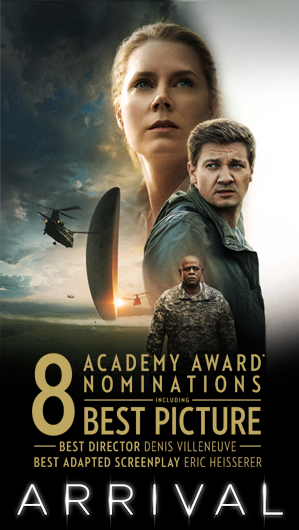 And I’m sure he’s probably done some other noteworthy stuff since then…
Anyway, a few of my standard points, but you’ll probably figure them out as we go. I’m in bold, asking the questions. Keep in mind a lot of these aren’t the exact, word-for-word questions I asked (which tended to be a bit more organic and conversational), so if the answer seems a bit off, don’t stress out over it. If you see a long line of dashes (———-) it means there was something I didn’t transcribe, probably because it was just casual discussion, something I knew I wasn’t going to use in the final article for one reason or another, or something that Eric was willing to talk about off the record to help me understand some of his on the record answers. Any links are entirely mine and aren’t meant to imply he’s specifically endorsing any of the ideas I’ve brought up here on the ranty blog—it’s just me linking from something he said to something similar that I’ve said.
By the nature of this discussion, there are going to be a few small spoilers in here, though not many. Check out the movie if you haven’t seen it yet.
Material from this interview was originally used for an article that appeared in the March/April 2010 issue of Creative Screenwriting Magazine.
So, anyway, here’s me scaring Eric Heisserer with a few questions about the Nightmare on Elm Street reboot.
(did you see what I did there?)
(you did?)
(…okay, I’ll see myself out)
So, how’d you end up on A Nightmare on Elm Street? Did they come to you, did your reps push you for it, or was it something you wanted?
It was one of those serendipity moments. I went for a general at New Line and I think right before I was to go in they were hoping that [Mark] Swift and [Damian] Shannon would be able to transition over from Friday the 13th to do a take on Nightmare. But they got locked into a Paramount deal and realized that they had to move fast on this thing. So what started out as a general turned into an assignment. It was pretty intense because I was only supposed to meet with Dave Neustadter, who’s a junior there at New Line and instead I’m meeting Walt Hamada and Dave. And I’m thinking to myself ‘Why am I in the big conference room? Did I say something bad about New Line? I’m in trouble, aren’t I…?’
So you walked in not even knowing this was now a specific assignment meeting?
Correct. They just pitched it at me. They said ‘You heard of a little thing called Nightmare on Elm Street?’
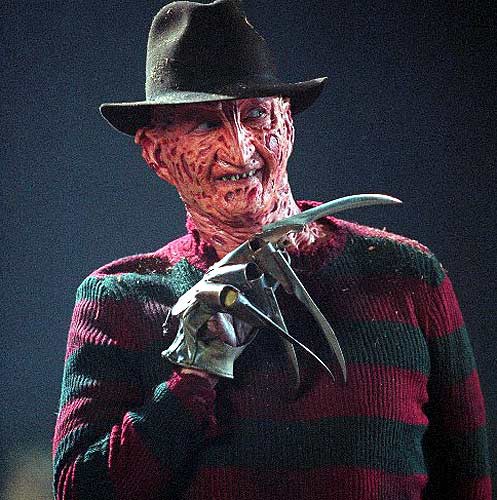 Were you really familiar with the original films to start with?
Now, I want to make sure I’ve got the timeline right. The screenplay started with Wesley Strick.
Yeah, he did a pass.
They filmed the movie. Then they brought you in to do some rewrites so they could do reshoots. Is that correct?
No, they abandoned his draft entirely. He did a draft for them and they decided to go in a very different direction. And I came in at that point and they said ‘Let’s start fresh.’ So the producers, Brad [Fuller] and Drew [Form] at Platinum Dunes and the execs at New Line sat down and the five of us figured out tonally what kind of movie we wanted to make and how we wanted our villain to be. Because there are various versions of Freddy Kruger. He changes as the franchise went along. Once we were all on the same page in terms of the tone of Freddy Kruger, I went off into my cave and I wrote for three and a half weeks or so in order to get a draft to them as fast as possible to put this thing on the production slate for Warners.
So this was a page-one rewrite?
Yes.
If you don’t mind me asking–it can be off the record–is Wesley’s credit mostly from inherent stuff from the franchise?
Yes. Oddly enough a lot of that is. Strick got his name on it because he was the first writer on and he had one idea that kind of changed the mythology of Freddy. Which is to put into question if he was guilty or innocent. That was the one thing in his draft that we stuck with in my draft and subsequent ones. Freddy Krueger as Samara from The Ring— you think that he just wants one thing and then it turns out he’s just an evil mother@%#r. And because of that one change in the mythology the WGA decided that it was not a remake but a sequel or some other deviant, and because of that Wes Craven’s name wasn’t put on there. Which frustrates me because aside from that one change in Freddy’s mythology, everything else is very true to Wes Craven’s story structure.
Now why did you come on? What about Wesley’s script did they feel needed to change?
Well, I really wanted to make it scary. Strick had some bizarre elements in his nightmare sequences that really didn’t make them nightmares. He had unicorns and the lead character was a barely-functioning autistic girl. The ending was a long monologue, and the monologue is what kills Freddy Krueger. So I understood why they wanted to start from scratch and rebuild the house for Freddy and focus first on making it scary and then figure out how to escalate that horror into the third act. Looking at the original, there’s a long gap in the last half of the film between appearances of Freddy Krueger, because people have figured out at that point in time that once you go to sleep, that’s when he gets you. Nancy, in Craven’s original, spends about twenty minutes of screen time kind of MacGuyvering her house so that when she pulls him into the real world [she’s got booby traps set up]. Johnny Depp goes to sleep, but that’s a very shortened nightmare sequence where he’s just pulled into the bed. We really don’t see Freddy. So there’s this long period where you feel like, in this day and age, the movie would drag. There’s a lot of stuff that may have worked in ’84, but it doesn’t translate well to now.
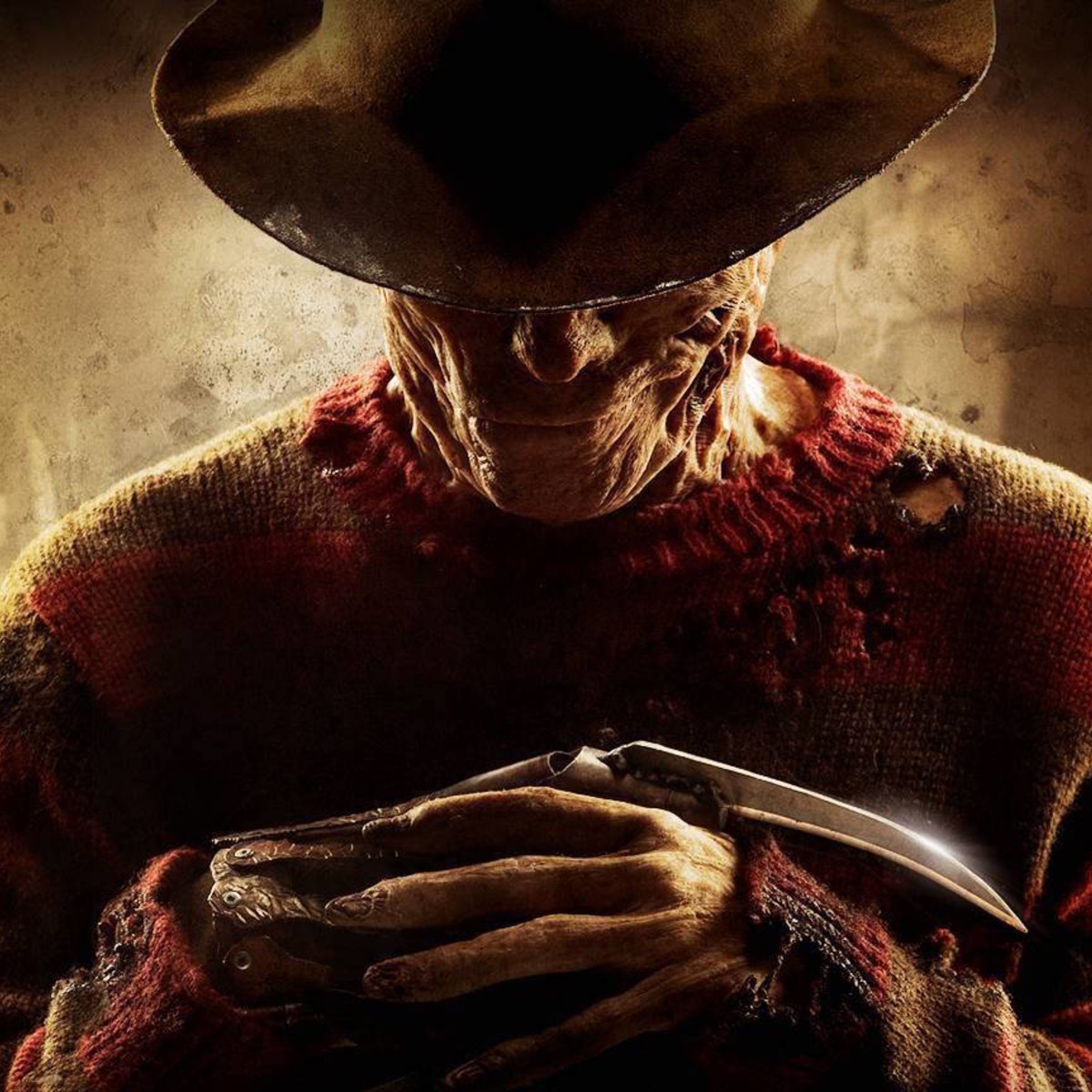
So I was looking for a way to make Freddy more and more of a menace as we got closer to the end of the movie. I did so by researching insomnia and health and other side effects from that. I discovered around the 70 hour mark of sleeplessness your brain starts to kick into what’s called ‘micronaps,’ and that part of the brain shuts down for a while. So you are actually asleep even though you’re conscious and you feel awake for the most part. That was my doorway into allowing Krueger to show up at unexpected times while they were awake and screw with the idea of what’s reality versus what’s dream.
A lot of the old “dream logic” seems to have gone away, too–the idea that absolutely anything can happen in the story because it’s a dream. Now Freddy’s a worm, now he’s a girl, now his tongue’s twenty feet long… Why is that?
Exactly. I wanted something a lot more grounded for a couple of reasons. One is that I knew we were under budgetary considerations. They wanted to hit a target number, so I knew that would help.
The second thing I discovered is that the scares are harder to deliver when the audience realizes that they’re in the dream world. Because once they’re keyed into that, the audience–at least part of them–starts to give up and think ‘Well, they’re screwed now.’ Because Freddy has full control there. He can be anything he wants. It’s like being in the Matrix. Breathing, running, distance–all of those are illusions. So I found that to keep as grounded as possible allowed me to play with when that moment was that they’d fallen asleep and entered the dream world. That just hit the buttons for me more as a horror writer more than playing with a fantastical landscape.
How do you normally approach a script? Are you an outliner? A notecard guy?
I start with note cards on a cork wall. Anything and everything that comes to me for the project–whether it’s a snippet of dialogue, an action sequence, a character, a backstory note–anything and everything I throw on there like a trash pile. Then I figure out the things I like best from it, start to organize it a bit, and from there I go to outline. Once I’ve got a decent outline. I use that as the spinal column of the script, and I make sure before I go to that, the script phase, that everybody else on the project agrees to it. Everybody’s seen it and they’re happy with the skeleton of the piece.
What’s a decent outline for you? Ten pages? Twenty? Thirty?
I land somewhere around twenty pages with these things.
Does it change things a lot for you, writing-wise, to come in and start with someone else’s material?
It puts a lot of stuff on that cork wall right away. I like that (laughs). It gives me a lot of stuff to deal with right away. I don’t mind coming in with something that already has ingredients set out for me.
Freddy Kruger’s a pretty solid horror icon. Is it a little intimidating to step in and try to rewrite him, especially when he’s not exactly faded from the public eye?
Absolutely. It was scary as hell. (laughs) I just had to do my best to do him justice. I wouldn’t’ve taken the job if I thought all I was going to do was deliver something that was a little bit better than what they already had. I had to deliver something I felt would really fit in with the mythology and restart him properly.
The franchise changed quite a bit over time. Freddy went from honestly creepy in the first one to more of an… an evil comedian in the later movies. He’s a lot more dark and savage in this. Was the focus from the start to “get back to basics,” as it were?
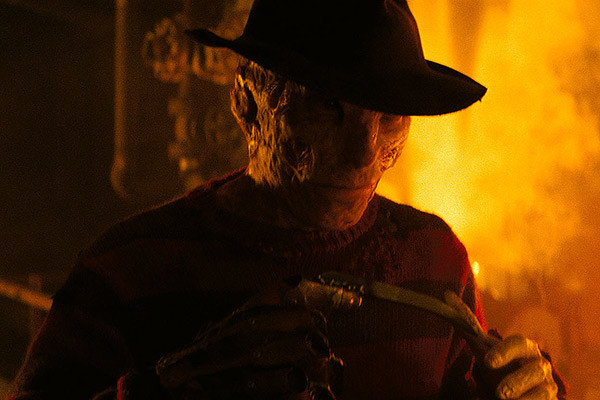
Yeah. Right. I knew that he still needed to have some sense of humor, but I wanted to make it sadistic rather than wise-cracky, Tonight Show. The reason I went there first is it just gives us more room to grow if this series continues after this first relaunch. I’ve noticed that a lot of franchises, by the time they’re at the third or fourth film, they bend more and more toward comedy. Like Lethal Weapon, for instance. I think if we start there, there isn’t much elbow room for Freddy. He can always become more wisecracking later on in the franchise, but what makes him an icon is horror is that first and foremost he’s scary. He’s someone you don’t want to have show up in your dreams.
Nightmare on Elm Street had a great run, originally, as a franchise. While you were writing were you thinking ahead to sequels or planting any seeds?
Yeah. I had to think way down field, otherwise… I don’t know if we would’ve built the movie around the character if we thought of it as a stand-alone story or something we didn’t want to revisit. We could’ve done a lot more with Krueger’s history and the history of the town, the kids, and the parents. Realizing that we could explore those layers allowed us, and me as a writer, the freedom to leave questions unanswered. Or to place questions out there of who this guy is and where he came from. Of course, I had to internally have all those answers ready for New Line because they wouldn’t let me get away with that (laughs).
Now, there’s also a very interesting twist, hinted at in the trailer, that Fred Krueger might have actually been innocent when the parents killed him. What made that so appealing?

What made it appealing was it forced an investigation, some procedural elements into the story. Our kids, not knowing what happened with Freddy, and feeling that he may be exacting revenge because he was falsely accused or falsely murdered, that allows us investigative beats to get to the truth. Without that, with just the idea that he’s evil and now he shows up in dreams and he’s killing people… there’s not a whole lot to do there, storywise (chuckles). ‘Well, I guess I’ve got to stay awake and I don’t know what to do after that.”
There’s an interesting twist to this, although not in the usual sense. We start the movie focused on Kris. She’s pretty solidly the main character. Then a third of the way in… you kill her and shift the focus to Nancy
Well, that was Craven’s original plan. We follow a character that we think is going to be our protagonist and then Craven pulls a Psycho and kills her off and then we hook up with Nancy
I noticed technology’s a bit more prevalent in this one. When Wes Craven made the original, you didn’t have iPods or cell phones with a hundred apps on them– these days pretty much everyone is carrying an alarm clock around with them. Did this hinder or help you a lot?
It helped a couple of times. Nancy
There’s a very low bodycount in this film. I think we only see… what, four or five people die? And two of those are kind of low-key, all things considered. Why is that?
Not so much, no. It’s not like it’s a guy in a hockey mask killing everybody off. Part of the reason for that is we wanted to spend more time with our characters. Do our best to get to know them and the relationship between their parents who are involved in covering up what happened to Krueger. And part of it is it’s harder, I think, in Freddy Krueger’s universe, in the Nightmare on Elm Street world, to get away with a whole slew of murders in a town and not draw a lot of attention and not change the game. If it were a camp by a lake and everybody’s off and sequestered in the woods, then you can kill ten or twelve people in one movie. But here we are in Springwood, a pleasant suburbia, and even one or two [murders] is going to draw a lot of attention. Local, state, national. Beyond a certain number if someone’s cutting up the teens of such-and-such place. Even if it looks like it’s accidental deaths, there are a lot of eyebrows being raised. So you have to be careful about that and not have body count be the focus of the story. Just find out how Krueger can work under the guise of a dream.
How many drafts?
Three? — Wow… that was my very first draft after about three and a half weeks on the project. There’s one that’s March 19 that gets rid of a lot stuff that was just thrown in there. It cleans up a lot of stuff and manages dialogue better. A lot of the dialogue in the January draft was just placeholder, in terms of throwing in as text what we later wanted to make subtext. So there’s a March 19th draft and then a production draft in May.
(a lot of off the record stuff)
Really that was pretty much it. We talked for another five or ten minutes, Eric explained a couple things I’d heard with a gentleman’s agreement it wouldn’t be used (and it still hasn’t been), and that was it.
So… next week.
Well, I still have the things I planned for last week. I just need to make some adjustments.
Until then… go write.
And if you happen to be near Lubbock