May 2, 2019

That Figure in Black

Today, I was hoping we could have a quick talk about that mysterious figure across the street.  You know the one.  Over there.  The person in the hat and trenchcoat who’s just standing on the edge of the shadows, watching us as we dig up this old time capsule.  The one who said something cryptic as you walked by.

You know who I mean.

No, seriously.  We all know the character I’m talking about, right?  The one who shows up in the first chapter, spouts a few  statements, and then vanishes for the next three or four hundred pages.  Heck, maybe they don’t come back at all.

Maybe—and let’s be honest here—maybe we’ve even written a character like that.  I know I have.  It’s okay.  Admitting it is the first step to getting better.

Truth is, characters like this are the one of the reasons so many agents and editors say they hate prologues.  So often, these characters don’t do anything except waste our time building a  false sense of mystery, dropping psuedo-hints that rarely, if ever, amount to anything.  They just… they’re awful.

So… how could we make them better?

Let me ask you this.  Forget the aura of mystery. What if they spilled their guts in chapter one instead?  They’re standing there across the street, then they walk over and just start telling us everything.  I mean, almost uncomfortable amounts of personal information.

What would this character say?

Who are they?  No, seriously—who are they?  What’s their actual name?  Who do they work for?  Why are they here?  Why are they dressed all in black?  Why are they saying these words?  What do they know? If they know more, why aren’t they just explaining everything?  Are they on my protagonist’s side?  If they are, why don’t they stick around to help?  If they aren’t, why aren’t they taking more direct action against the protagonist?  Why are they so cryptic?

Now, once I know all that… let’s look at my original version of this moment.  Is my mysterious figure acting believably?  Naturally?  This is my chance to make sure everything lines up, so my readers—including agents and editors—won’t feel cheated later on.

I’ve talked about something similar to this before—the detective’s speech.  That sometimes it’s worth writing out a chapter I might never use because it’ll help me figure out exactly how things are working in my story.  Because… well, I should know how things work in my story.  And why they work that way.

And why that guy’s sitting in his car across the street, watching us talk.

Next time… Look, I’ll be honest.  Next time might get a little explicit.

Until then, go write.

April 25, 2019

In The Beginning…

Running a bit late with this today.  Sorry.

So, I’m wading into a new book this month, and I figured… well, that’s probably a great time to talk about getting started and the draft process.

Of course, right off the bat… did I really start it this month?  I mean, sure, about two weeks ago I sat down and started actively working on an outline for it.  But the truth is, this is actually the second outline.  I first pitched it to my agent almost two years ago (and then again to my editor that summer).  They both said (and eventually, I agreed) that it needed some more work.
And, really, the bare idea came almost a year before that.  Back in early 2016, if memory serves.  I know I talked with another author, Kristi Charish, about one aspect of it back then, to get her thoughts and expertise on parts of it.

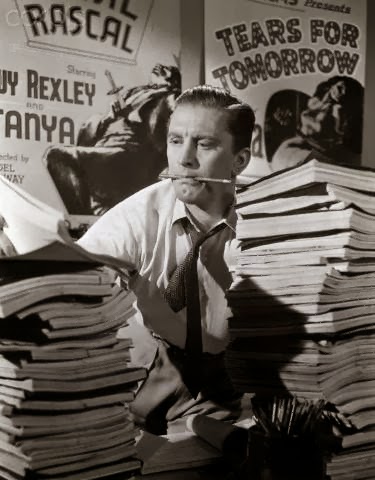
When do we “start” writing?  When does it count?  Is it when we first start thinking about a project?  When we actually make some notes or an outline?  Or is it not until I write VAMPIRE KAIJU: BOOK ONE by Peter Clines   CHAPTER ONE…?

I think that’s worth mentioning, because whenever I see someone talking about writing a book in five weeks or two months or whatever, I always wonder what they’re counting.  A finished, polished manuscript?  Just the first draft?  Are they counting the time they spent outlining, or that they started mulling it over months—maybe years—in advance?
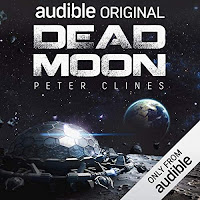
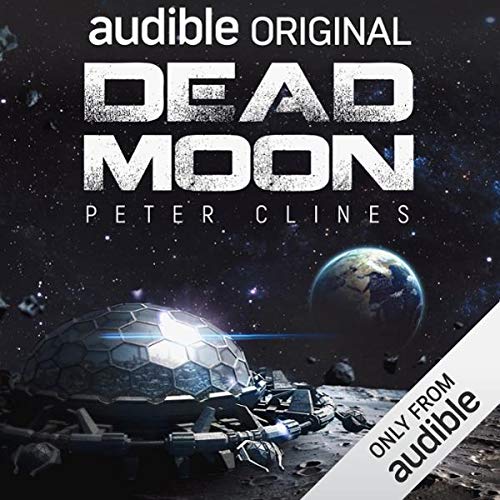
Paradox Bound came out in 2017, but I pitched it to my editor and wrote up a first rough outline back in 2013.  And Dead Moon, my new one that just came out on Valentine’s Day?  My very first stab at that actually happened back in 2011, right after I finished writing Ex-Patriots.  Yeah, it was a different book back then, but still… when I sat down to “start” writing it in 2017, I already had about 30,000 words done.

So how long did they take to write…?

Again, just think about that the next time you see someone say they wrote something in a short amount of time.  Or in a very long amount of time.  We all have our own thoughts about what counts as starting and stopping points.

Anyway…

At the risk of sounding arrogant, let me walk you through my process.  Well, more of a quick stroll, really.  I’ve talked about a lot of this before (so I’ll add a lot of links), and I don’t want to bore you with it since… well, odds are you won’t be doing things this way.

No, seriously, you won’t.  The process I use is pretty much unique to me.  And the process you use is unique to you—even if maybe you haven’t figured it out yet.  Or you’re in the process of evolving from one process to another.  I’m just showing off mine to maybe spark some thoughts and help you think about such things.

So… let’s get started.

All of this always starts with an idea.  Maybe you’re the type who writes them down, maybe you keep it in your head for a while.  I’m 50-50 on it.  If an idea really sings in my head right at the start, in any sort of way, I always write it down.  But some I mull over for a while.  I let them ferment in my brain, see if they grow a little or get a better shape.

Eventually all these notes come together in some form of rough outline.  I think we all do some kind of outline.  Even the most random of road trips starts with, at the bare minimum, “let’s head west.”  Maybe it’s just a page or two of those rough notes.  Maybe it’s an extensive beat sheet.  It might be a huge stack of color-coded index cards.  This stage is really going to come down to “whatever works for you.”  The outline I just finished up for this project is twelve pages, with another two page document about the characters, but that’s just me.

And now, I guess, we’re ready to “start” writing.

My first drafts are big, messy things.  I write a lot, but I also skip a lot of things.  The only goal with a first draft is to get it done.  Nothing else matters.  Not punctuation, not spelling, not finding the exact right word or crafting the perfect cool line to end that chapter on.  These things’ll matter eventually, but right now… I just want to finish this draft.

NaNoWriMo is really all about this.  It’s pushing yourself to just focus on finishing a first draft, rather than slowing down to worry about individual scenes and chapters.  If you’re especially determined (or masochistic) you could try the 3 Day Novel contest.  My partner’s done it a few times now and… well, I just try to keep her supplied with coffee and stay out of her way.

Once I’ve got this done, I dive into my second draft.  This is me in clean-up mode.  All the stuff I skipped gets filled in.  Sentences I never finished, incomplete descriptions, the places where I had to look up a certain place or name and for now it’s just ######### or [ADD BIG FIGHT HERE] or [MAKE THIS NOT SUCK SO MUCH!!!]
I also take a good look at the things I skipped.  Why didn’t I write it earlier?  Could I not come up with anything to go between these two elements?  Was I just not interested in writing that bit? If I’m not interested in writing it, people probably aren’t going to be interested in reading it.  This might tighten things up right here.

For me. the goal with this draft is to end up with a solid, readable manuscript.  Someone should be able to go to page one to page 500 and never hit any weird gaps or confusing typos or anything else that immediately kills the flow.

Third draft is editing.  I go through the whole manuscript line by line.  I check all my spelling.  I look for repetition and redundancy.  I cut a lot of excess words here.  Thousands of words, usually.  This involves a bunch of passes, the last one to make sure all this random cutting and tweaking hasn’t created any new hiccups.

When I’m all done with this—which can take a week or so—I try to get it in front of a few people I trust.  My partner.  Old friends who’ve ended up in the storytelling line of work.  People who’ve heard me talk about it and people who don’t know a thing about it.  The important thing is they’re all going to give me honest thoughts and opinions.  Which may sting sometimes, but will be much more useful.

Once I have all these notes from folks, I start my fourth draft.  Now I’m going through all these copies one line at a time, taking notes of my own and implementing changes where they’re needed.  How many people liked this bit?  How many didn’t like that one?  Whoops, guess I missed a comma there.  Now, having been away from this for a month or so while other folks were reading it, that line’s really dumb, isn’t it? Did I actually think that was deep and clever at some point?

This takes at least a week. Often more.  I’m simultaneously reading three or four copies of the book line by line, getting everyone’s thoughts and takes on it.  Weighing their thoughts against my own and each others.  Sometimes it goes fast, other times… it’s really slow.

And this eventually, finally brings us to the fifth draft.  This is me going through the whole thing again to make sure those fourth draft edits didn’t leave anything hanging or tweak a key point.  Just a nice, slow read-through.

One thing I like to do at this point is switch the whole thing into another font.  If I’ve been writing in , I switch it all over to Courier New.  If you’ve been doing that Comic Sans thing, hey, you needed to switch anyway.  When I do this, it makes everything sit differently on the page.  The words look different.  And suddenly passages I’ve been glossing over (after going through this a dozen times) are fresh and new.

And at this point… I wrap it up.  I think it’s important to just say “done” and move on to new projects, or else you can get stuck in an endless trap of rewriting again and again.  After all these rewrites and edits, there’s not much else I can do.

So that’s my process, beginning to end, in a nutshell.

Hey, what do you want?  I just started a new book.  I’ve got work to do.

Speaking of which… next time, I’d like to talk to you a bit about that guy across the street who just said the weirdest thing to me.  See him right over… where did he go?

Until then… go write.

April 18, 2019

The Kondo Method

This one may ramble a bit.  Apologies in advance.

An idea struck me the other day, and I realized I haven’t talked about it here in a while so I thought I’d go over it again.  And, as usual, the best way to do that is with a story.

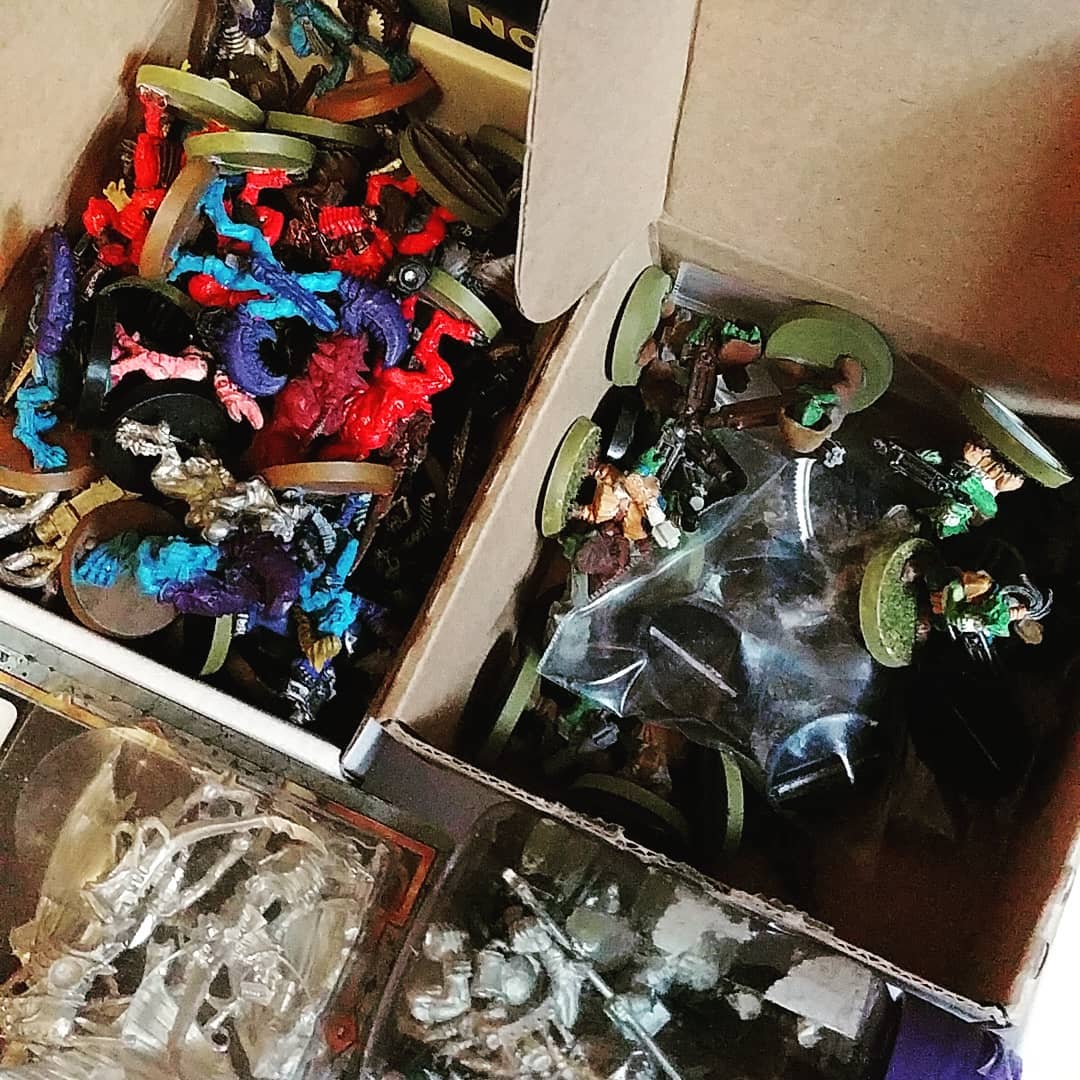
I talked last summer about moving and getting rid of a ton of old Warhammer figures.  I’d built and painted a lot of them.  Some of them were classic figs from twenty-odd years ago.  A few of them were honestly kind of beautiful, in their own way.  A couple were still sealed in the original package.

But, after a surprising amount of soul-searching, I finally just had to admit I was never going to play with these models again on the battlefield.  Or display them in any sort of cool way.  I was keeping them… just to keep them.  Because they were classics and that’s it.  Heck, I’d guess at least a third of them were for armies I didn’t even play anymore.  They were just cluttering up my shelves, and had been for years.  A couple of them for decades.

So I saved a few, maybe six or seven, that I thought I may use someday.  Or just really liked a lot.  The rest… got traded in for store credit.

But here’s the thing.  With them gone, my shelves became a lot cleaner and neater.  And I got a lot better with my hobby time.  I could find things much faster, which meant I was getting more done.   It sounds really straightforward, but getting rid of the clutter that wasn’t doing anything made my hobby much better.

I think this holds for stories, too.  As writers, we like to think the only limit is our imaginations.  But we’re still dealing with other restrictions.  The size of my manuscript.  The size of my cast of characters.  The patience of my readers. If someone’s going to take up space in my story, there needs to be a reason for them to be there.

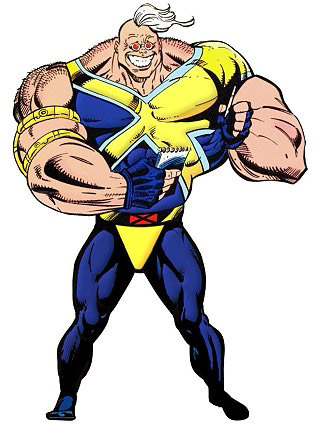
An example I’ve given before is Guido, the super-strong mutant from X-Factor.  Guido was a fun-loving, John Lennon-sunglasses-wearing guy who made the “gorilla body” physique popular years before Luther in The Umbrella Academy.  Also, as I understand it, now he’s dead and one of the lords of Hell or something like that, because who wants fun-loving characters around when we could have drama, right? Or maybe he’s alive again.  I lost track.

Anyway…

When Guido made his debut with X-Factor at a press conference, one of the reporters called out “He must be the strong guy!  Every group’s got a strong guy!”  Which led Guido to start calling himself Strong Guy from that point on, but also drew attention to the point that… well, yeah.  Every group does have a strong guy.  Because in the stories most superhero comics lean towards, a strong guy is very handy to have around.  There’s a reason to have them on the team and in the story.

In stories, we sometimes end up with characters that don’t serve a purpose.  Perhaps they’ve got a fantastic voice or a really clever description.  Maybe they’re a kind of character that doesn’t get seen a lot.  Maybe I came up with the idea for them in the shower and just really like how they turned out.

But if they’re not really doing anything to advance the plot or the story… I should probably get rid of them.

Before anyone goes nuts, I admit this is a bit of a broad statement.  There are going to be lots of characters in any story, and some of them are going to have a minimal-at-best effect on the outcome.  The guy serving our food.  That woman guarding the armory.  The fourth person to die in the battle.

Thing is, though, I shouldn’t be putting a lot of effort into someone who isn’t actually going to be doing anything.  All my characters should be propelling the plot and/ or story forward.  If they’re just standing around not really doing much… well, why would I spend a lot of effort on them?  Why give them a name and a backstory and a detailed physical description if all they’re going to do is walk up to the table and drop off three drinks?

This brings me nicely to a potential exception to this statement.  Sometimes we just run into someone interesting.  That one person who stands out because of their wild wardrobe or random pearls of wisdom or… heck, I don’t know, maybe they’re just funny and flirting a lot.  It’s not that uncommon to have this sort of chance, memorable encounter.  Think of the bit player in a movie who stands out in a scene just as much as the main character. Sure they exist, and we all love to encounter them in a story.  Sometimes the reason to be there can just be “this is really cool.”

However…

If I’ve got three or four or more characters like this, that’s starting to really cut into my page count.  At just three or four pages per encounter, that’s twelve or sixteen pages of my manuscript that have nothing to do with my story.  It adds up quick.  This is me deciding I’ll keep a few of those little toy soldiers, but just the special ones, and the ones that look good, and the ones that have fond memories, and the rare ones,  and suddenly I’ve put a hundred of them back on the shelf.

If I’m one of those writers who tries to make every single character special… well, there’s a good chance people are going to start getting frustrated with my lack of focus.

Y’see, Timmy, it keeps coming back to that idea of clutter.  Things getting in the way and slowing us down.  It’s okay to a small extent, but once it hits a certain point… we just have to stop everything.  And the people we’re trying to impress with it…  they’ll probably get annoyed with me.  Or flee in terror and call one of those hoarders shows.  Or the literary equivalent of one, I guess.

I may have some of the coolest, rarest, most beautiful characters out there.  But if they’re not really doing anything, I should maybe at least consider getting rid of them.

Speaking of which, next time…

Well, I’m starting a new book, and we haven’t talked about that whole process in a while.  So maybe I’ll talk a bit about drafts.  Unless one of you has something else you’d rather hear about?

Until then… go write.

April 15, 2019

RIP

Categories