September 18, 2010

Numbers and Letters

I would love to tell you I’m late with this post because I’ve been getting ready for one of my oldest friend’s wedding tomorrow back here in New England. John and Holly are finally getting hitched.

Or I’d be thrilled to say this is late because I’m having such a wild time at Horror Realm 2010 promoting Ex-Heroes and/ or The Eerie Adventures of the Lycanthrope Robinson Crusoe. This place rocks.

Yep. I would love to tell you either of those things.

Moving on.

I’d like to do a little math trick for you. You’ve seen these before, right? Start here, add this, multiply that, and I predict your answer. Sound familiar?

Let me give you another example. Divide 8 by 5. Add 3. This should give you the famous answer to the question of life, the universe, and everything.

Wait, division’s the one where you make that many more of something, right? That’s multiplication? Sorry. Okay, let’s try it again.

Multiply 8 by 5. Add 3. Now you should have it, and it’s also one of the mystic numbers from LOST.

Still no?

Did I type 3? I meant to hit 2. Well, no big deal on that one. You got it from context, right?

Of course, it is a big deal, isn’t it? Screwing up numbers can have dire consequences. Misunderstand a term or toss in the wrong digit and suddenly the door doesn’t fit right on your jumbo jet. Chase hikes your interest rate by 23% or more. Your space probe misses the planet Venus and goes flying off into deep space. Yes, if it’s in a key place just one digit off could mean you miss a whole planet. Or worse yet… don’t miss it.
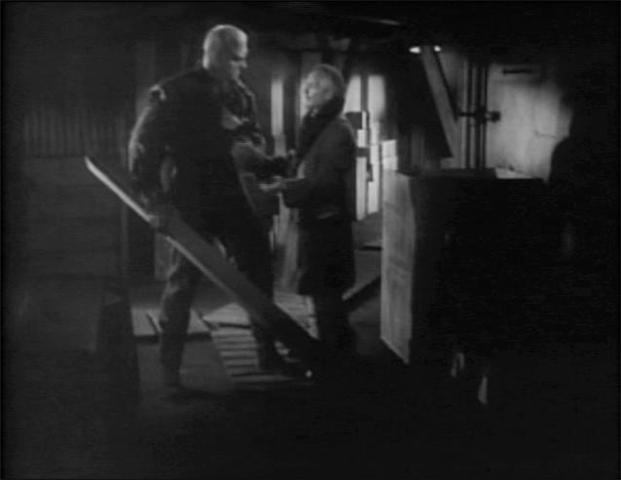
Granted, there’s always that brave scientist who strikes out on his own without checking his work or having anyone else go over their ideas. A whole slew of movies were made about such men back in the ‘50s. We’ve all read stories, fictional and true, about the people who didn’t double check their math, and most of these stories end in tragedy. Heck, all you need to look at the financial section of your paper to see what happens when bankers don’t pay attention to what’s actually on the page in front of them.

This is why you always hear about scientists, engineers, and bankers checking and rechecking and re-rechecking their figures. Then they hand those numbers and equations off to a colleague for him or her to check and recheck them. Finally, once their work’s been confirmed, they’ll talk about building a new plane or flying to another planet. Not knowing your numbers and sums means you don’t really have a hope of succeeding in one of these fields. You might be able to manage something small, but the big jobs are always going to end up going to the people who can just do this stuff, not the ones who are completely dependent on their calculators to do every single calculation for them.

Of course, this isn’t just true of numbers. Messing up a word or a letter can have dire consequences, too. Especially for writers.

Just as a scientist or engineer is expected to know their numbers so they can make something solid, a writer is expected to know spelling and definitions to make something worth reading. This is why I stress spelling and vocabulary here again and again and again. Hands down, the most common flaw in amateur manuscripts is misspelled and misused words.

I mentioned calculators before and, well, it was a calculated choice. I’m sure a few folks are already in the comments section pointing out that most scientists–even the very top cream-of-the-crop ones– do use calculators. They use them all the time. And they do, I’d be a fool to argue the point.

So how, you ask, is that any different from the people who depend on the spell-checker to do it all for them?

Y’see, Timmy, the difference is that the scientists are just using calculators as a time-saver. They know how to plug in all the formulas, how to work the equations, and how to do the math. If you ever sat in on a college physics class, this is why all those equations get put up on the board. These folks can do the problem out by hand on three or four sheets of paper… or they can punch the numbers in and get the answer.

This is not the same thing as the would-be writer who doesn’t know the difference between its and it’s or there and their and they’re or something bigger like corporeal and corpulent. If a writer is misusing these words it’s not that they’re saving time with spellchecker–they want spellchecker to know these things for them.

I’ve mentioned this several times before, but I’ll say it again. Buy a dictionary. There’s one or two nice big ones on the carousel at the bottom of this page. Stop depending on your spell-checker and make a point of looking up a word if you’re not sure how it’s spelled or what it means. Odds are you’ll never have to look up that word again, and you’ll remember whatever it was that made you trip up on the spelling.

If nothing else, you’ll impress friends with that big, solid book on your desk.

Next time, I’m going to rant about your friends and family. Really.

Until then… do the math. Go write.

September 10, 2010

Alphabet Soup

Wow, is it Thursday again already? The three day weekend really threw off my schedule. You get used to things in a certain order and suddenly there’s Thursday, showing up a day early. You expect there to be a few more days in there, y’know…?

Anyway…

I don’t know about the rest of you, but most of my ideas tend to spark with small moments. It’s very rare that an entire story pops into my head fully-formed. I’ve had it happen with a few pieces of flash-fiction and maybe two short stories. For the most part, though, when I start writing something it tends to begin with a random snippet of dialogue or a clever scene of some kind. Then another one. And another. And so on and so forth.

Now, when it comes time to start organizing all of these, I end up with a rough outline of sorts. I say rough because I know there’s a lot of stuff that’s not there. I may have snappy dialogue A and clever reveal B which lead to action scene C, but all the stuff in between… well, there’s usually a lot of discovery in there that doesn’t come out until I start putting words on paper. For example, who would’ve guessed that Danielle’s baseball shirt would be so important in Ex-Patriots? I sure didn’t. I just realized the other day how it tied up a few things into a neat package.

However, there’s also times that I pound my head on the desk for hours trying to figure out what the hell goes between A and B. It can take ages but I usually find something. More often than not, it’s something I’m not thrilled with and it tends to be something that gets cut later.

Which is what I wanted to toss out to you.

If you’ve got A and B, what goes between them?

No, don’t overthink it. Just answer the question. What’s between A and B?

The answer is nothing, which is what a lot of people have trouble with. I had trouble with it for the longest time. Sometimes the reason nothing seems to fit or work between two plot points or story beats is because… well, nothing fits or works between them. There’s a reason no one ever talks about A.5 or A and 3/4.

This is very important in screenwriting, where the goal is to keep everything as lean and tight as possible. When a reader comes across a page of dialogue or action that’s just filler–and it will be apparent to a professional reader that it’s just filler–they’re going to toss that script in the big left hand pile. At the very least, they’re going to be swiveling their chair in that direction and waiting for the next excuse to toss it.

I’ve often mentioned my first real attempt at a novel, The Suffering Map. The first draft of it was bloated, and part of the reason is that I was convinced something had to happen between A and B. And between P and Q. And between V and W. At one point, because I was somehow convinced there needed to be time and space between two events, I had a Mafia boss discover the whereabouts of the guy who slaughtered three of his men and then decide to wait three days before sending people to extract vengeance. Three days that I had to fill up with unnecessary nonsense just because I knew there had to be something between that moment Uncle Louis learns about Rob and the bloody slaughter that followed.

What I eventually realized, though, was that Uncle Louis wasn’t the kind of guy to wait. There was nothing between A and B. Once I realized this and made a few sweeping cuts, the story was stronger and that whole sequence was much more powerful.

The same thing happened once or thrice in Ex-Heroes. I had a few points where characters would go on for a page with random dialogue or actions for no real reason except that I was convinced that there needed to be a break between this and that. Two of my early readers caught these moments and pointed out there was no reason R couldn’t come right after Q. It should come right after Q. That’s how the alphabet works, right?

Now, just to be clear, this doesn’t mean there should never be anything between story points. You may put them next to each other and end up scratching your head at the oddness you just created. Sometimes there really does need to be stuff separating A and B. However, that tells you something right there, doesn’t it? If this is the case, you’re not dealing with A and B, but A and C, or perhaps even A and D. Once you figure that part out, you now know how much needs to go between those two points you have.

So the next time you get stuck trying to figure out what needs to be between A and B, stop for a moment. Try putting your two plot points or story fragments next to each other and see what happens. You may discover you’ve got a solid connection already. At the very least, maybe you’ll get a better idea of what needs to be between them.

Next time, what happens when simple math tricks go wrong.

Until then, make a point to fill in all that blank space on the page. Go write.

September 3, 2010

The Big Problems

So, let’s begin with a shameless plug…

You may have noticed the new button on the right for The Eerie Adventures of the Lycanthrope Robinson Crusoe. It’s a new novel I co-wrote with Daniel Defoe and H.P. Lovecraft. Pick it up today and watch as I break every single suggestion and rule I’ve ever given here on the ranty blog by writing in Defoe’s style. Plus you’ll have some fun with it and hopefully even find it a bit creepy and chill-inducing at points. You may even shed a tear or two.

But now, back to out regularly scheduled rant…

I’ve prattled on here a few times about writing dialogue. I’ve talked about descriptor issues, genre problems, and more than a few times about spelling. Oh, the rants about spelling. I can feel another one building even now…

What I’d like to blather on about now, though, is a few big things. These issues tend to not be limited to this character or that character. They usually extend across a writer’s dialogue as a whole.

Some of these I’ve mentioned before, and you may notice some common threads between them. I like to break them down like this because I know the little distinctions help me notice this stuff sometimes in my own writing.

Monologues – If you don’t know the term for some reason, a monologue is when a character gives a long speech. Here’s a hint. If a character has a block of dialogue which fills more than half a page, in either script or prose format, it’s probably leaning towards a monologue. If there’s no one else in the room with them when they do this it’s definitely a monologue. Unless your character is named Hamlet and your name is William, this is generally a bad thing.

People don’t talk in monologues in normal, everyday life. Or even in abnormal, once-in-a-lifetime life. They stand out because most of the time they’re either a character thinking out loud or dumping a boatload of exposition, and either of these things can be accomplished in better ways–assuming they’re needed at all. There’s a reason screenwriter Brad Bird made fun of this dialogue habit in his movie The Incredibles.

If one of your characters is giving a monologue, ask why they are. Is it really an inner monologue that could be expressed through action or subtext? Is it an info-dump for the reader that may not be entirely necessary? If there’s someone else there, could this person be breaking that block of dialogue up by asking for clarifications, offering corrections, or even making jokes?

Declamation – Here’s a term you don’t hear tossed around much anymore. It’s when someone speaks in very practiced, rehearsed statements. Have you ever noticed how a lot of politicians or salespeople sound like they’re declaring things even when they’re asking questions? There’s a degree of absolute certainty to their statements that just comes across as false or staged.

Believe it or not, declamation used to be considered a minor art form. No, seriously. Read I, Claudius by Robert Graves sometime and check it out. Or just pretend to buy a car and spend half an hour on the lot. Or watch some FOX News commentaries. It tends to happen in writing a lot when characters are just the mouthpiece for a message from the writer.

Remember that real people–and real characters–don’t have everything rehearsed. They don’t always have the perfect word on the tip of their tongue. They get caught flat-footed and can’t come up with something to say. And sometimes they say the wrong thing.

Here’s an easy trick. If you think some of your dialogue may be more declaimed than spoken, look at the page for a few moments, then look away and try to speak that dialogue from memory. Did you get it word for word? Or did you substitute different words and simpler structure? That’s speaking versus declamation. Same information gets conveyed, but one doesn’t sound rehearsed.

Wooden – If you are wondering, dear reader, what a person means when they refer to dialogue as wooden, it means the lines of dialogue which are presented in such a blunt and dry fashion that they do not sound natural. These sentences tend not to have an organic flow to them. They are difficult to read because of this.

A common sign of such dialogue is a lack of contractions, which, as you all know, are a natural part of speech and conversation. Without contractions, the dialogue becomes stiff, thus the sobriquet “wooden.” A strict adherence to the rules of grammar is not unheard of, as well. These are not the only signs of wooden dialogue, however they are two of the most common.

You may have noticed, dear reader, that the previous two paragraphs lack the usual tone and cadence you may have become accustomed to in these posts. They seem a bit lacking and awkward to read. This is because I am forcing myself to write in a stilted, stiff manner not unlike that which I have seen in the wooden prose of some manuscripts.

And I’m sick of doing that sooooooooo… moving on.

On The Nose – What does it mean when someone tells you you’re right on the nose? It means you’re absolutely correct. Spot on. Got it in one. Right on target. Which is great if you’re doing pub trivia, but not so good in dialogue.

On the nose dialogue has no subtlety to it. It’s when people say exactly what they mean without a shred of caution or concealment. This dialogue isn’t layered with meaning because it’s not even layered. It’s the sheet cake of dialogue. It gets the job done, but only just, and you’re kind of left wondering if it was even worth it.

In real life, people beat around the bush. They’re coy. They feel each other out, in a verbal sense. They use implications, and inferences and innuendoes.

You want a phenomenal example of not on the nose dialogue? Watch Four Weddings and a Funeral and look at the scene about 2/3 of the way through when serial monogamist Charlie tries for a solid minute to declare his love for Carrie before ever getting around to saying it.

So, there you have it. A quartet of dialogue problems that tend to blanket work rather than cropping up here and there. Give your writing a look and see if there’s anything that stands out.

Next time around I want to toss out a few tips for getting from A to B. It really isn’t all that hard. Honest.

Until then, go write.

August 26, 2010

It’s A Trap!!

I would like to thank Admiral Ackbar for pointing out the obvious.

Alas, sometimes things aren’t as apparent as we think they should be. Like the horror story where the absolute last thing someone should do is open the door to the study, so of course Yakko is reaching for the knob…

Lots of aspiring writers fall into traps. Sometimes it happens when they follow bad advice. Other times it’s because they insist on using a method or writing in a style which really doesn’t work for them. And sometimes… sometimes that trap’s just sitting there in the field kids play kickball in, hidden by some leaves, waiting to snap…

So, with all that being said, here are some common–and dangerous– misconceptions people have about writing. Beware them, and beware the people who set these traps for themselves and others.

Writing is easy Probably the most common misconception there is. I mean, most of us learned how to put words on paper when we were ten, right? We could write passable essays by ninth grade. So writing for a living, for an audience greater than your immediate friends and loved ones, how hard could it be? Anyone can do it once you’ve got a clever idea. Heck, I’d bet 90% of Americans have immediate access to a word processor of some sort.

Truth is, writing—not basic, grade-school literacy, mind you, but the ability to write— is a skill which needs to be learned like any other. All you need to do is browse the comment sections of any news feed or message board to see how few people know how to express their ideas through words. Yeah, I took English and reading classes in school. I also took music classes, so maybe I should expect to get a recording contract sometime soon? Twelve years of gym classes, too, but for some reason I haven’t made it onto any Olympic teams.

Writers need to train and practice for months–maybe even years–before they’re ready to show off their writing. I don’t need to look it up to tell you Wolfgang Puck didn’t get any praise for the first hundred meals he cooked, Mark McGuire did not get paid big money the first thousand times he swung a baseball bat, and Stephen King didn’t make a single cent off the first 100,000 words he wrote. Writing is work. Hard work. It requires skill, a great deal of practice, some actual talent, and a heck of a lot of dedication. This is why so many people can’t succeed at it.

This is probably the best trap because it doesn’t just catch the writer, it tends to kill them 2/3 of the time. Most of the wanna-be writers who believe this have never actually written anything. Once they do, they come up with an excuse why they’ll never be completing their manuscript (see below), then slink away to become musicians. Or writing gurus.

Writing doesn’t require any writing A few decades back there was a huge spec script boom in Hollywood. It was one of those rare periods when studios acknowledged the importance of the writer and were paying top dollar for screenplays, or even just the idea for one. A popular story is how established screenwriter Joe Eszterhas scribbled the bare idea (no pun intended) for Jade on a cocktail napkin and ended up with a multi-million dollar contract for it.

As I said, however, this was over twenty years ago. These days producers and publishers are much more cautious and they’re not interested in ideas. They’re interested in complete, finished works. Not two-thirds of a manuscript. Not most of a script. Just to save time, knowing the right people won’t change this. No, it won’t. I don’t care what you read on the special snowflake website.

Not to sound too harsh but… well, no, this is harsh because people can only end up in this trap by choice. If someone can’t write and complete something, they can’t be a writer. That’s really all there is to it. Stop now and go back to those criminal justice classes you signed up for.

For the record, some folks argue they don’t want to write until they get paid. These people should give up on any sort of fiction– because that’s not going to happen there–and go into journalism. Then they need to find a staff job on a website, magazine, or newspaper.

Good luck with that, by the way, not having a writing resume and all…

First person is easy A lot of prose writers start off with first person stories. It’s quick, it’s not hard to get into, it’s easy to find a voice. It’s also very personable, so a reader can relate to the characters immediately. Plus there are tons of formats ready and waiting; journals, diaries, letter, memoirs, and so on.

Truth is, first person is a very difficult, very limiting tense to write in. There’s a reason so many professional writers avoid it. Beginning writers rarely develop their first-person characters past their voice. I could go on about this one for a while, and as it happens I did earlier this year.

Writers who get caught in this trap start their first novel and pound out 20,000 words worth of journal entries over the weekend. There’s always that chance they may be brimming with so much raw talent they’re the next Hemingway or Steinbeck. There’s a far better chance, though, they’ve just wasted a long weekend.

Writers don’t need to read – Somewhere along the line, someone started promoting the silly idea writers shouldn’t waste time reading, they should spend all their time writing. This is kind of like saying you don’t want to waste time stopping for gas while you’re driving. Every professional writer I’ve ever met, interviewed, or even just read about (myself included) reads voraciously. A writer should be devouring works in their chosen field to stay current and snacking heavily on everything else to stay fresh.

Sad but true, the people who fall into this trap tend to write plain awful stuff. They go for every easy idea, hit every cliché plot point, and tend to follow the textbook formulas they were taught in some creative writing class somewhere. What else can they do? They try to mimic one or two famous examples of what they aspire to and usually end up looking just like the worst of the worst (because they have no idea what the worst looks like)

Research everything – Alas, this is one of the two deadliest traps out there, which is why I saved it for one of the last. We all want to get the facts right in our stories. We check research books, make phone calls, visit important locations, or maybe some of us just spend a lot of time on Wikipedia. The point is, how can I be expected to move forward with my story if I don’t know the name of George Washington’s barber and what size shirt he wore? It’ll ruin everything if I just call him John Smith, neck 16.

This is an awful trap because getting stuck in it means a writer was trying to do the right thing. Research is important, but never forget it’s not writing. There’s a time for putting noses in books but there’s also a time for putting pens to paper (or binary code to electromagnetic bubble memory, as it may be)

Some people get caught in an even deeper layer of this trap. They get stuck researching how to write. We’ve all known someone like this, the one who buys book after book, takes class after class, but never does any actual writing. For some people this becomes a defense mechanism of sorts, sometimes subconsciously and sometimes… not so subconsciously. If they never start, they won’t have to put the work in and their work stays in that wonderful hypothetical stage where it’s the greatest thing (almost) ever committed to paper. It’s a tragedy, really, they never had time to write it down…

Rewrite until it’s perfect – The last and deadliest of the traps in our showroom. For some people, rewriting turns into an endless loop. There’s always another opinion to listen to, more feedback to get, and revisions which need to be done because of them. Just thought of a new way to do those action scenes? That calls for another draft. Maybe last night’s Chuck inspired a new opening? Perhaps Aunt Betty is visiting and she thought the ending was a little violent, and a good writer knows changing the end means changing everything which leads up to the end.

There are two ways people fall into this trap. One is a combination of bad advice and bad judgment. So many gurus tell people to rewrite and rewrite and rewrite. How many times have you heard “writing is rewriting” parroted in classes or on message boards? There’s some truth to that, but there’s also a lot of truth in the phrase “poop or get off the pot” (cleaned up for work computers). Eventually, a writer just needs to call it done and move on or they’re going to be trapped in one manuscript forever.

The other way people fall into this trap is by purpose. A bit like with research, constant rewrites are an excuse not to actually produce anything. You don’t expect me to show you an incomplete or old draft, do you? I was going to send it to some agents or publishers, but I think it needs one more polish to make it perfect. Maybe one more after I go through and clean up a few loose threads. Rewrites are a way wanna-be writers–again, consciously or not– can avoid possible failure yet still keep up the illusion of forward motion.

Are all of these traps deadly? No, but getting snagged in one can definitely cost you some time. I’d be lying if I said I hadn’t fallen victim to one or three of them over the years. Fortunately, one of those things only has to slam on your leg once and you’ll rarely let it happen again.

Assuming, of course, that you get out of it the first time.

Next time, I’m going to throw around some big words relating to the throwing about of big words.

Until then, go write. And watch your step.

Categories