
More pop culture references for the old folks.
Yeah, I’m running late. Very sorry. I hit the home stretch on the first draft of Ex-Patriots and I had to give my attention to that.
Check it out, though. The blog counter passed 10,000 hits. And it did it on a week I didn’t post anything.
Anyway, I haven’t prattled on about characters in a while, so I figure I’m due…
I may have mentioned once or twice before that characters are key to a successful story. Non-stop action with flat stereotypes can be diverting in a film for a little while, but in a book (and in a good movie) characters are your bedrock. If the reader doesn’t have someone they like, someone they can relate to, a story can be dead in the water by page five.
Now, there are three common ways people try to make their characters come to life and become real on the page. I say “try” because all three are based off a simple misunderstanding of why certain aspects of characters work. Let’s go over what they are, the problems with each one, and how you can work around it.
The first method is to describe these characters in amazing detail. The writer introduces us to Phoebe and tells us her hair color, eye color, height, and weight. Then come descriptions of her hairstyle, body type, the shape of her face, and possible tattoos (visible or not). There’s a list of her measurements and shoe size. In the next sentence we get the name of her lipstick, the name of her perfume, the designer for her jewelry, the designer for her shoes, and the style of her manicure. Phoebe gets described to us in such exacting detail there’s no way we can picture her any way except how the writer envisioned her.
The second way is for the writer to give pages of background on the character. We’ll get lengthy flashbacks to Phoebe’s first day of school, her first kiss, her first sophomore English class at Prestigious University. Sometimes she’ll start talking to friends, family, or complete strangers and tell them about the last time she baked cookies with her mom, the awkwardness of losing her virginity in the back of a pick-up truck, or the day she realized she wanted to be an Oscar-winning screenwriter. Sometimes these historical revelations won’t even be a flashback or dialogue, they’ll just be straight prose from the writer.
The barista gave Phoebe her double-whipped half-mocha latte with whipped cream, just the way she liked it, just the way she had it every day. He was a handsome man, and part of her wanted to ask him out. He wore plaid flannel shirts a lot, though. It was a silly thing, she knew, but plaid flannel always made her mind go back to her grandfather’s heart attack. He’d always worn plaid, too, and he’d been wearing it the day she and mom were visiting and he grabbed at his chest and made that awful noise. Young Phoebe had been so determined not to look at his pain-stricken face she’d just stared at the plaid shirt. So for now the barista would just have to stay behind the counter.
The third way, thankfully, is the least common, but it happens enough I feel the need to mention it. Real people have irrational quirks, sometimes do nonsensical things, and often go against their own best interests. Sometimes we even up and die in awful, unexpected ways (statistics say most people do at least once in their life). It’s the way we’re all wired. We’ve all seen people do things like this. We’ve all done things like this.
The logic here is if the writer has the characters act illogically, they’re acting more real. If Phoebe is a bundle of odd behaviors, then she has to be believable. It’s almost a challenge to the reader. Since real people do this, how can anyone say Phoebe isn’t real if she’s doing it? Heck, if Phoebe randomly gets hit by a car in the last few pages, that’s so much like life it almost counts as art, doesn’t it…?
Now, here’s why these three methods usually don’t work. I won’t say they never work, but if you’re the gambling type you should consider the odds here.
The problem with using tons of details to describe your character is it breaks the flow of your story. Events come to a screeching halt while the writer has this infodump. If you look back up there, I bet you started skimming just while reading that list of potential descriptions, didn’t you? If a list of general examples can’t hold your attention, what’s going to happen when it’s a list of specifics two or three times long?
The other catch to this is that a lot of the time readers form their own mental images of what a character looks like. For example, if you look over the past few paragraphs you’ll see I haven’t actually described Phoebe at all, but you’ve probably got some mental image of her when I use the name, don’t you? If you know what this character looks like with no description, then two pages of description is just pointless excess.
In a similar vein, a writer can add in a hundred pages of biographical facts and anecdotes and it’s still not going to make a character seem real. More likely, the story’s going to suffer from the same expositional infodump I mentioned above, and it’s going to come to a crashing halt again. The problem is relevance. While there’s no question these past events shaped Phoebe’s life and the person she is today, the reader’s going to wonder what do they have to do with this story. No matter how good a particular element is, if it doesn’t relate to the story the writer’s telling it’s just bulk filler.
The other problem here is no matter how much raw data you pour out on the page, there’s always more which isn’t out there. There are shaping events we forgot or didn’t want to mention. There are people we probably never realized how influential they were to our lives.
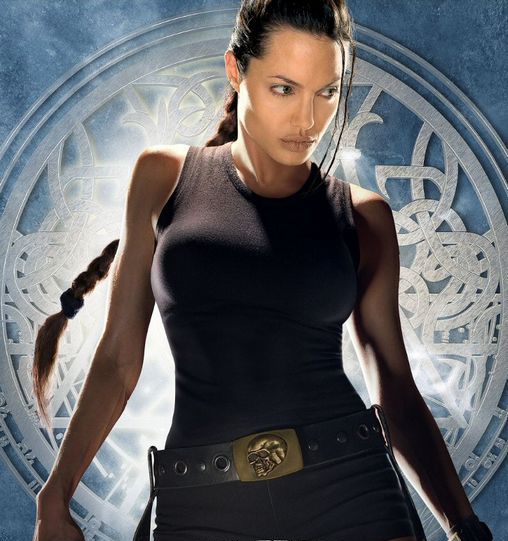 Consider Angelina Jolie or Barack Obama. Here are two people who’ve had their entire lives put under a microscope and studied by the whole world. And the whole world’s continuing to study them today. Thing is, though, there’s still tons of stuff we don’t know about both of them. Common sense tells you that. I’m not talking about that birth certificate nonsense or any of that. I mean simple things. No matter how much you know about someone–about anyone–there’s always more you don’t know.
(Yes, I needed a picture of something to break up the wall of text, so we’ve got Tomb Raider. There it is.)
The problem with the third method, randomness, is that fiction is held to a higher standard than real life. Nonsensical, illogical, unbelievable things happen in real life all the time, but life isn’t scripted. When I pick up a book, I know John or Jane Doe is the writer behind it. There is no randomness, because every word on the page was deliberately chosen. And that means any apparent randomness has to be serving the purposes of the story. Because if it’s not, well… why is it there?
So, with all that being said, is there any way to make these three methods work?
If not, this hasn’t been terribly informative, has it? Hardly worth the two-week wait. I should probably come up with something…
Okay, the big trick to all of these, as I mentioned above, is relevance. Like adjectives or adverbs, if character elements aren’t serving a purpose they shouldn’t be there. Strip away all the noise and clutter and just give the reader what they need.
For example…
Let me tell you an ugly secret. Phoebe lives in a fleabag apartment infested with rats and roaches, always buys her bread from the day-old rack, and eats peanut butter sandwiches for lunch every day of the week. She always has immaculate hair and designer clothes, though, especially on the weekends. I’ve just told you something about her, haven’t I? More than just the words on the page, too. You’ve got a sense of who Phoebe is and where her priorities are. Maybe even a mental image of her. All in just a hair over three lines.
See, I don’t need a lot of details, just the right details. Did I need to tell you about Phoebe’s anklet or her lipstick or how tall she is for that little character sketch to work? I just need to pick the right details to create the image and imply the person I wanted you to see.
Here’s another example for you. When I was just a ten year old kid I used to walk a mile-long paper route in the snow seven days a week, usually four or five months out of the year. No, seriously, I did. I grew up in Maine– of course it snowed a good chunk of the time.
What does this have to do with what I’m getting at?
Nothing.
 However, once a week I would also walk almost three miles down into York Beach to Garfield’s Newsstand. Wednesday was the day new comics came in, so from about age eight on I would trudge down there– rain, sleet or snow– and work through the wire racks looking for new issues of Spider-Man, ROM, Star Wars, Hulk, and more. If it was really cold and I needed more time to warm up, I’d go through the tiny section of genre paperbacks in the back of the store. That’s how I first came to know John Carter of Mars and the old Han Solo novels. And it wasn’t too long before I was copying all of these tales on one level or another.
Y’see, Timmy, the backstory of me delivering newspapers is crap. I’m also not going to waste time retelling the story of my dog Flip and my dislike of ketchup. None of them have anything to do with anything here.
The second story, though, shows some of those first seeds of me becoming a writer. It’s relevant to me as the person behind the ranty blog, so it’s especially worth mentioning in this little rant. If you’re going to add in stories about a character’s past, they should somehow relate to what’s going on in the “now” of your story. Or your blog post.
The randomness issue is the easiest one to deal with. It’s okay for seemingly random things to happen in a story–key word seemingly. At the end of the day, the writer is in charge and the events in this story are happening for a reason which benefits this story. I can tell you, from a narrative point of view, why Duke Perkins dies at the beginning of Under the Dome, why the unnamed comedian’s wife dies in The Killing Joke, and why Ben Kenobi dies in Star Wars. All of these are seemingly random events… but they’re not random, are they? Each one drives the plot and character development in a certain way and in a specific direction. That’s the kind of “randomness” which should be in a story– the kind that serves the writer’s purpose.
So make your characters. But really make them real.
Next Thursday is Thanksgiving. Wow, this year has flown by. I think I may put a name to something I’m thankful for.
Until then, go write.