
January 7, 2016 / 2 Comments

The Woooooorld of Tomorrow!

            Welcome back.  Glad to see you all survived the violent transition to 2016.
            I like to start the year by going over what this pile of rants is for and why I do it.  I think it’s good for any of you who’ve stumbled across this page.  It’s also good for me, to help stay focused on helpful tips and suggestions and, yes, the occasional rule.
            That’s more or less how this started, almost nine years ago now.  At the time, I was writing for a screenwriting magazine, and I’d see tons of articles and websites about tricks and gimmicks—the sort of stuff you worry about after writing.  I’d guess at least two-thirds of writing articles, even in our own magazine, fell into this category.  Stuff like how to get an agent or manager, how to aggressively network, how to arrange book signings, that sort of thing.  Most of which seemed like… well, like it was skipping a few steps.
            And some of these folks were asking to be paid for their pearls of so-called wisdom.  
            So, I went to my editor with a few spec columns about… writing.  Some basic things I’d written up based on my own years of many failures and a few successes (or, as some folks call it, experience).  And the columns were rejected.  A few months later I went to another editor, he passed them up the chain, and they were rejected again.  Those three columns became the first posts here.  I’d tossed them up just so it felt like I’d done something with them.  I thought they were fairly well written and made some good points—I didn’t want them to languish on my computer.  Maybe in the tiny, limited space that was the internet somebody would stumble across them and find them useful.
            (Bonus fact. Maybe a year after I started posting here full time somebody pointed out Thoth-Amon was also the evil sorcerer in the Conan books and comics.  Completely slipped my mind when I picked the name for the site.  I just went with it because Thoth was the Egyptian god of writing)
            Anyway, as I worked my way further into the life of a full-time writer, I was exposed to more and more people’s work.  I read scripts for a couple different contests and got a bunch of exposure to it (reading 400+ pages a day will do that to you).  And it struck me that I kept seeing the same basic mistakes.  Often to wince-inducing levels.
            Okay, so this is just my own experience, but at this point my experience is pretty broad so I feel good about saying it…
            Most aspiring writers fall into one of two camps.  Some think writing and storytelling are mechanical, quantifiable processes that can be broken down into solid rules and formulas.  These are the folks who will use Syd Field as proof that their screenplay is perfect and quote the MLA Handbook to explain why their novel deserves to be published  
           The other group think rules are for old-school losers who don’t get that spelling, formatting, and structure just hamper the creative process and will get overlooked when people see the inherent art in the writing.  Nothing matters past the pure art of words flowing out of their fingertips.  Because we all have fantastic stories to tell.  Don’t know how to spell that word?  That’s what spellchecker’s for.  Don’t know what the word means?  Well, they’ll get it from context.  Not in the mood to write? Then just wait for the muse to strike.  Someone said bad things about your writing?  Ignore them, what do they know?!  Nothing matters except being happy about your writing.

            Both of these groups are usually wrong, for the record.
            Note that I said “usually.”  Most folks think it’s all-or-nothing.  You have to be on one extreme or another.  The truth is that it’s more of a middle ground.
            Y’see, Timmy, there are correct and incorrect things in writing. I have to know how to spell (me—not my spellchecker).  I have to understand grammar.  I need to have a sense of pacing.  If I’m writing a script, I’ve got to know the current accepted format.  As a writer, I can’t ignore any of these requirements, because these are things I can get wrong and I’ll be judged on them. 
            On the other hand, there is no “right” way to start your writing day or to develop a character.  There’s only the way that’s right for me and my story.  Or you and your story.  Or her and her story.  This is the Golden Rule that I’ve mentioned here once or thrice.  If I ask twenty different writers about their method, I’m going to get twenty different answers.  And all of these answers are valid, because all of these methods work for that writer
            But that still doesn’t mean I can ignore every convention or rule I don’t like. I need to understand the rules if I want to break them successfully. Yeah, maybe there are ten or twenty people who broke the rules and succeeded… but there are hundreds of thousands, probably millions, who broke the rules and failed miserably.
            And that’s what I try to do here.  Talk about writing.  Not the after-the-fact-stuff, just writing.  I talk about rules that we need to learn and follow (until we’ve got the experience to bend or break them).  I try to offer some various tips and suggestions I’ve heard over the years that may (or may not) help out when it comes to crafting a story.
            I have a few topics on deck for the weeks ahead.  Author visibility.  Action.  Inside jokes.  Stakes.  Motives.  A few others.  And if there’s something that’s been gnawing at you that you’d like me to blab about, let me know down in the comments.  I’ve been doing this for a while—there aren’t many topics I haven’t had a painful learning experience with, and I’m always willing to share.
            Oh, also… if you happen to live in the southern California area, I’d like to recommend the Writers Coffeehouse.  It’s a monthly meeting of writers of all types and levels to talk about… well, writing.  All aspects from first ideas and editing to pitching and marketing.  It’s free, it’s fun, and it’s open to everyone.  Jonathan Maberry (author of the Joe Ledger series, the Rot & Ruin series, and many others) brought it with him when he moved to the San Diego area, and he hosts a Coffeehouse the first Sunday of every month at the Mysterious Galaxybookstore. And starting this month, on the 24th, I’m going to be hosting one here in Los Angeles at Dark Delicacies.
            So check that out if you’re in the area.
            Next time, I’d like to talk about lanterns.
            Until then… go write.
December 31, 2015 / 3 Comments

Last Year’s Resolution

            One last post squeezed in before I head out to play games and drink with friends.  Hopefully you’ve got some wonderful plans for closing out the year as well.  But first…
            Let’s talk about what we got done this year.
            My big goal for this year, like it has been for two or three years now, was to get two novels done.  It’s a goal I keep stretching for and always fall short.  I’m not sure if I can reach it or not, but I keep trying.
            How’d I do?
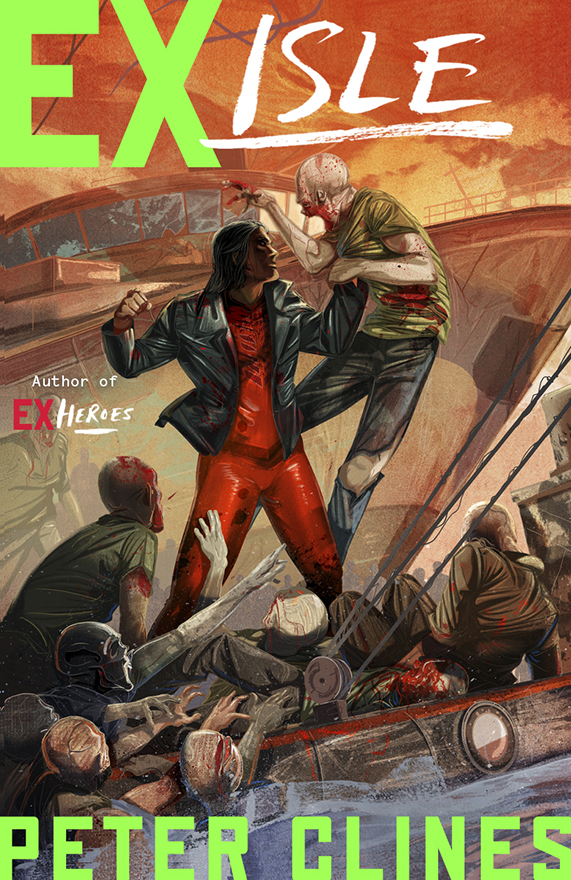
            Well, a good chunk of this year was taken up by Ex-Isle.  I struggled with this one a lot, for a few reasons, and a good chunk of that was my own fault.  I’d done a fair amount of work on it last year and then even more this year.  My editor looked at what I handed in and… well, he knew I could do better.  So I went back, hacked, slashed, and came up with a much nicer, cleaner book.  It’s the longest Ex book to date, word-count wise.  Tweaks and layouts on this carried us right into October, and I ended up adding a new chapter at… well, not the eleventh hour, but pretty close to 10:30.
            You’ll get to see if that was all worth it in just five weeks…
            When The Fold came out in June I did a bunch of promo stuff for it, including interviews and a half dozen or so original articles for a few different sites.
            For the past few months I’ve been working on my new project which is, as yet, untitled.  I’ve mentioned it here a few times, and I’m sure you’ll be hearing more about it next year.  I’m about 2/3 in at this point, and if all goes well I’m hoping my beta readers will be seeing it in late February or so.
            I also polished up a short-short story for the Naughty or Nice holiday anthology.  It was an idea I’d had a while back and getting invited to the anthology was just the kick in the pants I needed to make it worthwhile.  Plus, it’s for charity, so you score actual karma points when you buy a copy.
            Counting this one, I’ve done 42 posts for the ranty blog here, plus another 34 for the geeky hobby-based blog I keep up elsewhere.
            That’s what I wrote this year.
            What did you get done?
            To be honest… I’m a little upset with myself.  I was really ashamed of that first Ex-Isle draft my editor saw.  I’d also really hoped to have the new project out to beta readers by now, so I’m a solid two months behind where I’d planned to be.  I would’ve felt justified, at that point, in saying I had two novels finished.
            Yeah, maybe this sounds a little shallow to some of you.  I mean, I get to make my own schedule, write for a living, and here I am complaining about how much more I wanted to do.  Sounds pretty damned good as is, doesn’t it?
            Thing is, as we’ve discussed here many times before, good enough is never enough.  Good enough will never get a career going, and it won’t keep one going.  We have to be willing to push ourselves to be better, and to keep pushing ourselves.  We all need to set new, higher goals.
            One could even call them resolutions, if they were so inclined.
            With that in mind… what do you want to do next year?
            I hope you all have a peaceful and safe New Year.  Don’t drink and drive, be good to people, and kiss someone you love at midnight.
            We’ll talk again in 2016.
            Until then… go party responsibly.
            And then come home and write.
December 24, 2015

Happy Holidays!

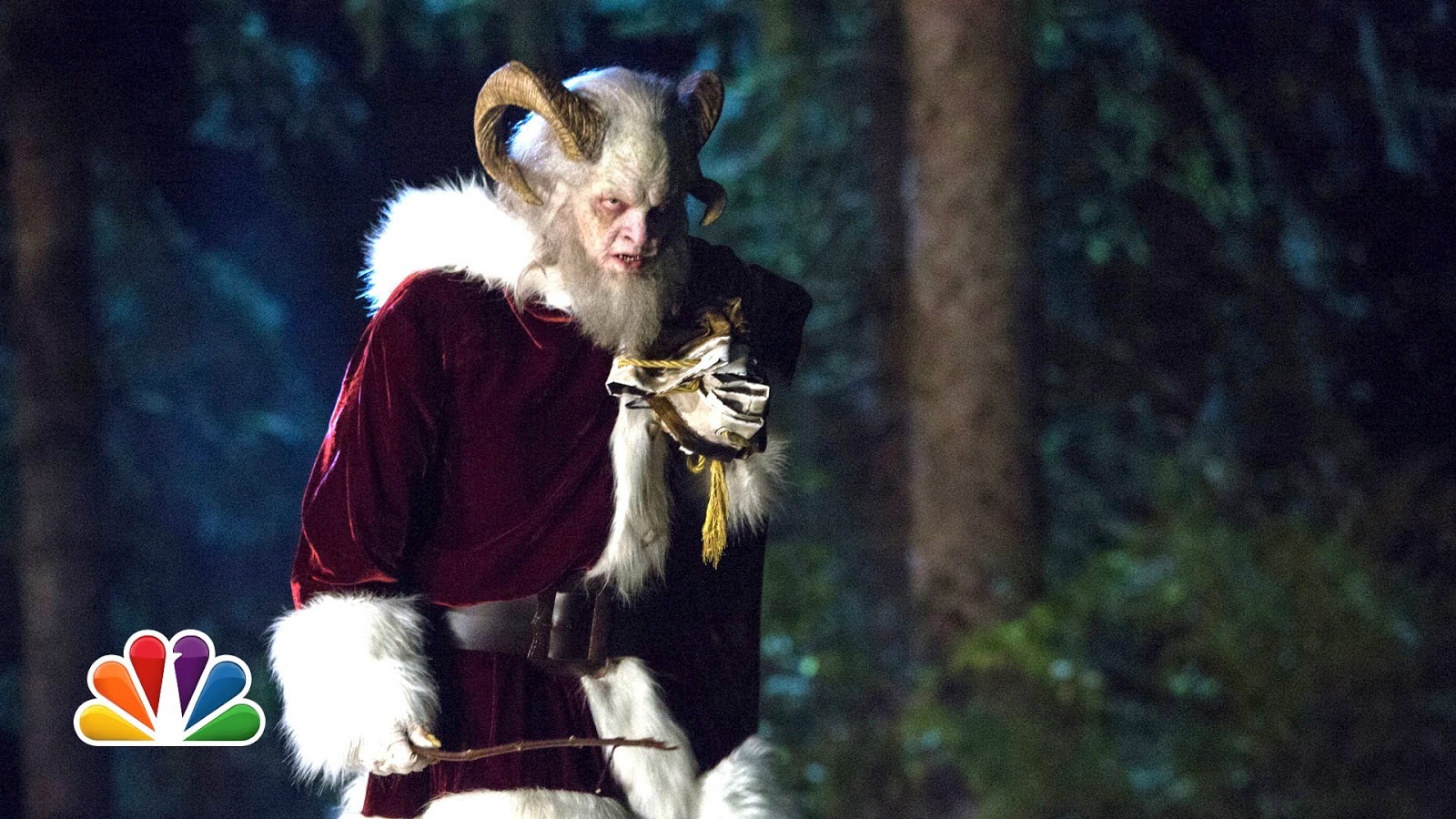
             Hey, there!  Thanks for checking in on Christmas Eve!  Or Krampusnacht, which is a lot more dangerous, depending on some of the choices you made this past year…
            Speaking of choices, I thought I’d toss out something real quick, just in case the holiday season had sparked a story idea or two in your mind.  I wanted to give you a quick warning about Christmas.
            No, not in a “Krampus is coming” sort of way…
            Writing stories that revolve around Christmas, or any holiday, is tempting.  They’re very relatable.  A lot of the groundwork is already done for us (there’s no need to explain the plump guy in the red suit sliding down the chimney). It can be a great contrasting background for some stories.
            Plus, let’s be honest. Christmas stories are lucrative.  There’s a fair argument to be made they’re consistently one of the best-selling genres out there, especially if you write screenplays.  Think of all those cable channels that are just brimming with original movies.  Heck, I had a short story in a holiday-themed anthology this year, and I know of two or three other anthologies that were open for submissions, too.
            Not to sound all capitalist, but… there’s a lot of money to be made off Christmas.
            Now, that being said…
            If I’m thinking about a clever idea for a holiday story I need to be careful.  The ugly truth is, it’s all been done before.  All of it.  No matter how clever or original I think my take is, there’s a good chance someone’s done it before.  Because, as I mentioned above, this is a huge market and lots of folks have written lots of stories.
            Look at it this way.  How many holiday specials are a tradition in your household?  My lovely lady and I enjoy all the classics, but we also dig out the Christmas episodes from some of our favorite shows.  And we have a big stack of about a dozen movies we watch every year about this time.  So, without even trying, there’s over two dozen Christmas stories.  Comedies. Action flicks.  Superhero movies.  Message movies.  Even a few horror stories. 
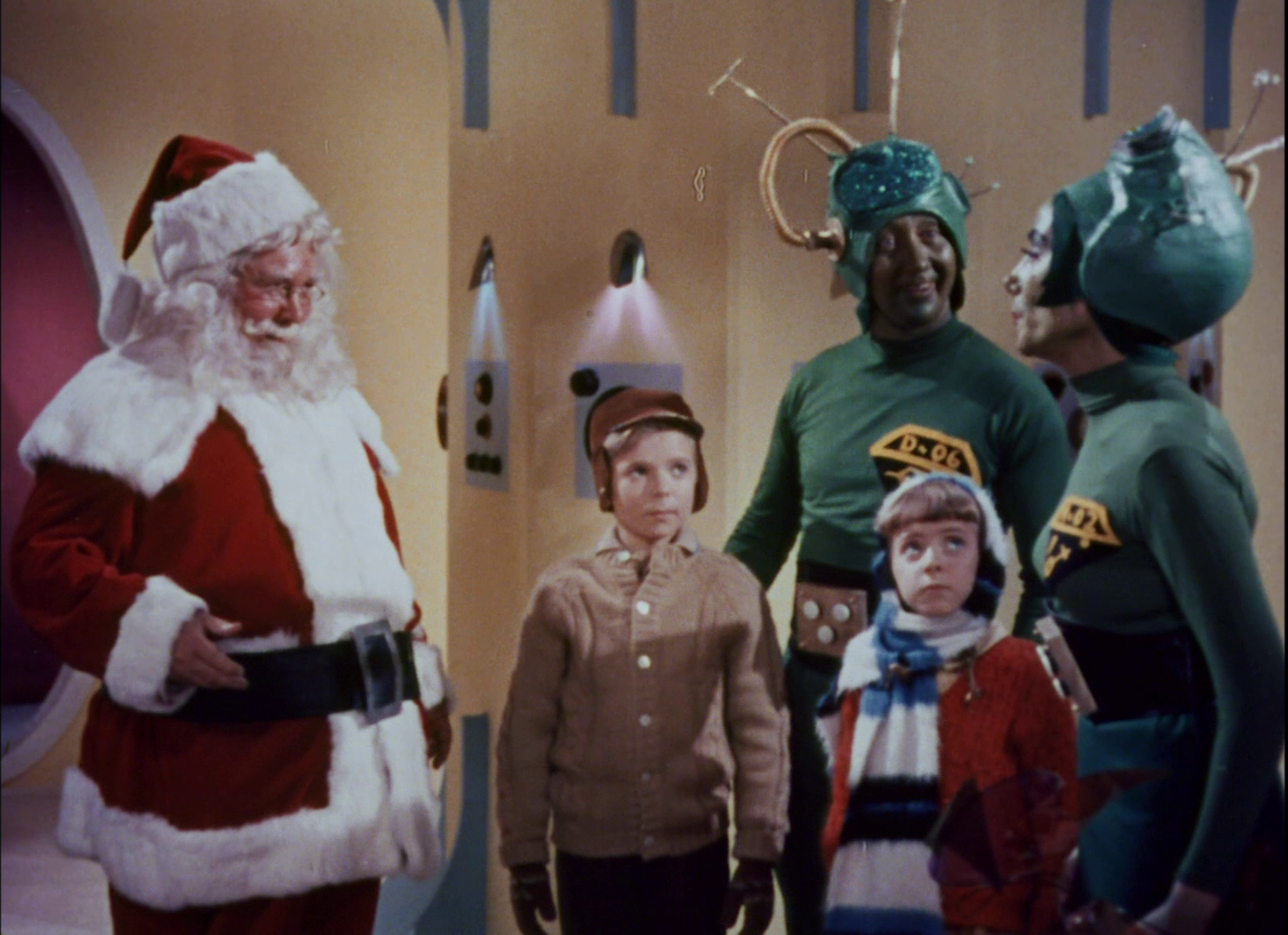
            And that’s just a little bit of peeking in the closets.  Think of all the different Santa Claus stories out there.  Good Santa. Evil Santa.  Naughty Santa.  Robot Santa.  Accidental Santa.  New Santa.  Temp Santa.  Kidnapped Santa.  Arrested Santa. Hell, I’ve now seen multiple stories where Santa is an action star defending his workshop from invading forces.
            How about A Christmas Carol?  Personally, I’ve seen the Dickens classic done many times in the past and present, and even once with time travel on an alien planet.  There’ve been versions that leaned toward comedy, toward drama, toward horror.  Heck, I remember a bionic version on The Six Million Dollar Man when I was a kid.  No, I’m dead serious.  Steve Austin in a Santa suit leaping around and convincing a stingy businessman he was a spirit.
            Ahhh, says me. But I’m not really doing a classic Christmas story.  I’m being clever and going back to the old country.  I’m writing a Krampus story.  How many people have ever heard of Krampus?
            Well, you may have heard of a Finnish film called Rare Exports from a few years back.  That’s pretty much a Krampus story.  Grimm did a great Krampus holiday episode last year.  There was a Krampusmovie this year.  He also shows up in that anthology I mentioned up above, and in an anthology movie I just watched the other night with friends. 
            Again, all done many times, and in many ways.
            I’m not saying these stories can’t be done, but I need to be aware that this is a fruitcake that’s been regifted a lot.  So if I’m going to try passing it along, too, I should have a good idea how many hands it’s already passed through.  I don’t want to be giving it to someone who just saw it a few hours ago.
            How’s that for one last awful holiday metaphor?
            So think about stories this holiday season.  But if you’re thinking about holiday stories… put in a little extra thought.
            Next time, let’s review a few things.
            Until then… Merry Christmas.
            Joyous Kwanzaa.
            Happy Holidays.
            Glorious Ascension of Tzeentch.
            Now go write.
December 19, 2015 / 2 Comments

Yes, Virginia… There Is A Santa Claus

            December has gone by way too fast for my liking.
            Anyway, before we all head off to watch Star Wars: The Force Awakens and get some final holiday shopping done, I though I’d talk about something completely unbelievable.
            No, seriously.
            There’s a phrase you may have heard called willing suspension of disbelief.  Simply put, it’s when a reader is willing to ignore or forgive obviously false things for the sake of enjoying a story.  They deliberately choose to ignore the impossible.  It’s why we can enjoy Lord of the Rings when we know there’s no such thing as elves, dwarves, or invisibility rings.  It’s also why we can enjoy Star Wars when our adult minds realize the Force, lightsabers, and hyperdrive are all a little questionable, logically.  And if there really was a hockey-masked serial killer taking out a dozen kids per summer up at the same lake… seriously, shouldn’t someone have caught on by now?
            Fantasy, sci-fi, thrillers, a lot of horror—the genre stories are the ones that we immediately think of when it comes to willing suspension of disbelief.  But the ugly truth is that any story can make a reader shake their head and toss it aside.  There is no genre, no point of view, no style of writing that is immune.  Sometimes a writer asks us to make a leap and… we just can’t.
            Why is that, y’think?  When was the last time you shook your head at something you were reading?  Has something ever happened in a movie or television show that just made you decide you couldn’t take it seriously any longer?  Or maybe you just shut it off?
            I have a few thoughts on this topic…
            One of the biggest things that’ll make a story believable—any story—is the characters.  I may have mentioned once or twice or thrice that good characters make for good stories.  I can’t have a believable story without believable characters.  It’s just not possible.
            Yeah, even if I slap “based on a true story” or “inspired by real events” under the title.  Once it’s on the page or on the screen, all anyone cares about is if it’s a good story about believable characters.  This is a common mistake—one I’ve made myself.  Whether or not they’re real is completely irrelevant.  If that’s my only selling point… I’m in trouble.
            If my characters are going to be believable, they’ve got to be consistent—or at least consistently inconsistent.  I can’t have them acting and reacting in whatever random way happens to move my plot along.  My readers need to see motives they can understand.  Natural-sounding dialogue.  Relationships that are somehow relatable to the average person.
            This is important because once my readers believe in my characters, they’ll believe in what happens to my characters.  If I believe in Phoebe and Phoebe ends up meeting Santa, then—by extension—I have to believe in Santa.  Stephen King is a master at this.  He gives us very normal, relatable folks, lets us get to know them, and then plunges them into nightmarish circumstances with inhuman, otherworldly threats. We believe there’s a weird clown-spider-elder god thing living under this small Maine town because we believe in the kids-who-become-adults who encounter it and decide to fight against it.  Just saying that up above—clown-spider-elder god thing—makes it sound kind of goofy and silly.  But millions of people were terrified by ITand completely believed in that creature… because they believed in the characters Pennywise the clown was terrorizing.
            Now, something I haven’t touched on yet.  How can I make someone believable in a completely fictional worldStar Wars is set on other planets centuries ahead of our own, technology-wise (don’t be that person arguing about “a long time ago…”).  The Game of Thrones books are set on another world that’s arguably thousands of years behind us.  The Harry Dresden series by Steve Butcher is set on a different version of Earth.  The whole Marvel Universe (comic book and cinematic) may have been vaguely close to ours once, but is far off into sci-fi at this point, even right in the middle of Manhattan.
            A lot of this will depend on how foreign I make my world.  The more difficult it is for a reader to find relatable ground, the harder it’ll be to find something relatable in the characters.  And as I mentioned last week, being relatable is a key to good characters.
            Let’s consider Star Wars (no, don’t worry, no spoilers).  The first movie (episode IV if you want to be pedantic) starts with a battle between massive starships, but quickly shifts to a boarding party—one on one action where we see people being killed and captured.  And then it’s revealed this is a spy mission and the Empire is looking for some sort of stolen plans. Good so far—all of this is very understandable stuff.
            Our hero, Luke, works on his uncle’s moisture farm where he drinks blue milk and is expected to work on droids who will work on the vaparators.  This is all vaguely understandable, yes.  But, as quickly becomes apparent, Luke doesn’t want to work on the farm his whole life.  He’s suffocating here.  He wants to go off and do big, exciting things. And that’s something we’ve all heard before. Hell, a lot of us have probably felt that before, right?  So even though it’s set on spaceships and desert planets, Star Warsimmediately grounds us with familiar, believable characters and situations.
            Okay, so once I’ve got good characters, that whole disbelief thing is taken care of, right?
            Well… not exactly.
            Another thing that can mess up willing suspension of disbelief is if I get my facts wrong.  If I tell my readers there are only six countries in Africa, that the human heart is made up of just one cell, that Ronald Reagan was the 25th President of the United States, or that Hitler died in 1958… well, most people are going to see the mistakes there.  Even if they don’t know the right answer, they’ll know I got these wrong.  And that knowledge is going to jar them out of the story for a minute.  It moves us from experiencing the story to analyzing it.  We start lookingfor wrong things, and that pokes holes in our suspension of disbelief. 
            Again, the world of my story will have some say in this.  What we consider a fact in one story might not hold true in another.  There’ve been one or two successful stories where Santa Claus was a main character.  A fairly successful movie actually made the claim that Hitler died in 1958.  By the time it made this claim, though, it had already introduced average, relatable guy John Myers (and us) to the hidden supernatural world of the story.
            There’s also a flipside to this, one that takes a bit of empathy.  I can also blow the reader’s willing suspension of disbelief by using completely true facts that are unbelievable.  There are lots of things that are statistically possible, but that doesn’t mean they’re actually going to happen, or happen that often.  Likewise, there are tons of late night cable shows that will tell you about amazing true coincidences or billion-to-one events that actually happened.  If I’m basing a whole chapter—or a whole story—around these things, it could cause problems.
            I spoke with a documentary filmmaker years ago.  He’d just finished a film about the botched invasion of Iraq and the even bigger mess that came after it.  One of the most amazing things he told me, though, was how much he had to cut out of the film.  There were points of such complete incompetence in the year after the invasion that—if he had left them in the film—nobody would’ve believed them.  And he was telling me this three years later, when it was becoming pretty clear to everyone how poorly things had been thought out over there.  Even then, he had to cut some things so his documentary wouldn’t get dismissed as a hatchet job.
             If I present something that’s too hard to believe, even if it’s true, it’s still going to make the reader pause and shake their head.  As I mentioned above, nobody cares if it’s true or not.  There’s a phrase you may have heard that started with Lord Byron, passed through Mark Twain, and has even been used by Tom Clancy—the difference between fiction and reality is that fiction has to make sense.  And when it doesn’t make sense, it’s going to knock people out of the story and chip away at their disbelief some more.
            Y’see, Timmy, this is the big thing.  When our suspension of disbelief is broken, even for a moment, it breaks the flow of the story.  The more often the flow is broken, the harder it becomes for my readers to be invested in the story.  And soon they’re setting it aside to do something more exciting… like the dishes or thank-you cards.
            So keep it believable.
            Next time… Heck, next time is Christmas Eve.  Wow.  I may try to jot down something really quick for that morning, but I’ll understand if you have other plans.
            Until then… go write.
            Believably.

Categories