
March 28, 2017 / 2 Comments

Con Etiquette, Pt I

             D’you see what I did there…?
            So, Emerald City Comic Con was a few weeks back,  Wondercon’s this weekend, and we’re kinda lunging full force into the spring con season (followed by the summer con season, the fall con season…).  I think I may be doing eight or nine cons this year, which may be a new record for me.
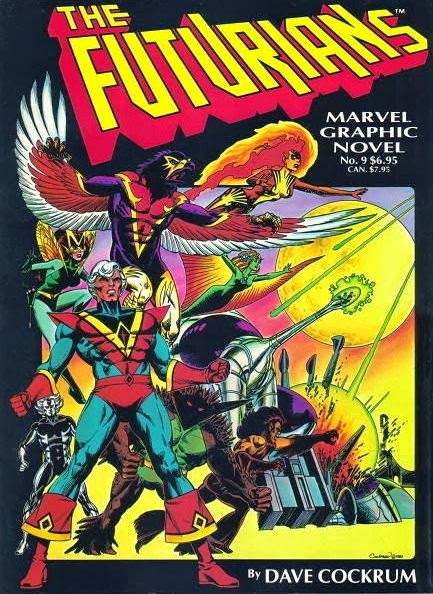
            I love cons.  I think I went to my first convention, in Boston, for my thirteenth or fourteenth birthday. I met artist/writer Dave Cockrum (who gave young me some career advice), a few Marvel editors, and Matthew Waterhouse (who played Adric on Doctor Who back in the day).  And we won’t talk much about when that was, but I’m pretty sure Reagan was president at the time…
            Over the past couple of years, though, I’ve been seeing conventions in a whole new way.  I started going as a vendor, hawking my books to whoever I could attract over to my little folding table.  Nowadays I’ve hit the point where more of my con time is panels and signings.  If I happen to be at a table, it’s not quite so much work to get somebody to talk to me.
            Anyway, while my experience isn’t exactly overwhelming, I thought it might be cool to toss out a couple of convention tips I’ve gleaned over my years of con-going, seeing things from a few different angles.  But I thought I’d divide them up a bit.  Today I’ll talk about attending cons as a fan, next week as a vendor, and that last week I’ll talk about the holy grail—being a guest of the con.
            Sound interesting?
            Well, good.  ‘Cause that’s how I’m doing it.
            Let’s start with the basic form of con-attendance—as a fan.

1) Be aware of my surroundings – Soldiers and police have a great term called situational awareness.  Really simply put, it means I’m being constantly aware of what’s going on around me and how it might affect me… or vice-versa.

            This ability can make me a convention ninja, no joke.
            If I’m going to wander around the con for a day, I should at least try to be aware of the other people around me.  At a crowded convention, all it takes is one person who decides to stop in the middle of a busy aisle or intersection.  I don’t want to be the person everyone’s glaring at… or deliberately slamming their shoulder into.
            Another factor here—what have I brought for bags?  We all have something at cons. I generally just have a messenger bag, but lots of folks have whatever big bag they’re handing out with passes.  I’ve even seen a couple folks wearing backpacks that are probably larger than you’d need to spend a summer backpacking in Europe. There’s nothing wrong with any of these, I just need to be aware of how much space they take up. Suddenly those random stops or turns make me a serious menace (and a major annoyance).
            Also, most cons are going to have limited dining facilities.  I really shouldn’t camp out for an extra hour after I’m done eating.  I know this is a tough one, because so many big cons—looking at you, SDCC—have very, very limited places to stop and rest.  Once I actually score a table, there’s a mad desire to hang onto it as long as possible. I just need to remember—everyone else wandering around feels exactly the same way.
2) Be respectful of everyone’s time—Most con events are timed one way or another.  Panels and autograph sessions are rarely more than an hour.  Even vendor interactions don’t last long—they’re generally trying to manage a large area and juggle numerous potential clients at once.
            If I’m spending five minutes at the microphone or in front of a line or even in front of somebody’s booth… that’s a big chunk of time. We’ve all been there when that guy gets up in front of the panel and talks for three minutes before getting to his question.  I’ve seen people argue their case for submitting book manuscripts and art samples at publisher’s booths, no matter how often the random marketing intern has to explain they’re not the person for that.  I’ve watched people stand dead center in front of a booth, talking to the vendor for ten minutes, then admit they don’t have any money.
3) Don’t be creepy—Okay, I know this is a tough one because nobody… okay, most people don’t think they’re being creepy. Just remember—not everybody likes it. No, it doesn’t matter what kind of con it is.  I just really need to be honest with myself when I engage with cosplayers, vendors, professionals, con staff. How am I coming across
            No, not in a perfect world, in this world. How are people going to react to what I’m saying or doing?  Is that woman reallygoing to be happy I wrapped myself around her or pinched her ass? Is that vendor really going to be pleased that I stood by his booth breathing heavily for twenty minutes? Is it okay that I keep staring at that woman’s cleavage?
            Yes, a lot of these involve women—go figure!  It’s kinda sad how many times this has to get brought up.  No staring, no touching, no rude comments.  If I’m trying to justify how whatever I’m about to say or do is okay… I’m probably doing something creepy.
             Seriously, don’t be creepy. 

4) Remember, everyone here is human—Yes, even that artist/writer/actor I’ve worshipped as my personal god/dess for the past five/ten/twenty years.  Some people aren’t dealing well with the crowd.   Some need to hydrate.   Some people need a drink of the other variety.  Some folks are just tired—cons can be exhausting.  Maybe they’ve answered that same question I just asked fifty times today.
            If someone seems annoyed or they get a little short with me, I should try to give them the benefit of the doubt before tweeting about what a horrible person they are.  Granted, maybe they are a horrible person—they’re out there, sure—but there’s a good chance they’re just kinda burned out.
            And let’s not also forget that… well, maybe I already messed up one or two of those first three rules.
            So there’s that.  Four simple rules that can make me a lot more popular at  a convention. Or, at the very least, not as annoying.
            Remember them at Wondercon.
            And come back in a couple days for my next pearl of writing wisdom.
            Until then, go write.

March 23, 2017

Sentence DNA

            Okay, so, a few weeks back (before the amazing ten year anniversary) I said I’d blab on a bit about words.  That time has finally come.
            Be ascared. Be very ascared.
            Anyway…
            It’s been a while, so I figured I’d bring up spelling again.  I’m sure it seems silly that I keep revisiting this topic again and again.  But there’s a reason for it.  Words are the absolute core of what we do as writers, the bare-bones building blocks.  They’re the DNA of storytelling, the atoms to my sentence molecules.
            I musthave a solid, working vocabulary if I want to be a writer. No question, no excuses.  I need to know what words mean.  I have to know how to spell them.  I have to be able to tell them apart.
            That last one’s a killer.  We’ve all seen people go on about there/they’re/their and of course about its and it’s.  But I’ve seen folks mess up corporealand corpulent. I’ve seen major websites confuse possible and posable.
            Granted, ninety-five percent of the people making these mistakes aren’t claiming to be writers.  They’re just folks trying to express their thoughts online.  This isn’t their field of specialty.  As I’ve pointed out before, I can cook, but I’m not a chef.  I can do an oil change and rotate my tires, but I’m no mechanic.  And I don’t think the folks at my garage would look down at me for not being able to tell a carburetor and a fuel pump apart on sight.
            But…
            I’d probably look down on them if they couldn’t tell the two apart.  I’d eye all their work and claims with a bit of skepticism.  Truth is, I probably wouldn’t trust them with my car anymore. It’s the kind of ignorance that calls all their work into question.
            That’s why spelling is so important for writers.  It’s one of the first benchmarks we need to pass—one of the first indicators that we know what we’re doing.  I can’t tell you how many times, as a contest reader, I would start judging a screenplay because it had two or three misspelled or misused words in the first two pages.  If I hit twenty pages and there were more than ten typos…  Well, even when I wasn’t supposed to judge on spelling, there’s simply no way that’s not going to color my thoughts when I hit another problem.
            And y’know what?  The scripts with spelling problems always had another problem. Always.
            I wasn’t alone in this, just in case you’re thinking I’m some hypercritical jerk who’s scared of newcomers taking his job or something (keep in mind, this was almost eight or nine years ago—nobody wanted my job back then).  A good number of readers—and editors and agents—are also writers.  Even when we’re not supposed to judge on spelling… we all kinda judge on spelling.
            Anybody who’s a professional in this word-making field will.
            That said… here’s a list of paired-up words.  They’re homophones or malonyms or just… well, screwups.  As always, all of these examples come from actual mistakes I’ve seen in the wild—in books, catalogs, and on various websites that try to claim a degree of professionalism.  Hell, one of these was in an article about how to be a better writer!
            Yeah, it’s just painful to think people messed up some of these…
mote vs. moot
conscious vs. conscience
defuse vs. diffuse
reign vs. rein
angle vs. angel
dual vs. duel
idle vs. idol
dyed vs. died
pique vs. peak
emulate vs. immolate
bawl vs. ball
jive vs. jibe
do vs. due
sleight vs. slight
rouge vs. rogue
marital vs. martial
hansom vs. handsome
don vs. dawn
gild vs. guild
turn style vs. turnstile
            Neat list, eh?

            Did you know what both words meant?  In every example?  Because, again, I need to know what words meanAll the words.  Not a pretty good idea, not a general sense of how it works, not pretty-sure-that’s-the-one-I’m-looking-for.  These are my basics, after all.  This is sugar vs. salt for a chef, or carburetor vs. fuel pump for a mechanic.  If I mess these up… well, I can’t be shocked when people stop treating me like a professional.

            Actually, if you don’t mind me running a bit long, I want to toss out something else here, too.  Another point I’ve mentioned before, but it still bears repeating.
            Sometimes, for storytelling reasons, maybe I want spelling mistakes in my work. Maybe it’s an epistolary story, or just a jutted-down note within the narrative, and the character in question isn’t supposed to be all that bright. Then it makes sense that they may not be good at spelling, yes?
            I need to be super-careful when I do this.  This is one of those things that can make me lose points with editors and writers.  Seriously.  I’ve seen both.
            D’you notice up above when I’d written jutted instead of jotted?  Not a huge mistake.  Understandable, even—U and Oare pretty close on the keyboard.
            Which means, of course, there’s a chance that’s an actual mistake, not one I added in for narrative effect.  If I see somebody mess up they’re and their, I’m left wondering if the character’s not too bright… or the author isn’t. There’s no real way to be sure.
            Compare that to when I used ascared up top. It’s not a word you’ll find in many dictionaries, but it’s a generally accepted colloquialism. It’s also (take notes now) a spelling that would raise flags for copy editors or even the dumbest of spellcheckers. And readers. We’d immediately question how such a blatant, easily caught error made it in, and the default assumption would be that I meant for it to be.
            Y’see, Timmy, I need to be smart about deliberate mistakes in my writing. It needs to be very clear they’re deliberate—screw-ups the character made, not me.  Because if they’re not sure, most readers are going to assume it’s my mistake.  And as I mentioned above, if I make too many mistakes…
            Well, again, I can’t be shocked by how people react.
            Next time…
            This is getting tough, because I’m thinking of making Tuesday posts a semi-regular thing, but they’ll probably be a bit broader and not quite as writing-specific. So “next time” won’t actually deal with writing, but it’ll still—
            Y’know what? Just keep checking back here.  It’ll be worth it.  Hopefully.
            Until then, go write.
March 21, 2017 / 5 Comments

Scribbling

            Okay, so here’s a simple tip. One you’ve probably heard before.  One you’ve probably ignored until it’s too late.
            Always carry a notebook.
            Now, I know what some of you are thinking.  A notebook.  How quaint.  How 19th century.  What a delightful little writery affectation.  I’m too young and vibrant to forget things.  I’ve trained my mind to function like a steel trap!
            Yeah. 
            You’ll forget stuff.
            Back when I was in college, I was trying to write and drifting back and forth between a werewolf detective novel and another one I’ve mentioned here called The Trinity, about rival immortals.  And I also had this idea dancing in my head.  A scene with a few snippets of dialogue.  Something about it called to me.  Tickled me.  Gnawed at me.  It was one of those things I kept playing with, spinning it different ways, trying to find just how and where it would fit in a story.  Or maybe a story that fit around it.
            So one night I was talking with a friend down at the dorm security desk and somehow ended up talking to a foreign exchange student. For, like, two hours.  There at the desk. I don’t remember much about her except she had an amazing accent,very clever (hey, we talked for two hours), and was kinda stunning in that casual way some women pull off really well.
            And about halfway through this conversation, I suddenly realized where that little scene fragment fit. Something she said flipped it around and I suddenly knew justhow this would work in a story. How it would be the seed of an entire powerful, amazing book.
            But… I was having a fascinating conversation with an attractive foreign exchange student.  I didn’t want to break that off.  Besides—there was absolutely no wayI’d forget an idea this good.
            Reader… I forgot it.
            To this day, my most solid memory of that night is the sheer joy of knowing I’d figured out how to perfectly use that idea.  I don’t remember how.  Or the exchange student.  But I remember how thrilled I was, knowing I’d finally get to use that idea.
            I just don’t remember how.
            Write it down.  On a notepad. On your computer. On your arm. On your phone (there’s usually a notepad app, and there are some great ones out there you can grab cheap).  Doesn’t matter if it’s an idea, an editing note, a clarification—always write it down somewhere.
            But don’t tell yourself you’ll remember it.
March 16, 2017 / 4 Comments

Our Aluminum Anniversary Post

So very sorry I missed last week.  There were copyedits.  I got about 3/4 of a post done in my spare time, but I was never quite happy with it, and then last Thursday was here and gone.

And now here’s Thursday again.

As it turns out, though, this turned out to be a fantastic bit of lucky timing.

This, my friends-students-lurkers-haters-et al, is the 400th post here on the ranty blog.  Yep.  Four.  Hundred.  I know that doesn’t really mean much, in the big scheme of things.  There are some folks who post way, way more frequently than I ever will.

Still, though… that’s a lot of random writing rules and advice I’ve been spouting out over the years.  Granted, there were a couple of amusing pictures mixed in there, plus I’ve revisited the same topic a few times, but…c’mon, it’s a pretty cool milestone.

Okay, fine. You’re not impressed.  How about this, then…

Sunday, it’ll be ten years since I first started said ranty blog.

TEN. YEARS.

To put that in perspective, the first Iron Man movie, the one that kicked off the entire Marvel Cinematic Universe?  That was nine years ago.  Ten years ago nobody’d heard of Breaking Bad or Fifty Shades of Grey.  Hell, ten years ago nobody’d ever heard of Sarah Palin.

To be honest, nobody’d ever heard of me, either.

Probably also worth mentioning there’ve been a little over 770 comments posted here in that time. So many thanks to all of you who’ve stumbled across this pile of rants. It’s always nice to know I’m not shouting into the void.

Ten years.

This revamp’s long overdue, yes?  Blogger’s overhauled many of its formats. A lot more of you are reading this on tablets or smartphones (something else that would’ve been a mystery ten years ago).  This whole page could be a lot more mobile-friendly.

Plus, let’s be honest. I’m ten years older. Some of you are, too.  Most of you are going to be.  The white-text-on-black setup wasn’t helping anyone.

Soooooooo… Whadda you think?

Okay, talk about that down in the comments. Since we’re looking at a big momentous anniversary (and did anyone get me an aluminum ring?  No!) and I’ve been doing the Writers Coffeehouse for over a year now, I wanted to be clear on something.  I’ve kind of talked about this on and off, but it struck me it might be worth saying in really clear, absolute terms.

I am not a writing guru.

Hell, forget guru, I’m not much of a writing teacher.  I’m barely a writing adviser.  Most of the Coffeehouse folks can vouch for this.  At best, I’m kind of the old writing hermit up in the hills.  You can ask me questions and I’ll shake my fist and shout some kind of answer, but I’d guess at least half the time my answer won’t work for you.  Probably closer to 2/3 of the time.

That’s the Golden Rule I’ve mentioned here once or thrice.  Writing is a very individual, very personal process. What works for me might not work for you. It definitely won’t work for him.

So… how is that different from being a guru?

Well, because I’m admitting it might not work.  Not for everyone.  I’m telling you that up front.  There is no “right” way to do this.  At best, we can pin down some methods that work better than others and a few more that are more likely to hinder than help.  But past that…

Okay, I’m going to tell you a really old, really stupid joke.  I apologize in advance, but it’s kind of important.  Ready?

A man goes to the doctor’s office.  He holds his arm out, rotates it counter-clockwise at the shoulder, and says “Doc, it hurts like hell whenever I do this.”

The doctor looks at him, shrugs, and says “Don’t do that. That’ll be twenty dollars.”

Yep, twenty dollars for a doctor’s visit.  Told you it was an old joke.

Now, on a basic level, the doctor has taken care of the patient’s problem.  And it’s kind of a win-win for the doctor.  If the man keeps doing it and the pain persists, he’s going against the doctor’s orders and the doc was right telling him to stop.  If he doesn’t do it and there’s no pain, then the doctor was right telling him to stop.

The catch here, of course, is that the doctor hasn’t actually done anything.  And that’s how a lot of gurus operate.  They know how tough it can be to succeed in this business, so they charge a lot of money and offer foolproof advice.  Foolproof in the sense of it can’t fail, because the advice is not to do anything.

I used to see this mentality in the film industry a lot.  A script will normally go through what they call “clearance.”  It’s when a lawyer or legal assistant goes through the screenplay looking for possible legal issues, usually with names, addresses, and prominently mentioned items.  Is this character name common, or is there only one person with this name in that city?  Should someone bitch and complain about Microsoft products by name on screen?  The clearance people are supposed to do some research and then give everything a thumbs down (because you might get sued) or a thumbs up (you’re in the clear).

Guess what, though?  About nineteen times out of twenty, they just say don’t do it.  Don’t use that name, don’t mention that product, don’t refer to that person.  No matter what it is, you might get sued, so don’t use it.

Y’see, Timmy, if I tell you not to do something and you don’t, there’s no problem—I was right.  If I tell you not to do it, you do anyway, and nothing happens, then you were lucky—and I was right.  If I tell you not to do it, you do anyway, and  you get sued… well, I told you not to do it.  It’s not my fault.  No matter what the actual outcome is, by saying no, I’m always correct.

This is what I see overwhelmingly from gurus (both prose and screenwriting).  Rather than actually teach anything, far too many of them just give lists of what not to do.  Don’t do flashbacks. Don’t use passive voice.  Don’t take too long to introduce characters.   Don’t have your inciting incident any later than page nineteen.  Don’t use “we see.” Don’t use “said.”  Don’t do voiceover in scripts.

And, again, they’re never wrong, because saying no is always correct.

On the other hand, I try to explain how these things work. Of course you can use flashbacksIntroduce characters whenever it’s appropriate for your individual story.  And please, please, please try to use “said” more than any other dialogue descriptor. These devices wouldn’t exist if they didn’t work—they would’ve died out centuries ago. Actual centuries.  It’s just easier and quicker to say “don’t use them” then it is to explain how to use them correctly.

Especially if said guru doesn’t know how to use them correctly.

There’s another way I’m different from a guru.  I have actual, recent experience.  Not references or testimonials—experience.  I honestly can’t tell you the number of self-proclaimed experts I’ve seen who haven’t had a single sale in their chosen industry in years.  Assuming they’ve ever even had a sale.  One of my favorites was a “script doctor” I’d never, ever heard of (keeping in mind, I worked in the film industry for fifteen years and then reported on it for another five) who assured would-be clients that he’d worked on lots and lots of big box office films… none of which he was allowed to name for confidentiality reasons.

Remember, real professionals don’t have testimonials—they have credits. Recent credits.  Every industry changes over time.  Publishing, filmmaking, programming, farming—all of them.  The longer it’s been since I’ve done something, the less likely it is that my knowledge of said industry is any good.  You might remember a couple weeks back I mentioned I wasn’t going to offer screenplay advice anymore because it’d been a while since I actively did anything in the film industry.  I don’t want to mislead anyone with out-of-date advice about how to put a screenplay together.

Yeah, there are still format posts here if anyone wanted to go digging (look, here’s one), but it’s also clear these aren’t current.  So I’m going off the basic assumption that if someone finds their way here, they’re smart enough to think twice before blindly following something from a year ago.

I mean, let’s just approach this logically.  If Wakko really knows how to write a novel that publishers will pay half a million for… why is he nickel-and diming you and me? Why are we paying him $650 for a three-day course (not counting food) when a publisher might give him $500,000—plus royalties?

Don’t get me wrong.  There are a bunch of very talented, very experienced people out there offering writing advice and asking for a couple of bucks.  I personally know at least half a dozen writers who’ve put out books of writing tips and advice.  I’ve toyed with the idea myself.  But, again, they’re all professionals.  Offering writing advice is a side business, not their primary one.

Which is, y’know… writing.

And that brings me to my last point.  It’s not a hard fast rule, but I’d say it’s a pretty solid rule of thumb.  Most of the professionals who offer writing advice… just offer it.  They don’t want a huge amount of cash up front. They’re not asking $85 for a self-published textbook.

The reason for this is pretty simple.  The vast majority of us who’ve made it up here to the top half of the ladder only got here because we got help and encouragement from other professionals along the way.  I can look back and know I only made it here because of advice and tips I got from several writing professionals along the way, almost all of whom gave me that advice for free (one was a college professor—and a two-time Pen/Faulkner winner with nine books to his name at that point).

The question I need to ask myself is… is that big pile of don’ts from somebody with no experience worth $650?  Or maybe a grand?  Hell, is it even worth fifty bucks?

And that’s why I’m not a guru.

And it’s part of the reason I’ve been writing out suggestions and tips and not-so-gentle nudges here for the past ten years.

Again, thanks for being here.

Next time, I’ll probably prattle about words, like I said I was going to do last week. Or maybe I’ll talk about this really cute foreign exchange student I knew in college. One of those things.

Until then… go write.

Categories