
April 6, 2017 / 1 Comment

Can You Describe the Suspect?

            So, a friend of mine gave me a book a while back…
            Okay, gave might be the wrong word.  I think she got rid of the book and I happened to be the unlucky recipient, like a bottle imp or that sexually-transmitted monster in It Follows.  She needed it out of her life, I just happened to conveniently be there at the right time. It was nothing personal.
            Anyway…
            The first page of the book was nothing but exposition about the main character’s backstory. Exquisite, laboriously crafted, meticulous exposition.  Where she grew up. How she grew up. Facts about her mother, father, and brother. 
            Page two was her life as a child, a teen, and a blossoming adult.  Favorite toys, sports, and fashions.  Random crushes. Assorted adventures.
            Page three was the college years.  Classes she liked and didn’t. Boys she liked and didn’t.  Women she liked and didn’t.  Intellectual growth, sexual discovery, more fashion, and a tiny bit of body modification which would lead to arguments with her parents.
            Page four was after college. The new job. New fashions.  Being an amateur athlete. Competing in the office and out on the street. Getting better. Moving up the ladder, seeing big things in her future at the job and the sport.
            Page five was the accident. The long, drawn out accident.  Gruesome details of it as it happened.  More gruesome details as doctors took drastic action to prevent further damage.  Some of this spilled onto page six.
            Most of six and seven were recovery. Coming to terms with her new life.  Depression. Self loathing.  Breaking up with Chris.  Purging everything that reminded her of who and what she used to be. Getting rid of so many favorite clothes and shoes.  Won’t be needing shoes anymore. More sulking and self loathing.
            On page eight— we introduced the next character.
            By sheer coincidence, page eight is also where I stopped reading.
            Seven pages of long, rambling sentences showing off an impressive vocabulary, but all of it telling the story, not one line of it showing anything.  Nothing actually happened, I just got told a bunch of stuff that had happened in the past.  There wasn’t even any dialogue in all of that.  None.  After all the clothes talk, I could probably tell you how many days the main character’s bra and underwear matched, but I didn’t have the slightest clue what kind of voice she had.  Or anyone around her.
            Hell, you probably started skimming all that, right?  And that was just me describing what the book was describing.
            A common problem for all writers is when description gets too excessive.  I get caught up in giving all the details and nuances of this person I fleshed out in my character sketch.  Or mentioning every detail of that period furniture and firearms I spent three days researching.  Or maybe just taking all those little things I noticed on my hike through the woods and putting every one of them down on the page.
            And at some point, while I’m pouring all this magnificent stuff out, I lose track of the fact that somebody’s going to have to read all this.  And since most readers are more interested in the plot and story–the active elements of my writing—odds are they’re going to start skimming after the fourth or fifth flowery description they’ve come to realize has no bearing on the story
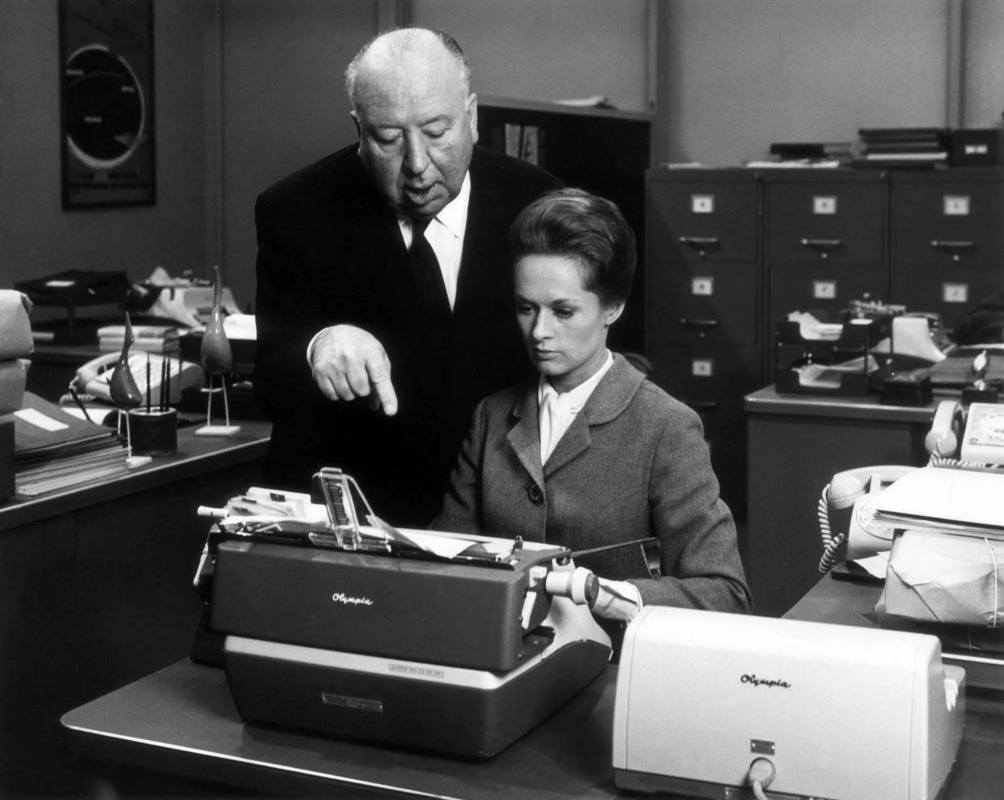
            So, maybe I should question why I’m including stuff my readers are just going to gloss over. Most semi-decent storytellers would.  Alfred Hitchcock once said that drama is life with all the dull bits cut outElmore Leonard said he leaves out all the parts people would skip anyway.
            Excessive description that serves no purpose… serves no purpose.  That’s all there is to it.  And, no, “art” isn’t a purpose.  If I’m going to spend seven pages describing Phoebe’s wardrobe through the first twenty-six years of her life, everything that happens in the rest of the book better hinge on those clothing choices.
            (Bonus tip–this kind of overwriting is deadly in scripts.  By its very nature, screenwriting is a very concise, minimal form of storytelling.  A sure way to get rejected from a contest is to put in piles of description that just shouldn’t be there.)
            Now, I’d like to mention another issue with massive over-description.  We all tend to form our own mental pictures of people and objects in stories.  My lovely lady and I were chatting once about Jack Reacher, the Lee Child character, and realized we both had very different ideas about what he looked like.  I get notes from people all the time about how this cover got Stealth wrong or Cerberus doesn’t look like that.
            That’s part of the joy of books.  We can all have our own image of characters like Stealth or James Stark or Kincaid Strange or Sinjir Rath Velus.  In that little movie theater inside our skulls, they have a certain look and sound that’s special just to us.  And nothing’s more distracting than to be constantly reminded of all the many details that don’t match up with that mental picture we’ve already formed.
            Okay, one last thing…
            There’s a flipside to description, and that’s when I never actually describe anything.  Sometimes this is an attempt to invoke mystery or suspense.  Other times it’s a way to evoke an emotional response with a clever metaphor or simile (when the knife sinks into your gut and it’s like every painful sensation in your life got balled up, hammered flat, and pushed up under your ribs). 
            And sometimes… well, sometimes it’s just a cheat.  I can try to avoid the monster for as long as possible, which helps build suspense and dread, but eventually I need to say what it is.  It’s not uncommon for a writer to try to find a way around an actual description at this point.  After all, I’ve been talking about how fantastic the Hypotheticoid is for three-quarters of the manuscript now, and my description of it may not live up to all that hype.
            But I still need to describe it.
            So, here’s an easy tip.  It’s so easy I bet half of you will shake your head and ignore it.  And some of you are probably already doing this without thinking about it.
            If I’m going to describe something… I need a reason to describe it.  That’s all. I need a reason for the level of detail I’m using.  The cashier at WalMart and a medical examiner can both see a bullet hole in a person’s head, but they’re both going to view it very differently.  And if it takes me three paragraphs to explain what the cashier sees, what am I going to need for the medical examiner?
            If I’m going to describe a character, I should have a reason for doing it.  I can’t describe the last police officer I dealt with, but I can give a lot of details about the last few people I went out to dinner with.  I’m betting nobody here can list everyone they crossed paths with the last time they were in a grocery store.  Oh, one or two might stand out, but let’s face it… there were probably dozens of people there.  
            And they just weren’t important in the long run.  
            Y’see, Timmy, if I waste my descriptions on the little things, they won’t have any weight when I get to the big things.  Because by then my readers will already be conditioned to skim my descriptions because they don’t matter.  And once readers are just skimming…
            Well, then I’ve got nothing.
            Now go write.
April 4, 2017 / 2 Comments

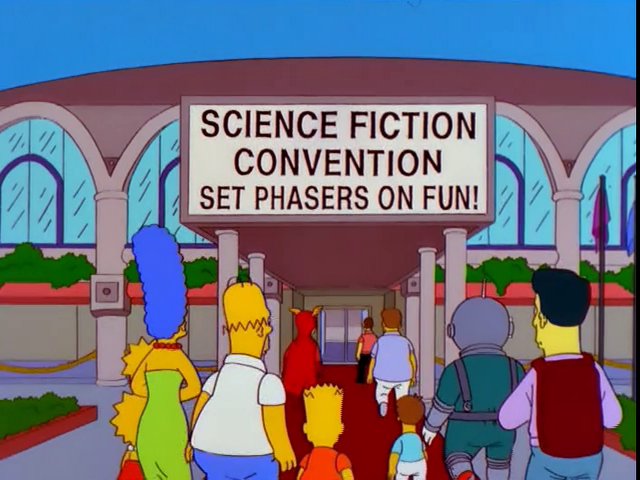
Con-etiquette , Part II

            Did anyone notice the clever title…?
            So, this time last week I talked about some of the ways I can be a better con-goer, based off my own meager experience.  This time I’d like to blather on  about a couple ways I can be a better vendor. Which, admittedly, is pretty much the hardest way to attend a convention (said as someone who’s stood on both sides of the folding table).
            Being a vendor—any kind of vendor—means I’m starting Hypotheticon already in the red.  Paying for a table, paying for whatever I’m selling (books, for most of us, yes?), sometimes paying for internet, electricity, travel, housing.  There’s only two or three cons I do as a vendor, but I can say off the top of my head I probably start opening day a grand in the hole.  Not a great place to be.
            Here’s a couple easy things I can do to get out of that hole…
1) Be happy to be there—I can’t tell you how many times I’ve seen vendors lurking behind their own tables.  I was at one con and the guy across the aisle from me actually just sat behind his table scowling. He barely talked to people–just sat there looking like he’d lost a bet and was stuck minding the store while his partner was off hooking up with the Australian women’s volleyball team.
            Not a lot of people stopped to talk with him, as memory serves.
            I try to make a point of always standing behind my table. At the very least, I kneel on a chair.  I try to smile and be upbeat.  If I look upset, why would anyone stop to talk with me?  If I don’t look at least mildly excited to be here at Hypotheticon, isn’t it natural to assume whatever I’m selling is boring?
            Think of any surly, grumpy cashier you’ve ever had to deal with.  Did you want to deal with them?  Did they make you want to spend more time in their store?
            Don’t be the grumpy person.
2) Be polite to the customers—This kinda feeds into the last point. First off, I need to respect the fact that people at the con just might not have money to spend. Or maybe they’re not ready to spend it now (I’ve only been here for an hour, I’m still looking around, STOP PRESSURING ME!).  Remember, nobody likes the hard sell, on the internet or in real life.
            Second, I need to respect the fact that some people just might not like what I’m selling.  Nothing wrong with that. My mom doesn’t like all the stuff I write. Neither of my grandmothers was too fond of my chosen genres, either. That’s just the way things work.
            Also, I shouldn’t shout at people. Sure, I can try to call them over, maybe even have a quick long-distance sales pitch.  I’ve been known to call out “excuse me, sir, are you a fan of hypotheticals by chance?” to people walking past my booth at Hypotheticon.  But I don’t want to be hollering at every passer-by like a carnival barker.  I think we’ve all been in a mall or store where someone randomly shouts “HI, TRY OUR CHICKEN FINGERS!” or maybe “WELCOME TO TOYS R US!”
            Seriously, how often do we cringe from that?  It pretty much guarantees that’s not the store we’ll be walking into next, right?
            Look at it this way—would you, personally, stand at a booth when the vendor kept shouting at other people? Are you more likely to walk over to a booth where there are other people already standing there?
            Okay, now think of how those two points work together…
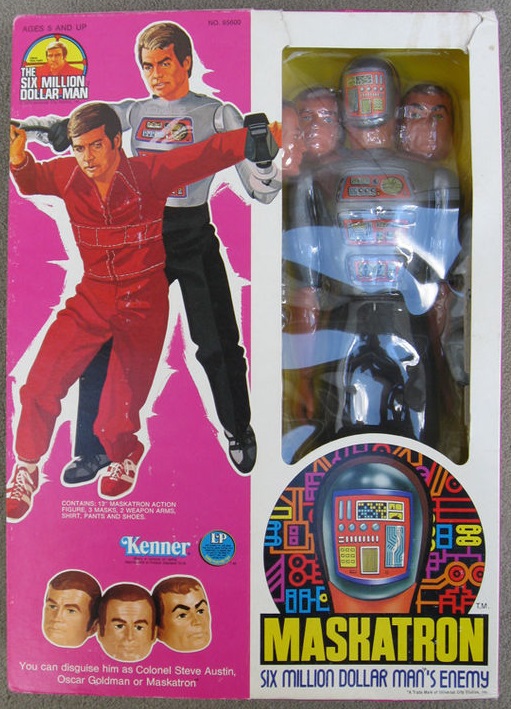
            Also, one last point that struck me at SDCC last year. Cons are getting tough for vendors because 95% of what vendors are offering is available online.  I remember being thrilled about ten years back when I found an old Maskatron (one of my very first sci-fi toys), something I hadn’t seen in years.  But I just now searched eBay and found dozens of Maskatrons available for sale, in and out of the box–one of them selling for less then I paid ten years ago.  There are countless online shops selling old toys, geeky t-shirts, art prints, rare comics, and more.  The “once-a-year-geek-yard-sale” aspect of cons is over.  So the big thing I’ve got going for me as a vendor is in-person interaction.
            Which leads nicely into…

3) Be honest—Okay, who’s encountered the vendor…  no, let’s put it this way.  Who’s encountered the random person on the con floor who says “Would you like a free stress test?” or maybe “Would you like a free portrait?”… only to find out that free leads to “please buy my art or books” or maybe even “for the love of–oh, please don’t walk away I need this sale”…?
            As I mentioned above, we all have our own gimmicks and tricks and methods for bringing people to our booth and pitching our stories.  But they need to be honest. I can’t tell someone I’ve got the cure for cancer and then say “it’s a book about alien zombies in space” once they’re standing in front of me.
            I can’t lie if I’m trying to sell my books. Not about awards or blurbs or genre or why I called you over or anything.  The minute we think someone’s being dishonest with us, we walk away. And someone fighting to keep us there just makes us want to run more.  Oddly enough, being pushy tends to push people away…
            So don’t lie, and don’t be pushy about it.
4) Be polite to other vendors
            So… let’s be honest. Cons are kind of scary because—to an extent—they can be seen as a zero sum game.  If you’re spending money at his booth, it’s money you don’t have to spend at my booth.  Her gain is my loss, and vice versa.
            Thing is, though… if I look at it this way, I’m just going to come across as a dick. 
            A friend of mine was at a con once where the guy in the next booth kept interrupting her while she was making her spiel, trying to lure the folks she was speaking with over to his booth.   I was at one con where a publisher was undercutting some of their authors who were also there.  At another con, some vendors were shooting random people with Nerf guns… including other vendors trying to talk to customers.
            Personally, I try to be nice to everyone at cons.  Other writers aren’t my competition.  Never forget that.  This isn’t a scheme or a marketing strategy—it’s just the truth. Plus, most of them are just fun, fantastic people, so the whole experience will be better if I’m working with them rather than against them.
            And you know what?  I’d guess at least a third of the people who stop by my table when I’m a vendor come by because anothervendor recommended me.  For a while, Craig diLouie and I would get paired up at cons by our publisher and we loved it. We could (and often did) pitch each other’s books to whoever stopped by our table.  I did the same thing with Peter Stinson at SDCC one year. And Katie Cord from Evil Girlfriend Media.  And Tim Long.  And Ellie Knapp.  And Jonathan Moon.  And Jessica Meigs. All of these folks are great writers, and I wasn’t going to twist someone’s arm to make them buy my books when it was clear one of these other authors was a better fit for their tastes.
            It will never, ever hurt me to help out another vendor.  Especially if they’re another author selling their own books. And the truth is, as I mentioned above, it’s tough to just break even at cons as a vendor.  Really tough. It’s better to just look at the whole thing as a publicity event rather than a sales event.
            Plus, it’s always great to have someone who’ll cover my booth if I have to run for the bathroom.  Or for food.  And nobody’s going to do that if I’m a jerk.
            And there you have it. Four really simple ways I can be a better vendor.  And probably make my way out of that hole I was talking about at the start of this.
            One week from now, how to be a better con guest.
            A few days from now… I can’t even describe what we’ll be talking about.
            Until then… go write.
April 2, 2017

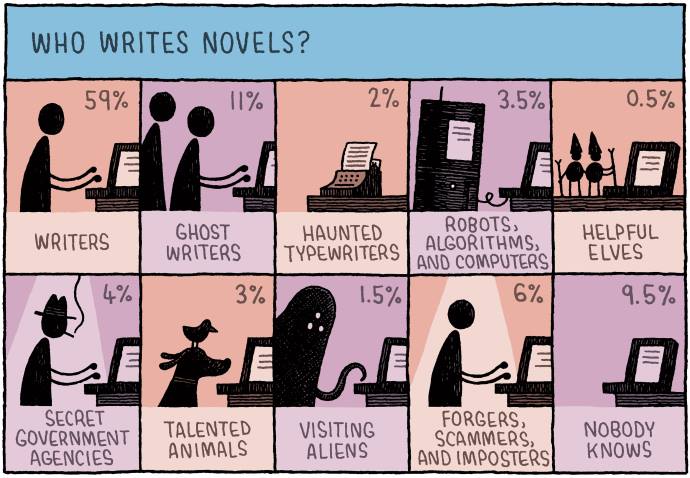
Tom Gauld

March 30, 2017 / 1 Comment

Can’t Find The Target

            By odd coincidence, this is post 404.
            There’s an old development saying you’ve probably heard—let’s throw it at the wall and see what sticks. The premise here is that if we use every single idea we have, surely the good ones will do something to get noticed.  They’ll stick to the wall or rise to the top or… something.
            The unwritten part of this premise is that you’ll also end up with a serious mess.  Yeah, my two or three good ideas stuck to the wall, but look at all the crap piled up on the floor under them. Hell, look at the wall itself.  It’s all stained and smeared and streaked.  This isn’t a clean-up situation, it’s a straight repaint.  I can say with confidence that we’re not getting our security deposit back.
            With all that in mind, I’d like to tell you the story of Phoebe McProtagonist…
            Phoebe struggled through life from an early age, born ten months premature on the same day her father died in the Middle East, one week before his two-year tour ended.  Overwhelmed with grief, her mother committed suicide during the birth.  Phoebe’s years as an orphan in child protective services left her hard and jaded, and she never had a single role model—growing up without parents, foster parents, inspiring teachers, sports heroes, pop icons, internet stars, or even a giving tree.
            In high school, Phoebe struggled with drug addiction, alcohol addiction, adrenaline addiction, video game addiction, sex addiction, a hoarding problem, OCD, Tourette’s syndrome, and extreme boredom because she wasn’t being challenged (no inspiring teachers, remember). She got pregnant three times on prom night, couldn’t get any abortions because she lived in a red state, then suffered four miscarriages from drinking lead-tainted Jaegerbombs after graduation.
            (alcohol addiction, remember?)  
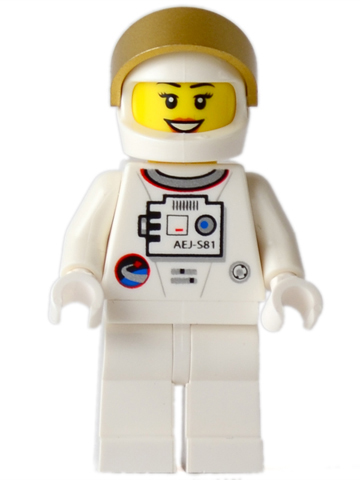
            Determined to honor the memory of her unborn children, Phoebe withdrew from society and home-grad-schooled herself, eventually receiving magna cum laude, perfect attendance, and a triple doctorate in music theory, film criticism, and genetic engineering.  Thus armed, she applied to be an astronaut and, after months of rigorous testing, was finally accepted into the astronaut training program by those goddamned f@¢%!#g bastards at NASA.
            (Tourette’s, remember?)
            But when the rest of her team was killed in a launchpad fire that also burned down her house,  Phoebe took time off to sort out her life.  She sorted it out, got her groove back, got her ducks in a row, realized what’s important, and was struck by lightning walking along the beach.  As she sprawled on the shore, feeling a moment of divine bliss and agony as all the hair on her body burned away, giant mutant fiddler crabs came out of the ocean, the product of unregulated industrial waste dumping—
            (red state, remember? See how it all ties together? That’s what good literature does!)
            —and dragged her away into the water. In her final moments, the race between drowning and being eaten alive by the mutant crabs, she realized the single secret to clean energy, FTL travel, and how to make the perfect 7&7.  But there was no one to tell before she died, because she walked the beach alone.
~The End~
            Okay, that was maybe a little bit over the top, but you might be surprised how common this kind of storytelling is.  I saw it in writers’ groups in college (part of the reason I don’t belong to such groups anymore) and countless times when I used to read for screenplay contests.  You wouldn’t believe the number of dramatic stories that are just brimming with excess plot devices and story threads. Hell, I freely admit some of the early drafts of The Suffering Map were the same way.
            This springs from a common misconception–that writing a bunch of plot points and character elements is the same thing as writing a story.  The logic is that if I load up my story with every possible dramatic idea for every single character, one of them’s bound to hit the target, right?  And then, eventually, the story will be dramatic.  Plus, adversity builds character, therefore it stands to reason all this extra  adversity in my story will make for fantastic characters.
            I mean, Phoebe comes across a great character, right…?
            Simple truth is, this is all just excessive. If I’m doing this, I’m wasting ideas and wasting words, using thirty or forty examples instead of just three good ones.  It’s the kind of thing that tells a reader I was more interested in creating art than I was in telling any kind of decent story.
            Of course, in all fairness, it’s not just the artsy literature types who do this, although I must admit, they seem to be the most common offenders.  We’ve all read (or seen) the action storywhere every punch draws blood, every car chase ends with an explosion, and every leap rattles bones.  Plus every character had a snappy one-liner to toss out (or at least think about) before, during, and after offing one of the villains. And there were lots and lots of villains…
            Then there’s the sci-fi stories that have vast interstellar conflicts and near-magical technology and unstoppable cyborg monsters and omnipotent, cosmic beingsand sacred orbs   Seriously, reading contest scripts I was so sick of orbs.  I came to loathe the word.  Know what else?  Nobody in bad fantasy ever has eyes, they all have orbs.
            Friggin’ orbs.
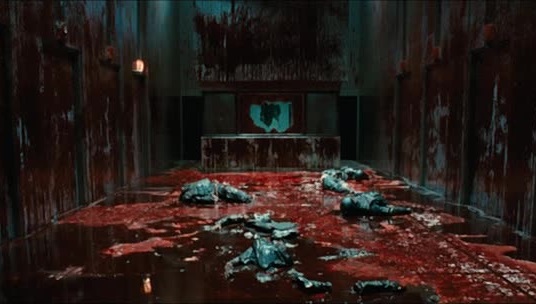
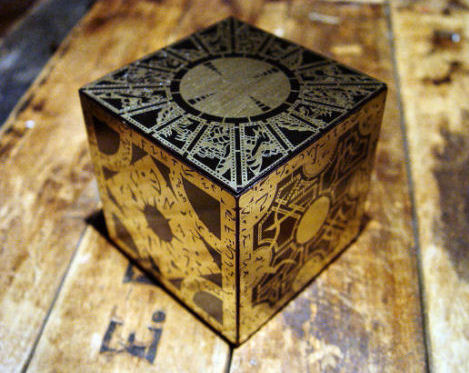
            And sooooo many horror story that have cubic yards of blood and gore everywhere.  Plus there’s a little chalk-skinned child who moves in high-speed “shaky vision.”  And a secret psychopath.  And one person who snaps and gets dozens of people killed because they opened a door or invited something in or played with the puzzle box. 
            It’s been almost thirty years, people. Thirty. Years.  Haven’t you figured this out yet?  Nothing good comes from opening the damned puzzle box!  Even my mom knows this!
            Y’see, Timmy, whatever my chosen genre is, just loading a bucket up with plot elements and flinging them at the wall does not create a story.  It’s the opposite of writing in just about every way possible.  No, not even if I only consider the leftover stuff. As I mentioned above, all those other ideas are still going to leave stains and streaks, no matter how solid the good stuff is.
            Take that as you will.
            Next week I’ll talk a bit more about cons, and I might talk about excessive stuff a little more, too.
            Until then, go write.

Categories