
July 6, 2017 / 2 Comments

#NotAllWritingAdvice

            I’m relatively new to Twitter.  I mean, I’ve been there a couple years now, but there are some early-adopters who’ve been there for ten years or more.  I remember a while back when Ernie Cline finally got verified, and he noted that he’d been on Twitter longer than the Twitter verified account…
            Anyway, I follow a lot of writers, and most of them (and me, too) tend to toss out storytelling advice of one kind or another.  As best you can in 140 characters, anyway.  Sometimes it’s threads, random encouragements, simple reminders—there’s all sorts of stuff.
            Of course, like any statement made on Twitter, this advice is often followed by a response like “Well, actually…”  You’ve probably seen it applied to a lot of things beyond just writing advice
            In simple terms, this kind of response is people pointing to an exception to the rule in an attempt to disprove the rule.  And a lot of the time, they’re doing this to justify their own opinions and behaviors.  I don’t like statement X, or what it implies, so I’ll find one or two examples where X isn’t true and use it as proof that X is never true.
            Here’s the thing about approaching writing—or anything in life—with that kind of mindset.
            Vesna Vulovic.
            For those of you who came in late, Vesna was a flight attendant back in the early ‘70s.  I’ve mentioned her here once or thrice before, and a few times at the Coffeehouse.  Y’see, her DC-9 was bombed in mid-air back in 1972.  She was trapped inside the plane’s hull as it plunged six miles to the ground. 
            However…
            Somehow, through a near miraculous series of events and conditions, Vesna survived.  She fell 33,000 feet, was in the hospital for a couple of months afterwards, and left under her own power.  No wheelchairs.  No artificial limbs. No iron plates in the skull.  She was fine.  They did a whole Mythbusters episode about her fall.
            Vesna lived a very full, rich life for another forty-four years, just passing on back in December.  She ended up working as a political activist for most of her life. And she still holds the Guinness Record for an uncontrolled fall.
            So… this means one of my characters can fall six miles and live, right?  It really happened, so it must be believable.  Heck, I could probably say they fell a mile without even needing hospital time.
            Let’s be clear on one thing—there are always exceptions to the rule.  Always.  Anyone who tells you that something is 100%, never-question-it always wrong–especially in art–can be ignored.  Especially if they shriek “no exceptions!!”
            Here’s the catch. Exceptions to the rule are very rare.  Exceptionally rare, you could say.  That’s why they’re the exception to the rule and not the rule. 
            For example, maybe I can point to a dozen people who sold the first draft of the first novel they wrote.  But I can also point to the tens of millions of people—actual, literal millions—whose first draft submissions were rejected. 
            Yeah, there’s a double handful of authors who sold manuscript full-to-the-brim with horrible spelling and bad grammar and not the slightest clue about formatting.  There are hundreds of phone books full of people, though, whose manuscripts were tossed out almost immediately because of these same issues.
            And sure, we can point at a dozen or so people who got their first book sold because they knew the right people or were related to the right people or were sleeping with the right people. But there are also the hundreds of thousands, probably (again) millions of writers who broke in by taking their time and writing really good books.
            The downside of this is… well, none of us want to be in the majority, right? Nobody likes the thought of eventually breaking in, we want all the success and recognition now!  We want to be the exception!
            And, yeah, some folks have gambled everything on being the exception. That’s their entire business plan. I don’t want to take the time or do the work or try improving myself and my skills.  So I’ll latch onto anything that says I don’t have to, anything that proves the advice from that experienced pro is wrong.
            Okay. Fine. Just ask yourself one question…
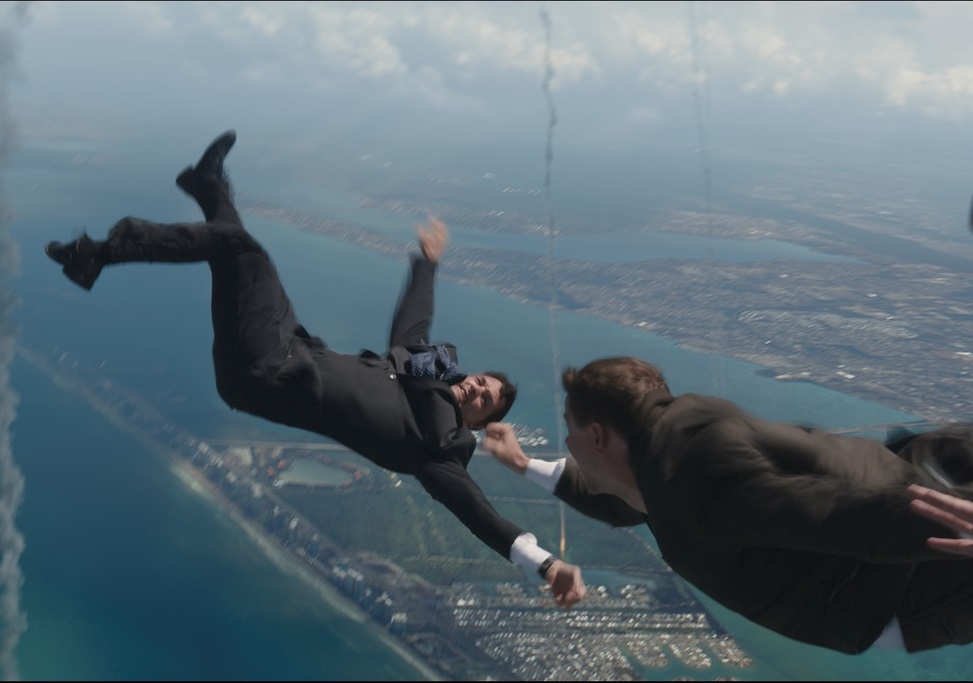
            D’you want to go skydiving without a parachute?
            I’m willing to bet a fairly large-denomination bill that right now someone is itching to write a “well, actually…” down below that will explain how this isn’t the same thing.  Or that you can go skydiving without a chute. Or that there are two or three schools of thought that Ms. Vulovic maybe didn’t fall quite as far as all the reports said.  It’s just human nature. Some people need to argue the way you and I need to breathe.
            Even if it amounts to arguing against parachutes when you go skydiving.
            When professional writers offer advice, they’re handing out parachutes.
            So, here’s my bit of advice for you, and it’s one I hope you’ve seen underlying most of the stuff I’ve said here since the first post you may have read.
            Y’see, Timmy, the best thing I can do is assume I’m not the exception to the rule.  No matter how clever, how witty, how perfect my writing is, I should not consider myself to be the one person who gets to ignore all the established standards.  The absolute worst thing I can do is scoff at the rules and think they don’t apply to me.  No matter how vastly superior my work is, I should always assume I’m working under the same conditions as everyone else.
            The reason I should assume this is because the person readingmy work is going to assume it.  That’s what I’m fighting against when I plan on being the exception to the rule.  My audience—whether it’s an editor, and agent, or just someone reading my story for free on their Kindle or on Wattpad.  All these folks have seen attempts to break the rules again and again and again, and the overwhelming majority of these attempts have been simply awful. 
            Remember—exceptions are rare.  Very rare.  The vast majority of would-be writers who break the rules do it for the wrong reasons and in the wrong ways.  So when I veer away from the rules, most everyone is just going to go with the numbers and assume my work is simply awful, too.
            Does that mean all these things won’t happen or can’t be done?  Not at all.  My writing may be so utterly, mind-bogglingly spectacular the reader will forgive and forget those atrociously dull opening pages.  The structure could be so rock-hard that no one notices the abundant typos.  It’s even possible my idea is so fiendishly, unbelievably clever that nobody will pick up on the fact that every single character is carbon-copied from Game of Thrones   Yeah, even my dwarf, my teenage assassin, and my Princess of Wyverns.
            A nice, simple rule of thumb.  If at any single point I find myself questioning if something matters—I should assume it does.  Does my main character need to be developed more than this paragraph?  Will a reader care that I misspelled forty or fifty words?  Do I need to make that part of the story clearer?  Should I bother to look up the exact format rules for this?
            My default answer for all of these questions needs to be yes.
            Again, I shouldn’t be scared to do something new, because if I break the rules—break them well, mind you—I’ll get noticed and rewarded for it. 
            Just remember a lot of people break the rules because they don’t know what they’re doing… and I don’t want to get lumped in with them.
            Next week—okay, I have to be honest.  The next few weeks are going to be rough for me, from a blogging point of view.  One week from tonight I’m going to be down in San Diego at Mysterious Galaxy, talking with Daniel Price about his new book The Song of the Orphans. If you’re in the area, stop by and hang out with us.
            And then the week after that I’ll be back in San Diego for SDCC. I’m doing at least one panel, possibly two (but I haven’t heard back on that one, soooooo…), and I think there may be a signing or two and some cool Paradox Bound swag we’re giving away…
            So we’ll see what happens next week.  As always, please feel free to make requests below.
            Until then, go write.
June 30, 2017

Puppy Monkey Baby

            Pushing this one up to the wire, but it’s technically still Thursday.
            Somewhere…
            So, there’s an author I follow on Twitter (she wrote one of my favorite books I read last year), and she was recently grumbling about something she’d run across.  “I’m tired of the ‘everything sucks’ genre of fiction. We’re all corporate drones and suckers for advertisements – I get it.”
            I remember sighing, because I knew just what she was talking about. I think we’ve all run into this sort of writing.  The big-idea, big-character moment stories.  Often—not always, but often—they’re stories that are so beautifully “real.”
            A standard element in this type of writing is when a character has an epiphany—either on their own or pushed on them.  A supposedly world-altering revelation about their life.  About life in general—everyone’s life.
            I say “supposedly” because most of them are the sort of simple life lessons most people have figured out by… I don’t know, the time we turn twenty?  Somewhere around there?  That it’s better to be healthy and loved than to be cool or rich.  That sometimes we have to compromise our beliefs to achieve certain goals.  That big multinational corporations may have an agenda that doesn’t involve my personal health or financial prosperity.  That advertising is trying to get us to buy stuff.  Y’know, those sort of things.
            Minor aside.  Can you imagine if I was bragging to someone about having cereal for breakfast?  And—not to overlook this point—I prepared it!  With no help from anyone.  I didn’t even watch any YouTube instructional videos. I just grabbed that box, shook some Captain Crunch into the bowl, and poured on the milk.
            I even fed myself. With a spoon and everything.  I’m just that good.
            Let’s stop and consider for a moment.  Is this really an accomplishment I should be boasting about?  That I should be particularly proud of?  It’s like congratulating someone for having a stripper at their Las Vegas bachelor/ette party–so many people do it, it’s almost taken as a given.
            And if this was the “big thing” you’d been going through two hundred pages to find out…?
            I can’t help but think a lot of these moments get put in for one of two reasons.  Well, really the same reason, just approached from two different points of view.
            One is the kind of innocent one,  The writer’s including this amazing revelation because they don’t grasp that everybody has these moments.  The vast majority of people assume they’re “normal.”  That everyone thinks the same way I do and knows the same stuff I know.  So if I make a sudden discovery about the world, it kinda stands to reason that nobody else knew about this.  Even if it’s something like “Whoa—did you know Stan Lee is in every one of the Marvel movies?”
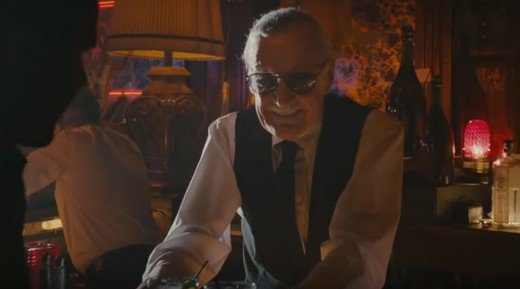
            The other one is… okay, it’s the same one, but with a lot more attitude.  Now the writer assumes that nobody has everknown this.  They—and they alone—had the brilliance to spot this, and they’ve graciously decided to share their brilliant insight into the world with all those folks of lesser intelligence.  This is when it’s suddenly “Most people don’t catch it, but Stan Lee is the bartender in Ant Man and  also the delivery man in Civil War.”
            Of course, as I said before, normally they’re not talking about Stan Lee cameos.  We’re talking about priorities.  We’re talking about the industrial complex.  We’re talking about multimedia, like advertising and Twitter and random blog posts!
            *ahem*
            In a way, this is the flipside of an empathy issue I’ve mentioned here a few times.  I even mentioned it up above.  Sometimes, as a writer, I make the mistake of assuming that everyone knows all the same things I do—that they’ll get all my jokes and references. In this case, I’m assuming I found something all-new that nobody’s ever seen before.
            My lovely lady friend came up with a term for this a while back, developed after many years of reading for screenplay contests.  Simply put– it’s the moment when a baby discovers their own feet.  It may be the coolest thing that’s ever happened in the life of the baby, but for the rest of us… well, it’s not quite as exciting.
            Yeah, sure it is for the parents.  But for everyone else?  Can you imagine having your friends call you over to sit and watch their baby giggle at his or her toes for two hours?
            When a character figures out it’s more important to spend time with their loved ones than at work, they’re discovering their own feet.  If someone comes to the jaw-dropping conclusion that they’ve messed up a life that was clearly messed up on page one, it’s their own toes they’re staring at.  When someone realizes that bad things happen to good people and most other people don’t even care–OH MY GOD!  The toes wiggle when I think about wiggling them!!!!
            This is one of the reasons I’m always encouraging people to read. I need to read in my genre, yeah, but outside it, too.  All those best sellers and the bad stuff.  I need to know what stories have been told, how they were told, and I need to have a good grasp of how well they’re know.  This isn’t the 1820s anymore—it’s tough to be a writer and be disconnected from the world.
            Because I really don’t want my big reveal to be that Ford’s top priority is selling trucks…
            Next week, I’d like to give a belated sendoff to my favorite stewardess.
            No, not a flight attendant.  Back then, alas, she was considered a stewardess.
            Until then… go write.
            I wanted to talk about writing advice a bit.  The good stuff and the bad stuff.  I just did a few months ago, yeah, but this is a little different. 
            This time, I want to talk with you about taking those words to heart… or not.
            Here’s an ugly truth about writing advice. 
            I’d guess a good 40% of it is just people telling you what worked for them.  Here’s how I do characters, here’s how I do dialogue, here’s how I plot, here’s how I write fifty pages a week.  There’s nothing inherently wrong with this advice—it clearly worked for that particular professional.  It’s just a presentation problem.  It assumes every writer and project is like every other writer and project.
            Still, that’s better than the 50% of people who are bellowing advice that hasn’tworked for them.  The only thing sketchier than someone  with a lot of credits insisting “this is how it’s done” is somebody with no credits insisting “this is how it’s done.”  Or somebody who had a credit twenty-five years ago.
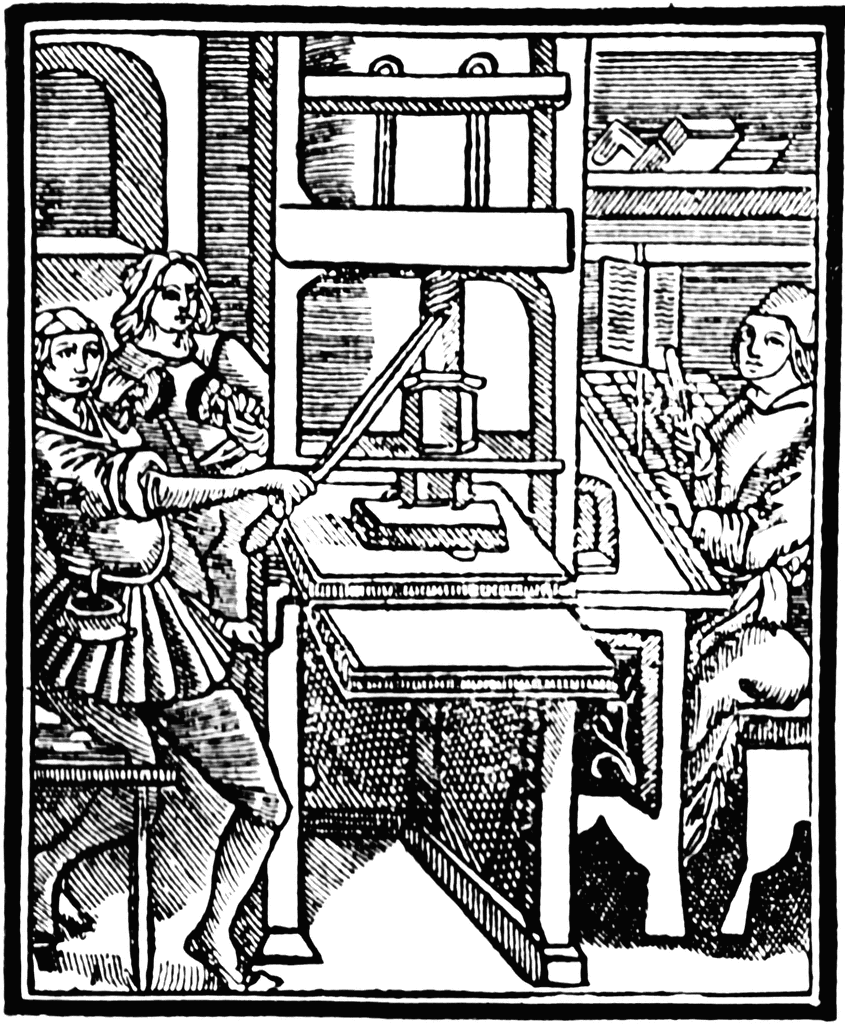
            What? A twenty-five year old credit should still count?  I mean, on one level I agree with you—it’s a credit.  But it’s a credit from another era.  Seriously.  Johannes Guttenberg may be the father of printing, but he’s not going to be much help if my Brother 5-in-1 gets a paper jam.
            Let me put it in these terms.  Let’s say we were talking about computers. Let’s say I knew someone who’d been a kinda-known name in computers twenty-five years ago. And hadn’t really done anything since.  How seriously would you take their advice about computer engineering?  Or programming?  Or breaking into the industry?
            Actually, I take it back. There’s one thing worse than somebody with no credits insisting “this is how it’s done.”   It’s when somebody with no credits wants money to tell you “this is how it’s done.”
            Anyway, that leaves us with, what… 10%, roughly?  Math isn’t my thing.  What’s that last ten percent of advice?
            You’ve probably seen it. It’s the folks saying “try this.”  Or maybe they’re a couple of provisos before or after their statements.  I’ve mentioned the idea of this here a few times.  It’s called the Golden Rule.
            No, not that Golden Rule. I made this one up.  The Golden Rule is one of the core things I try to put out with all the writing advice I offer here.  It goes something like this.
What works for me probably won’t work for you.
And it definitely won’t work for that guy.
            You see, writing is a very personal thing.  In the same way I can’t say “urban fantasy is the best genre,” I also can’t say “writing 500 words before lunch every day and another 500 words after is the key to success.”  Because it’s not. 
            Oh, it might be for some people, sure, but it isn’t for everybody.  There are people who write in the afternoon.  There are people who only write in the morning.  Some like massive outlines, some like very minimal ones.  If you ask a dozen different writers how to do something—anything—you’re going to get a dozen different answers.  Because we’ve all found what works for us.  That’s the golden rule.
            There’s a joke I’ve used  a couple times to explain this.  If the only time you can write is Sunday afternoons, and the only way you can write is standing on your head, wearing that “enhancing” corset you bought at the Ren Faire last summer, using voice-recognition software, but doing this lets you write 15,000 words…
            Well, that’s fantastic.  Seriously.  I know professional, full-time writers who don’t always get 15,000 words down a week.  I can maybe hit those numbers once a month.  If that’s what it takes for you to do it, and you can do it consistently—power to you!
            See, at the end of the day, how I write my book doesn’t matter.  Perhaps I write first thing in the morning or maybe late into the night.  I could work exclusively on a laptop, on my phone, on a typewriter, or on yellow legal pads with a #2 pencil.  Maybe I reward myself after every thousand words with half an hour of reading, a video game, twenty minutes of exercise, booze, sex, whatever.  Do I do one long, constantly reworked draft or two dozen drafts each with a few minute, specific changes?
            However I do it, that part of writing doesn’t matter.  As long as I’m working, I’m doing fine.  People can insist whatever they want, but at the end of the day it always comes down to the golden rule.

What works for me probably won’t work for you.
And it definitely won’t work for that guy.

             I don’t write books the way Victoria Schwab does.  She doesn’t write books the way Andy Weir does.  Andy doesn’t write like Sarah Kuhn.  Sarah doesn’t write like Chuck Wendig.  He doesn’t write the same way as Kristi Charish.  And she doesn’t write like me.

            And none of us write like you. We don’t have your habits, your preferences, your thoughts, your goals.  We’re not telling your story your way.
            Which is why you shouldn’t worry about writing like us. Sift through all the hints and tips.   Learn which ones do and don’t work for you.  Don’t worry if four of the six people above do X, find out if X works for you.  Find your way to write.
            And if your way happens to involve a corset… hey, who am I to judge?
            Next time… I want to talk about babies.  I hate those guys.
            Until then… go write.

Categories