
June 15, 2017

Basic Geometry

            I wanted to blather on about challenges  today. Simple, basic challenges.  Well, a type that should be simple, but still gets messed up sometimes.             
            That challenge is called choice.
            We’ve all used or come across choice.  As I said, it’s probably one of the easiest challenges a writer can create.  Character A has to decide between two options (B and C).  It’s s triangle.
            Sometimes these choices are tough. Sometimes they’re not. Sometimes A is pursuing B, but it’s clear C should be the priority.  Making the decision between B and C provides the conflict, the drama, and maybe even some comedy depending on how it’s done.  There can also be an opportunity for some character growth in there.
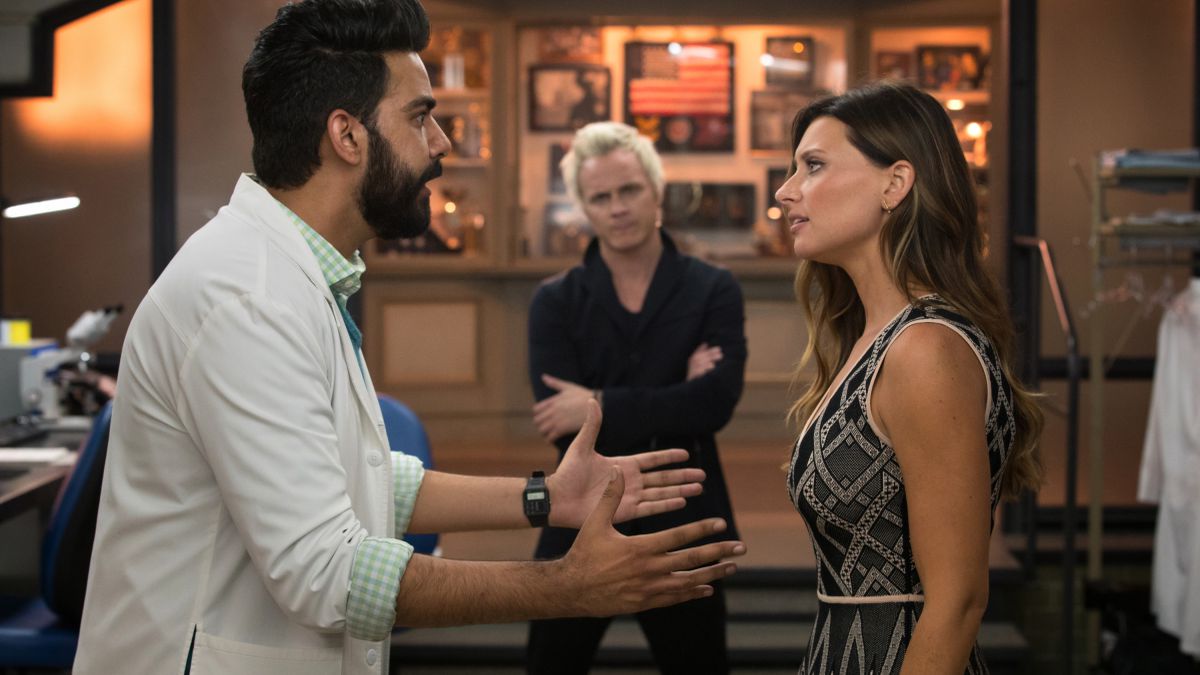
            You’ve probably heard of romantic triangles.  It’s one of the most common ones out there.  A is dating B, but then comes to realize C is their real soul mate.  Maybe Dot is engaged to an antagonistic jock, but can’t help falling for the free-spirited caterer.  The standard in most romantic triangles is that B is very clearly not the right person for A, while C is so blatantly right it’s almost frustrating.
            Another common one is “work vs. family.”  Will Wakko choose to spend the weekend with his family or working on the MacGuffin account?  There are a few versions of this.  Sometimes it’s family instead of friends.  It’s usually work on the other leg, but it could be any sort of mild obsession or compulsion.  Am I choosing my best friend or this treasure map?  My pets or my new apartment?
             Triangles are fantastic because they’re a very simple plot and framework that we can all immediately relate to and understand.  They make for easy subplots in novels, and in short stories or screenplays they can almost be the entire story.  This is one of the reasons we keep seeing them again and again and again.
            However…
            Simple as they are, there are still a few basic rules to a triangle.
            Actually, that’s a lie. There’s only one rule.  Triangles are so simple there’s just one rule to making them work.
            We have a triangle because there’s A, B, and C.  Three points.  If I toss out one of these—let’s say B—then I’ve only got two points. That’s a line.  Our structure is just A to C now.   
            Let me expand on the examples above…
            Wakko is so obsessed with landing the MacGuffin account that he misses his daughter’s karate tournament, his son’s piano recital, and the anniversary party his husband arranged for their best friends.  But Wakko keeps at it because this promotion will put him in a key position for the next account, and that’s the big one that’s going to put him in the corner office and change their lives. 

            The stress of all this is too much, though, and Wakko snaps.  He screams at a client.  When he’s called on it, he even yells at his boss and gets fired.  But after a week at home with his kids and husband, he realizes this is where he was supposed to be all along, with his family.  They may not be filthy rich, but the film ends with all of them happy together.
            Or what about this one.  Dot’s a painter-turned-graphic designer engaged to a square-jawed former quarterback turned TV producer. He’s crass, he’s mean to every waiter, and he undresses every woman he meets with his eyes—even when Dot’s right there with him.
            Then she meets their potential caterer, a free spirit who does watercolors and incorporates his talents into his food.  They talk art.  They talk careers.  They have a casual lunch and talk more art.  When Dot comes home early one night and catches her fiancé with his secretary (who he’s decided to marry instead for… reasons), she finds herself calling the caterer.  And suddenly, Dot’s heart is fluttering like it hasn’t in years as she realizes this is the person she’s supposed to be with.
            Do both of those examples feel a little… lacking?
            Y’see, Timmy, what happened in both of them was that character A never really did anything.  Once B was eliminated, there wasn’t anywhere to go, story-wise, except with C.   Character A didn’t make a choice, they just went with what was left. 
            Make sense?
             B and C both have to remain valid choices.  My story has to maintain that triangle up until the moment of choice.  B can still be a bad choice, but A has to actively realize that and then decide to go with C instead.  Once that’s happened, I can get B out of the picture, but not until then.
            If not, ending up with C isn’t a triumph.  It’s a consolation prize.  Which I’d guess isn’t terribly satisfying for C.
            Or for the readers.
            Next time….  Next time’s going to be golden, that I can promise you.
            Until then, go write.
June 8, 2017 / 2 Comments

If You Can’t Say Something Nice…

            I wanted to prattle on for a minute about a part of dialogue we ignore a lot. The unspoken part, so to speak.  Well, not so to speak.  Literally, the unspoken part.
            Wait… can something be literally unspoken in prose?
            Anyway, as I so often do… I’d like to tell you a little story.
            I was working on a movie once which had a pretty standard romantic subplot. Estranged husband and wife, pushed apart by work (he wants to stay small town, she wants to go national), and now brought back together again during a crisis.  Like so many of the lower-budget things I tended to be on, we ended up running short on time. The place they decided to tighten things up was in the reconciliation/we-still-love-each-other scene.  You know that scene, right? It’s in a bunch of stories and a lot of movies.
            The director and the two actors huddled together and started talking about how they could trim the page and a half scene without, y’know, ruining it. Were there phrases that could be combined? Maybe words that could be swapped out for… shorter words?
            At which point the lead actor suggested… “What if we didn’t say anything?”
            Which is what’s in the final movie.  You can watch it and see the one minute, one-shot scene. The two of the working together in the lab, falling right back into old habits, giving each other little appreciative glances…
            And never saying a word.
            Some folks are intent on picking “better” words and elaborate. meticulous phrasing. That gets spread as kind of a gospel.  We’ve all seen it—the people who’ll never use five words if it can be said in ten.  If there’s a longer, more roundabout way to talk about something, they’ll find it.
            But I don’t need to do this.  I’ve talked about the “less is more” idea a few times here.  A fair amount of the time I can do just as much (or more) with just a few words.  Subtext can get a point across so much stronger than the spoken (or shouted) word, and sometimes that subtext doesn’t even need dialogue.
            I know this sounds kinda weird and contradictory. I think I’ve said here two or three or forty-four times that dialogue is one of the key ways we show character, so it just feels unnatural to have characters not say anything.  Especially when there are so many cool lines and comebacks tingling on our fingertips.
            Let’s consider it, though.  How often can a grim silence have so much more impact than the longest, most detailed monologue?  Think about how flirty someone can be with just the right gesture or look.  There’s whole schools of comedy based around the idea of an awkward silence.
            And this is going to be harder to write.  I won’t lie to you.. Depending on unspoken subtext means I need to have my descriptions perfect—not one extra adverb or adjective cluttering them up and slowing them down.  It means I need to have a great sense of empathy—that I know exactly how this moment will be interpreted by everyone who reads it, and not just by a few of my friends.
            Y’see, Timmy, this kind of subtlety is what makes my writing soar.  It’s how I bring my story to life and raise it up to the next level.  I want to recognize the chance to say nothing–to use that delicate balance of silence and description and subtext–and take advantage of it.
            Or, as K.M.Weiland once put it—“Never miss a good opportunity to shut up.”
            Next time, I wanted to discuss some basic geometry.  We haven’t done that in a while.
            Until then… go write.
May 27, 2017 / 1 Comment

Feet of Clay

            Sorry I’m running late again. I seem to do that a lot, don’t I…?
            I was going to do a whole piece on character building this week (since nobody suggested anything else). But it kind of felt wrong.  We talked about characters at the Writers Coffeehouse this month, and we’re going to talk more next month, and I always feel a little odd addressing Coffeehouse topics here on the blog. Especially close to the same time.
            Yeah, not everyone here goes to the Coffeehouse, but still…  One way or another, it feels kinda cheap.  To me, anyway. It’s just how I’m wired. Like I’m re-using material here or there, giving one group minimal effort.
            But while I was writing out the character piece, I thought of a new angle I wanted to explore.  The more I thought about it, the more I was sure it could be a post all on its own.  A new take on character development.
            So, here’s an easy question I should be able to answer about any of my characters.
            What are they not good at?
            Seriously.  This shouldn’t be hard. Can I name five or six things my character isn’t good at?  No, not ridiculous things like “gene splicing” or “space shuttle repair” or “aboriginal dialects.”  Just name a couple basic things your character isn’t good at.
            Let me make it personal. 
            I’m terrible when it comes to pretty much any kind of sports.  I don’t know players, teams, leagues, anything.  I can name a few New England teams, just because I grew up there, but even then I’d be pretty pathetic.
            I wish I was more musical.  I love music, but have never been good at music, if that makes sense.  Horrible at telling music genres/styles apart, can’t play anything more complicated than a triangle.  Hell, in high school I played bass drum in the marching band, and a couple people can vouch for the fact that I screwed thatup sometimes.
            I’m really bad at taking compliments, on any level.  People telling me I have nothing to worry about is pretty much guaranteed to freak me out.  I’ve been a full time writer for ten years, my ninth novel is coming out this year (plus the new collection this week) and I still have a ton of career anxiety.
            Anyway, I could go on and on, but you get the idea, right?  I’m not a perfect person (not by a long shot).  Most people aren’t.
            And, if I’m doing it right, my characters are people too. So there should be things they’re not good at.  They should have bad habits that cause problems.  There should be fields of interest they know nothing about.  Blind spots to political/cultural ideas.  Phobias that mess them up.  You’ve probably heard of these referred to as character flaws.  It doesn’t mean there’s anything blatantly wrong with the character.  It just means they’re… well, human.
            If I’m doing this writing thing really well, these areas where my characters have problems are going to cause specific issues in this story.  Maybe even a few plot points will hinge on them. And my characters are going to have to learn and grow and change to get past these problems.  They’ll have to make an effort to overcome fears, work past prejudices, and maybe figure out new ways of doing things.
            That’s a good thing.  It’s called a character arc.  You’ve probably heard of those, too.
            Now, let me address a couple of quick points, if I may…
            There are those folks who believe, well, more is better.  Their characters don’t have a flaw, they have flaws. And they don’t really have flaws, they have faults.  And I use “faults” in the geologic, California-drops-into-the-Pacific sense.  Yawning, bottomless chasms.  Each character generally has six or seven of these.  Maybe a baker’s dozen.  These people don’t just have feet of clay. They have feet, ankles, calves, knees, thighs. hips, groins, and lower abs all made of wet, soft clay. 
            Yes, groins.  There’s no way someone this screwed up doesn’t have a ton of sexual issues.  That’ll come up, too.  Or… maybe it won’t. One out of five…
           Again, this isn’t unrealistic.  I’m willing to bet most of us have known one or two really messed up, annoying people in our lives.  I’ve known a couple.
            As I’ve often said, though—reality isn’t our goal as fiction writers. Think of that messed up person from your own life. How much time did you really want to spend with them? Would you want to read a short story about them? A whole novel? Sit through a two hour movie?
            Y’see, Timmy, there’s nothing wrong with an overly-flawed character, but I need to balance that with the realization that my readers need a reason to like this person. A reason to keep reading.  It doesn’t matter how beautiful or artistic my prose is, the majority of people aren’t going to want to read about an awful character who’s a failure on every possible level.  
            If someone’s going to have serious flaws, they need some serious strengths, too, to counterbalance them.  A grocery clerk who gets blackout drunk every weekend to forget her past isn’t that interesting, but a popular billionaire philanthropist who gets blackout drunk every weekend to forget her past… well, that probably got you thinking of story ideas right there, didn’t it?
            Also, to got to the other extreme, nobody likes the flawless character. Seriously.  I’ve talked before about some of the problems with characters who are never caught off guard or never get scared.  What’s the challenge going to be for someone like that?  If Dot is always ready, always prepared, always calm, and always wins (of course she always wins—how could she lose?)… well, that’s going to get boring really quick.  And unbelievable.  When somebody’s ready for absolutely every contingency—especially when there’s no real reason for them to be—it just gets ridiculous.  Plus, there’s no space for character growth. If I’m already at ten in all categories… what kind of arc can I have?  Where can I go?
            There’s a wonderful line in the first Hellboy movie—“We like people for their qualities, but we love them for their defects.” I think that’s extremely true of fictional characters.  The more well-rounded they are—with strengths and weaknesses—the more we’ll be able to identify with them. And care about them.  And want to read the next book about them.
            Which is what we all really want to happen.
            Next time…
            Okay, look, I’ll be honest.  Next week’s my birthday.  There’s a good chance I’ll be drunk the entire day.  Possibly the night before, too.
            But… if I manage to be sober somewhere in there, maybe I’ll talk a bit about shutting up.
            Until then… go write.

Categories