August 24, 2017 / 4 Comments

The Genre-Device Mnemonic Caper

Middleman reference.

Very sorry I missed the last two weeks. Lots going on, which I’ll get to in a minute

I wanted to toss out a couple of quick, easy genre/device mnemonics for you.  These are a couple of things I’ve heard over the years.  Sometimes—when I’m struggling with something in a story—I’ve found them helpful for getting my head wrapped around things.

So, what is it you’re working on right now. Maybe keep in mind…

Suspense is about what’s going to happen

A thriller’s about what is happening

A mystery is about something that already happened

Granted, these are kind of broad definitions, and there’s always going to be an exception or two. But I’ve mentioned once or thrice before the problems that can crop up when I try to push this kind of story into thatframework.  And if I’m trying to write a thriller that’s about events that already happened… well, there’s probably a reason I’m having problems with it.  Or maybe my readers are having problems with it.

It’s not a bad thing to double check what I’m writing about and what I think I’m writing about.

Now, let’s flip this and talk about devices.

A mystery is when my characters are actively searching for a piece of information they don’t know.

Suspense is when my readers—or the audience, in a larger sense—knows a piece of information that my characters need to know but don’t.

A twist is when we’re talking about a piece of information that nobody even suspects exists (readers or characters), but once we learn it, it’ll change how we view a lot of what’s already happened in the story.

I think we all mess these up a lot when we’re starting out. We’re trying to use a device or write in a specific genre, but we fall into the patterns of another one.  Or we’re so focused on having, for example, a cool mystery that we don’t realize we’ve actually set up a twist.  And it’s kind of a weak twist because… well, we’re still trying for a mystery.

Worse yet, sometimes we learn these mistakes.  They become that thing we’re convinced is right because we never learned anything different. And so we stick with these mistakes for years, focusing on other things instead of the one clearly-wrong thing.

Make sense?

That’s why I like a lot of these little mnemonics.  They’re easy things to keep in the back of my mind and check my work, so to speak, every now and then. Good for starting out, good for later on, too.

Next time…

Okay, truth is, I had surgery last Tuesday.  Nothing super-serious, don’t worry, but it was pretty intense and the painkillers have really knocked me for a loop (and really messed with my sleep). Heck, this post was mostly done last week and I couldn’t pull it together long enough to get this up on the site.  Barely got that cartoon up the other day.

Long story short—no idea if I’ll have a coherent post done for next week.  August might be my lame month.

At the least, I’ll put up another cartoon. At the best… well, we’ll see how close I am to reality at the given moment.

As always, please feel free to toss any requests or suggestions in the comments below. Or any handy mnemonics of your own.

Until then, no matter what… go write.

September 11, 2015 / 2 Comments

Come On and Twist A Little Closer Now

            If you don’t get the title reference, I’m afraid you have to leave.  It’s not my choice, you understand.  It’s the law.
            Anyway…
            I’ve run into a few folks recently talking about spoilers, usually pertaining to twists.  It’s a little bothersome how many times I’ve seen people say that knowing a twist in advance shouldn’t—and doesn’t—affect their view of a story.  And this is… well, just wrong.  That’s not a matter of opinion.  It’s just flat out wrong.
            So I thought it might be worth discussing some of the finer points of a well-executed twist.
            First, though, let’s define a few terms.
            A mystery is when the main character and the readers are aware that information has been hidden from them, and the story usually involves the search for that unknown fact. At it’s simplest, a mystery is when someone in my story asks a question and then tries to find the answer. 
            Suspense is when there’s an important piece of information my readers know and the characters don’t. The key here is that my characters don’t know that they need to know this vital fact. The woman Yakko is going upstairs with is the murderer.  There’s a bomb under the table.  Dot’s going into a meeting with a bunch of her superiors who all know what she did.  These are common suspense situations.
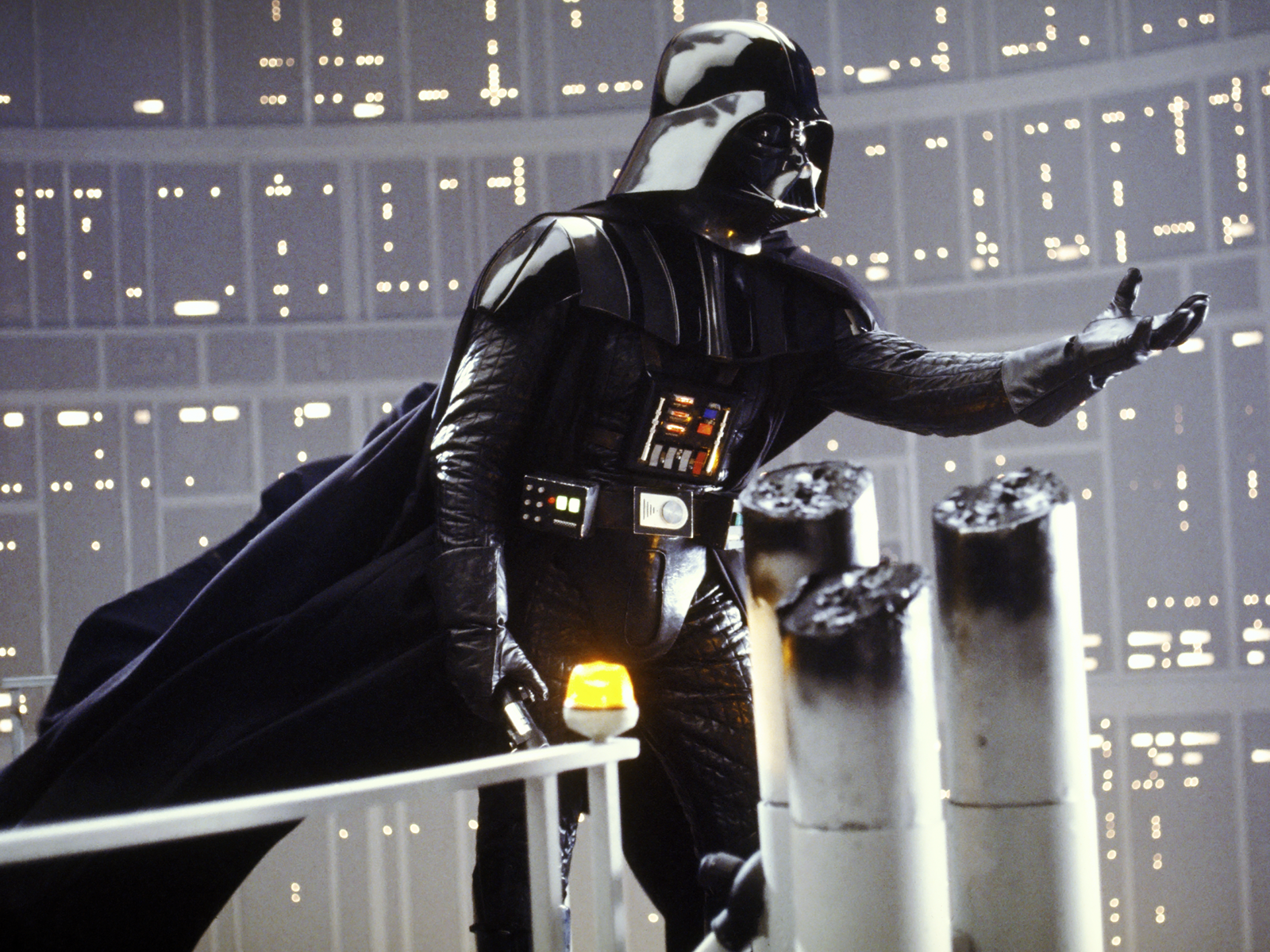
           A twist is when information is revealed that my characters and the audience didn’t know was being kept from them.  They don’t even suspect those facts are out there, waiting to affect the story.  When a twist appears, it comes from out of nowhere and changes a lot of perceptions for the characters and the audience.  We’ve all been told that Luke Skywalker’s father is dead, so when we learn that Darth Vader is his father, it’s a bombshell that alters our view of everything.
            Assuming we didn’t see all the advertising for the prequels…
            But that’s a different discussion…
            Notice that in most of these, the characters and the readers are in the same position.  Their view of things lines up.  The only time it doesn’t (with suspense) is when the characters are in extreme danger because of what they don’t know, which cranks up the tension for the audience.
            Going off the above definitions, one of the main components of a successful twist is that the reader (or audience) doesn’t know it’s coming.  We can’t be surprised or taken off guard by something we’re expecting, right?  So without that element… well, it’s not a twist anymore.  This moment becomes empty, poorly structured suspense, a missed beat in the structure of my story.
            Personally, this is why I’m so nuts about spoilers.  One small spoiler can rip the heart out of a great reveal and leave it flapping in the wind like an empty shirt on a clothesline.  Rather than identifying with the characters, we’re waiting for them to catch up and shaking our heads at how long it’s taking them.
            Y’see, Timmy, saying a twist should still make sense whether or not I know it’s coming is like saying a defibrillator should still work whether or not it’s got electricity running through it.  We’ve removed a vital element that it needs to function.  A working defibrillator won’t always perform the function it was made to, yeah, but it simply can’t when it’s not even plugged in.
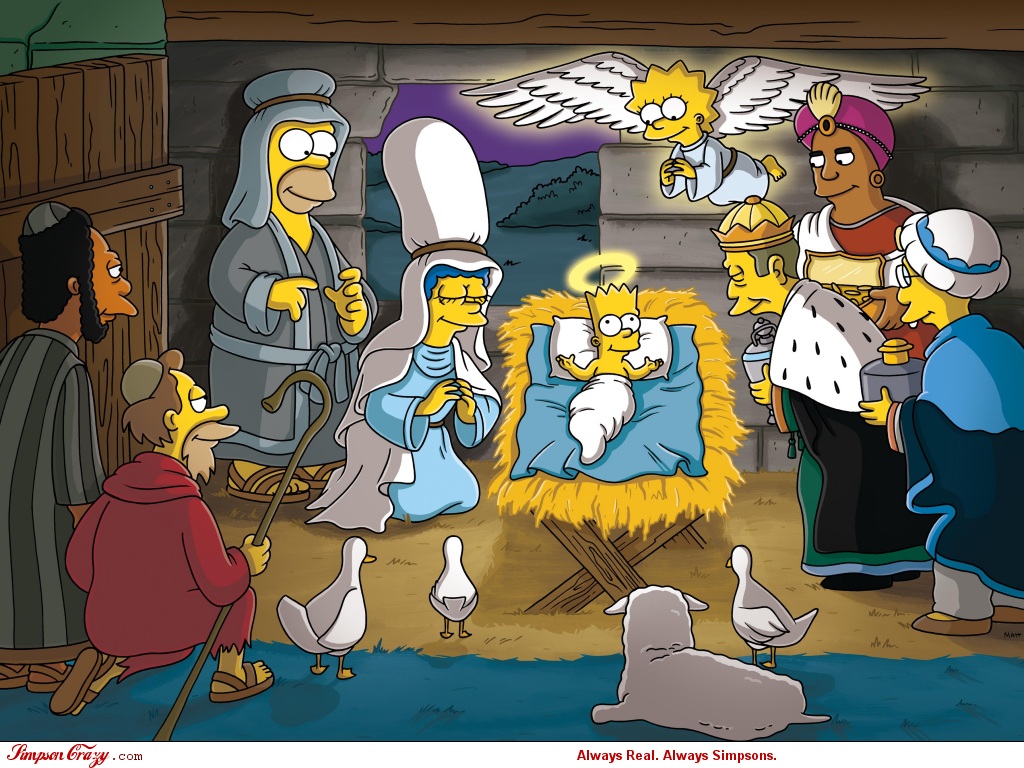
            Now, there are two other things that can make a twist flop.  One is when the information the twist reveals isn’t actually a surprise, or it’s something the reader probably figured out on their own.  If you’re a long-time fan of The Simpsons, you may remember one time when Homer told the Nativity story in church.  And he ended his little sermon with these drama-filled words…
            “And did you know that baby Jesus grew up to be… Jesus?”
            It’s a perfect example of this point.  If I’m two or three steps ahead of the characters and the author, a “reveal” like this borders on comedy.  Which is great if I’m writing comedy, not so good if my book is a techno-thriller.  A twist that tells us something we already know, by definition, isn’t a twist, and it doesn’t matter if the author hasn’t specifically spelled it out or not in the book.  If all my readers figure out who Dr. Acula really is on page two, it’s my own fault when the big twist falls flat.
            The second thing that kills a twist is the flipside of what I just said.  It’s also not a twist if there’s absolutely no way we could’ve suspected it.  Yes, a twist depends on us not knowing something’s coming, but when it arrives it needs to fit with everything we’ve been told all along.  A reveal should mesh with what we know, not contradict, and make us look at things in a new way.  Finding out Phoebe is my long-lost cousin in the last fifty pages is a twist.  Finding out Phoebe is a third-gender alien from the year 2241 in the last fifty pages means I should…
          Wait, an alien from 2241?  Hasn’t this a period murder-mystery novel for the past two hundred pages?  What the hell…?
            I once read a book where we found out in the last twenty pages that the leader of the all-woman biker gang is actually a vampire.  And while we’d known this was an urban fantasy novel, there’d been no clue whatsoever that vampires exist.  It was a first person story and the main character had never even told us that vampires were a thing, even though we learned in those final pages that this is the vampire she knew had killed her husband.  The reveal clashed with what I knew about the world and the character, and that clash jarred me out of the book at a point when the author really needed me to be sucked into it.
            And that’s the real killer. When my twist falls flat, for any reason, it breaks the flow of the story.  And since big twists tend to come toward the end of a story, it means I’m giving my readers a reason to stop when I want them to be checking the clock to see how late it is and if they can finish the book tonight.
            A twist is a powerful device, the five-point-palm technique of storytelling.  It needs to be done a certain way, but if I can master it I’ll be unstoppable. And if I do it wrong…  I’m just going to piss off my target.
            Next time, I think we need to discuss paying dues.  Especially those of you who’ve been here for a while.
            Until then, go write.
June 12, 2015 / 3 Comments

Another Chapter Comes to a Close…

            Many thanks for your patience. The past week has been an amazing ride for me, traveling up and down the west coast, meeting a few hundred people, and signing a few hundred books.  And losing a few hundred strands of hair…
            Also, if you took part in the pre-order promo for The Fold, word on the web is that galley copies are starting to land.  Hopefully you got one and can now use it as the teaching example it was always intended to be.
            But enough about me and my book.  Let’s talk about you and your book…
            A few weeks back I opened the floor for suggestions (it’s always open, but I just pointed out all the space on the dancefloor) and a good double-handful of ideas came in.  This week’s little rant comes from one of them.  And it’s a good topic I wish I’d thought of before.
            The question was about endings.  More specifically, chapter endings.  How do I find the right moment to end a chapter without it feeling either dragged out or cut off in mid thought?
            Clive Cussler (author of Raise the Titanic and many, many others) commented years back that chapters should be like potato chips.  Each one should be easy to digest and leave you wanting another one.  That was a great rule that stuck with me early on, and I’ve tried very hard to follow it ever since.
            So, here are a half dozen places in a story  I’d usually pick to end a chapter on.
A question—These moments make great chapter endings.  Sometimes the question’s asked out loud, sometimes it’s implied.  When a what/how/why moment comes up in my story, it’s going to make people want to turn the page in the hopes of learning the answer.  So that’s a great place to end a chapter.
            Keep in mind, though, this only works if there’s a real question and the reader doesn’t know the answer.  Whether or not the characters know is irrelevant (I’m the writer, I can make them go to the next chapter with very little effort).  If this question is already answered or the answer is painfully obvious, it’s not a great place to end.  If I’m writing the novelization of Jurassic World. “Wait, there are dinosaurs on this island?” isn’t a great stopping point.
A big reveal—The flipside of the above.  Getting a long-sought answer can be powerful, especially if it’s going to affect what happens next in my story.  Even if it’s not an answer, revealing a solid, key bit on information can give a moment a lot of weight and make it a great place to pause.  When I tell you “the dinosaurs have gotten loose,” that’s a big moment that’s going to change everything from here on in.
            Again, though, this one will only work for me if it’s an actual reveal.  Vague responses and fuzzy reasoning don’t make for good answers, in real life or in a novel.  Neither do answers we already know.  If I try to dramatically reveal that California is on the west coast of the U.S., that’s not going to do much for anyone.
A big twist—Similar to the reveal but not the same.  I’ve talked about the difference between mysteries and twists a few times in the past, so I won’t go into that again here.  A twist is a fantastic moment for me to end a chapter because it’s very nature means everything’s going to change.  My readers will go to the next chapter just to see the fallout from a good twist.
            I need to be very clear, though, on what a twist is and how it works in my story.  If I fumble it, either with my reveal or what I’m revealing, it’s not going to have any weight or ramifications. Which means my readers have no reason to turn the page. 
           
A big setback—Any story’s going to have its ups and downs. When my character gets his or her feet kicked out from under them, deliberately or accidentally, the reader wants to know how that character’s going to recover.  Are they going to stay down?  Fight back?  Come at

things from a new angle?  I need to turn to the next chapter and find out!

            The catch for this one (there’s a lot of catches on these, have you noticed?) is that I need to have either a good solid character or a really compelling plot for this to work.  If my reader doesn’t care about the stakes—either internal or external—they’re not going to care when my characters fail.
A big leap forward—The flipside to the setback.  When my characters find the hidden button, manage to make it past the security system, or get the power running to the velociraptor fences again, this is an achievement.  We can all pause for breath, and that’s a good time to roll things over into the next chapter.  There’s a natural break there, and I should take advantage of that existing rhythm.
            Again, though…I need strong characters or plot for this to work.  I also need to be aware of what’s going to be seen as a leap forward.  Sharpening a pencil or avoiding a sleeping guard are not big accomplishments, so my readers won’t feel that need to pause for a breath.
A cliffhanger—The classic.  I just stop right in the middle of things, right as the action is kicking into high gear.  My antagonist pulls the trigger, the T-Rex gets me cornered in the museum, or the zombies spin around when I accidentally step on a branch.  These are moments when the reader mustknow what happens next.  And if the next chapter is there, the reader will go to it.
            The catch here is that the reader needs to care about my characters.  If not, there’s no tension when I put said character into that dangerous spot.  It’s like me telling you someone’s in danger.  You care in a sort of abstract way, but how often are you going to ask a follow-up question?
            So, there’s six solid ways to end a chapter.  Each one’s got a slightly different flavor and works better in different situations.
            However, going over this list, there’s sort of a glaring issue, isn’t there?  What if my story doesn’t have any of these things?  What am I supposed to do if I’m a hundred or so pages in and I haven’t had a big setback, or a reveal, or asked any questions?
            Well, my first thought would be… why don’t I have any of these things?
            A while back I did a big block of posts about structure.  As I mentioned above, every story’s going to have ups and downs.  There will be unanswered questions, revealed answers, challenges, and successes.  It doesn’t matter if I’m writing a torrid period romance, a sci-fi space epic, or an apocalyptic horror novel.  Every story is going to have these moments. They’ll take different forms, but they will always be there.
            Y’see Timmy, if those moments aren’t there… well, my story has bigger issues than figuring out where chapter breaks should be.  In fact, this probably is part of the reason I can’t figure out where chapter breaks should go.  Without these highs and lows, my story’s just going to be a drab, monotone mess.  And it’s impossible to place breaks in something like that because it’s all the same.  There aren’t any landmarks that stand out.
            So I need to make sure I have something that can be broken up. And then I can break it up.
            Next time, I might offer a few quick tips on drafting.
            Until then, go write.
            Does that title sound a little too familiar?
            Maybe we should talk about that…
            A few months back I read a book that I couldn’t figure out.  It left me completely baffled.  I’m not talking about the plot (granted, I was having trouble with that, too), but the setting. 
            I honestly couldn’t figure out the world.  At times, it seemed like it was the modern world that we all know and love—granted, with some sci-fi/ fantasy stuff going on in the background.  At other times, it seemed to be a sort of alternate history, post-apocalyptic “present.”  It didn’t help that every character was somehow tied directly into that sci-fi/ fantasy thread, because for all of them this was the “normal” world and they didn’t notice anything different about it.
            Why does this matter?
            Well, knowing where a story is set helps me, as a reader, to set my expectations and reactions.  It lets me get a sense of what’s possible, or what might be possible.  The setting is an automatic set of guidelines for the reader, for the characters, and for the writer, too.
            For example…
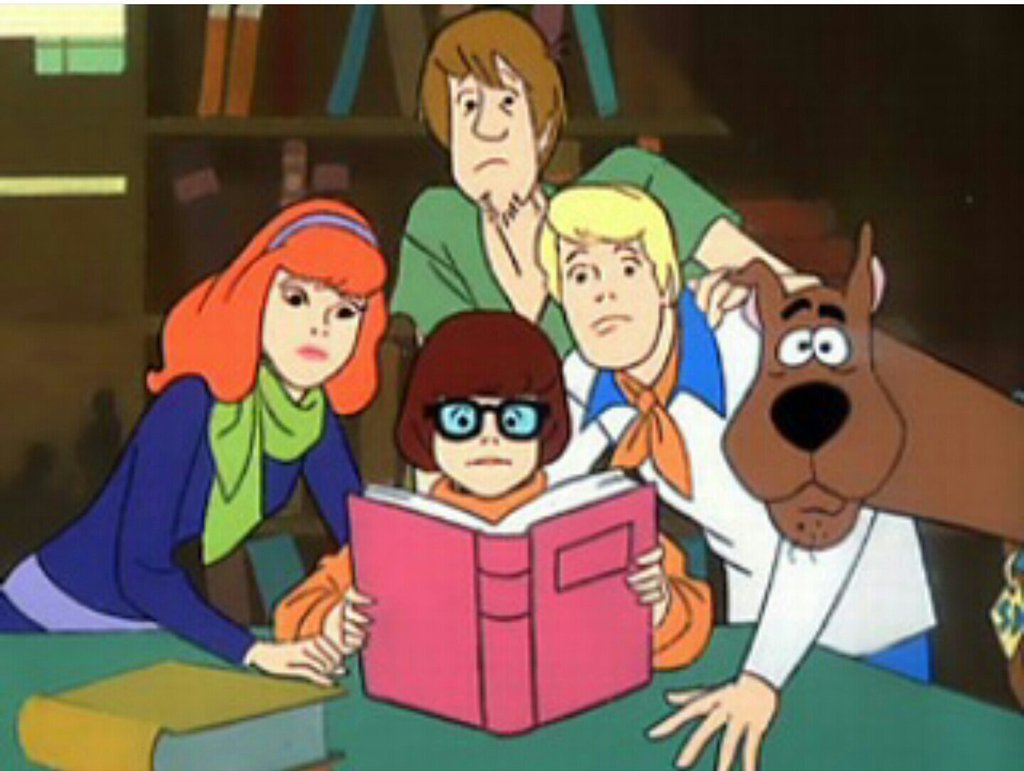
            A few years back I read an absolutely wonderful essay on Scooby-Doo and secular humanism.  No seriously.  You can read the whole thing here.  The writer made a very interesting point that shows why it’s so key to know what kind of world my story is set in.  He uses it as one link in a larger chain of logic, but for our purposes we can examine it alone.
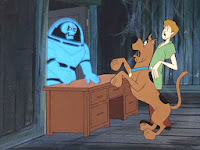
            In all the classic Scooby-Doo episodes, the supernatural threat is always revealed to be a fake.  It’s someone in a costume (probably Carl the stuntman or Mr. Bascombe) using special effects of one kind or another for an ulterior motive.  It has to be, because in the world of classic Scooby Doo, ghosts and monsters aren’t real.  That’s why it makes sense for Velma, Fred, and Daphne to act rationally and why it’s funny when Shaggy and Scooby get scared and run away—they’re scared of the fake monsters.
            But…
            If the supernatural is real (as it is in some of those later stories), suddenly everything shifts.  The rules of the world have changed, so we have to look at the characters in a new light.  Now Velma and the others are foolish for trying to apply logic to inherently illogical creatures and for exposing themselves to life-threatening monsters like werewolves and vampires.  Not only that, Shaggy and Scooby are now the smart ones, because being scared of vampires is a perfectly rational response in a world where vampires are real.
            Here’s another one.
            I recently read a piece by one of the editors at Marvel comics.  He proudly spoke about how their stories are set in “the real world.”  The characters, their reactions, the world around them…
            And I have to admit, my first thought was… what a bunch of nonsense.
            (I may not have used the word nonsense.  I tend to be a bit more emphatic with my internal dialogue…)
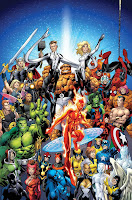
             Let’s consider a few details about the Marvel Comics universe.  It is commonly known that some people can fly.  It’s not exactly secret that magic is real and aliens exist.  Super-powered human mutants are also real and receive tons of media attention.  There’s a large, tropical valley in Antarctica where dinosaurs still live, visible on Google Earth and written about in several textbooks.  Energy weapons are commonplace, as is high-tech battle armor.  There are numerous publicly-known artificial intelligences in the world.  Standing next to detonating atomic weapons can give you superpowers.  Hell, in the Marvel Universe, you can jump off the Empire State Building and there’s actually a halfway decent chance someone will catch you on the way down.
            Does this sound remotely like the real world
            Would the people of this world have the same expectations you and I do?  Would they think and react to things the same way?  I live in LA, and when I hear a faint rumble and the building shakes, I normally check Facebook to see if anyone else felt an earthquake.  In the Marvel Universe, I’d probably assume it was superheroes battling a giant monster.  If I got a headache, I’d be checking to see if it was telekinesis or some form of optic blasts.  And then take aspirin.  And then check for telekinesis again, just in case it interacts with drugs somehow. And the thing is, these would be perfectly rational reactions in the Marvel Universe.
           Now, one more example.  Harry Potter.  In this world there are wizards, giants, dragons, hippogriffs, goblin bankers, house-elves, gnomes, and much, much more (no aliens, though).  But the thing is, it all exists kind of… off to the side.  The average person in the world of Harry Potter has never heard of Hogwarts and can’t find Diagon Alley.  The magical world rarely overlaps with the mundane one, and we learn there are whole government departments charged with making sure they stay separate.  The real world for them is the real world we all know about, one where there’s no such thing as magic.
            Starting to make sense?  If I can’t define my world, I can’t define what is and isn’t possible.  I can’t have characters react appropriately if I don’t know what would be appropriate.
            On the flipside, there’s a period show on right now that kind of gnaws at me.  Mostly because it’s set in Victorian London and one of the supporting characters never wears a hat… but also because of the setting.  The main plot revolves around our protagonist attempting to perfect wireless, broadcasted electricity, something Tesla worked on for decades.  Our hero hopes to destroy the fortunes of a group of wealthy oilmen by rendering their investments worthless.

            Now, here’s the thing.  We know broadcast power wasn’t invented at the turn of the last century, so if the show ends with our hero succeeding, it means the whole story’s been set in an alternate history.  But if his broadcast power fails, it implies the story’s set in the real world.  But until one or the other happens, I can’t tell you the setting.
            Of course some of you may know what program I’m talking about and I’m sure you’re going to bring up the larger point—the vampires.  But here’s the interesting point.  The vampires are irrelevant.  Much like Hogwarts and Diagon Alley, no one knows the vampires exist. 
            But the broadcast power… that’s in the news.  There were press releases and huge parties.  Broadcast power changes everything.  That’s a world where, from the beginning of the electrical age, nothing needs batteries or wall outlets.  There are countless changes and repercussions if broadcast power is real.
            Y’see, Timmy, my fantastic story can still be set in the real world provided the events of my story don’t change the world.  I mean, within the world of the show only a handful of people in London know vampires are real.  It’s not public knowledge.  And today in the modern world we’ve never heard of or seen evidence of vampires in the Victorian era, so that part of the story has an aura of truth and reality to it.    
           If you want to set an amazing story in the real world, you need to use conspiracy theory logic.    I’ve used this analogy before, and bizarre as it may sound it works.  Yep, the same reasoning used by moon-landing deniers, “9-11 was staged” folks, and the birthers is what makes for a good fiction story. No irony there…
            By conspiracy-theory logic, any facts that disprove XYZ are an attempt to hide the truth, thus further proving XYZ is true.  The very lack of evidence is the proof that it’s true.  And if I stumble across a few coincidences that imply XYZ might be true, well, that’s just more evidence XYZ is true.
            Didn’t I just describe the world of Harry Potter?
            The vampires hide all trace of their existence.  There is no evidence that vampires exist.  Ipso facto (fancy Latin words) my story rings true because it lines up with all known facts.  Follow me?
            The world of my story has to have its own consistent logic.  Because if I don’t know my world, I can’t know how characters in my world react to things.  And if I don’t know my characters, well… that’s it.
            Next time… well, is there any topic anyone would like covered?  I can probably ramble on about most anything (as this post shows).  Let me know in the comments if there’s something you’d like me to babble about.
            And if no one does, I’ll come up with something worthwhile.
            Until then, go write.

Categories