
October 12, 2013

But What About…

Yeah, this is a day late.  Lots going on this week, so I thought I could make an exception…

Which, by coincidence, is what I wanted to blabber on about this week.

If you hang out with enough writers (or musicians, or filmmakers, or other artists), either online or in the real world, you’ve probably heard a story about someone who broke the rules and got away with it.  And Wakko didn’t just break the rules, mind you… he shattered them.  Every one of them.  They had to write new rules for him to break.  All those people who tell you do this, don’t do that—he ignored them all.  And that’s how he got where he is today, with his fame and fortune and living the life we all dream about

People like these tend to get sort of a mythology around them in their respective circles.  Which is kind of sad, because these folks—unintentionally or not—tend to make things a lot harder for the folks coming after them.  Once I buy into the idea of being the exception, my chances of success drop drastically.

Let me give you an example…

Most of you have probably heard of Cormac McCarthy.  He’s a brilliant writer who’s done some wonderful books like The Road and Blood Meridian, among others.  He’s also famous for using almost no punctuation, sometimes to the point that his books become difficult to read.  Seriously, you’d think the guy got beat up  by a pair of quotation marks every day after school when he was a kid.
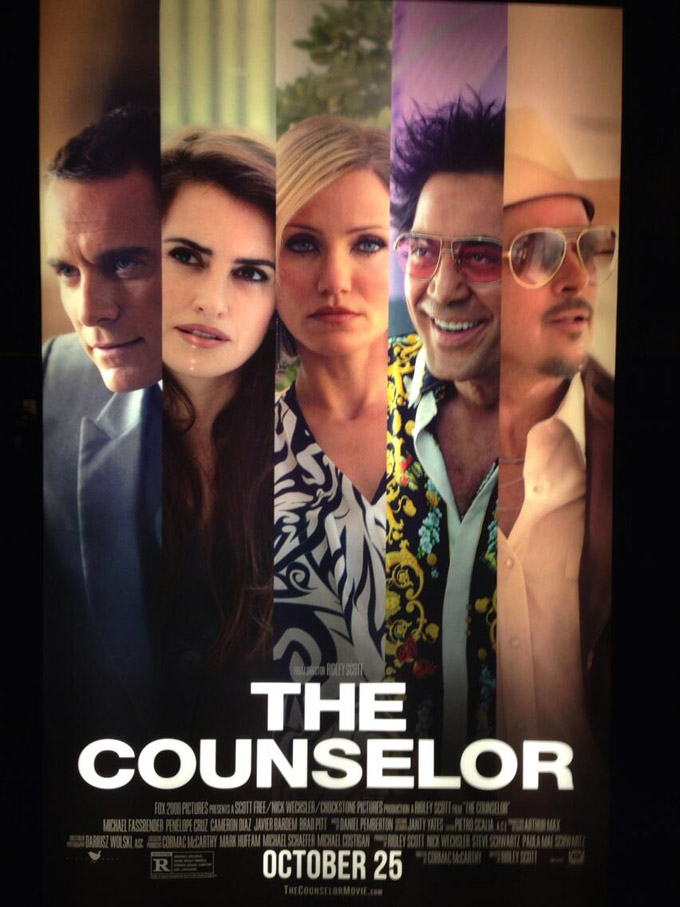
Now, McCarthy decided a while ago that he wanted to write a screenplay.  But, being Cormac McCarthy, he didn’t bother to learn how to write one.  He just started throwing dialogue and settings down on the page in whatever format looked right to him.  And several accounts say the script was…well, a complete mess.  Naturally, though, when word got out that he’d written a script, Hollywood went nuts.  The script was grabbed, Ridley Scott directed, and it’s coming out in just a few weeks ( The Counselor).

Now, a lot of would-be screenwriters who believe in ignoring the rules saw this as validation.  How can anyone say formatting matters after a format-free script sells and becomes a major motion picture?  It’s undeniable proof that sort of thing just isn’t important.

Except, well… not exactly.

Cormac McCarthy’s been a legend for twenty years, and was still famous for twenty before that. He could’ve turned in a script written on a used paper plate and the bidding would’ve started at fifty thousand. His status as a novelist made him the exception to the rules of screenwriting. Just because he can do it doesn’t mean I can. Or you can.  Or she can.

Here’s the thing…

Exceptions to the rule tend to be rare.  Exceptionally rare, you could say. That’s why they’re the exception and not the rule.  McCarthy’s script was snatched up by Hollywood despite its poor formatting, but dozens of them are tossed aside every single day for that very reason.  Because that’s the rule.  Formatting does matter.

And it’s not just screenwriting.  For every person who sold the first draft of the first novel they wrote to the first publisher they showed it to, there are millions of people who did not.  Yes, E.L. James, Diablo Cody, J.L. Bourne, and a triple-handful of other writers started out by giving their work away for free and then spun that into successful, paying careers as writers.  And that sounds fantastic until you stop to consider there are over two billion people on the internet these days.  Even if only one percent of them are trying to make money by writing on a blog or website, that puts the odds of success somewhere in the neighborhood of  20,000 to 1 (about 0.0005 % if my math is right).  And that’s with a very generous estimate of how many successful writers have followed this path.

I can’t use an exception to the rule as a basis for how things should be done.  By it’s very nature, the exception is the freak chance, the aberrant behavior—it’s just not the way things work.  Think of the stories you’ve heard about people who survive falling out of airplanes or getting shot in the head.  They’re amazing and true and took almost no effort, yes, but they shouldn’t make anyone rethink using parachutes or gun safety.

If I want to succeed, the best thing I can do—whether I’m jumping out of a plane, getting shot at, or writing a story—is to follow the established rules.  The absolute worst thing I can do is scoff at those rules—rules like spelling, grammar, or wearing body armor—and  decide they don’t apply to me.  No matter how amazing my writing is, I need to follow the basic guidelines for my craft.

The reason I should follow them, before you ask, is because the person reading my work is expecting me to follow them.  The publishers, editors, and producers who see it before my chosen audience definitely will, and those readers or viewers will assume I’m going to, too.  They all have certain expectations they’ve built up, and these expectations all tend to fall in line with the rules.

Now, does that mean amazing, rule-bending things won’t happen or can’t be done?  Not at all.  My writing may be so spectacular that no one notices the abundant typos.  The basic idea could be so clever that nobody will pick up on the fact that all of my characters have about as much depth as a puddle on the kitchen floor.  Heck, the structure of my story could be so rock-hard the reader will forgive and forget those incredibly boring opening chapters.

But you know what?  Let’s say on page one of my manuscript I introduce school newspaper reporter Tomm Truth and Joanie Justice, and show them straggling with staph editor Barry O’Bama who doesn’t want them running a article about the poor campus seckurity.  After a paragraph or two of that my editor’s going to groan out loud.  I know when I was a script reader seeing stuff like that made me roll my eyes and add more rum to my glass.

Y’see, Timmy, the minute I see a bunch of clichés, misused words, poor grammar, and misspellings, I’ve rendered a judgment on that writer.  Possibly two or three, depending on how many things I see that look wrong.  And they may not be wrong for this story—each one may be carefully chosen to set up certain things for later on.  But on page one or two or three, they look wrong, and that’s how they’ll be interpreted and that’s going to color my view of the manuscript from here on.

If I assume I’m the exception, that I don’t need to follow certain rules, I’m setting an obstacle between me and the people who are going to pay me to keep writing.  Maybe even multiple obstacles.  They’re not insurmountable and they don’t guarantee failure.  But it does mean I’ve just limited my potential audience.  Some readers will toss a manuscript in that big pile on the left after seeing two or three things that look like mistakes.  Others will read ten or fifteen pages before setting it aside.  And if I can’t prove I am the exception before that happens, I’m going to get a lot of rejections.  My story may be loaded with promise, but if my initial foundation looks weak and poorly designed, why would anyone risk the time to see if the rest of it’s structurally sound?

So try to be the exception.  Just don’t automatically assume you are.  You need to earn it.

Next time… I want to talk about Guido.

Until then, go write.
August 15, 2013

Admissions Board

             This is going to be one of those posts that sounds a bit harsh at first, but hopefully you’ll stick through ‘till the end before posting those angry responses.  If you’re feeling a bit thin-skinned, maybe you should come back next week.
            Writing is tough.  It’s hard work.  I know this, because I do it for a living.  When someone tells me how easy and wonderful and fun writing is, I’m often tempted to point out that they’re probably doing something wrong.
            Instead, I bite my tongue and scribble notes for a ranty blog post or two.
            There was a point when I thought writing was easy and fun.  To be blunt, that was back when I wasn’t taking it seriously.  My plots were either contrived or derivative (some might say that hasn’t changed).  My characterization was weak and my motives were… well, whatever they needed to be at the moment to make that weak plot move along.  I rarely edited. 
            Perhaps most important of all… I thought I was a literary genius.  My stories didn’t just deserve Stokers and Hugos, mind you.  Once I got around to finishing them and sending them out, they were going to get Pulitzers and Nobels.
            Needless to say, my writing made huge leaps when I was able to admit a few things to myself.  I think that’s true of most people in most fields—if we can’t be honest about where we are, it’s hard to improve.
            That being said…
My writing sucks—This sounds harsh, yeah, but it needs to be.  Too many beginning writers just can’t get past the idea that something they wrote isn’t good.  I know I couldn’t.  It’s just against human nature to spend hours on something and then tell yourself you just wasted a bunch of time.  Why would I write something I couldn’t sell?  Obviously I wouldn’t, so my latest project must deserve a six-figure advance.
            The problem here is the learning curve.  None of us like to be the inexperienced rookie, but the fact is it’s where everyone starts.  Surgeons, chefs, pilots, astronomers, mechanics… and writers.  Oh, there are a few gifted amateurs out there, yeah—very, very few—but the vast majority of us have to work at something to get good at it. 
            You noticed I said “us,” right?  Lots of people think of Ex-Heroes as my first novel, but it wasn’t.  There was Lizard Men from the Center of the Earth (two versions), a God-awful sci-fi novel called A Piece of Eternity, some Star Wars and Doctor Who fan fic, a puberty-fuelled fantasy novel (which I haven’t admitted to in twenty years or so), The Werewolf Detective of Newbury Street, The Trinity, The Suffering Map, about half of a novel called Mouth… and thenEx-Heroes.  And I can tell you without question that most of those really sucked.  It doesn’t mean I didn’t try to sell some of them (we’ll get to that in a minute), but I couldn’t improve as a writer until I accepted that I needed to improve.
My first draft is going to suck—There was a point where I would fret over my writing.  I’d spend time laboring over individual words, each sentence, every paragraph.  I’d get halfway down the page and then go back to try to fix things.  It meant my productivity was slowed to a crawl because I kept worrying about what had happened in my story instead of what was going to happen.
            The freeing moment was when I realized my first draft was always going to suck, and that’s okay.  Everyone’s first draft sucks.  Everyone has to go back and rework stuff.  It’s the nature of the beast.  With those expectations gone, it became much easier for me to finish a first draft, which is essential if I ever wanted to get to a second draft, and a third draft, and maybe even a sale.
My writing needs editing.  Lots of editing—So, as I just mentioned, I’ve been doing this for a while.  Arguably thirty-five years.  Surely by now I’ve hit the point where my stuff rolls onto the page (or screen) pretty much ready to go, yes?  I mean, at this point I must qualify as a good writer and I don’t need to obsess so much over those beginner-things, right?
            Alas, no.  We all take the easy path now and then.  We all have things slip past us.  We all misjudge how some things are going to be read.  And I’m fortunate to have a circle of friends and a really good editor at my publisher who all call me out when I make these mistakes or just take the easy route when I’m capable of doing something better.
            Also, as I mentioned above, part of this is the ability to accept these notes and criticisms.  I’m not saying they’re all going to be right (and I’ve been given a few really idiotic notes over the years), but if my default position is that any criticism is wrong then my work is never going to improve past the first draft. 
            Which, as I also mentioned above, sucks.
My writing needs cuts—Sticking to the theme, if I believe my writing is perfect, it stands to reason all of it is perfect.  It’s not 90% perfect with those two odd blocks that should be cut.  When I first started to edit, one of my big problems was that everythingneeded to be there.  It was all part of the story.  Each subplot, every action detail and character moment, all of the in-jokes and clever references.
            The Suffering Map was where I first started to realize things need to be cut.  I’d overwritten—which is fine in a first draft as long as you admit it in later drafts.  I had too many characters, too much detail, subplots that had grown too big, character arcs that became too complex.  It took a while, but I made huge cuts to the book.  It had to be done.  Heck, with one of my more recent ones, 14, I needed to cut over 20,000 words.  That’s a hundred pages in standard manuscript format.  All cut.
My writing is going to be rejected –You know what I’ve got that most of you reading this will never have?  Rejection letters.  Actual paper letters that were mailed to me by editors.  I’ve got lots of them.  Heck, I’ve probably got a dozen from Marvel Comics alone.  And since then I’ve got them from magazines, big publishers, journals, magazines, ezines.
            But when that first one came from Jim Shooter at Marvel… I was crushed.  Devastated.  How could he not like my story?  It was a full page!  It was typed!  I even included a rendering of a cover suggestion in brilliant colored pencil.  It took me weeks—whole weeks, plural—to work up my courage to try again, and then he shot that one down, too.
            Granted, I was about eleven, and those stories were really awful.  But even good stuff gets rejected.  Heck, even with the list of credits I’ve got now, the last two short stories I sent out were rejected.  Editors and publishers are people too, and not everything is going to appeal to everyone.  I came to accept being rejected once I realized it wasn’t some personal attack (okay, once it was…), just a person who didn’t connect with my story for some reason.
            And, sometimes, because my stories sucked.
            If I can admit some of these things to myself, it can only make me a better, stronger writer.  It’s not a flaw or a weakness.  In fact, if I look at the above statements and immediately think “Well, yeah, but I don’t…,” it’s probably a good sign I’m in denial about some things.
            And that won’t get me anywhere.
            Next time, I’d like to say a few clever words about saying the word said.
            Until then, go write.
June 6, 2013 / 1 Comment

Where The Problem Is

             A quick pointer…
            Every now and then I throw open the floor here to suggestions.  What would people want to hear me ramble on about next?  What topics or elements are giving them trouble in some way, or maybe they just want a few pointers on something?  Pretty much every time I do this, someone will ask about agents or networking or publishing, and I will politely explain I don’t cover that stuff here.

            Why?

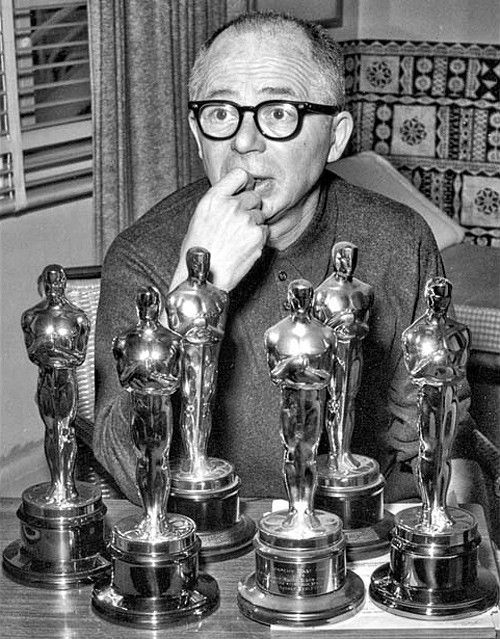
            When asked for screenwriting tips, Oscar-winner Billy Wilder would often remind would-be writers of a simple rule of thumb.  To paraphrase, a problem with your third act is usually a problem with your first act. 
            In other words, if the end isn’t working, it’s probably because of the way I did things in the beginning.  Perhaps I didn’t establish characters well or set up things for that twist.  Maybe the gruesome, depressing ending just doesn’t work after two acts of comedy and slapstick.
            My career as a writer has three acts, too.  A beginning, middle, and an end.  I learn the basics and practice a lot.  I write a good book.  Someone gets interested in the book and offers me money for it (either in a contractual or individual sense).
            So if I’m having trouble with that last part, the third act of my writing career, maybe the problem is in my first act. 
            Maybe it’s not that publishers and agents are jerks who won’t recognize my genius or try anything new.  Perhaps the problem rests in that first part of the equation.   Do I even know my basics?  Did I bother to practice and polish my skills?  Or did I declare the first thing I scribbled out perfect and leave it at that?
            It’s just possible, believe it or not, that I can’t get anyone interested because I didn’t write a good book.
            Next time, I’d like to share some thoughts about a new topic I’ve been researching.
            Until then, go write.
            Pop culture reference.  I have no idea why, but that commercial always made me giggle like a little kid.

            So… I’ve only got a couple of minutes, so let’s talk about right now.  Starting… now.
            When I used to read for a couple of screenplay contests, one of the most common mistakes I’d see would be writers loading the page with information that wasn’t being shown on the screen. 

INT: CAFE
Push in on PHOEBE, sitting at a table, sipping her coffee.  She’s young, blonde, and pretty in that girl-next-door way.  She’s also heartbroken because she just found out her boyfriend’s been sleeping with someone from his office.  They got in a fight when she confronted him and he told her to move out.  She moved here to Seattle to be with him, doesn’t have any nearby family, and has realized that most of her friends were his friends first.  So now she’s sitting here in a cafe, with all her belongings out in her car in the parking lot, trying to figure out what to do with her life.

          Now, in the scene I just scribbled out… what’s happening in the movie right now?  What do we, as the audience, see?  What actions are taking place? 

            Screenwriting is about right now.  Not a year ago, not last week, right now.  Nothing matters except what’s on the screen right now.  If it’s not on screen right now, it’s not important.  If it is important, it’ll come out on screen later (later, at that point, being right now).  If all the words on page one of my screenplay aren’t related to the first minute of my movie, I’m doing something wrong. 

            So, just to clarify, my script should only be talking about what’s happening right now
            Now, there are lots of screenplays out there by some amazing screenwriters that mention a character’s background, past relationships, all that sort of thing.  Thing is, if I really pay attention when I read all those scripts, I’d see that these elements are only brought up when they’re relevant to what’s happening on screen right now.  Because screenwriting is about right now.
            Here’s my quick little common sense analogy for you. Feel free to swap genders or locations as you like…
            If I’m out at a bar talking with Phoebe, she’s what’s important.  If I’m talking to Phoebe but thinking about Dot, it means I’m either A) a jerk or 2) focused on the wrong thing.  Because if I’m talking to Phoebe, I should be focused on Phoebe.  If I’m thinking about my boss, I’m doing something wrong.  If I’m on the phone talking with a friend, I’m doing something wrong.  If I’m thinking about my ex-girlfriend or the woman I met earlier in the evening, there’s something wrong.  And if I’m thinking about where Phoebe and I are going to be two hours from now… yeah, I’m probably still wrong.  Phoebe’s in front of me right now, so I should be focused on her. 
            Right now.
            When next week becomes right now, I think I may talk a bit about flashbacks.
            Until then, go write.

Categories