
November 14, 2014

Introduction to Orientation

            Running a tiny bit late.  Trying to get a bunch of stuff done before the weekend and dealing with many disruptions and distractions.
            Anyway…
            I’d like to start this week by talking about  college.  It’s something I bet most of us here experienced, so it’s a great analogy for my real topic.  I’m sneaky like that.  Sometimes.
            If you’ve been reading these rants for a while, you know I grew up in a very small town in Maine.  For high school, my dad got a new job and we moved to a somewhat large town (arguably a small city) in southern Massachusetts for four years.  And then I went to a giant state school for college.  No joke, my freshman dorm almost had more students in it than the entire school system I attended in Maine.  And I wasn’t even living in one of the larger dorms.  The college had a larger population than my hometown.
            It was, needless to say, a bit overwhelming.

            There were lots of orientations, of course.  Then I was introduced to tons of people in my dorm, and then people on my hall (we won’t even get into classes).  We all talked about ourselves a bit.  I think so, anyway.  It was all a bit of a blur.  For a while there were just the two skinny guys across the hall,  the woman with the short hair who smiled a lot, the big guy with the glasses further down the hall. But after a while details and names accumulated, these people became clear in my mind, and they became Mike, Jon, Karen, Henry, and so on. 
            Most of us can relate to something like this, yes?
            When I’m introducing characters in my story, it’s a lot like this.  Sometimes things are a whirl of action.  Other times, everyone’s just sitting around studying each other.  Some people stand out—either on their own or because of my own interests—and other people just warrant rough placeholder descriptions for now.
            Context is everything when I introduce a character.  In the middle of a firefight, Wakko may not notice much about the person who dives in to join him behind the barricade.  They’re wearing body armor and they have a rifle—score!  If he’s dealing with a job applicant, though, he’s got time to notice how sharp the creases are in the slacks, how the tie is knotted and the hair is combed, not to mention the smell of shampoo and the state of fingernails.
            Likewise, during that firefight, there’s not much personal info Wakko needs to know past “you’re on my side, right?”  In the middle of the interview, he can ask “what are the three worst jobs you’ve ever had?”
            And in either case, he might not learn about that tattoo or the special shirt or the naughty story behind her nickname.  Some things are only seen or discussed in more intimate situations.  These are all details that come out with booze or debriefing or sex or some combination of all three. 
            Y’see, Timmy, there isn’t a certain way or time to introduce characters.  It’s all a matter of context.  Context, and a bit of relevance.  I need to think of it in terms of my narrative and my main character (or the character I’m focused on at the moment). 
            At this point in the story, is there time to notice more than a few basic physical attributes about this new character?  Is there any one or two things about him or her that my point-of-view character might focus on for the moment?  Is there even time to trade names?  If there’s a lot going on, I don’t want to bring things to a crashing halt with a page of description or exposition.
            I think one of the problems some writers have is they keep seeing examples of bad storytelling and character introductions in television and movies.  There’s an all-too common belief that things need to be frontloaded, that the audience needs to know everything about someone up front.  How many stories have you seen that begin with the “let’s all introduce ourselves” scene?  We learn their names and how they talk and their likes and dislikes and usually some clumsy anecdote about them or a blatant example of I’M THE UNSTABLE ONE!!!  GAHHHHH!!!  
            These scenes almost always feel unnatural because this isn’t how we meet people in real life.  Most of the time, we learn things about them in bits and pieces.  A little here, a little there.  Sometimes we never learn a character’s name, sometimes it’s the first thing we learn.  Some characters are willing to spill everything about themselves, others don’t want to know anything about you because it makes the job simpler.
            Now, I mentioned relevance up above.  It’s a close companion to context.  My story may end up in a place where we can take the time to get to know someone, but that doesn’t mean I need to say everything there is to be said about them.  Yes, everything in a character’s life helps define them, rich tapestry, all that, but if it really isn’t relevant to the moment at hand, or the story as a whole, there’s a good chance it doesn’t need to be there.  Bob explaining that he had to slit the throats of sheep growing up on a farm is important when we’re choosing who has to fight in the wolverine pit, not so cool during speed dating.  And someone telling you their sexual fantasies might be very exciting on a third date, but it can be a bit creepy during a job interview (no matter who’s talking).  When someone does this in real life, it’s called oversharing, and it tends to make us uncomfortable because… well, we don’t need to know these things in this particular situation.
            This can also help me weed out characters that… well, might not need to be characters.  If their introduction doesn’t fit in context, and the facts about them aren’t relevant… maybe I should question why they’re in my story here and now.  Maybe their introduction—or the full extent of it—should be pushed back or pulled forward.  Or maybe they’re just delivering the pizza and don’t have anything to do with the story at all.
            It all depends on context.  And relevance.
            And speaking of introductions, next time I’d like to go one step further and talk about dating.
            Until then, go write.
October 29, 2014

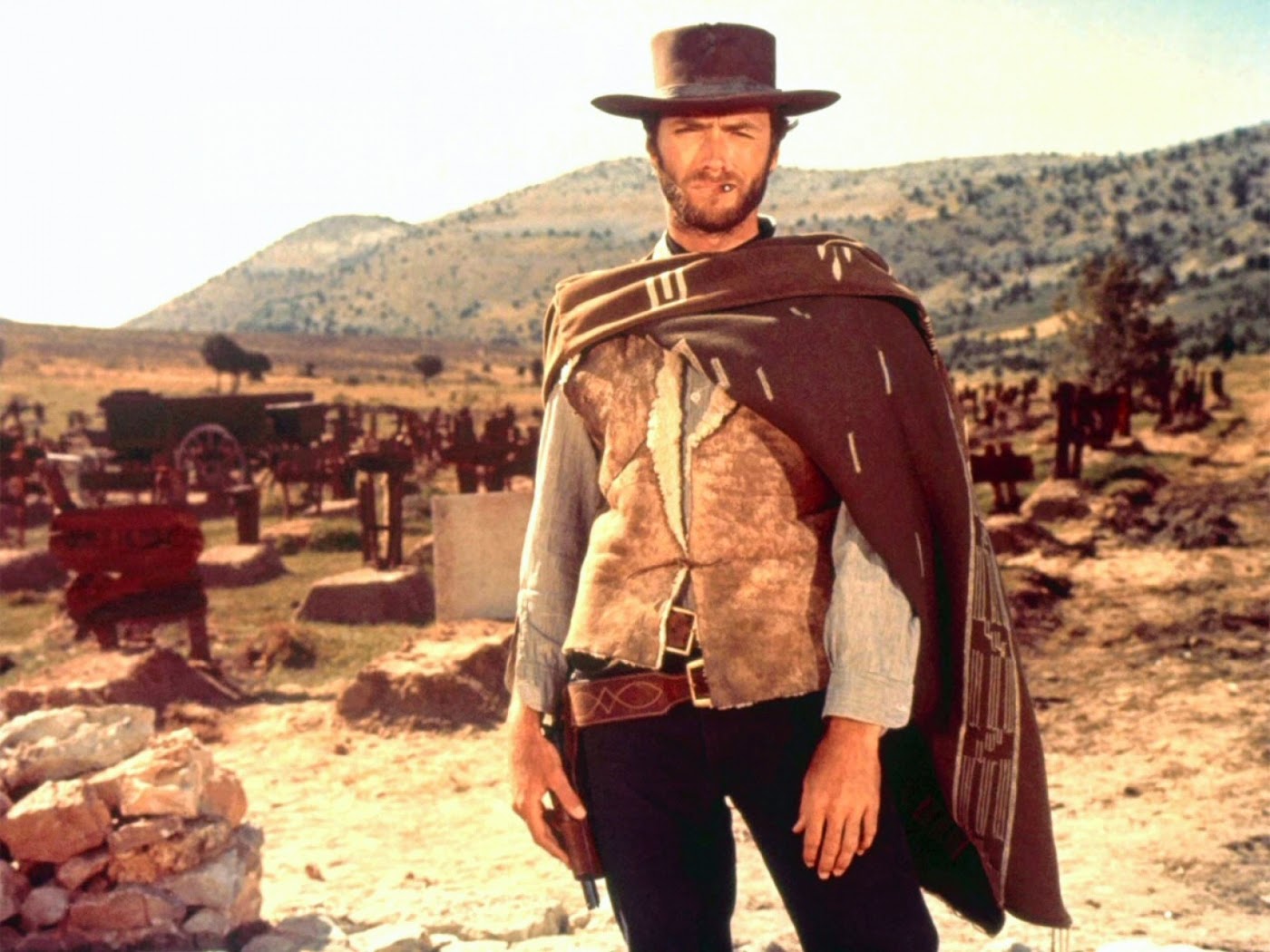
The Man With No Name

             So very sorry for the long delay.  You’ve all been very patient.  Like, eligible-for-sainthood patient.  
            I could make a bunch of excuses but, well… I’m probably going to bombard you with self-promotional stuff next year.  Let’s just put it that way.
            Sorry.
            Anyway… let’s talk about that title.  Pop culture reference from fifty years ago.  In the hit western A Fistful of Dollars (also known as “that old western they’re watching in Back to the Future II”) and its sequels, Clint Eastwood’s character is never named.  Never. 
            Why do I mention this?
            Let me go over a few things first.
            There are three types of characters in any story.  You may have heard a bunch of different literary terms for them, but for our purposes I’m going to break them down to main characters, supporting characters, and background characters.  Every character in my story can fit under one of these three umbrellas.  Or in one of these classes, if you prefer.
            My maincharacters are my heroes, and sometimes my villains, too.  These are the people making things happen in my story, and the ones my narrative will spend most of its time with.  If someone makes a movie out of my book or screenplay, the main characters are going to be the ones on the poster.  There could be six or seven main characters in a good-sized ensemble, but it starts getting hard to balance (or juggle) things when it goes much higher than that.  Not saying it’s impossible, but if my story has fourteen main characters, I might want to rethink some things.
           The supporting characters are the ones around my main characters, usually offering some kind of support (surprise) in either a physical or emotional way.  They appear and disappear from the story as they’re needed.  We don’t focus on them as much because they’re secondary in the story.  They help out, in a variety of ways, but they aren’t the ones who save the day or stop the bad guy.
            Finally, we have the background characters.  They’re just what they sound like.  These are the window dressing people.  The ones who fill tables at a restaurant, bring drinks to our heroes, and stand at the bus stop outside so they can be obstacles when said heroes come racing out at high speed.  In the film industry, they’re actually called “background” or just “extras” (and sometimes less flattering terms depending on who’s listening).  Background characters rarely get more than a line or two of description, and it’s almost always physical.  More than that’s a bad precedent, because I’m setting up the reader to think they’re more important than they are.  When my story’s focusing on the flight attendant, I don’t need tons of history and  psychological background about the rude woman in seat 4C.
            Now, before we get back to Clint Eastwood, let me mention something else that’s come up here once or thrice before.  Names.  Names are important for characters, because a name is great shorthand to my readers for how relevant a character’s going to be to my story.  If I introduce a character with a name, there’s a good chance they’re going to matter so the reader should pay attention to them. 
            (I mean, I’m not just going to name some random guy over at table three in the diner, right?   Can you imagine how much Guardians of the Galaxy would’ve dragged if it started by naming every single person in the hospital room with Peter Quill’s mom?  Or all of the prisoners and guards in the Kyln?  That’d just get silly and confusing, and there’d be no point to it…)
            So, what am I getting at?
            I need to keep track of what class of characters I’m writing about and balance things accordingly.  It’s hard for me to say Bob is one of my main characters if the bus driver gets more description than he does.  If everyone in my script is named, how’s the reader supposed to keep track of the important people?
            A while back I mentioned Theresa Cano, a character in early drafts of my many-times-rightfully-rejected novel The Suffering Map.  Except Theresa wasn’t even a character.  She was a rich and detailed transitional device that filled two pages.  When I cut her out (in the fourth or fifth draft, if memory serves) it didn’t change a single thing in the story.
            So, really, she was a two page distraction that broke the flow.
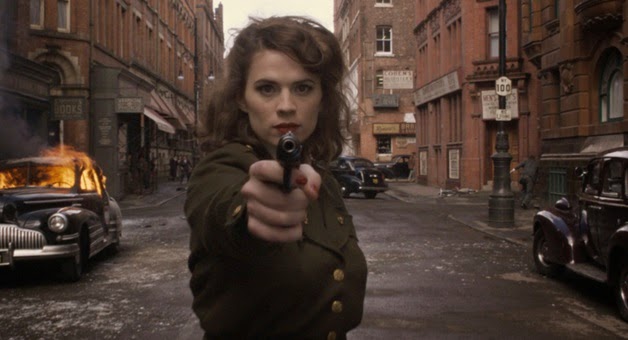
            In A Fistful of Dollars there’s so much focus on the main character that he doesn’t even need a name.  And it’s not like this complicates things  He’s almost always present  and people rarely use names when they talk to each other.  Cormac McCarthy does the same thing in his novel The Road.  We never learn the father’s name or the son’s.  Same with Ryan Gosling’s character in Drive.  We’re more than halfway through Fight Club before it’s pointed out that Ed Norton’s character has never been named.  Heck, Boba Fett’s name is never spoken in the Star Wars movies until about twenty seconds before he’s knocked to his doom in the third movie.
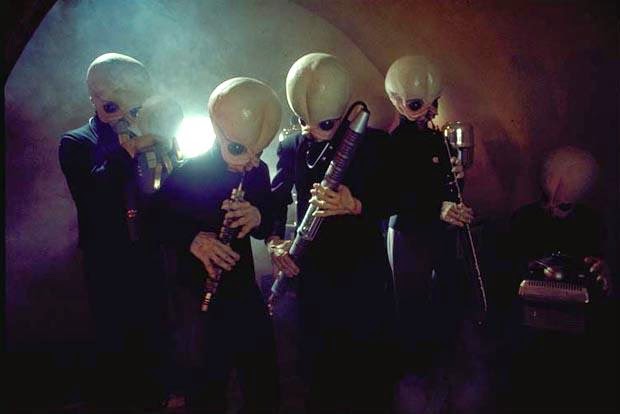
            Speaking of Star Wars… one of the biggest complaints about all the Special Editions and additional canon is how overcomplicated it’s made things.  The folks at Kenner and LucasArts were looking for more marketable material, but rather than making new things they just inflated what was there.  Think of that famous cantina scene with the band and the alien trying to rough up Luke.  Did you know the band has a name?  All the individual musicians do, actually.  So does the alien smacking Luke around (he’s called Ponda Baba).  And the bartender.  In fact, pretty much every single alien in that scene now has a proper name and a race and a back story.
            Good thing none of it’s actually in the movie.
            When I’m writing, I have to know what’s relevant.  I shouldn’t make extended detours to cover irrelevant characters because a detour, by definition, is off the path.  It’s breaking the flow.  People can argue about art or style or literature all they want, but if my heroine runs into the drugstore for first aid supplies after a vampire attack and I spend the next seven paragraphs talking about the twenty-two year old failed football jock who’s running the night shift register because he tore a ligament in his junior year of college and had nothing to fall back on when he didn’t go pro, and how he got his name from his grandfather and it caused a huge argument between his dad and his mom when he was little which was what drove him to be a super-successful athlete and why the torn ligament was such a dream-killer… wait, why was my heroine coming in here?  Does she know this guy?   Is he secretly a vampire hunter (doubtful, since we just heard his whole history)?  Is he the love interest?  Is he a potential—no, never mind.  Our heroine just ran back out to get on with the story.
            Once I start breaking the flow—going off the path—I risk losing my reader.  I need to stay focused on my main characters and the actions they’re taking, with some help from the supporting characters now and then.  The background characters, by and large, should stay in the background, with maybe an odd line of dialogue or description now and then–giving them a name and a page of description isn’t going to add anything because they’re not supposed to add anything.  And if I really feel compelled to put the best man in every scene of my wedding story, then maybe I need to rethink who the main characters are and restructure things accordingly.
            Because if I’m not sure where my characters belong in my story… well, who will be?
            And there you have it.  Clint Eastwood.  Hope it was worth the wait.
            Next time…
            Y’know what?  This is so ridiculously late, and it’s a holiday week, so in a day or two I might revisit the idea of how to horrify people.
            Until then, go write.
September 19, 2014

Inflation

            Sorry about last week.  Still juggling a few things and the ranty blog drew the short straw.  It happens.  Many thanks for your patience.
            It’s not that I didn’t have an idea.  There was a solid idea.  And there was enough to fill a regular post (about three and a half pages).
            Sometimes I don’t have as much, though, and that’s okay, too.  There’s been more than a few times that I’ve jotted off a quick page or so and called it good.  It’s not like the ranty blog has any guidelines about length.
            A lot of markets do, though.  Anthologies, magazines, and journals often have specific minimums and maximums in mind.  Most publishers (big and small) are going to have pretty firm ideas about what counts as a novella or a novel.  And what doesn’t.
            The catch, of course, is that sometimes my story just doesn’t fit with a certain market.  This isn’t a judgment, just a simple fact.  Sometimes SUVs are too big for garages.  Sometimes my car is too small for the bookshelf I’m trying to move.  If I try to claim the people who make bookshelves are biased against my car… well, I’ll look pretty silly.
            But you’re not here to listen to me blab about bookshelves.  I’m supposed to talk about what goes on the bookshelves.
            Sometimes I might really want to place a story somewhere and it just isn’t the right size.  Even if it’s my choice to self publish, it’s safe to say most folks are going to feel cheated if my “book” is only 40,000 words.  What I used to do in this case, and what I’ve seen a few people do recently, is to artificially inflate things.
            Inflation is, no big surprise, when I try to make something bigger by adding more of the same.  It’s when I come up with ways to make every ten word sentence reach fifteen or twenty words.  Or when a two page conversation stretches out to a whole chapter.  Or when I segue away from the main plot for a while and just kind of put it on hold until I get back.  
           These things aren’t happening because of poor editing.  Well, okay, a bit because of poor editing.  Really, they’re happening because I’m stretching to reach a goal that my story really wasn’t intended to reach.  At least, not in it’s current form.  So the story starts to lose its flow and spin its wheels a bit as the reader waits for… well, things to happen.
            Let me give you an example…
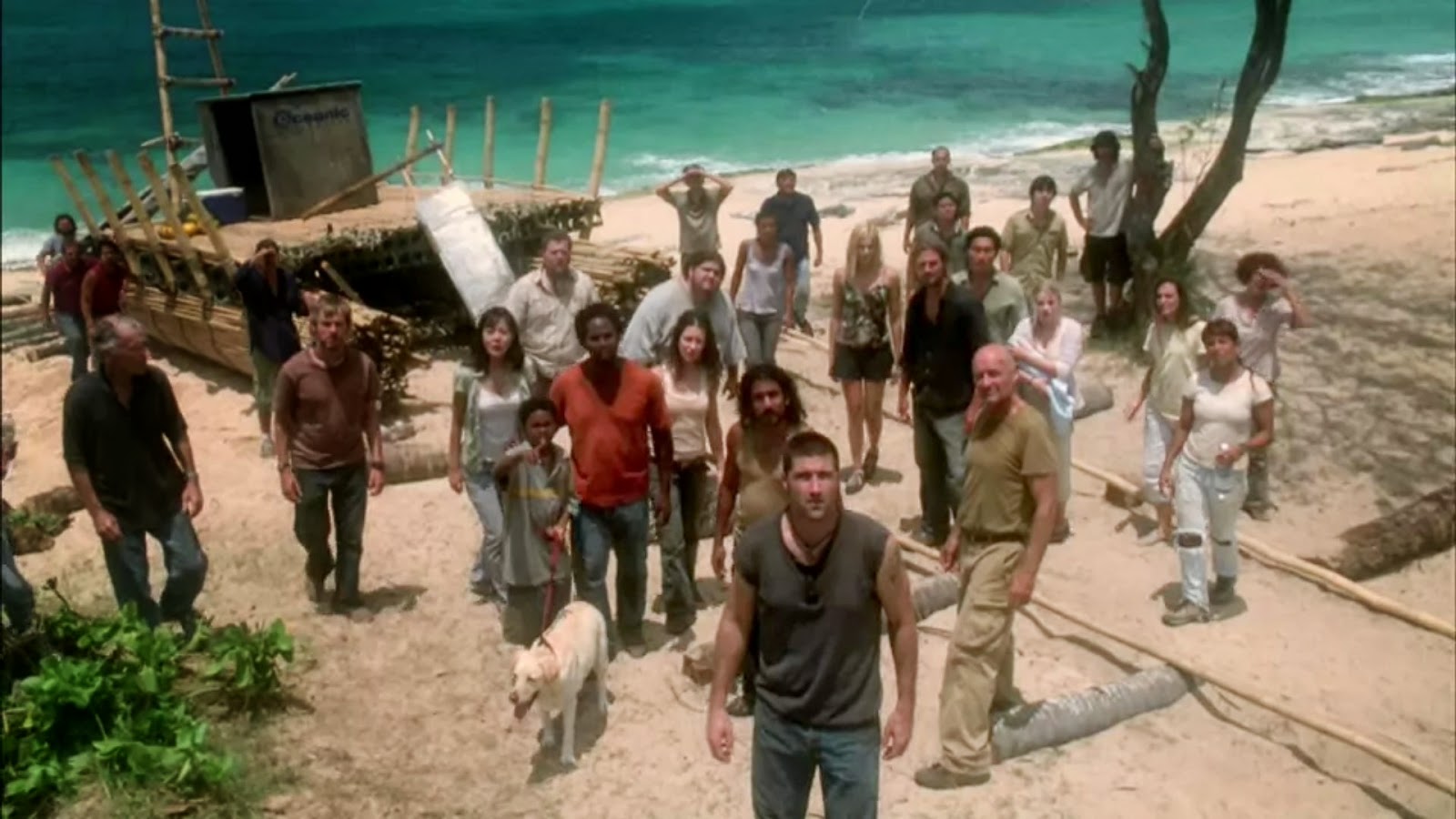
            Monday is the tenth anniversary of the premiere of LOST.  Yep, on September 22, 2004, Oceanic Flight 815 broke up in the air and crashed on an uncharted island in the South Pacific.  The thing is, they were only supposed to be there for three years.  Four tops.  But LOST was a huge show for ratings and the network didn’t want it to end.  So, the story started to inflate.  And inflate a little more.  And a little more.  And it started to flail because it was clear to even the most devoted fans of the show that a number of these third and fourth season stories were just… well, filler.  And once the end was in sight it all started to tighten up again.
            I used to do this a lot.  It was a standard part of my storytelling, to have pointlessly long conversations or needlessly elaborate descriptions.  But I eventually figured out this was all just fat on the meat of my story (sorry, vegetarian readers).  Now I cut all of that, and I can’t help but notice my success rate with placing stories and books has gone quite a bit higher since I did this.
            It also made me more aware of what my stories were.  Some of my ideas were executed in a way that pretty solidly made them short stories.  One or two of them were novellas.  Many of them were novels.  And there were one or two I thought were novels that, well, they were novellas at best.  The number of characters and plot points, the way I’d structured the whole tale… it really didn’t work for a larger format.  But I forced them into that format by inflating them rather than expanding them.
            Here’s a couple of things I learned to look for that could be signs of inflation…
            Repeating information—This can take many forms, and in a way I’d guess more than half the cases of inflation I’ve seen burn down to this.  Sometimes it’s revisiting the same information with no variation.  Sometimes it’s characters repeating a certain phrase again and again for no real reason.  I just finished one book where a woman keeps reminding everyone again and again and again that  “I have a schedule to keep.”  Honestly, I could’ve cut two solid pages out of the book just by removing half the instances of that phrase.
            There’s a writing idea I’ve mentioned before—something we don’t know is information, something we already know is noise.  This method of padding means a manuscript full of noise.
            Overly detailed descriptions—There’s two common versions of this.  One is a massive over-description of characters or objects or locations.  Two pages of irrelevant details about someone’s suitcase or the inside of a diner—no matter what some folks try to say, that’s just an attempt to stretch things out and it’s putting the plot and story on hold while I do.
            The other version is when I have a very complex set of actions like baking a cake or fixing a car or performing an operation and I describe every single step.  Every teaspoon, every bolt, every cut.  Granted, there are times I want to describe all this because I’m trying to build tension.  If I need to seal four bolts to keep the charging insurgents on the other side of this hatch, I’m going to describe every turn of the wrench and every time the threads catch.  But if there isn’t a need for such immediate tension, odds are this is just filler.
            Elaborate Action—This kind of ties to the above.  Some folks write the most over-detailed action scenes ever.  Each and every punch is described in painstaking anatomical detail.  Every time my pistol fires involves a list of facts about the action, the ammunition, and the sensation of recoil in exact foot-pounds.  As above, there are moments for this sort of thing.  A trained NSA agent probably isn’t going to have the same thoughts about firing a weapon that a suburban house-husband does.  But if it’s every moment, it’s just padding and it’s monotone.
            Overuse of names–Repeating names flattens out dialogue.  I’ve mentioned in the past that it’s just not natural to use someone’s name in every other response of a conversation.  So this is artificially adding to the word count and ruining the dialogue at the same time.
            There’s a corollary to this, too.  One book I read recently had a  character named Catherine, which is how she was described in all the text.  Except her friends called her Cathy in dialogue.  And the guy in her office always called her “system lord” for her computer skills and network access.   And her boss called her “Red” (for her hair).  And the semi love interest called her “surfer girl” (how they met).  And every one of these characters used their own name for her in every second or third line of dialogue.  So now, not only was it excess words and flat dialogue, it was also confusing as hell.
           Granted, these aren’t the only signs of things going wrong, but there ones I’ve learned to watch for in my own writing.
            This isn’t to say that a short story can’t be expanded into a novella or a full novel.  But if I’m going to do this, I need to actually add material.  Characters, plot points, story points… something.  I can’t just swell my story with empty words that don’t contribute anything.
            Because that’s the kind of thing that bursts apart with just the slightest prick.
            Next time I’d like to talk about Clint Eastwood.
            Until then, go write.
May 8, 2014

Information vs. Noise

            Many thanks for your patience.  Sorry I missed last week, but—as suspected—travel stuff kind of overwhelmed me.  Texas Frightmare was pretty amazing.  If you’re a fan of horror, or any subgenre of horror, I highly recommend it.
            Enough of that, though.  Let’s make some noise.
            Actually, let’s not.
            Writer and writing coach Damon Knight made an interesting observation about how we receive facts as we read.  When we come across a fact that we don’t know, it’s information (I have four different statues of the Egyptian god Anubis on my desk).  Information is new, and we tend to pay attention to it. 
            A fact that we already know, on the other hand, is noise (the sky is blue, candy is sweet, the KKK is bad).  Noise is annoying.  It’s repetitive and distracting.  We try to block it out and focus on other things, because we know listening to noise is a waste of our time.
            Let me give you an example…
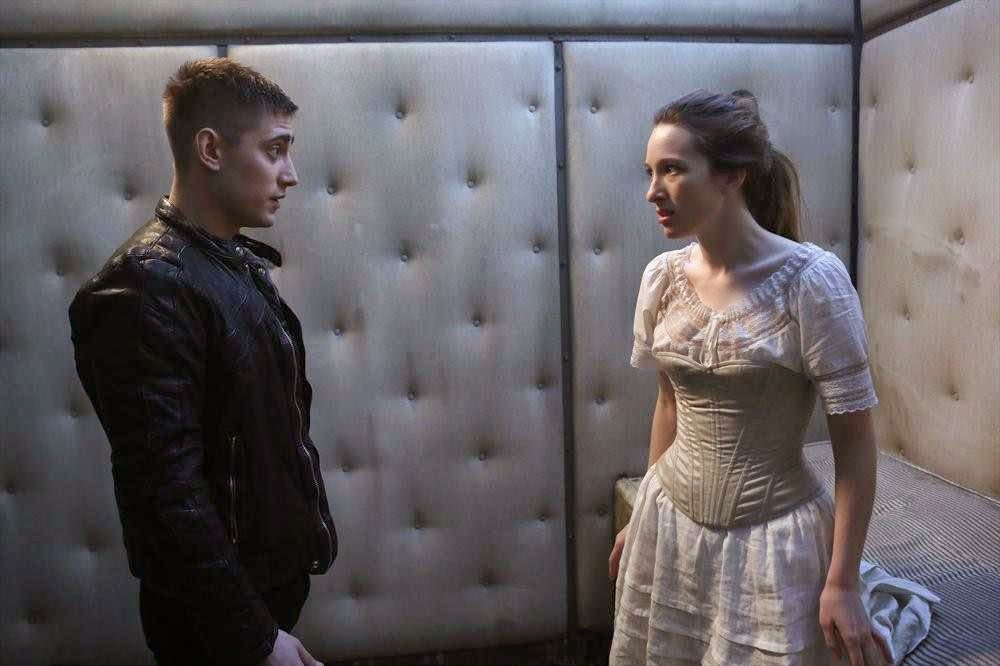
            I saw the pilot for a television show a few months back.  Well, most of the pilot.  I shut it off halfway through.  Normally I wouldn’t call out shows or movies for mistakes, but since this one’s already been cancelled, I don’t think it matters.  The entire first act of Once Upon A Time In Wonderland goes back and forth between young Alice adventuring in Wonderland with her Djinn boyfriend and adult Alice in an insane asylum, where she’d been for years because she insisted her childhood stories were all real. 
            As we kept going back and forth, the style of storytelling (and, granted, the whole premise of the show) made it very clear that Alice actually experienced these things.  So the ongoing inquisition at the asylum became doubly pointless.  I knew they thought she made it up and I also knew it really happened. 
            And information we know is just noise. 
            What’s interesting, though, is that as this back and forth continued, a shift happened.  The Wonderland sequences became noise, too.  Even though they were giving new information, it was still couched in the frame of “this really happened.”  And I already knew it really happened, because that was established early on.  So I began to glaze over the entire first act of the show and wondered when the actual story—something new—was going to begin…
            I just finished a book where everyone in a small village is being affected by mood-altering technology that are making them dull and listless.  The most vibrant people are tired and apathetic, and even pale from lack of sunlight.  As our young heroine returns home, she keeps observing how everyone is tired and apathetic and pale.  The girl at the local Quik-E-Mart is tired and apathetic and pale.  The clerk at the grocery store is  tired and apathetic and pale.  The deputy who she confronts about it is tired and apathetic and pale.  And she comments to her as-yet-unaffected friend about how tired and apathetic and pale everyone seems to be, and they wonder what’s going on.
            And I’m sure you were skimming a bit at the end there, because there’s only so many times you can see “tired and apathetic and pale” before you start glossing over it. It’s what I ended up doing.  I have to admit, I skimmed large swaths of the book because it kept showing me the same things over and over again.
            Y’see, Timmy, I need to be aware of noise not only in my story, but in the way I tell my story.  It’s unavoidable that I’ll need to repeat something every now and then.  But this should be the rare exception, not the standard pattern of my storytelling. 
            My story should always be moving forward.  My characters should be growing and learning and developing.  This is all progressive motion, and it’s what every story needs to survive. 
            Because if my story doesn’t have forward movement, it’s just me sitting there making noise.
            Next time, I’d like to speak in code for a bit.
            Until then, go write.

Categories