
December 24, 2015

Happy Holidays!

             Hey, there!  Thanks for checking in on Christmas Eve!  Or Krampusnacht, which is a lot more dangerous, depending on some of the choices you made this past year…
            Speaking of choices, I thought I’d toss out something real quick, just in case the holiday season had sparked a story idea or two in your mind.  I wanted to give you a quick warning about Christmas.
            No, not in a “Krampus is coming” sort of way…
            Writing stories that revolve around Christmas, or any holiday, is tempting.  They’re very relatable.  A lot of the groundwork is already done for us (there’s no need to explain the plump guy in the red suit sliding down the chimney). It can be a great contrasting background for some stories.
            Plus, let’s be honest. Christmas stories are lucrative.  There’s a fair argument to be made they’re consistently one of the best-selling genres out there, especially if you write screenplays.  Think of all those cable channels that are just brimming with original movies.  Heck, I had a short story in a holiday-themed anthology this year, and I know of two or three other anthologies that were open for submissions, too.
            Not to sound all capitalist, but… there’s a lot of money to be made off Christmas.
            Now, that being said…
            If I’m thinking about a clever idea for a holiday story I need to be careful.  The ugly truth is, it’s all been done before.  All of it.  No matter how clever or original I think my take is, there’s a good chance someone’s done it before.  Because, as I mentioned above, this is a huge market and lots of folks have written lots of stories.
            Look at it this way.  How many holiday specials are a tradition in your household?  My lovely lady and I enjoy all the classics, but we also dig out the Christmas episodes from some of our favorite shows.  And we have a big stack of about a dozen movies we watch every year about this time.  So, without even trying, there’s over two dozen Christmas stories.  Comedies. Action flicks.  Superhero movies.  Message movies.  Even a few horror stories. 
            And that’s just a little bit of peeking in the closets.  Think of all the different Santa Claus stories out there.  Good Santa. Evil Santa.  Naughty Santa.  Robot Santa.  Accidental Santa.  New Santa.  Temp Santa.  Kidnapped Santa.  Arrested Santa. Hell, I’ve now seen multiple stories where Santa is an action star defending his workshop from invading forces.
            How about A Christmas Carol?  Personally, I’ve seen the Dickens classic done many times in the past and present, and even once with time travel on an alien planet.  There’ve been versions that leaned toward comedy, toward drama, toward horror.  Heck, I remember a bionic version on The Six Million Dollar Man when I was a kid.  No, I’m dead serious.  Steve Austin in a Santa suit leaping around and convincing a stingy businessman he was a spirit.
            Ahhh, says me. But I’m not really doing a classic Christmas story.  I’m being clever and going back to the old country.  I’m writing a Krampus story.  How many people have ever heard of Krampus?
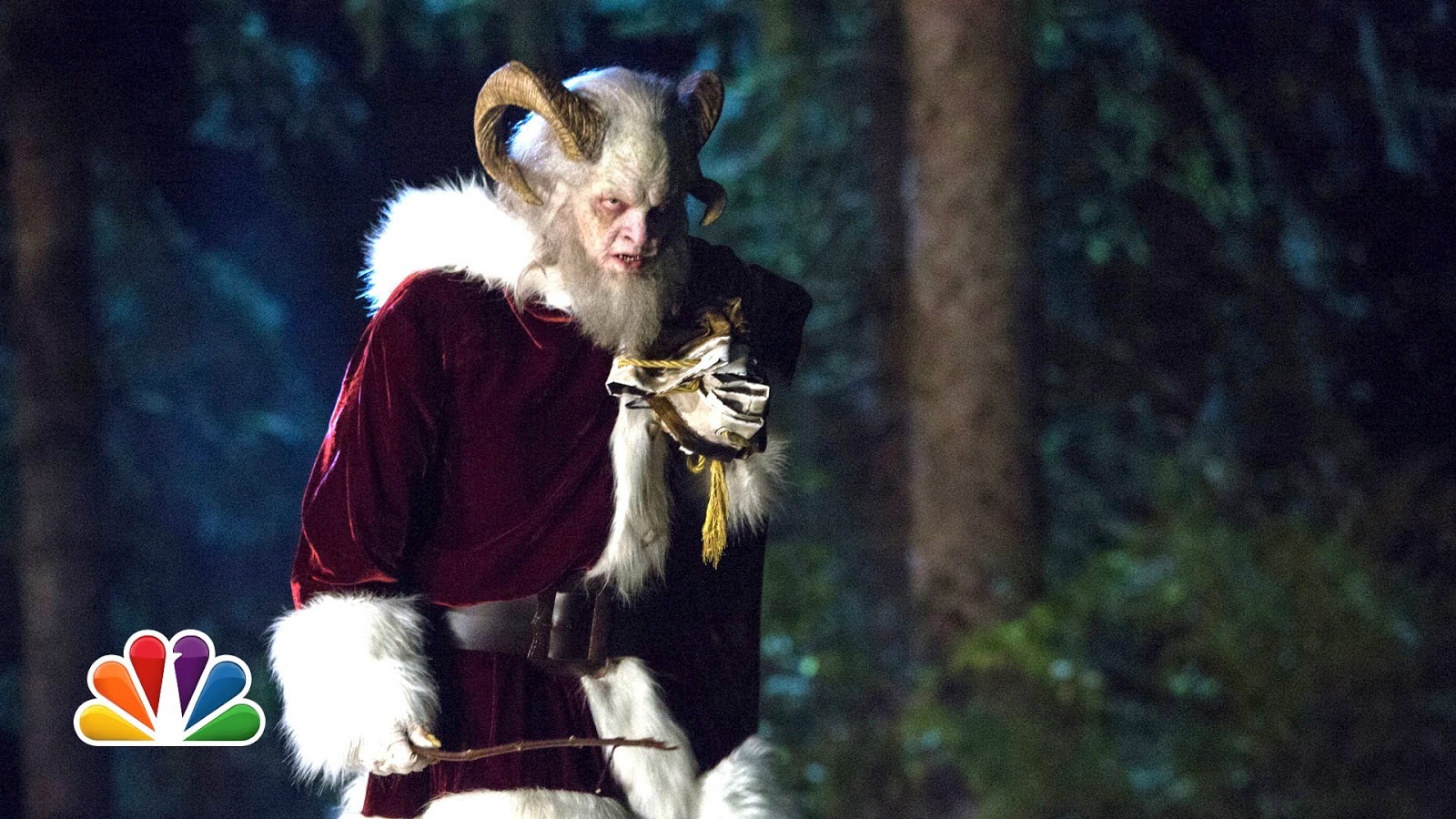
            Well, you may have heard of a Finnish film called Rare Exports from a few years back.  That’s pretty much a Krampus story.  Grimm did a great Krampus holiday episode last year.  There was a Krampusmovie this year.  He also shows up in that anthology I mentioned up above, and in an anthology movie I just watched the other night with friends. 
            Again, all done many times, and in many ways.
            I’m not saying these stories can’t be done, but I need to be aware that this is a fruitcake that’s been regifted a lot.  So if I’m going to try passing it along, too, I should have a good idea how many hands it’s already passed through.  I don’t want to be giving it to someone who just saw it a few hours ago.
            How’s that for one last awful holiday metaphor?
            So think about stories this holiday season.  But if you’re thinking about holiday stories… put in a little extra thought.
            Next time, let’s review a few things.
            Until then… Merry Christmas.
            Joyous Kwanzaa.
            Happy Holidays.
            Glorious Ascension of Tzeentch.
            Now go write.
January 24, 2015

My Story

            Late again.
            But I’m keeping lots of other schedules, if that matters.
            Anyway…
            I’d been playing around with the basic idea for this post when I was scooped by Welcome to Night Vale.  If you’re somehow not familiar with it, it’s a fantastic podcast that purports to be the community radio show from a very, very odd little town out in the desert (although not as odd as those jerks in Desert Bluffs).  If you follow them on social media, they occasionally toss out little Night Vale-ian sayings about life, death, horoscopes, janitors, and so on. A week or so back, there was this one…
           
            Death is only the end if you assume the story is about you.
            Which is a funnier way of saying what I wanted to talk about.  See, I was going to tell you about the dinner I had the other night.  It was one of those nights where my girlfriend and I just decided to scrounge up meals for ourselves rather than make an actual meal together, and I’d been having odd cravings for scrambled eggs.  I’d also been feeling a little nostalgic because—silly as it sounds—we didn’t eat breakfast Christmas day.  And I’d been thinking about the breakfasts my dad would make on Christmas mornings when my brother and I were kids and we still lived at home.  It was a small, simple tradition, but it was something I’d been thinking about.
            So… That’s what I had for dinner.  Breakfast.  I sliced some kielbasa—yep, kielbasa as breakfast sausage—scrambled three eggs, added a few mushrooms and a bit of cheese, and cooked it all together.  Which I ate while watching an old episode of Home Movies. The ren faire episode, if you care.
            It was a wonderfully satisfying dinner.
            Well, it was to me, anyway.
            What am I getting at?
            There’s a Mel Brooks quote I’ve paraphrased here a few times before.  “Tragedy is when I cut my finger. Comedy is when you fall into an open sewer and die.”  It’s usually used to emphasize the comic aspect, but I think it works well in reverse, too.  Many people fail to see that what they consider great, powerful drama is actually, well… not.
            I’ve mentioned beforeseveral times before—that for screenplay contest readers one of the most dreaded scripts is one that comes with a “based on a true story” label.  And the reason for this is that most of us live pretty average lives.  Yeah, even the dramatic parts. We have great successes and miserable failures.  We get knocked down and we pick ourselves back up (or not, sometimes).  We lose people we care about and we find new loves.
            So a lot of these “based on a true story” scripts tend to be… well, dull at best.  Tedious at worst.  Neither of which are labels we want on our writing
            Y’see, Timmy, my life feels special to me because, from my point of view, I’m the main character.  So lots of elements of my life may seem exciting. boring, hysterical, or tragic to me, but that doesn’t automatically mean they will to you.  Or to him.  Or to her. 
            Honestly, quite a bit of my life is average.  Many of you would probably even call it boring.  And I recognize that, which is why I rarely use me as a reference.  Or as a guideline for what most people should know or how most people would react.
            One of the skills we all need to develop as a writer is the ability to sift good ideas from bad ones.  Or common ones.  To recognize that just because something hits me hard doesn’t mean it will have the same resonance with everyone else.  It’s an empathy issue, something I’ve brought up many times before.  If I have trouble honestly seeing the world through different people’s eyes, I’m just not going to be good at this.
            I don’t want to tell you my story.  My story is boring.  That’s why I want to tell you St. George’s story.  And Danielle’s story. And Mike’s story. And the story of how Eli and Harry met three times before they ended up traveling together.
            What story are you going to tell?
            Next time I’d like to talk about firearms, power tools, sports cars, and other expensive things people spend money on for the wrong reasons.
            Until then, go write.
November 26, 2014 / 3 Comments

More Dating Tips

            Very sorry about missing last week.  Copyedits. And Thanksgiving is this week, so I know nobody’s going to be reading this on Thursday.  So I figured I’d get this up today and hope to break even.  Sort of…
            Anyway, this week I wanted to blab on about dating your work.  And I figured the best way to do that would be to talk about the Cat & Fiddle.
           If you’re not familiar with Los Angeles, the Cat & Fiddle has been a Hollywood landmark for about thirty years now.  It’s a little pub in the middle of Hollywood with a nice outdoor patio.  It’s always been popular, but I think it managed to avoid being hip or trendy in all that time.  Part of Casablanca was filmed on that location.  Seriously.
            Heck, there’s a reference to the Cat & Fiddle about halfway through my book, 14.  It was a landmark, as I said, and my story is very much about Los Angeles.  Why wouldn’t I refer to it?
            Except now it’s closing.  The landlord found someone willing to pay twice as much so, well, the cat’s out in the cold.  No more Cat & Fiddle unless they can find a new place.  Somewhere else.
            What’s my point?
            Just like that, 14 has become dated.
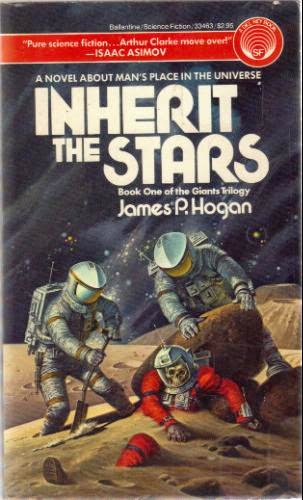
             Still, I’m not as bad off as James P. Hogan.  When he wrote his novel Inherit the Stars (first book in the Giants series) back in 1977, he envisioned the US facing off against the Soviet Union in a race to colonize the solar system (a race that gets interrupted by an amazing discovery, granted…).  Needless to say, the first three books in that series are extremely dated.
            When we say a book is dated, we mean it’s a book someone can look at and say “Ahhh, well this was clearly written back when…”  It’s a book that isn’t about now, it’s about then.  And when my book’s not about now, that’s just another element that’s making it harder for someone to relate to my characters and my story
            Remember in school when you had to read classics?  Some of the hardcore Dickens or Austen or maybe even Steinbeck.  One of the reasons they can be hard to read is because of the references in them.  They talk of events or customs or notable persons that are foreign to us.  Hell, half the time so foreign they’re just gibberish (bundling?  What the heck is bundling..?).
            When we hit these stumbles, it breaks the flow and makes the book harder to enjoy.  A dated book has a shelf life, like milk or crackers.  The moment it gets this label, there’s an end in sight.
            Because of this, there’s a common school of thought that I shouldn’t make any such references in my work.  My story shouldn’t mention current fads or events.  I don’t want to have references to celebrities or television shows or bands or music.  If I want to have my writing to have any sort of extended life—the “long tail” as some folks like to call it—it can’t be dated.
            And there is something to this.  I’ve seen metaphor-stories fall flat with readers less than a year after the events they’re referencing.  It was funny at the time, but if you watch Aladdin today it’s tough to figure out half the stuff the Genie’s riffing on (what the heck’s with the whoop-whoop fist thing…?).
            However…
            When the GOP shut down the US government last year, my friend Timothy Long pounded out a longish comedy short story called Congress of the Dead.  And for a few months it sold really, really well.  It’s not doing much these days (it’s still funny but not as topical), but he knew going in that it wasn’t going to be timeless and used that knowledge to his advantage.
            So, which way should I go?
            Well, here’s the catch.  My work is always going to end up dated.  Always.  There’s no avoiding it.  Stories get dated by technology and cars and geography. Things people assume will never change (like the Cat & Fiddle or the U.S.S.R.) end up changing. It happens all the time.  It can’t be helped.
            Consider this…
            Stephen King’s Cujo couldn’t happen today.  Cell phones undermine the entire plot.  Same with Fred Sabehagan’s Old Friend of the Family.  The entire plot of Lee Child’s first Jack Reacher book, Killing Floor, hinges on an idea that was obsolete six months before the book even reached stores.
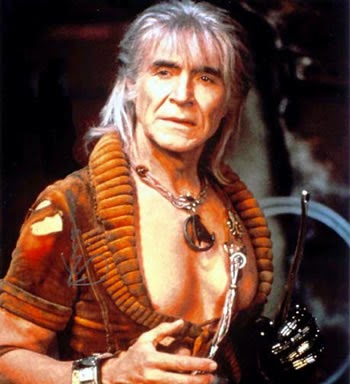
            Let’s not even talk about speculative fiction.  How many sci-fi shows predicted events we’ve since caught up with and passed?  Buck Rogers left Earth on a deep space probe in 1987, and Thundar the Barbarian saw the world collapse in 1994.  Star Trek told us the Eugenics Wars happened in the 1990s, which was also when Khan and his followers were launched into space in cryogenic suspension (presumably using the technology from the Buck Rogers deep space probes).  According to the Terminator franchise, Judgement Day happened in 1997 (later adjusted to 2004).  Then there’s 2001: A Space Odyssey and it’s sequel 2010.  Heck, even Back to the Future is just a few short weeks away from becoming a silly, dated comedy.  It’s going to be 2015 and there are no self adjusting clothes or flying cars or Jaws XIX (it looks like we did get hoverboards, though…).  And, hell, supposedly in 2015 people are still using faxes as a high-tech method of communication.
            If I really don’t want to date my work, I can’t mention anything.  Cars, music, movies, television shows, networks, books, magazines, sports teams, games, cell phones or providers, Presidents, politicians, political parties, countries, businesses of any kind, actors, actresses… all these things and a few dozen more. All these things change all the time in unpredictable ways.  So if I want to be timeless, I can’t bring up any of them.
            The problem is, though, these are all things that are part of our lives. They come up in conversations.  They shape how we react to other things.  So if I’m writing a realistic character with natural dialogue… these things will be there.
            So what’s this all mean?
            In the big scheme of things… don’t worry about it.
            That being said, I  probably shouldn’t base my entire plot around readers knowing the lyrics to Taylor Swift’s latest single, and (much as I love it) I might not want to use a reference to the second season finale of Chuck as the big button on my chapter.  There’s a reason some things stand the test of time, some become cult classics, and others become… well, we don’t know, do we?  And I should never be referencing something no one knows about.
            There isn’t an easy answer for this.  I’d love to list off some rules or just be able to say “8.3 references per 50 pages is acceptable,” but it isn’t that simple.  A lot of this is going to be another empathy issue.  As a writer, I need to have good sense of what’s sticking around and what’s a fleeting trend.  What references will people get in ten years, which ones they’re going to forget in six months, and how blatant these references need to be to get the job done.
            Getting dated is unavoidable.  It is going to happen to my work.  And yours. And hers.  But if we’re smart about it, we can get the most out of it while we can and still make sure that date’s as far off as possible.
            Next time, I’d like to talk about dialogue.  And I’ll probably make a mess of it.

            Until then… go write.

June 26, 2014 / 3 Comments

Limited Discussion

           I wanted to revisit something I blabbed on about a few years back.  I’ve kind of touched on it a few times since then, but I thought it would be good to just babble on about it more specifically.  So if you’ve been reading this for a while and you have a phenomenal memory… sorry.
            I see a lot of television shows that are getting rolled out and cancelled just as fast.  One thing that amazes me is how many of them don’t really seem like television ideas.  They’re cool ideas, yes, but many of them are very A-to-B sort of stories.  My characters have been presented with a single, overriding problem or conflict, and once they resolve it… well, that’s it.  Which is a great thing for a feature film or a single season, but very rarely works well with a long-running series.
            And I’d say that long string of cancellations kind of backs me up on that.
            Some story ideas are, as I just mentioned, pretty much straight line affairs.  There may be a few steps, but in the end it comes down to achieving a single goal.  There are also the broad ideas, the ones you tell people and they say, wow, that could go on forever.  In the past, I’ve referred to these, respectively, as limited and unlimitedconcepts.
            What do I mean by that?
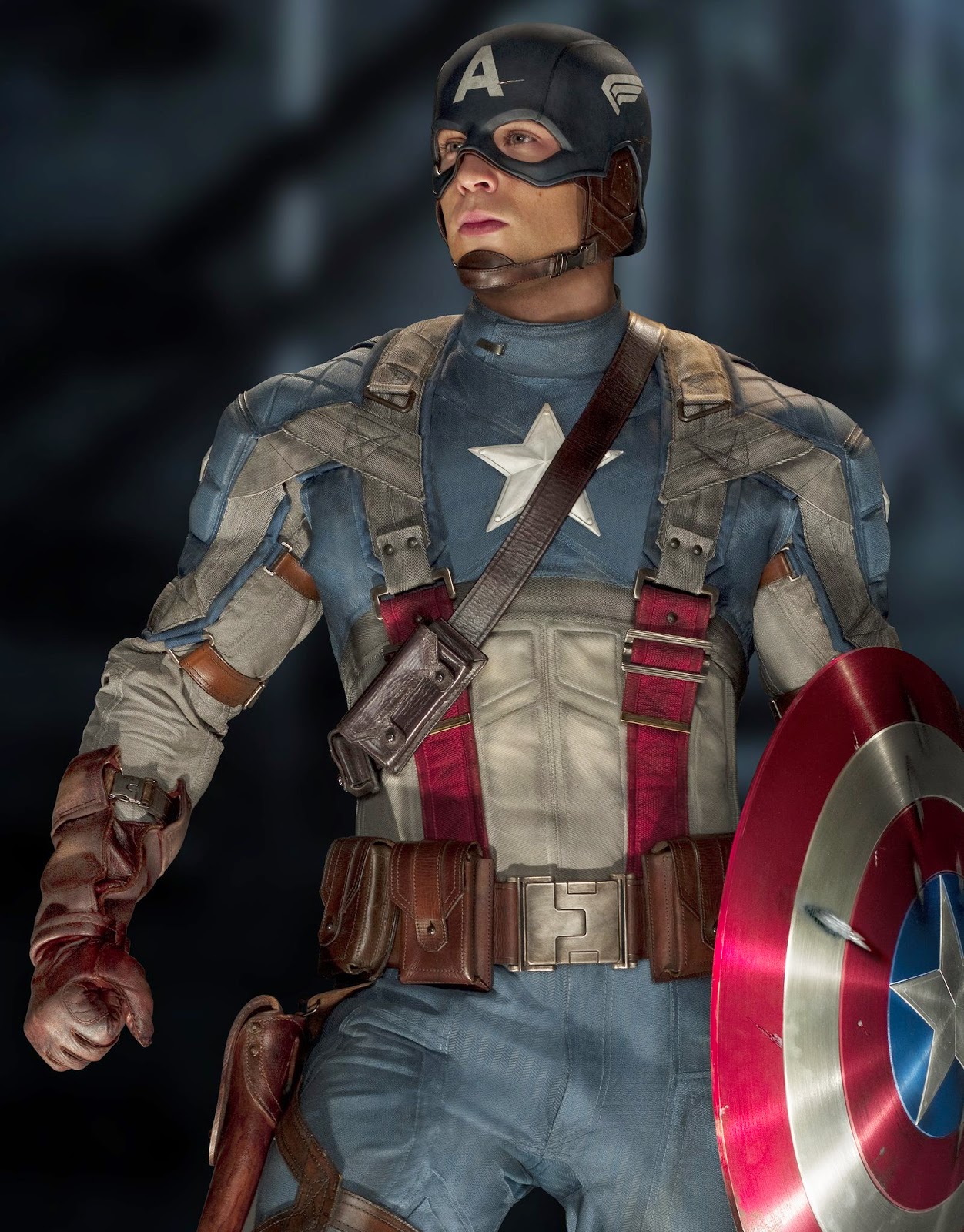
            An unlimited concept generally has a very broad scope.  Sherlock Holmes uses deductive reasoning to solve mysteries.  Spider-Man and Batman fight crime to make up for the death of their loved ones.  Captain America and Superman fight to protect rights and ideals that they believe in.  Joe Ledger is a soldier turned cop turned super-agent working for the mysterious Mr. Church (or is it Mr. Deacon?).  The crew of the starship Enterpriseexplores the distant reaches of the galaxy.  Jack Reacher just wants to wander and see the country, but he’ll stop to help folks out sometimes.  Detective Kennex and his android partner, Dorian, investigate homicides in the future.
            A key thing to note.  When we talk about unlimited concepts, nine times out of ten we end up talking about the characters over the plot.  Sometimes it’s the setting, but usually it’s the characters.  An unlimited concept isn’t about a specific set of events, which is why it’s also sometimes also called an open story.
            A limited concept, as the name implies, can only go so far.  As I mentioned above, it’s an idea that has an end inherently built into the concept.  A road trip story is a classic limited concept—as I mentioned above, it’s A-to-B.  We’re trying to get (physically or metaphorically) from here to there.  The passengers of Oceanic flight 815 want to be rescued from their weird tropical island and the residents of Chester’s Mill want to be rescued from the big invisible dome over their town. Tom Jackman wants to find a way to control his dark half.  Mark Watney wants to find a way to survive on Mars for the years until a rescue mission comes.  The crew of the starship Voyagerwants to make their way home from the other side of the galaxy.
            In all of these cases, the characters have very clear, straightforward goals.  Once that goal’s reached, the story is over.  It doesn’t mean everybody in Chester’s Mill lives happily ever after or the Voyager crew never goes into space again, but those are all different stories which don’t have to do with the premise I mentioned above.
            Why am I babbling about this?
            If I don’t understand what kind of an idea I have, it’s very easy for me to mess it up.  Trying to play one as the other almost never works.  By their very nature, these concepts are very true to themselves.
            For example…
            Several years back I was part of the staff for an online game.  One time while we were brainstorming new quests for the playerbase, someone suggested taking one of the old ruined castles at the fringes of the map and making it haunted.
            “Okay,” I said.  “And…?”
            “It’s a haunted castle.”
            “Right.  So what’s the quest?”
            “It’s.  Haunted.”
            An unlimited concept is almost never a story in and of itself.  It’s almost always lacking any sort of plot or narrative structure.  I need to add elements to make it work as a story (or a quest).  A fair number of “art” films tend to be unlimited concepts—they’ve got fantastic characters, beautifully rendered locations… but nothing else.  Nothing happens because unlimited concepts don’t contain a conflict or goal for the characters to strive for.
            On the other hand, a common thing I see people do with limited concepts is to keep pushing the goal away to extend the story (or series).  It’s an A-to-B, which means when I hit B the story is over.  So some folks will swerve around B for a while, maybe go back to A because they forgot a few things.  Somehow we end up at 4.2 (no idea how we got here), then we get close to B and veer off at the last minute…  If I’m doing a Los Angeles to Boston road trip, think how annoying it would be to start circling Boston but never actually get there.  Or I suddenly find out I need to be in San Diego instead.  That’s what it’s like when a limited concept artificially extends itself.
            It’s also cheap if I pile on the limited concepts, giving my characters a dozen or three goals that need to be achieved—either all at once or one after another (see above).  In my earlier days, before I had a better grasp of structure, I thought this was how you filled a book.  I still see lots of writers do it when they start out.
            The truth is, it’s very tough for either of these concepts to work alone.  An unlimited one almost never does, but that hasn’t cut down on the number of art films or “experimental” stories.  A limited one might squeak by as what’s often called a “plot driven” story.  Neither of these tends to be very satisfying.
            For a really great book or screenplay, I need both working together.  I need to put that fantastic character (the unlimited concept) and give them a solid goal they need to achieve (the limited concept).  As I’ve often said, my story won’t succeed without good characters, but they also need to do something and it needs to challenge them somehow
            If I don’t have good characters or I don’t have them doing anything… well…
            The math isn’t that hard.           
            Look through that document of story ideas.  Or the file folder.  Or the notebook.  If you’re reading this, odds are you’ve got at least one of those.  Figure out if your ideas are limited or unlimited.  Because then you can figure out what they need to become solid stories.
            Next time… well, there haven’t been many comments lately, so I’m guessing none of this stuff interests a lot of you.  So next week I’ll try to redeem myself

            Until then, go write.

Categories