November 17, 2016 / 1 Comment

That Cool Moment When…

            Hey, folks. So very sorry I missed last week.  I had this thing all plotted out and then I somehow ended up in the Mirror Universe. And not the cool part of the Mirror Universe… the bad part.
            Hey, speaking of cool stuff…
            I read a book recently where the characters spent most of their time trying to verbally one-up each other. Every line of dialogue was a cool, badass line.
            Which still wasn’t quite as exhausting as a couple books I’ve read that were just non-stop super-cool action and conflict from page one.
            Although, that was better than the folks who tried to do an uber-cool plot structure of a cool flashback within a cool story within a really cool flashback.
            Saying “cool” that many times is kinda… uncool, isn’t it?
            Now, with that in mind…  I’d like to repeat a little experiment I did for some of you a few years back.  Please pay close attention to the following paragraph.  Don’t write anything down, but try to keep a lot of it in mind.  There’ll be questions afterwards.

            LA LA LA LA LA LA LA LA LA LA LA LA LA LA LA LA LA LA LA LA LA LA LA LA LA LA LA LA LA LA LA LA LA LA LA LA LA LA LA LA LA LA LA LA LA LA LA LA LA LA LA LA LA LA LA LA LA LA LA LA LA LA LA LA LA LA LA LA LA LA LA LA LA LA LA LA LA LA LA LA LA LA LA LA LA LA LA LA LA LA LA LA LA LA LA LA LA LA LA LA LA LA LA LA LA LA LA LA LA LA LA LA LA LA LA LA!!
            So…
            What parts of that stood out to you?  What was the high point?  Did the paragraph hold you from beginning to end?
            Odds are none of it stood out for you.  And the high point was probably when it ended, right?  In fact, I’m willing to bet you got halfway through the first line and just probably skimmed down to the end. 
            Nah, don’t worry, I won’t hold it against you.  Any sane person would’ve done the same thing.  It was just a bunch of LAs.
            Here’s another example. A variation on the theme, you might say.  Have you ever heard a tuning fork?  Tuning forks are perfect, y’know.  If you have a middle-C tuning fork it will hit that note and hold it for ages. 
            That said… have you ever felt compelled to listen to a tuning fork for hours?  No? Why wouldn’t you want to listen to constant perfection?
            Because it’s boring!
            A tuning fork plays one note.  That’s it.  It’s the musical equivalent of LA LA LA LA.  Middle C is great, and any musician from Bach to Pharrell will tell you it’s all but impossible to work without it–but it can’t be the only note.  It’s part of a system of highs and lows that we call music.
            Storytelling works the same way.  A story that’s just all the same thing is the literary equivalent of a tuning fork.  It’s neat for a minute or two… and then it starts to wear on your nerves. 
            I’ve mentioned this idea before, because it applies to several aspects of writing.  Structure.  Dialogue.  Action.  I can’t have a story that’s all action.  I can’t have a script that’s nothing but Oscar moments.  Every line can’t be a cool line.  Because if it’s all at the same level—if it’s all cool—then it’s all monotone.
            Look at Doctor Strange.  Big popular Marvel movie right now, yes?  And, yeah—no spoilers—it has scenes of magical combat and all that skyline-bending we saw in the commercials.  Lots of other cool stuff, too.  But it also has quite a few scenes where Strange just reads medical reports and books.  He listens to music.  At one point he has a conversation with a guy on a basketball court.  He even writes a few emails.
            Y’see, Timmy, it’s the up-and-down, back-and-forth nature that makes for interesting stories.  If you look at any good story, you’ll see that most of its elements swing back and forth between extremes.  Lows and highs.  Calm and frenetic.  Average and unforgettable.
            Because, again, if my story elements don’t have this up and down nature, if it’s all the same, then it’s just a line.  It doesn’t matter how high the line is, even if every point on it scores a perfect ten, even if it all goes to eleven…it’s still just a flat line.
            And you know what “flatline” is another term for, right?
            Dead.
            Next time… well, next Thursday is Thanksgiving here in the states.  But I owe you all one from last week, so I’ll try to get something up the night before.  That way I won’t feel like a total fraud.

            Until then, go write.

December 11, 2015

Protagonist #3

            I can’t believe the year’s almost over.  Where did the past few months go?
            I wanted to get much more done this year.  But we’ll talk about that in a few weeks…
            While posting my last few little rants and adding in links, I realized there’s a lot of basic stuff I haven’t revisited in two or three years now.  I think part of it is because I’ve been doing more conventions and talking about these topics there, so it feels like I’m going over them all the time.
            Anyway, over the next month or two I want to go over some things like dialogue, stakes, action, and a few other random tips and tricks I’ve stumbled across during the many years of mistakes that make up my career.
            Right now, I wanted to talk about some character basics.  Three of them, to be precise.  Put this rant near the top of the advice column.  I’m really, really tempted to call it a rule, but I think that would spark too many comments about various exceptions and distract from the point I’m trying to make.
            Pretty much across the board, my characters need to be believable, relatable, andlikeable.  If my protagonist doesn’t have these three traits, I’m pretty much screwed.  It’s not impossible to have a story where my characters don’t have these traits, but it’s going to be an uphill battle.  Like, rolling-a-boulder-up-a-mountain level uphill battle.
            Allow me to explain by going over each of these. We’ll do that with my frequently-used volunteer character, Dot.  Also, there’s a lot of back and forth between them, so I apologize now if this gets a bit confusing or jumbled at points. 
            First up, Dot has to be believable.  Almost nothing is more important than this.  If my reader can’t believe in the character within the established setting, if they don’t feel like a real person, my story’s got an uphill battle going right from the start.  It doesn’t matter who (or what) Dot is, she must be believable.
           How do I do that?

           Dot’s dialogue should sound natural.  Her words have to flow naturally and they have to be the kind of words Dot would use.  I’ve seen countless stories where four year olds talk like they’re forty and forty year olds talk like robots.  When Dot speaks, it can’t be stilted or forced, and it shouldn’t feel like she’s just spouting out my opinions or political views or whatever.

            The same goes for Dot’s actions, reactions, and motives.  There has to be a believable reason she does the things she does.  A reason that makes sense with everything we know about her or will come to know.  If her motivations are erratic and just there to push the plot along, my readers are going to pick up on that really quick.  If I find myself thinking (or shouting) “What are you doing?!” at a character, it’s a good sign their motivation isn’t believable
            Also, please keep in mind that just because Dot is based on a real person who went through true events doesn’t automatically make her believable.  Sometimes, believe it or not, it can make her seem even more contrived.  I’ve talked here several times about the difference between reality and fiction, and it’s where many aspiring writers stumble.  Don’t forget, there’s no such thing as an “unbelievable true story”—only an unbelievable story.
            Speaking of which, this first trait can be an immediate challenge for genre writers, yes?  Werewolves aren’t believable  because they’re not real.  Neither are leprechauns.  Nanotech cyborgs, aliens, ghosts, hive minds, demons, Santa Claus, Elder Gods, barbarians from the Ninth Realm of Shokar—we’ve pretty much proven all of these things are fictional, much as we might want some of them to be real.  But, as I just mentioned, part of this trait is making them believable within the setting of the story.
            Next, Dot needs to be relatable.  As readers, we enjoy seeing similarities between ourselves and the characters we’re reading about. It lets us make extended parallels with what happens in their lives and what we’d like to happen (or be able to happen) in our own lives.  It’s not a coincidence that most stories deal with ordinary people in extraordinary situations.  It’s hard for readers (or an audience) to enjoy a story when they can’t identify with the character on some level.
            Part of this is me being aware how my readers are going to view and react to Dot.  There needs to be something they can connect with. Almost all of us can relate to blue collar, middle class folks easier than multi-millionaire celebrities.  I feel safe saying everyone reading this—or writing it—has been the victim of an awful break up or two.  Very few of us have hunted down said ex for a prolonged revenge-torture sequence in a backwoods cabin.  Hopefully none of us.
            This is also going to tie back to the idea of being believable.  Dot’s actions and reactions, her motives and experiences, are a big part of what’s going to make her relatable.  This is how the readers come to understand her.  By the same token, the less believable or common a character element is, the less likely it is my readers will be able to relate to it.  If I make Dot a reincarnated, retro-futurist one-percenter who eats nothing but snake hearts, speaks only in Babylonian metaphors, and firmly believes the lizard men are going to be returning to claim the world (and welcomes her new reptilian overlords)… well, it’s going to be a real challenge for my readers to identify with that.  And if readers can’t identify with Dot, why will they care what happens to her?
            When Dot doesn’t have any character traits we can relate to, we’re no longer understanding her—we’re observing her.  It’s an immediate wedge between the readers and the character, keeping them at arm’s length.  And that separation is going to keep readers from getting caught up in my story.
            Again, this isn’t to say characters can’t have amazing traits or abilities, but  those can’t be my focus.  The most successful takes on Superman haven’t been the ones that focus on his godlike powers, they’ve been the ones that emphasize he’s still basically a guy who grew up in all-American, small-town Kansas.  Jessica Jones may be able to punch through a wall, but her story is really about how she chooses to deal with her past—therapy groups, lots of drinking, and random sex with guys she barely knows.  Jonathan Maberry’s Joe Ledger is a trained and lethal warrior who still prefers to spend his time playing with his dog, wearing Hawaiian shirts, and enjoying burgers and beer. In my own book, The Fold, Mike may have one of the most amazing minds on the planet but he really just wants to fit in and be like everyone else.
            Finally, and perhaps most importantly, Dot has to be likeable.  There has to be a reason we, as readers, want to follow her story and not his or hers or theirs.  We have to like her.  There should be elements to her we admire and maybe even envy a bit. We have to be somewhat invested in her accomplishing her goals and making it to the end of the story.
            Keep in mind, likable can mean a lot of things.  It can mean adorkable klutz but also fantastic work ethic.  Maybe Dot has impeachable integrity.  Maybe she takes care of every stray she finds.  She could be really funny or perhaps she’s just always there when her friends need her.  Or maybe she’s the one who just says what needs to be said and stands up for the little people, no matter the cost to her.
            On the flipside, if she’s morally reprehensible, a drunken jackass, or just plain boring… well, what’s going to keep people reading?  Nobody likes the person who kills babies or pets.  We’re rarely interested in boring people (because none of us think we’re boring) and we don’t like stupid people(because none of us think we’re stupid).  If this is how I’m characterizing Dot, nobody’s going to read through a few hundred pages of her exploits.  Or lack of exploits.
            Again, this doesn’t mean my character has to be a saint, or even a good person.   In Doctor Sleep, we find out that Danny Torrance grew up to be a major, life-ruining alcoholic. Cat Grant on Supergirl is a ruthless, often cruel boss who can’t even be bothered to get her assistant’s name right.  Sherlock Holmes has often been portrayed as curt and with very little patience for those he thinks are inferior to him (which is most people).  Raymond Reddington is a ruthless “concierge of crime” who doesn’t hesitate to pull a trigger or stab someone in the back (figuratively or literally).  We’re still interested in them as characters, though, either because of underlying codes of honor or because they’re doing things we wish we could get away with.  And because of this, we’re willing to follow them through their stories.
            Now, I’m sure many of you reading this can list off a dozen or so examples from books and movies of characters that only have one or two of these traits (someone probably skipped down to the comments after the first few paragraphs and started typing them up). It’d be silly for me to deny this.  Overall, though, I think you’ll find the people that don’t have all three of these traits are usually supporting characters.  They don’t need all three of these traits because they aren’t the focus of our attention.  If I’m a halfway decent writer, I’m not going to waste my word count or screen time on a minor character—I’m going to save them for Dot.
            So, to sum up, a good character should be someone we’d like to be, at least for a little while.  That’s what great fiction is, after all.  It’s when we let ourselves get immersed in someone else’s life.  So it has to be a person–and a life– we wantto sink into.  One we understand on some level or another.  One we can believe in.
            One we want to read about.
            Next time, it being the season, I’d like to talk about Santa Claus.
            Until then, go write.
            Pop culture reference. Well, okay, ten-year-old pop culture reference.
            This week I wanted to talk about… well, talking.  Which I haven’t done in a while. 
            Dialogue’s the lifeblood of fiction.  It’s how my characters move beyond the page and become living, breathing people.  In any sort of storytelling, it’s going to be the key to making them memorable.  In screenplays, it’s going to be what makes them quotable. Sounds corny, I know, but it’s true. 
            Bad dialogue is the fastest way to make sure characters are dead to my readers. It’s almost always the second element of my writing to get picked apart (spelling will be the first).   All of us know what people sound like, so when someone speaks in flat, clumsy, expositional dialogue, it makes them unbelievable. And when a reader can’t believe in my characters, it means they can’t believe in my story.
            Here’s a dozen things I should be keeping an eye out for in my dialogue.  Some of them are related.  Others are unique to themselves
            On The Nose—You may have heard people talk about dialogue that’s “on the nose.”  In simple terms, this is when a character says precisely what they mean or what they’re doing without any subtlety whatsoever.   Nine times out of ten, if someone’s talking to themselves out loud, it’s on the nose.  I’d guess that at least half the time I stumble across it, on the nose dialogue is just exposition (see below). 
            A good way to think of this is old radio-shows, when people had no visuals at all and had to depend on doing everything with only dialogue.  If my characters are speaking like that, I’m doing something wrong.
            Grammatically Correct – Very few people speak in perfect, grammatically correct English, aside from a few freaks with inferiority complexes.  Or Sherlock Holmes.  Or robots.  As for the rest of us, we all speak differing degrees of colloquial English.  Our verbs don’t always line up with our nouns.  Tenses don’t always match.  Truth be told, a lot of “spoken” English looks awful on the page (see transcribingdown below).  This is where some folks choke, because they can’t reconcile the words on the page with the voice in their head.  Which is how I end up with several characters, all of whom speak in a precisely regulated manner which seems highly affected and does not flow by any definition of the term.
            Lack of Contractions– Often found with the grammar issue I just mentioned.  A lot of people start out writing this way because they’re trying to follow all the rules of spelling and punctuation so they don’t get branded a rookie, and ironically… 
            While this is a good practice for your prose, dialogue drags and sounds forced when every word is spelled out in full.  As I said above, most of us use contractions in every day speech—scientists, politicians, teachers, and even military personnel.  Without contractions, dialogue sounds stilted and wooden.  If there’s a reason for someone to speak that way (ESL, robots, aliens, or what have you), then by all means do it.  If my characters are regular, English-speaking mortals, though…
            As a bonus, using contractions also drops your word count and page count.
            Similarity– People are individuals, and we all have our own unique way of speaking.  People from California don’t talk like people from Maine (I’ve lived almost two decades in each state, I know), people living in poverty don’t talk like billionaires, and medieval idiots don’t speak like futuristic mega-geniuses. 
            In my writing, my characters need to be individuals as well, with their own tics and habits that make them distinct from the people around them.  If a reader can’t tell who’s speaking without knowing the complete context or seeing the dialogue headers, I need to get back to work.
            Extra descriptors—I just hinted at this, but it’s worth mentioning again.  Even if I’m using said with a character’s name, it can still wear thin.  I don’t always need to use it, because after a point it should be apparent who’s talking.
            Plus with less words, dialogue gets leaner and faster.  Tension builds in the exchanges because the reader isn’t getting slowed down..
            Not only that, once I’ve got speech patterns down for my characters, I should need descriptors even less.  In my book, Ex-Communication, Stealth’s dialogue could never get confused with Madelyn’s or Barry’s or Freedom’s.  They’re all distinct, and their speech patterns identify them just as well as a header would.
            ExtraNames—Let’s come down on names a little more. If I don’t need them around the dialogue, I need them even less in the dialogue.  Pay attention the next time you get on the phone with someone.  How often do they use your name?  How often do you use theirs?  Heck, when my friends call my cell phone I know who it is before I even answer—and they know I know—so I usually just say “Hey, what’s up?”  We don’t use our names, and  we definitely don’t use them again and again in the same conversation.
            Spoken names can also come across as a bit fake.  It’s me acknowledging the audience may be having trouble keeping track, and throwing in a name is the easiest way to deal with it, rather than the best way.  Remember, if I’ve got two characters who’ve been introduced, it’s really rare that they’ll need to keep using each other’s names.  Especially if they’re the only ones there.
            Accents– This is a common mistake by beginning writers.  I made it a bunch of times while I was starting out, and still do now and then.  Writing out accents and odd speech tics will drive readers and editors nuts.  There are a handful of professional writers who can do truly amazing dialogue, yes, but keep that conditional in mind—only a handful.  
            I show an accent by picking out one or two key words  at most and making those the only words I show it with.  If my character’s Jamaican, stick with “mah” instead of “my.”  For the Cockney fellow, keep the dropped H when he speaks.  Past that, just write straight dialogue.   Just the bare minimum reminders that the character has an accent.  Like most character traits, my readers will fill in the rest.
            Transcription– One thing years of interviews have taught me is that, with very few exceptions, people trip over themselves a lot verbally.  We have false starts.  We repeat phrases.  We trail off.  We make odd noises while we try to think of words.  It’s very human.  However, anyone who’s ever read a strict word-for-word transcription of a conversation will tell you it’s awkward, hard to follow, and a lot gets lost without the exact inflection of certain words.
            One of the worst things I can do is try to write dialogue in such an ultra-realisticmanner.  It will drive my editor nuts and waste my word count on dozens of unnecessary lines.  While this sort of rambling can work great in actual spoken dialogue, when it’s written on the page it’s almost always horrible.  I want to keep it simple so I don’t scare off readers.
            Cool lines—  D’you remember in The Incredibles when Syndrome reveals his master plan?  “And when everybody’s super… no one will be.” 
            It’s an ugly truth–everything becomes mundane when there’s no baseline.  If everyone on my basketball team is eight feet tall, who’s the tall guy?  When everyone owns a Lamborghini, owning a Lamborghini doesn’t really mean anything.    If anybody can hit a bull’s-eye at 100 yards out, hitting  a bull’s-eye isn’t all that impressive.
            The same holds for dialogue.  We all want to have a memorable line or three that sticks in the reader’s mind forever.  The thing is, they’re memorable because they stand out.  For every fun, quotable line in Iron Man 3, there are also pages of dialogue that just advanced the story.  We all remember Tony mocking Rhodey about his friend’s new code name, but how much do we remember about Aldrich Killian’s business pitch about Extremis?
            If I try to make every line a cool line, or even most of them, I’m shooting myself in the foot because none of them are going to stand out.  When everything’s turned up to eleven, it’s all at eleven– it’s monotone.
            Exposition—Remember being a kid in school and being bored by textbook lectures or filmstrips that talked to you like you were an idiot?  That’s what exposition is like to readers.
            I should use something like the Ignorant Stranger method as a guideline and figure out how much of my dialogue is crossing that line. If any character ever gives an explanation of something that the other characters in the room already should know (see below) or my readershould know, I need to cut that line. If it’s filled with necessary facts, find a better way to get them across.
            Monologues—This one’s closely related to exposition.  A good monologue can be a major point in any story or film.  By the same token, though, a bad one can bring your story to a screeching halt.
            Is my monologue necessary?  Does it read naturally?  Is it flowing?  Does it fit the moment?  If I’m breaking one of these guidelines and doing it with a 750 word monologue, my manuscript is going to end up in the ever-growing left hand pile.
            Second clue if it’s bad is to count how many monologues there’ve already been.  Yes, that may sound laughable, but you’d be amazed at some of the things I’ve seen.  One script I read for a screenwriting contest had half-page dialogue blocks on almost every page.  If I’m on page forty-five and this is my seventh full-page monologue… odds are something needs to be reworked.
            “As you know…” – If you take nothing else from today’s rant, take this.  I need to find every sentence or paragraph in my writing that starts with this phrase or one of it’s halfbreed cousins. 
            Once I’ve found them, I need to delete them all.  Gone.  Destroyed.
             Think about it.  If I’m saying “As you know,” I’m openly acknowledging that the people I’m talking to know what I’m about to say.  I’m wasting time, I’m wasting space on the page, and I’m wasting my reader’s patience.  This is probably the clumsiest way to do exposition there is.  If I’ve got a rock-solid, lean-and-mean manuscript, I might be able to get away with doing this once.  Just once.  As long as I don’t do it my first ten pages or so.  Past that, I need to get out my editorial knife and start cutting.
            And here’s a bonus tip.  One idea you may have heard is to read your dialogue out loud to find where it trips.  It’s not bad, but if I really want to find out how it reads, I should ask someone else to read it out loud—preferably somebody who hasn’t seen it before or heard me talk about it.  If I’m reading it myself, I know how it’s supposed to sound, where the breaks should be, and what gets the emphasis.  Let a friend or family member who doesn’t know it read it out loud and see what they do with it.
            And there you have it.  A baker’s dozen of dialogue tips which should help your fictional dialogue seem a little more real.  Fictional-real, anyway.  Not real-real.
            Next week…
            I’m going to have to skip next week, I’m afraid.  Rewrites are due on Ex-Isle so odds are I’ll be up late second-guessing myself.  I may put up one of the photo tips.
            After that, I’m open to suggestions, if anyone has any.  Or if anyone made some good ones I’ve misplaced.  If not, maybe I’ll offer a quick idea about drafts.
            Until then, go write.

November 26, 2014 / 3 Comments

More Dating Tips

            Very sorry about missing last week.  Copyedits. And Thanksgiving is this week, so I know nobody’s going to be reading this on Thursday.  So I figured I’d get this up today and hope to break even.  Sort of…
            Anyway, this week I wanted to blab on about dating your work.  And I figured the best way to do that would be to talk about the Cat & Fiddle.
           If you’re not familiar with Los Angeles, the Cat & Fiddle has been a Hollywood landmark for about thirty years now.  It’s a little pub in the middle of Hollywood with a nice outdoor patio.  It’s always been popular, but I think it managed to avoid being hip or trendy in all that time.  Part of Casablanca was filmed on that location.  Seriously.
            Heck, there’s a reference to the Cat & Fiddle about halfway through my book, 14.  It was a landmark, as I said, and my story is very much about Los Angeles.  Why wouldn’t I refer to it?
            Except now it’s closing.  The landlord found someone willing to pay twice as much so, well, the cat’s out in the cold.  No more Cat & Fiddle unless they can find a new place.  Somewhere else.
            What’s my point?
            Just like that, 14 has become dated.
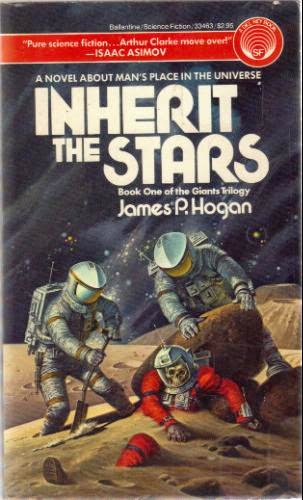
             Still, I’m not as bad off as James P. Hogan.  When he wrote his novel Inherit the Stars (first book in the Giants series) back in 1977, he envisioned the US facing off against the Soviet Union in a race to colonize the solar system (a race that gets interrupted by an amazing discovery, granted…).  Needless to say, the first three books in that series are extremely dated.
            When we say a book is dated, we mean it’s a book someone can look at and say “Ahhh, well this was clearly written back when…”  It’s a book that isn’t about now, it’s about then.  And when my book’s not about now, that’s just another element that’s making it harder for someone to relate to my characters and my story
            Remember in school when you had to read classics?  Some of the hardcore Dickens or Austen or maybe even Steinbeck.  One of the reasons they can be hard to read is because of the references in them.  They talk of events or customs or notable persons that are foreign to us.  Hell, half the time so foreign they’re just gibberish (bundling?  What the heck is bundling..?).
            When we hit these stumbles, it breaks the flow and makes the book harder to enjoy.  A dated book has a shelf life, like milk or crackers.  The moment it gets this label, there’s an end in sight.
            Because of this, there’s a common school of thought that I shouldn’t make any such references in my work.  My story shouldn’t mention current fads or events.  I don’t want to have references to celebrities or television shows or bands or music.  If I want to have my writing to have any sort of extended life—the “long tail” as some folks like to call it—it can’t be dated.
            And there is something to this.  I’ve seen metaphor-stories fall flat with readers less than a year after the events they’re referencing.  It was funny at the time, but if you watch Aladdin today it’s tough to figure out half the stuff the Genie’s riffing on (what the heck’s with the whoop-whoop fist thing…?).
            However…
            When the GOP shut down the US government last year, my friend Timothy Long pounded out a longish comedy short story called Congress of the Dead.  And for a few months it sold really, really well.  It’s not doing much these days (it’s still funny but not as topical), but he knew going in that it wasn’t going to be timeless and used that knowledge to his advantage.
            So, which way should I go?
            Well, here’s the catch.  My work is always going to end up dated.  Always.  There’s no avoiding it.  Stories get dated by technology and cars and geography. Things people assume will never change (like the Cat & Fiddle or the U.S.S.R.) end up changing. It happens all the time.  It can’t be helped.
            Consider this…
            Stephen King’s Cujo couldn’t happen today.  Cell phones undermine the entire plot.  Same with Fred Sabehagan’s Old Friend of the Family.  The entire plot of Lee Child’s first Jack Reacher book, Killing Floor, hinges on an idea that was obsolete six months before the book even reached stores.
            Let’s not even talk about speculative fiction.  How many sci-fi shows predicted events we’ve since caught up with and passed?  Buck Rogers left Earth on a deep space probe in 1987, and Thundar the Barbarian saw the world collapse in 1994.  Star Trek told us the Eugenics Wars happened in the 1990s, which was also when Khan and his followers were launched into space in cryogenic suspension (presumably using the technology from the Buck Rogers deep space probes).  According to the Terminator franchise, Judgement Day happened in 1997 (later adjusted to 2004).  Then there’s 2001: A Space Odyssey and it’s sequel 2010.  Heck, even Back to the Future is just a few short weeks away from becoming a silly, dated comedy.  It’s going to be 2015 and there are no self adjusting clothes or flying cars or Jaws XIX (it looks like we did get hoverboards, though…).  And, hell, supposedly in 2015 people are still using faxes as a high-tech method of communication.
            If I really don’t want to date my work, I can’t mention anything.  Cars, music, movies, television shows, networks, books, magazines, sports teams, games, cell phones or providers, Presidents, politicians, political parties, countries, businesses of any kind, actors, actresses… all these things and a few dozen more. All these things change all the time in unpredictable ways.  So if I want to be timeless, I can’t bring up any of them.
            The problem is, though, these are all things that are part of our lives. They come up in conversations.  They shape how we react to other things.  So if I’m writing a realistic character with natural dialogue… these things will be there.
            So what’s this all mean?
            In the big scheme of things… don’t worry about it.
            That being said, I  probably shouldn’t base my entire plot around readers knowing the lyrics to Taylor Swift’s latest single, and (much as I love it) I might not want to use a reference to the second season finale of Chuck as the big button on my chapter.  There’s a reason some things stand the test of time, some become cult classics, and others become… well, we don’t know, do we?  And I should never be referencing something no one knows about.
            There isn’t an easy answer for this.  I’d love to list off some rules or just be able to say “8.3 references per 50 pages is acceptable,” but it isn’t that simple.  A lot of this is going to be another empathy issue.  As a writer, I need to have good sense of what’s sticking around and what’s a fleeting trend.  What references will people get in ten years, which ones they’re going to forget in six months, and how blatant these references need to be to get the job done.
            Getting dated is unavoidable.  It is going to happen to my work.  And yours. And hers.  But if we’re smart about it, we can get the most out of it while we can and still make sure that date’s as far off as possible.
            Next time, I’d like to talk about dialogue.  And I’ll probably make a mess of it.

            Until then… go write.

Categories