
Kind of a goofy title.  Hopefully it’ll make sense in a few minutes.
            Hey, did you know today is the 50th anniversary of Star Trek?  Yep, the original series premiered fifty years ago today (tonight, really).  “The Man Trap,” the one with the salt vampire.
            May we always boldly go where no one has gone before…
            Anyway…
            If you follow me on Twitter, you know I often spend my weekends watching a half-dozen or so B- or openly awful movies while working on toy soldiers or tanks or something. And I often tweet out little bits of advice when I see a storytelling screw up that should’ve been easily avoided. They’re more frustrating in film, because it means someone had the screenplay sitting right there in front of them before this messed-up scene was put on film. And yet… they still put it on film.
            And sometimes the screw-ups are so bad, so overwhelming, that all I can do is drink…
            A recent awful film I saw hit on a really big problem I’ve seen a few people wrestle with. To be honest, I wrestled with it on my oft-mentioned book, The Suffering Map.  And when I realized what I’d been doing, not only did I feel like an idiot, but I realized that book might be salvageable someday after all.
            With a certain amount of rewrites.
            What am I talking about?
             A few weeks back I was watching a movie that was probably going for the idea of a goofy, somewhat inept hero with much more capable friends. Think of Jack Burton in Big Trouble In Little China or even, to a lesser extent, Shaun in Shaun of the Dead.  Alas, that’s a very tricky balance to pull off, and this writer/director didn’t have the skill or experience to do it.

            Instead, the “hero” came across as kind of sleazy (almost stalkery) and completely useless.  I mean, seriously, this guy barely worked as bait for the monsters.

            Meanwhile, the cute bartender (who liked him because… well, it was in the script, I guess) is well-trained with firearms, has a plan, stays calm under pressure… and keeps getting regulated to reaction shots and wide shots of the supporting character.  Except for one or two scenes, she’s almost a background character.
            And then, at the end, the hero sweeps her off her feet.  After the world’s been saved by someone else.  No, a third person altogether, not either one of them.
            That movie killed half a bottle of rum.  One of the big bottles.
            Anyway…
            Example two.
            In my early drafts of The Suffering Map, my main character, Rob, pretty much dominated the book.  There were some good supporting characters in Sondra, Miguel, Levi Gulliver and his ravens, and my villain, Bareback (a shameless Cenobite rip-off in those first three or four drafts), but Rob was easily 70-75% of the book.
            When I finally made a serious revision, one of the big changes was giving more time to Sondra. Really, the story involved her almost as much as Rob, and she had her own arc that I’d all but skimmed over because… well, he was my main character, right?
            By the next big revision (the last one) the novel was pretty much split clean between them.  But it still wasn’t quite right, and—as I’ve mentioned before—it was rejected a few times.  It was around this time that I finally trunked it.  Well, cyber-trunked it.
            Y’see, Timmy, both of these stories suffered from the same problem—not being aware of who should be the main character.  They’re not focusing on the heroic, active person—the person who’s actually making choices and doing things. And learning from those choices and changing because of them. What I came to realize was that Rob shouldn’t be the main character of The Suffering Map—Sondra should be.  She was more active, she was more interesting, and she had a serious arc.  Really, the book was her story.  Which I knew, but I was so stuck in the headspace of it being Rob’s story that I didn’t recognize the actual hero.
            The bad movie did the same thing.  It only took a few moments of mental re-plotting to see how much stronger and more entertaining the film would be if it had been focused on the bartender.  She was smart, clever, willing to take charge… all the stuff we want and need in a main character.
            Granted, it’s always possible to bend or break those rules, but—as I mentioned above—it’s not an easy thing to do, and probably not something to attempt without a lot of serious experience.
            I also think it’s worth addressing the elephant in the room.  In both of these examples, the better lead, the one shunted to the side, was a woman.  This isn’t always going to be the case, but I also didn’t want to gloss over it. 
            For me, it came down to The Suffering Map being my first all-out serious attempt at a novel.  I was worried I didn’t have the skill to pull off a female lead, and at the time I was right. But as I kept rewriting it over the years, and Sondra became a better character, I developed those skills. Alas, as I mentioned above, it still took me a while to get past the idea of “Rob is the main character.”
            In the bad movie… well, I don’t know what they were thinking.  I wasn’t there.  It’s possible, as I mentioned above, they went for a goofy hero with better sidekicks and really messed up the balance.  Or maybe they just planned on her as a love interest, put in a lot of character traits thinking it’d be cool to have a love interest who wasn’t just window dressing, and couldn’t register the fact that they’d made this supporting character into a far better protagonist than their lead. We’ll never know.  All I can say is that it was far from the movie’s only problem, and no one should ever watch it without a serious amount of alcohol on standby.
            But back to our topic…
            If I’m doing a story with a good-sized cast of characters, it may be worth taking a moment to look at the story from a few different points of view.  Maybe that clever thing I’m trying to do with my main character isn’t working.  Maybe she’s the main character.  Or that guy.  Or that person in the coat over there.  My goal as a writer should be to tell the most interesting story possible, and sometimes… that might not be the story I started with.
            Next time, I’d like to blather on a bit about where you’ve decided to write.
            Until then… go write.
August 25, 2016 / 3 Comments

Sucker Punched

             Grrrrh. Running behind again. Sorry.  Juggling too many things right now.  Honestly, I think I’m thinking about juggling too many things and just being hit with a paralysis by analysis situation…
            Anyway…
            Speaking of things that aren’t immediately apparent, I wanted to talk about a problematic character point for a moment.  It’s one I’ve stumbled across a few times (and fallen victim to once or twice myself), and once I worked out exactly why it was problematic, I thought it was worth mentioning.
            A few quick examples…
            I saw an older movie recently from the dark era of superhero films. You know, that time before Blade when studios (and writers, and directors…) really didn’t believe you could do a serious superhero movie. Well, not without changing everything about it. Play it more for laughs.  Minimize the costume.  Avoid logos. Avoid masks.  Absolutely no capes.
            Really, how could you hope to do a movie about superhero characters who wear masks and capes and get anyone to take it seriously?
            Anyway, this film had a scene where the superhuman hero waded into a minor gang war while wearing his street clothes.  To be clear, at this point, the hero knew the full range of his abilities. Super-strength.  Near-invulnerability. Enhanced reflexes.  So the bad guys were throwing themselves at this skinny guy and ending up with bruises, cracked knuckles, broken limbs, maybe even one or two concussions in there.  By the time they figured out something wasn’t right, the hero’d probably sent a dozen of them to the emergency room.
            Here’s another example from the book side of things.  As usual, names, genders, and genres have been changed to protect the innocent.  Or maybe they haven’t, just to throw you further off the trail…
            A friend of mine had been doing a western horror story recently and asked me to take a look at his current draft.  His main hero, Wakko, was a pretty solid gunslinger/sharpshooter type (yeah, named his lead Wakko—weird coincidence, isn’t it?).  At one point, Wakko and the other heroes find themselves taking refuge in an old frontier fort that’s run by some less-respectable types. Wakko wanders around and finds the local tough guy, and inwardly notes a few things that confirm the guy may have been the best in the fort, but that doesn’t mean he’s particularly good.  To prove it, and make a point, Wakko teases and insults the other guy until he finally leaps up, grabs for his pistol
            And Wakko flicks out his own gun and shoots the guy dead.  Justified, of course.  That guy was trying to draw.  Everyone saw it.
            I made a note that this scene didn’t make Wakko look particularly heroic.  In any sense.
            This sort of thing is a hustle.  A con.  If you’ve ever played pool, nothing annoys people more than to discover the cute “rookie” who tricked them into wagering everything on their third game is actually a pool shark with countless notches on her belt.
           One thing about a hero—in real life or in a literary sense—is that we expect a sense of fairness and general decency from them.  They shouldn’t abuse their power.  They won’t deliberately harm people.  Yeah, they might have to do awful things at some point, and they might not hesitate to do them when they need to, but it won’t be something they want to do.
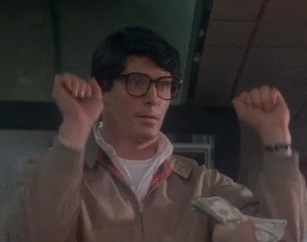
            Y’see, Timmy, a superhero in regular clothes is… well, just a dick.  Yeah, even when it’s Christopher Reeve.  Let’s be honest, that was a cheap move, beating up that guy in the diner.  A green beret who goads people into taking a swing at him is also a dick.  Or a gunslinger who forces somebody into a quickdraw contest.
            Honestly… it’s a bully move.
            Now, when my villain (or just a general antagonist) does something like this, it often works well for my story.  How often have we seen our hero throw a punch or kick or hail of bullets that had no effect?  What appears like a minor obstacle  just became a much more serious challenge for my heroine or hero to deal with. And challenges are great.
            But bullies aren’t.
            Especially when they’re supposed to be my protagonist.
            Next time, I wanted to talk about some thing.
            Until then, go write.
August 5, 2016 / 3 Comments

But What Do You Think…?

            I know I said I’d talk about chefs when I got back from SDCC—which, granted, was two weeks ago—but I want to put that order on hold for a little bit.
            Over the past week or so, I’ve interacted with a few different folks online.  And while online interaction doesn’t work the same as face-to-face conversations, it still got me thinking about communication and points of view and characters.
            Which, of course, made me think about Go-Bots.

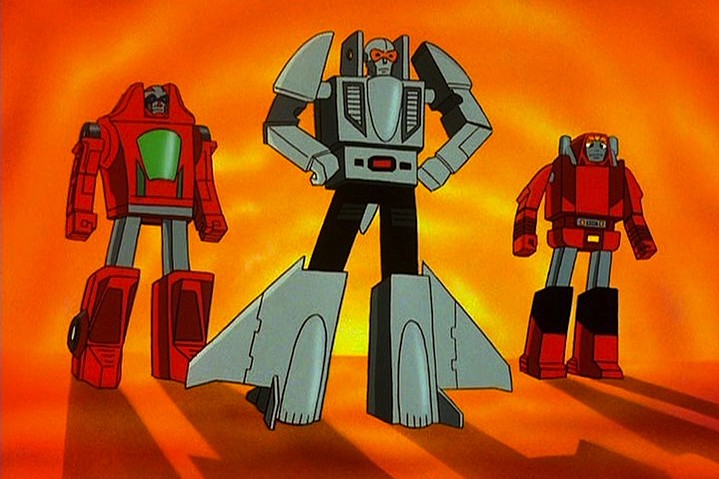
            I’ve got to be honest. When I was a kid, Go-Bots baffled me.  More to the point, people who liked Go-Bots baffled me.  I mean, seriously. Why would anyone play with Go-Bots when there were perfectly good Transformers to be had?  Go-Bots kind of sucked. No, not kind of. They were dumb and clunky and their robot-to-vehicle change usually amounted to standing them up. They had a lousy cartoon with a lousy theme song.

            Hell, there were Go-Bots that turned into rocks. Seriously.  Rock Lords turned from robots into lumpy, dull-gray balls.  That’s some serious, hardcore play action right there.
            Kids who liked Go-Bots were stupid.  No question about it.
            Thing is, as I got older, I actually came to realize why some people had this odd affection for Go-Bots, and still do to this day.  Their simplicity wasn’t a flaw, it was a feature. They had a different story behind them, and what they were worked fine for that narrative. In the end, they were just a different kind of toy for different kinds of kids (or nostalgic collectors).
            Of course, as adults we can argue about X-Box versus PlayStation.  Or Hunger Games versus Twilight.  Or socialism versus capitalism.
            As a writer, though, I need to be able to see both sides of any of these discussions.  That’s how I end up with a great cast of characters—a group of people who embody different beliefs and cultures.  They don’t all act and think and sound the same.
            I’ve talked about this a bit before with villains. Everybody in the story thinks they’re the hero, including the baddie.  They believe what they’re doing is right and just.  So to have a good villain, I need to be able to see things from their point of view. I need to be able to identify and understand with how they feel.
            We all know what it’s like when every character sounds just like the author. Or when they all agree with all the author’s beliefs.  We’ve all read that short story or the first few chapters of that book or sat through the first half of that movie.  It usually means I’m pounding home a message.  Or I’m just not a very good writer.  Sometimes both.  And if this is the kind of story I’m writing, I almost always end up with muah-ha-hah, mustache-twirling villains that feel like they’re… well, straight out of a Go-Bots cartoon.
            Female or male.  Progressive or conservative.  Pro-life or pro-choice.  Young or old.  Rich or poor.  Christian or atheist.  Black, brown, white, or Asian.  Omnivore, vegetarian, or vegan.  Straight, gay, lesbian, bisexual, or asexual.
            Y’see, Timmy, in order to be a good writer, I need to be able to see things more than one way.  This just isn’t a profession for the narrow-minded, unless I’m looking to only appeal to a similarly narrow-minded audience.  I have to be open. I have to be willing to learn.  I have to be able to see other viewpoints
            One of the main characters of my Ex-Heroes series is a black, bisexual woman.  I work like hell to make sure she sounds as real as possible, despite the fact that I am not one of these things myself.  It’s important to me.  And I worry constantly that I’ll have her do or say something that will offend somebody.  But I don’t want to be the straight, progressive white guy who only writes about other straight, progressive white guys and makes everyone else a secondary character at best.
            Because if I couldn’t see anyone else’s viewpoint… that’s all I’d be able to write.
            Next time—unless somebody wants to make a request in the comments—I’m probably going to go all passive-aggressive on you.
            Until then… go write.
June 9, 2016 / 2 Comments

Not Very Nice Guys

            Long overdue, I know. I could make excuses but… well, the honest truth is I just took a few weeks off to recharge the batteries a bit.  I watched some movies.  Built some LEGO sets and a few little toy soldiers.  There may have been some drinking, too.
            Yeah, selfish of me.  I’m not a nice guy.
            As some of you know, a few years back I was hired by Amazon Studios to do a movie treatment for a very loose idea they had about robot soldiers (nothing ever happened with it).  I even went in and chatted with some folks at the production company they’d farmed the movie out to.  As we talked about stories and motivations, one of the producers told me about a great sign she’d seen outside the door for one of the development heads at Warner Brothers.
WHAT’S THE BAD GUY’S STORY?
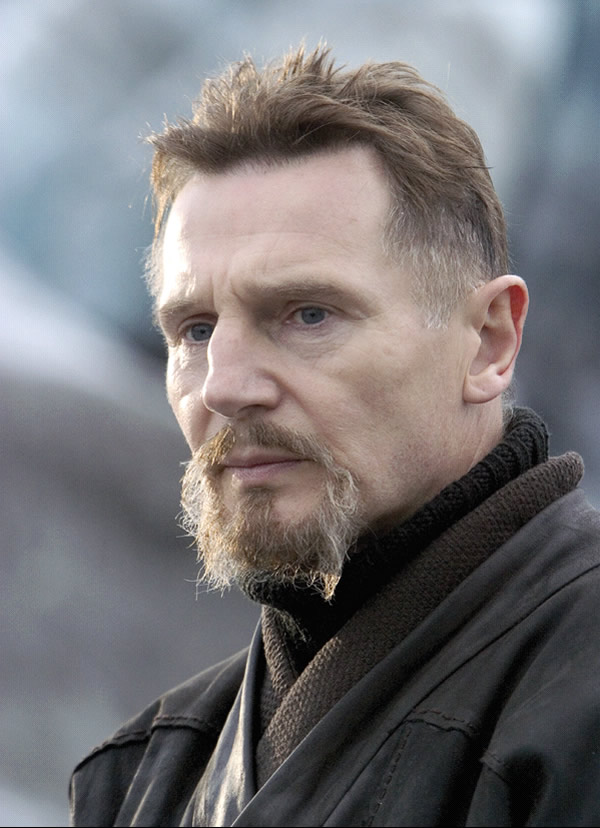
            Let me follow that up with another story before I explain.  You may be aware of a CW show called Arrow which chronicles the adventures of the Green Arrow and a number of related DC heroes and villains.  Well, a while back one of the characters they started hinting at for season three was Ra’s al Ghul, the leader of  the League of Assassins.  And one actor name that briefly floated around was Liam Neeson, who’d played Ra’s in the Christopher Nolan Batman trilogy.  Much to everyone’s surprise, when MTV asked him about it on a press tour, Neeson said he’d take the part again in an instant if they offered it to him (they did not). 
           He also offered some advice about why Ra’s was an interesting character and how an actor should play him.  “They have to believe in their philosophy,” Neeson explained.  “Ra’s al Ghul absolutely believed what he was doing was ultimately saving civilization, and it was quite a good argument he comes up with.  Throughout the ages this fraternity, that brought the plague to wipe out a section of mankind because it needed to be regenerated again.  Very dangerous, but you have to believe it.”
            See where we’re going here?
            Pretty much every story has an antagonist of some kind.  A flat-out villain, maybe a misguided but well-meaning opponent, perhaps a few mindless pawns of the system, but somebody.  It’s the rare story that has no antagonist of any sort.
            As both of those stories above explain, the antagonist has to have their own reasons and motivations for what they’re doing.  That producer had gotten tired of villains who twirled their mustaches for no reason, or for extremely weak reasons.  If one of my characters is going to shut down the prom, rob a casino, or blow up the United Nations, they’d better have a real reason for doing it.
            A lot of stories fall apart because they don’t have a good villain.  All too often, writers just think their antagonist just needs to do bad things and—done!  Why are they doing it?  Well, they’re the bad guy.  Bad guys do bad things, right?
            And, please, for the love of Tzeentch, do not say “because they’re insane.” That’s the cop-out answer.  If I say my villain’s motivation is “they’re insane” I’m aiming about three inches below the dirt-simplest, first-choice answer.
            Why do I need a well thought-out villain?
            Well, my villain’s arguably the second most important character in my story (after my hero).  He or she is why the story is happening. After all, if they weren’t posing some sort of challenge to my hero… well, heck, why even put pants on today?  Why do anything?  My hero might as well spend the day in underwear and a t-shirt, drinking and getting caught up with Star Wars: Rebels or Animaniacs.
            The problem, of course, is that it’s tough to logically explain why someone would decide to be the villain, right?  Aside from vampires or demons or some kind of inherently evil thing… why choose to be the bad guy?  Why would anyone decide to be a Nazi? I mean, how could anyone do that? 
            As it happens, that Nazi reference did set something up for me (go Godwin!).  A great way to explain this is with Magneto, the X-Men’s recurring nemesis.  If you aren’t a big X-Men fan, Professor X and Magneto used to be allies.  They were friends who shared the same beliefs and goals.  But at some point, Magneto decided he needed to follow a different, more extreme path.  He became the villain of the series, and the arch-enemy of the X-Men.
            So….why did Magneto decide to become a villain?
            That’s the interesting point and what this is really all about.  He didn’t.  Magneto decided everyone else was doing things wrong and that—much like Ra’s Al Ghul up above—he was going to start doing them right.  In his mind, Magneto is the hero of the series while his old friend and the X-Men are a bunch of well-meaning idiots who, alas,  keep getting in the way of his bigger-picture goals.
            Y’see, Timmy, for every character, the story is about them.  In the same way I’m the main character in my life story and you’re the main character in yours, the villain believes the story is all about them. Try to think of the most reprehensible character you can, then put yourself in their shoes.  They all believe they’re in the right.  Yes, even if it’s a drug lord or a DVD pirate or a mutant master of magnetism. 
            Part of my job as a writer is to get inside their head and figure out how someone could rationalize things like this.  What makes someone think being a bully or a hit man or a far-right fascist Nazi is a good decision?  What’s their motivation? How do they continue to justify it as time goes on, and how do the people around them justify it? 
            We’ve talked about something like this before—triangles.  In a romantic triangle, all too often one of the two choices is made absurdly ridiculous.  We’ve all probably made a bad choice in partners at some point in our lives, but not one that bordered on being a flat-out evil dictator or sociopath.
            When someone’s significant other shows signs of being cruel, a bully, manipulative, dishonest… that’s usually when we end up asking “why the hell are these two people together?”  These triangles fail because that first choice isn’t a person, they’re just a caricature.  We don’t see why someone would act like that, let alone why someone else would choose to be with them.
            And let me toss out one last bit of advice. I heard years ago—and you may have heard it, too—that the three most common motives for murder are love, money, and revenge.  If I’m going to pick one of these as my villain’s motivation… man, it better be spectacular. The greatest love story evercommitted to paper (without being even slightly cheesy).  A sum of money beyond imagining (but, of course, not so huge it would destroy the world economy).  The most elaborate revenge-worthy crime ever (yet not taken to such an extreme that my antagonist becomes a joke).  If I’m going to have someone wear the bear suit… I have to earn it.
            A great villain deserves no less.
            Next time, I want to talk about big ideas. And ides that may not be as big as they seem at first glance.
            Oh, on another note, if you happen to be in the Los Angeles area, this Sunday is another Writers Coffeehouse at Dark Delicacies in Burbank.  It’s open to writers of all levels, it’s completely free, and it’s at least as adequate as this blog.  This month we’re going to be talking about editing, drafts, and some social media stuff.  Stop by and check it out.
            Until then… go write.

Categories