

I though I’d talk about something utterly unbelievable.
No, seriously.
Most of you have probably heard of willing suspension of disbelief. It’s when my readers (or moviegoers or whatever) are willing to overlook or ignore obviously wrong or just plain impossible things for the sake of enjoying a story. It’s a deliberate, often unconscious decision to… y’know, just go with it. We know super-powers aren’t real, but we can still enjoy Wonder Man. Ghosts aren’t real either, but I’ve really been loving School Spirits. Dragons? Also not real, but people keep lining up for Westeros-related stories. Heck, kaiju make no sense whatsoever. None. They’re 100% impossible, on so many levels. But people keep heading out to see Godzilla movies.
The catch, of course, is that this is willing suspension of disbelief. But if I’m not careful, I can push things in my story a little too far and my readers are suddenly no longer willing to suspend their disbelief. It hits a point where they just can’t ignore all the cracks and cut-corners and missing chunks and then… the whole thing comes down.
When that suspension of disbelief starts to crumble—or if you prefer, when disbelief starts to grow—I think it comes from two specific directions. One is from elements within my story. The other is from characters in my story. Let me talk about both of these for a few moments.
If we’re talking about I think genre stories tend to be the immediate targets when we talk about willing suspension of disbelief. Sci-fi. Fantasy. Horror. Genre tends to have a lot of the elements I was talking about earlier—super powers. Ghosts. Monsters. So it’s the easy thing to point at when we talk about suspension of disbelief because they’re easy things to, well, not believe in.
Now, granted, yes, some people just won’t believe this stuff no matter what. We’ve all seen that reviewer who begins “Well, I picked this up even though I never like horror… and now I remember why!” It’s possible for folks who don’t like a genre to tolerate a genre, sure. Just keep in mind, what seems like a little ask for another reader is going to be much harder for them to let slide. Their block of disbelief is going to be calving off massive chunks of disbelief like a glacier dealing with global warming.
I’m saying this just as a reminder– we can’t do anything about these people. If they happen to pick up one of our books, it is what it is. Let’s not worry about them too much.
But even for people who do like these more fantastic elements, there comes a point where I’ve pushed things too far. Maybe I’ve crossed one too many genres. Perhaps I brought in an element too late in the story that makes too big a change. Whatever it is, eventually there’s a beat, a moment, a thing where I’ve just gone too far. I’ve seen John Scalzi call this point “the flying snowman”—that we can accept a snowman who comes to life, sings, eats food (hot food, even), but hang on now he’s flying? Seriously? Oh come on…
Something I’ve talked about here a few times is that stories have to be believable. There needs to be a grounded world my readers can understand. That includes stories set in medieval fantasy valleys, gigantic space stations, and even a world just like ours except no one’s ever done anything about that serial killer who lives across the lake by the old summer camp. Whatever my setting is, it has to be something a reader can—on some level—understand and believe characters can exist in.
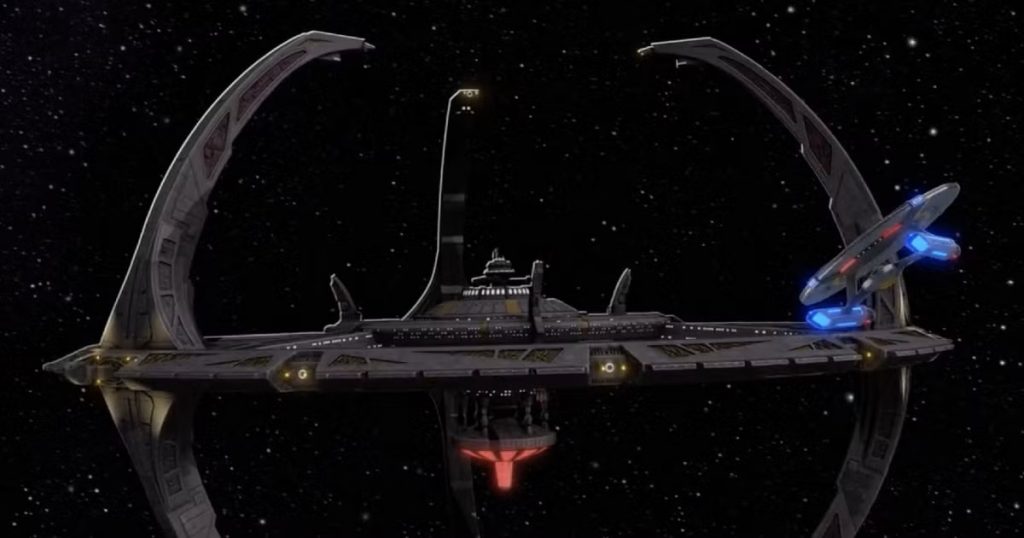
Take that giant space station. We all inherently understand the nature of a space station—even a very advanced one—and why it might need different crew members. Maybe even a lot of crew members. We can understand why it’s located out here on the fringes of space, working like a sort of interstellar lighthouse—or maybe a watchtower? Very isolated research? Artificial gravity isn’t a wildly new idea. Neither are supply runs or some form of food synthesizer or an oxygen generator. Look at that. A bunch of very understandable, very believable things about our space station, but still leaving us lots of room for weird, new things we don’t understand. Make sense?
Three quick notes to this. First, I personally try to resist the urge to give normal, familiar things new “genre” names unless it’s going to be really clear what they mean. Too often this is just, well, a lazy way to worldbuild. Most folks will get frustrated if they read through a hundred pages of jha’krynn forging and training before it becomes apparent a jha’krynn is just what people call a shield in this world. Plain old, normal on-your-arm shield. And they should be frustrated. Maybe even a little annoyed—I’ve been making them do extra work for no reason. And that frustration means they’ll be a lot more judgey going forward (maybe even looking back), and less likely to suspend their disbelief.
Second note ties to that other thing I mentioned. A world just like ours except… Some folks think “the real world” means I don’t have to worry about things being believable or relatable. But the truth is, unbelievable things happen in the real world all the time—things that would be pure nonsense in fiction. And a lot of what’s relatable to me in my life would probably be completely alien to a little girl growing up in Aswan. And the life of an undercover NSA agent would probably seem baffling to me. Depending on what my story is, it’s still going to need that grounding.
Third and last. My readers are going to have a sense of what’s possible in my world. Keep in mind, possible can still include highly unlikely. The thing is, knowing what’s possible means they know what’s impossible, and if something comes across as impossible… well, that’s another big chunk off the ol’ disbelief block.
Now… remember, way up there when I mentioned the two directions? Let’s talk about the other one. The Roman numeral II in our outline. Or probably a B, thinking about it.
Anyway…
The other thing that can wear down my willing suspension of disbelief is my characters. If they’re doing or saying unbelievable things, or if they’re just inherently making someone think “I can’t believe anybody would…” I mean, my readers won’t be willing to suspend their disbelief long for someone like that. Honestly, how many found footage movies hit that point where we’re basically yelling at the screen “WHY ARE YOU STILL HOLDING THE CAMERA?!?”
Characters have to be believable. They’ve got to be consistent—or at least consistently inconsistent. I can’t have them acting and reacting in whatever random way happens to move my plot along. My readers need to see motives they can understand. Natural-sounding dialogue. Relationships that are somehow relatable to the average person.
The reason this is important is because when my readers believe in my characters, they’ll believe in what happens to my characters. If I believe in Yakko and Yakko ends up turning into a werewolf, then—by extension—I have to believe in werewolves. If I believe in Dot and she runs into a dragon, oh holy crap, it’s a dragon!
Okay this is getting silly-long so one last tip. It’s silly to point out, but one thing that whittles away at suspension of disbelief really fast is getting facts wrong. If I tell you that WWII ended in 1964 (the same year the first war with Iran began) or that there’s only one T in Manhatan, your brain is going to automatically shift into denial mode for a moment. because you know these aren’t correct. It’s a little slip in that willing suspension of disbelief, and after too many slips…
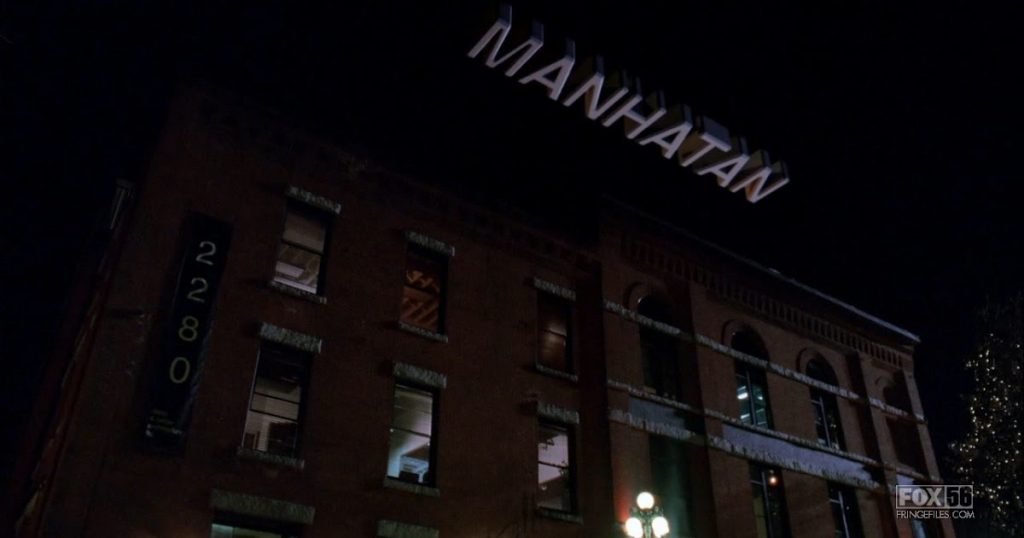
Yes, there might be a reason my character thinks there was a war with Iran in 1964 (he’s an idiot) or that Manhatan only has one T (we’ve slipped into another universe). But this is yet another one of those I need to be careful/ every story is different things. If I let too many of these build up without an explanation, I’ll hit a point where it doesn’t matter if I have a reason for them or not, because my reader just can’t believe any of this anymore.
There’s also a flipside to this, one that takes a bit of empathy. I can also blow the reader’s willing suspension of disbelief by using completely accurate facts that are unbelievable. There are lots of websites and YouTube channels that’ll tell you about amazing true coincidences or billion-to-one events that actually happened. If I’m basing a chapter—or a whole story—around these things, it could cause problems.
I’ve mentioned this before, but years back I interviewed a filmmaker who’d just finished a documentary about the botched 2003 invasion of Iraq and the even bigger mess that came after it. One of the things he told me was how much material he’d left out of the film. There were so many incidents of complete and utter incompetence in the year after the invasion nobody would’ve believed them. Because they were just so goddamned unbelievable. He told me a few during the interview and I kept saying “What? What?!?”
Oh crap. Wait. One more thing. The for-real final tip, kind of going off that last bit. I’ve said this many, many times before but… being true doesn’t matter. Once it’s on the page, all anyone cares about is if it’s a good story about believable characters. Whether or not the events and characters are real is irrelevant. Too many folks see “true” as some sort of pass that means readers have to accept things. But if I’ve got a true story that’s just completely unbelievable… it means I’ve got a completely unbelievable story. Simple as that.
Y’see, Timmy, that’s what it all boils down to. When your suspension of disbelief is broken, even for a moment, it breaks the flow of my story. The more often the flow’s broken, the harder it becomes for my readers to be invested. And eventually it’s just easier for them to go sit on the couch and get caught up on Starfleet Academy or School Spirits or something.
So keep it believable. Or as believable as you can.
Next time I’d like to rant a little bit about ranting a little bit.
Until then, go write.