Another six months have passed us by and I promised I’d update this when there’s some more news soooooooo…. Updates!
For those of you just joining our show (already in progress)… One aspect of being an almost semi-famous author on social media is getting asked questions. Which is overall fun and I enjoy hearing from folks. But a lot of these questions come up frequently You could even go so far as to say they’re… frequently asked questions.

Sad truth is this can get exhausting—and a little frustrating—to answer the same questions again and again and again.
Between this blog, Twitter, Instagram, Facebook… well, it adds up to a lot of people asking the same questions.
And that’s with some version of this FAQ pinned to the top of all my social media pages!
(And before you panic, person who asked a question yesterday, no, I’m not singling you out. You just did it this one time without thinking. You’re good)
(I’m talking about that other guy. You know who I mean. We’re all thinking it, I’m just the one saying it…)
Anyway… rather than get testy and frustrated ‘cause someone asked the same question I already answered twice this morning in the same thread, I’ll just scribble up answers to a dozen of the most common questions I get and pin them on a lot of my social media pages. Then when people ask me the same question again anyway, I can say “check out that FAQ pinned at the top of the page!”
Or maybe I won’t say anything, cause look—there’s an FAQ pinned right at the top of the page!
1) So, hey, when are we going to see something new?
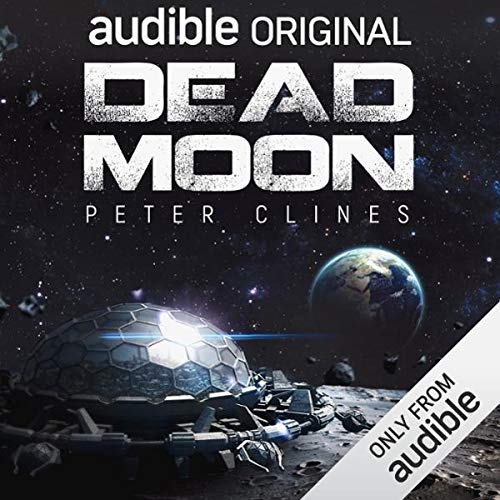
Well hopefully a lot of you checked out
Dead Moonback at Valentine’s Day. It’s my kinda fun and pulpy sci-fi horror story about zombies on the Moon and some other things.
It was exclusive with Audible and on August 14th it’ll be available as an ebook (with a little extra material) through most of your favorite booksellers.
Early next year (2020), will be Terminus. Exact date still pending. And possibly the title but I think we’re all 83% sure this is going to be it. It’s a Threshold book, and the story of a more-or-less regular guy named Murdoch who’s trying to deal with his childhood sweetheart, Anne, coming back into his life. He also has to deal with her Family… which is technically his Family, too. There’s a guy name Chase who’s, ironically, on the run from something. And there’s also Seth, Doug, Barnabus, Katanga, and some other names you may recognize, as well. It’s also going to be another Audible-exclusive (the final one). I’ll talk about that down below, if you care why.
I’m also talking with some folks about a sort of bonus-collector’s edition thing that may interest some of you. More news on that as it firms up.
If all goes well, by the time you read this I’ve
finallysat down to start writing a new standalone book I’ve been wanting to do for about two years now.
If everything goes perfect it
might be out next year but… I guess we’ll see. And after that I might try something I’ve wanted to do for… wow, maybe a decade now?
And after that… who knows.
 2) Wait, no paper version of Dead Moon?
Alas, not in the immediate future. There’s a couple of different reasons for it, and they involve a lot of business stuff I’d rather not get into at the moment. There’s
a chance it may still become available, but for the moment it’s just going to be ebook alongside the audio.
Sorry.
And I don’t know about Terminus yet, just to answer that one now. It’s still pretty far out.
3) Will there be another book set in the Threshold series?
… I just answered this question.
This is what I was talking about! You’re not even reading this, are you? Come on! I wrote all these out. You could at least do more than just skim.
Jeeeeesh…
4) Okay, explain this whole “Threshold” thing you keep talking about?
“Threshold” is the overall, umbrella label for the shared universe I kinda-sorta inadvertently kicked off eight years ago when I wrote 14. There are some books that are definitely part of an overall linear story, a “series” if you will, and some that just fall under the umbrella. Every Marvel movie is part of the MCU, but not every Marvel movie is a direct sequel to TheAvengers. Or if you prefer, lots of Stephen King books tie into the Dark Tower mythology, but they’re not all part of the Dark Tower series. Does that make sense?
And, yes, this does make things a bit awkward, because I know the marketing folks are r
eeeeeaally pushing Threshold as a pure, straightforward series (Book One, Book Two, etc), even though I’ve said several times that it isn’t.
This may give some people false expectations for what some books will be about, and I apologize if that’s you.
I’m doing my best to make the books as great as they can be, and hopefully you won’t be too bothered that maybe you went in expecting
Avengers: Endgame and you ended up getting
Spider-Man: Far From Home.
Again, if that makes sense.
As a name, Threshold fits in a few different ways.
It’s part of a doorway, and doorways figure big into most of this series. It also refers to reaching a certain critical level—another recurring issue in these stories. And, finally, it’s also a reference to an old H.P. Lovecraft short story. Which has absolutely nothing to do with anything, but I thought it was cool…
5) How does Dead Moon fit into the Threshold series?
As it happens, I wrote a whole book explaining this. Check out #1 up above.
6) Why do you keep doing these “Audible exclusives” ?
Well, first off, I’ve only done two, and that’s counting Terminus coming out this fall. Second, there’s a very solid argument to be made that the majority of my fanbase is audiobook listeners. Odd, I know, but there it is. Audible knows this, too, and because of this they made me an extremely generous offer for exclusive rights to Dead Moon and Terminus, meaning both of them would be audiobook only for the first six months they’re out. As I mentioned above, for Dead Moon that exclusivity ends on August 14th. For Terminus, it should be next summer (I can’t say exactly because we don’t have a release date nailed down).
And, yeah, I know this makes some of you grind your teeth. I’m sorry if you’re not an audiobook listener and this leaves you out of the loop for a bit. My agent and I talked about it a lot, believe me (even with that generous offer). Every other day on the phone for about six weeks. In the end, I really wanted to tell these stories and this was the best way I’d get to do it. Again, I’m sorry if this puts you in a bad spot.
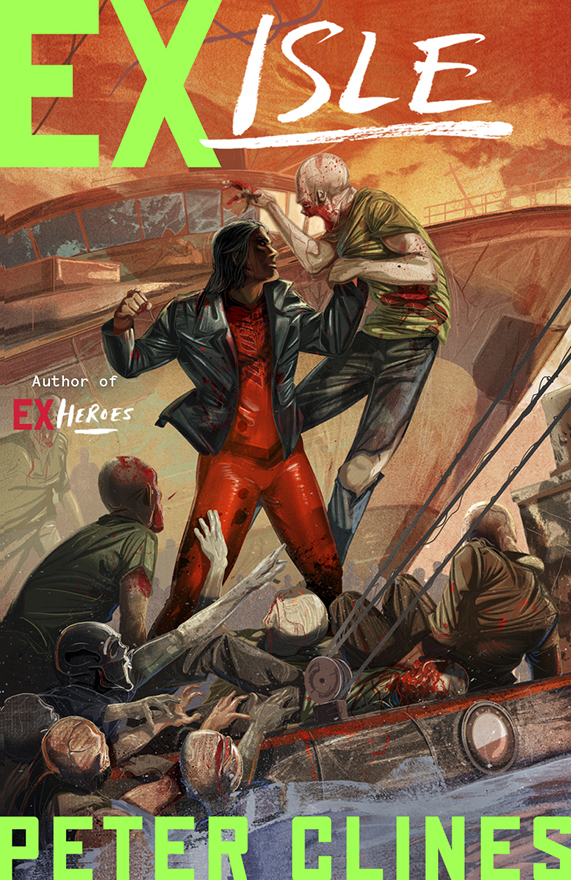
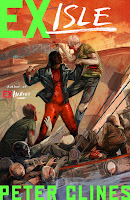 7) Is Ex-Isle the last Ex book?
Not absolutely 100% sure, but… yeah, it looks that way.
The truth is, every series has a limited life. Very few people start on book three—they go back and start at book one. So book one of a series always sells the best, not as many people show up for book two, even less show up for book three, and so on (I just learned that in comics they call this “standard attrition”). It’s a near-constant downward slope heading for that red line where things aren’t profitable. None of the Ex-Heroes books have ever lost the publisher money (thank you all for that), but the margin kept shrinking and things didn’t look great for book six as far as that red line’s concerned.
Again, not 100% sure, but we’re in the high 90s. A number of things could make the series surge in popularity and get the publisher interested in putting out another book or two. But for now, Ex-Tensionis going to stay on that back burner. Sorry.
8) Have you considered a Kickstarter or a GoFund me to continue the Ex series?
I have and the answer’s no, sorry. I love these books. Hopefully you all know that. St. George, Stealth, and the other folks at the Mount (and your love for them) got me where I am today. I’m still amazed there are so many fans who feel so passionately about them. I had tons of fun writing them.
But… the simple truth is, if there were enough people willing to pay for another book, the publisher would be willing to put out another book. All the numbers say that’s just not the case. Sure, some folks might pay twice as much into a Kickstarter for one more book, but I think we can all agree experience says three or four times as many people wouldn’t pay anything. There’s pretty much no way this works out. Again… that downward slope I mentioned in #7.
Plus, my schedule’s set up months in advance. As I hinted at above, I already have a pretty good idea what projects I’m going to be working on until sometime in 2021 at this point. Doing a crowdfunded project means I haveto plan on said crowdfunding succeeding and work it into my schedule… which then means a gaping hole in my schedule when it doesn’t succeed.
Again, sorry.
9) Do you make more money if I buy your books in a certain format?
I know this sounds like an easy question, but there’s about a dozen conditionals to any answer I give. Figure a huge chunk of each contract is just all the different terms and conditions for when and if and how people get paid.
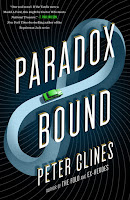
For example… format matters, sure, but so does whereyou bought the book. And when you bought it. And how many people bought it before you. And if it was on sale. And who was holding the sale. And all of this changes in every contract. What’s true for, say, The Fold may not be true for Paradox Bound.
TL;DR—just buy the format you like.
10) Do you have any plans to attend ########-Con?

To be honest, last year was such a mad jumble with working on books and going to cons and moving that… well, I didn’t make a hell of a lot of plans for this year. At the moment, the only thing on my schedule for the rest of the year is
SDCC next week.
Absolutely nothing else.
I am cautiously hoping next year will get me to a couple cons across the country. Maybe ECCC, Phoenix, DragonCon, and possibly Denver or NYCC. I’d love to do something out in New England. If any of these sound good to you, or you want to see me at your local con, please let them know. Yeah, them, not me. I’m willing to go almost anywhere I’m invited, but if I’m not invited… well, there’s just not much I can do. So, email them, tweet them, post on their Instagram account. Reach out and let your voice be heard.
And keep in mind, too, that most cons finalize their guest list at least four or five months in advance, so if your local con’s in three weeks… the odds are not in our favor. Sorry.
11) When are you going to make a movie/ TV series/ cartoon/ graphic novel/video game of your books?
Okay, there’s a misunderstanding of how
Hollywoodworks in this sort of question.
When you see a film adaptation or TV series, it means the studio went to the writer, not the other way around.
I mean, if it was just about writers saying “hey, make this into a movie,” wouldn’t most books be adapted by now?
Everybody’d be doing it.
Alas, I have zero say in whether or not SyFy wants to do an Ex-Heroesseries or Lifetime does a Lycanthrope Robinson Crusoe movie. They look for things that have piqued a certain level of interest, and so far these stories of mine haven’t quite scraped that threshold.
No, me (or you) writing the screenplay won’t make a difference, unless your name happens to be Shane Black, James Gunn, or David Koepp—and even then it’s not a sure thing. Because in case you forgot…
12) Didn’t you have a series deal?
Yeah, in theory. I struck a deal a few years back with Team Downey, the production company of that guy we all know from Kiss Kiss Bang Bang. Turned out he’s a fan of 14and he wanted to do something with it.
Alas, there are no sure things when it comes to Hollywood. It’s a big game of if. If a pilot gets greenlit, if it gets shot, if it turns out okay, if the assorted executives like it, if it gets picked up. And a lot of these ifs are happening on a time limit. In the end… time just ran out. Which all kinda goes with what I said up above in #11. Robert Downey, Jr. had signed on as an executive producer and that still wasn’t enough to get the show made. But I get to say he liked one of my books.
And who knows what could happen in the future.
 13) So, is there anything we can do to help?
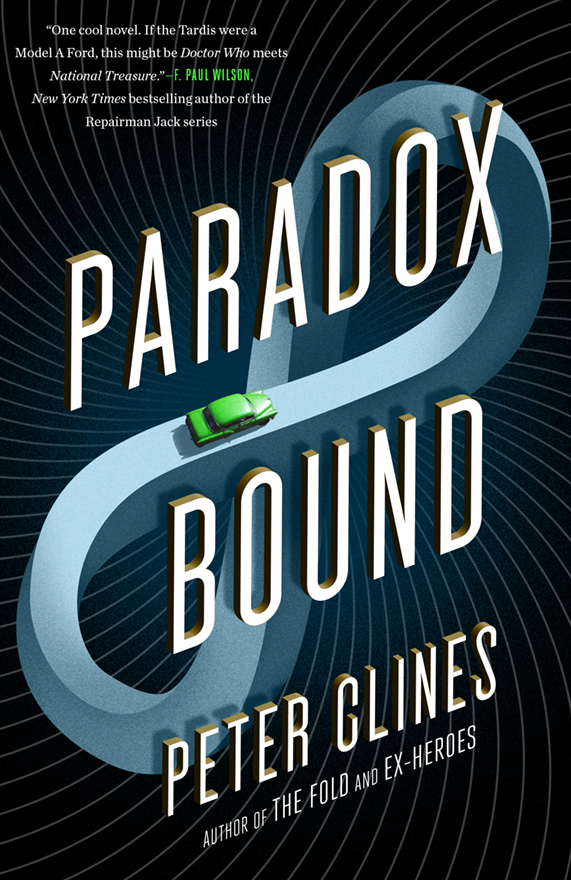
Well, buying books is always a good step. Hollywood likes to see big sales numbers and interest. If you want to see something—anything—on the air, talk about it a lot on social media. Write reviews on websites. Producers/ directors/ actors all hear about this stuff the same way you do. If #ParadoxBoundor #DeadMoon start trending on Twitter tomorrow, there’ll probably be a film deal within a week.
(true fact—an easy way to help do this? Don’t buy books from Amazon. Write reviews there, sure, absolutely, but Amazon gets iffy with sales figures, so they don’t get included in a lot of bestsellers lists. Yeah, a purchase from your local bookstore might cost a buck or three more, but it’s a purchase Hollywoodis more likely to notice)
(Plus, now you’re one of those cool people supporting local businesses. So be cool.)
14) Why don’t you like people talking about your books?
To be honest, I’m still thrilled people talk about anything I wrote. Seriously.
What I can’t stand are spoilers. That’s why I avoid those questions and/or comments in interviews, ignore them on Twitter, and why I try to delete any posts that reveal information from the back half of a book (yep, that’s probably what happened to your post).
And not just my stories!
You shouldn’t mess up other stories, either. Movies, TV—if you enjoyed it, try to give other people a chance to enjoy it the same way. I still haven’t watched the last season of
Game of Thrones or
Doctor Who, dammit!
15) Will you read my story and tell me what you think?
Part of this is a time issue.
If I say yes to some folks, in the spirit of fairness I have to say yes to everyone. Now I’m spending all my time reading and doing critiques instead of writing.
I don’t want sound mercenary, but… writing is how I pay my mortgage.
So when someone asks me to read stuff, they’re asking me to give up a few hours of work. Plus, I do have this
ranty writing blog sitting right, y’know, here with over a decade of advice and tips.
It’s also a legal thing. Some folks are lawsuit-crazy, and the bad ones ruin it for everyone else. Say Wakko gives me a piece of fanfic to read where he has Harry and Eli showing up at a certain post-apocalyptic film studio. A few years from now, I decide to do a big crossover book. And then Wakko sues me for stealing his ideas.
Yeah, I know that sounds stupid, but seriously, I’ve been
subpoenaed and deposed over a case with less behind it than that.
This is why I’m
verrrry leery when I get a long message along the lines of “You know what you should really do next with the people from
14…”
It’s why some writers respond with smackdowns
or even legal action when they get sent stuff like this.
So, the long answer is also…
no.
And if you send stuff without asking, I’ll delete it unread, just like spam mail. Sorry.
16) What’s up with–wait, sixteen? You said top twelve. Wasn’t this supposed to be over by now?
Jeeeeez, do you have any idea how often I get that question…?
It’s bonus material. You got the deluxe BluRay version. Just be happy about it.
17) What’s up with your Facebook page?
Man. Facebook. What a mess, huh?
Simple truth is, Facebook’s made it pretty much pointless to have
a fan page.
They’ve tweaked their algorithms so my posts there have gone from 70-85% engagement to barely scraping 15-20% most of the time. Why? Well, so I’ll pay to reach people who’ve already said they want to see my posts.
And yeah, sure–it’s their site. They can do whatever they want with it and run it the way they like. And yeah they absolutely deserve to make money off it. I’m a progressive, but I still believe in (regulated) capitalism.
But then that brings us to all Facebook’s little side ventures. Which all seem to boil down to the buying and selling of… well, us, at the core. As many folks have pointed out, Facebook’s real product is us. Their real customers are the people buying as much about us as they possibly can. Maybe I’m old fashioned, but when someone talks casually about buying and selling people… it makes me uncomfortable.
So I’ve scaled way,
way back on Facebook.
Personally and professionally.
I have no plans to change this in the near future. Sorry.
18) What about Twitter or Instagram?
Instagram (
also @PeterClines) is probably the geekiest of
my social medias.
How is that possible, you ask?
Well, there’s little toy soldiers, LEGO, classic toys.
And cats.
Can’t have an Instagram account without cats. Sometimes these things mix.
Yeah, I know Instagram’s also owned by Facebook, but (for the moment) they’re not being quite so reprehensible over there. So (also for the moment) I’ll still be there.
And I think that should answer about 90% of your questions, yes…?


 Sad truth is this can get exhausting—and a little frustrating—to answer the same questions again and again and again. Between this blog, Twitter, Instagram, Facebook… well, it adds up to a lot of people asking the same questions. And that’s with some version of this FAQ pinned to the top of all my social media pages!
 2) Wait, no paper version of Dead Moon?
 7) Is Ex-Isle the last Ex book?
 To be honest, last year was such a mad jumble with working on books and going to cons and moving that… well, I didn’t make a hell of a lot of plans for this year. At the moment, the only thing on my schedule for the rest of the year is SDCC next week. Absolutely nothing else.
 13) So, is there anything we can do to help?
 I’m @PeterClines on Twitter. Fair warning–as some of you may have figured out, I’m progressive and I’m a bit more political there. On Saturdays I also drink a lot and live-tweet bad B-movies so… don’t say you didn’t know what you were getting into