
So, we’re officially in the Christmas season now.  And the marketing people at Crown—who are truly wonderful folks—have dropped certain… hints my way.  Sooooooo, much as I dislike doing this here…
            I have to ask you all to buy stuff.
            I’m so very sorry.  I’ll be quick.
            Here’s a few of my books and also some collections and anthologies I’ve got stories in.  Put them on your holiday wish list or get them as gifts for friends and family members.
            And really, go to your local bookstore.  They’re cool and they could use the business. Plus, now you’re not one of those conformists falling for all this Cyber Monday capitalist nonsense.
            Anyway…
            The big thing this year, of course, is Paradox Bound, available in hardcover at all your favorite bookstores.  Also in ebook and a wonderful audiobook read by Ray Porter.  If you haven’t heard me drone on about it yet, it’s got history travel, road trips, creepy bad guys, and a really cool train. F.Paul Wilson compared it to Doctor Who crossed with National Treasure, and I really couldn’t ask for a better description than that.
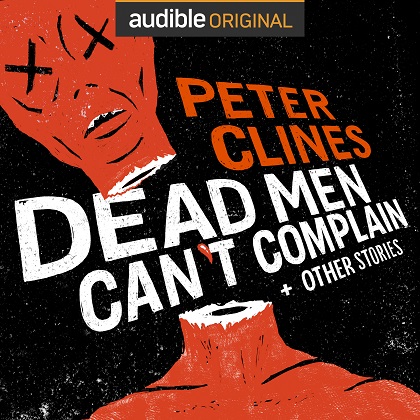
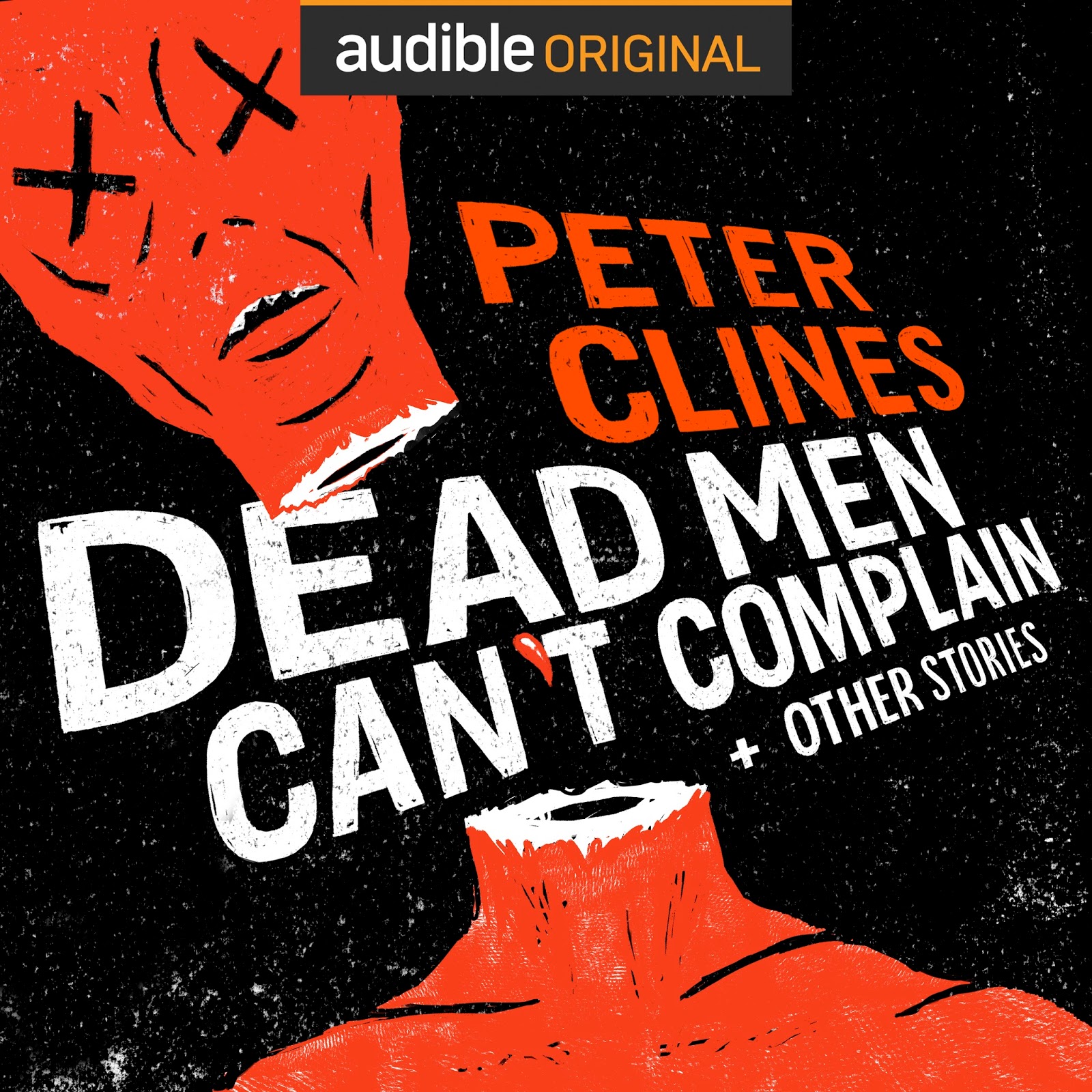
            I also had a short story collection come out this year—Dead Men Can’t Complain.  It’s a bunch of stories from various anthologies and journals, plus a few original ones.  This one’s an Audible exclusive, and it’s read by Ray Porter and Ralph Lister.
            Many of you are probably here because of the Ex-Heroes series.  Ex-Heroes, Ex-Patriots, Ex-Communication, Ex-Purgatory, and Ex-Isle! All of these are available in a number of formats and a number of languages.
            Early on someone described The Fold as a horror-suspense novel disguised as a sci-fi-mystery, and I’ve been using that ever since.   It’s also loosely connected to another semi-popular book I wrote…  Ray reads the audiobook for this one, too.
            At least a third of you have probably found your way here because of –14— my weird Lovecraftian-sci-fi-urban-horror-mystery novel.  There’s a paperback (although it’s ridiculously hard to find these days), an ebook, and another audiobook narrated by Ray Porter.
            You can pick up The Junkie Quatrain as either an ebook or an audiobook (no paper, sorry).  It’s my attempt at a “fast zombies” tale, a series of interconnected stories I’ve sometimes described as Rashomonmeets 28 Days Later
            I also have a ton of short stories out in anthologies right now.  The newest one is MECH: Age of Steel, which features “Projekt: Maria,” a new WWII pulp adventure featuring Carter & Kraft from me (and stories by more talented writers like Jason Hough and M. L. Brennan).  Plus, you can still pick up Kaiju Rising, which contains “Banner of the Bent Cross,” the first Carter & Kraft team-up
            Naughty or Niceis a collection of twisted holiday stories which cover… a lot of genres.  Don’t get it for your nine year old.  Or probably your parents. 
            There’s also The X-Files: Trust No One, edited by the wonderful-in-so-many-ways Jonathan Maberry and with stories from Gini Koch, Tim Lebbon, Heather Graham, and more.  My story here is “The Beast of Little Hill,” a classic Mulder and Scully tale about roadside attractions and fake aliens. 
            Finally, there’s “The Apocrypha of Gamma-202, ” a story about robots and religion, which appeared in Bless Your Mechanical Heart.  You’ll also get some great stories from Seanan McGuire, Ken Scholes, and Lucy Snyder.
            Also, I’ve said it in some other places, but if you’d like to get something autographed for the holidays, get in touch with Dark Delicacies (either by phone or online).  You can place an order with them (they’ll order the book you want if they don’t have it in stock) and tell them what you’d like to have scribbled in it. I stop by the store, personalize those scribbles for you, and they ship the book(s) to you in time for your end-of-year-holiday of choice. Everyone wins.
            And thus ends my shameless Cyber Monday appeal to capitalism.  Again, so very sorry, but please tell the marketing folks you read it.  I’ll also do another list later this week with some great books I’ve read by other, much better authors.  And of course, our usual Thursday blog post about writing.  And please don’t forget my Black Friday offer if you happen to be someone who needs it.
            Please feel free to resume your internet shopping.  Surf responsibly.  Clear your browser history on a regular basis.  
            And don’t click on that—it isn’t really from PayPal.
May 23, 2017 / 3 Comments

Dead Men Can’t Complain

            Yep, it’s another shameless self-promotion post.  Two in three weeks.  I’m very sorry.
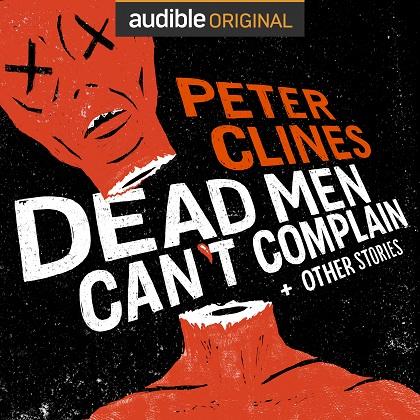
            Today my first short story collection is out exclusively from Audible.com.  Dead Men Can’t Complain is a bunch of short stories I’ve had published in various places over the years, plus three all-new ones that have never been seen (or heard) before. Most of them are stand-alones, although you may find hints to a few things I’ve written in the past (or may be planning for the future).  It’s got zombies, ancient horrors, modern comedy, time travel, some more zombies, lizard men, superheroes, and even a romantic ending or two!

            You can pick it up using your Audible credits (if you’re a member) or straight through Amazon.

            Hey, so sorry.  I need to take a minute to make a sales pitch.
            In two weeks, I’ve got a short story collection coming out from Audible.com—Dead Men Can’t Complain.  It’s a bunch of short stories that I’ve had published in various places over the years, plus a trio of all new ones that have never been seen (or heard) before. Most of them are stand-alones, although you may find hints to a few things I’ve written in the past (or may be planning for the future)
            This is an Audible exclusive—no print, no ebook, no special kanji edition—it’s audiobook only.  Because they wanted to publish it and they do fantastic work, that’s why!  You can pick it up using your Audible credits (if you’re a member) or straight through Amazon.

            Shameful moment over.  Next up—editing tips.
May 6, 2016

The Challenge Round!

            Back from Texas Frightmare, where a fantastic time was had by all.  Well, maybe not all, but everyone I talked to seemed to be having a good time.  If one of those folks happened to be you, thanks for stopping by…
            Also worth mentioning—this is post #350 here on the ranty blog.  I’m kind of amazed I’ve managed to come up with this many posts. Even more amazed that so many folks keep reading it.
            So thank you all very, very much.
            But on to today’s (hopefully) helpful rant…
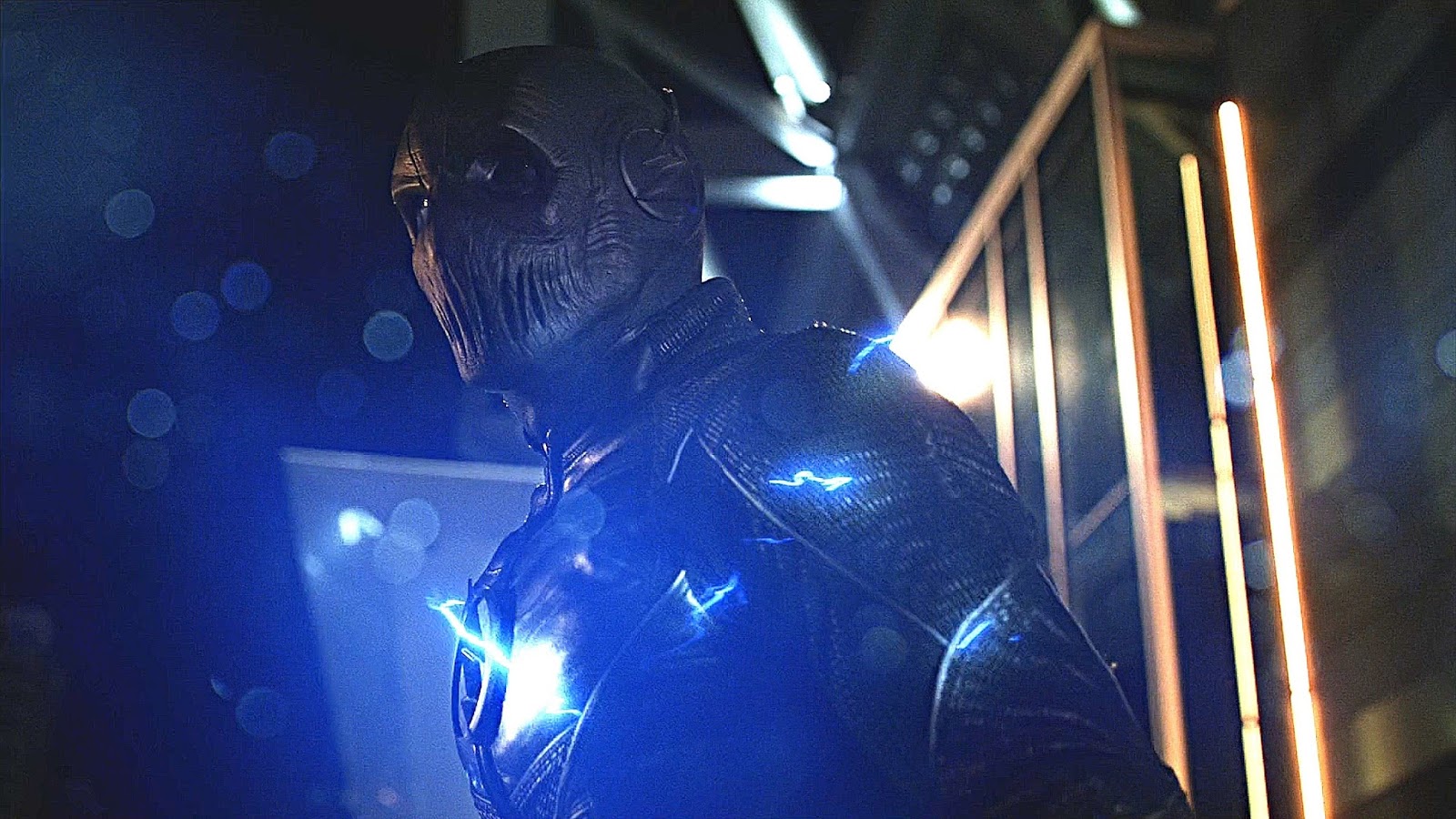
            A basic element of storytelling is the obstacle.  It’s what stands between my characters and whatever it is they want.  In The Fold, solving a puzzle for his oldest friend is what stands between Mike and getting back to his normal life.  A lot of time and a whole lot of space stands between astronaut Mark Watney and getting home to Earth.  The monstrous Zoom stands between the Flashand keeping his home city safe, but so does the potential risk of regaining the “speed force” that makes him the fastest man alive.
            Although, seriously… is it just me, or for “the fastest man alive” does Barry run intoa lot of people who are faster than him?
            Folks may have different thoughts on this, but—personally—I think an obstacle is slightly different from a conflict.  It’s just terminology, but I’ve noticed that exterior problems tend to be called obstacles a lot of the time, while interior ones are almost always labeled as conflicts.  In that example above Barry has to defend the city and his friends from Zoom (obstacle) but also has to weigh the risk of setting off the particle accelerator again to regain his powers (conflict).  Make sense?
            Now, while in strict literary terms either of these can be correct, I prefer to use the term challenge.  I’ve found that thinking about “obstacles” tends to guide the mind toward physical impediments, like parts of an obstacle course.  While this isn’t technically wrong, it does seem to result in a lot of the same things.  This is when you get challenges that have an episodic feel to them.  Character A defeats obstacle B, then moves on to obstacle C, and finishes up with D.
            Anyway, I’ve gone over it in the past, but I thought it might be useful to go over some tips about challenges.  Some of them you might not have considered before, and a few of them… well, one or two it’s kind of sad that I feel it’s necessary to bring them up.
            For example…
I have to have one.
            Yeah, this sounds basic, I know, but it’s surprising how often I see stories where people either sit around doing nothing or just stroll through events with no worries or effort.  They’re geared up for whatever they might run into, from werewolves to biological warfare.  Anything they don’t have just appears.  Anyone they meet is willing to help.  Any lucky break that has to happen does so at the perfect moment.  I know this sounds silly to most of you, but it’s honestly stunning how often this happens in amateur books and screenplays.  Heck, it’s bothersome how often it happens in professional writing.
            There needs to be something between my characters and their goals, because if there isn’t, they would’ve accomplished these goals already.  If I want a LEGO set, I  can walk up the street to Toys R Us and get one– that’s it.  Not exactly bestseller material, no matter how much pretty language I use.  On the other hand, if I want the Transforming Interlock-Cube Tactical Operating Chestplate that MIT designed for a black-ops branch of the NSA… well, getting that’s probably going to involve getting past fences, computer-locked doors, armed guards, a laser security net, pressure-sensitive floors, a badass female ninja, and that’s before we find out Theodore’s a traitor and he betrays us all (knew we shouldn’t’ve trusted that guy…)
            That’sa story.
My characters need a reason to confront it.
            If my characters are going to take on a challenge, they need a reason to do it.  A real reason.  Watney isn’t alone on Mars growing potatoes as part of a psychology experiment—this is his only real chance at survival.  When things start to go bad at the Albuquerque Door project, Mike doesn’t stick around because he can’t get an Uber to the airport—he stays because the lives of his new friends are at risk.  If Zoom isn’t stopped, he’ll kill thousands of people just to amuse himself.
            Make sure this reason is really there.  It may be obvious in my head why the characters are going to undertake a challenge, but is it that clear on paper?  This is especially true for more internal challenges, where my readers need to see why Mike is so hesitant to use his gifts and why it’s a big deal when he finally embraces them.
I need a reason for it to exist.
            A combination of the first two points.  Nothing’s worse than a challenge that has no reason for existing in the world of the story.  No past, no future, no motivation—it’s just there to be something for the protagonist to overcome.  We can probably all think of a book or movie where an obstacle just popped out of nowhere for no reason at all.  That kind of stuff just weakens any story. 
            Challenges have a purpose.  They’re characters in their own right, or maybe obstacles other characters have set in my protagonist’s way.  There’s a reason Zoom exists (he was caught in Earth-2’s particle accelerator explosion), and there’s a reason he’s going after the Flash (he needs to absorb speed force to keep himself alive). He didn’t pop through a breach and start tormenting the Flash and company for no reason.  I need to think about why a given challenge is in my story, and if there isn’t a real reason… maybe I should stop for a few minutes and re-think it.
            I’ll add one other note here.  It’s generally better if the audience (reader or viewer) has at least some idea why said challenge exists.  They don’t need to know immediately, but I also shouldn’t save it for the last ten pages… or never reveal it at all and just vaguely hint at it.  “Oh, that demon that’s been hunting us since sundown… it’s probably after me. We’re psychically bonded.  Probably should’ve mentioned that sooner.”
It has to be daunting.
            It’s bad enough Zoom is about ten times faster that the Flash on a good day, but now Barry’s lost his powers altogether.  He can barely sprint across a parking lot.  Voodoo practitioner Kincaid Strange has to risk her career, her freedom, her life, and maybe even her immortal soul to figure out who raised an impossible zombie in her city.  If the Avengers don’t stop Ultron, it’s going to cause an extinction-level event and wipe out all life on Earth.  This is something I mentioned a few weeks ago—the stakes.
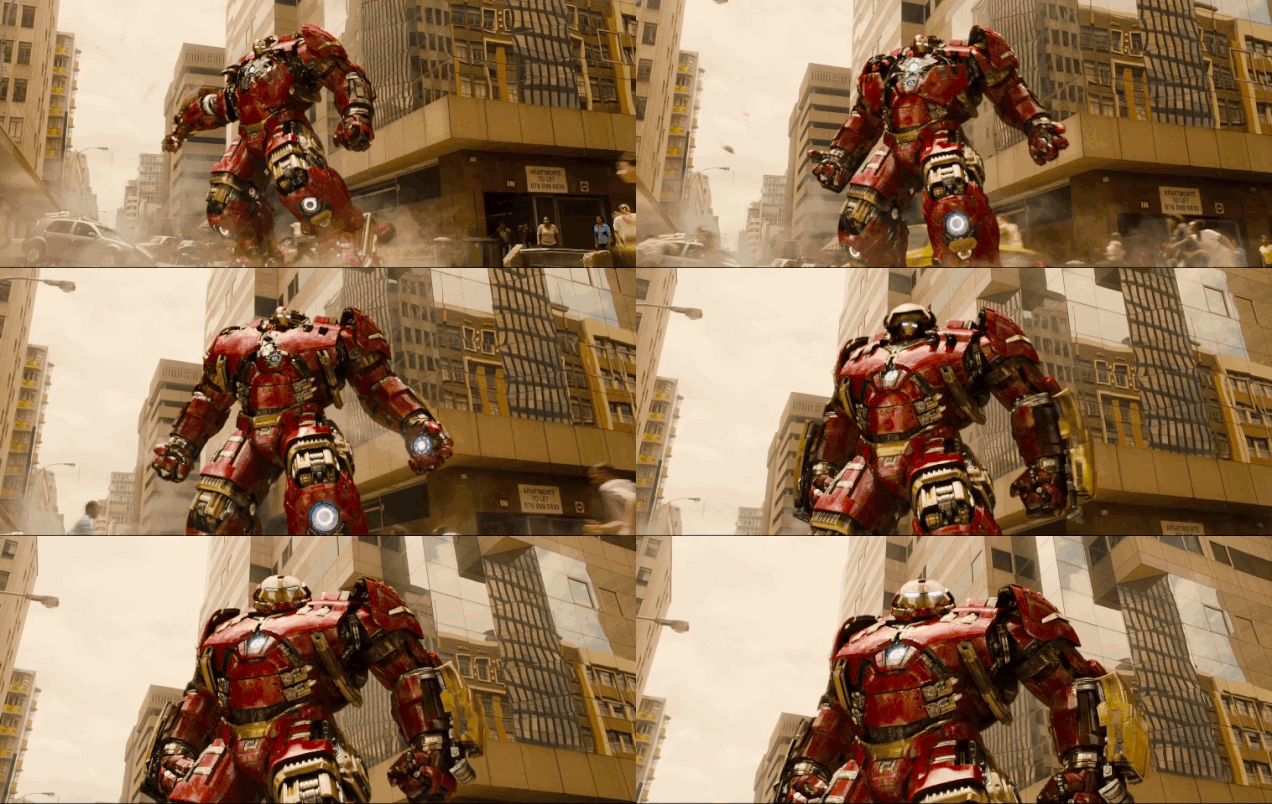
            Characters should never want to deal with a challenge, because let’s be honest– we’d all love it if more things were just handed to us.  Again, getting LEGO vs. getting the TICTOC.  A challenge needs to be something that gives the character (and the audience) pause, or else it isn’t really a challenge.  Tony Stark has built a suit of armor that can take on armies, and an even bigger suit of armor that goes over that one, but he still feels his bladder tremble when he realizes he just got the Hulk angry.
It can’t be impossible.
            There’s nothing worse than being on the wrong side of a sure thing.  Nobody reading this wants to get in a fist fight with Dwayne “The Rock” Johnson because we all know it’d be no contest.  None of us want to be given the responsibility of stopping a runaway asteroid or even just a runaway bus, because I’m willing to bet for all of us here (myself included) those would be things we just couldn’t deal with.
            If you’ve ever watched any sporting event, you’ve probably noticed they’re more or less evenly matched.  The Red Sox don’t play against little league.  NFL teams don’t face off against pee-wee football teams.  The most boring stories tend to be the ones where the heroes have no chance whatsoever of meeting the challenge.  Torture porn or Ju-On horror are great examples of this.  They’re great for a bit of squeamishness or a few jumps, but we can’t get invested when we already know the outcome.  I recently recalled someone theorizing that zombies are so popular because zombies are the monsters we can beat. Werewolves, vampires, demons, kaiju—if these attack, we’re just screwed.  They’re too far past us.  But I’m willing to bet everyone reading this has something within ten feet of them that they could take out a zombie with.
            As long as it’s just one zombie.  Maybe two or three…
            The other risk to be careful of here is if the challenge is completely impossible and my hero pulls it off anyway, it can look unbelievable and knock my reader out of the story.
            Actually, one last thing.  The challenge can’t seem impossible to the character, but have a painfully obvious solution to the reader.  My readers have to identify with my characters, and this kind of thing makes my characters unlikable by nature of their stupidity. That’s not going to win anybody points.
It should be unexpected.
            This isn’t an absolute rule, but it’s something I still lean heavily toward. 
            If there’s a challenge and my characters know about it, then that challenge immediately loses some of its strength.  If they have time to plan or prepare or equip themselves, the challenge shrinks accordingly.
            Consider this—every heist movie involves an enormous challenge—usually getting past security to break into a vault or museum.  There are many chapters or scenes of preparation.  Then, almost without exception, in the middle of pulling the job, something happens that the heroes aren’t prepared to deal with.  A new set of guards, new security equipment, or just that bastard Theodore betraying us and setting off the alarms in the elevator shaft.   This is where the story gets exciting.  If my heroes are so trained  and ready for anything that the job goes off without a single hitch, then there really wasn’t a challenge, was there?
            A bonus of the unexpected challenge is that it often gives my characters a chance to look better.  When they beat the unexpected challenge through sheer skill or cleverness, it makes them all the more likeable.  Because my readers are going to identify with them, and most readers like identifying with skillful, clever people
I need to resolve it. 
            Once I’ve set up a challenge, the readers need to see it resolved somehow.  We can’t set Zoom loose on Earth-2 and then just forget about him.  Once Mike realizes what’s going on with the Albuquerque Door, he doesn’t wash his hands and walk away.  I can’t have my hero pining over their lost love for the first third of my story and then never, ever address those feelings again.  Believe me, readers will remember these things.  Once I present a challenge to the audience it can’t be forgotten or ignored.  As Chekhov once said, if we see a phaser on the bridge in act one, we need to see it fire in act three.
            So make sure the challenges in your writing really are challenging, for the characters and for your audience.
            Next week—I’ve been going over a lot of general story stuff for a while, so I thought I’d take a few minutes to go over some things aimed more at the big screen.
            Until then… go write.

Categories