
November 15, 2019

The Big Lead-Up To…

Hahahhaaa… okay, so I had this post that I’d been working on for a while, but I never got it quite right and I kept pushing it back and pushing it back. And it just posted because, jeeez, mid-November? I won’t have to worry about that for a while.

Time is funny. Anyway… what I wanted to talk to you about.

A little earlier this year, I set down a book without finishing it. Might not sound big to you, but it’s big for me. It’s really rare for me to pick a book up and not finish it.  Don’t think it’s happened in over a year, easy, and I read around forty or fifty books a year, on average.

One of the big reasons I put it down is… well, to be honest, I’ve got no idea what’s going on. I’m more than halfway through and the plot in the book bears no resemblance to the one described on the back of the book.  Or anything  else really. When I set it down the other night, I described it to my partner as “watching a crime scene investigation where I don’t know who any of the people are, what their jobs are, what crime was committed, or what sort of legal system this is.”  There were things happening, but I had no idea what any of it meant or implied. It was just… stuff happening

Okay, I’m lying, I did finish the book. I have a problem,okay? I went back and read the last 117 pages and it went… I mean, pretty much just like I thought. We finally had the big reveal (which was the story described on the back of the book) and then had a minor twist to add a tiny bit more flavor.
Anyway, I thought it might be worth addressing this—the book’s problem, not my own compulsive need to consume bad things—because it’s something I’ve seen before. It’s an unusual issue because it’s a story problem I can only fully identify in retrospect.

So, quick recap on reveals and twists. I’ve talked about them here before a few times, so I don’t think we need more than that. I want to get to the heart of this particular issue.

The reveal is pretty much the standard way we get information across to our readers. New facts are presented to them, and depending on exactly what it is and what kind of ramifications it could have, these facts can have different levels of impact. We might just nod and accept it, or maybe it’ll have a ton of weight and impact.

A twist is a very specific type of reveal. Again, talked about them at length before, but the short form is that twists are information that the characters and the reader didn’t know was out there, and (importantly) this information forces us to look at a lot of previous facts in a new light. It’s also worth noting that twists almost always come later in my story because I need to establish those facts that need twisting. Make sense?

It’s the “later in the story” aspect of this I wanted to talk about. The issue I’ve been seeing is that a story will have a later twist, but it doesn’t establish any of the things its (hypothetically) twisting. I just tell you “Yakko is a redhead!” and expect that to have some kind of emotional or narrative weight. These stories try to tell us X is the reallyimportant thing, but they’d never really gone out of their way to convince anything else was important.
This is even worse in longer-form stories like novels or movies. We essentially go through two thirds or more of the story to get to “the good stuff,” but there’s nothing supporting it. There’s just been a lot of stalling and not talking about things until we get to that point.
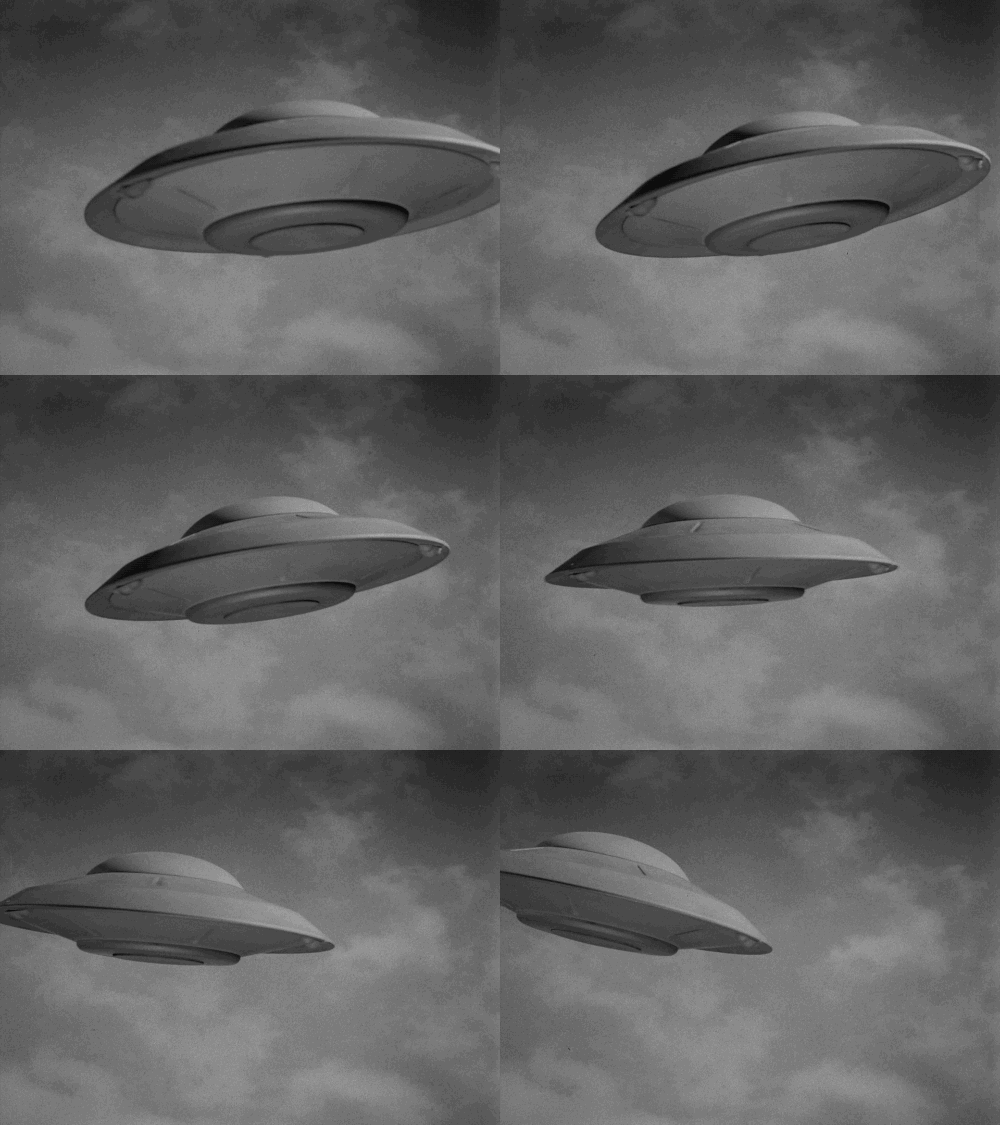
Like… okay, imagine an old Twilight Zone episode where we see a spaceship land on a planet and they get out, wander around, and then maybe find a sign that basically says “hey, losers, you’ve been on Earth this whole time.” You know this episode, right? Is it even an actual episode? You know this archetypal story, right?
But here’s the thing—these stories have a lot more than that. They have assumptions and discussions about which planet this is and what did or didn’t happen here. Maybe even about who the astronauts are. We need to have strong reason to think this isn’t Earth for that twist to have any impact. Make sense? Up until that reveal everyone should be acting like it’s an alien world. Yeah, we’re going to find out the thing scratching at the door’s  just a beagle. But for now, before we get to that reveal… it’s a hideous alien monster. No, it can’t really hurt my characters, but they don’t know that. And they need to act accordingly.
I think a lot of this tends to come down to… well, not having an actual story. There’s nothing going on except that big reveal, so all my characters just sort of stand around twiddling their thumbs until we get to it. I’ve been so focused on what happens after the reveal that I haven’t considered what everyone’s supposed to be thinking or doingbefore that moment.
Just to be clear—I’m not saying mid-book twists aren’t cool. They’re super-cool.  They’re fantastic and I love ‘em. But y’see Timmy, there has to be a story before we get there.  Even if it’s all a bunch of misconceptions or faulty beliefs—my characters have to be doing something somewhat motivated in a world we can at least vaguely understand.
Have you read (or maybe seen) Wayward Pines? It was a fun series by Blake Crouch that became a pretty good television series. And it had a pretty solid twist quite a ways into it. A really perfect, made-you-reconsider-everything twist. But the main character, Ethan, is still doing stuff before then. He makes his own assessments of the small town he finds himself in, based off all the information he has, and he acts. He does things. Ethan treats the world he’s in like… well, the world he’s in, and not just a glorified waiting room until the “real” story begins.
I can have the cool twist. I can have a great reveal. But these things don’t stand alone. They need to be carefully woven into my story. There needs to be elements supporting them and guiding my readers to them.

Because nobody wants to read about a bunch of people standing around waiting for the big reveal.

Next time… well, we haven’t talked about how stupid I am for a while now.

Until then, go write.

February 7, 2019 / 1 Comment

In Context

            I’m writing up this post as I levitate upside down in my office.  Which—cool thing about this new house—exists in an orbiting satellite that’s only accessible through a teleport array we found in the attic.  Really cuts down on the commute to work, let me tell you…
            Okay, we’ll get back to that.
            I wanted to expand a little bit off something I touched on last week, and that’s the idea of context within a story.  When we talked about it before, I was using it to show how I can’t pull random elements from that story, copy them into my story, and expect them to work the same way
            Quick semi-related question.  What does it mean if I walk up and smack someone?  Full on, five fingers, hard across the face.
            Well, it could mean any number of things.  It could mean they’re a complete jackass.  Or maybe I am.  Maybe they deserved it.  Maybe they’re in shock and I’m trying to bring them around.  We don’t know enough about the circumstances, the background, the existing relationships between me and the person I smacked.
            What if I just walked up and kissed them?  Or slapped their ass.?  Kinda the same thing, right?  We don’t know enough.  Maybe I’m a complete sleaze.  Maybe this is my partner of several years.  Hell, this could mean different things depending on where it happens. Doing it at the office could be extremely inappropriate, but in the locker room this could be a congratulations, and in the bedroom it might be foreplay.
            All of this additional information—the stuff we don’t know in these situations—is the context.  It what makes actions creepy or exciting or exciting in that other way.  As I’ve said before, there can be many different interpretations of the same thing depending on all the other things around it. 
            This becomes extremely important in genre fiction, because one of the big aspects of genre is that we tend to tweak the world a bit.  Maybe superheroes are real.  Or dragons. Or cybernetic implants.  Maybe they’re not just real, they’re common.  Boring, almost.
            For example, take my opening paragraph.  It probably made you smile, because it’s absurd in two or three different ways, right?  Complete nonsense, because we all know how the real world works and I am, no matter how many times I’ve wished otherwise, part of said real world.
            In a genre story, though, all of that could easily be true.  Then it isn’t laughable—it’s setting.  Possibly important plot elements. 
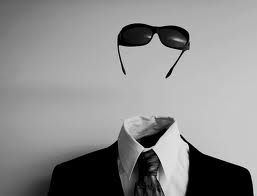
            Charlie Jane Anders made a wonderful observation a while back about how some of her least favorite stories were the ones that got pitched as something like “it’s a world just like ours, except everyone can turn invisible.”  The problem with these stories is that if everyone could turn invisible… well, the world would be completely different.  Views on privacy would’ve changed massively, possibly in different directions depending on how long this power’s been available.  Social views would be different, because anyone might be listening.  Heck, traffic laws would need to be adjusted because what if an invisible three year old wandered into the street?  Technology would be different, because there’d be whole-new priorities in this world.
            And if none of these things have changed… well, that just doesn’t make sense, does it?  Try to think of an aspect of your life that wouldn’t be different if there could be two or three invisible people in the room with you.  Any room.  At any time.
            Context lets me know what is and isn’t possible in this world.  By extension, it lets me know when people’s reactions are appropriate or wildly inappropriate.  If my story doesn’t explain what the limits of my world or characters are–or if I don’t give my readers enough to figure it out—it’s going to limit their investment and immersion in the story.
            For example…
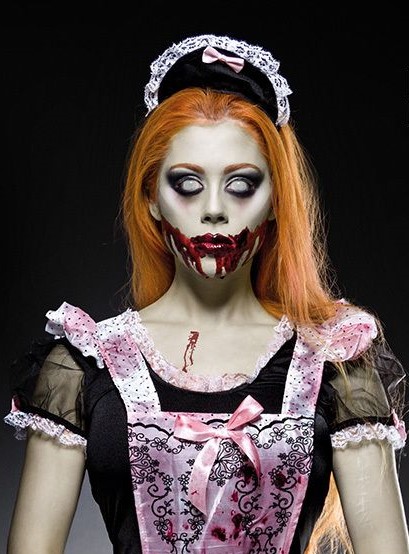
            I watched this movie a while back where a guy hires a live-in maid (occupations and genders may be changed to protect… I don’t know, surely somebody deserves it).  Nothing weird or unusual there, right?  Except when the maid shows up, she’s kind of… well, unnatural.  Pallid, almost gray skin.  Dark circles under the eyes.  Blank stare.  Never speaks.  Tends to move in a kind of slow, lurching way.
            You can kinda see where this is going, right?  Zombie maid.  Clearly.
            But here’s the thing.  Our protagonist and his roommate don’t notice anything unusual about her.  They act like she’s totally normal.  One of them even thinks she’s kinda hot.  Same with other people who stop by.  They all just treat her like… well, the maid.  Or, at the very least, the woman staying at Yakko and Wakko’s place.
            And let me save you an assumption.  This wasn’t a comedy movie.  It bordered on melodramatic horror, really.  Except… nobody was horrified. 
            Well, maybe me…
            So what was going on?
            I watched the whole damned movie and I still don’t know.  Was she a normal woman who just happened to look and act like a zombie for some reason?  Maybe?  But if that was the case, wouldn’t people comment on it?  Since nobody in the movie ever mentions that the new housekeeper looks like one of the walking dead, it seems like this might be, well, a common thing.  In fact, there are two or three scenes where the characters pretty much treat her like an appliance, even putting her in a storeroom at one point.
            But if she wasa zombie maid, shouldn’t that come up?  Heck, even if it’s the most normal thing in this world to have undead people cleaning your home, you think someone would mention it.  And plus… the rest of the time they’re talking to her and acting as if she’s a completely normal person.  Hell, like I mentioned before, the roommate’s even mildly obsessed with “how hot she is” and more than once talks about trying to get her in bed.  Which is a bit odd if she’s supposed to be a zombie.  At least worth a small discussion, yes?
            The real problem was that I couldn’t tell how to feel about any of this.  Were the guys being jackasses who objectified their maid—which would imply I shouldn’t like them, right?  Or was this a normal reaction, the way you or I would treat the vacuum cleaner when we weren’t using it?  Was the roommate’s desire to have sex with the maid kinda weird?  Full on creepy?  Hell, maybe even normal?  I don’t understand the world, so I don’t have any context to base these reactions in.
            And just to be utterly, completely clear—there’s nothing wrong with a story about zombie maids.  That’s the basis for a very cool story.  I’d never say otherwise.  Heck, it’s the basis for Fido, a really fun movie.  But if this is the world I’m setting my story in, I need to be clear this is… well, the world my story’s taking place in.
            Now…
            All that said, it’s really common to start off with a story set in “the real world”  and then it suddenly veers off into the realm of magic, aliens, and/or elder gods.  We’ve all seen it.  If you like hearing about three act structure, this kinda thing is a common way the first act ends.  Again, nothing wrong with this.  Like I said, it’s really common and I bet we’ve all got a favorite story or six that does this.
            Why can they do it?  Well, if you look at these stories, the big reveal that zombie cyborg lizard men are secretly running Wall Street is pretty much always structured as a low-level twist—it doesn’t alter the context, it enhances it.  These reveals force us to look at a lot of earlier story events in a new light.  They don’t actually contradict anything we’ve already seen in those first two or three chapters.  And since they happen early in the story, they’re not asking us to rethink a lot of assumptions or beliefs about these characters or the world they live in.
            There’s also another way to pull off this context shift, and it’s one that you’ve probably seen done a couple times.  I do it in Dead Moon.  Heck, J.K. Rowling copied it from the original Predator.  No seriously.
            Okay, not seriously.
            Just tell them right up front.
            Most people tend to forget, but Predator begins with an alien spaceship doing a fly-by of Earth and launching a landing pod as it zooms past.  That’s the very first shot in the movie.  Seriously.  And then it’s half an hour of Arnold and Shane Black shooting guys in the very real-world jungle before we see another hint of the alien.  Same with Harry Potter.  Sure, there’s all that stuff about Harry’s miserable childhood with the Dursleys, but the first chapter’s all about magic cats and a flying motorcycle.  Rowling all but openly says right up front there’s a magic world the Dursleys are desperately trying to ignore, despite their clear connection to it.
            What this does is establish right up front these are genre worlds, no matter how normal they may seem as we ease into the story.  When they take their sharp turn, it isn’t out of nowhere. It’s just a reminder of what we’ve already been told.
            Y’see, Timmy, without this context, my readers are left in a kind of “anything goes” situation.  Which it makes it really hard to have stakes.  Which means they won’t be able to make any kind of investment in either the plot or the characters.
            And no investment means no reason to keep reading.
            Next week is a double-header for me.  It’s Valentine’s Day and I have a new book coming out.  Have I mentioned Dead Moon?  Two or three times?  Today?  Okay, just checking.
            Anyway, I’m going to be busy on Thursday.  But I’ll probably put something up earlier.  In the spirit of the holiday, I’ve been thinking it’s about time we talked about… you know.
            Until then, go write.
March 13, 2018

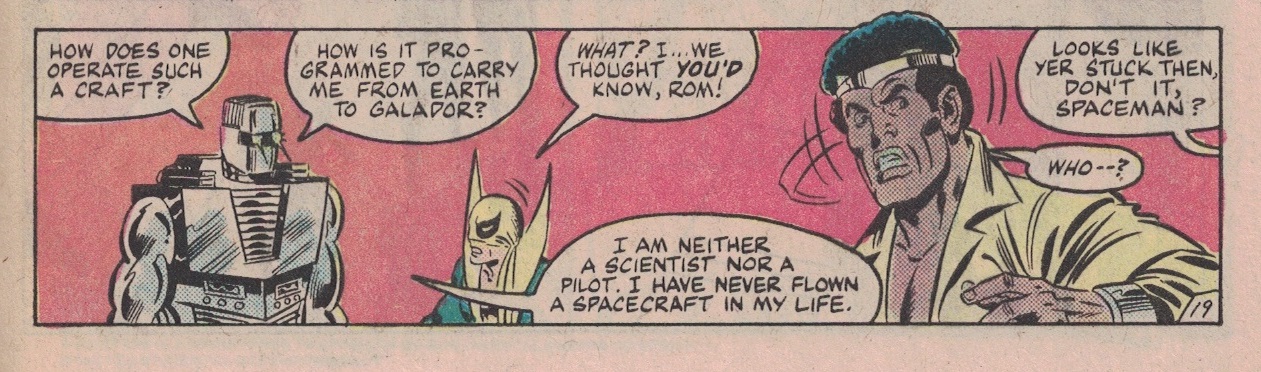
Writing Lessons from ROM

Eight-year old me learned a big lesson about storytelling from this one panel…

August 24, 2017 / 4 Comments

The Genre-Device Mnemonic Caper

             Middlemanreference.
            Very sorry I missed the last two weeks. Lots going on, which I’ll get to in a minute 
            I wanted to toss out a couple of quick, easy genre/device mnemonics for you.  These are a couple of things I’ve heard over the years.  Sometimes—when I’m struggling with something in a story—I’ve found them helpful for getting my head wrapped around things.
            So, what is it you’re working on right now. Maybe keep in mind…
            Suspense is about what’s going to happen
            A thriller’s about what is happening
            A mystery is about something that already happened
            Granted, these are kind of broad definitions, and there’s always going to be an exception or two. But I’ve mentioned once or thrice before the problems that can crop up when I try to push this kind of story into thatframework.  And if I’m trying to write a thriller that’s about events that already happened… well, there’s probably a reason I’m having problems with it.  Or maybe my readers are having problems with it.
            It’s not a bad thing to double check what I’m writing about and what I think I’m writing about.
            Now, let’s flip this and talk about devices.

            A mysteryis when my characters are actively searching for a piece of information they don’t know.
            Suspenseis when my readers—or the audience, in a larger sense—knows a piece of information that my characters need to know but don’t.
            A twist, is when we’re talking about a piece of information that nobody even suspects exists (readers or characters), but once we learn it, it’ll change how we view a lot of what’s already happened in the story.
                       
            I think we all mess these up a lot when we’re starting out. We’re trying to use a device or write in a specific genre, but we fall into the patterns of another one.  Or we’re so focused on having, for example, a cool mystery that we don’t realize we’ve actually set up a twist.  And it’s kind of a weak twist because… well, we’re still trying for a mystery.
            Worse yet, sometimes we learn these mistakes.  They become that thing we’re convinced is right because we never learned anything different. And so we stick with these mistakes for years, focusing on other things instead fo the one clearly-wrong thing.
            Make sense?
            That’s why I like a lot of these little mnemonics.  They’re easy things to keep in the back of my mind and check my work, so to speak, every now and then. Good for starting out, good for later on, too.
            Next time…
            Okay, truth is, I had surgery last Tuesday.  Nothing super-serious, don’t worry, but it was pretty intense and the painkillers have really knocked me for a loop (and really messed with my sleep). Heck, this post was mostly done last week and I couldn’t pull it together long enough to get this up on the site.  Barely got that cartoon up the other day.
            Long story short—no idea if I’ll have a coherent post done for next week.  August might be my lame month.
            At the least, I’ll put up another cartoon. At the best… well, we’ll see how close I am to reality at the given moment.
            As always, please feel free to toss any requests or suggestions in the comments below. Or any handy mnemonics of your own.
            Until then, no matter what… go write.

Categories