
February 18, 2016

My Dream Woman

First, before I forget…  Folks in the Los Angeles area, this weekend is the Writers Coffeehouse. Sunday, noon to three, at Dark Delicacies in Burbank. It’s free and it’s open to writers of all levels—from bare-bones beginners to seasoned professionals, and even a few mid-list hacks like myself.  Stop by, ask questions, have fun.

Speaking of writing advice…

This week I wanted to prattle on for a moment about one of those off-topics I tend not to talk about much.  It’s more of a mindset, and it applies to writers of prose and scripts alike.  I’ll give you a hint—it’s not a good mindset to have.

Let me toss out a hypothetical situation for you.  More exact, a hypothetical person.  I’ll call her Phoebe.  If you want to substitute a different name or gender, please go right ahead.

Just for the record, I have never known a Phoebe. I know two or three folks who’ve changed their names, and they weren’t a Phoebe before or after. That’s why it’s one of my four fallback names I use here all the time (the other three belonging to the Animaniacs). If I randomly referred to a woman in one of these examples as Colleen, Becky, Jennifer, or Katie, for example… I would get many calls/messages from people I know asking “is this supposed to be me?”

So… Phoebe.

Phoebe is, for the record, my dream woman. She’s what every man aspires to in a significant other. Smart.  Funny.  Kind.  Sexy.  Gorgeous. I can’t think of anything I’ve wanted more than to be with Phoebe. Feel free to take “be with” any way you like–you’ll be right.  She is, in all ways, perfect.

Well, perfect might be overstating it.

Just a bit.

To be honest, she could use one tiny improvement in the facial region. Her chin is kind of sharp. Makes her face a bit too triangular and pointy. A rounded chin would bring out her cheeks and her smile more.

Also… slight overbite.  You can’t really notice it until you’re close to her.  That’s when you can also see one of her incisors has this little twist to it.  Nothing braces couldn’t fix, though.  Maybe those transparent ones.  Invisalign?  Something like that.

Plus, she’d be much hotter if her hair was a bit lighter.  And not so long.  If she was more of a platinum blonde, Phoebe would be unbelievably hot.  So really she’s just a haircut and a box of dye away from being my perfect woman.

Speaking of which—please don’t judge me for this—Phoebe is a touch on the small side. Not flat, by any means, and they’re nicely formed. Really nice.  I’m not talking about anything grotesque, mind you, but something in a B-cup would give her an absolutely killer figure.

Again, though, that’s minor. Really minor. Heck, I think it’s just outpatient surgery these days.
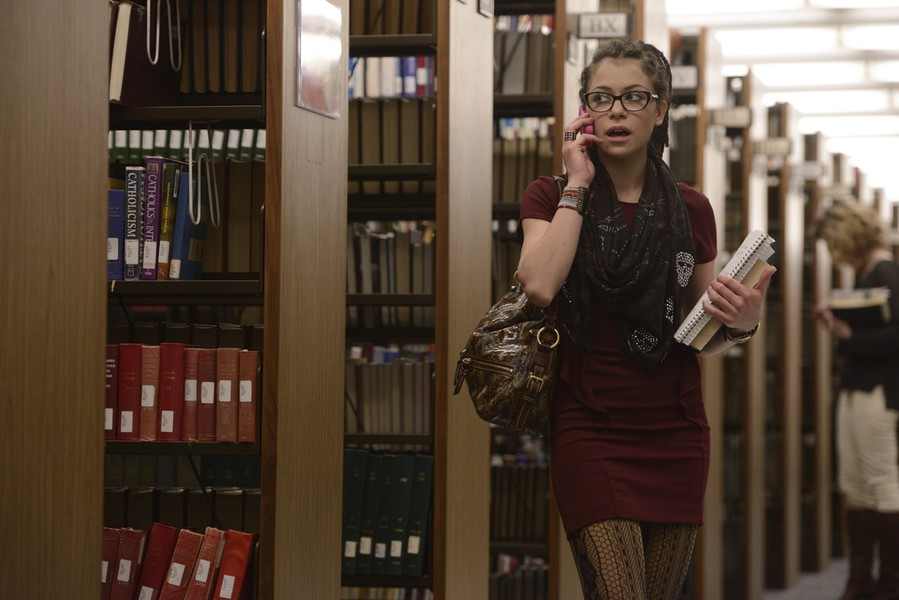
Y’know, thinking about it, if she wore some nicer clothes, it’d help show off that figure, too.  Everything Phoebe owns is that kind of frumpy-baggy look.  It was kind of cute in college, but come on.  Dress up a bit now and then.  Would it be so wrong to wear something eye-catching?  Once we’re together, I’ll take her on a nice shopping spree before we go out anywhere.

Although I don’t know where we’ll go out.  We don’t have many of the same interests. She can’t stand superhero movies.  Or shows.  Or books (which is a bit of a sore spot).  I’ll work on that, get her to watch something better and stop subjecting me to that crap stuff she likes to watch.

And, I mean… I sit in a chair nine hours a day and she makes me look kind of athletic. She’s still got that young metabolism, lets her eat half a pizza before bed and she actually wakes up weighing less than she did the night before.  That’s not going to last forever.

At least, with that body—well, the potential body we’re talking about—the sex will be worth it.

As long as she doesn’t make that same weird noise she makes when she’s excited. That sound creeps me out.

Still my dream girl, though, and I’d love to be with her—in any sense of the phrase.

So, at this point I can guess what a lot of you are thinking.  Why the hell is Phoebe my dream girl? She sounds like a good, solid person as she is, but it’s pretty apparent she’s not what I’m looking for, despite my insistence that I want to be with her. I mean, why would anyone want to be involved with someone just to change everything about them?

Which… is the point I wanted to make.

Between this ranty blog, conventions, signings, Twitter, Facebook, the Coffeehouse I mentioned up above… I meet a lot of writers. Several of them are so far past me I’m astonished when they strike up a conversation. A couple…I think it’s safe for me to say I’m on the same level as them.

Most of them are beginners, though. Maybe they’ve got a small sale under their belt, but often not even that much. You probably know some folks like this, yes? Maybe you’re one of them. These folks will talk about how much they want to be writers, how it’s been a lifelong dream to see their name on a shelf in a bookstore, or to hear actors reciting their dialogue.  There’s nothing they want more, and they’ll do whatever it takes, to make that dream become a reality.

However…

Just after this, some of these folks follow it up by explaining how biased and unfair the publishing industry is. Or maybe listing off all the things that are wrong with Hollywood.  Don’t even get these folks started on agents. Agents of all types need to be a lot more open, especially considering they usually do nothing and then take a cut of your money.

Or maybe they swing the other way.  Perhaps they’ll  point out how much self-publishers are screwing things for everybody. It’s not even real publishing, right?  They’re just oversaturating the markets with all their crap and making it harder for good stuff—my stuff—to get noticed.

As a finale, these people will announce all the things they’d change about the industry.  All the things they’re going to change once they’re in that position of power.  In fact, the industry’s changing now and they’d better watch out!  We don’t need any of those dinosaurs anymore, right?!

By what I’m sure is a complete coincidence, very, very few of these people have ever sold a book. Or a screenplay. Or a short story.

Which only shows how corrupt and broken the system is and why it needs to be fixed. Right?

Y’see, Timmy, I can’t go into any sort of relationship thinking I’ll be the one to change her! Or him. Or them, if I’m feeling adventurous. Those relationships are always doomed one way or another. Either they fail horribly or they “succeed” with one person or the other becomes a twisted, compromised version of themselves (and probably hating the other person for it).
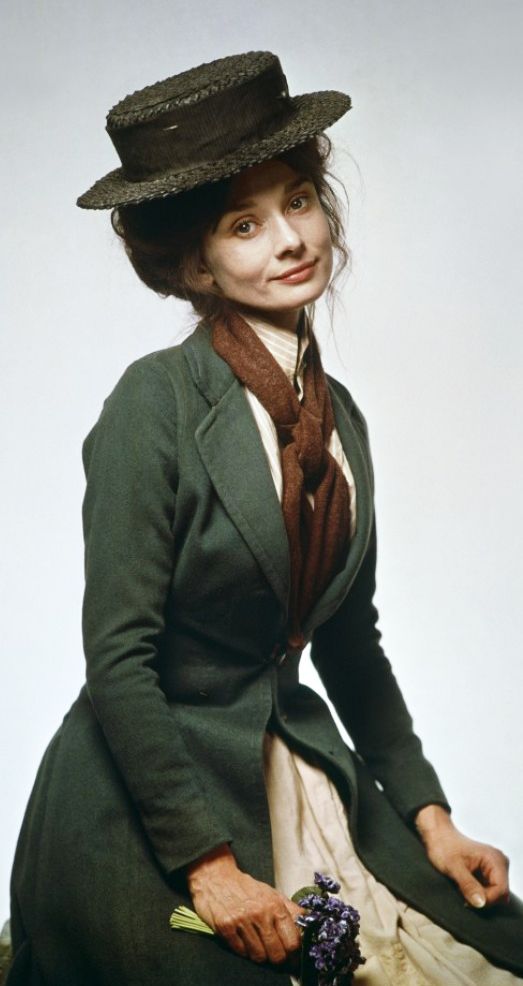
Likewise, I can’t expect to have any sort of success in the publishing world or in Hollywood if I’m starting from the mindset of “they’re all wrong.”  Definitely not if it’s my main focus.  It’s no different than my mad pursuit of Phoebe just so I can change everything about her.  I’m either looking for a relationship or I’m looking for someone to be my Eliza Doolittle-esque test subject.

My main focus as a writer should be (ready for this?) my writing. It needs to be my main concern. It’s very good to know about different forms of publishing, about marketing and networking and social media… but first and foremost, I’m a writer. Personally, when someone introduces themselves as a writer and the first thing they want to talk about is everything wrong with traditional publishing… I get a little cautious.

What’s your first concern? Do you want to date Phoebe… or do you just want everything on your terms?

Next time…

Oh, almost forgot! This Tuesday, Ex-Isle is finally out on audiobook after delays that are pretty solidly my fault. And they brought back the whole cast for the production. Check it out!

So… next time, if I may, I’d like to talk about your purpose.

Until then… go write.

            Old reference from the Incredible Hulk comics.  Paraphrased, but very relevant.  Points if you know who said it.
           So, a few weeks back I talked about suspension of disbelief.  It’s how we guide our readers through the parts of our stories that, well, don’t hold up to rigorous examination.  They’re inherently wrong, illogical, or maybe just very out of character for that person on the page–or maybe for anyone.  This sort of thing breaks the flow of my story.  If I break the flow often enough, my reader’s just going to put the book down and move onto something more entertaining like the latest episode of Galavant.  Or laundry.

            Now, that being said, sometimes I just need a coincidence or an irrational act.  It’s the curse of being a writer.  Every now and then someone needs some amazing good luck or really horrible bad luck.  They find the key.  They forget the password.  They manage to make the nigh-impossible shot on their first try.  Their cell phone battery dies.

            Here’s a quick tip that can help make that moment work.
            There’s a device I’ve mentioned before called “hanging a lantern on it.”  It’s when I take that odd coincidence and—rather than try to hide it or brush it aside—I draw attention to it.  I put a spotlight on it.  Not as the writer, mind you, but within the story itself.  When I hang a lantern on something, an odd or unlikey event happens and my characters address the oddness or unlikelihood of it
            In my Ex-Heroes series, for example, the subject of origins comes up in the second book, Ex-Patriots.  One of the characters, Cesar Mendoza, has the ability to possess machinery, and explains that he got the power when he was younger.  According to him, he was struck by lightning while working on a car’s alternator.
            Ridiculous, right?
            Thing is, St. George immediatelypoints out how ridiculous this is. He even gives examples and explains just how impossible it is for a lightning strike to give someone superpowers.  Cesar’s response is just to shrug and point out “Yeah, but it did.”  And then he asks how St. George got his powers, and our hero awkwardly admits he got his powers by getting caught in an explosion when a radioactive meteor hit a chemical storeroom at the lab where he was cleaning up.
            So, why does this little trick work?
            Well, y’see, Timmy, when my reader sees something ridiculous happen in the story and my characters acknowledge that thing is ridiculous, it makes them more believable and relatable.  It’s just the way we’re wired as people.  We can’t forgive a million-to-one coincidence that everyone takes in stride, but we kind of buy it if everbody comments on the odds we just beat.  When the reader and the character have the same reaction, it pulls the reader in a little bit rather than pushing them away.
            Now, does hanging a lantern make a story’s lucky coincidence totally acceptable?  Well, not always.  But it’ll push back the suspension of disbelief a few notches.  So if I’m asking the audience to accept something small-to-midsize (that five people on a subway car all have the same birthday), and I make a point of commenting on the oddness of it, the readers will probably accept it without too much trouble.  If it’s a huge coincidence that really strains belief (“None of the codebreakers thought to see if the password was his birthday?!?”)… well, there’s only so much any plot device can do.
            Also, keep in mind I can’t include dozens of belief-straining elements and hang a lantern on each one.  In fiction, just like in real life, people start to get weirded out by too many coincidences.  When it happens once it’s good (or bad) luck.  Twice is just crazy.  Three times… okay, now I’m looking around.  Four times and someone’s interfering with my life, somehow. 
            Looking at it from the authorial side of it, it’s something you can only do once or thrice before people start to catch on to what you’re really doing.  A good magician rarely repeats a trick, because once the audience sees what you’re doing, the trick’s ruined. 
            And now I can never use it again.
            So if my readers are going to think something is a bit unlikely… maybe my characters should, too.
            Next time, I’d like to talk about photobombers.
            Until then, go write.
January 7, 2016 / 2 Comments

The Woooooorld of Tomorrow!

            Welcome back.  Glad to see you all survived the violent transition to 2016.
            I like to start the year by going over what this pile of rants is for and why I do it.  I think it’s good for any of you who’ve stumbled across this page.  It’s also good for me, to help stay focused on helpful tips and suggestions and, yes, the occasional rule.
            That’s more or less how this started, almost nine years ago now.  At the time, I was writing for a screenwriting magazine, and I’d see tons of articles and websites about tricks and gimmicks—the sort of stuff you worry about after writing.  I’d guess at least two-thirds of writing articles, even in our own magazine, fell into this category.  Stuff like how to get an agent or manager, how to aggressively network, how to arrange book signings, that sort of thing.  Most of which seemed like… well, like it was skipping a few steps.
            And some of these folks were asking to be paid for their pearls of so-called wisdom.  
            So, I went to my editor with a few spec columns about… writing.  Some basic things I’d written up based on my own years of many failures and a few successes (or, as some folks call it, experience).  And the columns were rejected.  A few months later I went to another editor, he passed them up the chain, and they were rejected again.  Those three columns became the first posts here.  I’d tossed them up just so it felt like I’d done something with them.  I thought they were fairly well written and made some good points—I didn’t want them to languish on my computer.  Maybe in the tiny, limited space that was the internet somebody would stumble across them and find them useful.
            (Bonus fact. Maybe a year after I started posting here full time somebody pointed out Thoth-Amon was also the evil sorcerer in the Conan books and comics.  Completely slipped my mind when I picked the name for the site.  I just went with it because Thoth was the Egyptian god of writing)
            Anyway, as I worked my way further into the life of a full-time writer, I was exposed to more and more people’s work.  I read scripts for a couple different contests and got a bunch of exposure to it (reading 400+ pages a day will do that to you).  And it struck me that I kept seeing the same basic mistakes.  Often to wince-inducing levels.
            Okay, so this is just my own experience, but at this point my experience is pretty broad so I feel good about saying it…
            Most aspiring writers fall into one of two camps.  Some think writing and storytelling are mechanical, quantifiable processes that can be broken down into solid rules and formulas.  These are the folks who will use Syd Field as proof that their screenplay is perfect and quote the MLA Handbook to explain why their novel deserves to be published  

           The other group think rules are for old-school losers who don’t get that spelling, formatting, and structure just hamper the creative process and will get overlooked when people see the inherent art in the writing.  Nothing matters past the pure art of words flowing out of their fingertips.  Because we all have fantastic stories to tell.  Don’t know how to spell that word?  That’s what spellchecker’s for.  Don’t know what the word means?  Well, they’ll get it from context.  Not in the mood to write? Then just wait for the muse to strike.  Someone said bad things about your writing?  Ignore them, what do they know?!  Nothing matters except being happy about your writing.

            Both of these groups are usually wrong, for the record.
            Note that I said “usually.”  Most folks think it’s all-or-nothing.  You have to be on one extreme or another.  The truth is that it’s more of a middle ground.
            Y’see, Timmy, there are correct and incorrect things in writing. I have to know how to spell (me—not my spellchecker).  I have to understand grammar.  I need to have a sense of pacing.  If I’m writing a script, I’ve got to know the current accepted format.  As a writer, I can’t ignore any of these requirements, because these are things I can get wrong and I’ll be judged on them. 
            On the other hand, there is no “right” way to start your writing day or to develop a character.  There’s only the way that’s right for me and my story.  Or you and your story.  Or her and her story.  This is the Golden Rule that I’ve mentioned here once or thrice.  If I ask twenty different writers about their method, I’m going to get twenty different answers.  And all of these answers are valid, because all of these methods work for that writer
            But that still doesn’t mean I can ignore every convention or rule I don’t like. I need to understand the rules if I want to break them successfully. Yeah, maybe there are ten or twenty people who broke the rules and succeeded… but there are hundreds of thousands, probably millions, who broke the rules and failed miserably.
            And that’s what I try to do here.  Talk about writing.  Not the after-the-fact-stuff, just writing.  I talk about rules that we need to learn and follow (until we’ve got the experience to bend or break them).  I try to offer some various tips and suggestions I’ve heard over the years that may (or may not) help out when it comes to crafting a story.
            I have a few topics on deck for the weeks ahead.  Author visibility.  Action.  Inside jokes.  Stakes.  Motives.  A few others.  And if there’s something that’s been gnawing at you that you’d like me to blab about, let me know down in the comments.  I’ve been doing this for a while—there aren’t many topics I haven’t had a painful learning experience with, and I’m always willing to share.
            Oh, also… if you happen to live in the southern California area, I’d like to recommend the Writers Coffeehouse.  It’s a monthly meeting of writers of all types and levels to talk about… well, writing.  All aspects from first ideas and editing to pitching and marketing.  It’s free, it’s fun, and it’s open to everyone.  Jonathan Maberry (author of the Joe Ledger series, the Rot & Ruin series, and many others) brought it with him when he moved to the San Diego area, and he hosts a Coffeehouse the first Sunday of every month at the Mysterious Galaxybookstore. And starting this month, on the 24th, I’m going to be hosting one here in Los Angeles at Dark Delicacies.
            So check that out if you’re in the area.
            Next time, I’d like to talk about lanterns.
            Until then… go write.
June 18, 2015 / 2 Comments

Don’t Look Back Now…

            Okay, I’m still trying to get caught up on things after a whirlwind of publicity stuff for The Fold.  And to be honest, the storm flags are still blowing a bit.  So I just wanted to offer some quick advice on drafts.  Specifically, how to approach my first draft.
            As I’ve mentioned here a few times before, I tend to treat my first draft as the “just finish it” part of writing.  I just want to get it done with a beginning, an end, and the majority of points in between.  I also don’t hold back.  I let dialogue, descriptions, and action scenes run on a bit longer than they probably should.  A lot of it’s not perfect, but I know I’ll start cutting in the next draft or two, so there’s no reason to worry about length now.  The most important thing is to get the overall framework done.  Personally, I find it’s a lot easier to deal with the small things when the big things aren’t looming over me.
            A lot of folks I’ve talked to try to do this, but they get caught in early-editing mode.  Ten pages in and they’re going back to edit, or rethink a character, or to tweak the structure.  Forward motion crashes to a halt because the writer’s spending all their time looking back.
            Now, in all fairness, a few people can do this and it works fine for them.  It’s how Kevin Smith writes.  He goes in blocks of ten or twelve pages, writing, rewriting, and polishing until they’re done.  Then he moves on to the next ten. 
            If you’re one of the folks who can do this, power to you.  But in my experience, with all the writers I’ve talked to over the years, those folks are a rarity.  Most of us, alas, have to go through the whole thing, then go through it again.  And again.
            So, if you’re one of us, too, here’s my quick piece of advice.
            Don’t look back.
            When working on a first draft, I can read the page I left off on.  That’s it. If I stop halfway through the page, I can look at the top half before I start writing again.  That’s it.  If I ended at the top of a page, too bad.
            If I close the document, I’ll make a note somewhere else of what page I was on.  When I reopen it, I go right to the page I left off on.  No slow paging through the document.  Get back to where I left off and start writing again.
            Under no circumstances while writing will I hit the up arrow or page up or push the scroll bar.  None of that.  Not even to go up to the last paragraph.  No corrections, no re-reading, no going back to adjust. I don’t go back to fix typos or formatting or anything.  This draft moves in one direction and it doesn’t stop moving in that direction.
            I do not stop.  Ever.  Until it is done.
            This is an adjustment, yes.  And a very tough one.  It might not work for everyone.  But I’ve tried it twice now and found it helps. There’s a lot of stuff to clean up, yeah, but I’m getting to the clean up stage a lot faster than I would normally.
            Y’see, Timmy, forcing myself to only go forward means I’m forcing myself to write.  I don’t get to rethink yesterday’s work or tweak that first encounter or even double check if I usedthe right spelling of prophesy (I didn’t, but it doesn’t matter in a first draft).  I just write until the first draft is done.
            So try going forward.  Only forward. Never back.  Not one line.
            Next time, by popular demand from my fan page, we’re going to talk a bit about screenwriting, clan wars, and hunting.
            Until then, go write.

Categories