
October 25, 2018 / 1 Comment

Now and Then

            Okay as we inch closer to a happy Halloween, I wanted to take a moment to address something I see pop up a lot in horror stories.  Not only horror stories, but in my experience it seems the most common with them.
            Plus, as I said, it’s the season…
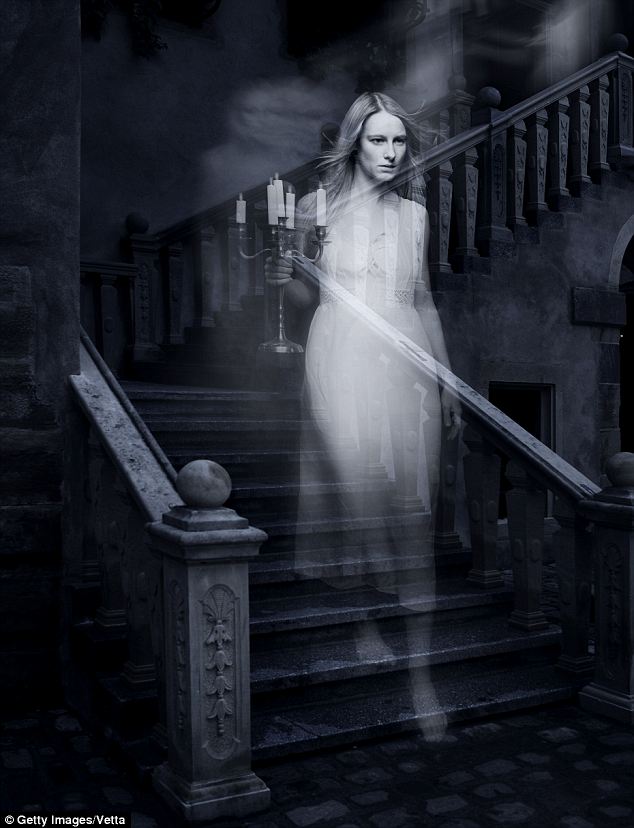
            Remember this story?  A bunch of people get mysteriously summoned to some remote location (often some kind of mansion), start getting picked off by some kind of ghouls or ghosts, and then discover—oh, crap!  We’re the descendants of the people who did this awful thing fifty/ a hundred/ two hundred years ago.  And now these ghosts want their sweet vengeance.
            I’ve seen a few variations off this, and you probably have, too.  Phoebe’s perfectly happy to live in everybody’s shadow… until she isn’t. Yakko’s seemed perfectly sane… until it’s revealed he’s been completely mad the entire time we’ve known him!  That statue’s sat quietly in the museum since the 19th century… until sundown today, when it opened a portal to hell.
            So here’s my important question for you.
            Why now?
            Why is this happening now?  What made super-shy Phoebe decide this is the week she has to ask Wakko out to the upcoming dance?  Why did Yakko’s mask of sanity finally slip away?  Why did the ancient portal open in the museum tonight?  Why did the ghost choose this weekend to send out the summons to its deadly party? 
            Why now… and not a dozen times earlier? Why not six days ago?  Or six months ago?  Or six decades, in some of these cases?
            The real issue here is motive.  Why is my character doing this?  And a big part of motive is knowing why they’re performing these particular actions at this particular time.  Even for things like ghosts or ancient portals, something has to be kicking them off.
            Let’s look at those ghosts again (it is Halloween, after all).  I mean, those ancestors did their awful thing a hundred and fifty years ago.  There’s at least five generations between them and my characters.  Has everyone been getting mysterious invites out to the old mansion?  How the hell did any of them ever have kids, then?  Or have the ghosts been really incompetent up until now when it comes to reaping sweet vengeance and none of my relatives ever bothered to mention it?
            And if mom and dad and grandma and grandpa haven’t been getting invites… well, what’ve the ghosts been waiting for?  Is tonight an anniversary of some kind?  A cosmic alignment?  Did one of the realtors spill an urn of ashes or unlock the attic or decide they’re bulldozing this place on Monday?
            I’ve touched on this idea before—plot being active while story is more passive.  Even if the ghost are my antagonists (and dead), they’re still characters with their own story.  What’s happened that’s made them finally spring into action?  Either they’ve been doing it all along—which would imply a history and a bunch of evidence from previous attempts—or something has changed.  Drastically changed, in some cases. What outside force has caused this story to happen now instead of… some other time?
            Y’see, Timmy, writing a book—any kind of book—is kinda like solving a crime.  I need to know all the motives.  All the answers to what and whyand how and when.  I may not have characters blatantly explaining them within my story, but they should definitely be there if people look for them.
            Because if they’re not there…
            Well, then I’m writing a really lifeless story.
            Next time…
            Holy crap.  Next time is November.  The year’s almost over.
            But more importantly (for some of you)… it’s NaNoWriMo.
            Have a Happy Halloween
            And go write.
May 10, 2018 / 3 Comments

Meanwhile, At A Secret Island Base…

            As has come up here once or twice or thrice, I like to watch bad movies (and usually offer a bunch of half-drunken live tweets as I do).  I’m a big believer in learning from the bad stuff over copying the good stuff.  Plus it’s kinda fun, in a masochistic sort of way.  I mean, statistically, somebodymust’ve made a good shark movie, right?
            Yeah, sure, Jaws, but I’m thinking in the forty years since then…
            Anyway, a few times now I’ve noticed an issue that I’ve also caught in some literary fiction.  By which I just mean “fiction on the page,” to distinguish it from cinematic fiction.  It can be brutal in movies, but it stings in books, too.   So I wanted to blab on for a minute or three about an aspect of pacing that seems to get overlooked a lot.
            It’s a very natural part of storytelling to shift between locations or timeframes. At a particularly dramatic moment, we may leap over to a parallel storyline, or maybe flash back to a key moment that happened hours, weeks, or even years ago.  Depending on our chosen genre, we may leap across centuries or galaxies.
            And that’s cool.  We all love it when a story covers a lot of ground and shifts between points of view. It lets us tell multiple stories and tie them together in clever ways, or to get information across using different methods.
            But…
            There are still some things I need to keep in mind as a storyteller. As beings that live more-or-less linear lives, we tend to notice when there’s a jarring difference in the passage of time.  We understand that time spent here is also time spent there… even if we don’t see it happen.
            That’s the thing to keep in mind.  Just because we cut from scene A to scene B, it doesn’t mean scene A stops. Time still passes.  Characters keep doing things.  They continue to talk and discuss and explain and comment on things.
            It’s not unusual to skip over swaths of time in a narrative.  As I was recently reminded, we don’t need to see the four-day cross country trip if… well, nothing happens during those four days. No matter how beautiful the language or evocative the imagery is, if nothing happens to further the plot, it’s an irrelevant scene.  Or chapter, as it was in my case.
            But here’s the thing I need to remember.  That time is still passing.  My character may get on the bus at the end of chapter six and get off at the start of chapter seven, but that doesn’t mean the journey was instantaneous.  There were meals and probably some conversations and a few bathroom breaks and some sleeping.
            More to the point, it wasn’t instantaneous for everyone else.  Four days passed for all the other characters, too. Time progressed for everyone.
            Now, I can fudge this a bit in a book.  It’s much harder to do in a movie, but in a book we can be made to understand that time didcome to a halt between chapters nine and eleven.  We went off to deal with something else for fifteen pages, yet when we come back everyone’s still standing here with pistols drawn, cards on the table, or awkward confessions hanging in the air.
            But…
            Yeah, another but.  Sorry.
            Whenever I have one of these cutaways, in prose or on screen, I need to consider the pacing and flow.  My readers will need to switch gears and jump into a new headspace for this different scene with different characters.  Sometimes it can be fantastic.  Cutting away can increase tension, ramp up the stakes, or just heighten emotions.  Done right, it can take my readers from screaming to laughing and back.
            Done wrong… and it just reminds people that things weren’t happening.  That the  action just froze during the time we shifted attention to something else.  The writer skipped over it… and they assume the characters did, too.
            I saw this in a friend’s book.  Some characters went through a major event together, drove two hours back home… and thenstarted talking about what had happened.  And my comment was, what were they talking about during the two hour drive?  Or there was a recent geekery movie where one of the aspiring victims was running from the homicidal killer, and then we cut away to six or seven minutes of the local sheriff discussing the recent killings over coffee.  And then… back to the victim.  Still running.  Still with the killer a few yards behind…
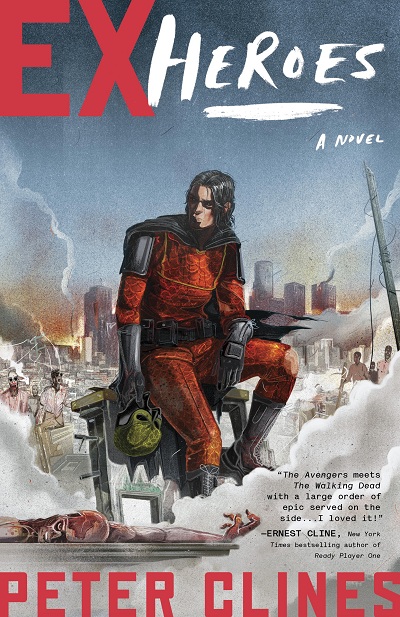
            And I did it once, too. In an early draft of Ex-Heroes, right in the middle of the climactic battle, the story cut away to a slow, almost introspective flashback.  Conversations were had, moral decisions were made, and in the end a plan was created to help save as many—WAIT, back to the fight with the zombie demon!!
            My beta readers made fun of me, too.
            Part of this is a pacing issue. If the action is happening with breakneck, life-or-death speed in this scene, I probably want to be cautious about jumping over to a slow stretch of decompressed storytelling.  I don’t want my reader stumbling as they try to figure out what’s happening and when it’s happening.
            Y’see, Timmy, when that stumble happens, it knocks us out of the story.  The cutaway brings things to a jarring halt.  We go from experiencing the story to analyzing it.  Puzzling over it.  Maybe even… laughing at it.
            Laughing at, mind you.  Not laughing with.
            So be careful where you make your cuts.
            Next week I’d like to talk about another aspect of writing that’s really close to this, one I’ve been bringing up a lot lately, to be honest.  This’ll flow really well right into it.
            Until then… go write.
January 14, 2017 / 2 Comments

Time for Torches and Pitchforks

            So sorry this is a bit late.  Deadlines. They can suck, but they pay the bills.
            Anyway, with some of the awful changes we’re already seeing this year, I thought it’d be good to try some positive changes.  In the next few weeks I’m hoping to do much more regular (and frequent) posts and also address a few different topics people have tossed my way.  And maybe even a big overhaul of this whole page.
            But first, I wanted to talk to you about the little European country of Switzerland.
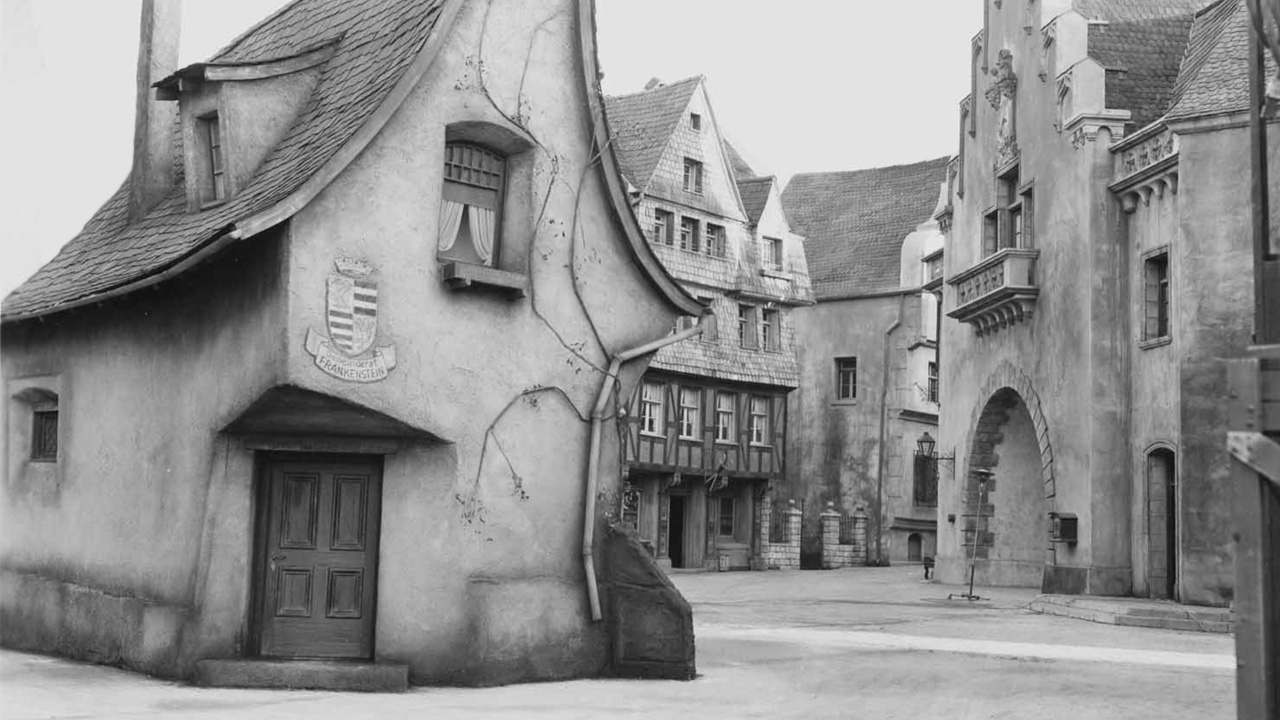
            I’m guessing everyone reading this has seen some version of Frankenstein, yes?  Maybe the iconic Universal film or one of its many sequels.  Or the Abbot & Costello movie.  Or even the comedy remake Mel Brooks did.
            (For the record Frankenstein here is the name of the movie, not the monster…)
            One standard in all of these is the little nearby village.  It shows up in every version of the story I just mentioned, plus a few dozen more.  And yeah, in the movies it’s in Switzerland.  Weird, I know.
            Anyway, I’m sure most of you reading this can picture it in your minds, yes?  The wall with the big gate.  The houses with the exposed timbers and big fireplaces.
            Okay, got all that in mind?
            Whenis that small town?
            No, no, don’t try to reason it out. Just answer the question.  In what time frame is that little town set?
            I bet that made your brain seize up for a moment.  Y’see Frankenstein was written back in the early 19th Century, and is actually set in the back half of the 18th.  It’s a contemporary of Ben Franklin and his lightning experiments.
            (For the record, Frankenstein here is the name of the book, not the monster…)
            And yet…
            The films kind of updated the story and gave it a slightly more “modern” setting.  The clothes and some of the doctor’s technology hint at a story set closer to the Victorian era.  There’s mention of trains in some of them.  The Abbot and Costello movie is set in “modern” times.  There are cars, planes, telephones–they’re full-on into the 20th century at that point.
            And yet… the little hamlet below the castle looks exactly the same in every movie.
            It’s not impossible.  There are lots of villages in Europe that still look a lot like they did two or three centuries ago.  Even here in the US we’ve got towns that haven’t changed much since the fifties.  Or the twenties.
            What’s my point in this?
            I read a book recently that was set in a village a lot like the one in Frankenstein.  There were even a couple of castles.  And one of the annoying things was I couldn’t tell when this story was supposed to be taking place.  No mention of electricity, radio, or cellphones, but also no mention of horses, woodpiles, or outhouses.
            The author described the clothes on a few characters, but these days having an eccentric, oddly-dressed character is kind of commonplace.  So maybe that woman’s clothing is a hint as to what era the story’s set in… or maybe she’s just really into steampunk or some kind of retro cosplay.  One guy carried a crossbow but… well, kind of the same thing, right?  These days crossbows, longbows, swords—they’re not that unusual in stories from any time period.  Look at The Walking Dead.  Heck, Warhammer 40,000 is set… well, about 38,000 years from now, and people are still using swords in that.
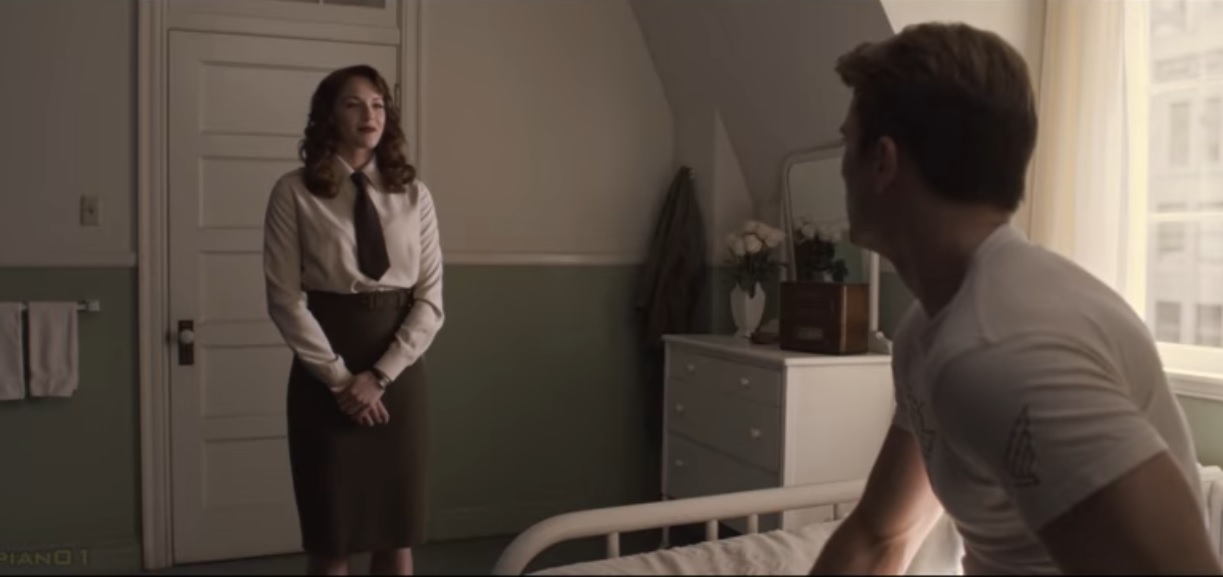
            Yeah, there’s always going to be that time where I want to misdirect my reader into thinking it’s 1944, but Cap really just woke up in 2012.  Or that the high-tech lair is in the future, not inside an Egyptian tomb in 1250 BC.  The thing I need to keep in mind is that these aren’t cases where I’ve just forgotten to mention the time—it’s being deliberately withheld to create an effect later.
            Y’see, Timmy, knowing the when of a setting is just as important as the where.  It’s one of the things we use as writers to help the readers relate to elements of the story. And it helps to define the world I’m creating.  Without knowing when my story’s set, it’s tough to tell when something’s exceptional or important in that world.  A soldier talking on a walkie-talkie isn’t exactly earth-shattering stuff, but if I tell you this soldier’s with George Washington in 1776, that walkie-talkie conversation becomes interesting on many more levels. And it immediately tells my readers what kind of story they’re reading.
            So remember the when along with the where.
            Next time, I’d like to talk about something I’m not going to talk about anymore.
            Until then… go write.
April 24, 2015 / 4 Comments

Slow Down, You Move Too Fast

            Both of you who are still here, many thanks for your patience during my long absence.
            The title’s a pop culture reference to some band my mom listened to a lot.  Garfunkel and Oates, I think…
            Okay, I’ll warn you right up front, this post is going to annoy some of you.
            I wanted to talk with you for a few minutes about cooking.  As I’ve mentioned in the past, cooking and writing are great parallels.  There are certain rules that must be followed, but there’s also a degree of personal style and taste involved for both the creator and the consumer.  We also understand that while almost all of us can do it on a simple, day-to-day level, there’s a big difference between that and cooking on a professional level as a chef.
            In cooking, we understand there are certain time elements that can’t be changed.  A three minute egg needs to boil for (big surprise) three minutes.  I can’t bake a cake in half the time by turning the temperature up twice as high.  Trying to speed these things up doesn’t improve them.  We all get that.  We all understand it.
            This is true in a lot of things.  If I’m building a house, I need to let the concrete in the foundation set before I start working on the frame.  Doctors often need to do procedures in multiple steps to give the patient time to heal.   It’s boring as hell, but sometimes you actually just need to watch paint dry. 
            Likewise, I think there’s a time element in writing.  The more it gets rushed, the more I end up with… well, a burned cake.  Or a crappy foundation.  Or severe hemorrhaging.  Or a lot of smeared paint.  Pick your favorite metaphor.
            That being said, there’s a lot of pressure to rush through writing these days.  I’ve seen more than a few would-be gurus pushing a business model of quantity over quality.  The ease of publishing through Amazon has made the idea of moving slow seem… well, clunky and antiquated.  It draws comparisons to, dare I say it, dinosaurs.  And with the raw amount of stuff being e-published, I think all of us have a lurking fear that if we don’t get our idea out there now, someone else is going to have it out there first thing tomorrow.
            But the most important thing, above all others, is for me to write well and write something good.  Churning out 6000 words a day or 300 pages for NaNoWriMo is an achievement, yes.  But it’s better to have 2000 good words and 200 polished pages if I want to do something with them.
            Odds are, that’s just not going to happen in my first draft.  Or my second draft, especially if that’s just a quick pass with the spellchecker.  Or my third.  Maybe not even my fourth.  Oh there’s always a chance that my first book is just pure gold on the first pass, but the majority of us just don’t have the ability or the experience to put out material that doesn’t need work.
            Yes, us. The book I just turned in took six months, start to finish.  It went through four drafts, and there’s no question in my mind it’s going to get another.  In the end, I even asked my editor for more time.  Because it needed more.  A lot of my word choices, my phrasing, my structure… it was all first-pass stuff.  It wasn’t really bad, but it also wasn’t good. Definitely not great (although I like to think there were still a few moments of greatness in there somewhere).
            Writing takes time.  Like the cake or the surgery or the paint, I can’t rush through an edit draft in a day and expect to get the same results as someone who spends three weeks going over their manuscript line by line.  My first draft is never going to be as good as someone’s fifth or sixth draft.
            Because of this time factor (ready for more angry comments?), I often find myself questioning people who say they wrote a book in a month.  Or even six weeks.  I completely believe a draft can be written in that amount of time.  I wrote the first draft of 14 in about six weeks.  But a finished book manuscript?  Something ready to hand off to an editor?
            You’ve probably heard of Stephen King.  You probably also know how often he’s been mocked and criticized numerous times for the speed he puts out books.  I mean, he’s got to be putting out how many novels a year?
            Two.  That’s it.  Less than that on average, really (although he did have a bit of a dead zone (zing!) after getting hit by that van).  In forty years of professional writing, he’s barely had fifty books published.  And so many people still call him a hack because he churns stuff out at such a fast rate…
            Now, going slow isn’t an ironclad rule.  Just a few weeks back I pointed out that some folks go so slow they pretty much come to a dead stop.  And sometimes everything just lines up and a draft takes a few days.  No two projects are the same and no two writers are the same. 
            But if every draft of every project goes fast… maybe I should take an effort to slow down for a while and see how it affects my writing.
            Because the goal for all of us is to be great.  Not to rush toward good and stop when we get there.
            Next time I’d like to have a quick chat about zombies.  And vampires. And mysteries.
            Until then, go write.

Categories