
October 22, 2020

Getting to Know You

I talk about characters here a lot. A real lot, going off the size of that tag over in the cloud on the right. Are the clouds even a thing anymore?

Anyway…

While I’ve talked a bunch of times about the traits of good characters, I don’t think I’ve really talked as much about how to get these traits across in a story. It’s all fine and good to say someone needs to be likable, but does that just mean I should have them shout “Like me, please like me!” up at the sky? How do I get across the kind of person Wakko is without falling back on him rattling off his resume and dating history?

I think most of the ways we establish characters tend to fall into three broad groups.

First is the easiest one—my characters establish themselves through their own words and actions. We’ve talked a bunch of times about the importance of voice, how someone talks and what they tend to talk about. If all Phoebe ever talks about is work, that tells us something about her. Likewise, if every conversation she has leads to talking about sex, that gives us a different insight. If every time she speaks it sounds like her Adderall just kicked in, that implies something about her, just like it does if every conversation tends to center on her and how great she is. Heck, even if someone doesn’t talk much—or maybe chooses to barely ever talk—that’s them telling us something about themselves.

In a similar way, if I show Wakko shooing away a stray dog, it says something about him. It says it a little louder if he throws something at the dog or shouts at it. And of course, if I see Wakko have a really crappy day at work and then he goes home to his crappy apartment and heads back out to give the stray a plate of dog food… that can say a lot about what kind of person he is. Good people do good things, bad people do bad things.

The second way we establish characters is by how other characters talk about them and react to them. If Phoebe’s talking in a calm, measured voice but her employees are nervous—or even terrified—that’s a big clue in to what kind of person they know she is. Likewise, if she’s trying to ream someone out over their poor job performance and they’re ignoring her, that also tells us something. Heck, if I’ve got multiple POVs, I might decide to show a bunch of her employees at the bar after work, and they might have a lot more to say once they’re out of the office. Until Phoebe walks in, anyway, and then their tone might change really fast… which again, tells us something about Phoebe.

It’s worth pointing out that most of the time my characters are going to know each other better than my audience knows them. So these interactions are going to work on a couple levels. They’re probably going to hint at how much history there is between characters, what that history’s like, what their current relationship is like. This is where I can use a lot of subtext and let my audience read between the lines a lot. People love that. Seriously.
The third way is how my character’s words and actions line up with my reader’s personal experience. You’ve probably heard that old adage, “actions speak louder than words.” If I tell you this is the smartest guy you’ll ever meet, but then constantly show him being outmatched and outsmarted… what does it actually say about this guy? Up above I mentioned Phoebe turning every conversation to sex? What does it say if she does it constantly at clubs and parties, but then we see her go home sad and alone every night? On the flipside, if she talks all the time about how she’s a bit of a conservative prude and very old fashioned, but then every other night we see her take someone new back to her place, that’s telling us something, too. And if the guy she’s chatting up at the bar talks about how much he loves animals, but then we see him throw a bottle at that stray dog on the way back to her place… well, we get a much better sense of who he is.

This sort of contrast (or open contradiction), can be a great way to get across those character traits. It can let us see who someone thinks they are versus who they actually are. It can show us who they want to be versus who they tend to be. Maybe even show us who someone really is as opposed to the person they keep trying to tell everyone they are.

That’s what I’ve got off the top of my head. If you’ve got some other ways to get character traits across to your readers, please let me know.

And next time is Halloween! And then NaNoWriMo. And then who knows what…

Until then, go write.
September 17, 2020 / 1 Comment

Around Here We Call That…

I wanted to take a minute or two to talk about a certain type of talking.

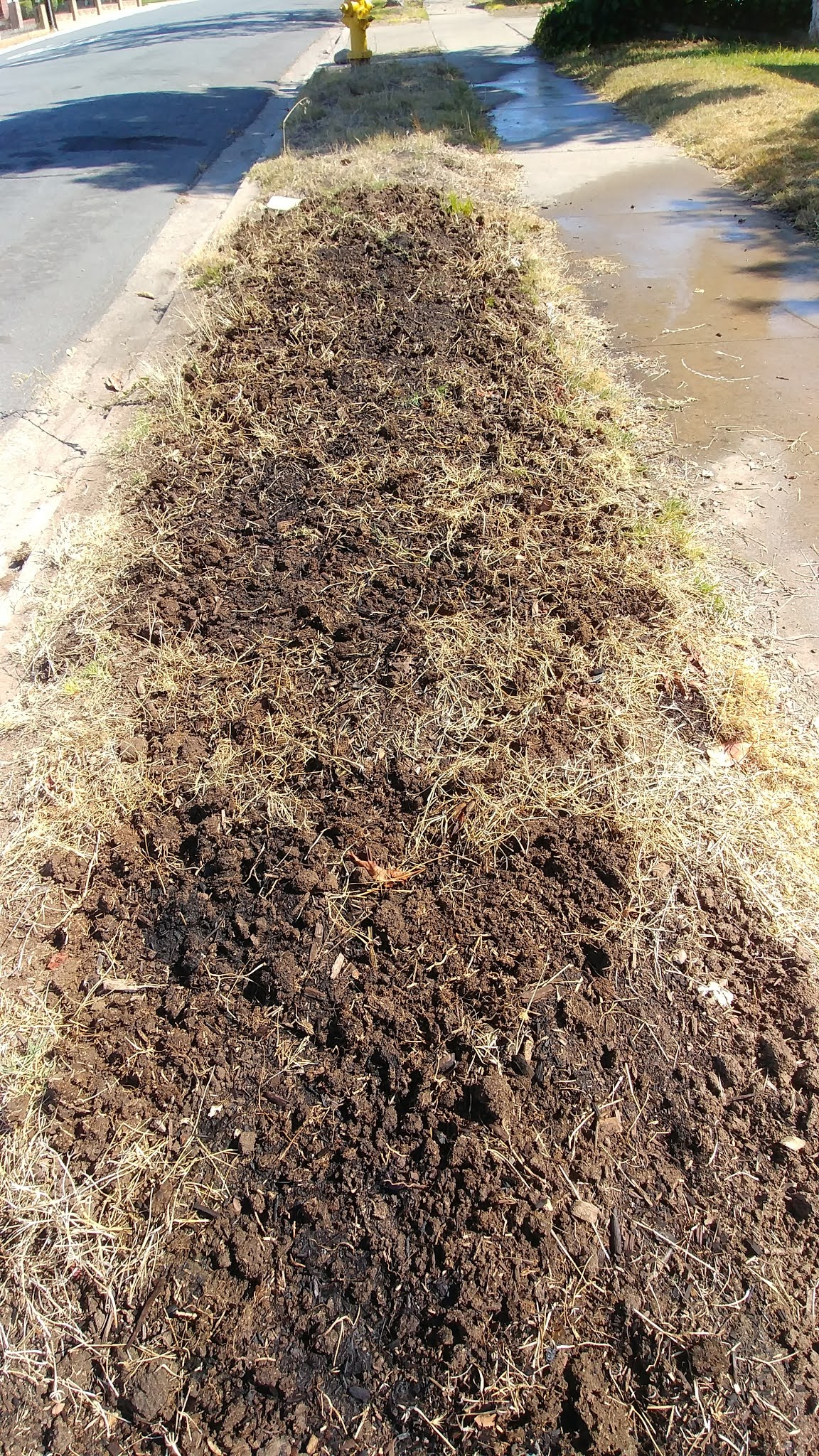
We all have our own unique voice based on where we grew up or maybe where we ended up. It’s partly accent, partly regional vocabulary. I think we’ve talked about the whole pop vs. soda vs. cola thing before, right? Plus some of you weirdos who just call everything a coke. But there are tons of little things like that. For example, does your street have a parkway, a common, an easement, or a road strip?

Everyone has their own personal vocabulary, and their own preferred words. It’s a way we can identify people (and characters). And it’s a way we can learn a little more about them.

For example… I grew up in New England (mostly Maine, but a fair amount of time in Massachusetts), and I’ve been told my accent really comes out on certain words (like drawer). Plus my particular part of Mainehas a unique term for tourists—goatropers—that my tongue still tries to fling out now and then. But at this point I’ve now spent (wow) half my life in southern California, so I’ve also picked up the odd habit of using “the” with freeway and highway numbers. And I started calling that strip of land the devil strip, just because I saw it explained that way once and fell in love with it. And my partner and I’ve been watching a lot of British gardening shows lately, so I’m pretty sure we’re using a lot of their terminology now.

And that last bit is what I wanted to talk about.

I’m betting most of you have had a job at some point with its own special vocabulary. Certain terms and phrases unique to that business. Sometimes they refer to specialized equipment, other times to certain practices or methods. If you were in retail, I bet you had to deal with a lot of terms that came down from some corporate desk, right?

And that’s another aspect of this. At that job, there were probably all the “correct” terms and phrases and names to use… and then there were the ones that actually got used on the job. I’m sure you know what I’m talking about. There’s the way we get told it works, the way the people up top say it works… and there’s the way everybody down on the ground floor actually does it.

For example, again… most of you know I worked in the film industry for several years (a good chunk of that “half my life in Southern California” time). The film industry has a lot of special equipment and does a lot of things other jobs don’t, so it stands to reason there are a lot of special terms that get used. But… the terms that get used on a film set very often aren’t the ones that get taught at film school. Again and again I’d meet people who “knew” the industry, but were baffled by the actual terms used by the crew. Terms like needing a stinger, turning around, the abby singer, or the martini. And sometimes, yeah, it’s annoying but that martini gets an olive.

But it’s not like the film industry’s that rare. The military has a lot of their own terminology, and a lot of jargon that gets used in place of that terminology. So does the medical community. I’ve talked with my scientist-turned-urban-fantasy-author friend Kristi Charish numerous times about the language and phrases used in a lab. I have a bunch of friends in the game industry who’ve let jargon slide out now and then. I worked at a Walgreens through most of high school, a suit store for a year after college, and a few theaters in San Diego when I first moved to California. And all of these places had their own way of talking and referring to things. Even the samethings.

Weird as it may sound, this is why I like having beta readers with different backgrounds than me. And why I like talking with people who work in all sorts  of fields. Because so often they’ll tell me “this isn’t how Wakko would say this,” or “Dot would probably call this a…”

It’s also why I love talking to people in person (or these days, on Zoom) when I’m asking them questions about things. A lot of the time when they’re speaking (rather than writing it out), they’ll fall back on that jargon first because it’s the natural way they speak about things. And that’s what I want to know—how would my characters naturally talk about these topics. What parts of their work vocabulary leak into their day-to-day conversations?

Of course, this is all just for flavor. I don’t want to bury my dialogue in jargon for the same reason I probably don’t want to write out an extreme accent—I don’t want my readers to get lost or confused in the dialogue. Believe me, back when I was in the film industry, I brought many Thanksgiving dinners to a dead halt as I tried to explain “things that happened at work” to my family. Because these were casual, everyday terms for me, but they had noidea what I was talking about.

I want my readers to be able to flow past odd spellings or to figure out unusual terms from context. And I want the readers who know this jargon to see that I’ve done my research, for them to feel instantly familiar with the characters they should be identifying with the most. Again, just that dash of flavor that makes something perfect.

So learn those odd terms and casual phrases. Make characters talk like the people they’re supposed to be, in the jobs they’re supposed to have. Because it’ll grab your readers and pull them deeper into the story.

And personally, I like it when my writing pulls readers deeper into the story.

Next time, I thought I might go back over a few basics.

Until then, go write.

May 9, 2019

Expletive Deleted

A few weeks back, a superhero movie kinda came and went in the world. No, not that one. That one’s still doing fine.  The other one, that came out two weeks before it. I admit, I didn’t see the other one. I’m not against reboots or remakes, but it felt like all this had going for it was… it was R-rated.  So the protagonist could swear.  And the filmmakers could show more gore.  And maybe a butt or a boob or something.  Again, didn’t see it.
Thing is “profanity” isn’t really much of a selling point once we’re past… what, ten years old? Blood and gore usually just draws attention to it vanishing between scenes. Seeing a naked butt on screen lost a lot of its appeal once the internet became a thing. I guess you could make an argument for whose butt it is, but even that’s only going to get you so far…

We’ve all known for a while now that this sort of stuff doesn’t make a good movie.  It doesn’t automatically mean my movie is bad, but if these are the only elements I’m pushing to say my movie is good… well, I can’t be surprised if I don’t do well at the box office.  As A. Lee Martinez noted a few weeks back, ”I never trust a story that wants to impress me with its gore and vulgarity. I have enjoyed many a story with gore and vulgarity, but never one that was sold to me that way.”

I think this is true of most storytelling. There isn’t much we’d consider taboo in stories anymore.  And there’s an audience for almost everything.  There are sub-genres and sub-sub-genres and when you go deep enough pretty much anything goes.
Because of this, though, I think sometimes writers get caught up in the idea of just showing everything.  All the gore and sex and violence they can manage, all written out in long, elaborate detail.  I mean, it fills up the page and, hey, check it out.  Bet you’ve never pictured someone getting split in half that way before, have you?

We need to understand, though, that these excessive and explicit moments are very rarely part of the story or plot—they’re just descriptions.  If Bob dies, it rarely matters if it took me one sentence or seven pages to kill him.  In the end, Bob is dead and it kinda boils down to how much of this actually advanced the plot, and how much of it my readers could just skip over with a yawn.

And yeah, sure, sometimes there’s a point to it.  There’s a narrative reason I need two pages of gore or three pages of sex or a character who drops f-bombs in every sentence they speak or think.  Nobody would say otherwise (nobody you should listen to, anyway).  But this is a lot like adverbs, adjectives, or exclamation points.  The more I use them, the weaker they get.  They start to clutter up the page.  So I want to be a little conservative with them.

Here, lemme give you a very non-conservative example….

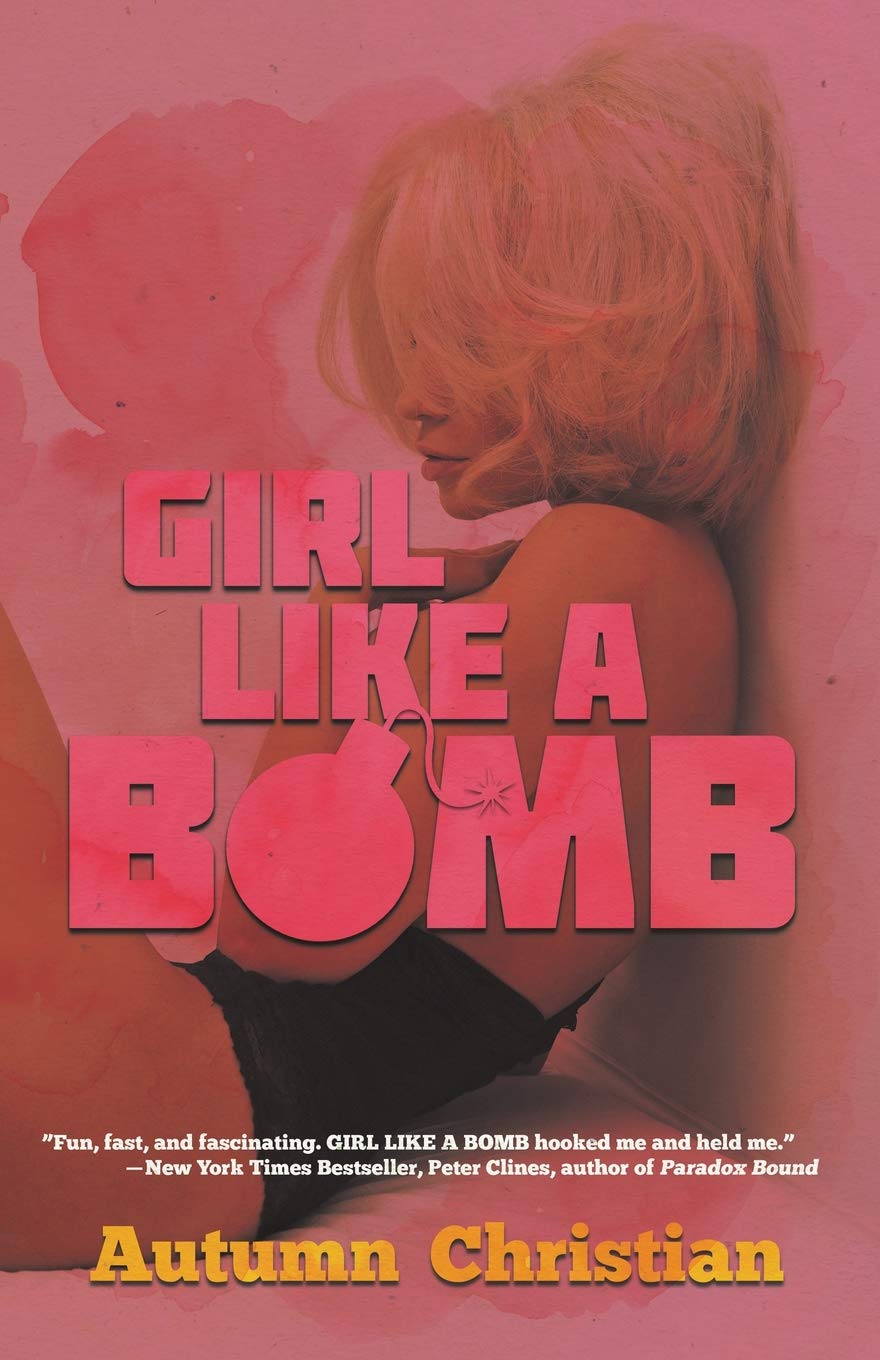
My friend Autumn Christian wrote a wonderful book called Girl Like A Bomb. The main character (and narrator), Bev, discovers she’s got an unusual superpower. When she has sex with people, they get… better. They clean up. They get focused. They become the best, self-actualized version of themselves.
Now, you might guess sex is a big part of this book, and you’d be right (consider that your warning if you decide to pick it up). The first few times Bev has sex—like any teenager—it’s a wild ride and it’s very explicit. It’s an all-new experience for her, she likes it, and she is, as they say, DTF.

But after those first few encounters—and one much more violent one (consider that your other warning)—Bev becomes all-too-aware of the effect her gift is having on her partners. It’s still fun, but it’s also a responsibility, and this shows in her narration.  Less than halfway through the book, her various encounters becomes a quick sentence or less, sometimes coming across as more of an annoying obligation or burden.  Because while the story involves sex, it’s not really about sex—it’s about what Bev can do with her superpower. So that’s what Christian focuses on.

And this holds for everything.  If I push any story element up to ten for my whole book—sex, action, violence, gore, cool lines—it’s going to get boring fast.  Sure, there’s a small percentage of readers that’ll be thrilled, but it’s reeeeeeeeeeeeeally tough to find any sort of wide appeal that way.

Plus… in a way, all this extensive description is me feeding everything to my reader.  I’m telling them everything instead of showing them everything.  And, yeah, I know that sounds weird but…

Okay, look… I’m going to let you in on a secret.  This is one of the six Great Secrets of storytelling that you can only learn from a crow after they eat 169 peanuts in a row from your hand.  It’s the first and easiest of the secrets to learn, but I’m just going to give it to you for free…

You’ve probably heard people talk about showing vs. telling all the time, but we rarely bring up the obvious.  We haveto tell.  That’s all we can do. I’m typing words for you to read, telling you what the characters see, hear, feel, smell, think, whatever. On the surface, telling is pretty much it for us as writers.

When we talk about showing, we’re talking about making images appear in the reader’s mind. And the longer it takes for those images to form, the less effective they are at creating some kind of emotional response. So, to speed things up, we want the reader to do some of the work for us. We want them to tell them just enough—just the right things—and have them fill in the blanks.  They supply the horror or the excitement or the disgust so it’s instantly summoned to their mind, rather than waiting for me to spell it all out. It’s the difference between me telling you a joke that you immediately get and me having to explain the joke to you (“Because, y’see, the last guy was hiding in the refrigerator, so when they threw it over the railing he ended up…”).

That’s what showing is.

See, when I wrote out that little bit of dialogue, you got that.  Even if you didn’t recognize the joke, you understood the situation of having to spell out the punchline for somebody.  You filled in everything around that sentence fragment.

Truth is, the big majority of readers like doing this. They enjoy it when we trust them enough to understand things. When we don’t spell everything out for them.  In graphic detail.  Billy Wilder used to say you could let the audience add 2 + 2 now and then and they’d love you for it. Heck, I’ve got a whole loosely-scientific theory about how this kind of writing sets off the pleasure centers of our brain.  No seriously.

So y’see Timmy, I don’t need to wipe every single one of these excessive, over-described bits from my manuscript.  But, like adverbs, if I’ve got a bunch on every page… ehh, I might want to stop to reconsider some of my choices.

Next time, I’ve got a few more ideas to bounce off you.

Until then, go write.
February 13, 2019 / 1 Comment

The Talk

           I’m posting this one a bit early because… well, hopefully you’ve all got other plans for tomorrow.  I know I do.  Alita: BattleAngel is finally out.  And also some book about zombies on the moon…
            Oh, yeah, and it’s Valentine’s Day tomorrow.  With all the fun activities we associate with said holiday.  And that’s kinda what I wanted to talk to you about…
            Look, you’re getting to that certain point in your writing career.  Your voice is developing.  Your body is changing.  Your facial hair is growing out nice and thick, which is probably a big change for most of you women.
            Anyway, I figured it’s time we sat down and talk about… well…
            Writing sex scenes.
            Yeah, this is going to be a little awkward for all of us.
            Like sex itself, a lot of this is going to come down to our own personal preferences, comfort zones, and what works in a given situation.  As such, it’s going to be really tough to offer any specific advice about when and where and how these moments should happen in your book.  I’ve tossed out some general suggestions in the past if you really want them.
            What I wanted to talk about here is more of the act itself, so to speak.  Writing sex scenes is a tricky skill to master.  It’s a constant balancing act of too much and too little, exciting the reader or maybe horrifying them, and it’s ridiculously easy to make people roll their eyes (not in the good way).
            So here are three big things I think should be in mind when writing a sex scene.
            Firstis that we don’t always need to show sex happening in order for sex to have happened.  Subtlety and nuance are a huge part of sexiness—on the page and in real life.  If we know Wakko and Phoebe sneak off to the supply closet for half an hour during the office party, we can make an educated guess what they’re probably doing in there.  Especially with the appropriate context around them sneaking off and how they sound/look/act when they come back. 
            So depending on the overall tone of my story, maybe I don’t actually need to write out my sex scene—I can just let my reader fill in the blanks themselves.  And again, like so many well-done subtle things, this can end up being much, much sexier than actually showing stuff.  As an artist friend of mine once pointed out, “nudity isn’t sexy.  It’s what you don’t see that gets you turned on.”
            There is one small pitfall to doing things this way.  If I’m too subtle, people might not get what I’m implying.  Their assumptions may go much too far, not far enough, or maybe end up on that awkward balancing point where they try to figure out what just happened.  Or if anything happened.  I don’t want to knock my readers out of the story with a confusing “did they or didn’t they”—unless that was the whole point of my fade to black.
            Second, if I’m definitely going to show my sex scene, I need to remember that sex is… well, action.  I don’t mean it needs to be wildly enthusiastic, just that this is a case of actual, physical things happening.  And any sort of action can get boring fast if it’s written poorly.
            I’m a big believer that most action shouldn’t take longer to read then it would take to happen, especially when we’re in the moment.  A punch shouldn’t take three paragraphs to describe.  A car crash probably shouldn’t take two pages unless it’s some massive, seventeen-car pileup
            Likewise, if I’m telling you these two people are ripping each others clothes off, but it’s over six pages of description…  you’re probably going to start skimming.  And that’s never good.  I don’t want to slow down action—any kind of action—by stretching it out with too much description.
            And talking about describing all that action…
            Third,if we’re going to be writing things out, brings us back to personal taste.  I think the catch with explicit sex scenes is they essentially become porn.  Porn, as a friend from work once pointed out, is when we see everything.  And after a certain point, that’s pretty much exactly what we’re talking about with any written-out sex scene.
            And some people like porn, some don’t.  No judgment either way.  That’s just a simple truth.
            But there’s more to it than that.  Even the people who do like porn don’t all like the same kind of porn.  This particular act really turns me on, but you find it kind of quaint and almost routine.  That might weird me out, this might be a complete non-starter for you, and that… okay, that seriously disturbs both of us on a number of levels.  So it’s a pretty safe bet that the more explicit/niche my sex scene becomes, the less  people it’s going to appeal to.  And the more people it’s going to repulse.
            Y’see Timmy, this is where empathy is going to be really important, and also a very clear, honest sense of who my audience is.  The people who pick up a thriller aren’t expecting the same kind of sex scenes as the folks who buy romance novels, and I’m thinking neither of them are expecting five pages of hardcore, strap-on orgy action.
            And if that last sentence made you a bit squeamish… you get my point.
            So go forth and write your sexy moments.  But think about if you really need them.  And how they’re paced.  And who you’re writing them for.    
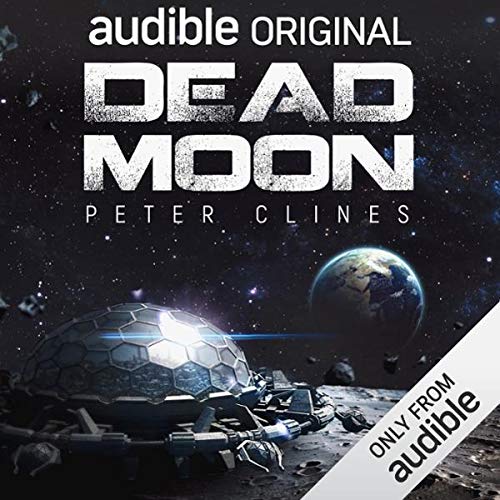
            Hey, speaking of sexy things, I’ve got a new book out tomorrow, exclusively through Audible.  Have I mentioned that recently?  Dead Moon is a fun little zombie story set… well, you can guess where.  And it’s also set in the Threshold universe, so there may be some other things in there that appeal to a few of you.  Please check it out so I can keep buying cat food and rum.
            Next time…
            Well, okay, look.  I’m in the last few weeks of finishing up another Threshold book, so I don’t have a lot of time.  Truth is, I’m probably going to take the next week or two off to focus on that.  If you want to use this time to toss out a few suggestions for thing you’d like me to rant about, that’d be fantastic (thanks in advance).
            And one way or another sometime very soon, I’ll be revisiting the whole outlining thing.
            Until then, go write.
            Happy Valentine’s Day.

Categories