
February 8, 2026

Maximum Effort

There’s a little maxim you may have heard– work smarter, not harder. If you haven’t, what it means is some folks solution to every problem is to throw 100% of their effort at it. They’d throw 110% at if that was possible. But it’s not.

Meanwhile, another type of person will look at the problem and figure out how much effort it actually needs. Do we want to do the time and work to dig through the mountain when we could go over it? Or around it? And then we can save all that effort and energy for somewhere we actually need it rather than burning out early on problems we could’ve just, well, easily gone around.

I mention that so I can tell you a few stories. There’s a theme. Trust me.

A bunch of you know I worked in the film industry for about fifteen years. Mostly television, some movies. Some of it’s even stuff you’ve heard of.

An all-too common problem I saw from beginning directors (and let’s be honest– also from plain bad directors) was an urge to make every single shot special. Every one had to be Oscar or Emmy-worthy. Didn’t matter if it was a wide shot, a close-up, a master, or coverage. Didn’t matter where it fell in the story. Didn’t matter what the day’s schedule looked like. Every shot of every scene required hours of set up and rehearsals and discussions and little tweaks and adjustments.

Now, on one level, yeah, this is sort of the director’s job. To make it all look good. But there’s a lot of nuance there. I can make an individual shot look good, sure. But does it fit with the last good shot? Does it fit with the rest of the scene? Is the editor going to be able to cut these shots together in a way that works within the filmic, visual language we all know on some level? Heck, does it even fit in the story I’m telling?

Plus, well… this is going to be an awful shock for some of you, but there are a few capitalist aspects to filmmaking. Yeah, sorry you had to find out this way. Making a movie costs money. It has a budget, and one way that budget’s expressed is in how long you have to shoot something. Spielberg can take a week waiting for the absolute perfect sunset his heroes can ride off into, but I’ve got today and it took us too long to get to this location so I might get two tries at this if I’m lucky and that’s it.

Anyway, what this meant for the crews I worked with was we’d get stuck with a new (or bad) director and they’d spend hours on the first two or three shots of the day. Like I mentioned above, it didn’t matter what they were or were they fell in the story. These folks would spend the whole morning working on whatever scene happened to be first up, and then we’d come back from lunch and surprise we still have 83% of today’s schedule to shoot in the last six hours of the day. So we’d rush through all that stuff—again, no matter what it was—and then come in the next day and, well, usually watch them do the whole routine again.

And this was really bad, from a storytelling point of view. The final film or TV episode would end up uneven because there was all this visual emphasis on random scenes that didn’t need it and often very little on scenes that did. Heck, once or twice I saw folks spend all this time on a random “pretty” shot and it wouldn’t even get used because there was no way to cut it in. These directors were so focused on making individual shots look amazing—no matter what that particular shot was—that they didn’t stop to think of the film as a whole.
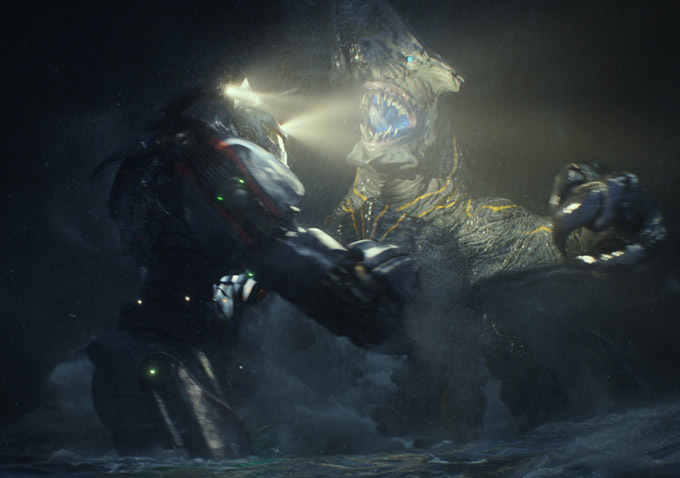
Okay, this actually reminds me of another fun story (still semi-related). A few years after I got out of the industry, my beloved took me to an Academy screening of Pacific Rim (yeah, she’s super cool) and Guillermo del Toro was there talking about the movie. One of the things he stressed was even though he knew large swaths of the movie were going to be mostly computer-generated, he didn’t want any sort of wild, impossible “camera moves.” You know, the ones where the camera’s essentially whizzing through the air and then it loops down under the monster’s armpit to come back up between punches from the giant robot and then it circles around the two of them before pulling back for the panoramic shot of the city in flames as they fight? We’ve all seen some of those, right?

Yeah, del Toro didn’t want any of that in Pacific Rim. He understood those sort of visuals becomes distracting very easily, and once the audience is thinking about them they realize how impossible these moves are. And suddenly a big chunk gets lopped off their willing suspension of disbelief. They become consciously aware they’re just watching a movie rather than getting drawn into the story. That’s why the CGI camera shots in Pacific Rim are all set up as if actual, physical cameras are there doing regular, normal shots.

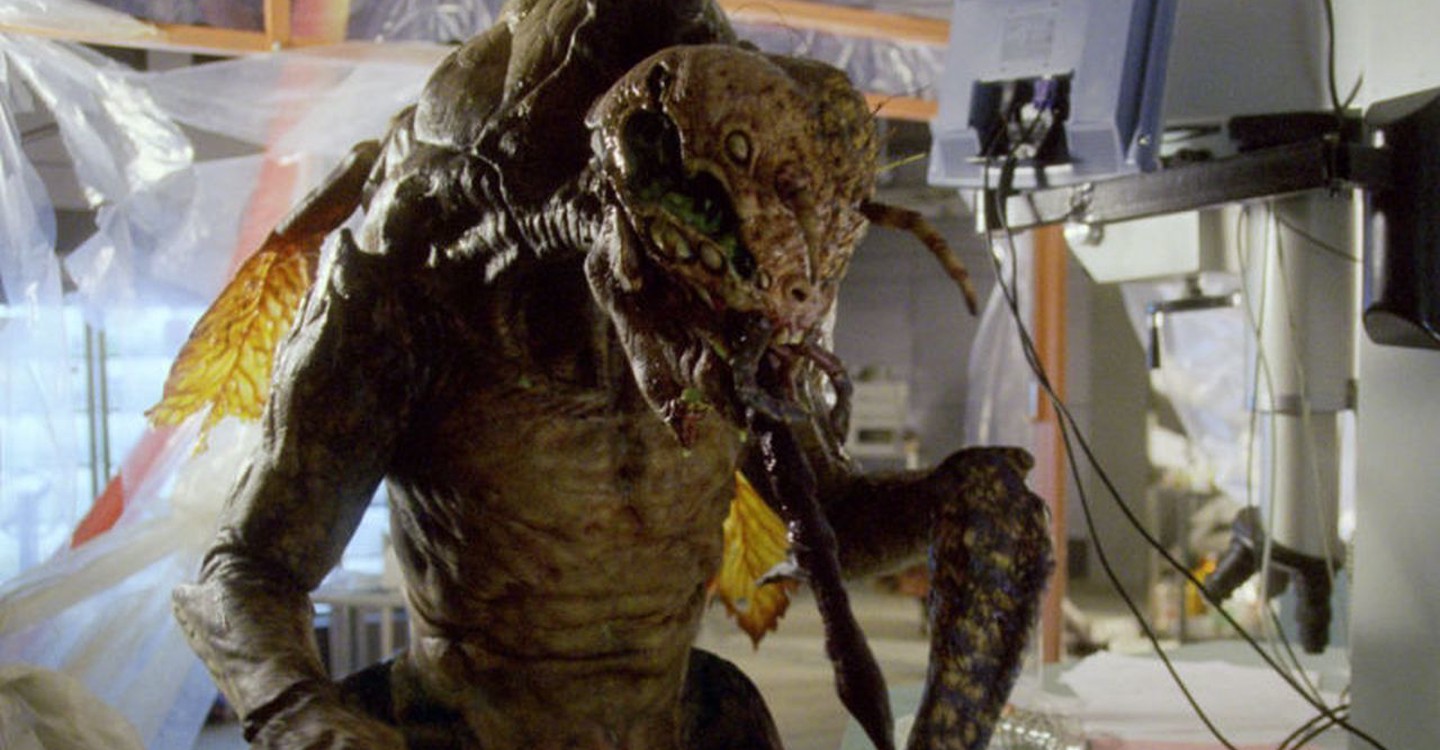
Now… I told you all this so I could tell you about Krishna Rao.

I worked with Krishna on a show called The Chronicle, back when the SyFy Channel was called the Sci-Fi Channel. Krishna started out in the crew (one of his very first film credits is on John Carpenter’s Halloween) and over the years worked his way up the ladder (seriously check out his list of credits), becoming a director of photography and quite often a director as well. Which is how I knew him. He had a loose rule he tended to follow when he was filming an episode. Honestly, I’m not sure he ever even put it into words, because it didn’t really click in for me until the second or third time I worked with him.

Krishna would only really plan on one pretty shot a day. That’s it. Once a day we’d have a complicated move with the camera dolly or some other elaborate shot that required lots of set-up and rehearsal. Everything else would be simpler, workhorse stuff– masters, overs, some coverage if it was needed. And I’m sure a few folks reading that may have some thoughts about “real” directors or the lack of art in American television or whatever. But here’s a few things to keep in mind.

Krishna made his schedule pretty much every day. Because he didn’t overload himself trying to do too much, he could make sure all his material fit together just how he wanted. He still had at least seven solid, very pretty shots per episode—that’s a cool shot every six minutes in a standard 42 minute television episode. And because he was being careful about using them, they always landed where they’d have the most visual impact.

And, sure, like any rule, sometimes he’d bend it a bit. He wasn’t against doing something fun or clever if he could do it quick. Sometimes we’d do two pretty shots in a day, maybe because of stunts or special effects. But these were always the exception, not the rule.

And his episodes always looked fantastic,

Okay, all interesting, but what does it have to do with books? With, y’know, our kind of storytelling? We don’t deal with visuals.

Y’see Timmy, something I’ve talked about a few times here on the ranty writing blog is pointless complexity. In structure. In dialogue. In vocabulary choices. I’ve seen stories with the most confusing non-linear structure just because the writer… felt like using non-linear structure. There are folks who scoff at using pedestrian words like blue or house or said. They spend all their time figuring out how to bury their story (or hide the fact that they don’t actually have one) behind layers of complexity.

To be clear, I’m not saying any of this stuff is inherently bad in and of itself. Personally, I love a story with a clever structure, an author who knows how to use their full vocabulary, and some twisty-turny character motivations. But a key thing is that when they do this—when they make a choice that isn’t the basic, workhorse choice—is that it’s actually making things better. This added complexity is an improvement, not an affectation.

And one other thing to consider. Sometimes… we need the simple stuff. We need the workhorse to just come in and deal with this paragraph or page. Because if I try to make every single sentence/ paragraph/ chapter the one that gets me an award, what I’ve really done is make a flat, monotone manuscript. If every single line is the utterly amazing artistic-piece-of-beauty one, they all have the same weight. Nothing has emphasis. To paraphrase one of great modern philosophers, once everything is super… nothing is.

So think about where you’re putting your effort. And how much of it you’re putting there. And how much you might want somewhere else.

Next time, I may blather on about the Children of Tama. Haven’t talked about them in a while.

Until then, go write.

May 14, 2021 / 2 Comments

Tom Gauld

August 13, 2020

Where B-Movies Go to Die…

And now for something completely different…

Everyone else is talking about how soulless IP is, so since that’s covered I thought instead I’d answer a question sent to me over on Twitter. Which was… 

“As a bad movie expert, where does one find the good b-movies that come out nowadays? Is there a modern day Roger Corman?”

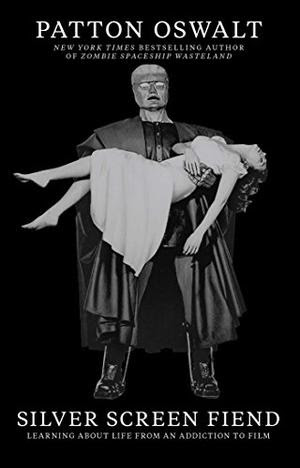
Okay, first off, there are people who’ve put far more study and hours into B-movies (bad and good) than I ever have (seriously, check out Patton Oswalt’s Silver Screen Fiend). I watch a lot of them, yeah, but I freely admit there are some holes in my education. On the other hand, I also have a much more rounded film education than a lot of folks—being a huge fan, having worked as a film journalist, and having worked both above and below the line on film projects. I worked on a movie that spent three weeks at number one at the box office, another movie that’s considered one of the worst films ever made, and a double-handful of movies I guarantee you’ve never, ever heard of.

All that said, I think B-movies have a fascinating history, and I think we need to consider it—and how we define them—in order to answer that question.

Are you sitting comfortably? Then we’ll begin…

On the off chance you didn’t know, B-movies started out as the lower-billed movie on a double ticket. You’d go to the movies for your big-budget studio picture (sometimes costing hundreds of thousands of dollars), but the studio’d also tack on something a little simplistic and low-brow so you felt like you were getting your full 40¢ worth. Usually this was a genre movie—westerns, horror, comedy, early sci-fi stuff. Some of it was even based on hahahhahhaaaacomic books.

Double-bills became less common in the ‘50s, but it turned out there was enough of a market for these lower-budget genre B-movies to keep producing them and putting them out on their own. They were cheap, usually aiming more to entertain than artistically enlighten, and they tended to at least make back the meager investment in them (a winning formula by almost anyone’s standards).

Plus, this became an entry point for writers, directors, actors… Move to Hollywood, start with small positions on small projects, learn stuff, work your way up. Lots of film icons and heavyweights started out in B-movies. Seriously, pick your favorite actor/director/screenwriter and scroll down IMDb to their first few credits. There’s probably some B-movies there. Look—here’s a very young Leonard Nimoy in the giant ant movie THEM (1954).

Then came the 1970s. The 70s blew the idea of “B-movies” out of the water and upended the whole film industry. Jaws. Halloween. Star Wars. There was a sci-fi boom and a horror boom. Suddenly what had been B-movies were dominating the box office.

So we had an early 80’s rush of people trying to copy that success. Lots of studios tried to manufacture B-movies with the intent of them becoming megahits. And within just a few years of that we had even more radical changes in the industry. Cable television and home video. Now there was a desperateneed for content. We need to fill video store shelves and tens of cable channels!

So this, in my opinion, is the second golden age of what we tend to think of as B-movies. Once again, we need stuff so people feel like they’re getting their money’s worth. Lots of cheaper movies aimed at pure entertainment more than art.

BUT…

It’s important to note these were all still people with a degree of training. They weren’t grabbing people in Tulsato make these movies, they were grabbing people in Hollywood. Because Hollywood was where all the crews and actors and equipment were. And those cameras are super-expensive, so the studios weren’t handing one over to just anyone. They went to the people who were dedicated filmmakers—who’d moved to Los Angeles to be in the film industry, taken PA jobs so they could learn and office jobs to be near the decision makers. Yeah, sure maybe you had an 8mm camera at your home in Tulsa, but that just wasn’t going to cut it in the 35mm age.

(minor segue—go read Bruce Campbell’s If Chins Could Kill for a great story of him, Sam Raimi, and Rob Tapert trying to screen an 8mm print of their movie that they’d already blown up to 16mm and then tried to blow up again to 35mm)

(go on—support your local bookstore!)

So, in my eyes, this second golden age (silver age?) re-established B-movies as stepping stones. Studios were now willing to take some gambles on lots of lower-budget stuff, and there were a lot of films that needed filmmakers. And even if they were less experienced, they still had basic, baseline experience.

I also think this is why there are so many great B movies from this era. It was a perfect confluence of lots of experienced, dedicated people waiting for an opportunity and studios willing to take lots of chances. Or at least say “Yeah, sure, whatever… just have it done by the 15th.” Which also meant some people had a chance to slip in a little art after all…

But as studios evolved, we began to see less and less of these low budget B-movies as execs leaned more and more into what we usually now call “tentpole” movies. Things either got larger budgets or… got forgotten. Heck, there was a brief-point in the late 90’s when horror movies almost broke out of their low-budget niche and started getting $40, $50, and even $60 million dollar budgets. But it didn’t last long and that’s a whole ‘nother story.

And that brings us to what I think was the last big B-movie boom. Our bronze age. And this is an odd one, I admit.

SyFy. Or, as it was known then, the Sci-Fi Channel.

There was a solid seven-eight year period where SciFi Pictures put out a new original movie every single week. Plus a few multi-part miniseries. Remember that? It was one of their claims to fame. Seriously, go look up Sci-Fi Pictures and see how many movies they put out. And then they became SyFy and put out that many more again. There’s close to a thousand movies altogether on those lists, spread over a little less than a decade. Sci-fi, horror, fantasy. Were they all winners? Hell no. But even if we only say 20% of them are worth watching, that’s still around 200 solid movies. More importantly, it created opportunities again and gave a lot of skilled (and, yeah, some not-so-skilled) people the chance to move up a notch or three on the Hollywoodladder.

Now, with all that in mind, the original question. Where do we find B-movies today?

I don’t think they really exist anymore. Sorry.

I shall now explain.
One thing that defined filmmaking for ages was a level of *gasp* gatekeeping. As I mentioned above, like most arts, filmmaking required a lot of rare, specialized equipment and the knowledge to use that equipment correctly. Plus I’d need to understand narrative storytelling and visual storytelling. One thing you’ll notice throughout this little history is that most B-movies, in all eras, came from people who already had a degree of experience. They’d been exposed to filmmaking. They understood concepts like framing, camera angles, coverage, crossing the line, and more. Yeah, we can always point to a few exceptions here and there, but the vast majority of folks making B-movies came out of Hollywood.

Today we live in a world that’s both wonderful and, well, a little troublesome. Today most of us are carrying whole camera/editing packages around with us. You might even be reading this on one. It’s ridiculously easy to shoot a movie today. Anyone can, experienced or not.

And on one level, that’s fantastic. I’m a huge fan of giving everyone the tools to do the thing they love. I mean, how many fantastic filmmakers did we lose because they couldn’t make it out to Hollywood? It’s a huge, terrifying leap—said as someone who did it!

On another level, I think this easiness encourages a lot of folks to leap ahead before they’re really ready. They’re getting stuck in, as the Brits say, without understanding a lot of the concepts I mentioned above. And again—on many levels this is great. You can try different shots, experiment with lighting and effects, and find out if Wakko can really act or hasn’t improved since that fifth grade play. And you can do all this for free—no worrying about the price of film or equipment rentals or truck rentals to haul around the equipment.

But I think for a lot of folks the current mindset tells us this isn’t practice, it’s the finished product. It’s done and ready to go. And there are lots of studios and distributors who are fine with slapping a logo on those practice shots, FX tests, and audition tapes and putting them out there. Honestly, if the technology existed back in the ‘80s and early ‘90s, they probably would’ve done it then, too.

That’s why, in my opinion, we don’t see those kind of quality B movies being made right now. Not in any sort of quantity, anyway. Studio/ distributors aren’t dependant on the pool of people who already know how to make movies and just need someone to make an investment in them. Distributors can get lesser movies for pennies, fill all the empty spaces in those digital shelves, and easily make back the minimal amount they paid for it.

Again, for the people itching to fight—I’m not saying there aren’t any good movies made this way. But they’re very, very rare. Much rarer than they were when the requirements tended to favor filmmakers who already had a degree of experience. I’ve been doing this Saturday geekery thing for a little over three years now, probably close to 45 weekends a year, easily averaging three movies each time. And in all that time of watching “B-movies” made in the past twenty years I’ve stumbled across… six? Maybe seven where I said “Holy crap, you all need to watch this.”

And as far as being a stepping stone, well… This is already super-long, but let me close with a quick story.

Way back in the day, a friend and I had worked up a pitch for a potential series, and we were toying with the idea of shooting a quick teaser trailer for it. This was when “sizzle reels” were really common, to give producers a sense of what the finished product would be like. We talked about it with a producer friend of ours and she shook her head, vigorously, and told us it’d be a waste of money.

The problem, she explained (and I’m paraphrasing) is that the people who make the big money decisions rarely have great imaginations. They don’t look at something and see potential, they look at it and just see what it is. If we shot a super low-budget, semi-professional trailer for our high-concept sexy-vampire-wars series, they wouldn’t imagine it with better lighting or hotter actors or cooler stunt work. All most of them would see is… a super low-budget, semi-professional trailer.

Which meant we’d probably make a super low-budget, semi-professional show, right?

Which is why a lot of these films never really work as stepping stones.

And that’s waaaaaay too much about B-movies. But to be honest, it was something I’d been thinking about before the question was asked.

Take care of yourself, wear your mask, go write.

July 16, 2020 / 2 Comments

A Compass That Doesn’t Point North

A few weeks back I talked about things getting their genres mid-identified, and afterwards somebody asked an interesting follow up. Namely, how do we identify genres? What are the benchmarks? How do we decide if something’s sci-fi or a techo-thriller or a romance that just happens to be set in a sci-fi world?

I know this sounds like a simple question, but it isn’t. For a couple reasons. Which I shall go over now.

First and foremost thing to remember—I shouldn’t worry about genre while I’m writing. Genre’s really a marketing tool more than anything else, so it doesn’t have a lot of use on the creative/ artistic side of things. In fact, if I’m worrying a lot about the guidelines of a given genre while I’m writing, I may want to take a step back and make sure I’m not just trying to jump on a trend. In my experience… that doesn’t work out most of the time.

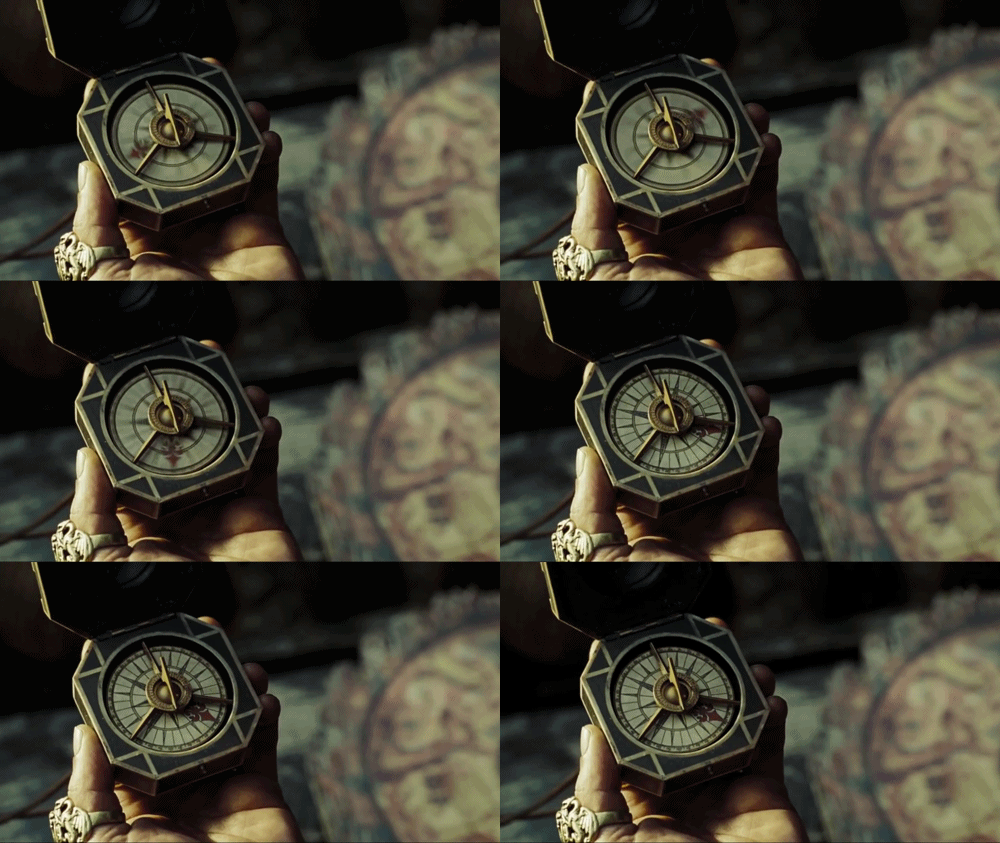
With that in mind… what even is genre? A great way to think of it is a compass (many thanks to Pierce Brown for this analogy). Genre points you in the general direction of things you’re looking for. You want to head south-west? Just keep going that way. You want to find horror novels? They’re all over there.And that leads us to another good way to think of it, maybe an even more relatable one. Where would my book get stocked in the bookstore? Don’t think about getting misshelved or getting featured on that best-sellers endcap. No excuses, no avoiding the question. Picture your favorite store and decide where would it be shelved in that store.

If I can’t answer this… I have a problem. Because this is how an agent’s going to try to sell my book. “It’s something new to go here.” Even if I’m just planning on self-publishing an ebook, Amazon’s going to want to know how to categorize it.

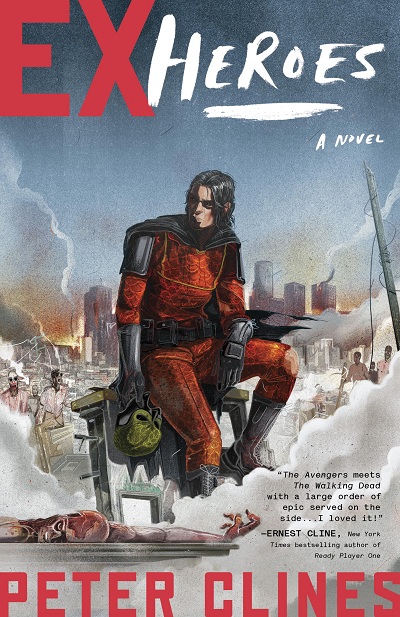
Let me tell you one last little story. My first published book was Ex-Heroes, which ended up becoming a series of books set in that world and all involving the same basic theme—superheroes fighting zombies in post-apocalyptic Los Angeles. When the series originally came out, it was through a small press that specialized in apocalyptic fiction, specifically zombie fiction. That was their niche, and they filled it perfectly. So they heavily emphasized the zombie/ post-apocalyptic aspects of the book in their publicity for it. That’s the direction their compass pointed.

But… by book three the series had moved to Broadway Paperbacks at Random House, and they wanted something that would promote well at comic conventions. So… the superheroes became the new focus. And so the compass needle for the books swung from the horror section (in the few stores the small press had gotten them into) to the sci-fi section.My point being… life finds a way.

No, sorry, my point is that in both cases, the genre gave people a good idea what they’d find when they opened the book. Post-apocalyptic zombies. Superheroes.

So, that said… let’s talk very rough guidelines for a few basic genres. I won’t be able to touch on every genre (and may not even do a fantastic job with these), but I figure if you’re here looking for advice from me, there’s a semi-decent chance you’re writing the same kind of stuff you read. Which is me arrogantly assuming you ended up here because you read a couple of my books and liked them.Science-Fiction—this is when my fictional elements have a rational, scientific explanation behind them. They don’t need to be explained (although hard science fans love it when you can), but they need to fall within a range of believability.

Science-Fantasy—This is when my story elements are hypothetically grounded in science, but (to paraphrase Arthur C. Clarke) they’re so far advanced they’re beyond all possible understanding and essentially magic.

Fantasy—This is when some aspect of the rules of reality are tossed out the window. It might mean magic. It might mean new races or species (dragons, elves, orcs, owlbears, what have you). Fantasy tends to have less technologically-developed settings.

Urban Fantasy—A subgenre I thought was worth mentioning. Here we’re still tossing some of the reality-rules out the window, but we’re specifically doing it in a modern (or near-modern), real-world setting, often with more modern technology alongside it.

Horror—Might sound obvious, but many aspects of these stories involve fear for both the characters and the reader. Depending on my exact subgenre, that fear can have many different causes and intensities.

Romance—again, might sound obvious, but in romance most of the elements revolve around two characters developing a relationship despite various challenges. There may or may not be a sexual element (of varying explicitness) again depending on my subgenre.

Mystery—This is when the main thrust is trying to find answers to a problem—very often (but not always) involving a crime of some sorts. Another good rule of thumb for mysteries—they tend to center around something that already happened. The mystery is past tense.

Thriller—Somewhat similar to mysteries, this is when the plot elements involve a current, ongoing problem. Because of this, thrillers also tend to have a strong action component and fast pacing. The rule of thumb—thrillers are happening right now.

That’s not all possible genres (not even close), and there are sooo many sub-genres, but it’s enough to get you started.

One last thing to tag onto this. You’ve probably heard of terms like young adult or middle grade. It’s worth noting these aren’t actually genres in and of themselves, but additional guidelines that get applied to a given story. It’s not about my story as much as it is about how I’m choosing to tell that story.All of this leads me to my final bit of advice, which kind of ties back to that earlier post. If I had to give a one or two sentence elevator pitch about my story, what would be in that pitch? What would I be focusing on? Would I be talking about space elevators and moon colonies, or would I be emphasizing the zombie hordes rising from their graves? Remember—I’ve only got two sentences, and they can’t be run-ons. Elevator pitch. Very fast, very clear.

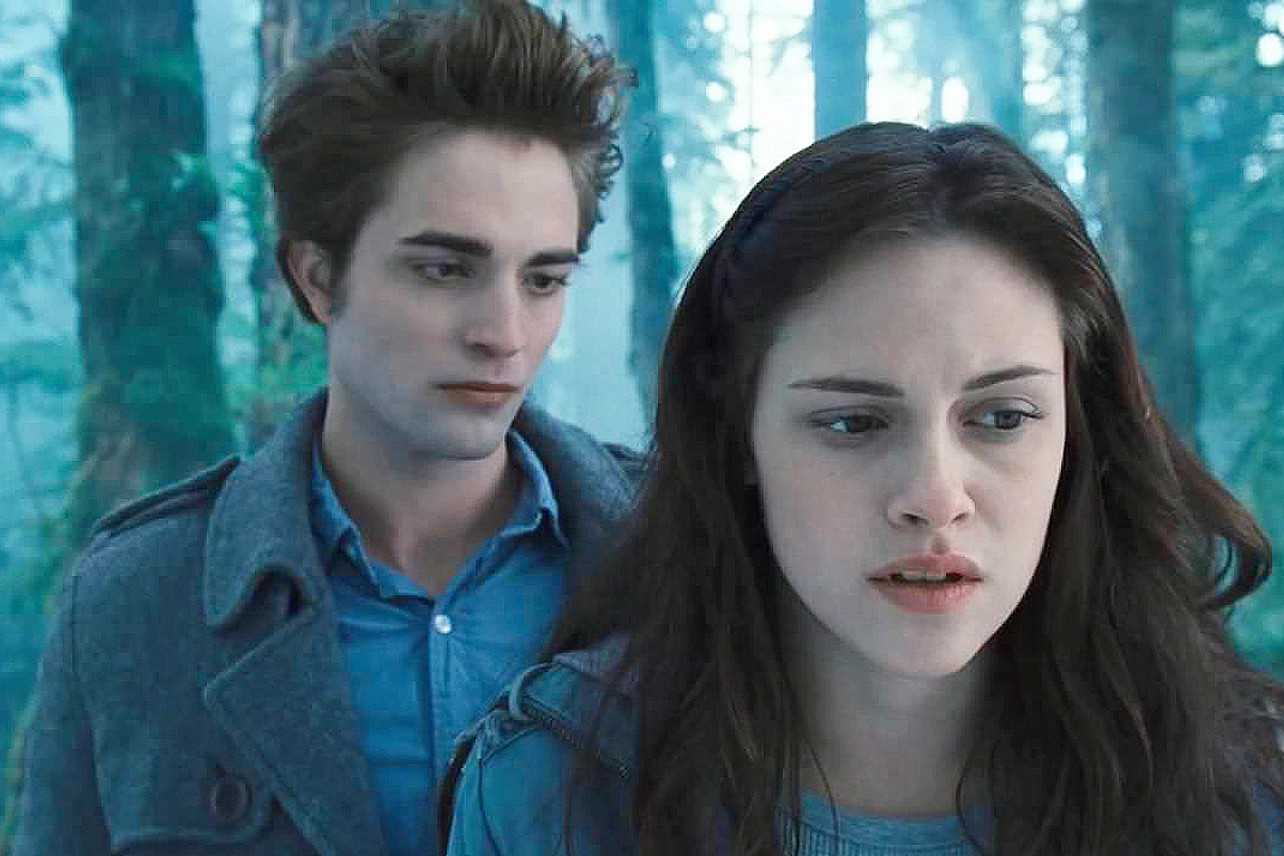
Consider Twilight. It has vampires and werewolves and more than a few deaths… but it’s not a horror story. It barely counts as urban fantasy. The thing we’d emphasize in our elevator pitch is the high schooler who falls in love with a vampire. It’s a romance novel. Supernatural romance if we want to start focusing down.

And remember—there may be elements to my story that’d normally be immediate signs of one genre, but they don’t come up in that elevator pitch. That’s okay. I shouldn’t try to cram them in. Tamsyn Muir’s Gideon the Ninth has lots of raunchy jokes and a few spaceships, but I’d bet 99% of the people who’ve read it don’t think of it as a comedy or a sci-fi novel–their minds jump right to the necromancy and the murder mystery.

And that’s all I’ve got to say about genre. Unless anyone has any specific questions?

Next time…

Well, in some beautiful, alternate world we all sheltered in place all through March and April, wore our masks for May, and now it’s perfectly safe for all of us to attend San Diego Comic Con next week! YAY!But in this world, alas, SDCC was cancelled because of folks who refused to do those things. There are still going to be some virtual events, though. I’m doing a panel on sci-fi writing next Friday at 4:00. I’m hoping to have a new Coffeehouse video up by then. And I’m also going to be doing a special Saturday Geekery, live-tweeting a few B-movie classics with some friends. You should come join us.

And all this means that next time, I may revisit and revise my list of top B-movie mistakes.

So until then, go write.

And, c’mon… wear your mask.

Categories