
April 30, 2011 / 5 Comments

Wizard Needs Food

Extra bonus points if you get that pop-culture reference.

Sorry for the delay, too. Working out some final kinks in the new computer.
In my car, in that little bin they all have under the cupholder, is a blue and yellow card. It’s from a board game called Goosebumps, based off the book series by R. L. Stein. Many, many years back, when I was living in another city altogether, I was heading out to work and discovered someone had thrown away said game but missed the dumpster. The wind and backwash from other cars had blown pieces every which way. Plastered to the driver’s side window of my car, right by the door latch, was one of the game cards.

MAGIC RING
save this to fight
the headless ghost
Not being a fool, I saved it
Seriously, it’s out in my car right now. I kid you not. Yeah, you’re smirking, but we’ll see who’s laughing when that headless ghost shows up.
This is funny for a couple of reasons, not the least of which is a grown man driving around with parts of the Goosebumps game in his car. Plus, we’re all about 99.99% sure a headless ghost isn’t going to show up anytime in the foreseeable future. I didn’t save the card for its spirit-fighting abilities, just because it makes for an interesting conversation piece.
Okay… maybe I saved it just in case…
The card’s also funny because we can probably all agree most magic rings wouldn’t have an inscription that says save this to fight the headless ghost. Heck, in The Lord of the Rings Frodo’s ring was covered with writing, but nowhere did it say wear me to turn invisible and become a megalomaniac. Imagine how silly it would be if a character in a story decided to go hiking one morning, opened the fridge, and there was a raw steak labeled bring this to distract the mountain lion. The only thing more silly, in fact, would be if that character just randomly decided to bring a steak on their hike for no reason. And then a mountain lion showed up.
Wow. Lucky break there.
More than a few times—enough that I feel justified ranting about it—I’ve seen manuscripts or screenplays where characters randomly decide to do something. They’ll decide to go visit Mom’s grave in the country where they haven’t been in years. They’ll toss a first aid kit and some cans of soup in the back seat of their car for no real reason. Or maybe, for no apparent reason, they’ll decide to make a bomb shelter in their back yard.
Lo and behold. Ten pages later it turns out this was precisely the right thing to do. The character’s random, unmotivated decision was the right one to make. That bizarre object they decided to lug around is exactly what they need.
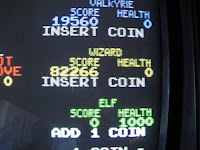
In my opinion, this kind of mentality grows out of videogames. Not the newer, sleeker ones, but the older ones. The game would only have ten or twelve things to pick up, so when you ran across one of them you knew it was going to be important and you grabbed it. This wasn’t really a fault of the games, mind you. It’s just that there wasn’t that much processing power or memory.
No metaphor there…
There’s two problems here, and they kind of build off each other.
First is that once a writer starts falling back on these sort of coincidences it removes any sense of challenge. We can’t be worried when Yakko is facing the living incarnation of the Babylonian goddess-dragon when he has the silver sword of Marduk that was specifically prophesied to kill her. If Dot is given an all-access passkey, getting locked in the sub-basement isn’t that big a deal. When I reveal my villain’s weakness is romantic poetry and a few pages later we learn the hero had a minor in Byron… well, personally I can’t get too invested in that.
Second is that it’s just shoddy writing. Depending on nothing but coincidence to drive the plot forward is like winning a game using loaded dice. I get to say I wrote a book and Wakko gets to say he won the game, but did either of us actually accomplish anything? Did either of us demonstrate any actual skill or ability? Heck, we weren’t even depending on luck. We handed the character A and then constructed a challenge that would be solved with A.
Sounds a lot like cheating, doesn’t it? On a number of levels.
Yes, William Goldman did precisely this in The Princess Bride with the holocaust cloak and the wheelbarrow. But he’s William Goldman and he did it perfectly. And I’ll save you some more effort—Phillip K. Dick already used the idea in a time travel story, and it was already adapted into a passable movie (both named Paycheck). Not to mention the fantastic Doctor Who episode “Blink” with the Weeping Angels. So give up any thought of doing something clever… unless you can do something incredibly clever.
The very nature of good writing is that the characters aren’t going to do everything right and everything is not going to work out for them. People need to face challenges and they need to overcome them.
Because we all know somebody who got everything handed to them in life. Thanks to TMZ and People magazine, we probably know a couple. And how did they turn out? Were they someone you wanted to follow and keep tabs on? Or someone you couldn’t wait to be done with?
Next time I’d like to talk about this world we live in. Most of us, anyway.

Until then, go write.
April 22, 2011

Beware the Bellboy

You’ll have to excuse me for running a bit late. My old laptop came to an unexpected end on Monday night and I lost the first draft of this post. Believe me, it was far more witty and insightful than what you’re about to read.

That being said…
As the story goes, there once was a young carpenter here in Hollywood who wanted to be an actor. He had trouble getting parts. The problem, according to his agent, was that the young actor sank too deep into his roles and never got noticed. He’d gotten a small supporting role as a bellboy and just vanished into the background. The agent pointed out that one of Tony Curtis’s first roles was playing a grocery store clerk, but he dominated the scene. “You looked at that guy and you knew he was supposed to be the star,” said the agent.
“I thought the point was you were supposed to think he was a grocery clerk,” said the frustrated actor.
And that young bellboy grew up to be Harrison Ford.
Who, let’s all be glad, also had enough sense to stop making Indiana Jones movies after Last Crusade.
(la la la la la la la la not listening la la la la la la la)
Anyway…
This fun observation by Mr. Ford hammers home a problem I’ve seen with a few narratives. It’s not uncommon for fledgling writers to center the narrative around a character and then tell a story that’s far beyond the scope of said character. nailing down the perspective a story is being told from is tough, and picking the wrong one can leave the story painted into one corner after another. This comes up most often in two forms—a first person person story and an epistolary story.
To recap…
In a first person story the reader gets everything through the eyes and thoughts of one of the characters. On the plus side, we get to know and see everything this character knows and sees. On the down side, we only get to know and see what this character knows and sees. First person is a very limited viewpoint. We don’t get the suspense of us knowing something’s happening that the character doesn’t know about. This also means we can’t be privy to extra detail, nor can we have any doubt if something did or didn’t register with the main character. To Kill A Mockingbird is a phenomenal first person novel, as are Moby Dick, A Princess of Mars, and Stephen King’s novella “Rita Hayworth and Shawshank Redemption.”
(Yeah, there’s no the in the original title. Seriously. Check it out.)
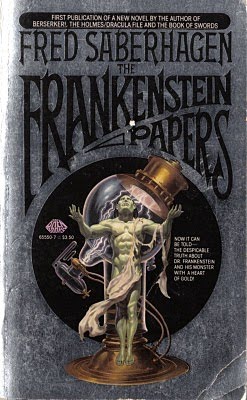
An epistolary novel is told through “existing” documents. As the name implies, it was originally letters, but it can also include journals, police reports, newspaper articles, and even blogs or tweets or social network updates. By its nature, a lot of epistolary writing comes across as first person, but there’s a notable difference. This form is very episodic. There are gaps in it where the “writer(s)” didn’t have time or inclination to put things down on paper. Dracula is an epistolary novel, as is Fred Saberhagen’s The Frankenstein Papers, and Mr. King did a rather horrific epistolary short story some of you may remember called “Survivor Type.”
Now the catch for both of these forms is that once a writer chooses to use them, they’ve just put themselves into what can be a very limiting viewpoint. If Wakko’s my main character, I can’t see, hear, or understand anything if he doesn’t. His limitations are mine. If he doesn’t know what happened out on Highway 10 that night, I don’t get to know.
More to the point, it’s going to make Wakko crumble as a character if he’s constantly stepping out of his boundaries. When he does know what happened out on Highway 10, as a reader I end up puzzling over how and when he found that out. If he suddenly reveals on page 120 that he studied Goju-ryu karate in Okinawa for twenty years, I’m going to wonder why this never came up before. Since I’m inside his consciousness, inconsistencies stand out like flares and each one means I’m going to believe in him less and less.
I recently read a book where the narrator goes to great lengths to tell us she has no writing ability. Oh, like anyone who graduated high school she knows the bare mechanics of how to write, but she’s not at that level that she’d consider herself a writer. Why, not counting work memos, this is probably the longest document she’s ever committed to paper (or computer memory). So hopefully we, the readers, will go easy on her as she tries to record the events of the past few days.
Said narrator then launches into a flourish of vivid metaphors, purple prose, elaborate sentence structure, and parallel constructions. This went on for the entire book. The vocabulary was the kind of stuff you might hear tossed around by Harvard alumns trying to outdo each other at literary conferences.
She did not come across as someone who never expressed themselves through writing.
Definitely didn’t sound like a grocery clerk.
Just as a quick note—some writers have managed to pull off stories where a first person character who should be ignorant of certain facts manages to convey enough information for the audience to understand what’s really going on. Perhaps he or she has some knowledge that goes against the character we’ve seen so far. We’ve all seen stuff like this. The illiterate guy who manages to describe a stop sign, the Neanderthal girl who explains a pistol, or the bellboy who it turns out has a degree in chemical engineering so he can help thwart a terrorist attack. You can get away with this once or twice, but it’s a device that wears thin fast so you shouldn’t be depending on it for an entire book.
Now, there’s a somewhat-related problem that tends to crop up in epistolary work. Some writers litter the journals and letters there creating with typos and misused words. The idea here is this makes the documents (and thus, the characters behind them) seem more real because they contain the kind of errors that real people make, especially folks who aren’t usually writing for an audience. And, let’s face it, it also spares those writers from learning how to spell or bothering to do any sort of editing.
The catch here is that any typo is going to knock a reader out of the story. It’s going to be an even bigger hit if the reader stops to figure out if this was a deliberate mistake or just… well, a mistake. Like up above when I used there when it should’ve been they’re. All of you stumbled on it, and a few of you probably stumbled even more as you paused to figure it out if, being the sneaky bastard I am, I was doing it for a deliberate effect. And I was. And you still stumbled and paused.
A great example of doing this correctly is the book Flowers for Algernon by Daniel Keyes. It’s the epistolary story of a man named Charlie who’s mentally challenged. If you felt cruel, you could call him severely retarded. The book, in theory, is a journal his doctors have asked him to start writing. It’s painful to read. Charlie can barely spell, has only the barest understanding of grammar, and no real idea how to express himself.
His doctors are giving him a series of treatments and surgeries, though, and as the book progresses the journal entries become clearer and more elaborate. At one point they actually get close to going the other way—Charlie has become so smart he’s taken over the enhanced intelligence project and is using his journal for research notes and brainstorming. Now the journal’s almost unreadable because it’s so advanced! The language he uses becomes one of the elements Keyes uses to show the reader how much Charlie is changing.
So one of the big tricks with these two formats is to create a character who’s believable and relatable, but still has the abilities, intelligence, and experience to deal with whatever challenges the plot may throw at them. A cheerleader may be great for figuring out who ruined homecoming, but not as much for an assassination plot. A Nobel-prize winning physicist isn’t going to be much help at harvest time. The trans-warp drive on a starship is probably going to be out of the range of the guys who work at Jiffy Lube.
Choose your character wisely.
Next time, I was going to blather on about the world we live in. Or, at least, the one we thought we were living in.
Until then, go write.
April 8, 2011

The Back Seat Driver

Many thanks for your patience. Sorry I had to miss last week. It’s for a good cause, trust me.

I’m sure you’ve all heard that titular term before, yes? Most of you have probably experienced it at one time or another. It doesn’t even need to be in the car. There are folks who can be backseat drivers in the kitchen, at work, and at school. And definitely on the internet…

If you’re not familiar with the term, a backseat driver is someone who’s not behind the wheel, yet continues to tell the person who is what they should be doing. It’s not all that far off from the old chestnut “those who can’t, teach.”

I’m sure you’ve also all heard about plot-driven stories and character-driven stories. They’re terms that get applied to tales where the focus is either the characters or the plot. Summer blockbusters and best-selling “beach books” tend to be thought of as plot-driven while slow-paced indie films and more “literate” books are often considered to be character-driven.

Now, personally, I don’t think there’s any such thing as a plot-driven story. All stories are moved forward by the actions (or inaction, in some cases) of their characters, thus all stories are character-driven. I think it’s one of those cases where a shorthand term developed which then somehow became a mild pejorative. The usual implication is that if you have a plot-driven story you have crap characters who are flat on the page. That’s why you’ll often see people refer to (for example) “a character-driven horror story” or some such, because the implication is this was just a horror story, or (heaven forbid) a plot-driven horror story, it couldn’t be that good. Being character-driven validates a work, while being plot-driven invalidates it in some way.

Plot-driven generally gets used as a pejorative because it’s a common way stories get messed up. Some writers (or in the case of Hollywood, some development execs, directors, and actors) get so obsessed with individual beats and moments they forget the overall whole. Explosions are cool, but explosions that serve no purpose are just silly. Emotional monologues and character reversals are fantastic, but when they happen at awkward moments with no motivation behind them… well, then they’re laughable. When the story gets twisted to accommodate these things, it tends to get considered plot-driven. I have a list of plot points and I’m going to hit them no matter how bizarre, pointless, or crammed-in they feel.

But back to my driving metaphor…

Plot has to take a back seat to characters. As I’ve said here many, many times before, characters have to be your priority. If I can’t believe in Wakko and Yakko, their story’s dead on arrival. I need to accept their motivations, actions, and reactions. If characters act in an unbelievable way, it doesn’t matter what’s going on around them. Good, well-developed characters must be the driving force in a story.

I’m not saying plot isn’t important, and I’m sure as hell not saying you don’t need it. Anyone who’s been following along here knows how much a story with no plot drives me nuts. But at the end of the day, your audience is going to notice an unbelievable character over an unbelievable situation. So if you know your characters are good, you need to tweak the plot to suit them, not vice-versa.

In all fairness, I’m also guilty of this particular sin. I’ve done it before, I still do it today sometimes, and odds are I’ll do it again sometime in the future. Keep this little fact in mind for your summer reading–the final climactic day in Ex-Patriots was originally two days. Yep, right in the middle of all that’s going on in the last ten chapters, people stopped and went to bed for the night. Seriously. Is that lame or what? Fortunately I recognized that sticking this rigidly to my roughly-outlined plot was injuring the story as a whole and forcing my characters to act unnaturally.

Now, with all that being said, reality has to take a back seat to plot. And we’re out of back seats, so reality has to go in the trunk. Yeah, we could be in a limo or something, but the importance/ seating order is kind of reversed in a limo. That just messes up my beautiful metaphor.

Anyway, at the end of the day, people are reading your work for a good story, not for an education. Anyone who’s reading Dan Brown for an insightful and true view of the Renaissance is in for a major disappointment. Thomas Harris may not be the number-one source for how FBI profilers act. I just had a discussion with a publisher about brain structure which ended with us agreeing my words will sound pretty good to most folks, but hopefully any neurologists will be willing to suspend disbelief a little more than the layman.

You don’t want to bring a really cool plot to a crashing halt by rigidly adhering to facts. You don’t want to be blatantly wrong, but you’re also not writing a textbook. Well, maybe you are, but then most of this doesn’t apply to you. How many phenomenal movie gun battles would lose a lot if the filmmakers counted every bullet and showed the hero reloading again and again and again? If it took nine days for a steamship to cross the Atlantic but I say my Victorian heroine has access to a ship that can do it in seven, is that going to upset anyone?

Well, yes… there’s always someone on the internet who will feel the need to write an essay about the ludicrous degree to which I’ve massaged the facts. Can’t be helped. Just take that one as a given and move on.

I got to hear Ray Bradbury tell a wonderful story once about how he was hired by the Smithsonian to spruce up the script for their failing planetarium show. Their show, he immediately realized, was a dry recitation of facts rather than an exploration of the wonders of the universe. When he turned in his version, he got back a list of notes that was longer than the script itself–and every note was replacing one of his poetic exultations with another rigid, precise fact and an explanation of the fact. When they challenged Bradbury’s statement that the universe was over fifty billion years old, he dared them to prove it.

“So they fired me,” he said gleefully, “for being a smartass.”

And another planetarium happily bought his script.

So… the characters are driving. The plot is in the back seat where it can offer suggestions if need be. Facts are in the trunk–we know right where they are if we need them and they can be heard if they yell really loudly.

Make sense?

Next time I’d like to talk to you about Jenga. Yeah, Jenga. The wooden-blocks game. Trust me, it’ll be cool.

Until then, hit the road. And go write.

March 18, 2011 / 2 Comments

Lucas Syndrome

On the very, very off chance you didn’t know, George Lucas was the writer/ director/ creator of a little seres of movies that went under the header of Star Wars. They sold a ticket or three at the box office. I heard there were even one or two spin-off toys.

Okay, I used to own a bunch of the spin off toys. Almost all of them. Except for the blue Snaggletooth. And the Bespin Leia, who had a weird-looking tiny head.

Anyway…

The first trilogy did very well, as I mentioned. It made tons of money and inspired a whole generation of storytellers to pick up pen, pencil, or home video camera. There was a great piece I read years back about when John Williams created the new Star Wars orchestra for the prequel movies. There were half a dozen musicians in it who had been part of his original orchestra twenty years earlier. It also had about a dozen younger musicians, all of whom had gotten into classical music because they were inspired by Williams’s score from the original trilogy. And now they were all working on the prequels.

Ahhhh, the prequels.

The prequels were not quite as well-received. Oh, fans were in a frenzy at first. I know. I was there in the line at Toys R Us for the special midnight releases. After the first movie, though, that energy ebbed a bit. After the second movie it was leaking away. By the final film, the fan base was bleeding out, to turn a phrase. There were still some die-hards, but there were far more shrieking about how Lucas had “raped their childhood.”

So, what went wrong?

Well, you could point at a lot of things. Wooden dialogue. Bad direction. A gluttonous use of decent-but-not-great CGI. Any one of these can hurt a film, but I don’t think they’re killers on their own. I think the biggest mistake Lucas made with his prequel was the unavoidable one.

He told a story we already knew.

Let me pause at this point for a funny story…

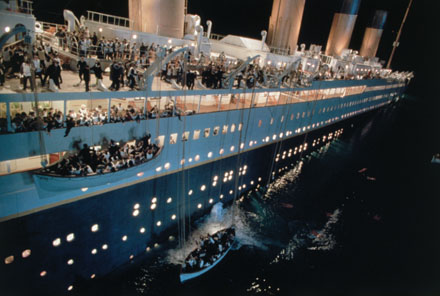
Many years back I went home to New England to see my family. My mom and I decided to go take in a movie, and the big one at the time (no pun intended) was James Cameron’s Titanic. I hadn’t seen it, she hadn’t seen it, what the heck.

Well, we all know the story. Big ship. Bigger iceberg. We were maybe two-thirds through the film and there’s that awful bit when Leonardo’s working-class buddy grabs a life preserver and hurls himself out into the icy water. He’s paddling away from the cries and howls and there’s this ear-splitting crack. The cables are snapping on the smokestacks. One of the huge towers creaks, tilts, and swings down over the water. Nameless friend of Leo (oh, come on–none of you remember his name, either) looks up as the smokestack blots out the sky and comes crashing down on top of him.

The audience wailed. People were already blubbering and misty eyed, but when Leo’s buddy was killed, well, that was the breaking point. Audience members were sobbing and crying out to the screen.

In the midst of all this, my mom turns to me and says, in a very loud, clear voice…

“What did they think was going to happen? It’s the Titanic, for Christ’s sake!”

So here’s problem one. As I’ve mentioned before, you can’t have drama or conflict in a story if the outcome is never in doubt. When we know what’s going to happen, it’s very, very easy for a story to veer off into boredom, melodrama, or both.

Not only that, but when we’ve already seen chapters thirty through fifty, we don’t want to go back to chapters one through ten. That’s moving backwards. We want to be going forward. You may notice that with much of the recent coverage of the crises in Japan, no one’s going back to do a retrospective on the Tokugawa shogunate of the 17th century. It’s an important part of Japanese history. It has a fair degree to do with why thing are the way they are in Japan today. But we really don’t need to know it to understand why a trio of nuclear reactors are being stabilized with hoses and buckets.

Now, in all fairness, and with all deference to my mother, Cameron’s Titanic is not about the ship. It’s a story of, if you’ll pardon the phrase, two star-crossed lovers which uses the disaster as a backdrop. The Titanic is no different than the feud between the Capulets and the Montagues or the impending gang war between the Sharks and the Jets. Can we even call that a war? The impending dance-off between the Sharks and the Jets. These are the plot elements that let the reader know from the start just how doomed this relationship probably is.

See, that’s the catch. We all know what happens to the Titanic. It’s a historic fact. We don’t know what happens to Leo and Kate, though. Will they survive? Will they die together? Apart? Will she live to be a middle-class ninety-year-old and toss a diamond worth a billion dollars into the depths of the Arctic Ocean as a meaningless gesture to her spring break fling who died three-quarters of a century ago?

Probably not that last one, because that would just be silly.

It’s the rest of those questions that make the story worth telling. I’ve talked about the problem with god-like forces in a story, and history is one of the most powerful ones out there (unless you happen to be a Time Lord…). If I know for a fact that character A survives until chapter thirty, it’s very difficult to get worried when she’s threatened in chapter three.

Obi-Wan Kenobi. Anakin Skywalker. Padme. R2-D2 and C-3P0. Yoda. Palpantine. Chewbacca. Bail Organa. The fate of every one of these characters was well-established twenty years ago in the original trilogy. Lucas asked us to make an emotional investment in characters we were already emotionally invested in. He asked us to worry about the future of characters whose future we already knew.

To be honest… that’s just plain boring.

This is the big challenge with any sort of “prequel” writing and it’s why a lot of these works tend to ring a bit hollow when all is said and done. To be honest, it’s one of the reasons I haven’t been all that interested in writing prequel stories for any of the characters in the Ex-Heroes universe. It’s also why The Nativity Story didn’t really work as a two hour feature film. We know what happens to these characters, so anything that happens in the story is automatically going to get robbed of some or all of its dramatic weight.

So, the burning question is… how do you make a prequel story work?

It’s not that hard, if you think about it. Don’t focus on events. We know the events. We know what’s going to happen. So that’s a dead end right there.

No, the secret to a good prequel is the characters. Don’t tell me about the guy I already know. Tell me about the other guy who was there. For example, we all know what happened to Abraham Lincoln that fateful night at Ford’s Theater. But what about the people sitting behind him? What about the security men on duty? Were they injured? Wracked with guilt afterwards? Secretly pleased? We don’t know the answers, so those are interesting questions.

You may have seen either the original version of The Clone Wars cartoon or the newer one that’s run for a couple seasons now. It’s very popular. It also focuses more on characters like Mace Windu, Cad Bane, and Kit Fisto–characters we don’t know that much about.

If only all the prequels had done the same.

Next time… well, I think we’ve finally come to the end.

Until then, go write.

Categories