
January 26, 2012 / 2 Comments

Feels Like The First Time

            Okay, first off, a bit of shameless self-promotion that also pushes my street cred, as the kids say.  Amazon Studios is developing a film with the working title of Original Soldiers.  It’s a sci-fi tale about human soldiers leaping into action when America’s droid army is shut down by an opponent.  I’m one of five folks (well, four folks and a writing team) who were hired by Amazon to expand my simple pitch off their logline into a full treatment.

            So, between that and Ex-Communication, things might slow down a bit in the month of February.  Just letting you all know now.
            Oh, and check it out.  You can still pick up The Junkie Quatrain.  It’s very cheap for your Kindle or Kindle app of choice.  Just saying…
            Anyway…
            I’d like to begin this week, if you don’t mind, with a personal question or two.  You don’t have to answer them, but I want you to keep the answers in mind.
            Your current significant other—girlfriend, boyfriend, wife, husband—do you remember the first time you saw them naked?
            Not just the date or time, mind you.  Do you remember how you felt when you saw them like that?  What thoughts were going through your mind?  What emotions?  What your pulse and breathing were like?
            Follow up question—do you remember the most recent time you saw them naked?  How did you feel then?  What thoughts were going through your mind?
            Next question—do you remember your first day at your current job?  Do you remember looking at things, meeting people, learning the ropes?  Can you recall any thoughts that went through your mind?
            Follow up question—what was today like at your current job?  What did you think about?  Who did you see?
            Some of you may have picked up on the point I’m trying to make here.  There’s a big difference between the first time something happens and the fiftieth or hundredth or five-hundredth.  My first day on a film set was exciting as hell, but at the six year mark even the days with naked women on set were pretty dull, and at twelve years I was generally known as one of the cynical people on any given set.
            Now, I make that point so I can make this one…
            One mistake I see a lot in stories and screenplays is when writers can’t make the distinction between the first time your readers or audience are seeing something and the first time the characters are seeing it.  Characters go to work, have dinner with family, or teleport to their secret lair and express confusion or wide-eyed amazement at these things.  It knocks a reader out of the story because it’s immediately apparent this is something the characters should be familiar with.
            It sounds silly to say it so blatantly, but if I’ve been living in New England my whole life, a brutally cold winter shouldn’t come as a real shock.  If I’ve worked for Discorp for over a decade, their business practices shouldn’t catch me off guard.  If I’ve been with Phoebe for eight or nine years, the odds are we’ve seen each other many, many times and had many, many conversations about many, many things.
            The thing is, many storytellers become focused on the fact that this is the first time the readers have seen Wakko in action or me and Phoebe together.  So these folks tweak dialogue and reactions to play to the audience, rather than the genuine responses of the characters.  It seems correct from a mechanical point of view, but once you really study the moments this sort of thing falls apart.
            Here’s an example of doing it right that ties back to my opening questions–Mr. and Mrs. Smith.  When the film begins, the title characters have been married for several years and… well, things are getting a bit stale between them.  They’ve had all their conversations.  This is why Mr. Smith doesn’t really react much when Mrs. Smith—played by Angelina Jolie—is walking around their bedroom in her underwear.
            Let me repeat that last bit—Angelina Jolie is walking around their bedroom in her underwear.
           While this would be an absolutely amazing moment for about half of the folks reading this, Mr. Smith barely notices it.  He’s been seeing her in her underwear for years, after all.  It may be the first time all of us have seen her dressed (or undressed) like that, but for him this is just like every other day.
            This is closely related to another problem I’ve brought up once or thrice before, the dreaded  “As you know…”  When one of my characters says “as you know,” they’re admitting right up front that they and the person (or people) they’re speaking to already know the facts that are about to be spoken.  It’s clumsy, it’s wasted space, and it’s unnatural because it sounds like these folks are having a conversation for the first time when common sense tells us this has to have come up a dozen times before.  My girlfriend and I have been together for over seven years now, so we don’t need to talk about when our birthdays or anniversaries are.  I helped my best friend move into his house, so I don’t need to ask him where he keeps the rum or how to get to the bathroom.  My dad’s been an expert in his field for decades, so I don’t think he’d be stunned to learn working on reactors involves potential exposure to radiation.
            This is why the ignorant stranger is a great story device.  When I’ve got a character who’s new to the world of the story it gives me someone who can experience things for the first time while my other characters can be well-established sources of knowledge.  Yeah, I know where the rum’s kept in the house, but Yakko doesn’t, so my readers will accept it if Yakko and I talk about where to find the booze or the bathroom.
            Another great example if this is—
            SPOILERS
            Men In Black .For James Edwards, the police officer who becomes Agent J, the MIB is an intergalactic wonderland of non-stop discovery.  He’s the ignorant stranger.  Alien life forms, alien customs, alien technology—it’s all new to him.  But consider Agent K.  Everything that excites or stuns J makes him yawn.  Invading battle fleets, extraterrestial assassins, talking dogs, rocket cars, a warp-drive powered superball… these things all bore the hellout of him.  In fact, as the story progresses it becomes clear that K is at a disadvantage because he’s become so jaded by the world he lives in.
            One of the worst things I can do as a writer is confuse the first time the audience sees something with the first time the characters do.  It’ll come across as false and it’s one of those clumsy mistakes that’s hard to recover from.  So just remember… the first time for you might not be the first time for me.  And it’s almost definitely not the first time for him.
            Next week, as we’re close to opening day for a lot of the big screenplay contests, I thought I’d talk about a lot of common screenplay mistakes I’ve seen.
            Until then, go write.
December 24, 2011

Wherefore Art Thou Romeo

            Pop culture reference, four hundred years late.  Plus, if you actually know how to read that title line, you’ve got a hint at what this week’s ranty blog is about.

            Sorry this is late, by the way.  Yesterday was early Christmas lunches with family and parties at night with friends.
            Speaking of which, one last push before Christmas—you can still order Kindle books as last minute gifts and my publisher has a ton of them on sale for dirt cheap prices, including my own Ex-Heroes.  You can also pick up the Kindle version of The Eerie Adventures of the Lycanthrope Robinson Crusoe for half off the paperback price.
            Now, with all that out of the way… let’s get back to our title subject.
            One thing I stumble on a lot in stories is names.  Sometimes writers will load up every single character in their manuscript with a proper name.  I read through and I know the given name of the cabbie, the waitress,  the office intern, the homeless guy at the freeway exit, the woman whose ahead of the main character in line at the grocery store.  It doesn’t matter how important—or unimportant—they are to the story, they get a name.
            Another thing that makes for a troublesome read is when there are lots of people with similar names.  Sometimes, if there are enough of them, it can just be the first letter of the name.  Believe it or not, I read two scripts this year by two different people, but each screenplay was loaded with names that began with the letter J.  There was Jason, Jackie, Jerry, Jonathan, Javarius, Jacob, Jenny, and even a Jesus.  I read one the year before where everyone’s name began with P.  Since names are the reader’s shorthand for characters, making them confusing is not a great way to go.
            What I’d like to do now is to suggest a simple rule of thumb that can eliminate both of these potential problems.  And I’d like to illustrate this rule of thumb with a popular character most of you probably know…
            Calvin and Hobbes was created by Bill Watterson back at the end of that ancient decade known as the ‘80s.  The glaciers had retreated, a few mammoths still wandered the plains, and I had just started college in western Massachusetts.  The two title characters were Calvin and his stuffed tiger, but after them the two people we saw the most were Calvin’s long-suffering mom and sometimes just-as-mischievous dad (no real question where Calvin got it from).  Their names, as any fan of the series knows, were Mom and Dad.
            No, seriously.  That was it.  Mom and Dad.  I challenge anyone here to find a single scrap of evidence from the decade or so of Calvin and Hobbes strips that shows these two characters have any names past that.
            There’s a simple explanation for why they didn’t.  The entire strip is done from Calvin’s point of view.  In his world, people randomly transmorgify into giant bugs or space aliens.  Dinosaurs are still common if you know where to look.  And those two adults in his house with the sagging poll numbers are just Mom and Dad.  Not “just” in the sense that they’re diminished somehow—they simply don’t have any identity past what Calvin’s given them.
            A character’s name should be what your main characters refer to them by.  If my main character doesn’t know their name (and never will) there’s probably not a reason for the reader to know it.  Calvin never thinks of his parents as anything other than Mom and Dad, so within the story of Calvin and Hobbesthey never get names, just those simple titles. 
            It’s not just Calvin and Hobbes, of course.  There are a lot of examples where storytellers don’t name someone because it’s unrealistic for the main character(s) to know that name.  A few other well-known characters without names include…
–The little red-haired girl
–The alien bounty hunter from X-Files
–The other woman
–House’s cellmate
–The cute blonde waitress
            It didn’t lessen any of these characters to not have actual names.  If anything, you could probably make the case that some of them were more memorable because they didn’t have names—it added to their sense of mystery
            Consider it this way.  Stephen King’s novella “Rita Hayworth and Shawshank Redemption” is about Red, Andy, and the other prisoners.  Because of this very few of the guards get named, even though there are dozens of them in the story.  They’re the outsiders.  But in King’s The Green Mile it’s the guards who are the focus of the story so most of the prisoners don’t get names, even though there are hundreds of them in the prison.
            Or, if you prefer, consider this.  If you’ve ever worked as a waiter or waitress, or ran the checkout counter at a store, how many of your customers could you name?  On the flipside, can you name the waiter from the last time you went out?  Or the clerk the last time you bought something?  They were probably even wearing a nametag, but I bet you can’t.  And the reason you can’t is because they weren’t important to your story. 
            While giving every character a name helps show how well-thought out the world is, in the long run it makes a story confusing.  If your main character doesn’t know who someone is, there’s nothing wrong with just calling them Man #3 or the other girl, and it usually makes for a much cleaner, easier read when you don’t have to info-dump half a dozen names on each page.
            Next time, I thought I’d do my annual sum-up of the year in writing.
            Merry Christmas, Happy Hanukah, and a general Happy Holidays to you all.
            Try not to take the whole week off from writing.
November 17, 2011 / 5 Comments

Our THREE Secret Weapons Are…

            Pop culture reference.  Overdue.

            Okay, so what I wanted to blather on about today has its roots in screenwriting, but it’s a lesson that can get applied to short stories and novels as well. Simply put, it has to do with boring your readers.
            Some of you may have heard of the “rule of three.”  It’s  a good screenwriting rule of thumb that you should never do something more than three times in a movie because it starts wearing on the audience.  By the third time you’re showing me something, I’ve either got it or I don’t.  And if I don’t, it’s not my fault…
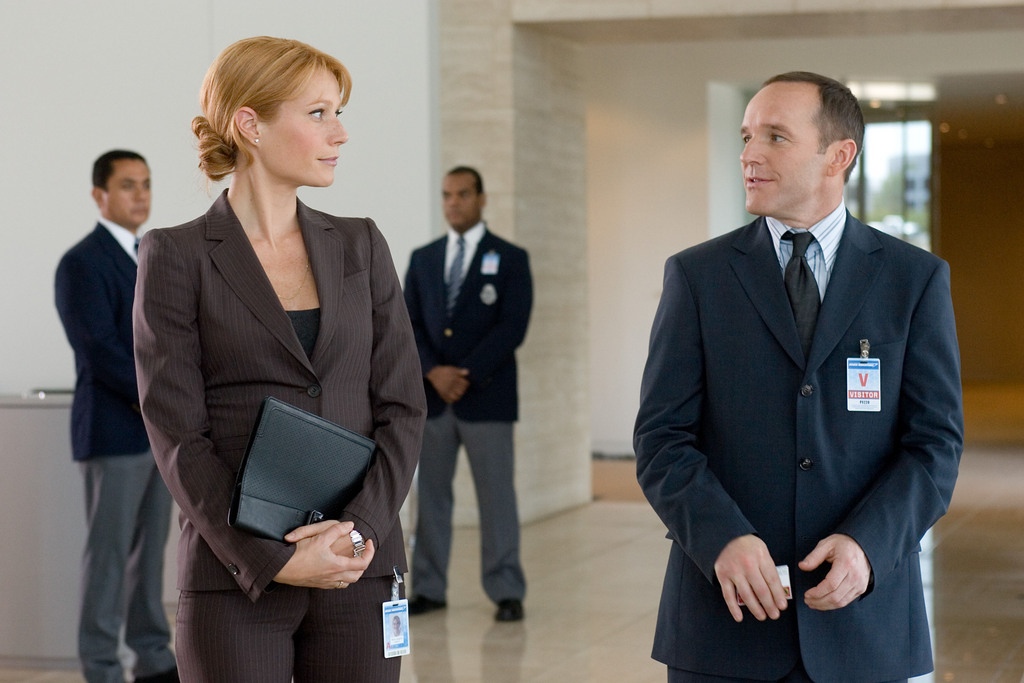
            For example, in the movie Iron Man we see three big examples of Tony Stark’s playboy lifestyle before something happens to make him change (blowing off the award ceremony, sleeping with the hot reporter, and partying on his private jet).  He then goes on to design three versions of the Iron Man armor, which also involves taking three test flights (one of them very, very short).  While all this is going on, we get three examples of what a great guy Obadiah Stane is, three of what an evil jerk he is, and the ever-loveable Agent Coulson asks three times about debriefing Tony and we get three jokes about the overly-long name of his government division before the payoff most comic geeks saw coming. 
            Seriously, pick up almost any movie you like and you’ll be stunned how quick the threes add up.  The Hulk goes on three rampages in his last movie.  In Highlander we see three other immortals die before the final battle.  In Aliens there are three major attacks and three examples of Burke being a slimebag.  In the movie Severance, the bear trap slams shut three times (and if you haven’t seen it, I’m not explaining that any further).  In Casablanca, Victor and Ilsa ask for the letters of transit three times.  Heck, in The Princess Bride, how many challenges does the Man in Black have to overcome to claim Buttercup (I’ll give you a hint—Inigo, Fezzik, Vincini)?  And there are three great swordfights in that film—all involving Inigo.
            Now I’m sure some folks reading this are thinking three’s just an arbitrary number, right?  It could be the rule of two or the rule of four.  That’s very true, and you can find some examples of both.  In Charlotte’s Web, for example, the children’s classic by E.B. White (he of the awful style guide), there are four words that get spun into webs and none of us were screaming “get on with it” when our parents read that book to us.
           In a script I just read, though, there were over a dozen examples of how low the single-dad main character had sunk.  It starts with him late for work (as a waiter—historically a job of high pay and great respect) where he had a party dine-and-dash so he has to cover their bill.  Then his car breaks down and he has to walk home in the rain.  Then he gets a collections notice. Then he has to go grocery shopping and doesn’t have enough money.  Then the babysitter demands more money because he’s late again.  Then his power gets shut off.  Then anotherparty dines-and-dashes on him and he gets fired.  Then he gets an eviction notice.  Keep in mind, this is only the first twenty pages of the script or so, and there’s still more examples coming.
            At what point did you get the idea this guy’s at rock-bottom?  Halfway through that list?  A third?  Check which note you got it on and count backwards.  Was it on the third example?
            I bet it was…
            Here’s the thing.  Each time we get exposed to information or events, it changes our understanding of them.  And a writer needs to be aware of how the reader is going to be seeing these facts or events.
            The firsttime we get exposed to a piece of information—and only the first time—it’s something new.  We, as the audience, didn’t know this or haven’t seen it before.  Agent Coulson’s introduced as yet another guy who needs to schedule a meeting about Tony escaping from Gulimar.  We brush him off the same way Pepper does (well, those folks do who don’t recognize the initials of his agency).
            The secondtime we see this happen, on the page or on screen, it establishes a pattern.  Now we know the first time wasn’t an isolated event or a fluke, and it gives us a little more information about things and characters.  Coulson shows up again and hasn’t forgotten about this meeting and he isn’t going away.  There’s also the unspoken question of how did some low-end, government flunky get into this extremely high-end exclusive party.
            The thirdtime confirms that pattern.  These behaviors or incidents are a definite element of the character or story.  Coulson shows up to remind Pepper of his loosely-scheduled appointment and she grabs him to use as a shield against Obadiah.
            When I start going past this point, things start becoming less informative and more… well, boring.  Once the information’s been established, continuing to repeat it is just noise the reader’s going to tune out.  And eventually—quickly, really—they’re going to get annoyed that I’m just repeating stuff they already know rather than moving forward, because storytelling is all about forward motion.
            Now, as I said above, there are always exceptions to the rule of three.  One of the easiest ways is when a writer is very subtle about something and the reader doesn’t realize they’ve gotten that first exposure.  They may be on their third or fourth before they notice it, so the pattern forms around the fifth or sixth time—and is all the cooler when they look back and realize the pattern was there all along.  When we finally notice the Observer on Fringe, we discover he’s been there all along, in every episode.  Another good example is Jason Hornsby’s Eleven Twenty-Three, where a town is suffering from brief outbreaks of extreme violence. It happens twice before the characters realize the outbreaks always occur exactly at the titular time, and then they suffer through three more of them before the end of the book.
            On the flipside, there are times we only need to see something once or twice to establish them.  This works best for real-world things that most people can relate to.  Neo only gets chewed out once by his boss, at the beginning of The Matrix, and we all immediately realize what kind of employee he is.  In Dean Koontz’s underappreciated Fear Nothing, we only need to see one of Christopher’s parents die to understand his sadness and loneliness.
             You can also change the dynamic.  Establishing something with the rule of three doesn’t mean you’re stuck with it.  One of the standards of good storytelling is conflict that forces things to change.  Once we’ve seen three examples telling us who  this character is, it’s a good time to start working that arc to change them into something else.  Yes, that third time asking about the appointment makes Coulson look like the ultimate paper-pusher, but right after that point we discover just how calm and collected he really is.  This is a guy who doesn’t just have a sidearm, he carries around shaped explosives just in case he needs to open a locked door.
            Look back over some of your writing and see how many times you give examples of something.  Character traits, recurring events, whatever.  Could some of them go away to tighten your novel or give you more space in that script for something else?  Or can you restructure things to hit one of the exceptions I mentioned above (three exceptions, for those of you keeping score).
            Next time, I wanted to take a step back and explain why you should avoid taking a step back in your writing.
            Until then, go write.
October 28, 2011 / 4 Comments

Blaming the Victim

            I’ve finally switched over to the new Blogger format.  A bit torn on it, myself.  Please let me know if you like it or not, because I can duplicate the old style, it just takes a bit of work. 
            Halloween is upon us, which means it’s time for me to do something horror-related here on the ranty blog.  It’s a topic I’ve touched on once or thrice before.  This time I thought I’d put a slightly different spin on it.
            As some of you know, I spent last weekend up at ZomBCon in Seattle.  It was eye-opening in several ways, and one of those ways (like any decent convention) was the people in costume.  There were a lot of fantastic zombies and related beasties, but there were also a lot of zombie fighters—people with miniguns and machetes and body armor.  Heck, one of my fellow Permuted Press authors, Eloise J. Knapp, showed up dressed to kill.  Not in the fun way.
            A lot of horror tends to focus on the enemy.  My zombies are different from your zombies.  Your vampires are different than my vampires.  Neither of our axe-wielding, demonically-possessed psychopaths are like her axe-wielding, demonically-possessed psychopath.  Horror can be broken down into many  different sub-genres, just like sci-fi, comedy, or other art forms like sculpting or painting.  Being labeled “horror” doesn’t mean Frankenstein is anything like The Descent, and neither of them resembles Paranormal Activity VII.
            What I want to talk about, though, are the victims.  Different types of antagonists define a story, true, but the same holds for the protagonist.  While A vs. B makes one type of story, A vs. C is something different and D vs. G is another world altogether.  So recognizing what type of characters I’m writing about can help me define what kind of story I’m writing, which helps me market it.  If I tell an editor it’s not torture porn when it plainly is, at the best I’m going to get rejected.  At the worst, they’ll remember me as “that idiot” when my next piece of work crosses their desk—even if I’ve fixed my mistakes since then.
            Here’s a few types of horror stories and the people you often find in them.
Supernatural stories
            Not talking about the television show, mind you. 
            The characters tend to be average folks in most supernatural stories.  They’re not idiots, but they’re not millionaire Nobel winners or retired assassins. Almost universally, the main character of a supernatural story rarely comes to harm.  They’ll need clean underwear, maybe have to dye their hair back to its natural color, and they probably won’t sleep well for a few months or years.  Physically, however, they tend to come out okay.  There might be some mental scarring, but that’s about it.  If anyone suffers in a supernatural story it’s usually the bad guy or a supporting character.  Often, though, people have died in the past.
Slasher stories
            These tales feature teenagers and young adults as their victim of choice.  Lots of teenagers, out of which two at most might survive.  A few people over the age of twenty-five may catch a machete, but ever since John Carpenter made the original Halloween (and it was horribly misunderstood and copied by dozens of filmmakers) it’s pretty much set in stone who the victims are in this sub-genre.
            A key difference between slashers and torture porn stories (see below) is that the victims here have a chance to escape.  It’s rare for the victim to die without hope or warning in a slasher film.  There’s often a chase or at least a struggle.  We get the sense that if Phoebe didn’t trip over that tree root or if Wakko hadn’t stopped to “deal with this guy” they might’ve gotten away.  Heck if Dot just could’ve run a little faster she would’ve made it to the car and relative safety.
Monster stories
            A monster story is about an unstoppable creature.  Godzilla is a monster, in a very obvious sense, but so is Freddy Kruger (in his later films), a zombie horde, and the alien in Alien.  I think the reason Jason X is so reviled by fans of the franchise is that the filmmakers turned it into a monster movie, not a slasher film like the ones before it.
            As such, the focus of a monster story is usually to get away from the threat.  Yeah, most horror movies involve running away.  In a monster story, though, it’s immediately self-evident this is the best choice of action.  Monster stories can have a lot of survivors because the monster, by its nature, is kind of attacking randomly.  It never gets personal for them.  The characters in a monster story are almost bystanders, swept up in the events and sometimes just left to watch from the sidelines.
Giant Evil stories
            In these stories the characters are usually pathetic pawns at best, helpless victims at worst (well, from their point of view).  Giant evil stories are close to monster stories in that the antagonistis just overwhelming.  There are two big differences, though.  One is there’s no way for characters to escape giant evil.  It’s everywhere.  Two is that giant evil rarely has a face.  It may have minions or manifestations, but often it isn’t something characters can “find,” if that makes sense.
            The characters in giant evil stories tend to be older and smarter.  They’re not hormone-crazed teens, but very educated adults with a bit of life-wisdom under their belts.  In my opinion, it’s because a large part of the horror here is realizing just how overwhelming the force against them is.  It’s something a younger character usually isn’t quite up to grasping because they don’t have as much of a world to overturn.
Thrillers
            Thrillers tend to focus on just one or two characters rather than a larger cast, so when people die they tend to be supporting characters or nameless folks in the background.  A thriller is about what could happen, not what does happen, so the big threats have to stay looming.  While characters in a thriller tend to be more active in a general sense, for the most part they’re reacting to the sinister plots and machinations going on around them.
Adventure Horror stories
            To paraphrase from Hellboy, adventure horror is where the good guys bump back.  While these stories may use a lot of tropes from the other subgenres, the key element to these stories is that the characters aren’t victims—they’re actively fighting back from the start.  Not in a dumb, facing-off-against-Jason-Voorhees-with-a-baseball-bat way, but in a heavily-armed-armored-and-prepared way that has a degree of success. 
            It can still go bad for them (and often does), but these characters get to inflict some damage and live to tell the tale.  For a while, anyway. 
Torture porn
            A key element to torture porn is the victim is almost always helpless.  By the time the characters know what’s going on (no matter how obvious it is to the reader) they’re already bound and drugged.  They’re completely alone or vastly outnumbered.  Unlike a slasher film (see above) there’s no question in these stories that the victim is not going to get away.  That hope isn’t here, because that’s not what these stories are about.
            Torture porn walks a delicate line with its characters.  If they’re bland and interchangeable, what happens to them is kind of meaningless.  When was the last time you shed a tear for that broken chair in your back alley?  However if we know these characters too well then their torture really does become truly unbearable and horrific to the point that it isn’t remotely entertaining.  We cheer when people get killed in the Saw movies, but not when they’re killed in Schindler’s List.
            I’ll also make the observation that characters tend to be one type or the other.  It’s very rare to see such a dramatic character shift that Phoebe goes from being the complete victim to completely kick-ass.  As has been said to death, the seeds are always there.  Ripley may not gear up until the end of Aliens, but there are plenty of reminders all through it that she’s just as capable and resilient as any of the Colonial Marines—including the fact that she’s the only survivor of the first movie.  When someone changes too much without any motivation they become inconsistent, and an inconsistent character’s a sure way to end up in that big pile on the left.
            So, dwell on these points while you’re munching on the ill-gotten gains you score while trick-or-treating with your candy beard.  Yeah, all of you with kids, you know what I’m talking about.
            Next time, I’ve been going back and forth about what I want to do.  I might just give a random quick tip.  Or maybe I’ll talk about going back and forth.
            Have a Happy Halloween.  Don’t forget to write.

Categories