
March 14, 2019 / 4 Comments

Can We Just Talk a Bit…?

Well, this one’s going to be a little awkward. We just said this weekend that we’d talk about dialogue next time at the Writers Coffeehouse. But then we got a request for it here, so… overlap. One way or the other, the second time is going to end up making me look a little lazy, little bit like a hack.

I mean, more than usual.

Ha ha ha, you’re welcome critics. Just tossing that one out there for you.

Anyway…

Dialogue.

I’ve blabbed on once or thrice about how important dialogue is. Yeah, I know I’ve said characters are the most important thing, but dialogue’s how we bring those characters to life. It’s the fuel for the fancy sports car, the foam that hides the gigantic wave, the beautiful full moon that shows us a bloodthirsty werewolf. You get the idea. They’re interdependent. I can’t have good characters without good dialogue, and bad dialogue is almost always going to lead to bad characters. It’s the circle of fictional life.
If a character doesn’t sound right, if their dialogue is stilted or unnatural, it’s going to keep me—the reader—from believing in them. And if I can’t believe in them, I cant get invested in them or their goals. Which means I’m not invested in the story and I’m probably going to go listen to music while I organize my LEGO bricks or something.

So here’s a bunch of elements/angles I try to keep in mind and watch out for when I’m writing dialogue. Some things to watch out for, some things to make sure I have. All sorts of stuff. And I’ve talked about a lot of these before, so some of them may sound familiar…

Transcription– Okay, some of you know that I used to be an entertainment journalist and I did lots and lots of interviews. One thing that never really struck me until then was that, with very few exceptions, people trip over themselves a lot verbally. We have false starts. We repeat phrases. We trail off. We make odd noises while we try to think of words. It’s very human. However, anyone who’s ever read a strict word-for-word transcription of a conversation (or typed up a lot of them) will tell you it’s awkward, hard to follow, and a lot gets lost without the exact inflection of certain words.

I don’t want to write dialogue in this kind of ultra-realistic manner. It’ll drive my readers and editor nuts, plus it wastes my word count on dozens of unnecessary lines. While this sort of rambling can work great in actual spoken dialogue, it’s almost always horrible on the page.

Grammar – As you’ve probably noticed in your day to day life, very few people speak in perfect, grammatically correct English, aside from androids and a few interpretations of Sherlock Holmes. The rest of us speak differing degrees of colloquial English. Our verbs don’t always line up with our nouns. Tenses don’t always match. Like I just mentioned above, a lot of “spoken” English looks awful on the page. And this makes some folks choke, because they can’t reconcile the words on the page with the voice in their head. When I do this I lose that natural aspect of language in favor of the strict rules of grammar, and I end up with a lot of characters speaking in a precise, regulated manner that just doesn’t flow.

Contractions– This is kind of a loosely-connected, kissing-cousins issue with the grammar one I just mentioned. A lot of people start out writing this way because they’re trying to follow all the rules of spelling and punctuation so they write out every word and every syllable. They want to write correctly!

Again, most of us use contractions in every day speech—scientists, politicians, professors, soldiers, everyone. It’s in our nature to make things quick and simple. Without contractions, dialogue just sounds stilted and wooden. If there’s a reason for someone to speak that way (ESL, robots, Sherlock Holmes, what have you), then by all means do it. If my characters are regular, native English-speaking mortals, though…

As a bonus, using contractions also drops my word count and page count.

On The Nose—Okay, in simple terms, this is when a character says exactly what they’re thinking without any subtlety whatsoever. It’s the difference between “Hey, do you want to come up for a cup of coffee?” and “Would you like to come up and have sexual relations in my living room right now?” There’s no inference or implications, no innuendoes or layered meanings—no subtlety at all. And the truth is, we’re always layering meaning into what we say.

Pro tip—I’d guess nine times out of ten, if a character’s talking to themselves out loud, it’s on the nose dialogue. It just works out that way. I’d guess that at least half the time it’s just exposition (see below).

Similarity– People are individuals, and we’ve all got our own unique way of speaking. People from California don’t talk like people from Maine (I’ve lived almost two decades in each state, I know), people living in poverty don’t talk like billionaires, and medieval idiots don’t speak like futuristic mega-geniuses.

My characters need to be individuals as well, with their own tics and habits that make them distinct from the people around them. If a reader can’t tell who’s speaking without seeing the dialogue headers… I might need to get back to work.

Let me follow this with a few specifics…

Humor—Here’s a basic fact of human nature. We make jokes at the worst possible times. Breakups. Office reviews. Funerals. It’s just the way we’re wired. The more serious the situation, the more imperative that release valve is for us. In fact, we kinda get suspicious or uneasy around people who never crack jokes. Not everyone and not at every moment, but when there’s no joking at all… it just feels wrong.

Plus, how we joke says something about us. Does someone make non-stop raunchy jokes? Do they have a dry sense of humor? A completely awful sense of humor. Do they have any sense of when it is and isn’t appropriate to tell a certain joke?

Flirting—Similar to humor in that it’s almost universal. We show affection for one another. We flirt with friends and lovers and potential lovers, sometimes even at extremely inopportune times. It’s not always serious, it can take many forms, but that little bit of playfulness and innuendo is present in a lot of casual dialogue exchanges.

Flirting is a lot like joking because it’s impossible to flirt with on the nose dialogue. Flirting requires subtlety and implied meanings. Flirting without subtlety sounds a lot more like propositioning, and that gives a very different tone to things. If nobody in my story ever flirts with anyone on any level, there might be something to consider there.

Profanity—another ugly fact of human nature. We make emphatic, near-automatic statements sometimes. We throw out insults. How we swear and respond to things says something about us. Phoebe does not swear like Wakko, and Phoebe doesn’t swear in front of Wakko the same way she swears in front of her mother. Or maybe she does. Either way, that’s telling us something about her and making her more of an individual.

Fun fact—profanity is regional. The way we swear and insult people here is not how they do it there. So this can let me give a little more depth to characters and make them a bit more unique.

Accents– Speaking of regional dialogue… Writing in accents is a common rookie writer issue. I made it a bunch of times while I was starting out, and still do now and then. There are a handful of pro writers out there who can do truly amazing accented dialogue, yeah, but keep that in mind—only a handful. The vast majority of the time, writing out accents and odd speech tics will drive readers and editors nuts.

I usually accent by picking out just one or two key words or sentence structures and making these the only words I show it with. Just the bare minimum reminders that the character has an accent. Like most character traits, my readers will fill in the rest.

Weird note—this can become odd with audiobooks, because the narrator will most likely add an accent of some sort to differentiate the character. So the most subtle of written accents can almost become an uncomfortable stereotype once they’re combined. Another reason to think about dialing things back.

Extra descriptors—I’ve mentioned once or thrice that said is pretty much invisible on the page. But it can still wear thin. I don’t always need to use it, because after a point it should be apparent who’s talking.

Plus with less words, dialogue gets leaner and faster. Tension builds in the exchanges because the reader isn’t getting slowed down by ongoing reminders of who’s talking.

Not only that, once I’ve got some of these speech patterns down for my characters, I should need descriptors even less. In my book, Dead Moon, Tessa’s dialogue could almost never get confused with Cali’s or Jake’s or Waghid’s. They’re all distinct, and their speech patterns identify them just as well as a header would.

Names—If I don’t need them around the dialogue, I need them even less in the dialogue. Pay attention the next time you’re on the phone with someone. How often do they use your name? How often do you use theirs? Heck, if my friends call my cell phone I know who it is before I even answer—and they know I know—so I usually just say “Hey, what’s up?” We don’t use our names, and we definitely don’t use them again and again in the same conversation.

Spoken names can also come across as a bit fake. It’s me acknowledging the audience may be having trouble keeping track, and throwing in a name is the easiest way to deal with it, rather than the best way. Remember, if I’ve got two characters who’ve been introduced, it’s really rare that they’ll need to keep using each other’s names. Especially if they’re the only ones there.

Monologues – Here’s another observation. We don’t talk for long. People rarely speak in long paragraphs or pages. We tend to talk in bursts—two or three sentences at best. There’s always rare exceptions, sure, but for the most part we get our ideas out pretty quickly (if not always efficiently)

When I have big blocks of dialogue, I should really think about breaking them up. Is this person just talking to themselves (see above)? Is nobody there to interrupt them with a counterpoint or question or a random snarky comment? Is my monologue necessary? Does it flow? Is this a time or situation where Yakko should be giving a four paragraph speech?

A good clue when examining a monologue–how many monologues have there already been. One script I read a while back for a screenwriting contest had half-page dialogue blocks on almost every page. If I’m on page forty-five and this is my fifth full-page monologue… odds are something needs to be reworked.

I also shouldn’t try to get around this with a “sounding board” character who’s just there to bounce things off. Talking is communication, which means it has to be a two-way street. If I’ve got somebody who serves no purpose in my story except to be the other person in the room while someone thinks out loud… they’re not really serving a purpose.

Cool lines— Our latest ugly truth–everything becomes mundane when there’s no baseline. If everyone on my mercenary team is two hundred pounds of swollen muscle… who’s the big guy? When everyone owns a seven-bedroom mansion, owning a seven-bedroom mansion doesn’t really mean anything. If anybody can hit a bull’s-eye at 100 yards out, then hitting a bull’s-eye isn’t all that impressive, is it.

The same holds for dialogue. We all want to have a memorable line or three that sticks in the reader’s mind forever. The thing is, they’re memorable because they stand out. They’re rare. If I try to make every line a cool line, or even most of them, none of them are going to stand out. When everything’s turned up to eleven, it’s all at eleven– it’s monotone.

Exposition—Remember being a kid in school and being bored by textbook lectures or filmstrips that talked to you like you were an idiot? That’s what exposition is like to my readers.

Use the Ignorant Stranger method as a guideline and figure out how much of my dialogue is crossing that line. If any character ever gives an explanation of something that the other characters in the room already should know (or my reader should know), cut that line. If it’s filled with necessary facts, find a better way to get them across.

“As you know…” – I’ve said this before, but… if you take nothing else from this rant, take this. I need to find every sentence or paragraph in my writing that starts with this phrase or one of it’s halfbreed cousins.

Once I’ve found them, I need to delete them. Gone. Destroyed.

This is probably the clumsiest way to do exposition there is. Think about it. A character saying “As you know” is openly acknowledging the people they’re talking to already know what’s about to be said. I’m wasting time, I’m wasting space on the page, and I’m wasting my reader’s patience. If I’ve got a rock-solid, lean-and-mean manuscript, I might be able to get away with doing this once. Just once. As long as I don’t do it my first ten pages or so. Past that, I need to get out my editorial knife and start cutting.

What is that, fifteen tips? Here’s one more for a nice, hexadecimal sixteen.

You’ve probably heard someone suggest reading your manuscript out loud to catch errors and see how things flow. Personally, while I think this works great for catching errors, it’s not as good for catching dialogue issues. We wrote these lines, so we know how they’re supposed to sound and what they’re supposed to convey. There’s a chance we’ll be performing what’s not on the page, if that makes sense.

So if you can stand to listen… get someone else to read it out loud. Maybe just a chapter or two. Let a friend or family member who doesn’t know it read it out loud and see what they do (SCI-FI) with it.

And there you have it. A big pile of tips which should help your fictional dialogue seem a little more real. Fictional-real, anyway. Not real-real.

Next week… I think it may be time to talk about superheroes.

Until then, go write.
            A couple folks have asked me questions related to marketing over the past few weeks, so I thought it’d be worth going over a couple things about this.
            There’s a wonderful Richard Matheson quote that Jonathan Maberry related to me a few years back.  If you’ve gone to either of the SoCal Writers Coffeehouses and listened to us speak (well, Jonathan speaks, I kinda babble on a lot until I run out of breath), you’ve probably heard it three or four times.  Writing is art, publishing is the business of selling as many copies of that art as possible.
            Marketing, big surprise, is part of publishing.  It’s a very necessary part of publishing, whether I’m doing it myself, with a small press, or I’m the favorite author at a Big Five imprint.  It’s how people discover I’ve got something to sell.
            Marketing can take a lot of forms.  It’s everything from me posting the new cover on Twitter to your book being plastered on the side of a bus.  It’s the copy on the back of the book and me summing it up in two lines for you at a convention.
            But the sole point of it, in all these examples, is to sell books.
            And sometimes… this can create some conflicts with the art side.

            As we move forward here, I’m sure some folks may try to read into this.  It isn’t a subtweet or an angry rant.  I’m not calling anyone out or absolving anyone of blame or any of that.  I’m just tossing out some facts.  Publishing is a business, and if I want to be successful in that business (and avoid a ton of stress), it helps to understand how it works.

            Also, I know there’s a fine line between marketing and publicity and I always mess it up, so please forgive me if I weave back and forth across that line once or thrice here.  I don’t think I’m ever going to end up in the other lane, but we may hear those bumpy lane divider once or thrice.
            Okay, so, if marketing is getting people to buy my book, how do I do that?  I can tell them the genre and see if it’s something they like.  Maybe the type of characters I use.  I can point out other books like it, or other storylines it may tie into.  I can even offer little summaries or excerpts to tease potential readers with.  Doesn’t this sound like a creepy/sexy/amazing/funny story?  You saw the dragon, right?  You know you like dragons.  And this one’s got a lightsaber.  Trust me, The Jedi of Krynn is the book you’ve been waiting your whole life for.
            But seriously…
            One of the big challenges here—the conflict between art and business—is how much do we tell?  How do we find that fine line between getting the sale and keeping the book enjoyable?  Tell too much and now all the book’s punch is already out there.  Don’t tell enough and… well, maybe nobody reads it at all.
            Do I mention every character in the book, even if some are supposed to be surprises?  Should I mention the big twist?  Should I hint at it?  Heck, sometimes even just naming the genre can be a bit of a spoiler.  And every spoiler saps a little bit of the story’s power… which lessens the chances for word-of-mouth sales.  Now my cool novel is just kind of a bland book with no real surprises in it.
            Sometimes what seem like simples questions can cause marketing headaches.  For example…
            (Some minor MCU spoilers coming at you)
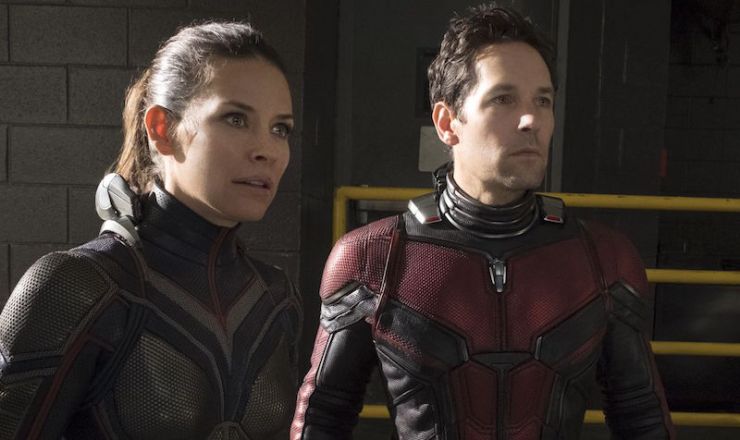
            Does Ant Man & The Wasp tie into Avengers: Infinity War
            Simple question, right?  But how do you answer it?  If I say no, there’s a bunch of people who might skip it. Plus, I’m lying, which people will then call me out for and complain about.  If I say yes, people complain because… well, 99.5% of the film doesn’t tie in at all.  And that last half a percent… well, if I’m saying yes, I’m kinda spoiling that super-powerful reveal, aren’t I?  There really isn’t a good way to answer it.
            Of course, even not answering it at all can cause problems, because then people will speculate around that sort of “negative space” left by the non-answer.  They’ll read into things, make assumptions, and develop expectations.  And these expectations will either be correct, in which case…  well, they’re acting like spoilers again.  Or they’re incorrect, and now people are upset because the expectations they went in with aren’t being met, no matter what the actual story is (or how good it is).
            There’s another angle here, too.  One you’ve probably heard before.  People like series.  They like them a lot, if you look at sales records. To be honest, publishers like them, too.  Editors love to see a new book with series potential.  And spin off potential.  And tie-in potential.
            But here’s another catch.  People want to know how all this stuff fits together.  They want to know if something is canon or set on Earth-23 or Earth 15 but stillcanon or does this involve Wakko before or after his cybernetic upgrades?  Because let’s face it—there’s no point reading any of the stories before he became bionic, right?  Why even bother?
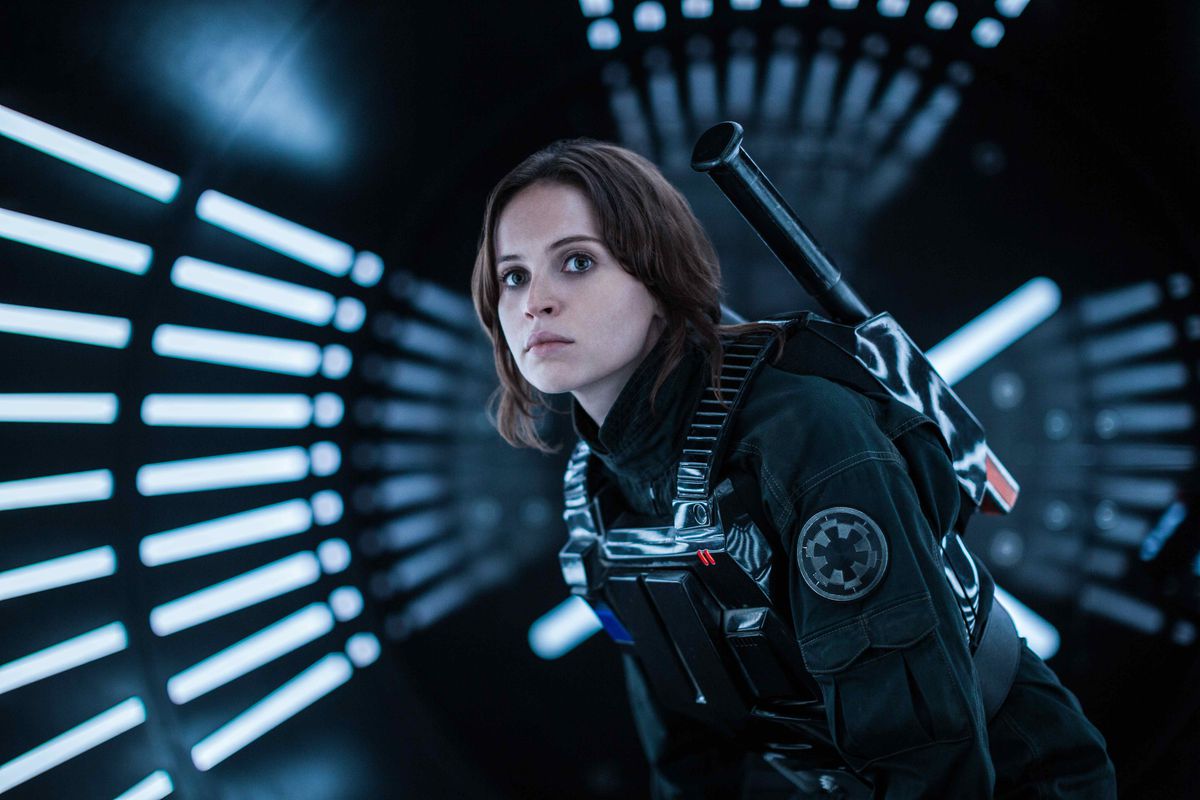
            So when things don’t fall into a neat A-B-C, 1-2-3pattern, it’s not unusual for marketing to just… well, kind of wing it.  Like, okay, how would you number the Star Wars films (or all the novelizations and spin off books)?  By the order they came out?  That won’t make much sense.  By the order they fit in the story?  That means A New Hope: Episode IV is actually movie six.   And how does that work if they do a new prequel story?  Do we re-number everything?  Do we just number some things but not others?  I saw the novelization of Rogue One listed once as Star Wars: Book 18, and I have no clue what that’s supposed to mean.
            Sure, we could leave them unnumbered but… well, that could cost sales, too.  Some folks don’t like reading a series until it’s done, and if I don’t say it’s a trilogy or whatever, well… maybe they’ll never pick it up at all.  So I probably need some kind of designation if I want these to sell, right?
            Or do I?
            Plus… sometimes explaining where things fit in can be a spoiler.  We thought this story was in the future, but it’s actually in the past.  We thought it was here on Earth but it’s actually on the mirror-universe world of Urth.  And that puts us back at… well, what do we tell?  How do we keep the book enjoyable while also getting people to buy it?
            It’s a mess.  Seriously.  And everyone’s clawing their way through trying to find a balance that preserves the art but still serves the business.  Everyone knows you can’t pick one over the other, but every single book (or movie or television show) becomes a new attempt at finding that balance point.  The guidelines we use for my book won’t work for yours. 
            And it doesn’t help when some folks, deliberately or not, muddle things even more.  We’ll play up the mention of that character or the appearance of that plot thread. I’ve seen things described as romances because of one thin subplot, or spiritual because someone prays at some point (I won’t tell you what they were praying for…)  I’ve mentioned before how for a while any book or movie with a somehow-superhuman character was billed as a superhero story.  These are the things that make people grumble about marketing, and make marketing folks grumble about people who just follow buzzwords.
            Anyway…
            I just thought it was worth tossing this out.  Mostly because a few folks have complained long and hard about the marketing for Dead Moon.  I’ve tried to address some of these things for, oh, eight or nine months nowbut… well, as I’ve been saying, some complaints are inevitable, no matter what. 
            But also partly because, like I said in the beginning, this is stuff worth knowing and thinking about.
            And I’m sure there will be some more thoughts down in the comments.
            Next time—like, tomorrow—some thoughts on dialogue.
            Until then, go write.
March 7, 2019 / 4 Comments

The Outline Experience

Hey everybody!

(Hi, Doctor Nick!)

I’d like to thank you all for your patience while I was off finishing that book.  I went through a brutal last week of work on it.  I decided to change the last five chapters and then still squeeze in another polish draft.  Because why not, right…?

And I’m assuming you’ve all been patient.  For all I know this was the last straw and you all said screw it—Victoria Schwab just tosses out great writing advice on Twitter.  Why am I wasting time waiting for this guy to come back?

I may just be writing into the internet void.

Ah, well.  I’ll give it a few weeks to be sure.

So, speaking of the void, a couple months back I talked about outlines, and how my attitude toward them has changed over the years.  And it is so weird to say “over the years.”  I’m still amazed I’ve been doing this for as long as I have.

Anyway, I talked a bit about outlines and promised to revisit the topic because… well, this book I just finished was the first time I’ve done a book with a really full, complete outline.  The analogy I made was going from roughly planning out a trip to having an hour-by-hour itinerary.  And since my previous attempts to work with an outline hadn’t gone so well, I thought it would be worth talking about what I did and how it all worked out in the end.

First off, as I mentioned before, the outline for this book was huge.  Forty-two single-spaced pages, almost double what I’ve ever done before with this kind of blueprint.  I had everything broken down by chapters, I had notes of which chapters were done from which points of view.  And I had another four page document that was just notes on characters—names, backgrounds, wardrobe.  I could probably say I had fifty pages of this done before I sat down to start actually writing it.

Remember that last bit—we’ll come back to it.

It’s also worth mentioning that I spent almost five weeks working on this outline.  More than a month.  There were many false starts.  There was feedback.  I pretty much went through drafts of my outline.

Was it worth it?

Well, taking the holidays and a week with a bad back into consideration, I finished up a first draft in just under nine weeks.  That’s pretty good for me.  My first drafts are usually somewhere between two to three months, so this one basically scraped right up against that, on the quicker side.

But…

It’s also worth noting that this was a much, much tighter first draft than I usually do.  I’ve joked about the number of notes I’d usually leave for myself in a first draft.  MAKE THIS SOUND COOLER or ADD A CHAPTER EXPLAINING THIS.  Usually, I’d have ten or twelve of these in a first draft.  This time around I had… four?  Maybe five?  And only two of them all that big.  So my second draft took just over a week, if memory serves.  About eight days, altogether.  In the past, that’s been a three to four week process, patching over all those holes.

Now… let’s crunch some numbers.

I’m sure one or two of you are seeing this as a brilliant validation of outlines.  They make things go so much faster and easier. Three months down to two?  Three weeks down to a little more than one?  Fantastic! I shaved 33% or more off my time.

 Did I though…?

I mean, as I mentioned above, once I add in the five weeks of work for that outline, the overall work period is just about as long as it used to be.  It went much smoother, yes—much less head-banging-on-keyboard—but I’m almost tempted to say it took a little bit longer.  Not drastically longer, but I’m not sure it really saved any significant time in the long run.  I just used the time differently.

Also worth mentioning—what’s that old chestnut, no plan survives contact with the enemy?  Same thing here.  No outline survives contact with the actual story.  As things are building and fleshing out, they change.  These are no longer those characters, able to carry out those actions.  One character in this book had a complete 180 personality change from first to second draft, from angry yelling guy to eerily calm smiling guy.  Which worked so much better for the story and made one of those fill-in-the-blank sections turn out completely different than I originally planned.

That’s also why the ending changed, as I mentioned at the start.  I rewrote the last five chapters of the book.  The last seven, really, because once the characters were well-established and the pace was set… well, I came to some realizations.  One was that some of my ending was pointless conflict—just drama and action for the sake of drama and action, nothing else. Also, I had a much clearer view of how some characters would react, and those little tweaks changed how some things needed to happen.

One other thing to keep in mind that I’d never considered—using a really dense, detailed outline can be a bit brutal if you’re someone who likes tracking their word count.  Every day I’d type out 1500-2000 words and feel really good about myself.  And then I’d delete all the notes for that chapter, which would knock the overall word count back by 500-750 words.  Yeah, I still wrote the same amount, but… well, if those numbers mean a lot to you, it can be kinda disheartening.

What does all this boil down to?

Well, not much.  As I’ve said in the past, an outline is a tool for my writing arsenal, but there’s no law that says I have to use that tool.  For me—someone writing on a hard deadline as part of my full-time job—yeah, I think I may try using this tool again.  For you, maybe not.  Maybe you’re still at a point where you can take the time to just feel your way through the story.  Maybe you just don’t want to deal with an outline and have that much planned out for you.  These are all fine things.  Like so many things on the writing side, it comes down to what works best for you.  That’s the Golden Rule I mention here so often.

And those are my thoughts on outlines.

At this point I’ll toss out the reminder that my latest book, Dead Moon, is currently available exclusively from Audible.com.  It’s set in the Threshold universe, so if that’s your thing you may like it.  You may like it anyway.  Please check it out, and if you already did reviews are always appreciated.

Also, if you’re in the southern California area, this Sunday is the Writers Coffeehouse at Dark Delicacies in Burbank.  We’ll be there noonto three chatting about exposition and types of contracts.  As always, it’s 100% completely free (no fees, no dues, no sign-ups, no emails, nothing), and much like this blog, it’s kinda entertaining and semi-educational.  Feel free to stop by.

Next time…

Well, it’s been a while.  If anyone’s had a topic gnawing at them, please let me know in the comments.  Otherwise I’ll just babble on about spelling or superheroes or something.

Until then… go write.

Categories