
August 8, 2019 / 1 Comment

And They All Lived Happily Ever After

Finally got this finished.
Endings are funny things, yeah? In a weird sort of way, we don’t get them much in real life anymore. We demand sequels to everything. Moving away doesn’t mean what it used to, not with Facetime or Twitter or any other messaging devices. Heck even death has been softened a bit, with social media accounts getting memorialized and lingering long after we’re gone.

And sometimes, people just throw on an ending because they can’t think of anything else.

The ending can make or break my story.  It’s the rich, perfectly sweet dessert after a feast of savory words.  I can have the absolute best filet mignon in the world paired with an exquisite wine, but if we end the meal with a pie made from rotten apples… well, that’s the part we’re all going to remember.  A so-so story with a really fun ending usually gets favorable reviews.  A strong manuscript that spirals downward at the end, more often than not, doesn’t go anywhere except into that big pile on the left.

Now, some folks are content to say “well, that sucked” and leave it at that.  But as storytellers we need to know why something doesn’t work.  Bad endings don’t always have the same root problem.  Sometimes the writer had a phenomenal way to start a character arc, but wasn’t sure how to wrap it up.   Or maybe they have a really cool idea for a story, but don’t know where to go with it past that initial idea.  Sometimes an ending just doesn’t work with the rest of the story.

And some endings almost never work, no matter what the rest of the story is. Endings like…

Nothing Changes
Let’s start with the basics.  My characters are supposed to have an arc.  Arcs end at different points than they began at.  If my last ten pages show the characters in the same place as the first ten, doing the same things, with the same people, and they’re not any wiser for what they just went through…  well, that wasn’t much of an experience, was it?  For them and probably not for my readers.  I’m not saying my characters need to have some gigantic emotional breakthrough or spiritual growth, but somethinghas to be notably different or this was all just wasted time. 

One type of story that does this a lot is the “slice of life” tale.  You know the one, just two or three average days in the life of two or three average people.  It’s hard to say this kind of thing is wrong in a general sense. Most of our lives don’t change radically on any given day.  I’ve spent most of today here at my desk writing, just like I did yesterday and probably like I’ll be doing tomorrow.  So it’d be a realistic ending if a story about me ended with me back here working at my desk. 

The question I need to ask myself is… why would anyone want to read about that? I know I sure wouldn’t. I already go through a slice of life every day where nothing changes.

The Heroes Don’t Do Anything

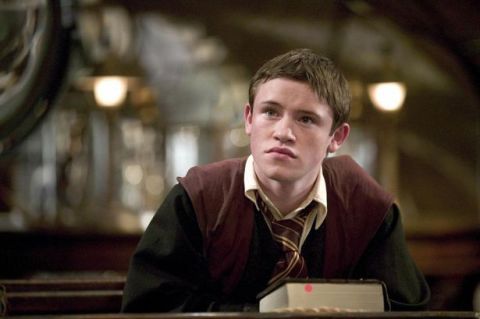
Every now and then, often enough that it’s worth adding to this list, I come across a weird story where the hero or heroes don’t save the day. Not that they lose they just… they aren’t the ones who bring the victory. Somebody else saves the day, hits the target, makes the big sacrifice, or what have you. Imagine we’ve been watching Harry Potter for seven books and then Seamus Finnegan leaps in to fling that curse back at Voldemort and kill him dead. Which, y’know, yay Seamus and wooo! Voldemort’s dead, but at the same time… why’ve we been following Harry for the last two thousand or so pages?

When I get to the end of my story, what’s my character actually doing? I mean, sure, pointing and shouting and worrying are all things you can do, but are they actually doing anything that’s directly affecting this outcome? Or is someone else doing it?  And if it’s someone else… have we been following the wrong person?


Everybody Dies and the Antagonist Wins
One of the biggest problems with ending things up this way is it gives my reader a sense the story was pointless.  They’ve just invested a few hours (or perhaps days) into this tale only to see it come to an unpleasant ending.  This can be especially frustrating if the reader comes to realize the character never even had a chance at succeeding.  It’s even more frustrating if my characters made a bunch of stupid decisions somewhere along the way. I mean, it’s bad enough when we have to watch the fifth person in a row decide to go check out the old Murderama Amusement Park where all those kids got killed last summer, but when that’s the point I decide to end the story on…? 
My protagonist doesn’t need to come through unscarred, mind you.  Heck, I can even get away with killing my lead.  But they need to succeed on some level.
The Left Fielder
This is the ending that comes out of nowhere. The quarterback finally gets his act together, aces his exams, convinces the cute girl from drama club that he really loves her, gets voted prom king but turns it down… and then gets hit by a bus on the last day of school. Our heroine stops international terrorists working with alien invaders, but in the end her girlfriend accidentally drinks the tainted Soylent and is devoured by necrotic nanites anyway. Or, as I experienced many years back, a friggin’ hilarious ninety minute sketch comedy show ends with a bleak monologue about racial inequality and prejudice.

No, seriously.  I worked on a stage play back in the ‘90s that actually did this. The director and producer rewrote the end to give it “meaning” and couldn’t figure out why nobody liked it.

In my experience, the vast majority of writers who use this kind of ending are trying to achieve art. It’s me attempting to show how this story flawlessly mimics a random and sometimes meaningless real world by having a random and meaningless ending.  It doesn’t relate to anything that happened because… it’s real.  And tragic.  And artistic.

Besides suffering from all the same issues as the “everybody dies” ending, the left fielder just isn’t that special anymore.  It’s become one of the most common conclusions in indie films and “literature.”  So besides making my audience roll their eyes so hard they sprain something, they’re probably going to see this “unexpected” ending coming for the simple reason that it’s just, well, expected at this point.
There’s nothing wrong or pedestrian about putting an upbeat ending on a story.  As I’ve mentioned before, nobody got hit by a train at the end of Slumdog Millionaire and it’s somehow still a good film.
The Y’see Timmy
This one’s a little odd.  I use this phrase here a lot, and it’s kinda an homage to the movie I found it in–Speechless (written by Robert King). This ending gets its name from the old Lassie TV show.  Little Timmy encounters some problems, works his way out of them with Lassie’s help, and at the end Mom sits him down and explains what happened and why.  “Y’see, Timmy, sometimes people get hurt or scared and it just festers down inside of them…”  Timmy and the audience learn a little something about life and we all go home as better people.
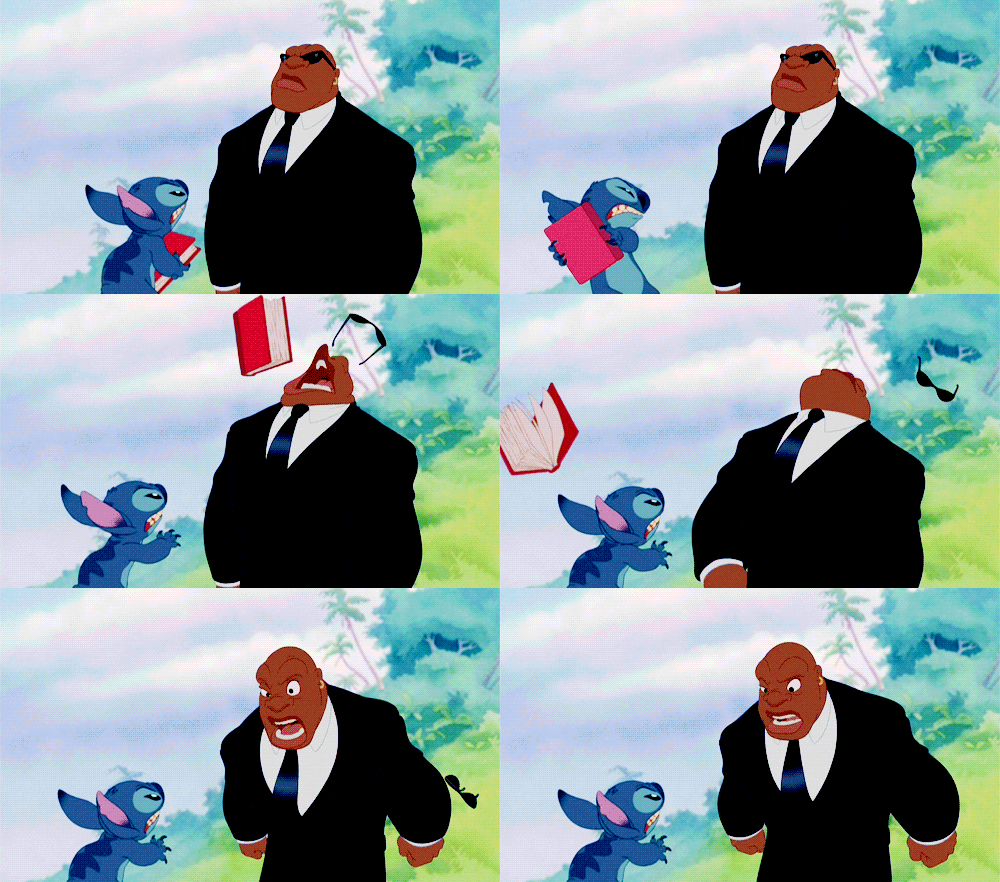
The problem is, in clumsy hands the Y’see Timmy quickly becomes “brutally beating the audience with my message.”  That’s why it’s on this list.  A great example is Ayn Rand’s Atlas Shrugged, where the 98 page monologue (no, seriously) at the end of the book recaps every single one of the subtle lessons that were shown in the first 800 pages, but all dialed up to eleven-point-six.  And if you know what I’m talking about,  I’m betting you probably ended up skimming and/or blotting out most of that monologue.  Just like everyone else did.  Except Paul Ryan.

…And They Write a Book About It
I think I’ve mentioned once or thrice before that this is pretty much the worst ending you can have for a screenplay.  It isn’t much better in a book. This almost always feels like it’s tacked on ending to assure the reader that our hero didn’t just survive this story—they benefitedfrom it.  Immensely.  Yeah, you’d think clearing my name of murder charges, getting the girl, and killing Thanos would be enough for most folks to consider it a good week, but noooooooo… apparently I need acclaim and wealth and celebrity, too.
I think writers tend to fall back on this ending for one of three reasons (sometimes more than one of them). One is that it falls into that “write what you know” tip we’ve all heard for years and years. I know writing, so I’ll write about writing.  Twois that, because of one, this feels like a natural thing to happen, so it adds an element of reality to my characters and story.  And three

Okay, I think three’s a sort of wish-fulfillment-validation thing, to be honest.  Work with me here. My character writes a book about how she used to be a international assassin and it becomes a New York Times bestseller, right? So, logically, my book about someone writing a book about how she used to be an international assassin should alsobecome a New York Times bestseller.  Right?
It Was All a Dream

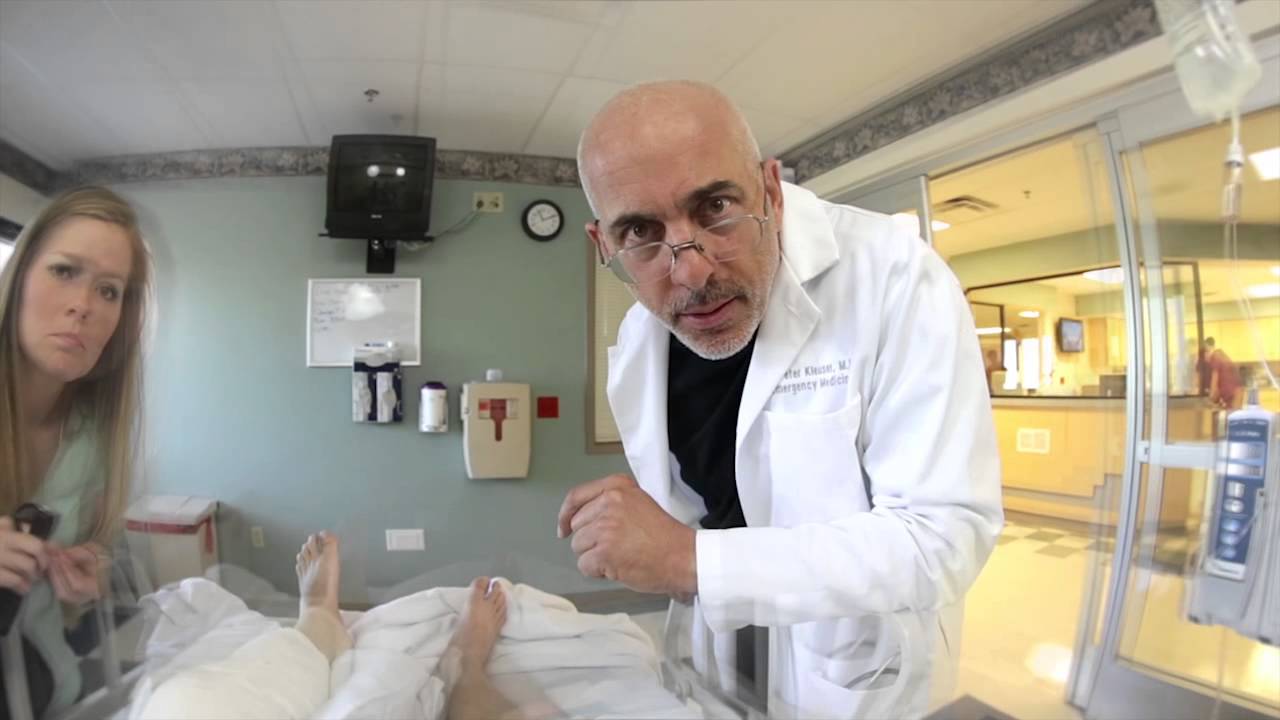
Probably the worst offender of all of these.  All too often the amazing tale of adventure ends with one of my heroes waking up on the couch or in a hospital bed.  None of the story my audience has just invested their time and attention in actually happened. Not even within the world of the story. We all just put ourselves into a story about a person who was putting themselves into a story. The end.

As I mentioned up above with Everyone Dies, this just tells the reader they made an investment for no reason.  How often have you read or seen a movie like this and immediately been able to pick out the moment things veer off into a dream?  My partner and I often watch shows or movies and find ourselves quickly declaring “Dream sequence!”

To Be Continued…
No, I lied. This is the worst offender. Hands down.
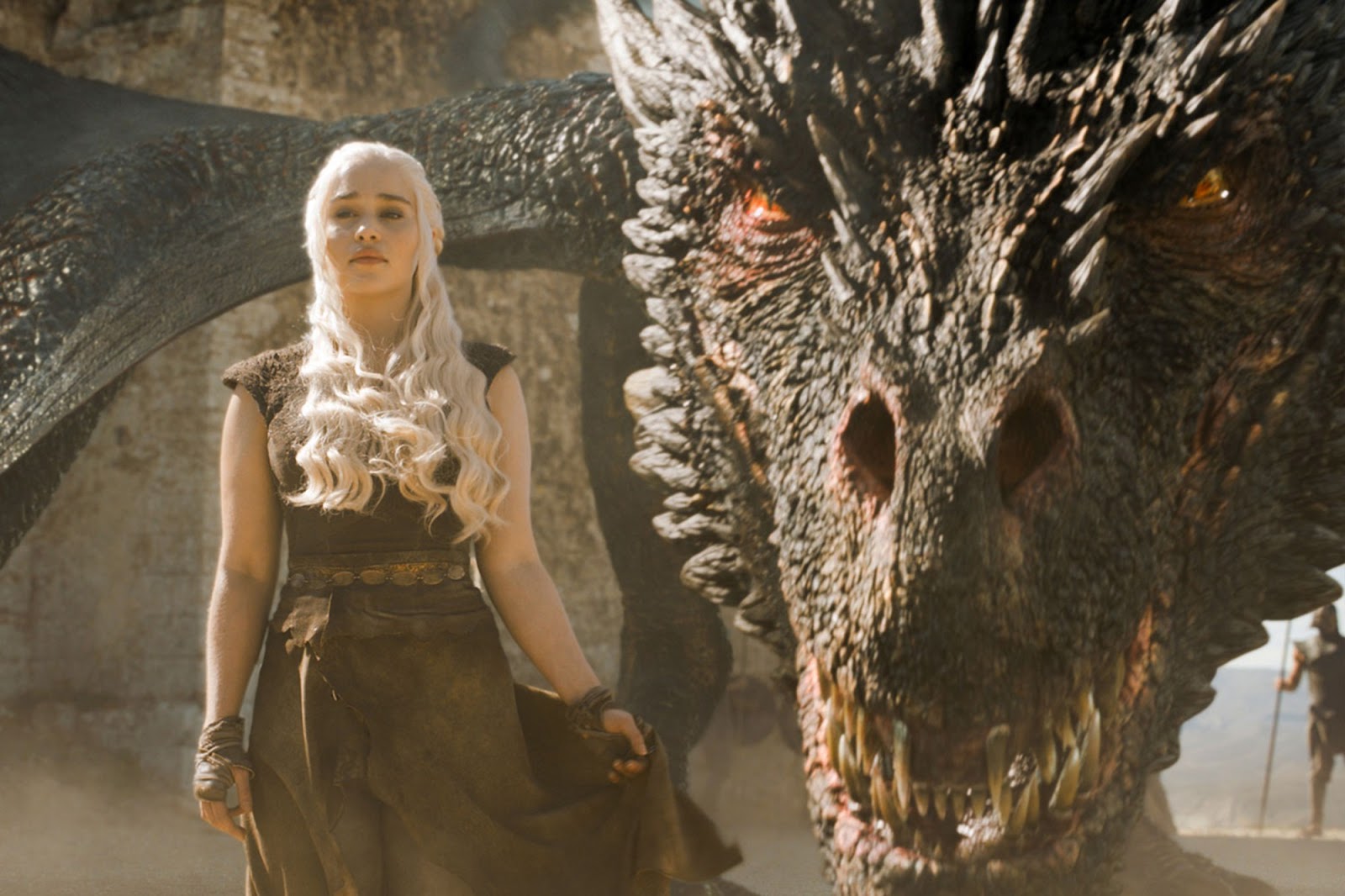
We all want to write great, sprawling epics.  Okay, maybe not all of us, but I’m sure a lot of folks here do. We want to write that massive series that spreads across at least six books and gets us an HBO deal. Starz at the least. But it just doesn’t happen this way.

There’s an ugly lie that races through writing groups and threads—the idea that publishers only want to buy series. First, that’s just not true. I know dozens and dozens of writers who’ve sold one-off books (myself included). Second… editors and publishers very rarely want a series. What they want is a book with series potential. A book that—if the preorders are good and word of mouth is great—I can easily write a sequel to. And another sequel. And maybe a fourth.  Or even a fifth.

More to the point, as a beginning writer I need to convince agents and editors that I know what I’m doing. That I’m able to bring things to a satisfying close.  So if my conclusion is “maybe I’ll end this in the next book”… well, that’s not going to score me points with anyone. Especially readers if that second book isn’t already a guaranteed thing.


So, there’s some endings that I may want to think twice about before falling back on them.  Again, I’d never say it’s impossible to do one of these and make it work.  But I am saying…I’d think twice before tackling one of them.

Next time… well, heck. we’ve been talking about the end. Whaddya say we just kill a few people?

Until then… go write.

August 2, 2019 / 1 Comment

Killer Sex Robots and Other Stories

I’m having a really crap day, but fortunately for you, this was already pretty much done. And maybe blabbing on about writing will make me feel better about stuff.  Probably not, but what the hell…

I’d like to babble on about another one of those “this is so self-evident why are we wasting time on it” ideas that… well, seems to come up a lot. 

As writers, we get cursed with ideas. Tons and tons of them. Books, comics, movies, epic television franchises, soooo many ideas. And, naturally, we want to use as many of them as we can. Cause they’re all friggin’ fantastic, right?

But, as I’ve mentioned here once or thrice before, that’s not always a good thing, no matter how fantastic my ideas are.  More isn’t always better. Sometimes stories get cluttered with ideas. I want to create a certain kind of character, use this cool idea I saw in a Gizmodo article, explore a few different themes, develop this awesome backstory I came up with, and then wait until you see all the stuff in chapter two!

We’ve all done this. Be honest. If I think I haven’t done this, it probably means I don’t realize I’m doing it right now in my current work.

Now, to be clear, there’s nothing wrong with having a lot of stuff in a story.  My book Dead Moon touches on zombie horror, body horror, sci-fi, action, mystery, and comedy. There’s a lot of talk about sex. There’s some politics. There’s some questions about self-worth and finding your place in the world (or the solar system).

But if you asked me… I’d tell you it’s about zombies on the moon.  Horror and sci-fi.

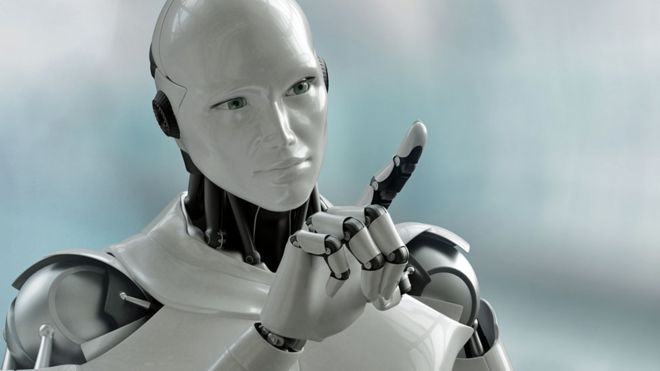
Let me give you a less personal example. I watched this geekery movie recently that was… okay, let’s just say it was about AI (or was it?  Maybe cloning? I’ll never tell). Anyway, there was a lot in it about the ethics of creating an intelligence solely for a specific purpose (is this slavery??). There was also stuff about the morality of assassination. Plus a lot of assassination-related action scenes. Then questions were brought up about the possible ethical issues when the scientist starts having sex with this thing she created. More so when it turns out the body said scientist made for this AI is the spitting image of her dead husband. Plus there’s a heist element as they plan to rob the CEO of the company. And some torture porn. Arguably some parenting, nature-vs.-nurture aspects, corruption of the innocent bits, too.

Now, all of these could be cool things to bring up in a movie. Hell, any one of them is probably a story in and of itself.  There’s a lot of fascinating character moments that can happen with almost any of these.

But again… what is this story about?

’Cause this AI movie made it about everything. The filmmakers gave every one of these elements equal weight. It was the ethical AI-assassination morality-action-sex issues-heist-torture porn-corruption movie we’ve all been waiting for. Just search for that category on Netflix.

(it’s not on Netflix—the category or the movie)

Is something just a conceit for the story?  Cool.  But to be clear… what’s my story then?  If I’m using clones to tell a long-distance love story, that’s cool.  Super clever. One of you should take that and run with it. But if that’s the case, I probably shouldn’t spend half the book talking about the science behind the cloning.  Likewise, if I’m writing a taut thriller about cloning assassins… maybe there shouldn’t be 250 pages of clone-love in there.

Subplots? Great.  Parallel plots?  Fantastic. Twiststhat subvert the plot? SOOO COOL! But what is this book about? What’s the dominant idea here? What aspect of the story are we spending the most time with?

Here’s a way to think of it.  There’s a Hollywood term you may have heard—the elevator pitch. It basically means I should be able to explain my story in one or two sentences, the length of an elevator ride. It comes from the awful idea that I should leap at people when I find myself alone in elevators with them. Because who doesn’t respond positively to that?

Anyway, if I got a chance to elevator-pitch the AI story above, how many of these things do I mention and explain? How many would I leave out? When I’ve only got thirty seconds to tell my story, what parts of it do I not bother telling?  It’s not going to be 100% accurate, sure, but it’s a safe bet my elevator pitch is going to make me really focus on the key things in my story.

And if I can’t focus on them… well, that’s probably telling me something.

Y’see, Timmy, it shouldn’t be that hard to explain what my story’s about.  It can have lots of elements—and hopefully it does—but there should be an overriding idea I can point to and sum up in a few lines.  “It’s about an android assassin who starts to question the morality of his existence, especially when he learns more about his creation.”

Which, alas, is not what that movie was about.

Next time, let’s talk about winding things up.

Until then, go write.

July 25, 2019

Standard Shots

San Diego Comic-Con was absolutely fantastic this year, in so many ways. It was wonderful meeting some of you in person, and maybe some of you are reading this now because you met me there in person. And if that’s the case… well, I’ll try not to disappoint you

All that said, I wanted to blather on for a few minutes about how you shoot movies.

As some of you know, I’m a big movie person. I worked in the film industry for many years  I wrote about the industry for many years. I had some lower-level success as a screenwriter. And I still watch lots and lots of movies. Some of them are even good ones.

This shot is an over.

If you watch a lot of movies, too, you may have noticed most scenes break down into a pretty standard group of shots. Masters, overs, and coverage is what they’re called. Masters are those big wide shots where we see everything and get a sense of where everybody’s standing. Overs are that shot where we’re looking at one character, but another is still prominent in the foreground, like we’re seeing over their shoulder (get it?). Coverage is the close shot, just somebody’s head and shoulders—or maybe even tighter—as they speak or react to things.

And there’s a reason these shots are so popular and common. Masters help establish the scene and the dynamics between characters. Overs help us see the connection between them.  And coverage lets us get close and feel the reactions and emotion.

How I cut these scenes together can tell me something, too. Maybe this scene is so intimate that it’s mostly coverage.  Or maybe it’s still early on and we don’t need that  tension close proximity brings yet, so there isn’t any coverage. Which shots I use and how I put them together says something about the scene. Again, it’s a film language we’ve all absorbed over the years.

Of course, there are lots of filmmakers that move past this basic framework. Perhaps their master shot involves a dolly move. Maybe we’re going to push in from the over and turn it into what’s essentially a straight coverage shot, or expand out from an over to reveal the big wide master. There’s even a special kind of shot called a oner (one– er) where we’ll see the entire scene (or scenes!) in a single, often elaborate shot. All of these are valid storytelling devices, and I’ve personally been there on set when skilled directors deviate from this basic formula to do some fantastic stuff (ask me about John Paragon’s water bottle warehouse sometime).

But…

The key thing to remember is that, again, master-over-coverage is the standard. It’s the accepted method of storytelling for filmmakers and the movie audience. This is the foundation we all work from, and our understanding of the story is built on that foundation.

So if I’m going to deviate from that baseline—and it feels super-silly to say this, but I’m betting it’ll still confuse come people—if I want to do shots that aren’t part of that baseline, they need to be better shots. They need to convey more information. They need to cut together easier and smoother than the regular ones. They need to tell the story in a way that improves on that baseline. Because why would I do shots that are worse than the baseline, right? I can’t say “well, this shot won’t really fit anywhere, but it’ll look fantastic.”

And yet… lots of directors do this. They either never learn how things cut together and shoot way more than they’ll ever need, or they’re so desperate to do something “new” that they waste time with shots that are just… well, unusable. They’re impossible to cut into the story or just plain irrelevant. If you’ve ever watched a movie and suddenly found yourself thinking “that’s a weird shot,” odds are pretty good you’re watching something where the filmmakers don’t know how to shoot or edit their film.

Anyway, why am I talking about filmmaking? Isn’t this supposed to be a writing blog?  Like, book writing?

Sure it is. But on a lot of levels, storytelling in any format faces the same challenges. What do we tell and how do we tell it?

In a way, books have their standard shots, too. Ways we’ve all come to expect the story will unfold. My readers expect Friday to follow Thursday. That characters will sound like real people. They’re going to assume my antagonists will lose and my hero will, on some level, get a win.

This isn’t to say things won’t go another way, of course. There are always exceptions, and I think it’s fair to say most great writing is built on exceptions. Some people bend the rules or break the rules or set the rules on fire with a flamethrower-armed drone and then launch those rules into a volcano.

Y’see, Timmy, the thing I need to remember is that these deviations have to be better than the norm. I don’t want to be doing things that lessen my story and make it harder for readers to get into. Sometimes, we all get so focused on the small parts, we ignore that bigger picture. I may think having a two page description of the clouds over a building is beautiful and artistic, but does it serve the book as well as a quick description that lets us get back to the story?  Having every chapter in the book told from a different point of view is unquestionably a bold choice, but does it improve anything? And, yeah, having my main character die moments before achieving the goal they’ve been striving for may be very dark and gritty and tragic… but is it a good ending?

All successful storytellers eventually learn how to sift through the material they’re working with and figure out what bits will work in a given story.  Something might be clever or cool or the hot new storytelling trend that all the cool kids are doing, but the real question I have to answer is whether or not it’s right for what I’m working on.  Because if it isn’t, if I’m just deviating from the basics for the sake of art, well…

There’s a chance my audience may not make that leap with me.

Next time, I’d like to talk about what my story’s about.

Until then… go write.

July 18, 2019

Unconventional

I’m at SDCC right this very minute.

Even if you’re reading this three weeks from when it posted.  I’m still at SDCC.

Send help!  Please!

Categories