
Like a lot of you, I’m still feeling a little overwhelmed by everything going on right now. Awe-inspiring stuff. Long overdue stuff. But still overwhelming.
I thought about updating my list of top ten B-movie mistakes, but I really haven’t been up for bad movie geekery for a few weeks. So I shelved that idea for a while. Then it occurred to me there’s a related topic I haven’t discussed in… well, years. Not directly, anyway.

It probably goes without saying that I really like genre fiction. I grew up with Doctor Who and Star Wars and comics about Spaceknights who came to Earth to protect us from alien shapeshifting sorcerers. Sci-fi, horror, fantasy—I like reading ‘em, I like writing ‘em.

But you probably knew all of that already.

Point is, I’ve consumed so much of this stuff. In so many formats. A lot of it’s been fantastic. Some of it’s been… not so fantastic.

As I started taking storytelling and writing more seriously, as I started really breaking things down and studying them, I noticed a few similarities. Common problems that showed up again and again, especially in genre stories. Three of them.

To be clear, they’re not confined specifically to these stories—you might see these issues crop up in mysteries or romances or even literary fiction. They’re also not the only problems these stories can ever have (not by a longshot). But it’s kind of amazing how often a problematic sci-fi or fantasy and even horror will have one or more of these three issues.

The first issue is when we bury our stories in too much of our chosen genre. If I have an idea, it gets included in the story. No matter what it is—neat visual, cool character beat, clever way a door opens—I’ll fit it in there. If it was scary in that story, it’ll be scary in my story. Most of us have probably read a genre novel that went to great lengths to explain how the weapons, shoes, uniforms, food, transportation, education, and economics are all very different on that other world or in that not-too-distant future. If it’s a magical world, everything is ancient and magical and built by the fae. If it’s a sci-fi world, everything has nanites and AI and came from interdimensional aliens. People don’t wear glasses in these stories, they have optykwear, and a good set of optykwear can cost you seven or eight neshseks.
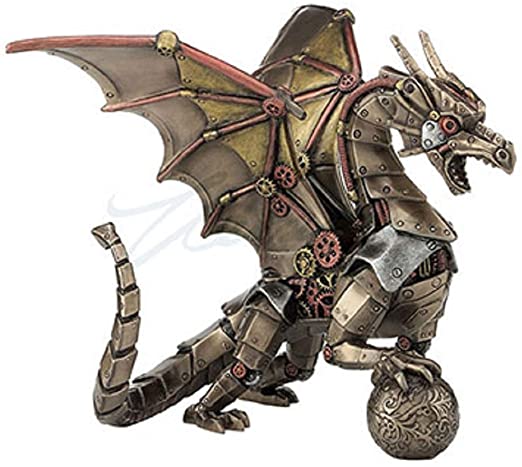
The problem with writing like this is my audience has nothing to connect with as they’re overwhelmed with all these unfamiliar elements. The people are different. The setting’s different. Motivations are different. Yeah, it’s a really cool alternate world where the Dark Ages never happened, all coinage is brass,  and wars are now fought with steampunk robot dragons run by difference engines, but the important thing is that my readers need to be able to understand this world and relate to it, while it’s on the page in front of them.
All the worldbuilding is good, but my story needs to have something my audience can immediately identify with in some way, and it’s best if it’s the main character. Someone who hates their job, who wants something they can’t have, or maybe who just feels like an outsider. A person with a universal need or desire.
When a reader believes in my characters, they’ll believe in what’s happening to my characters. It has to do with willing suspension of disbelief—I can’t believe in the big elements of a story if I don’t believe in the basics of it. Once I’m invested in Wakko’s life, then I’ll be more willing to go with it when he goes to work shoveling coal in the belly of a a giant steampunk dragon (but one day he’s going to be the commodore of the whole mechdragon fleet—you just wait and see)
There’s one very closely related issue to this, so close I’m not even going to branch off and make it a separate thing. Sometimes, all the laying-on of more genre gets a little monotone. Dramatic stories that are non-stop drama. The horror movie that’s nothing but horror. The magical fantasy series where everything is magical and fantastic. No matter how much I love this thing, it gets boring pretty quick when it’s all I’m getting.
We want our fiction to mirror our lives as much as possible, and the truth is very few of us lead monotone lives. They get broken up with moments of laughter (not always at appropriate times), random pettiness, unexpected excitement, casual flirting, and more. Our stories should be the same way.
The second issue happens when I try to explain everything. It’s confusing enough that I dropped readers right into a steampunk mechdragon battle, but now I’m going to pause that battle for ten pages while I explain how mechdragons came to be and where the best coal for their boilers is mined and how the creation of functioning wings (and the required steam- piston musculature) changed the nature of battle and hey I should probably talk about dragon tactics for a bit, right?
I think most people reading this have seen a story or two that suddenly deviated into that sort of excessive, often unnecessary exposition. I’ve read many stories that suddenly go to great lengths to explain how and why the serial killer turned out the way she did. Or how she ended up with superpowers and exactly how they work. Or both. At length.
What this leads to is stories that feel very detailed, but very little ever actually, y’know, happens. Page after page of explanation can add up really fast, and suddenly a third of my book is just… details.  And while I’m going over those details, my characters are just sitting around twiddling their thumbs, waiting for something to happen again. It can also annoy my readers as all this information gets doled out, especially if it’s something that feels unnecessary and unmotivated.
I think there’s two ways to deal with this issue. One is something I’ve talked about here in the past—the ignorant stranger.  If I’m going to explain things, I should have an actual, in-story reason for them to be explained. Wakko may know the day-to-day workings of a mechdragon, but Phoebe’s a stowaway and he needs to help her pass as a crew member or she’ll be “dropped off”… and they’re three thousand feet up. So he has a solid, understandable reason to explain everything and she can ask a lot of the questions my readers probably have.
The other way to deal with this issue is the quick and easy one. Cut it. I can delete anything that isn’t actually necessary to the story. This can be tough, because, I mean… steampunk mechdragon wars! There’s so much cool stuff in those three words. But how much of it do I really need? Is it relevant or is it just me piling more “genre” onto the plot and story? Yeah, ceramic teeth are cool, especially on that scale, and I’ve come up with a crazy way how they’re made, but does my story fall apart if the reader just knows the mechdragon has… teeth? Does it change anything if in their mind they picture the teeth are brass or steel or diamond? Pages are precious—do I really want to spend part of one on this?
The third issue is actually the reverse of the last one. It’s when I don’t explain anything. There’s so much new stuff that there’s no context. I can’t tell if neshseks are coins or bills or maybe they’re not even money. Maybe this world works on the barter system and they’re some kind of gourd. Could be a massage or a sex act or maybe it’s some kind of pet? Maybe it’s a pet that gives great massages?
But it’s not just terminology. The genres also tend to collect mysterious characters who drop vague hints or implied threatsfor… reasons. Creepy messages appear on walls, sidewalks, computer screens and we never learn how they got there. Disturbing objects are discovered in the attic and never, ever discussed again.
I think there are two general reasons this issue happens. First is that, as the writer, I’ve sunk deep into my fictional world for the past five months and I forgot the reader… hasn’t. They have no idea what a neshsek looks like. Or what it’s used for. Or how many you can seriously expect to get from a relative stranger for two tinted sets of optykwear
The other reason is that people are trying to duplicate the sense of mystery and anticipation they got from another story, but they don’t really understand how and why it worked there. A lot of these weird mysteries are just a general lack. There is no explanation or reason or motivation behind what’s happening in the story. It’s just happening right now because… I wanted to tell a weird creepy story.
A friend of mine gave me a great rule of thumb once, and I think it’s the best way to deal with this issue. I kinda mentioned it up above—my main characters should mirror my audience. If my goal’s to make my audience puzzled and eager to learn more, then really Phoebe should be puzzled and want to learn more. If the reader’s angry about something, Wakko should probably be angry about it, too. Likewise, if Phoebe and Wakko are both really annoyed because they still don’t know what’s going on… well, I can probably guess how my audience feels right now, one way or the other…
Are these the only three problems that might crop up in my genre writing? No, not at all. I have faith in you that you will find awesome, all-new problems. But these are the ones I see appear again and again. So maybe they’re worth looking for in my manuscript. Just in case.
Next time… I’ve got kind of a follow up idea to this. It didn’t really fit here, but it’s a genre problem. Sort of.
Stay safe out there. Wash your hands. Wear your mask.
Until next time, go write.
June 3, 2020 / 1 Comment

Getting the Message

This post ended up being a bit more timely than I expected.

I wanted to talk a bit about having a message in my work. I’ve touched on this recently when I was talking about theme during the A2Q. I think there’s a bit of a difference between having a message and a theme, and I felt it was worth going over that.

However, with recent events in mind, I want to be clear right up front I’m talking about having a message while writing fiction. Messages exist in the world. A lot of them are good, and a lot of them need to be shouted from the rooftops. Right now, here in the United States, we’re suffering from a lot of chaos because some folks thought ignoring some messages for years would make them go away… and those folks are the ones who really needed to hear them.

But while we’re talking about fiction….

As I’ve mentioned before, theme is the underlying threads that tie plot and story together. It’s connective tissue that helps my book become more unified and complete. As such, it tends to be a subtle thing.

Messages, on the other hand, tend to be thick and clumsy. They can’t be missed or misinterpreted. They’re heavy, beat- you-over-the-head things.  Most of them have never even heard of subtlety, let alone been in the same room with it.

A kinda common thing is people who decide to write a book or screenplay about a message. Not with a message, mind you, but about a message. There’s an important difference there. When I’m more interested in the message than the story, things fall out of balance pretty quick.

Here’s a simple test.  If my story or script has a message in it, at what point did the message come into it?  Did it grow naturally from the idea for a certain character or scene?  Or did this story start with the message, and then get fleshed out with minor things like characters, plot, and dialogue? Is this about telling a story… or pushing an agenda?

Let me give you a few examples.

If you’re of a certain age, you may remember a couple books and movies about the evil threat that is Dungeons & Dragons. We’ve all seen so many tales of the horrors of alcoholism and drug addiction. I remember some college writing class stories about innocents being “absorbed” by the industrial military complex only to discover they now had oil for blood (get it? Get it?) Hell, back when I read for screenplay contests, I was once presented with a script about the ghosts of aborted children-who-might-have-been haunting a clinic worker until she leads a crusade against the mustache-twirling, thoroughly evil doctors who ran the clinic.

Now, there’s nothing wrong with my story having a message. Most of the best stories do, on one level or another. Problems arise, however, if I approach things from the wrong end, like some of the folks I just mentioned did.

When a writer starts with the message, everything else tends to get slaved to that singular idea. Characters tend to have awkward or unbelievable motivations because the story isn’t about what these folks would naturally, organically do. All their decisions, actions, and reactions are bent to reinforce the message. So they often come across as puppets that all enforce the idea.

In one of the examples above, no matter what your personal views on religion or gaming are, does anyone seriously think Satan is trying to get to kids through D&D? How is that possibly going to sound believable? All the crap going on in the world right now, and the devil’s big plan to recruit souls is rolling dice? Or reading books about a kid wizard who’s an adequate student at best and really should’ve ended up with Luna Lovegood, as was clearly the original plan.

But that’s besides the point.

Also, when the message dominates my writing, dialogue suffers. Characters spout out a lot of emphatic monologues, and they sound… forced. Insincere. They’re all just serving as a mouthpiece for my views and ideas—strictly for or against with no middle ground. This makes their words become stiff and on the nose. My characters can’t be there just to parrot my viewpoints on different matters. They need to have agency or they’re going to come across as fake.

In some ways, we’ve all encountered this under the name of marketing. And while there are some really fantastic, sincere marketers out there, there are a lot of folks who are just… selling something. And they’re not doing it well.

We’ve all dealt with that, right? That godawful social media account that wants you to be safe at home but more importantly be safe at home eating Fauxritos, now available in sixteen flavors and four textures. Or that person who inserts themselves into every conversation or thread to tell you this is a heartbreaking and important moment in history, and it’s a lot like a moment in their book, which is available right now on Amazon for a sale price of just $3.99…

Y’see, Timmy, my story can have a message, but it can’t be about the message. That’s just a sales pitch. The message needs to serve the story, not the other way around. The story needs to be something my audience can believe in, with characters they can also believe in. We can all feel the insincerity radiating from those message-based books and movies, and it makes our skin crawl. Even if it’s a message we agree with.

And I don’t know about you, but that’s definitely not the message I want my writing to send.

Next time…

Seriously, I have no idea right now if there’ll be a next time. The country’s in a rapid downward spiral. At this rate, I could see everything that spreads subversive messages shut down this time next week. And I went and made message a keyword for this.

It should hopefully go without saying—it shouldn’t need saying… Black Lives Matter.

Please be safe. Wear your masks. Take care of yourselves out there.

Go write.

Last week I talked about action and I almost spun off on a whole little semi-related tangent. I cut myself off there, but I still want to talk about it, ‘cause it’s one of those things that comes up a lot. And people get it wrong a lot.
What I wanted to address (revisit, really) is that old chestnut that gets dragged out in almost every writing class or discussion or guru-lecture. Start with action. I’m guessing you’ve heard it once or thrice, yes?  Probably just this year.

The problem here is action. Most people see that word and think of… well, all that stuff we talked about last time. Car chases. Ninjas fighting cyborg lizard men. Giant two-headed shark attacks!

So, naturally, this is what they begin with. They come up with a reason to begin with a bank heist. Or a plane crash. Or an armed home invasion. Which is kinda weird in a romantic Christmas story, but you’ve gotta start somewhere, right? And we need to start with action!

To be clear, this almost never works.

If you follow me on Twitter, you’ve probably seen me do one of my Saturday geekery binges, watching three or four bad B-movies in a row. And one of the most common problems they all have is that they start with action. Something crashing to Earth and killing some rednecks or, y’know, a giant two-headed shark attack. Usually in three feet of water. Most giant two-headed shark attacks occur in three feet of water.

But every time, these action-packed events involve people we don’t know and have no investment in. Which immediately lessens the action because it’s not involving anyone I care about, it’s just… happening. To put it in current events terms, we’ve all seen the news about hundreds of thousands of people dying across the globe from Covid-19—heck, we’re past a hundred thousand deaths just here in the US. And while it’s awful, it’s also kind of abstract… until it’s somebody we know. That’s when it hits home and all this stuff happening really connects with us.

Weirdly enough, as a side note… a lot of time the people in these opening action scenes tend to be awful, so I don’t even have basic human empathy for them. I want them to die, and that can switch the whole tone of my opening. Far too often, these events won’t even end up tying back to the story. They’re just little disconnected blips with characters we’ll never see or hear about again.

When I try to start with action like this, I’m just delaying the actual starting point of the story. And I’m doing it in a way that alienates my audience, too. Why would I want to do that?

And one other problem when I start this way. If I structure my story so it begins cranked up to eight-point-three, there’s only two things it can do. It can either take a huge hit and drop down to three or maybe four as I establish some kind of norm. Or it can stay up in that top fifteen percent of dramatic tension and be… kind of monotone. I mean, think about it—a whole story where the tension never shifts by more than ten percent in any direction?

So… why does start with action keep getting parroted around?

As I mentioned last time, there’s more to action than just swordfights. My typing all this up for you to read is action, and you reading it is action. Getting lectured by your boss, trying to get to class on time, cooking dinner, mowing the lawn… All of these things are action. They’re things happening.

More importantly, I think, is they’re actions we can all immediately understand, and they’re actions that can easily tell us something about the people involved in them.

Take mowing the lawn for example. How old is Wakko? Is he mowing his lawn or someone else’s? Why is he mowing it? How much effort is it for him? What’s he thinking about while he’s doing it? These are all really easy questions to answer while he’s pushing the mower back and forth. So something’s happening, we’re meeting the character, and maybe even getting to set up some simple, basic stakes.

When we say “start with action,” we want to feel that events are in progress. That these are real people who existed before page one. We just stumbled across them right now at what’s (hopefully) the point when all the interesting stuff’s about to begin.
Also, just to stop one train of thought real quick—yes, thinking is technically an action. So is fantasizing, realizing, remembering, reading, staring into space, and many other such things. But the key thing to remember here is all of these are really just Yakko sitting at his desk and not moving. So really… nothing’s happening.

And we want to have something happening. Something that falls in the middle ground between daydreaming and demon ninjas roaring down the street on AI-guided murdercycles. I mean, just off the top of my head, let’s look at some action-filled books and movies and see how they start…

Captain America: The Winter Soldier begins, as I’ve often pointed out, with the two main characters doing their morning jogs.

Fractured Tide by Leslie Lutz begins with a young woman writing/narrating a letter to her father, warning him not to come looking for her.

The Last Adventure of Constance Verity by A. Lee Martinez begins with the main character trying to explain her very thin resume at a job interview.

Sarah Kuhn’s Heroine’s Journey begins with the main character reshelving books in a book store while she complains about her older sister not taking her seriously

My latest book, Terminus, begins with a guy half-listening to a sermon being given on a beach at night. Heck, Ex-Heroes, the post-apocalyptic superheroes vs. zombies book that launched my career, begins with two people on guard duty chatting while a zombie keeps bumping into the wall below them.
Hell, you want an absolutely crazy one? Do you remember how the Transformers movie begins? Yes, Transformers by Michael “it still needs more explosions” Bay? A bunch of Army Rangers get back from a long patrol and hit the showers while their CO goes to call his wife and baby daughter. Seriously. That’s the opening of the movie.
And again, they’re all starting with action… but they’re not starting with action! They’re putting us right into the ongoing story. They’re introducing us to characters rather than slamming us into them.

They’re catching our interest and drawing us in. Getting us invested. Making us want to read more.

Which is a pretty good way to start a book.

Next time, I’d like to share a special message with you.

Until then, go write.

Categories