Normally I try to update the FAQ
every six months or so. Partly for you, partly for me. To be honest, it’s tough for me to keep track of all the stuff going on (and
potentially going on) as far as sales, releases, formats, options, and adaptations. Even more so when you figure these past few months time has become less of an absolute, often slowing to a crawl and stretching on and on and on when in fact it’s only Wednesday.

And, well,
that particular effect has really intensified, hasn’t it? With the global pandemic and possibly months at home, not to mention the looming threat of murder hornets, I think a lot of us have either completely lost track of time or become all-too-painfully aware of it. I know
I spent pretty much all of March and maybe the first week of April doomsurfing. Like, all the time. I didn’t mean to, or really want to, but that’s how every day ended up going.
But even with all that, I figured it might be worth doing a quick catch-up. I mean, I think we’d all enjoy something happening pretty much how and when it’s supposed to, right? Something working the way it’s supposed to? Novel idea, right?
So here’s me scribbling up answers to some of the most common questions I’ve gotten lately. Then when people ask me those questions (again!)—or when their teacher says “hey, hunt down an author on social media and ask them a bunch of questions”—I can say “hey, check out the FAQ I’ve pinned all over the place!”
Or maybe I won’t say it, cause at this point… I mean, there’s a current FAQ pinned right at the top of the page,
several older versions of it, this blog, and several dozen interviews floating around the web. Plus I wrote a bunch of books, and it’s kind of amazing how often the answers are in the books.
Do your research, people! Be the mad scientist you always wanted to be when you were little!
1) When are we going to see something new?
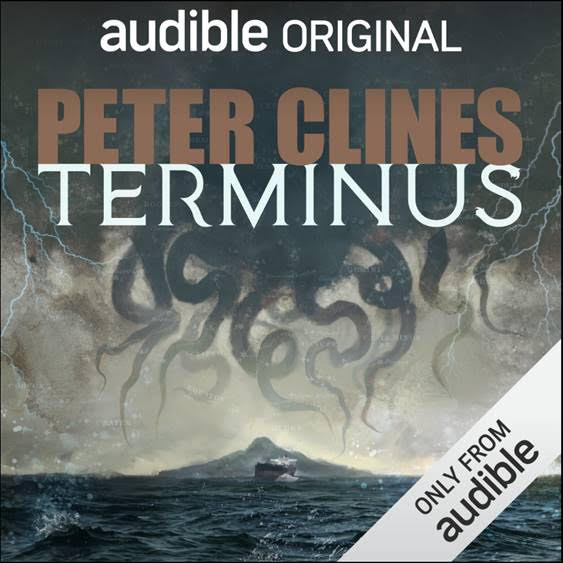
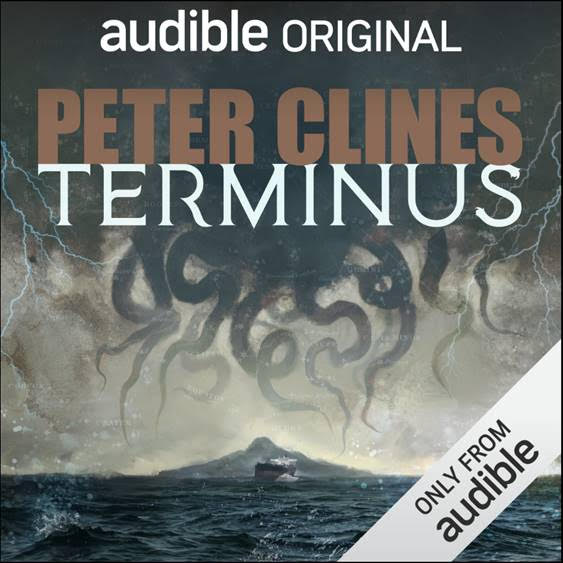
If all goes well, the ebook for Terminus should be out just in time for San Diego Comic Con. Hahahaaaaaaaaa… sad laugh. More on that below.
 Terminus
 should hopefully be out as an ebook by the end of July, barring any weirdness. I’m also looking at bringing one or two other things (at least) to ebook that have been kinda out of wider circulation for a bit. I’d hoped to have them done about… well, now, but then, again, everything kinda collapsed and time ceased to have meaning.
Past that… I’m just finishing up a book that kinda came out of nowhere, fortunately at a time when I could devote a lot of attention to it. It probably would’ve gone faster, but… again, doomsurfing. As you’re reading this, odds are my agent’s reading that.
And I’ve got a big idea I might be pitching him. Like, silly-wildly big. Maybe we’ll be talking more about that in another six or seven months.
2) So, wait, no paper version of Terminus?
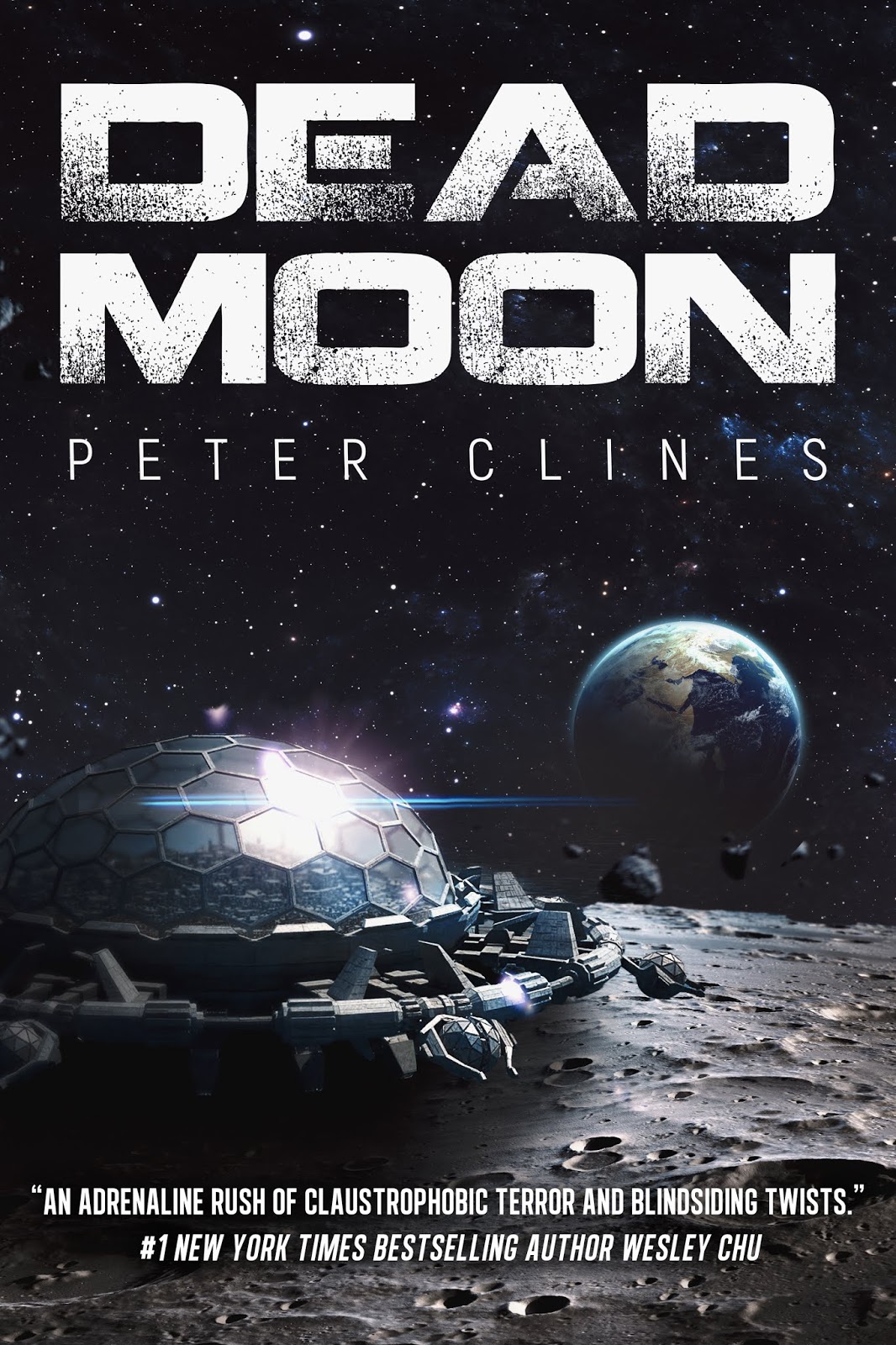
No. There’s a couple of different reasons for it, and they involve assorted business and PR things I’d rather not get into (okay, fine, I’ll get into it). There’s still a chance both books may still become available if there’s a big demand for them (feel free to tell Crown Publishing you want to read them in print and would buy half a dozen copies), but for the moment Terminus (and Dead Moon) are only going to be ebook and audio. Sorry.
3) Could you explain the whole “Threshold” series?
Threshold is the umbrella label for the shared “cosmic horror” universe I unknowingly began eight years ago with 14. There are some books that form a more linear story, a “series” if you will, and some that stand alone. A lot of Marvel movies are part of the direct Avengers through-line, but some—like Guardians of the Galaxy Volume 2 or Thor: Ragnarok—are just set in the MCU. You can enjoy them without knowing a lot of the other movies (you’ll just catch a few more nods and references). Make sense?
And, yeah, this can make things a bit awkward sometimes. I know at points
the marketing/publicity campaigns were pushing
Thresholdas a pure, straightforward series (Book One, Book Two, etc), even though I’ve said many times that it isn’t, and I know a few readers went into some books with very different expectations. I apologize if that was you.
4) So how does Dead Moon fit into the Threshold series?
As it happens, I wrote a whole book explaining this called Dead Moon. Also check out #3 up above.
5) Why did you do all these “Audible exclusives” ?
Well, first off, I did two. Arguably four, since they offered to release some previously-published, out-of-print stuff nobody was interested in anymore—The Eerie Adventures of the Lycanthrope Robinson Crusoe and a bunch of short stories we combined into Dead Men Can’t Complain, but really those aren’t even exclusives.
Second, there’s a very solid argument to be made that the majority of my fanbase is audiobook listeners. Audible knows this, too, and so when they heard about
Dead Moon and
Terminus they made me
an extremely generous offer for exclusive rights, meaning both of them would be audiobook only for the first six months they were out and then I’d be free to do what I want with them.
Yes, I know it made some of you grind your teeth. I’m sorry if you’re not an audiobook listener (for whatever reason) and it left you out of the loop for a bit. My agent and I talked a
lot about the pros and cons of doing things this way. In the end, I really wanted to tell these stories and this was the best way to do it. Again, I’m sorry if it put you in a bad spot.
6) Do you make more money if I buy one of your books in a certain format?
I know this sounds like an easy question, but there’s about a dozen conditionals to any answer I give. Figure a huge chunk of each contract is just all the different terms and conditions for when and if and how people get paid.
For example… format matters, sure, but so does whereyou bought the book. And when. And how many people bought it before you. And if it was on sale. And who was actually holding the sale. And all of this changes in every contract. What’s true for, say, Paradox Bound may not be true for Terminus.
TL;DR—just buy the format you like.
7) Do you have any plans to attend ########-Con?
Hahhahahaaaaa remember when this was a serious question?
Okay, in all fairness, I’m doing a lot of virtual-con stuff. I was “at” WonderConand as I write this I’m about to do some things with Denver Pop Culture Con, plus I’m doing one or two things for SDCC in a couple of weeks. Also worth noting that I’ve tried to take the Writers Coffeehouse virtual, so for the next few months you can try to find me there.
After that, well… hopefully next year will be a bit closer to what we think of as normal? Maybe? If you want to see me at your local con, let them know. Email them, tweet them, post on their Instagram account. Reach out and let your voice be heard.
8) When are you going to make a movie/ TV series/ graphic novel/ video game of your books?
So, when people ask this, there’s a basic misunderstanding of how
Hollywood works.
I have pretty much zero influence on Netflix making a
Threshold series or the Hallmark Channel doing a
Lycanthrope Robinson Crusoe movie. When we see a film adaptation or TV series, it means the studio went to the writer, not the other way around. I mean, if it was just about writers saying “hey, make this into a movie,” wouldn’t most books be adapted by now? Everybody’d be doing it.
9) Well, is there anything we can do to help?
Buying books is the best step. Talking about them is a close second. Hollywood likes to see big sales numbers and interest. Producers/ directors/ actors all hear about this stuff the same way you do—online reviews, bestseller lists, social media. If #ParadoxBound or #Terminusstart trending on Twitter tomorrow, there’ll probably be a film deal within a week. Seriously. Try it.
One easy thing to help with this? Don’t buy books from Amazon if you don’t absolutely have to. Write reviews there, sure, but Amazon sales figures don’t always get included in bestsellers lists. Yeah, buying or pre-ordering from your local bookstore might cost a buck or two more, but it’s a purchase Hollywood’s much more likely to notice in the long run. Plus, now you’re one of those cool people supporting local businesses—and we need more people like that right now.
10) But wait… I heard you don’t like people talking about your books. Which is it?

I’m thrilled and amazed people talk about anything I wrote. Seriously. What I can’t stand are people who blurt out
spoilers that can ruin the impact of these stories for other people. It’s why I avoid those questions in interviews, ignore them on Twitter, and why—where I can—I delete (or
block) posts that reveal things from a book.
And not just my stories! You shouldn’t mess up other stories, either. Movies, TV—I’m just saying, if you enjoyed it spoiler-free, why not try to give other people a chance to enjoy it the same way? I still haven’t watched the finales of She-Ra or Game of Thrones, dammit! I’m looking forward to finally seeing Arya on the Iron Throne!
11) Is Ex-Isle the last Ex book?
Yeah, Ex-Tension is staying on that back burner for the moment. Sorry.
The truth is, every series has a limited life. Book one always sells best, not as many people show up for book two, even less show up for book three, and so on. Not a lot of folks leap in on book five, y’know? Something could always happen to give the first book a boost (and all the other books after it) but they’re still all going to be on a near-constant downward slope heading for that big red line where things aren’t profitable. None of the Ex-Heroes books ever lost money (thank you all for that), but they were on that slope and when the publisher looked ahead to book six… well, hitting said line was pretty much unavoidable.
12) Have you considered a Kickstarter or a GoFundme?
Yeah, the answer’s still no, sorry. I love these books. I had tons of fun writing them. I’m still amazed there are so many fans who feel so passionately about them. But the math is pretty simple—if enough people were willing to pay for another book, the publisher would be willing to put out another book. And all the numbers say that’s just not the case.
Yeah, I know some of you might be willing to pay twice as much (or more) to see one more book, but I think we can all agree there’s at least as many people (probably more) who wouldn’t pay anything. And that’s the math again—it just doesn’t work out for this.
Another point to consider. I’ve already got a good idea what I’m working on… probably for the next two years at this point (that big idea I mentioned up top). Maybe even a little farther. But if I do a crowdfunded project, it means I have to schedule things under the assumption it’s going to succeed. Which means telling my publishers those other projects need to be put off and scheduled accordingly. Which leaves a six or seven month hole in my schedule when the Kickstarter flops. Which, again, all the math says is what’ll happen.
So again, no. Sorry.
13) Will you read my story and tell me what you think?
Short answer…
no.
Long answer… look, if I say yes to some folks, in the spirit of fairness I have to say yes to everyone. Now I’m spending most of my time reading and doing critiques instead of writing. I don’t mean to sound mercenary, but… writing is how I pay my mortgage. So when someone asks me to read stuff, they’re asking me to give up a few hours of work. Plus, I do have this ranty writing blog sitting right, y’know, here with over a decade of advice and tips.
Also… some folks are lawsuit-crazy, and the bad ones ruin it for everyone else. Somebody shows me a piece of bland, generic fanfic and a few years from now they sue me for stealing their ideas. Yeah, I know how stupid that sounds, but I’ve actually been
subpoenaed and deposed for lawsuits with less behind them than that. It’s why I’m
verrrry leery when I get a long message along the lines of “You know what you should really do next with the people from
14…”
Heck, some writers respond with cease & desist orders when they get sent stuff like this.
So the long answer also boils down to “no.” And if you send stuff without asking, I’ll delete it unread, just like spam mail.
14) What’s up with your Facebook page?
Ahhhhh, Facebook. Where we’re the consumer and the product. Just like Soylent Green.
Sad fact is, Facebook made it pretty much pointless for me to have a fan page there.
They altered their algorithms over the years and my posts gradually went from 70-85% engagement to barely scraping 10-15% most of the time. All so I’d pay to reach people who were already following me. And I won’t do for a few reasons, the main one being folks pretty solidly proved years ago that
paying for views on Facebook actually decreases your reach. Seriously.
And, sure–it’s their site. They can run it however they like. And yeah they absolutely deserve to make money off it. I’m a progressive, but I still believe in (regulated) capitalism.
But then there’s all of Facebook’s side ventures. Collecting countless amounts of personal data. Deliberately spreading misinformation. Malicious social engineering. If you think I’m exaggerating, look up articles about how Facebook shaped perceptions or spread propaganda in Myanmaror Sri Lanka. And these aren’t fringe articles—they’re from major news sites.
So, yeah, I deleted my Facebook account months ago (long overdue), which means the fan page there is cut loose with no administrator.
15) What about Twitter or Instagram?
I’m @PeterClines on both.
Fair warning–as some of you may have figured out, I’m progressive and I’m a bit more political on
Twitter. Most Saturdays I also drink and
live-tweet bad B-movies while building little toy soldiers so…
look, don’t say you didn’t know what you were getting into.
Instagram is probably the geekier of
my social medias.
How is that possible, you ask?
Well, there’s more little toy soldiers, LEGO, classic toys.
And cats.
Can’t have an Instagram account without cats. Sometimes these things mix.
Yeah, I know Instagram’s also owned by Facebook, but (for the moment) they’re not being quite so reprehensible over there. So (also for the moment) I’ll still be there.
And I think that should answer about 90% of your questions, yes…?


 The Micro and Macro– This is one of the ones were it’s especially important to have a really good sense of my readers. When it comes to criticism, any book is going to have two aspects to it. There’s the big picture stuff—did you like it? Did the twist make sense? Was Wakko’s overall motivation believable? Then there’s the smaller stuff—does this line of dialogue work? Does this description stand out? Is this action too detailed?
 I need to trust my beta readers. If I’ve got any doubts about their abilities, their motives, or their work ethic… I probably shouldn’t ask them to read this. If I’m going to ignore what they tell me, or tell myself they just didn’t get it… I probably shouldn’t ask them to read this. We need to be open to the criticism we’re going to get, and we have to trust the people giving it to us.