
November 6, 2010 / 2 Comments

Why You Didn’t Win

This week’s rant is a bit screenwriter-centric, but it really applies to any sort of submission anywhere. The following words are going to be a bit harsh (even for me), so if you’ve got thin skin… well, next week I was going to talk about characters a bit. If you’re quick to offend, maybe you should just go check out John August’s blog for now and come back here next week.

So, last night I was at the Nicholl Fellowship dinner to see the five new folks get awarded their fellowships. I couldn’t help but notice a lot of you weren’t there. In fact, lets be honest… most of you reading this weren’t there. I’d even be willing to bet a few bucks none of you were there.

Granted, I’m betting not all of you entered the Nicholl this year, but I’m pretty sure a couple of you did. And you weren’t there last night, were you?

A shame really. The steak was fantastic. I mean, seriously, it was amazing. Three of the best meals I’ve ever had have been at Nicholl dinners.

But I digress…

First off, let’s get one thing straight. Nobody deserves to win a contest. Just because all your friends won doesn’t mean you get to as well. It’s never your turn, it’s never about time, and luck has very, very little to do with it. We’re not talking about statistics. A screenplay contest (or any writing submission) is not a lottery.

With that being said, the ugly truth is, most of you reading this don’t deserve to win a contest anyway. Especially not one as prestigious as the Nicholl. That’s all there is to it. You can argue all you like but that’s the way it is.

Let me explain.

For the sake of this discussion, let’s say I’ve decided to hold a contest for horror screenplays. One grand prize, with four lesser prizes. Everyone who subscribes to the ranty blog enters, and let’s say some folks past that, too. By fortunate coincidence, I end up with 100 entries.

Let’s look at those 100 scripts (or short stories, or novels, or whatever it is sitting in a big pile in front of me).

Well, first off, there’s the 50% rule. Out of these 100 screenplays, odds are half of them are going to go right out the window. Figure some people submitted comedies or dramas that features zombies, but they figured it wouldn’t hurt to try. Some of them probably didn’t even have a horror element–they were just straight romcoms or fantasy or sci-fi. I’ll probably recognize their genius and give them an award anyway, though, won’t I?

Plus a few of them will be short stories, not screenplays, and probably a few that are in stage play format, too. One or two will be novels that were very poorly converted into a screenplay template (I mean, it’s all essentially the same thing, right?).

And some will just be God-awful. No other way to say it. Twenty blatant typos on page one. Characters so flat they could slide under a door. Dialogue that makes it sound like English is everyone’s second (or third) language. A plot that sounds a lot like a five year old explaining where dinosaurs came from.

So right there, 50% gone from my horror screenplay contest with almost no effort on my part. Maybe as few as 40. Perhaps as many as 60. In my experience, though, 50% is a great rule of thumb.

The next level of cuts will be those scripts that just don’t measure up. They’ve got an interesting premise, maybe a very clever take on an old idea, but they just didn’t do enough with it. Maybe the writer didn’t work on the screenplay enough because they took the lottery mentality and tried to enter four or five scripts that all could’ve used another two or three drafts. Or maybe it was just one script and it really just needed one more polish.

True story. A few years back I entered a contest that kept their own message boards up so people could talk. One guy proudly stated on these boards that he’d entered over a dozen screenplays. He also directed people to his website, where he had loglines for the three dozen or so scripts he’d written in the past two or three years. When none of his scripts placed, it was all the proof he needed that this contest was obviously a scam.

(I came in third. Got a free copy of Final Draft and a nice certificate.)

If this is the first draft of your script, it’s not going to win a contest. A lot of you may argue that there’s always a chance, I shouldn’t be negative, you may be a truly gifted amateur, blah blah blah, yadda yadda yadda. This is true. It’s also true, by every known law of physics, that random atoms in the air could come together in just the right way as to form an ounce of pure gold that drops right into your lap. True, and statistically possible, but the odds of it happening are so insanely, ridiculously low that you might as well say it’s impossible.

Please note, this doesn’t mean the script is bad or the writing is inherently flawed. It just means it isn’t polished enough. Despite what you may believe, there are actually tons of diamonds in the world. Literally, tons of them. They’re not all gem-quality, though, and not all of the ones that are get cut and polished correctly. That’s why engagement rings cost half a year’s pay.

So, that kills almost 2/3 of the scripts that are left. They’re good, but they aren’t great. Now we’re down to seventeen entries (rounding up, because I’m feeling generous).

Next is the rough one. It’s the human factor, and it pervades every single level of the judging process to a small degree. Readers are human beings doing a job. They have good days and bad days. They can get distracted or they can focus on the wrong thing. Think of your day job– are you 100% focused on it every minute you’re there? Or does your mind wander to your holiday shopping, your personal life, wondering about the cute temp’s personal life, wondering if your boss is that clueless or that brilliant…?

Well, readers do the same things. And, alas, they do it while reading your script.

There’s plusses and minuses to this. On the downside, your sci-fi romance screenplay might land on John’s desktop. John hates sci-fi and he just found out Phoebe’s dumping him for someone else. So today, well… today it might be a little tough for him to be impartial. You’re probably going to lose a point or three from him, and those points are crucial.

Or it might land on Wakko’s desk. Wakko loves sci-fi. Lives and breathes it. He’s got an Enterprise telephone and a TARDIS cell phone charm. Plus, he had his third date with Phoebe last night and… well, the third date went very, very well. So he’s thrilled to get your script and he’s almost definitely going to pass it on to the next level, even if maybe it doesn’t really deserve to make the cut..

Then again, it could go to Dot. She’s okay with some sci-fi, doesn’t mind it, but your script will get a fair shake with her. But little indy character dramas with no plot? Man, she loathes those things…

Maybe you’ll luck out. Maybe you won’t. Alas, statistically, the human factor is more likely to hurt than help. Y’see, Timmy, a good script that gets shot down stays shot down. A so-so script that doesn’t get shot down now most likely will get shot down later and then stay shot down. So if the human factor has a permanent effect, it’ll be a bad one.

At the most though, as I said, we’re only going to lose a few scripts to this. Let’s say three.

Now we’re down to fourteen out of the original hundred. See how quick they go away?

Last but not least…not everyone wins. When it comes down to it, contests have only so many slots for winners, and they can’t hand out prizes to every script that may deserve them. I’m giving away five prizes. That’s it. You can write a spectacular script and still come in second. Or even eighth.

That’s not just math, it’s life.

Keep in mind, while not winning is heartbreaking, it doesn’t have to be the end. Many contests offer feedback and judges’ comments on entries, so losing can still get you valuable information about how your script was perceived. You can use these responses to hone and polish your script even further, so the next time it goes out it will be stronger than ever.

It’s also worth noting that several producers, agents, and managers who keep track of contests look at the semi-finalists and finalists with just as much interest as the actual winners. James V. Simpson was a finalist for the 2006 Nicholl Fellowship. He didn’t get the fellowship, but his screenplay, Armored, still ended up selling for almost half a million dollars and got released earlier this year with a star-studded cast.

You will not win every contest, but–as special-snowflake as it sounds– you can try to make every one a positive experience.

Next time around, I want to talk about character. Because good characters rule.

Until then go write. And don’t get discouraged just because you didn’t win this time.
October 29, 2010 / 1 Comment

The Fear-O-Meter

Hello, kiddies! Thanks for tuning in to my latest blog post-mortem!! Hehehehehheheeeee!!

Pop culture again. Ahhh, those were the days…

So, last year at this time I talked about a couple of the subgenres horror can be broken down into. It’s important to know which group your tale of terror sits best with so you know how to approach the different elements and the way they mesh together. Knowing this also helps to sell it and promote it.

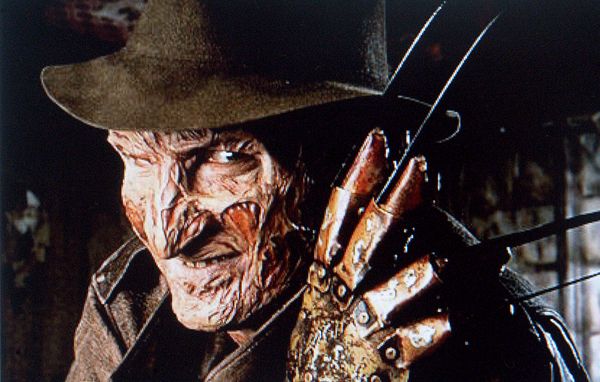
By the same token, when you sit down to write something “scary,” it can help to know just what you’re hoping to accomplish. People get their heads cut off in the Saw movies, in Attack of the Clones, in The Man in the Iron Mask, and in A Mighty Heart, but these decapitations are all received in very different ways because of how their particular stories are being told. In the same way, Freddy Kruger has been a slasher, a monster, and a plain old villain, even though the character has barely changed at all. How, exactly, do you intend to scare your readers with this moment as opposed to that one? Or are they supposed to evoke the same kind of fear?

You can nitpick back and forth, but I think fear, as a sensation, generally breaks down into three basic categories. There’s a couple different names people use for them, but for our purposes today, let’s call them the shocker, the gross out, and dread. These three form the food pyramid of fear, if you will, which means using and combining them in the right ways can make a variety of tasty seasonal treats.

…starting to sound like a cooking blog…

Anyway…

The Shocker This is when something unexpected happens and makes the audience jump. It’s the fear of what’s happening right at this moment. If you’ve ever watched someone read and seen their eyes bug, they probably just hit a shocker. Ever been in a theater when most everyone screams? Same thing. When someone walks around the camp cabin and Jason buries his machete in their skull, that’ll make you jump even watching a movie where you know people are going to get machetes in the skull. When Michael suddenly shoots Ana Lusia on LOST, that’s a shocker, too. Individual shocks can be stretched out a bit–especially on film– with lots of shouting and chaos and a few smaller shocks to keep it going, but really a shock is a short-lived thing.

The shocker is powerful, but it’s important for writers to remember it can’t stand on its own for long. As I’ve mentioned before, a good way to think of shocks is like exclamation points. You can use them! You can use a lot of them!!! But after a while, there needs to be something that actually requires emphasis! If not the shocks will start to lose power and your readers or audience will start to get bored!! Shocks eventually need something solid and lasting to support them.

The Gross-Out As named by the King himself. It’s when things are just disgusting. This is when the writer’s trying to tap into the reader’s sense of revulsion and maybe even induce some nausea. It’s when we spend two or three pages on someone getting their limbs sawed off or just eating a peanut butter and maggot sandwich, where the little sour-milk colored larva are eating their own paths through the spread before getting crushed against the roof of the mouth by someone’s tongue. The gross out usually differs from the shocker because of duration. While a shock gets weak the longer the writer tries to prolong it, a gross out can actually gain strength as it goes on and on (and thus, torture porn was born). Go too long or too frequently, though, and audiences will get bored with the gross out just like anything else.

An interesting point is that the audience often (but not always) knows the gross out is coming. We don’t linger on it, but it rarely comes out of nowhere.

It’s also worth noting that a lot of gross-out stuff moves closer to dread when it isn’t described at length. Speaking of Stephen King, we all remember the lovely “hobbling” scene in Misery, yes? What’s happening almost takes second place to Annie calmly explaining what she’s doing and why she’s doing it… even in the middle of the procedure.

Dread This is when something doesn’t happen, but we know it could. It’s fear of potential events, if that makes sense. You could also call this suspense or perhaps terror (if you wanted to nitpick). We’re waiting and waiting because we know something’s going to reach out from under the bed or crawl out of the closet and the fact that it hasn’t yet is giving us the chills. Pennywise the Clown gives us anxiety because we know he isn’t just a clown and it’s very wrong for him to be down in those sewer drains. Hannibal Lecter is creepy just sitting in his cell talking about the things he’s done in the past. And the zombie Julie Walker is kind of hot, but you also know she’s on that razor’s edge of probably eating everyone in the room (and not in the fun way). Dread works well in larger tales because there’s space for eerie backstories, but a good writer can also make it function in tighter spaces.

There’s two catches that come with dread. One is that it relies on the writer having a very solid grasp of how the audience is going to react and what they’re going to know. If I tell you there’s a Strigori knocking at the front door, most of you are going to shrug your shoulders and open up. Likewise, I may find ketchup disturbing, but I shouldn’t assume everyone’s skin is going to crawl at the sight of it. Paint the creepy stuff on too thin or to vague and the audience just won’t get it and they’ll be bored. Paint it to thick and they’ll be angry you assumed they weren’t going to get it. If the shocker is a hammer, suspense is the scalpel of fear.

Tying back to that, dread also relies on the audience having… well, not to sound crass, but it depends on a certain level of intelligence and involvement. If you try explaining climate change to a chimpanzee, you’ll notice they don’t get too worried about it–assuming they sit there for your whole lecture. It makes me sound old, I know, but part of the challenge with dread these days is the shortening of people’s attention spans. If people keep switching channels, walking away, twitting, or texting, they’re not getting involved in the story. Without that involvement, it’s very hard to build a sense of dread.

Also worth noting that dread needs good characters more than the other two types. We need to be able to identify with what a character’s going through. If we can’t, this is a news report, not a story.

Once you know just what you’re trying to do, it’s easy to see how each one works and how they can work with each other. Campfire stories are often little suspense tales that build to a shock in the same way jokes build to a punchline. A lot of the ‘80s slasher films would start with a touch of suspense, jump to shock, and then dive headfirst into the gross-out. Alfred Hitchcock could drag suspense out for ages, but knew a good shock or two could make a film unforgettable.

(mother, please. I’m trying to work on my blog. No mother, it’s not one of those websites, it’s for good people…)

Anyway…

Next time is mostly for the budding screenwriters. Some of you found out last week that you didn’t get one of the 2010 Nicholl Fellowships, yes? I’m willing to bet that no one reading this did, but I’m also sure some of you didn’t try for one. Let’s talk about why you didn’t get one.

Until then, go hand out candy. Oh, and write between trick or treaters.

October 21, 2010 / 2 Comments

Miss Scarlett in the Study with the Lamp

So, as we’re getting into the season of all things eerie and mysterious, I thought I’d babble on about a little problem I’ve seen once or thrice. The nice thing about it is, like many things, it’s pretty easy to avoid once you notice it.

Just like you can have false drama, it’s also possible to have false mysteries. These stories are boring and frustrating more than interesting. I’ve come across them a lot in genre stories and scripts, and once or thrice in political thrillers.

A quick recap…

A mystery is when the main character(or characters) and the audience are aware that an important fact has been hidden from them, and the story usually involves the search for that unknown fact. Who killed Mr. Boddy? What room did they kill him in? What did they use to do the deed? And why does that reanimated mummy want that old Egyptian coin? At it’s simplest, a mystery is a question someone in your story is asking and trying to find the answer to.

In a good mystery the answers always exist. There are people to ask, clues to examine, deductions to make, and so forth. There’s always someone who knows the answer. It might be the murderer, a cult member, the retired beat cop, anyone. But someone has the answers the characters–and by extension, the readers– are looking for.

Now, here’s where some folks go wrong.

In an attempt to make their main character seem skilled or clever, I’ve seen many fledgling writers solve the mystery in the opening pages of their story. The solution is revealed to the main character right up front and then the rest of the narrative becomes all about keeping this information from the audience. The mystery’s solved, the answer just isn’t being given out until the end.

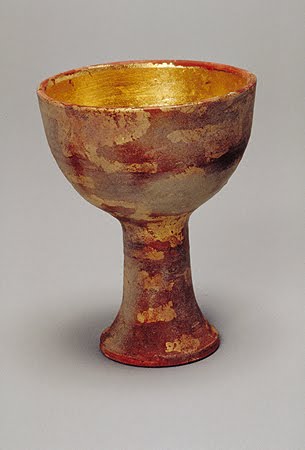
For example, I read one book recently that was a take on the Grail myth. Two parallel characters– one during the Crusades, the other in modern times– are on quests to find the secret of the Holy Grail. However, the first character gets taken aside by her father less than 1/5 into the book and–I kid you not–it essentially goes like this…

***

“Come, daughter. I must tell you a story.”

He talked long into the night and into the morning. His mouth went dry several times. As the sun broke over the hills, he finished.

“This is amazing,” she finally said. “You’ve known this all along?”

“Yes, and now you must keep this fantastic secret, too, until you pass it on to your child.”

***

I’m not exaggerating. That’s almost word for word what the author has on the page.

So, the story then covers another 300 pages during which Phoebe (not her real name) risks the lives of her friends and makes seemingly-irrational decisions to protect a secret she’s really just hiding from the readers. In the end, we don’t even get the answer from Phoebe. The author abandons the whole Crusades-era thread with Phoebe cornered by her enemies and just has someone else tell the modern-era character what happened to her. “Ah, the story of Phoebe? A sad tale, really. You see, when she was cornered by her enemies she…”

That was it. One person has the answers for the whole story, dies “off camera,” and someone else just walks in to read the answer out of a book. No, seriously. The modern character finds this historian and he actually reads her the answer out of a book.

This is not a mystery. Sure you can pitch it as the mystery of the grail, but it’s not. It’s just withheld information. A successful mystery has certain key elements which I’ve mentioned before. The reason this sort of story structure fails is that it violates two of these minimum requirements.

The first of these is that a mystery needs to have a resolution. The characters are searching for that hidden piece of information and they must find it for the mystery to work. The problem here is that the answer was found early in the story. So… mystery solved. In the example above, we were searching for the secret of the Grail and found it on page 81. The rest of the story is unnecessary.

The second element is that in a good mystery we like the protagonists and can relate to them. In any good piece of storytelling–whatever the genre–the characters should mirror the audience. It’s important to them that the answer is found, thus it’s important to us that the answer is found. We want to stick with them until they find those solutions and resolve things.

Y’see, Timmy, the main character can’t be the person holding the answers. In order to do that, they have to hide those facts from the reader (like Phoebe did). Now Phoebe isn’t mirroring the audience, she’s keeping them at arm’s length. The moment she starts concealing things, our protagonist has just alienated the reader.

For the record, this also holds for any Mr. X/ femme fatale type characters who make vague statements or drop cryptic hints. If they’re only here for a page or two, great. But these people can’t be following the main character around for two hundred pages or else they become protagonists, too. And, as I just mentioned above, they’ll be protagonists we don’t like.

If you want to put a mystery in your story, that’s great. Mysteries rock and great mysteries get remembered forever. Just make sure it’s a real mystery, with all the necessary elements it needs to work.

Next time, it being the season and all, I’d like to talk with you about horror.

Until then, go write.

October 15, 2010 / 2 Comments

Admitting the Truth

Yeah, I’m running late. Again. Two weeks in a row. I suck. Deadlines for the magazine, plus I signed the contract for the Ex-Heroes sequel.

So, nyaaaaaaaaaaahhhhhhhh…

Thing is, I’ve been juggling a bunch of stuff and this week’s little rant has completely slipped away from me. I’m kind of ashamed, to be honest. I spent a lot of today looking at the rough notes I’d scribbled to myself and, well, I had no idea where I was going with them.

I thought about just tossing it up anyway. Kind of faking something meaningful, giving it a vague ending, and calling it good. That wouldn’t really be fair to all of you, though. And to be honest, it would just gnaw at me to do something I knew was wrong.

So here’s what I’m going to do instead.

Like any decent writer who knows something isn’t ready, I’m not going to lie about it to you or me. I’m just going to pack it away for now and maybe sometime in the future I’ll pull it out and realize what needed to be done with it.

Isn’t this kind of clever? Talking about not putting up a post has become kind of a post in itself.

Next week, the mystery of the fake mystery.

Until then go write.

And please write something longer than this post.

Categories