
December 11, 2014 / 3 Comments

On the Cover of a Magazine…

            As promised, two in one week.  Both with clever titles.
            So, want to know an easy way to boost the hits on your website or Twitter account?  Post a sentence along the lines of this…

            Wakko slammed a fresh clip into his pistol and got back to spraying lead across the street.

             I’m sure several of you already see the problem, yes?  I used clip instead of magazine.  Well, here’s the catch…
            Yes, as usual here, there’s a catch.
            At the risk of angering a lot of folks… If I ever feel the need to correct someone about this, I’m probably not a good writer.  Seriously.  I would say nine times out of ten when I see other would-be-writers make this complaint…they’re wrong.
            (And I say would-be because that does seem to be where a good three-quarters of the comments come from—newbies intent on explaining to established writers where they messed up)
            Now, I’m sure a few folks are already leaping down to the comments to tell me I’m wrong.  There is a difference between a magazine and a clip.  And it matters! 
            To those people I have one thing to say.
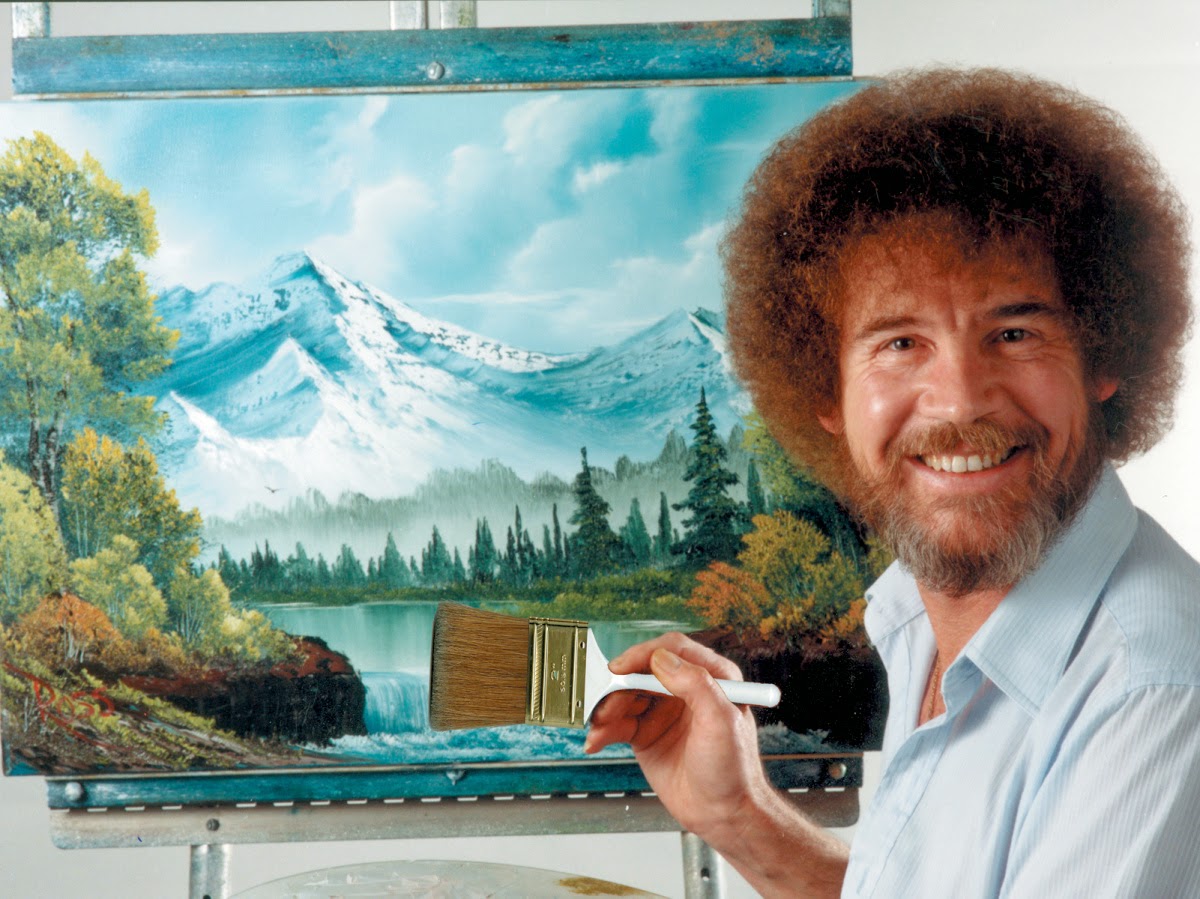
            Paintbrushes.
            You heard me.
            Remember Bob Ross, the happy painter on PBS with the bushy hair?  Even if you never actually saw his show, he’s such an iconic part of Americana you probably know him.  Heck, it wouldn’t surprise me if there’s a large number of people outside the US who can identify him.
            Bob Ross could paint a gorgeous landscape in under half an hour and make it look easy.  He did it with an array of paints, a few specialized tools, and maybe six or seven different brushes.
            Name three of them.
            Any three brushes he used.  Or any painter uses.  Go.
            I’m sure a lot of you thought of the fan brush.  Then maybe smiled and thought of the happy brush.  Maybe… wasn’t there an angled one, like a… a wedge, or something? 
            But even then… their actual names?  No clue.
            That’s not really surprising, of course.  I’m willing to bet most of us here have never done more than dabble in painting.  It’s not our field of specialty, so we don’t know a lot of the specific terms.  We just know the brushes on sight or maybe by the names we’ve given them or heard a few times.  Like the happy brush.
            In a similar manner, if my characters don’t know anything about weapons, it wouldn’t be unusual for them to not understand the difference between a magazine and a clip (or between a Sig and a Glock, or a broadsword and a longsword, or…).  They’d just go off what they remember from television and movies, or maybe some novels they read.  Sure, Yakko the former black ops guy would know, but Wakko the homemaker?  Odds are, he’s going to call that thing full of bullets a clip. Just like Mr. T did on The A-Team.
            Y’see, Timmy, all those people muttering about magazines vs. clips—they’re not wrong about terminology. They’re just focused on the wrong thing (one might even say it’s an empathy issue).  The important question here is not which term is factually correct, it’s which term should be used in my story,  We’re not writing textbooks, after all, we’re writing fiction.  And one of the bigger lessons to learn in fiction is that sometimes my characters will get things wrong. They’re not going to know everything.  Because characters who know everything tend to be very boring and wooden.
            If I had to guess why some people get so adamant about this—and I’ll try to tread lightly here—I’d think it’s because firearms are a divisive subject.  They tend to divide people politically, ethically, and even socially.  And this can cloud a writer’s view of things in both directions.  Some folks don’t want to make a stupid libtard mistake.  Others don’t want to listen to some crazy, overbearing gun nut.
            But, as I mentioned earlier this week, this isn’t the real world—it’s fiction.  If I want to keep my point of view consistent, I’m going to have some characters who load their pistols with clips.  Maybe a lot of them. And, yes, also some who know it’s called a magazine.
            Next time, I’d like to keep talking about characters and gunslingers a  bit by talking about bulletproof people.
            Until then, go write.
December 8, 2014 / 2 Comments

There Are Those Who Call Me…

            So very sorry about missing last week.  I was juggling a few things, time slipped away from me, and suddenly it was Saturday and somebody hadn’t updated things here.  Past me, I’ve discovered, can be a real lazy bastard sometimes.
            To make up for this, I’m going to do two shorter posts and put them both up this week.  Just some quick, easy tips.  I’m sure future me won’t mind writing them.
Not this Doug
            Anyway…
            I read a book a while ago about a character named Doug.  Good solid name.  That’s how the book referred to him.  Doug.
            Except to his parents.  They were only in the first two chapters, and they called him Douglas.  But even then, he thought of himself as Doug and that’s what he was called for the rest of the book.
            Although every now and then he was “the short guy” or “the short man” to break things up a bit.  Which is understandable.  Using someone’s name over and over and over again gets boring fast.  So once or twice on a page he’d be the short guy.  Or the short man.
            Except… there was a character, Jay, who’d been friends with Doug for years, and whenever they spoke Jay would always refer to Doug as “wingman.”  “Hey, wingman, grab me a drink while you’re up.” 
            Except… there was another character, an older one, who had met Doug briefly years ago (a friend of his parents).  At the time, Doug had been four and playing in a mud puddle.  So this guy kept referring to Doug as “the dirty kid.”  “Hey, dirty kid, what’s up?”  “The dirty kid said you might stop by.”
            Now, it’s understandable why people do this.  Over the course of our lives, most of us accumulate a number of names and nicknames and titles.  Most of my friends call me Pete, but I have a fair amount who call me Peter, as do most folks who don’t know me as well.  There’s also a bunch of family terms (son, brother, uncle, cousin) that different people use for me.  There’s also a number of folks who just refer to me by my last name.  For almost fifteen years I was regularly called Peter Props.  An early experiment with facial hair had a few mindless jocks referring to me as Goat-boy for a year of high school.  Heck, a woman in my college fencing class started calling me Hamlet and stuck with it for the whole time I knew her. 
            And there are more names past that.  We all end up with them.  That’s just life.
            But we’re not talking about real life.  We’re talking about fiction.  Two different animals.  I’d never use all these names consistently for myself, or for a character in one of my stories.  This is a variation on a problem I’ve mentioned before, usually in regards to screenwriting–the dump truck.  It’s a ton of names that I’m throwing at the reader for no real reason.  That’s just going to get confusing, and confusion breaks the flow.
            Think of Agents of SHIELD, where many characters have codenames (the Cavalry, Mockingbird, Hawkeye).  Nine times out of ten, though, if a name is used, it’s just their given one (Melinda May, Bobbi, Clint).  Because it’s less confusing that way.  It’s the same in my Ex-Heroes books, where everyone has secret identities
            Y’see, Timmy, it’s okay to reference some of these things, but they shouldn’t be fighting with the name I’ve chosen to use for my character.  I may have a rich history written up for my character Eli, which includes a few names he’s collected, but I’m only going to use what’s relevant for my story.
            Next time, this Thursday, I shall continue things at this fast clip.

            Until then… well, come on.  You should know by now.

November 26, 2014 / 3 Comments

More Dating Tips

            Very sorry about missing last week.  Copyedits. And Thanksgiving is this week, so I know nobody’s going to be reading this on Thursday.  So I figured I’d get this up today and hope to break even.  Sort of…
            Anyway, this week I wanted to blab on about dating your work.  And I figured the best way to do that would be to talk about the Cat & Fiddle.
           If you’re not familiar with Los Angeles, the Cat & Fiddle has been a Hollywood landmark for about thirty years now.  It’s a little pub in the middle of Hollywood with a nice outdoor patio.  It’s always been popular, but I think it managed to avoid being hip or trendy in all that time.  Part of Casablanca was filmed on that location.  Seriously.
            Heck, there’s a reference to the Cat & Fiddle about halfway through my book, 14.  It was a landmark, as I said, and my story is very much about Los Angeles.  Why wouldn’t I refer to it?
            Except now it’s closing.  The landlord found someone willing to pay twice as much so, well, the cat’s out in the cold.  No more Cat & Fiddle unless they can find a new place.  Somewhere else.
            What’s my point?
            Just like that, 14 has become dated.
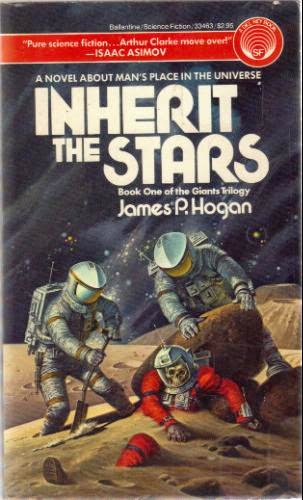
             Still, I’m not as bad off as James P. Hogan.  When he wrote his novel Inherit the Stars (first book in the Giants series) back in 1977, he envisioned the US facing off against the Soviet Union in a race to colonize the solar system (a race that gets interrupted by an amazing discovery, granted…).  Needless to say, the first three books in that series are extremely dated.
            When we say a book is dated, we mean it’s a book someone can look at and say “Ahhh, well this was clearly written back when…”  It’s a book that isn’t about now, it’s about then.  And when my book’s not about now, that’s just another element that’s making it harder for someone to relate to my characters and my story
            Remember in school when you had to read classics?  Some of the hardcore Dickens or Austen or maybe even Steinbeck.  One of the reasons they can be hard to read is because of the references in them.  They talk of events or customs or notable persons that are foreign to us.  Hell, half the time so foreign they’re just gibberish (bundling?  What the heck is bundling..?).
            When we hit these stumbles, it breaks the flow and makes the book harder to enjoy.  A dated book has a shelf life, like milk or crackers.  The moment it gets this label, there’s an end in sight.
            Because of this, there’s a common school of thought that I shouldn’t make any such references in my work.  My story shouldn’t mention current fads or events.  I don’t want to have references to celebrities or television shows or bands or music.  If I want to have my writing to have any sort of extended life—the “long tail” as some folks like to call it—it can’t be dated.
            And there is something to this.  I’ve seen metaphor-stories fall flat with readers less than a year after the events they’re referencing.  It was funny at the time, but if you watch Aladdin today it’s tough to figure out half the stuff the Genie’s riffing on (what the heck’s with the whoop-whoop fist thing…?).
            However…
            When the GOP shut down the US government last year, my friend Timothy Long pounded out a longish comedy short story called Congress of the Dead.  And for a few months it sold really, really well.  It’s not doing much these days (it’s still funny but not as topical), but he knew going in that it wasn’t going to be timeless and used that knowledge to his advantage.
            So, which way should I go?
            Well, here’s the catch.  My work is always going to end up dated.  Always.  There’s no avoiding it.  Stories get dated by technology and cars and geography. Things people assume will never change (like the Cat & Fiddle or the U.S.S.R.) end up changing. It happens all the time.  It can’t be helped.
            Consider this…
            Stephen King’s Cujo couldn’t happen today.  Cell phones undermine the entire plot.  Same with Fred Sabehagan’s Old Friend of the Family.  The entire plot of Lee Child’s first Jack Reacher book, Killing Floor, hinges on an idea that was obsolete six months before the book even reached stores.
            Let’s not even talk about speculative fiction.  How many sci-fi shows predicted events we’ve since caught up with and passed?  Buck Rogers left Earth on a deep space probe in 1987, and Thundar the Barbarian saw the world collapse in 1994.  Star Trek told us the Eugenics Wars happened in the 1990s, which was also when Khan and his followers were launched into space in cryogenic suspension (presumably using the technology from the Buck Rogers deep space probes).  According to the Terminator franchise, Judgement Day happened in 1997 (later adjusted to 2004).  Then there’s 2001: A Space Odyssey and it’s sequel 2010.  Heck, even Back to the Future is just a few short weeks away from becoming a silly, dated comedy.  It’s going to be 2015 and there are no self adjusting clothes or flying cars or Jaws XIX (it looks like we did get hoverboards, though…).  And, hell, supposedly in 2015 people are still using faxes as a high-tech method of communication.
            If I really don’t want to date my work, I can’t mention anything.  Cars, music, movies, television shows, networks, books, magazines, sports teams, games, cell phones or providers, Presidents, politicians, political parties, countries, businesses of any kind, actors, actresses… all these things and a few dozen more. All these things change all the time in unpredictable ways.  So if I want to be timeless, I can’t bring up any of them.
            The problem is, though, these are all things that are part of our lives. They come up in conversations.  They shape how we react to other things.  So if I’m writing a realistic character with natural dialogue… these things will be there.
            So what’s this all mean?
            In the big scheme of things… don’t worry about it.
            That being said, I  probably shouldn’t base my entire plot around readers knowing the lyrics to Taylor Swift’s latest single, and (much as I love it) I might not want to use a reference to the second season finale of Chuck as the big button on my chapter.  There’s a reason some things stand the test of time, some become cult classics, and others become… well, we don’t know, do we?  And I should never be referencing something no one knows about.
            There isn’t an easy answer for this.  I’d love to list off some rules or just be able to say “8.3 references per 50 pages is acceptable,” but it isn’t that simple.  A lot of this is going to be another empathy issue.  As a writer, I need to have good sense of what’s sticking around and what’s a fleeting trend.  What references will people get in ten years, which ones they’re going to forget in six months, and how blatant these references need to be to get the job done.
            Getting dated is unavoidable.  It is going to happen to my work.  And yours. And hers.  But if we’re smart about it, we can get the most out of it while we can and still make sure that date’s as far off as possible.
            Next time, I’d like to talk about dialogue.  And I’ll probably make a mess of it.

            Until then… go write.

November 14, 2014

Introduction to Orientation

            Running a tiny bit late.  Trying to get a bunch of stuff done before the weekend and dealing with many disruptions and distractions.
            Anyway…
            I’d like to start this week by talking about  college.  It’s something I bet most of us here experienced, so it’s a great analogy for my real topic.  I’m sneaky like that.  Sometimes.
            If you’ve been reading these rants for a while, you know I grew up in a very small town in Maine.  For high school, my dad got a new job and we moved to a somewhat large town (arguably a small city) in southern Massachusetts for four years.  And then I went to a giant state school for college.  No joke, my freshman dorm almost had more students in it than the entire school system I attended in Maine.  And I wasn’t even living in one of the larger dorms.  The college had a larger population than my hometown.
            It was, needless to say, a bit overwhelming.
            There were lots of orientations, of course.  Then I was introduced to tons of people in my dorm, and then people on my hall (we won’t even get into classes).  We all talked about ourselves a bit.  I think so, anyway.  It was all a bit of a blur.  For a while there were just the two skinny guys across the hall,  the woman with the short hair who smiled a lot, the big guy with the glasses further down the hall. But after a while details and names accumulated, these people became clear in my mind, and they became Mike, Jon, Karen, Henry, and so on. 
            Most of us can relate to something like this, yes?
            When I’m introducing characters in my story, it’s a lot like this.  Sometimes things are a whirl of action.  Other times, everyone’s just sitting around studying each other.  Some people stand out—either on their own or because of my own interests—and other people just warrant rough placeholder descriptions for now.
            Context is everything when I introduce a character.  In the middle of a firefight, Wakko may not notice much about the person who dives in to join him behind the barricade.  They’re wearing body armor and they have a rifle—score!  If he’s dealing with a job applicant, though, he’s got time to notice how sharp the creases are in the slacks, how the tie is knotted and the hair is combed, not to mention the smell of shampoo and the state of fingernails.
            Likewise, during that firefight, there’s not much personal info Wakko needs to know past “you’re on my side, right?”  In the middle of the interview, he can ask “what are the three worst jobs you’ve ever had?”
            And in either case, he might not learn about that tattoo or the special shirt or the naughty story behind her nickname.  Some things are only seen or discussed in more intimate situations.  These are all details that come out with booze or debriefing or sex or some combination of all three. 
            Y’see, Timmy, there isn’t a certain way or time to introduce characters.  It’s all a matter of context.  Context, and a bit of relevance.  I need to think of it in terms of my narrative and my main character (or the character I’m focused on at the moment). 
            At this point in the story, is there time to notice more than a few basic physical attributes about this new character?  Is there any one or two things about him or her that my point-of-view character might focus on for the moment?  Is there even time to trade names?  If there’s a lot going on, I don’t want to bring things to a crashing halt with a page of description or exposition.
            I think one of the problems some writers have is they keep seeing examples of bad storytelling and character introductions in television and movies.  There’s an all-too common belief that things need to be frontloaded, that the audience needs to know everything about someone up front.  How many stories have you seen that begin with the “let’s all introduce ourselves” scene?  We learn their names and how they talk and their likes and dislikes and usually some clumsy anecdote about them or a blatant example of I’M THE UNSTABLE ONE!!!  GAHHHHH!!!  
            These scenes almost always feel unnatural because this isn’t how we meet people in real life.  Most of the time, we learn things about them in bits and pieces.  A little here, a little there.  Sometimes we never learn a character’s name, sometimes it’s the first thing we learn.  Some characters are willing to spill everything about themselves, others don’t want to know anything about you because it makes the job simpler.
            Now, I mentioned relevance up above.  It’s a close companion to context.  My story may end up in a place where we can take the time to get to know someone, but that doesn’t mean I need to say everything there is to be said about them.  Yes, everything in a character’s life helps define them, rich tapestry, all that, but if it really isn’t relevant to the moment at hand, or the story as a whole, there’s a good chance it doesn’t need to be there.  Bob explaining that he had to slit the throats of sheep growing up on a farm is important when we’re choosing who has to fight in the wolverine pit, not so cool during speed dating.  And someone telling you their sexual fantasies might be very exciting on a third date, but it can be a bit creepy during a job interview (no matter who’s talking).  When someone does this in real life, it’s called oversharing, and it tends to make us uncomfortable because… well, we don’t need to know these things in this particular situation.
            This can also help me weed out characters that… well, might not need to be characters.  If their introduction doesn’t fit in context, and the facts about them aren’t relevant… maybe I should question why they’re in my story here and now.  Maybe their introduction—or the full extent of it—should be pushed back or pulled forward.  Or maybe they’re just delivering the pizza and don’t have anything to do with the story at all.
            It all depends on context.  And relevance.
            And speaking of introductions, next time I’d like to go one step further and talk about dating.
            Until then, go write.

Categories