
April 20, 2012 / 3 Comments

Why Do We Like These Guys…?

            Sorry there wasn’t a post last week.  I got the galley proofs for my new book, 14 (available in June from Permuted Press), and I spent about six days going over them line by line.

            There’s a weird trend in advertising lately.  Have you noticed that most of the people we’re supposed to be rooting for in commercials are kind of… well,  jerks?  They’re rude.  They’re smug.  They do obnoxious things that are supposed to be cute.
            Of course, unlikable characters are nothing new on television or in books.  There are hundreds of characters who are jerks to an almost criminal degree, but we still like them.  You can trace it back for decades.  Centuries, even.
            Let me give you a few examples.
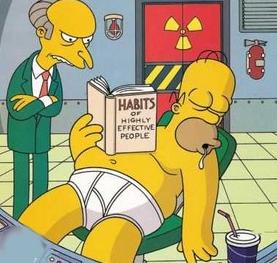
            Presented for your approval is one Homer J. Simpson.  He’s an alcoholic.  He’s rock-stupid.  He’s self-centered.  He subjects his kids to physical and emotional abuse.  He’s lazy to the point that he’s endangered countless lives in his hometown of Springfield, and a fair amount while traveling abroad, too.
           Here’s another one.  Barney Stinson from How I Met Your Mother.  Barney’s rude, misogynistic, very manipulative, and openly cruel sometimes.  When you consider the political climate these days, it’s worth noting that Barney is also a one-percenter who’s gleefully acknowledged eliminating jobs to increase profits at the multi-national corporation he works for.
            And, lest you think I’m not taking this seriously with all the sitcom references, let’s also add in Doctor Hannibal Lecter (the version from the novels, to be clear).   He’s a monster.  No two ways about it.  He’s a murderer who’s killed people in some truly horrific ways.  He’s tortured people.  And there’s his defining trait, of course… cannibalism.
            How could anyone possibly like any of these characters?  Heck, how is it that people end up rooting for them?  We laugh when Homer throttles his son, we cheer when Barney abandons the woman he just slept with, and we approve when we realize Lecter’s tracked down the asylum director who treated him like an animal for years.  Is there something wrong with all of us?
            Not really.  If we look at all of these folks, there’s certain key traits they all share that make for great characters.  More to the point, theses are traits that are almost always missing from characters that frustrate and annoy readers and/or audience members.
            Firstand foremost is honesty.  One of the main things we love about these characters is that they’re all true to themselves.  They know who they are and they see no need to hide it.  Nobody likes a hypocrite or someone who keeps switching sides.  It’s why we all grind our teeth over politicians who say one thing on Tuesday and then say the complete opposite on their next campaign stop.
            If Barney was constantly telling us what a sweet, caring guy he was we’d find him slimy at best, reprehensible at worst.  Part of what makes his womanizing acceptable—to us and his friends—is that he doesn’t deny it in any way.  He has no problem admitting what he does and even admits it may hurt some women … but he’s not there to deal with it, so what’s the big deal?  Homer’s almost gleeful about his alcoholism and has frequently fought the idea of trying to learn anything new.  Lecter doesn’t see any moral difference between eating a person and eating an animal, so he has no problem discussing the appetizers he set out for his unexpected guests.
            One mistake I see a lot of writers make is when their characters are telling us one thing but showing us another.  Yakko says he’s taking time off and trying to get his head together, but really he’s out cruising and screwing around every day.  Dot tells us she’s loyal to her husband but sleeps with three different guys from her office.  Wakko insists that he follows the rules to the letter, but we catch him cheating a dozen times during the game.  There are times this type of thing can work, but this kind of dishonesty can turn a reader against a character very quickly if it’s not handled right. 
            A similar problem is when writers think ambivalence is a character trait.  They have characters who are constantly unsure or second-guessing themselves or their actions.  That kind of self-doubt can work in small doses, but it gets annoying real quick.
            The secondthing that makes us like these horrible folks is that, despite all their unlikable characteristics, each of them tends to be a pretty decent person at the core.  Often in each of their respective stories, we’ll see these characters do something or make a gesture that doesn’t really benefit them, but it gives us a glimpse of who they really are when they’re not trying to score points or keep up appearances.  There’s an old saying you might’ve heard that sums this up well–someone who’s nice to you but not nice to the waiter is not a nice person.  In screenwriting this sort of thing is sometimes known as the “saving the cat” (thanks, Blake Snyder), and it makes us—the audience—like these characters a little more.
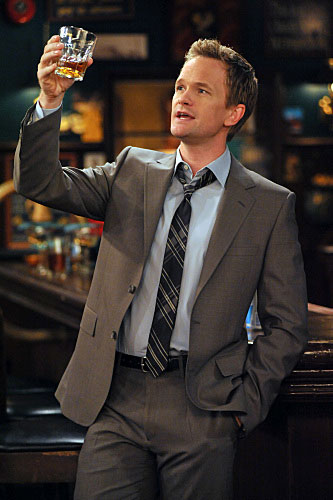
            When Homer gives up his dream job at Globex to make his family happy, it’s showing us that he really does try to be the best father and husband that he can.  When Barney flies cross-country to tell Lily she needs to wise up and get back together with Marshall, it lets us see what’s really important to him.  If you’ve read any of the books by Thomas Harris, it’s pretty clear that Hannibal Lecter, despite some of his more gruesome dietary preferences, is kind of a classy guy.  He’s polite.  He’s generous.  He appreciates fine art and fine music.  He has a very good relationship with his orderly, Barney, born out of professional courtesy for one another.  Just because he sometimes does awful things to people doesn’t mean he’s needlessly cruel.  In fact Lecter never kills randomly or without purpose, and there’s a fair list of people in the books he doesn’t kill who he easily could have.
            Even if you’ve only seen the films, you may remember that one of his defining traits very early on is that he despises rudeness.  Lecter makes for kind of an interesting twist on saving the cat.  When his hallmate, Miggs, is exceptionally “discourteous” to Agent Clarice Starling, Lecter kills him for it.  After the good doctor escapes, Starling’s confident he won’t come after her because “he would consider it rude.”  If he was just a cannibal, Lecter would be no different than Leatherface from The Texas Chainsaw Massacre.  It’s this underlying decency that elevates him above a schlock-paperback slasher.
            I see this get messed up a lot in books and scripts.  The writer presents an unlikable character or characters that I’m clearly supposed to like on some level, but I’m never actually given a reason to like them.   A lot of horror storiesfail because of this.  If I don’t like a character on some level…why would I care what happens to them?
            That bit a moment ago with Miggs brings me to my third and final point…wish fulfillment.  While these characters are doing unlikable things, they’re all doing things that—on one level or another—we all wish we could do.  It would be awesome to goof off at work and drink every night and never get punished for it.  We’d love to sleep around and have no emotional fallout from either our partners or ourselves.  And, much as we’d like to deny it, there are times we’d all really like to see obnoxious idiots dead for the things they’ve done to us and to the people we like.  Preferably dead in a really horrible way.  The condescending doctor.  That jackass supervisor at work.  The guy in the insane asylum who throws bodily fluids. 
            A lot of times I see people trying to do the unlikable-but-likeable thing, and the real problem is that they’ve made a character who… well, just isn’t likeable.  There’s almost no way to put a positive spin on someone who stomps puppies to death or molests schoolchildren.  Personally, I find it really hard to get behind a bigot.  There are times that even saving a whole cat shelter can’t make up for a character’s unlikable traits because too many lines have been crossed.
            Yeah, I know the cannibalism thing is a little beyond what any of us want to do, but here’s an interesting point—you barely ever see Lecter’s eating habits in the books.  We hear about them, but in the first three books there’s only one incident where we actually see Lecter eat part of a human being (and it’s at the end of the third book in the series).  So it’s a character trait that’s inexcusable, but it’s also carefully kept at arm’s length.
            And that’s some of the reasons why so many of us can’t help but like the bad boys and girls.     
            Next time, I’d like to talk about a trio of failed television shows and why they failed.  There’s a good storytelling lesson in it for all of us.  Honest.
            Until then, go write.
April 6, 2012

A Capital Idea

            Wanted to toss out a quick tip for the screenwriters here.  Prose folks, there’s something here for you, too, but I’m focusing this on scripts.

            As someone who read many screenplays for several contests (and lives with someone who’s read even more), I think I can safely say that one thing that drives readers nuts is the mis-use or over-use of capitalization in a screenplay.  A lot of people use them like exclamation points, and a good chunk of those people really over-use their exclamation points.  It’s hard on the eyes and it often makes the script confusing.
            So here’s a simple rule of thumb my lovely lady and I came up with over dinner the other night while discussing her latest headache.  This isn’t the end-all, be-all of when to use capitals, but it’s a great guideline.
            When you use capitals in a script (except for naming), it should be for the things that cannot change.  Think of it as the key plot points.  Not details, not stuff that’s extremely dramatic or packs an impact—save the capitals for the relevant stuff that matters.
            Now, I can sense a response from a few folks already.  It’s all relevant, right?  That’s the whole point of a screenplay, to trim down and edit away anything that doesn’t matter.  So how can I say only capitalize what matters?
            Things that matter, in this sense, are things that the script would fall apart without.  These are things that are so interwoven into the structure of my story that it would involve a sizeable rewrite to change one of them.  For example…
–In The Shawshank Redemption, it’s important that we know Andy Dufrense has Red get him A ROCK HAMMER during those first years he’s in prison, but it’s not important that the first chess piece we see him make is a rook, or that the first one the warden throws is a pawn. 
–In Robocop, Clarence blows off Murphy’s HAND with a shotgun.  Then the gang members shoot Murphy five or six times each, but the one that matters is when Clarence ends it by shooting him RIGHT IN THE HEAD.  Where all the other bullets land isn’t important, just that there’s a lot of them.
–In Sam Raimi’s first Spider-Man movie it’s vital that Peter Parker is wearing a BUTTON DOWN SHIRT at Thanksgiving, because this is how Norman sees the cut on his arm and realizes Peter is Spider-Man.  But it doesn’t matter what kind of pants Peter’s wearing, or if Harry’s in a coat or just sleeves.
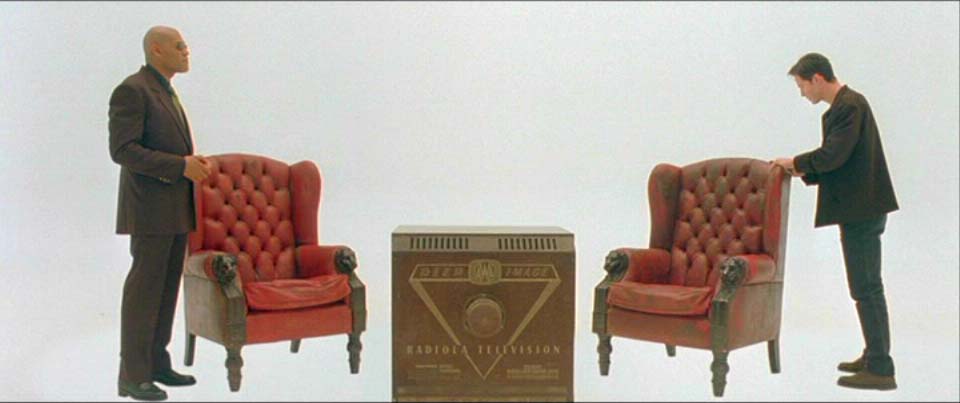
–In The Matrix, we need to know the stunning blonde in one of Neo’s first training runs is in a revealing RED DRESS as opposed to everyone else wearing nothing but BLACK and WHITE.  It’s key that she stands out and it’s essentially her name (the woman in the red dress).  She’s addressed as such several times.  Mouse even has a centerfold of her.
            Just to be clear, none of these examples are from the actual scripts (I have no idea which chess pieces are used where in Shawshank), but it wouldn’t surprise me to learn they were all capitalized just this way.  And if you’ve seen these movies, you should be able to see why these things were capitalized at this point in the script.  And why some of the other objects, actions, and clothes in those scenes weren’t.
            Next time, I wanted to talk about some people I really shouldn’t like.  You probably shouldn’t, either.
            Until then, go write.
March 30, 2012 / 3 Comments

Hunger Games

            Sorry I’m running a bit late.  I’m weak from starvation.

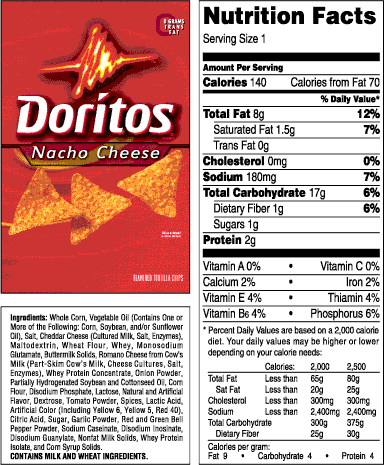
            Did I mention I was on a diet?  I can’t complain too much, because I’ve lost seven pounds in two weeks, and it’s actually starting to show in the waist.  Still…  I wouldn’t complain if one of you slipped me some Doritos.
            Anyway…
            I’ve used food and cooking before as a metaphor for writing, and I think it’s one that works well.  What counts as good food is largely a matter of individual taste, although most of us can agree on a few key things that make food bad.   There’s also some good parallels between being a chef and being a writer.  Almost all of us can cook, but we recognize that being able to microwave hot dogs doesn’t make me a chef, just like being able to send a text message doesn’t make me a writer.  There’s also books and classes for both, but the only way to improve is to just get in there and do it—again and again and again. 
            Also dieting, like writing, is going to work different ways for different people.  I need to make a set diet and follow the rules strictly, but you might be one of those god-awful people who can eat anything you like.  Sticking to it is agony for me, but maybe you barely notice you’ve changed what you eat.
            This doesn’t mean I can alter my diet to match yours, though.  My girlfriend’s also dieting, so we’re shooting for the same basic goal, but we’re not following exactly the same path to get there.  This is the Golden Rule I mention here now and then, my one bit of guru-istic advice.  What works for me might not work for you, and it definitely won’t work for that other guy.  We all need to find what methods and habits work best for us when it comes to getting to that basic goal
            So, since starting this diet—I mentioned I was on a diet, yes?  And that I would probably be willing to harm two or three of you for some garlic bread?—it’s struck me that there’s another way food and writing are similar, and that’s in how we portion things out.
            All of us develop habits in our writing, and they tend to stick with us until we make a serious attempt to change them.  And just like eating, most of our initial habits are bad ones.  We go for the fun stuff without realizing how bad it is in large quantities.  ActionGoreOne-linersSexMelodrama.
            The next step, though, is when people now take their writing (or eating) to the other extreme.  I think all of us know someone who’s borderline insane about what they eat.  They have to know every ingredient in something, the precise number of calories, the recommended daily allowance of saturated fats, the grams of protein.  Heck, some of them don’t just want to know what’s in their food, they want to know each ingredient’s pedigree.  Was the low-fat cheese made from the milk of grass-fed cows?  Was the grain in this bread mechanically threshed or hand-sifted?  And it is organic grain grown in non-chemically fertilized soils?
            Once I started getting a lot more serious about writing, I tried doing all the outlines and character sketches and charts and index cards.  I made sure every character had an extensive backstory (all of which ended up on the page), every object had an elaborate description (all of which ended up on the page), and every location had an array of smells and sounds and sights that could only come from experience and practiced observation (and they all ended up on the page).  Because I was a serious writer now.  And serious writers take writing seriously.
            Just like this diet—I mentioned I was on a diet, yes?  And that I would gleefully kill half of you for a chocolate chip cookie?—when I started writing I needed to learn what habits were good and which were bad.  What were the things I was doing all the time that were hurting more than helping?  I had to figure out what things are good, which were good in moderation, and which were just plain bad.
            I mentioned a while back that I worked with a personal trainer for a few years.  In his heyday, Jerzy was an Olympic-class weightlifter and went on to  set a world record and even win several awards for bodybuilding.  One of the keys to his success was a ruthless diet that let him get his fat levels down to minimal levels.  To be honest, dangerous levels.  Just before a tournament, Jerzy would often get his body fat below two percent.  He looked phenomenal, but it actually left him very weak because his body had no reserves whatsoever.  It had access to what was in his system right at that moment and not a scrap more.
            So the moment the tournament was over, he’d go out and get the biggest, greasiest cheeseburger he could and eat the whole thing.  Sometimes two of them.  That’s not what you’d normally consider former Olympian-weightlifter food, but Jerzy knew that once he’d reached that heights of success it was imperative that he replenished those fat levels as quickly as possible.  His health depended on it.
            Y’see, Timmy, sometimes the stuff we think of as bad isn’t just good, sometimes we needit.  Because the big secret to eating well—and writing well—isn’t extremes, it’s moderation.  Drama needs to be moderated with comedy.  Comedy needs a bit of seriousness.  Horror needs calm.  Chaos needs structure.  The great stories, the ones we really remember forever, are never all one thing. 
            Harper Lee’sTo Kill A Mockingbird is considered one of the greatest pieces of writing in American literature, an unparalleled drama.  Yet the book has a lot of humor in it as we see events interpreted through the eyes of young Scout, a girl who’s a few years from even touching puberty.  Christopher Moore’s Lambis a comedy about Jesus’ older brother, Biff, which gets very grim and serious at points.  Ray Bradbury’s Something Wicked This Way Comes and Robert McCammon’s Boy’s Life are both coming of age stories with a strong horror element.  For every skin-crawling moment in Stephen King’s IT, there’s a moment of complete twelve year old goofiness.
            Did I mention one of the standard things on this diet is a cheat day?  A lot of the best diets have them, because it’s easier to stomach all the food restrictions if you get a break from them every now and then.  One day a week I’m supposed to indulge.  I get to have Doritos and garlic bread and chocolate chip cookies.  And my body will forgive me for it because I’ve established this isn’t the norm. 
            So nobody has to die for me to get a cookie.
            Not this week, anyway.
            Next week I might be a bit short on time, but I had a capital idea I wanted to share with you.
            Until then, go write.

            Pop culture reference.  Easy one, cause it’s been awhile…

            So, one thing we all strive for in our writing is realism.  We want our characters to feel real.  We want our dialogue to sound real.  We want our settings to have that level of detail that only comes from authentic knowledge and experience.
            To do this, writers will people watch and eavesdrop and travel to obscure places just to get an idea of what the air smells like.  They’ll labor over the dialogue to make it as real as possible.  They’ll add random events to their narrative to give that sense of uncaring fate.  They will make their story as close to reality as possible.
            Here’s the problem, though…
            Nobody wants reality. 
            Not real reality, anyway.  Oh, they may say they do, but that’s kind of a lie.  Most people want fictional reality.  They want clean dialogue.  They want characters who win (maybe not cheerfully or without scars, but they do win).  They want things to make sense.
            Allow me to explain.
            When people talk in reality, they make false starts and pause a lot and trip over their words.  They can drone on for several minutes at a time.  They talk over each other.  If you’ve ever looked at an unedited transcription of a conversation, you know that real dialogue is the worst possible thing for fiction.  People would claw their eyes out, and everything would take forever to say.  When I used to interview writers for articles, it was just understood that I was going to clean up their words a bit to eliminate all that stuff.  It would just be incredibly distracting in an article.
            So fiction writers don’t write real dialogue.  They write “real” dialogue, lines that have a certain verisimilitude, if I may be so bold, which appeals to people.  They get cleaned up and tightened and measured out.  These are the lines that make readers say “Wow, her dialogue felt so real, like she was someone I’d meet on the street.”  That’s what we all want, right?
            Did you catch that, by the way?  The dialogue wasn’t real—it felt real.  Think of how often things get phrased that way.  An open (and often unconscious) admission that this isn’t how real people talk.  But it feels like how real people should talk. 
            As I’ve mentioned before, I’ve made this mistake.  I copied real people’s speech patterns into The Suffering Map, then had two different editors mention that as a specific reason I was being rejected.  It didn’t matter that it was real dialogue, because it wasn’t “real” dialogue.
            Make sense?
            On a similar note, odd, unbelievable stuff happens in reality all the time.  There are amazing coincidences.  Lucky breaks.  Unexplained things just happen.  Heck, people die in freak accidents and that’s it.  Story’s over, no matter how many things are left unresolved.
            I’ve interviewed several screenwriters who did biopics or “based on true events” movies, and one thing most of them talked about was the material they didn’t use.  The events that were so ludicrous people just wouldn’t believe them.  A few different folks have said that the difference between fact and fiction is that  fiction has to be believable, and these writers realized that.  So they removed true events that would’ve made their story seem silly or implausible.
            Here’s another example I’ve used before (and will continue to use again)–  Vesna Vulovic.  She was a flight attendant back in the ‘70s (which technically means she was a stewardess) on a flight that was bombed by terrorists.  Vesna fell six milesthrough the air and survived.  Not in the sense of held alive in an iron lung on life support, mind you—she’s out there today walking, talking, having drinks with friends and laughing about things.  She wasn’t even in the hospital for three months.
            Is that the kind of event I should include in my realistic fiction?  Of course not.  Nobody would believe that.
            Should I kill my characters at random, leaving their arc unfinished and their secrets unrevealed?  Will readers applaud me for my daring and realistic writing?  Not a chance.  When I’m a writer I’m the God of my world, and if something doesn’t serve a greater purpose I’m a piss-poor god at best.
            Y’see, Timmy, reality is a messy thing.  Every aspect of it.  And I don’t want my writing to be messy.  I want it to be clean and polished and perfect. 
            Even when I’m making it “real.”
            Next time… well, I’m on a diet right now, and it’s kind of gnawing at me.  So I’ll probably end up talking about that.
            Until then, go write.

Categories