
May 18, 2012 / 2 Comments

Textbook Storytelling

            Sorry this is a bit late.  Apartment-and-cat-sitting and I’m losing  a lot of time driving back and forth.

            If you’ve been on the internet lately, especially to any writing-related sites, you’ve probably noticed a lot of what I like to think of as film-school mentality.  It applies to books just as much as movies, but I think it’s a mindset that really began with the spec script boom of the late eighties and early nineties.  The people who display this mentality toss around a lot guru-istic terms and can give you long, exacting lists of why your story doesn’t work, and they make it sound like they really know what they’re talking about.
            Now, I’ve talked a few times (although none recently) about criticism.  A good critic of my work is someone who’s going to be honest about what works and what doesn’t.  Someone who just says “this sucks” isn’t helping me in the slightest. They’re also going to be able to explain why those elements do or don’t work.  But not all of these reasons are going to hold, because sometimes they’re based on a faulty premise.
            Which brings us to reverse-engineering.
            Reverse engineering is when you study how a piece of technology is built, work backwards to its initial phases, then work forward in creating your own. 
            For example, let’s say a UFO crashed in New Mexico back in the ‘50s.  My crack team studies its propulsion system, figures out it works off some kind of magnetic drive, and then eventually figures out how to build their own magnetic drives for monorails and Mk VII Space Shuttles (shhhh, no one’s supposed to know about those).  That’s reverse engineering.
            It can also be something mundane.  I can buy a toy like Grimlock the Dinobot, take him apart, and isolate all the individual components.  Then I just recast those parts, reassemble them, and look at that—I’m making transforming robot dinosaurs that look and work just like the one I studied.
            Now you’ll notice I used two different machines in my examples.  One’s alien-level tech and the other’s a fairly complicated toy, but they’re both mechanical.  There’s a reason for that.  Reverse-engineering is a very mechanical process.  It relies very heavily on the fact that these processes work the same in each direction.  A to B to C, C to B to A, and then A back to B back to C.  I can’t take Grimlock apart, put the components back together again, and somehow end up with a Barbie doll.
            However…
            This isn’t true of stories.  Stories are much more organic.   They depend on a high degree of empathy between the writer and the reader. The elements of a story can go together many different ways, with many different results.  Sometimes, a story just works and no one can tell you why.
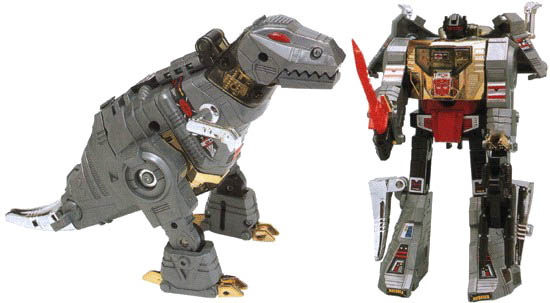
            Y’see, Timmy, unlike Grimlock, there’s lots of ways the individual elements of a story can go back together again.  Grimlock’s parts will make a robot dinosaur every time you assemble them, but story elements are fluid and mutable.  They can interact in different ways.  That’s why I can combine a lot of the same characters, plot points, and themes to get a series of radically different stories.  The Forgotten DoorE.T.  Escape to Witch MountainStarmanBrother From Another Planet.  They’re all the same pile of story elements, but these are all very, very different stories.
            Think of it this way… let’s fall back on cooking as a parallel (as I have once or thrice before).  I want to reverse-engineer some waffles.  So if I break the waffles down I’ll find flour, sugar, milk, eggs, and some heat binding them together.  Maybe some chocolate chips, too.  But those ingredients could combine to make more than just waffles.  I could take those same ingredients and make pancakes.  Or muffins.  Or cookies.
            More to the point, these ingredients can also make lukewarm gruel.  Something watery and maybe even a bit slimy that will make you gag.  Just because they went together one way and worked, or even three ways, doesn’t mean we can make a hard fast rule that says all good things to eat have flour, sugar, and eggs in them.  Or that anything with flour, sugar, and eggs in it is good to eat.
            This is why I’m against most gurus and how-to writing books.  You can’t come up with solid rules for how to write a story by reversing the way you analyze them. Using story A to critique story B may work in a classroom, but it won’t work when I try to write a story.  Because we’re all writing different stories and we’re all writing them in our own way for our own chosen audience.  Just because a set of rules can be applied to a novel like To Kill A Mockingbird doesn’t mean a book like Carrie or A Princess of Mars is wrong for not following them.
            I’m sure most of us know someone (or several someones) who’s written a novel, screenplay, or maybe even just a short story that follows all the rules and tips from some guru or how-to writing book.  And these stories tend to be… well, kind of blah.  They’re acceptable stories, they’re just kind of mechanical.  And that’s because these stories weren’t written, they were manufactured.
            Writing just doesn’t work that way.  Analyzing stories does, but analyzing is not the same as writing.  Just because I know how to do one doesn’t mean I know how to do the other. 
            This is why I’m always a little leery when people begin to dissect and critique a story using terms like “turning points” and “redemptive moments” and “inciting incidents,” usually while giving hard page counts for when all these things musthappen in a story.  These are all guru terms that try to pin down very vague, general things that change from story to story.  The more specific those terms are, the less accurate and useful they tend to be, and when people insist on following these inaccurate rules to the letter… well, nothing good comes of it.
            Now, I’m not saying there’s nothing to be learned from studying stories or films.  That’d just be silly.  But I need to understand the difference between  a set of  general guidelines and a hard-fast formula.  I’m sorry to sound repetitive, but there is no formula for writing a good story.  None.
            Bruce Joel Rubin, the Oscar-winning screenwriter of Ghost (and also Deadly Friend) made the keen observation a while back that we experience stories through our gut.  That’s where every good story hits us, on one level or another.  Stories that go through our heads never work, because the minute we start analyzing we’re no longer immersed in the story.
            This works going both ways.  When I write a story, it needs to come from my gut.  It’s not meticulous or precise, it’s raw and emotional and often more organic than logical.  This is why stories that get written to a made-up formula—stories that come out of someone’s head—end up feeling like… well, the product of a formula.
            Next time… well, next time I want to talk about something I couldn’t care less about.
            Until then, put down the how-to books and go write.
May 11, 2012

Activity Time

            I’ve been talking about general stuff for a while, so I thought it might be a good time to be a bit more active.

            Of course, being active is just good advice in general, don’t you think?
            Active can mean two different things in writing.  We can be talking about my writing in and of itself.  We can also be talking about what’s happening in the story and who’s doing it.
            First things first.  You’ve probably heard the term “active voice” tossed around a lot by guru types.  It refers to how I’ve structured my sentence.  Simply put, active voice is when my characters are doing stuff.
–Yakko mixed the soup and added pepper.
–Dot lit up the room with a flashlight.
–Wakko eviscerated the minotaur with his sword
            If you want to be a bit more grammar-oriented, when I’m using the active voice my characters should be the subject of my sentence.  They’re the ones doing things and making things happen.  They’re the movers and the shakers.
            Passive voice, on the other hand, is when stuff is being made to happen by my characters.
–Pepper was added to the soup as it was mixed by Yakko
–The room was lit up by Dot with a flashlight.
–The minotaur was eviscerated by Wakko’s sword
Wakko celebrates his adjective status.

            See, all these sentences convey the same information, but my characters are all objects now.  The focus has shifted to the soup, the room, and the minotaur. Heck, to keep things simple, Wakko the character was effectively removed from that last sentence.  He’s just a possessive adjective describing the sword (the real object).

            Another advantage of active voice is that it tends to be clearer.  Passive voice is an element of purple prose, which sounds nice sometimes but often gets confusing with all of its twists and turns, breaking the flow of the story.  Active voice is also usually more concise, which is great for pacing and word counts.  It just feels more dynamic.
            Now, you’ve probably heard a lot of gurus rant on about how you’ve always got to use the active voice.  Always, always, always, no exceptions.  Never use the passive voice for anything..
            This is wrong, of course.  There are plenty of times it’s fine to use passive voice.  It’s the same with having non-stop action or focusing exclusively on my main characters and ignoring the secondary ones.  It’s a way to alter the tempo or tone a bit in a story.
            The passive voice could be a quirk of a particular character’s way of speaking, especially in first person.  It could be used to “step back” in a moment of drama or mystery.  In screenwriting, it’s a clever way to change the visual of a moment without including camera angles or stage directions.  Done right, passive voice can even be used to increase horror—what could be worse than a character getting reduced to an object in all ways?
            So while  there are some good reasons to phrase things in the active voice, you don’t need to avoid the passive voice like the plague.
            However…
            It’s not just enough to phrase things in an active way.  My characters actually have to be active.  They need to make choices.  They have to face challenges.  They must take action.  Not in a gun-slinging, sword-fighting, car-chasing way.  Just in the simple sense of doing something.  On one level or another, my characters need to be the ones making things happen in a story.
            I honestly couldn’t tell you the number of stories or scripts I’ve read where the main character doesn’t do anything.  They just sit there as the story flows around them.  Other people tell them what to do and make their decisions for them.  They don’t take any action unless they’re dragged/ kicked/ forced into it.  A lot of them are little character-study “indie” things, but I’ve seen action movies done this way and horror novels, too.  Heck, I saw the film adaptation of a Harry Potter-esque book and it was almost halfway through the movie before the title character did a single active thing.  Up until then he was just a sock monkey getting handed off to different characters.
            Keep tabs on the voice of your story and make sure you’re not being too passive with your writing. And by the same token, you don’t want to have a lot of active writing about a character who doesn’t do anything.
            Next time I’d like to share a little idea I had about reverse-engineering.
            Until then, go write.
May 3, 2012 / 4 Comments

Zombie Hoarders

           This is a pet peeve that’s been building over the past year or so.  Like many of my pet peeves about writing, it finally gave birth to a rant.  A small rant, but still…

            I also admit, this is one of those recurring misused words that, because of my particular niche, I probably see a lot more that the average reader.
            There are few things more terrifying than a horde.  Just an overwhelming tide of opponents.  In history, Genghis Khan had hordes of warriors.  If you play Warhammer 40,000, you know Orks are often called the Green Horde.  He-Man fought an enemy army called the Horde, led by a guy named Hordak (no, seriously).
            And, of course, zombies come in hordes. Great, sweeping, endless hordes.  Something about the word just loans itself to a sort of mindless savagery, doesn’t it?  In most stories, if I’ve got a zombie horde on my hands, odds are I couldn’t carry enough ammunition to deal with it.
            If I have a zombie hoard, though, it means I’ve got an unhealthy obsession with the undead.  I’ve actively collected far more zombies than one person could ever possibly use.  I won’t get rid of the broken or spoiled ones, either.  They just pile up in the basement, the closet, and eventually in the corners of every room of my apartment.
            Hoard is a verb, you see (to hoard), although it can also be used as a noun to describe the thing I’ve been hoarding.  So a pirate horde is a bunch of guys with swords and eye patches, but a pirate hoard is usually gold and treasure chests and stuff like that.
            So, also, nine times out of ten, if I have a zombie hoard it means I’m an idiot who doesn’t know how to spell and never bothers to look anything up.  I might be a nice, well-meaning idiot, but I’m still an idiot. 
            And I’m definitely not a writer.
            (In all fairness, there’s a zombie news/collectors website called The Zombie Hoard, but they openly acknowledge that their title is a play on words).
            Remember, Genghis Khan conquered most of Asia with his hordes, but they traveled light so he’d never end up on Hoarders.
            Oh, and if you’d like to hear a little extra ranting this week, check out the fan page on Facebook where I just put up some thoughts about the comic book industry.  
            Next time, speaking of Genghis, I’d like to talk about getting active.
            Until then, go write.
April 26, 2012 / 3 Comments

The Nine Alcatraz Events

            Pop culture reference.  Sort of.  More of a portmanteau, really.

            Anyway, please bear with me.  This one’s a bit long, but I think it’s worth it.  And there are extra pictures.
            Some of you may remember a little show called LOST that aired a few years ago (yeah, we’re just a couple weeks away from years–plural).  I’ve mentioned it here a couple times because it completely redefined the one hour drama for television, and it also offered many brilliant lessons about executing mysteries and twists in a story.  It inspired thousands of writers, in film and in prose.
            It’s only natural that networks would want to duplicate the success of LOST.  Television is a business—it’s their job to be as successful as possible.  If X works, it’s only natural to try more X.
            Of course, it’s not quite that easy when we’re talking about storytelling.  Sometimes a story works, sometimes it doesn’t. The smallest tweak in structure, tone, or character can flip something from phenomenal to average or even trite.
            After watching another one of these would-be successors to the throne tread water for a few weeks, I though it might be time to address what a lot of these storytellers are doing wrong.  Not that any of them will ever see this or listen to me if they did.  But there’s something here that all of us should keep in mind, no matter which format our tale of eerie puzzles and mysterious strangers happen to be written in.
            So here are three shows that were all an attempt to cash in on the mystery/genre success of LOST
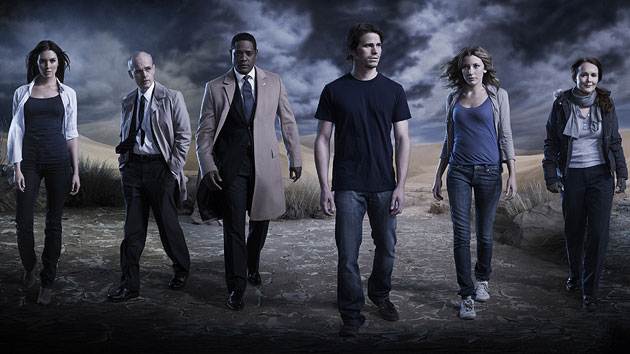
            The Ninefollowed the lives of the survivors of an extended bank hostage crisis.  When the police stormed the building after fifty-two hours, these eight hostages and one captor were the only ones still alive.  And despite having a huge impact on their lives, plus the lives of their family and friends, all of them are remarkably close-mouthed about what happened during those almost-three days.  Husbands, wives, and others are left wondering why these nine people are so changed, and why the only people they seem to be able to relate to anymore are each other.
            The Event was about three parallel plotlines.  One was the story of a resourceful young man whose fiancé is kidnapped while they’re on a cruise and his ongoing attempts to find her.  One covered a newly-elected President who’s learned the US government has been holding extraterrestrials in an Alaskan prison for the past fifty years and has decided to open negotiations and release them.  The last thread is about the aliens themselves and the long-term secret plan they’ve been trying to carry out, even while imprisoned.

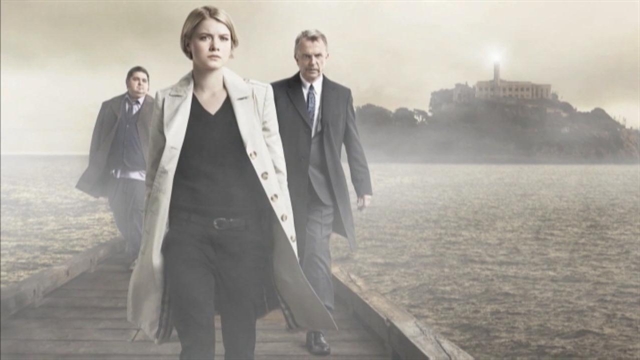
            Last but not least, we’ve got Alcatraz, which just finished airing a few weeks ago.  And I feel pretty confident when I say it finished airing, but I still might be proved wrong there.  It focused on San Francisco police detective Rebecca Madsen who gets pulled onto a special government task force.  It seems all the stories about America’s greatest prison being shut down fifty years ago aren’t exactly true.  All the prisoners weren’t transferred, they vanished.  And now they’re reappearing, one by one… and some of them seem to have missions.

            Seems like a decent array of shows, yes?  Now, here’s the really interesting thing.  All three of these shows failed for exactly the same reason.  They all had the same flaw.  Perhaps even more interesting is that the one that was the most blatant example of it, The Nine, was the first to air.  The others followed and still repeated the same mistake.  And to be honest, I see this mistake crop up in prose manuscripts a lot of the time, too.
            Allow me to explain
            The core idea of The Nine—the unconnected people who share the same mysterious experience—is interesting, but here’s the catch.  The narrative wasn’t about all their friends and family trying to figure out what happened to these folks during their two-plus-day captivity.  It was about the nine survivors.  They were the characters the show focused on as they approached the world with new attitudes and unknown motivations… yet still refused to talk about all those hours inside the bank.
            The Event also had a very interesting idea, but you probably spotted the same issue just in the synopsis.  Much of the ongoing plot circles around this secret alien mission, and the aliens are a third of the show’s cast.  Of course, if the aliens discuss their plans the mystery goes away, so they always speak in vague generalities rather than, y’know, talking about anything.  
            And then there’s Alcatraz.  Our big mystery is these time-shifting prisoners.  How and why are they doing it?  Since the show’s split between present and past, though, we see what our heroine doesn’t.  It’s evident early on in the run that the Warden’s behind it all, or contributing heavily at the least.  Not only that, it’s clear Rebecca’s new boss, Hauser, knows a lot more about it than he’s letting on.  Part of the show’s “mystery” is that he isn’t telling her things she needs to know in order to do her job.
            Everyone see the common link here?
            Consider this—is it a mystery what day my brother’s birthday falls on?  Sure, almost no one reading this knows the answer.  Some of you might even be surprised to hear that I have a brother.  But does that make this a mystery
            The problem with having a story that hinges on something like this is that there really isn’t a mystery.  A real mystery depends on the characters and the audience looking for an answer.  But when a story’s falling back on withheld information, the characters and the audience know right where the answer is.  They’re just being told to sit and wait for it to be revealed.  And since the characters are supposed to mirror the audience, this means everyone’s just getting frustrated.
            This is the real problem all these shows had.  They each had a couple other problems past that—every first season show does—but this was the crucial mistake they couldn’t get past.  All three of them are just cases of characters who are deliberately withholding information from either the character or the audience.
            Yeah, that’s right.  The audience (or the readers, depending on your situation).  My lovely lady made the observation once that any time the narrative of The Event shifted to the aliens, they always spoke like they thought the room they were in was bugged.  In a way, she was right.  There was someone listening to those conversations that wasn’t supposed to be—us.  The aliens can’t talk freely because we’d hear the answers to all the “mysteries” on the show, so instead their leaders had conversations like this…

            “We’re going to have to do it.”
            “You mean…?”
            “Yes.  Just as we discussed.”
            “But what about–“
            “I’ve considered it.  I think the potential risk to our people is acceptable.”
            “All the risks?”
            “Even back at the beginning, we knew something like this might happen.  We can’t back out now because we don’t like the options that have been forced on us.”

            I know this sounds a bit silly, but… well, I’m not the one who was writing it.  You could see the same thing on The Nine, when the former hostages would either have conversations just like that with each other, or repeatedly tell their friends and loved ones they wouldn’t understand because “you weren’t there.”   And it happened on Alcatraz, too.  The Warden would constantly dodge questions or try to bury answers under pseudo-philosophic homilies.
            Let me give you an example of doing this sort of thing correctly.  One you’d heard of long before LOST.
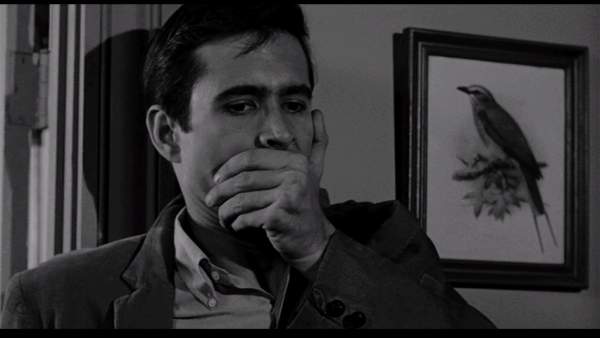
            I’m sure most of you are familiar with Psycho, the Robert Bloch novel that was adapted into the famous Hitchcock film.  Even if you haven’t seen it (or the pointless shot-for-shot remake) you probably know the general plot, yes? 
            So… who’s the main character of Psycho?
            If you said Norman Bates, you’re wrong.  He doesn’t even show up until half an hour into the story.  The truth is, Psycho is almost an anthology of three different stories connected by the theft of a large sum of money and the motel where the supposed thief vanished.  Our main characters are—in their respective tales–the thief, the police detective, and the thief’s sister.
            Y’see, Timmy, this is why Norman’s secret is so powerful.  We’re never seeing it with him, we’re always seeing it through the other characters—the one’s the story’s actually focused on.  If Norman had been one of the main characters, the story would be required to focus a certain amount of attention on him—while at the same time trying not to let us see or learn anything about him.  Instead he’s relegated to a supporting role in the story, even though he’s the character we’re most interested in.
            The Nine, The Event, and Alcatraz (and more than a few other stories I’ve read) all tried to put the mystery front and center while also trying to keep it a secret.  They wanted us to be interested and invested in characters who didn’t want us to know anything about them. 
            And that just won’t work.
            Next time, I want to talk about my collection of zombies.  Sort of.
            Until then, go write.

Categories