
Ahhh, Valentine’s Day.  A day when love and romance should be the first thing on everyone’s mind.  Even when we’re not dating anyone,  we can’t help but brood over such things today.  Okay, love, romance, and maybe massacres.
            Anyway…
            I’ve got plans, so I won’t be here for long, but I wanted to take a moment to address a common issue I see with love stories, whether they’re the main thrust of the story or just a subplot. 
            The weak triangle.
            I’ve mentioned triangles here before.  They’re an easy form of conflict where a character (A) has to choose between two options (B and C).  They come in a variety of flavors, but for today’s little rant I’m going to talk about one of the most common ones—the romantic triangle.
            We’ve all seen romantic triangles before.  Wakko (A) has been lusting after the head cheerleader (B), but then comes to realize that his best friend Phoebe (C) is really the person he should be with.  Dot (A) is all set for her reliable-and-boring boyfriend (B) to propose on their trip to Europe…until she meets the bohemian artist (C) who just moved in across the hall.

            Sounds familiar, yes?
            Here’s something else that may sound familiar.  In how many versions of this story is that head cheerleader (and please pardon me for being blunt) a cruel, wretched bitch?  Not just in a “mean girls” sense, but an honestly reprehensible human being?  She isn’t just someone you wouldn’t want to date, she’s someone you wouldn’t even want to talk to.
            And yet… Wakko’s infatuated with her.  He’s totally blind to her faults, no matter how many times he’s smacked in the face with them.
            Now, granted, in this scenario Wakko’s a high school boy.  High school boys are notorious for overlooking things, especially when it comes to high school girls.  It’s a hormone thing.
            But we’ve seen this situation reversed, too, haven’t we?  Where Dot is smitten with the quarterback—an arrogant jock whose dream is to start up a Hitler Youth program at their school because he thinks it will look good on his college applications.  And we all know girls mature faster than boys soooo… what’s her excuse?
            Really, there’s a dozen versions of my B character (B referring to the point of the triangle, not the sophistication of my writing).  The Bridezilla.  The condescending executive.  The fixer.  The person who’s nice to you but rude to the waiter.  The all-too plain Jane.  The Mister-so-Right-it’s-kind-of-creepy.  Everyone reading this can probably name a dozen examples from a dozen different stories, yes?
            Now, in this particular triangle scenario (and all the variations of it), the big problem is the actual integrity of the A-B line of the triangle.  When B is such an overall undesirable person, we can’t understand why that relationship even exists in the first place.  Why would Wakko be involved with someone like her?  What does Dot possibly see in him?  Surely either of them could do better, right?
            See the problem here?  If it’s that obvious to all of you that my character is with the wrong person, then said character looks kind of stupid, don’t they?  Maybe really stupid, depending on how much of an ass I’ve made B look like.
            More to the point, going with C isn’t much of a surprise in this scenario, is it?  It’s the only sane choice.  If they don’t go with C, they look even dumber than they do for being with B.  To paraphrase Eddie Izzard, when the choice is cake or death, we’re not really surprised that most people choose the cake.
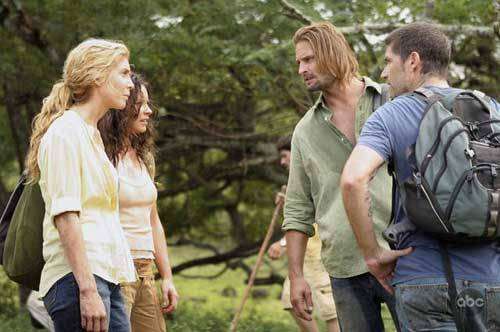
            If I’m using a triangle for conflict, especially a romantic triangle, B and C both have to be valid choices.  If they’re not, then my triangle doesn’t have any strength to it.  It’s weak, and that means my conflict is weak.  And if my plot or subplot is based on that conflict… well…
            Mind you, B doesn’t need to be perfect.  He or she should have pros and cons, like any good characters.  But there need to be enough pros—even if they’re shallow ones—that they somehow outweigh the cons.  As I mentioned above, there are times that a pretty face or really great sex can override a lot of negative qualities in a person.  So can a lot of money or material goods.  But these things can only make up for so much.  At the end of the day, the relationship between A and B has to be a solid one.  Not rock solid, but it has to take some weight.
            Making this decision between B and C needs to cause some turmoil for A.  Not gut-wrenching, years-of-therapy turmoil, but it should require a bit of effort.  It has to be a challenge.
            At least, more of a challenge than picking cake or death off the dessert menu.
            Next time… well, it’s that time of year again.  It’s contest season, and I wanted to offer a few tips to the screenplay-centric folks so you can make sure that your script goes down screaming in a ball of flames and never has a chance.
            Until then… well, okay, tonight your mind shouldn’t be on writing.
            But tomorrow, go write.
February 8, 2013

The End of Houdini

            My apologies for missing last week.  There’s just a whirlwind of stuff going on with the re-release of Ex-Heroes coming up in a few weeks (pre-order a copy at your favorite bookstore now).

            Anyway, an odd title this time, I know, but it’ll make sense in a few minutes.
            But before then, if you don’t mind, I’d like to brag a bit.
            Most of you reading this know I worked in the film industry for many yearsbefore I started writing full time.  That’s pretty cool, right?  I got to hang out with a lot of actors and actresses you’ve heard of.  I had lunch and dinner with several of them, grabbed drinks at the hotel bar with some of them, even played pool with one or two of them.
            In fact, if I may brag a bit more, I fooled around with one of them.  An actress you’ve probably heard of who made it pretty big shortly after our little liaison.  We got drunk at a wrap party that was being held in her hotel.  It was nothing too serious, and we didn’t speak of it afterwards.  I wouldn’t be surprised if she’d written it off or forgotten it entirely, but it’s a small point of pride for me. 
            Wow, you’re thinking.  Good show, Pete.
            Honestly, though, this isn’t much of a story at all, is it?  It’s not like we dated for any amount of time or ever hooked up again.  If I were writing the story of my life, it’d be a minor detail at most.  Barely even a plot point
            And, of course, you figure that over the past fifty years there’s probably been a thousand actors and actresses in Hollywood who could claim that kind of status—someone you’ve heard of who’s undeniably attractive.  And if any of them had vaguely normal sex lives and appetites, they could probably claim that level of physical interaction with at least a dozen people (probably a lot more in the ‘60s and ‘70s).  That’s somewhere around twelve thousand people who could tell the same story as me.
            So it really happened.  But it’s not that interesting.  And it happened to a lot of other people, too.
            Now I said all this to remind you about Harry Houdini. 
            I saw ads for that Cirque de Soleil movie around Christmas and I thought, wow, some production company did not learn from Harry Houdini.  The man’s career tanked with films, because on film anybody can do anything.  At the end of the day, the fact that Houdini was actually doing elaborate escapes on film didn’t matter.  Even in those early days, audiences had realized that people in Hollywood could do amazing things on screen.  They could shoot somebody with a rifle, set buildings on fire, even turn a man into a monster.  Getting out of a pair of handcuffs was nothing.  It was commonplace.
            Y’see, Timmy, if my story is depending on the fact that it’s real and true to make it interesting… well, that’s just not going to cut it. The moment we get caught up in a good story and believe in the characters and the events around them–even just for a moment–they’re real.  So no matter how powerful it may be to me personally, a truestory has to match that level of interest. A real character needs to compete with fictional ones.
            The movie Argois a great example of what I’m talking about.  I remember first reading about the events that inspired the film years ago, and I was blown away by them then.  It’s a heist story wrapped in a con game wrapped in a political tale.  That sounds fantastic, doesn’t it?  And in the hands of a storyteller who knows how to structure his narrative, it’s an absolutely amazing story.
            Who cares if it’s true or not?  It’s just a great story.
             In both books and movies, James Bond is really and truly a secret agent.  So is Jason Bourne.  Chuck Bartowski’s a secret agent, too.  John Carter of Virginia actually traveled to Mars.  The Avengers fought Loki and a bunch of aliens in Manhattan last summer.  I remember it like I was there. 
            If my stories are worth reading, whether they’re true or not is irrelevant.  They need to hit the same levels as these fictional stories.  They don’t need to be action-packed, non –stop thrills, or tons of gratuitous sex and nudity, but they need to have something original and compelling about them that’s going to be interesting to more than a few dozen people.  I’m not talking about universal appeal, but maybe at least… y’know, solar-system appeal.
            More appeal than there was between me and that actress, that’s for sure.
            Next time, on a related note, I thought I’d talk a bit about love.  It’s that time of year, after all.
            Until then, go write.
January 24, 2013 / 6 Comments

His But Looks Like an Asterisk

Bonus points if you get that reference…

Something quick for you.  I’m trying to finish some rewrites.

I’ve mentioned conflict once or thrice. Usually I prefer the term challenge, which has also shown up here a few times. Challenges are what make a story. When my character deals with problems, obstacles, and unexpected twists, that’s what makes them interesting and keeps the audience engaged.

Yeah, there are a few character-heavy stories out there that manage to have no challenges at all and still be interesting. Believe me when I say that they are very, very few and far between. Much, much rarer than some of our college writing instructors and chosen gurus would have us believe.

And really, at the end of the day, readers want to see challenges. They want to read about characters who are doing something active—physically, emotionally, spiritually. Ninety-nine times out of a hundred, characters who never face any sort of challenge are boring as hell.

And that hundredth time is a coin toss.

So here’s a simple test to see if my story has any kind of challenge in it.

Back when I was talking about expanding ideas, I mentioned that I should be using a lot of conjunctions when I explain my plot to someone. If you look back at the example I gave (the first half of Raiders of the Lost Ark) you’ll notice that but accounted for almost half the conjunctions I used. This is because but represents conflicts and setbacks. Indy finds the Ark of the Covenant, but Belloq and the Nazis steal it out from under him. I would’ve had a great time at the party, but my ex was there. Congress says they want to accomplish a lot, but the House and Senate never agree on anything.

Take your novel, screenplay, or short story. Try to summarize it one page. This isn’t a sales-pitch summary like you’d find on the inside flap of the dust jacket or on the back of the DVD. Write up an honest summary from beginning to end with all the beats and plot points. Don’t hold back, include as much as you can, but keep it at one page.

Now let’s take a look at it. How many times did you end up using but as a conjunction? You can count however if it shows up, and maybe though, as well.

If I can summarize my whole story without using the word but, I have a problem. Because but is where my challenges are. No but means no conflicts, and no conflicts means my characters aren’t doing anything worthwhile.

And that means they’re boring as hell.

Hopefully you see my point. But I’m sure some folks won’t.

Next time… hmmmm, not really sure what I’ll do next time. Open to suggestions as always. If none appear… well, I’m sure I’ll think of something really interesting.

Until then, go write.

January 18, 2013 / 3 Comments

The Magical Mystery Tour

             Yes, the Beatles also gave writing advice.

            Is there nothing they couldn’t do…?
            Back when I was in college, I submitted a story to a magazine.  It was loosely based on the myth of the Wandering Jew, and I’d had a character passing through time at a couple key events in history.  I later incorporated it into my college novel, The Trinity, which none of you have ever read.  For good reason.
            The story was rejected.  Not really a surprise, in retrospect, but the editor did send back a personalized response.  He congratulated me on my language, my characters, my dialogue, and my descriptions.  “However,” he said (paraphrasing a bit), “there isn’t much of a story here.  It’s a really neat magical mystery tour, but that’s it.”
            That term threw me a bit at first.  Wasn’t much of a story?  I’d written about an immortal passing down through the ages.  He was there for the Crucifixion.  The fall of Rome.  Magellan’s voyage around the world.  The Boston Tea Party.  How could this editor say there wasn’t a story?  Well, college-age me grumbled a bit and moved on, but I eventually figured out what that editor was talking about.
            Let me give you a few quick examples…
            (and these are just titles to get the point across—don’t read too much into them)
            Sometimes the tour might be the Non-Stop Laughs Roadshow.  We’ve all read these stories or seen these films, where every single line pushes for another laugh.  There’s never a pause to breathe, not even a moment.  Sight gags, puns, fart jokes, awkward pauses, absurd segues, funny voices.  Characters, plot, tone—nothing matters but getting the next laugh.
            Another version could be Merlin’s Wondrous Mobile Fae Emporium.  Every page has something else magical or supernatural to remind us what a magical and supernatural world this is.  I introduce the reader to ancient gods, spirits, supernatural creatures, and arcane mailmen.  Magical weapons, armor, jewelry, and household utensils.  Everything is magical.  Everything is from the dawn of recorded history. Except maybe the bathmat.
            No, sorry, the bathmat was woven on the loom of Fate with the silk of astral spiders.  But the washcloth is pretty mundane.
            The High-Tech Pan-Galactic Tour is sci-fi for the sake of sci-fi.  Because in the future or alien world that I’ve created, everything is different.  People wear clothes for different reasons.  They have robots that aren’t reallyrobots.  Things are powered in an entirely different way.  Transportation, food, the internet, entertainment… it’s all very alien and unrelatable.  Don’t even ask about sex.  In the future it’s so different you wouldn’t’ believe it.
            We could also call the tour, say, Captain Spaulding’s Traveling Horror Show.  It’s when people die one after another in horrible ways, usually after witnessing the gruesome death of the last poor bastard.  There’s blood and gore and some really nauseating dietary choices and a few nightmarish torture scenes.  Running someone feet-first through a meat grinder is tame compared to what happens in the horror show.
            In my case, it was the Historical Talent Show and Social Mixer.  If my story is set in the 1960s, my character will run into every single person you’ve ever heard of from that decade.  Fidel Castro, Andy Warhol, the Apollo 11 crew, the cast of Star Trek, Ed Sullivan, Harper Lee, Kurt Vonnegut, Kennedy, Nixon, Hendrix, Elvis, and (of course) the Beatles.  Most of them won’t do anything, but they’ll pass through and offer a few words here and there.  Maybe one of them will offer a helpful tip, but odds are they’re just there to get recognized.
            Y’see, Timmy, the mistake I made—one I still see lots of people make—is the assumption that a pile of plot points is the same thing as a story.  This is kind of like saying a pile of lumber is the same thing as a house, or there’s no difference between a palette of oil paints and the Mona Lisa.
            A lot of the time these stories will end up with a very episodic feel to them.  In the case of comedies, it’ll be a constant stream of setup-joke-setup-joke-setup-joke.  In horror stories, it’s victim-death-victim-death-victim-death.  The magical mystery tour almost always feels episodic because I’m using it to show you one thing after another with very little connection between them.  Oh, look, it’s the Crucifixion.  Oh, look, it’s Magellan.  Oh, look, it’s Paul Revere.
            All of these things I’ve listed above are great elements, no question about it.  If they’re not doing anything to advance the plot or the story, though, they’re just distractions.  There’s a point that this kind of thing is rich detail and there’s a point that it’s just padding.  And that’s the kind of detail that just slows down my story.
            Assuming I’ve even got a story.
            Any time you feel the need to drop a detail like this into your manuscript, stop for a minute and think.  This may absolutely be the greatest take on werewolves anyone’s ever put on paper, but if the werewolf’s only in the story to show this take… maybe I should save it for something else.  I may have scribbled the most elaborate death scene ever, but if absolutely nothing changes in the story when I swap out those six pages with “And then Phoebe killed Wakko,” maybe I should reconsider those six pages.
            And if I can just pull them out altogether without changing the story…  Well, I’ve got to wonder what they were doing there in the first place.
            Next time, I want to talk about your but for a little bit.  Especially yours.
            Yours… not quite so much.
            Until then, go write.

Categories