
July 1, 2011 / 3 Comments

One Time Only

If at first you don’t succeed… destroy all evidence you ever made the attempt.

No, no, don’t do that…

A few years back I was working on a film set where we were staging a bank robbery. The director… well, let’s be polite and say he wasn’t quite as knowledgeable as he thought he was.

We ended up doing a big dolly track move that encompassed the whole scene. Then we did a series of tighter moves. Then we did a wide master of the scene and got all the coverage. Then we did a reverse master of the scene and started doing coverage on that. Then came all the reaction shots for everyone in the bank. And by this time, the crew was starting to grumble, because every one of us knew what was going wrong.

As it turned out, my department had an intern, and he was still watching all this with complete newbie glee. As the day (and the bank robbery) wore on and on, he asked me what everyone was getting so grumpy about. After all, weren’t these all cool shots? I agreed they were, but pointed out that at least half of them were a waste of time. When he asked why, I came up with this way to explain it.

“When all this gets cut together,” I told him, pointing at one of our extras “you can only use one shot of them robbing that bank teller. You can break it up a bit, but not much because it’s happening so fast. At the end of the day, you can only rob teller number five once, so filming nine different versions of her getting robbed is a waste of time. If this guy knew what he was doing, he’d just get the shots he was going to use and that’d be it.”

The intern took those words to heart, and two or three more times during that project he’d give me a nod on days when scenes were just dragging and say “You can only rob teller number five once.”

The point of the story being, I know at least one person has gotten something useful out of my rambling.

No, wait, sorry, the point is that when you’re telling a story you can’t do the same thing again and again and expect it to have the same weight.

There’s an idea in literary theory (sorry, I do have to go there now and then) which says you can only experience a story for the first time once. After that first time, your brain can’t help but restructure your view of the story to see it with more experienced eyes. If you’ve ever read a mystery novel for a second time, or maybe rewatched films like The Sixth Sense, Dead Again, or The Prestige, you know it’s a very different experience when you go through these stories a second time. Or a third time. But you can never, ever get that first time again. Even something like The Empire Strikes Back changes between the first and second exposure to the material.

This is why we all hate spoilers, because the innocence, so to speak, of that first experience is being taken away from us and we can never get it back. To be honest, this is also one of the problems I have with the “film school” approach to movies. A lot of these folks get taught to study and dissect films rather than to watch them, so the first time with the story is lost on these people. They never see the movie the way it was intended to be seen—they just jump straight to the second viewing. Which seems counterproductive when you want to learn how to do something. It’s like going to cooking school and never bothering to taste anything.

Anyway… I digress. But not by much.

There’s another aspect to doing the same thing more than once, and this is the idea of noise. A few times before I’ve brought up Damon Knight and his wonderful observation about facts. A fact we don’t know is information, but a fact we already know is noise. This is true even if we just learned the fact ten or fifteen pages earlier.

An example…

I read a book a while back where one piece of information was “revealed” four times. Essentially, character A discovered a mysterious South American temple that shouldn’t exist. Then A was killed and B found his notes, so B discovered the temple. B quickly related the story to C and then C explained the whole thing to D, so now D learned about the temple. And D… well D was pretty high-ranking, so he went to the President and told the whole Cabinet about the temple. And every single time people would have incredulous reactions and then the reader got the explanation of what the temple represented and who built and how we know it’s ten thousand years old and what we think it is.

Every. Single. Time.

Y’see, Timmy, that information is powerful the first time we hear it. Like so many things that get repeated, though, it loses power every time. In this case, it’s not just losing power, it’s taking a rapid plunge from information to noise.

Plus, it’s taken a huge emotional hit. Finding out that the pyramid strongly implied, if not proved, a pre-human civilization was amazing… the first time. The second time it was something we already knew, even if it was new to this particular character. The third time it was annoying. By the fourth time, personally, I was skimming.

Here’s an easier example, and one we’ve all probably dealt with at some point or another. Have you ever had someone tell a joke (or what they thought was a joke) and then they repeated the punchline when no one laughed? Maybe they repeated it two or three times. Perhaps they went after people one on one (“Hey, Timmy, did you hear when Mike said he wasn’t putting in enough hours and I said ‘That’s what she said’..”). In these situations, as the joke was repeated again and again, we all just got more and more annoyed, didn’t we?

Now, anytime a writer has a fair-sized cast of characters and an even slightly challenging plot, they’re going to have to deal with this issue. You can’t have everybody walking around together experiencing every single thing at the same time. Which means there are going to be points when A and B know something C and D don’t. The trick is coming up with ways to share that information without having the story come to a grinding halt while characters discuss things the reader already knows.

I bring this up not just because of the head-banging nature of that book I referenced above, or because of scarring memories of the bank robbery. Y’see, this is something I’m dealing with right now. In my current project I’m juggling a large cast who are investigating a mystery separately, but keep coming together to compare notes. I know my mystery, but the roadblock is getting past awkward infodump scenes without neglecting this character or that one. I mean, Debbie’s reaction to what they found in the sub-basement is just as valid as Pash’s, isn’t it? She just had the bad luck of having to work that day so she couldn’t go exploring and had to get that information second hand.

You get one chance for your big reveal and that’s it. One. You can’t keep revealing it again and again and expect that reveal to have the same emotional weight. It’s also not going to draw the audience in, because it’s gone from being a surprise to being… well, just another fact.

And if you’re not careful, repetitive facts can get dry and boring really quick.

Next week, I’d like to tell you about the time I sat around for hours watching the most inefficient bank robbery ever.

No, actually, next time I’d like to describe something you’ve probably never seen before.

Until then, go write.

April 14, 2011

Jenga!

For those who never played it, Jenga involves making a tower out of long wooden blocks. Then multiple players take turns sliding the blocks out without toppling the tower. Eventually, though, someone will pull out one block too many and it begins to sway. It might stabilize. It might not. In the next turn or two that tower’s going to come crashing down into a pile of wooden blocks.

More on that in a minute…

I’ve mentioned the idea of withheld information once or thrice before, and it struck me that I’ve never quite explained what it is and why it should be avoided

So, hey… no time like the present.

Withheld information is when the writer or characters hold back facts from the audience for no other reason than to drive the plot forward. It’s the clumsy, unskilled version of mystery and suspense. I usually see it employed by novice writers who don’t have a mystery but are trying to create the illusion of one.

If you think of it in terms of Jenga, withheld information is when you know the next block is going to make the tower collapse… so you pass your turn to Wakko. Who in turn passes his turn to Phoebe. Who passes it to Yakko. Who passes it back to you. Yes, the game is still going on, but it’s only continuing because it’s stopped moving forward. And has become very boring in the process.

Like Jenga, information in a story can hit a certain tipping point. There comes a time when you have to tell the reader everything because it’s foolish not to. I can have the mystery, I can have the characters discover the answer… and then I need to let the audience know the answer.

At some time or another, most of us have been in a position where we have a vested interest in not answering a given question. Or taking as long to answer it as possible. A few such questions are….

“How old are you?”

“Do these jeans make me look fat?”

“Are you claiming this as a deduction?”

“Did you eat the last piece of cheesecake?”

“Is that lipstick on your collar?”

Now, by the same token, there are questions that should take no time at all to answer. When life and limb are at stake–or when nothing at all is at stake–nobody beats around the bush. These are the times you have to seriously wonder why someone isn’t answering a question–and they’d better have a damn good reason for not answering. I loved LOST. Absolutely loved it. But it did suffer when Ben became a regular part of the cast because we all knew that he knew stuff he wasn’t telling us. While there were still lots of cool mysteries on the island… well, there were also lots of things where it was just Ben sitting there with his lips pressed together in that creepy flat line.

There’s a sci-fi show on right now that suffers from this. I won’t name names, but a third of the show is the government trying to figure out what a group of humanoid aliens are up to, a third of it is one lone character trying to find out the alien secrets that are keeping him from his girlfriend, and one third of the show is the aliens themselves. And the aliens tend to talk in very vague, general terms, like they think every room and car they’re in is loaded with listening devices.

You can probably see how the writers have put themselves in a corner. If the aliens talk freely, it kills the mystery for the other two-thirds of the show. If they don’t, a third of the show becomes obtuse for no reason except to keep the other two-thirds going.

Now, there is a point when the pendulum swings even farther. Sometimes the information has been revealed, but people keep acting and insisting it hasn’t. So the audience is left drumming their fingers while they wait for the characters to learn something that’s already known.

I read a book recently that suffered from this twice-over. First, much like my own Ex-Heroes, it switched styles and viewpoints now and then. Every second or third chapter was done in epistolary form, a series of 16th century letters between a spy and his master, encoded with an elaborate, almost unbreakable cipher. Sounds kind of interesting, yes?

Thing is, most of the other chapters were about a search for the key that would let the modern-day characters read those letters. They’d go on and on about how important it was to decode them and learn the secrets contained within, etcetera, etcetera. So the motivation for a big chunk of the plot–maybe a third to half of the book–was deciphering some letters that had already been deciphered for the audience.

In the same book, though (twice-over, remember), one of the characters also had a secret. I felt there were a few too many clues, but overall it was passably hidden (I guessed it a third of the way in). At the halfway point, two different characters (solving different halves of the secret) came together and realized their halves met to form a whole. I felt clever. The characters didn’t realize what they’d discovered. The “secret” went on and on and was finally “revealed” in one of the final chapters.

In other words, for most of the book the reader is waiting for the characters to catch up.

To keep up our Jenga metaphor, this is when the tower has collapsed but your host is insisting you keep playing. So everyone’s sitting there picking up little wooden blocks off of the tabletop and telling themselves it’s a fun game of skill.

Now, I’d also like to point out that there are times when the audience does know things the characters don’t. That’s where we get suspense, and suspense is great… if it’s real suspense. Y’see, Timmy, one of the keys of suspense is that the characters don’t know they’re lacking this information, but it’s very important they learn it. Life-threateningly important. In suspense the stakes are high and they’re almost always personal. It may not be my life that’s in danger, but maybe the life of my girlfriend, my brother and his family, or even my cats. It’s tough to have good suspense without high stakes that matter to me. And the thing about high stakes is that they eventually have to pay off.

Hitchcock spoke of the bomb under the table (or was it under a chair? Or under the car…?). Wakko doesn’t know it’s there. The audience does. We can see the countdown timer and we know Wakko’s life is in danger. But if the bomb never goes off or Wakko never finds it, that bomb is just as frustrating as the pile of wooden blocks.

So, to recap, here are three great story elements that are not withheld information.

A mystery is when the main character and the audience are aware that a piece of information has been hidden from them, and the story usually involves the search for that unknown fact. At it’s simplest, a mystery is a question someone in your story is asking and trying to find the answer to.

Suspense is when there’s an important piece of information the audience knows and the characters don’t. The key here is that the characters don’t know that they need to know this vital fact. The bomb under the table. Wandering off with the murderer. These are common suspense situations.

A twist is when a piece of information is revealed that your characters and the audience didn’t know was being kept from them. They don’t even suspect those facts are out there, waiting to affect the story. When a twist appears, it comes from out of nowhere and changes a lot of perceptions for the characters and the audience. We’ve all made the natural assumption that Luke Skywalker’s father is dead, so when we learn that Vader is his father, it’s a bombshell that alters our view of everything.

If you’re trying to use one of these devices, make sure you’re using them correctly. Don’t just withhold information from your audience. Your characters should be just as smart and clever as your audience, and if they aren’t talking, make sure there’s a real reason why.

Next time, a wonderful story about Harrison Ford and a bellboy.

Until then go… you know. Do that thing. The thing we were just talking about. That.

If you know the show, you get the joke. And the topic of this week’s rant.

Last week I used a certain soon-to-be-ended island castaways show to demonstrate how you can construct a solid mystery, and also some of the common places mysteries go wrong. This week I’d like to look at mystery’s kissing cousin, the twist.

While a mystery is a piece of information the story’s characters are searching for, a twist is when a piece of information is revealed that the characters and the audience didn’t even know was being kept from them. They don’t even suspect this information is out there, waiting to affect the story.

When we discover that Oceanic 815 crashed because of Desmond and the Hatch computer which controls magnetic energy, that’s a twist. Realizing that we’re not watching drunken Jack Shepard in a flashback but in a flash-forward is also a twist. When we learn that John Locke never came back from the dead, he’s been the Smoke Monster all along (or the Man in Black, if you prefer), that’s a great twist. The story–and our own expectations–have been leading us to believe one thing, and it turns out the truth is something else. The key thing to remember is that when a twist is revealed, it should change how we interpret events that have happened in the story so far.

Those are the two points it takes to make a solid twist. The information has to be something the characters and the audience didn’t know. The information has to change how the characters and/or the audience look at past events in the story. That’s pretty much it.

For the record, the twist is probably tied with the mystery as one of the top things fledgling writers try to do and fail. How do they mess this up? Allow me to tell you a little story…

A few years before the ranty blog came into existence, I had the misfortune of working on a really bad, straight-to-DVD sequel to a fairly popular film. The original had a tight, clever mystery story with multiple twists and double crosses. Oddly enough, though, it was far better known for numerous sequences with Denise Richards soaking wet and at various levels of nudity. Go figure.

The sequel I worked on had some of those twists and double crosses, but they weren’t very tight. In fact, when you actually broke down the story… most of them were complete nonsense. The writers had just thrown in tons of “reveals” without seeing if any of them made linear sense. Some of the facts revealed in the course of the story were either already known or could’ve easily been deduced without too much trouble. It was kind of like the big reveal that I have a blog! Yeah, I’ve never said it in so many words, but there it is. Or perhaps you’d be stunned to discover the blog has Amazon links on it!

Yup, all the skeletons are coming out of the closet now.

The revealed information that sequel script kept tossing out also didn’t have any impact on the story. Which, as I mentioned above, is one of the key elements of a twist. It has to change how we interpret the things we’ve read or seen up until this point. If it doesn’t, it’s just pointless information. The sequel’s reveals just kind of… sat there.

Y’see, Timmy, some writers try to push a reveal as a twist when it has no bearing on the story. Would it change the story of LOST to discover Hurley also loves The Last Starfighter? Or that the Dharma folk used the Smoke Monster to frighten children? Would we look at the past two seasons in a new way if we learned Sayid drank for a week straight after Nadia was killed? Odds are none of you knew any of this, so it is revealed information, but none of these revelations twist any of our perceptions of the events or characters. Which is why the writers never tried to make that type of stuff feel like a big revelation.

I’m just making all that stuff up, by the way. I think Hurley is a Star Wars purist.

Now, there’s one more potential catch to a good twist, but this one has a bit more leeway. A twist depends on a certain amount of story coming before it, because it gains power and impact when there’s more story for it to… well, twist. It’s difficult to manage a successful twist in the first ten pages of a manuscript, but a lot of people try to do it anyway.

The first major twist of LOST was, arguably, the reveal that Locke was in a wheelchair before the crash of flight 815, the same wheelchair we’ve seen other survivors using as a cart to move stuff across the beach. I say arguably because there is one before it, but it kind of feeds into what I was saying about needing a certain amount of storytelling ahead of time. In the two hour pilot, there is the brief mystery of who was in the handcuffs. We know somebody on this flight was a prisoner, but who? The logical assumption is Sawyer, which is why we’re all surprised to discover it was small and sometimes squeamish Kate.

This is a twist, yes, but like the quickly-solved mystery this bit of information is revealed so soon it’s almost a regular plot point. Discovering Kate was the federal prisoner forces us to rethink 50 or 60 pages of storytelling, but learning that Locke was in a wheelchair makes us look at almost 200 pages in a new light. It not only forces us to re-evaluate the John Locke we’ve seen up until now, but also the island and the plane crash itself. When it’s revealed that the Smoke Monster is a sentient, thinking creature at odds with Jacob and the Others, that requires us to re-examine all five seasons of the show so far.

Because that’s a big, head-turning twist. The kind that makes people go “Oh, wow…”

Next week, I’d like to focus past all the background noise and talk about another common mistake with overwriting.

Until then, go write.

May 6, 2010

The Mysterious Island

Not to be confused with the uncanny valley, which is another phenomenon altogether…

So, there’s a show on television called LOST. Maybe you’ve heard of it? It’s not terribly popular and has only survived because of a miniscule-yet-devout fan following. Oh, and it completely changed how people approach one hour dramas on television and proved a genre show can hold its own.

Proving something, of course, doesn’t mean anyone’s learned anything. The recent Wall Street collapse has pretty much flat out proven trickle-down economics doesn’t work, but people still rally behind that mentality.

But I digress…

By the way, I’m going to be tossing out some spoiler-esque stuff here. If you’ve never seen the show and have been planning a one-month Netflix marathon once it’s over, you may want to skip today’s little rant. Maybe next week’s, too. A good part of storytelling is getting the twists and reveals when you’re supposed to, so if you want to enjoy this show as it was intended, take the week off.

Because of the phenomenal success of LOST, numerous shows tried to mimic its formula and failed. I’ve seen dozens and dozen of fledgling writers try to mimic it and they’ve failed, too. And, interestingly enough, they’re all failing for the same reasons. They don’t understand what they’re doing.

That sounds a little flip, I know, but that’s what it comes down to. These folks tried to copy something they saw, but they didn’t actually understand what they were seeing. In one sense, open-heart surgery is cutting open someone’s chest and poking around with steel tools, but we all understand that there’s a lot more to it than that. This is why nobody reading this grab for a steak knife when Uncle Wakko complains of chest pains.

At its core, this failure of storytelling comes from not understanding the difference between a mystery and a twist and how they both succeed. They’re two very different things, they each work a specific way, and they’re not interchangeable. Let’s slap a simple definition on each one.

A mystery is when the main character(s) and the audience are aware that a piece of information has been hidden or kept from them, and the story usually involves the search for that unknown fact (or facts, as it may be). How did a polar bear end up on this tropical island? Why do these six numbers keep appearing everywhere? Who built this gigantic statue on the shore, and how did it get smashed? At it’s simplest, a mystery is a question someone in your story is asking and trying to find the answer to.

Now, here’s how people tend to screw this up.

In a mystery, the key element you have to remember is that the characters are aware of it. They’re searching for answers, or at least they’d be somewhat interested to find those answers. Because of this, the strength of a mystery is entirely dependent on those characters. If we (the readers or viewers) don’t care about the characters, we don’t care if they reach their goals, and in this case their goal is solving the mystery. In the same way a good character can make you empathize with a broken heart or an amazing triumph, they’ll make you want to know what the answers is behind a given puzzle.

Using LOST as an example again, think of the first three or four episodes. The first episode (or first half of the two-hour pilot) is nothing but character development. It’s about who survived the crash and giving us a quick thumbnail of their personalities. At the very, very end of the episode, there’s a loud roar and we see something crashing through the trees in the distance. Episode two is more character, and then a bit more mystery. There’s a polar bear in the jungle and the something grabs the pilot out of the crashed plane’s cockpit (a pilot who was supposed to be Frank Lapidus, it’s worth noting…) and brutally kills him. Episode three is even more character and ends with a creepy radio signal left by someone who was shipwrecked on this island almost twenty years ago. It’s not until the fourth episode, “Walkabout,” that there’s undeniably something unnatural going on here.

So out of the first four hours of LOST, all the mystery elements add up to… maybe ten minutes, if you really stretch it. The rest is all character. And as has been said many times before, once we believe in the characters, we have to believe in what happens to the characters.

A lot of people get this backward. That’s the first big mistake. They try to start with the mystery, then later on they develop the characters and make them relatable. For the record, this almost never works. How many failed stories or shows or movies have you seen where the writers tried to front-load some kind of mystery with the hope you’d get interested in the characters as they tried to solve it? Remember, it doesn’t matter how cool or awesome or clever the answer is. We need to be interested in the characters who are going to find that answer.

The other important thing about a mystery is that it has to have a resolution. We love the mystery, we remember the mystery, and we’ll stick around while these characters try to figure it out, but eventually we need to learn why there’s a polar bear on the island and why all that’s left of the statue is one four-toed foot. Mysteries need answers. Even if they aren’t spelled out or blatantly said, the audience needs to believe an answer exists–and has always existed–and they’re not just getting strung along.

That’s another classic mistake some writers make. They try to dazzle their audience with what looks like a cool, baffling mystery. What they’re really doing, though, is just throwing out random elements they’ve seen before. Their puzzle hasn’t been thought out and they’re not starting with an answer. When a mystery has a silly, this-makes-no-sense resolution, it sours everything that came before it (assuming it wasn’t soured already). When a mystery is never resolved (to be continued in the next book or the next screenplay), it gives the audience the sense they’ve wasted their time.

That’s a great note for beginners, by the way–any fledgling writer is going to fail with a mystery that gets revealed “next time.” You don’t get another manuscript to impress editors, publishers, or contest readers with. You just have this one. If you’re someone reading this blog and you don’t have two sales under your belt (not dollar options, not back-end deals–sales), “to be continued” is almost guaranteed to be the kiss of death.

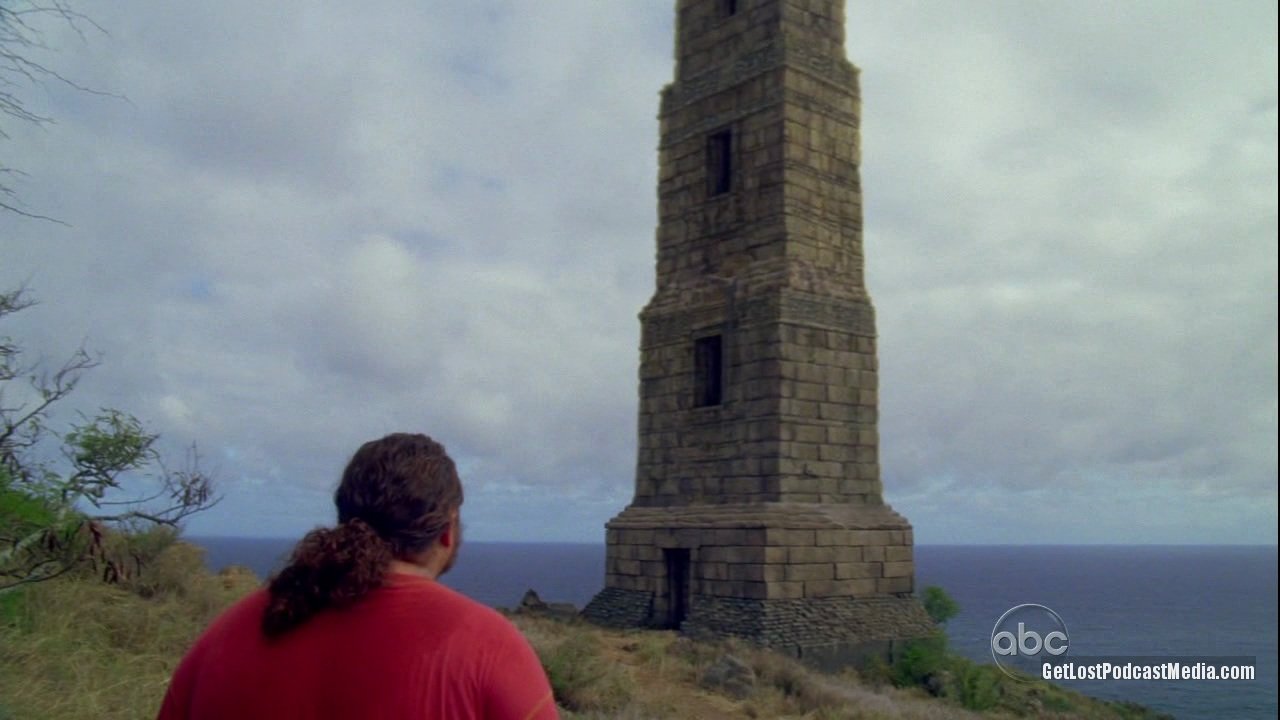
There’s another aspect to the resolution, too. If we find out the answer too soon, this wasn’t a mystery, just a minor plot point. Who burned Michael’s raft is never really a mystery because we almost immediately discover it was his son, Walt, who kind of likes it here on the island. What Jacob’s lighthouse is for also isn’t much of a mystery because we get the answer about fifteen minutes after we first see it. A mystery takes a little time and generally gets answered near the end of your story, which means you story needs to have an end. Many folks have commented on the thumb-twiddling quality the third season of LOST had. This was because the writers didn’t know when their show was going to end and were left unsure how to reveal their clues. Once they were past the beginning, the middle of their story rambled because they didn’t know where (and when) the end was. As I mentioned above, a mystery needs a solid conclusion, and that conclusion can’t be pushed off to some other time.

Speaking of pushing things off until another time, this is getting a bit long and I’m going to wrap it up. Next week I’ll use our favorite island castaways to rant about twists and some of the common mistakes people make with them.

Until then, go write.

Categories