
May 27, 2010 / 7 Comments

To See The Invisible Man

Either my latest rants have been pure gold no one can argue with or a lot of you really hated me using LOST as an extended example. Haven’t seen any comments in weeks.

Speaking of things you don’t see, this rant’s title is another one of those clever pop culture references. Anyone remember it?

Okay, fine, I’ll explain.

“To See The Invisible Man” is the title of a Twilight Zone episode adapted by Stephen Barnes from an old Robert Silverberg short story. It’s not one of the classic Zones, but one of the newer ones when the show was revived in the mid-‘80s. It’s the tale of a man in a somewhat-utopian society who is sentenced to a year of “public invisibility” because of his selfish, antisocial behavior. He isn’t actually turned invisible, however. He just gets a small brand on his forehead which tells everyone to ignore him. That’s the curse of it. They really can see and hear and feel him–and he knows they can– but no one will react to him. Even when he desperately wants and needs to be acknowledged (there’s an eerie scene in a hospital emergency room), people pretend he’s not there. As we find out later in the story, seeing an invisible person is a major crime.

In a way, this serves as a clever little metaphor for being a writer. The reader knows the writer is there, that you’ve crafted and shaped these words on the page, but they don’t want to admit you’re leaning over their shoulder. They just want to go on their merry way and pretend they’re alone with the book. As such, the worst thing the writer can do is draw attention to themselves.

For many would be writers, the temptation is to embellish the pixilated page with an exuberant flourish of verbiage which exhibits not only the vocabulary we’re capable of as proficient anecdotists (far above any paltry amanuensis), but also how we can bend grammar to our will; the elaborate and subtle metaphors we can craft; and the clever intricacies we can interweave betwixt the threads of character, plot, and theme.

For the record, it took me almost fifteen minutes to craft that impenetrable sentence. Yes, it looks like a paragraph but it’s just one sentence. A long, sprawling sentence that really tempted you to skim, didn’t it? Heck, let’s be honest. I bet after tripping over your second or third obscure word, at least half of you started skimming, didn’t you?

Y’see, Timmy, every time we make the reader hesitate or pause just for a second, we’re breaking the flow of the story. We’re encouraging them to skim at best, put the manuscript down at worst. The reader should forget they’re paging through the latest Wakko Warner novel or screenplay, perhaps even forget they’re reading a written work altogether. This happens, odd as it sounds, when they forget they’re reading. And the easiest way to make that happen is for them not to see the writing. It’s tempting to wave our arms and shout and try to get the reader to admit they can see us, but all this does is ruin things for everyone. It’s like Sherlock Holmes showing how he came to his amazing deductions or a magician explaining their greatest illusion. That moment is when the whole thing falls apart.

As writers, we need to be invisible. Oh, we want our characters to be seen. We want our dialogue to be heard. We want our action and passion and suspense to leave people breathless. But we are just distractions. If you think about it, who’s the more impressive tough guy– the one who commits unimaginable acts of violence, or the one who doesn’t have to commit those acts? Being able to restrain yourself is just as impressive as how excessive you can be. Less of us is more of the story.

Here’s a few simple ways to keep your literary head down.

Vocabulary We all know what bright means, but effulgent can make us pause for a moment. That guy can be bald or he can be glabrous. Some sneakers are black with a bit of red and some are atrementous tinged with titian.

A huge problem I see is writers with ego problems. They think they’re cleverer than anyone else, and they’re determined to prove it. More often than not, the writer latches onto (or looks up) obscure and flowery words because they didn’t want to use something “common” in their literary masterpiece. These folks write sprawling, impenetrable prose that makes it sound like they spend their free time wanking off to a thesaurus. All too often they’ll try to defend this wheelbarrow of wordplay by saying it’s the reader’s fault for having such a limited vocabulary. After all, everyone knows what it means if I say I’m going to cast a bantam gallet towards an embrasure, right?

Any word a writer chooses just to draw attention, to prove they don’t need to use a common word, is the wrong word. Any word that makes the reader stop reading and start analyzing is the wrong word. Period. You can try to justify your word choice any way you like, but absolutely no one is picking up your book or looking at your screenplay hoping for a vocabulary lesson. When the reader can’t figure out what’s being said for the fourth or fifth time and decides to toss that manuscript in the big pile on the left… there’s only one person to blame.

(It’s not them, in case you had any lingering thoughts on the matter)

(By the way, it just means I’m going to throw a small stone at a window)

Structure— Like obscure vocabulary, convoluted sentence structure is often the sign of a writer’s ego. One of the most common ways this manifests is to insist on grammatical and structural perfection. This often mean a rigid, formal text and very stiff dialogue. These writers are so insistent on proving they know the correct way to write that their words come across as forced and artificial.

The second most common is needless complication. If something can be described in five words, these writers will manage to do it in thirty, and I guarantee at least half a dozen of those words you’ll have to stop and look up (see above). This is where you find folks that use phrases like “seemed to be” or “appeared to be.” Some of these storytellers also go the non-linear route, even though nothing in their story gets improved by this pointless scrambling.

All of this can be an instant killer in screenplays, because most professional readers won’t put up with it. Your writing needs to be clean, simple, and natural. If there isn’t an in-story reason for it to be overcomplicated, it shouldn’t be.

Said— People will never notice if you use said. Said is invisible. What they notice is when your characters respond, retort, exclaim, pontificate, depose, demand, muse, mutter, sneer, shout, snarl, growl, whimper, whisper, hiss, yelp, exclaim, or ejaculate. Yes, stop giggling, it was a common dialogue descriptor for many years. Once you’ve got three or four characters doing all this (instead of just saying things) you shouldn’t be surprised if your audience stops reading to shrug or snicker. Usually while they’re pointing at you.

Granted, there are times where characters are shouting or whispering or hissing. Overall, though, they’re just going to be saying things. So don’t overcomplicate things and draw attention to yourself.

Names. If used in moderation, names are invisible. They’re just shorthand for the mental image of a character. It’s also worth mentioning that simpler, more common names blend into your writing easier than rare or unnatural ones. A reader can glide past Tony but might stumble a bit on Antonio. Edward is easier on the frontal lobe than Ezekiel, and they’re all nothing compared to Bannakaffalatta.

It’s worth mentioning a little note there for the genre folks. When writing sci-fi or fantasy, many fledgling writers feel the need to rename everything. The characters have all-new, created-for-this-world names. So do their pets. And their gods. And their elements. And their system of weights and measures. Off the top of my head, I would say 90% or this is a waste of time and a distraction. Your elaborate fantasy world will not collapse if the giant, fire-breathing lizards are called dragons, but it might if you insist on calling them pyroreptillicans.

A good rule of thumb–when you’ve made up a name like Grothnixyettiq for one of your characters (or their mode of transport, or their homeland, or the way they measure distance), take a moment and try to say it out loud. Note how long it takes you to figure out how to say it. Now email or text it to a friend, give them a call, and ask them to say it out loud. No hints or clues. Just ask them to say that word you wrote. If their pronunciation doesn’t match yours, you should really use a simpler word.

Always remember that moderation is key. If any name repeats too often, it begins to get cumbersome. Even a simple name like Dot can stack up. When I see a paragraph about Dot reading Dot’s book out by Dot’s pool shortly before Dot decided it was too hot outside and Dot went in where it was air conditioned… well, personally at that point I start counting them. Which means I’m not reading the story, I’m auditing it.

This is why we have…

Pronouns. When proper names start to stack up, we switch to the pronoun. Just like names are shorthand for story elements, pronouns are shorthand for those names. When nouns start to clutter up your writing, they’re there to leap in and shoulder the weight. It’s how Yakko becomes he, that mysterious island becomes there, and the Cerberus Battle Armor System becomes it.

The catch here is to make sure your pronouns are clear, because the moment someone gets confused about which it you’re referring to, they’ve just stopped reading your story and started studying the page. A good rule of thumb—after you’ve referred to Dot as she half a dozen or so times, drop her name back in once. It’s been long enough it won’t look repetitive, and it’s a gentle reminder of who she is.

And there they are. A few simple ways to stay invisible.

Next week, just for whatever budding screenwriters happen to stumble across this site on a regular basis, a few notes on drafting. In the construction sense.

Until then, don’t let me see you writing.

If you know the show, you get the joke. And the topic of this week’s rant.

Last week I used a certain soon-to-be-ended island castaways show to demonstrate how you can construct a solid mystery, and also some of the common places mysteries go wrong. This week I’d like to look at mystery’s kissing cousin, the twist.

While a mystery is a piece of information the story’s characters are searching for, a twist is when a piece of information is revealed that the characters and the audience didn’t even know was being kept from them. They don’t even suspect this information is out there, waiting to affect the story.

When we discover that Oceanic 815 crashed because of Desmond and the Hatch computer which controls magnetic energy, that’s a twist. Realizing that we’re not watching drunken Jack Shepard in a flashback but in a flash-forward is also a twist. When we learn that John Locke never came back from the dead, he’s been the Smoke Monster all along (or the Man in Black, if you prefer), that’s a great twist. The story–and our own expectations–have been leading us to believe one thing, and it turns out the truth is something else. The key thing to remember is that when a twist is revealed, it should change how we interpret events that have happened in the story so far.

Those are the two points it takes to make a solid twist. The information has to be something the characters and the audience didn’t know. The information has to change how the characters and/or the audience look at past events in the story. That’s pretty much it.

For the record, the twist is probably tied with the mystery as one of the top things fledgling writers try to do and fail. How do they mess this up? Allow me to tell you a little story…

A few years before the ranty blog came into existence, I had the misfortune of working on a really bad, straight-to-DVD sequel to a fairly popular film. The original had a tight, clever mystery story with multiple twists and double crosses. Oddly enough, though, it was far better known for numerous sequences with Denise Richards soaking wet and at various levels of nudity. Go figure.

The sequel I worked on had some of those twists and double crosses, but they weren’t very tight. In fact, when you actually broke down the story… most of them were complete nonsense. The writers had just thrown in tons of “reveals” without seeing if any of them made linear sense. Some of the facts revealed in the course of the story were either already known or could’ve easily been deduced without too much trouble. It was kind of like the big reveal that I have a blog! Yeah, I’ve never said it in so many words, but there it is. Or perhaps you’d be stunned to discover the blog has Amazon links on it!

Yup, all the skeletons are coming out of the closet now.

The revealed information that sequel script kept tossing out also didn’t have any impact on the story. Which, as I mentioned above, is one of the key elements of a twist. It has to change how we interpret the things we’ve read or seen up until this point. If it doesn’t, it’s just pointless information. The sequel’s reveals just kind of… sat there.

Y’see, Timmy, some writers try to push a reveal as a twist when it has no bearing on the story. Would it change the story of LOST to discover Hurley also loves The Last Starfighter? Or that the Dharma folk used the Smoke Monster to frighten children? Would we look at the past two seasons in a new way if we learned Sayid drank for a week straight after Nadia was killed? Odds are none of you knew any of this, so it is revealed information, but none of these revelations twist any of our perceptions of the events or characters. Which is why the writers never tried to make that type of stuff feel like a big revelation.

I’m just making all that stuff up, by the way. I think Hurley is a Star Wars purist.

Now, there’s one more potential catch to a good twist, but this one has a bit more leeway. A twist depends on a certain amount of story coming before it, because it gains power and impact when there’s more story for it to… well, twist. It’s difficult to manage a successful twist in the first ten pages of a manuscript, but a lot of people try to do it anyway.

The first major twist of LOST was, arguably, the reveal that Locke was in a wheelchair before the crash of flight 815, the same wheelchair we’ve seen other survivors using as a cart to move stuff across the beach. I say arguably because there is one before it, but it kind of feeds into what I was saying about needing a certain amount of storytelling ahead of time. In the two hour pilot, there is the brief mystery of who was in the handcuffs. We know somebody on this flight was a prisoner, but who? The logical assumption is Sawyer, which is why we’re all surprised to discover it was small and sometimes squeamish Kate.

This is a twist, yes, but like the quickly-solved mystery this bit of information is revealed so soon it’s almost a regular plot point. Discovering Kate was the federal prisoner forces us to rethink 50 or 60 pages of storytelling, but learning that Locke was in a wheelchair makes us look at almost 200 pages in a new light. It not only forces us to re-evaluate the John Locke we’ve seen up until now, but also the island and the plane crash itself. When it’s revealed that the Smoke Monster is a sentient, thinking creature at odds with Jacob and the Others, that requires us to re-examine all five seasons of the show so far.

Because that’s a big, head-turning twist. The kind that makes people go “Oh, wow…”

Next week, I’d like to focus past all the background noise and talk about another common mistake with overwriting.

Until then, go write.

May 6, 2010

The Mysterious Island

Not to be confused with the uncanny valley, which is another phenomenon altogether…

So, there’s a show on television called LOST. Maybe you’ve heard of it? It’s not terribly popular and has only survived because of a miniscule-yet-devout fan following. Oh, and it completely changed how people approach one hour dramas on television and proved a genre show can hold its own.

Proving something, of course, doesn’t mean anyone’s learned anything. The recent Wall Street collapse has pretty much flat out proven trickle-down economics doesn’t work, but people still rally behind that mentality.

But I digress…

By the way, I’m going to be tossing out some spoiler-esque stuff here. If you’ve never seen the show and have been planning a one-month Netflix marathon once it’s over, you may want to skip today’s little rant. Maybe next week’s, too. A good part of storytelling is getting the twists and reveals when you’re supposed to, so if you want to enjoy this show as it was intended, take the week off.

Because of the phenomenal success of LOST, numerous shows tried to mimic its formula and failed. I’ve seen dozens and dozen of fledgling writers try to mimic it and they’ve failed, too. And, interestingly enough, they’re all failing for the same reasons. They don’t understand what they’re doing.

That sounds a little flip, I know, but that’s what it comes down to. These folks tried to copy something they saw, but they didn’t actually understand what they were seeing. In one sense, open-heart surgery is cutting open someone’s chest and poking around with steel tools, but we all understand that there’s a lot more to it than that. This is why nobody reading this grab for a steak knife when Uncle Wakko complains of chest pains.

At its core, this failure of storytelling comes from not understanding the difference between a mystery and a twist and how they both succeed. They’re two very different things, they each work a specific way, and they’re not interchangeable. Let’s slap a simple definition on each one.

A mystery is when the main character(s) and the audience are aware that a piece of information has been hidden or kept from them, and the story usually involves the search for that unknown fact (or facts, as it may be). How did a polar bear end up on this tropical island? Why do these six numbers keep appearing everywhere? Who built this gigantic statue on the shore, and how did it get smashed? At it’s simplest, a mystery is a question someone in your story is asking and trying to find the answer to.

Now, here’s how people tend to screw this up.

In a mystery, the key element you have to remember is that the characters are aware of it. They’re searching for answers, or at least they’d be somewhat interested to find those answers. Because of this, the strength of a mystery is entirely dependent on those characters. If we (the readers or viewers) don’t care about the characters, we don’t care if they reach their goals, and in this case their goal is solving the mystery. In the same way a good character can make you empathize with a broken heart or an amazing triumph, they’ll make you want to know what the answers is behind a given puzzle.

Using LOST as an example again, think of the first three or four episodes. The first episode (or first half of the two-hour pilot) is nothing but character development. It’s about who survived the crash and giving us a quick thumbnail of their personalities. At the very, very end of the episode, there’s a loud roar and we see something crashing through the trees in the distance. Episode two is more character, and then a bit more mystery. There’s a polar bear in the jungle and the something grabs the pilot out of the crashed plane’s cockpit (a pilot who was supposed to be Frank Lapidus, it’s worth noting…) and brutally kills him. Episode three is even more character and ends with a creepy radio signal left by someone who was shipwrecked on this island almost twenty years ago. It’s not until the fourth episode, “Walkabout,” that there’s undeniably something unnatural going on here.

So out of the first four hours of LOST, all the mystery elements add up to… maybe ten minutes, if you really stretch it. The rest is all character. And as has been said many times before, once we believe in the characters, we have to believe in what happens to the characters.

A lot of people get this backward. That’s the first big mistake. They try to start with the mystery, then later on they develop the characters and make them relatable. For the record, this almost never works. How many failed stories or shows or movies have you seen where the writers tried to front-load some kind of mystery with the hope you’d get interested in the characters as they tried to solve it? Remember, it doesn’t matter how cool or awesome or clever the answer is. We need to be interested in the characters who are going to find that answer.

The other important thing about a mystery is that it has to have a resolution. We love the mystery, we remember the mystery, and we’ll stick around while these characters try to figure it out, but eventually we need to learn why there’s a polar bear on the island and why all that’s left of the statue is one four-toed foot. Mysteries need answers. Even if they aren’t spelled out or blatantly said, the audience needs to believe an answer exists–and has always existed–and they’re not just getting strung along.

That’s another classic mistake some writers make. They try to dazzle their audience with what looks like a cool, baffling mystery. What they’re really doing, though, is just throwing out random elements they’ve seen before. Their puzzle hasn’t been thought out and they’re not starting with an answer. When a mystery has a silly, this-makes-no-sense resolution, it sours everything that came before it (assuming it wasn’t soured already). When a mystery is never resolved (to be continued in the next book or the next screenplay), it gives the audience the sense they’ve wasted their time.

That’s a great note for beginners, by the way–any fledgling writer is going to fail with a mystery that gets revealed “next time.” You don’t get another manuscript to impress editors, publishers, or contest readers with. You just have this one. If you’re someone reading this blog and you don’t have two sales under your belt (not dollar options, not back-end deals–sales), “to be continued” is almost guaranteed to be the kiss of death.

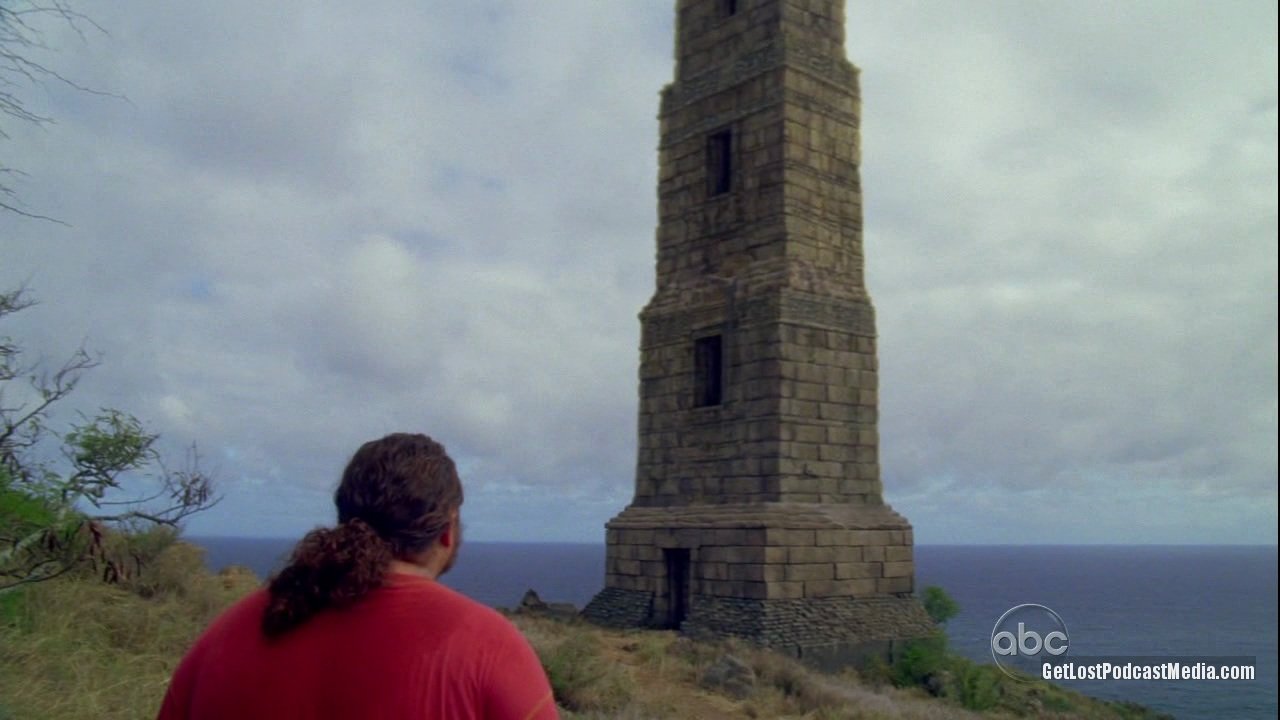
There’s another aspect to the resolution, too. If we find out the answer too soon, this wasn’t a mystery, just a minor plot point. Who burned Michael’s raft is never really a mystery because we almost immediately discover it was his son, Walt, who kind of likes it here on the island. What Jacob’s lighthouse is for also isn’t much of a mystery because we get the answer about fifteen minutes after we first see it. A mystery takes a little time and generally gets answered near the end of your story, which means you story needs to have an end. Many folks have commented on the thumb-twiddling quality the third season of LOST had. This was because the writers didn’t know when their show was going to end and were left unsure how to reveal their clues. Once they were past the beginning, the middle of their story rambled because they didn’t know where (and when) the end was. As I mentioned above, a mystery needs a solid conclusion, and that conclusion can’t be pushed off to some other time.

Speaking of pushing things off until another time, this is getting a bit long and I’m going to wrap it up. Next week I’ll use our favorite island castaways to rant about twists and some of the common mistakes people make with them.

Until then, go write.

November 19, 2009 / 5 Comments

And Now For Something Completely Different…

A long-overdue pop culture reference for the title, just to get us moving.

It’s always interesting to me when I try to figure out what next week’s blog will be about, for that little teaser at the end of this week’s blog. This week’s started off when I was passing quick notes back and forth with a friend who’s doing the NaNoWriMo challenge this year. He had a clever idea for one of his upcoming chapters, about midway though his work-in-progress, and I… well, I was advising against it. Then someone brought up the same issue on a publisher’s message board I frequent. A few days later, I was reading scripts for a contest and found one where said issue had become one of the problems crippling the screenplay.

What is said problem, you ask?

Well, the first time I ever saw Doctor Who was halfway through a very trippy story arc called “The Deadly Assassin” (which has finally become available on DVD). It was probably the worst set of episodes to try to start watching the show on, because the Doctor spent a good chunk of it in the mind-twisting reality of the Matrix (yes, Doctor Who had a Matrix decades before Keanu Reeves did). A few months later I tried again and WGBH (which only had so many episodes) had circled back around to “Robot,” which was the first Tom Baker story, also featuring the lovely Elizabeth Sladen as Sarah Jane. And that’s how I became a Doctor Who fan, and have remained one for most of my life.

What the heck does that have to do with any of this?

Well, it’s hard to tell, isn’t it? Suddenly bam I’ve gone from the usual rant to some senile doddering about my childhood without any sort of transition.

Ahhhh-haaaahhhhhh…

Transitions are what I wanted to rant about this week. That moment your story goes from this to something else. It can be a shift in character, person, location, or time. Every time you switch, you’re asking your audience to take a moment to readjust. The bigger the shift, the bigger the time of adjustment. Most of us could make it past either a six inch step or a three foot drop, but one’s going to take a lot more effort than the other.

As a writer, you don’t want the audience to think about that adjustment. If everything’s done right, the transitions will be as invisible as the word “said.” If there are too many transitions, though, going in too many different directions, it’s too much like driving on a road covered with speed bumps. You’re asking the reader to pause again and again and again and again. If a manuscript has too many transitions, or too many extreme ones, it’s going to go into that large pile on the left. What would you do if a manuscript made you pause half a dozen times in the first ten pages? Would you keep reading or get back to folding laundry?

I mentioned my friend who started all this off (and who most likely is reading this). Let me be blunt and hope he forgives me. In the middle of his superhero action-intrigue story, he wanted to do an entire chapter in verse. Chaucer-style, Canterbury Tales verse. Why isn’t important for our purposes, just that he was going to do it. He had a very solid reason for it, and I have no doubt he could’ve pulled it off.

The thing was, he’d actually had several point of view shifts in his novel already. Some of them were basic shifts– we’d go from third person focused on him to third person on him. Then there would be jumps to first person narratives. And epistolary chapters. And flashbacks. Plus a frame that was a flash-forward. So it wasn’t just that he wanted to do a chapter in verse, it’s that he wanted to do a chapter in verse on top of everything else. All fine and good on their own, but as they begin to pile up…

As a brief but relevant segue, let me talk about Dean Koontz for a moment, author of (among many, many others) Watchers, Dark Rivers of the Heart, and the Fear Nothing series (which I really hope he goes back to some day). Early in his career, Koontz wrote a great little book called How To Write Best Selling Fiction It’s gone out of print, and the author himself has said he’s got no interest in seeing it re-issued. I think a lot of the reasons for both are political, because in this book young Koontz did say a lot of blunt, rather unkind things about publishing, gurus, and wannabe writers. Now, in all fairness, many of these things were completely true, and still are today. They’re not what people want to hear or admit, but, as a friend of mine once told our boss, if you wanted a cheerleader you should’ve hired one. If you can find a copy– grab it (they go for big bucks on eBay). If you can find it online, download it, memorize it, and delete it. Than write an angry letter to Writers Digest Books telling them how they’ve forced you to resort to piracy.

Back on track, though.

One thing Koontz stresses, and you can see it in his work, is to never shift viewpoints within a chapter. Use the chapter break itself as the big pause and try to have as few little ones within it as possible. Now, I’d never go as far to say you should never switch within a chapter, but I also think Koontz has a solid track record backing him up.

So, a few quick tips for transitions…

Fewer – This is the easiest one. The simplest way to avoid troubling shifts is… well, avoid them. Look at the transitions in your writing and figure out how many of them can be trimmed out or consolidated. Is it harder to tell a story with fewer transitions? A bit, yes, but far from impossible. Alfred Hitchcock’s Rope doesn’t have one transition in it. It’s a single continuous film narrative from start to finish. Defoe’s Robinson Crusoe only has two in the entire novel. It switches to an epistolary journal for a few dozen pages and then back to the regular narrative. There aren’t even chapter breaks.

Smaller – As I mentioned above, it’s easier to go down a six inch step than a three foot drop. It’s easy for a reader to go from third person, past- tense to another third person, past tense. It’s a bit harder to start in third person, past tense and jump to second person, future tense section and then back… or to a first person, present. Likewise, jumping between the thoughts of a Harvard professor and a golden retriever is going to be a bit jarring. Bigger jumps mean bigger pauses to adjust, and also more of a disruption in the flow of your story.

Smoother – One way to lessen the impact between sections is to make the transition as organic as possible. A common way of doing this is by creating parallel structure in text or dialogue to keep up a certain rhythym. Another is to do continuations, where, for example, a question gets asked in the first part but the answer is given after the transition.

Make Them Have Purpose – Is there a real reason the story’s going from this point of view to that one? If so, your readers will be more willing to accept the change. If not, it’s just going to frustrate them more. Much like when I prattled on about structure, if the shift doesn’t accomplish something in the story, you shouldn’t be doing it. Make sure the story as a whole is focused, and that there’s a real reason we’re suddenly spending a page with Wakko, the wannabe actor who’s working as a waiter on weekends and about to serve a drink to the main character.

Now, there is sort of a halfbreed flipside to this. A common problem, especially in screenplays, is a complete lack of transitions. Gurus and how-to books tell people to cut description, cut words, cut everything. So fledgling writers take that advice and cut… well, everything.

The problem with that approach is, while it sounds wise on the surface, what it really does is leave you with nothing on the page and nothing between scenes. Suddenly, we’re in a house with Jane. What kind of house? Old? Modern? Is it the present day? Are we in the kitchen at lunchtime? The bedroom at midnight? And while I’m still reeling trying to figure out where we are and why Jane is yelling at George, suddenly we’re in an office. A newspaper office? A telemarketing office? Is it real office or a field of cubicles? Too late, now we’re with George in his car…

I’ve set down a lot of scripts like this while I was reading for contests. None of them went in the pile on the right.

So, there’s my random musings on transitions. Hopefully not too random.

By the way, the reason “The Deadly Assassin” was so hard to follow as an introductory episode was because it took place across a virtual landscape formed from the stored memories of the Time Lords. In other words, it was a mish-mash of settings with no transitions between them. It would’ve been so much smoother if I’d said that up front, yes…?

Next week we’re getting into the holidays, so I won’t take up too much of your time. I may talk about it, though.

Until then, go write.

Categories