
June 20, 2014

Go Big or Go Extinct

             Pop culture reference.  Huge one.
            I wanted to mention something that ties back to last week’s rant.  It’s about how I choose to begin a story.  I almost included it then, but I figured it worked as a stand-alone, and I’m trying to get away from the posts where I just blab on and on.
            Unless I really need to.
            Anyway…
            One piece of writing advice that people keep repeating is “start with action.”  It started cropping up in Hollywood as development people became more and more involved in shaping a story, mostly because it’s a very simple rule.  And from there it spread out to television, books, and other forms of storytelling.  I’m tempted to say this isn’t so much advice as a good solid rule.
            Now the catch (yeah there’s always a catch—if there wasn’t, I’d have nothing to write about on Thursdays) is that somewhere along the way a lot of people started pushing this rule when they didn’t really understand it.  Some folks hear “action” and immediately think explosions, ninjas, car chases, and giant monsters fighting giant robots.  So that’s what they tell people.
            Thing is, there are lots of issues if I’m going to start with Action (capital A).  One of the biggest is that I can’t start at big.  If I start at big, I’ve got nowhere to go.  Granted, the tension level in my stories should go up and down.  But if my first point is 9.5 out of ten, it means everything after this either has to be a huge drop or it can only squeak half a point higher.  Starting at 9.5 to 10  means every character arc, every bit of tension, every moment of action has pretty much topped out on page one.  There’s nowhere else to go.
            Also, let’s be honest… some stories just aren’t conducive to Action.  What kind of great action scene could I begin To Kill A Mockingbird with?  Or (500) Days of Summer?   The Notebook?  Heck, how many romantic comedies begin with a big action scene?  Action (still capital A) is great for… well, action tales and some genre stuff, but there’s tons of stories that this advice just will not work for.
            And because of that last issue, sometimes writers will force action into a story that doesn’t really need it.  Or shouldn’t have it.  But they’ve been told they need to start with action, so they come up with a way to cram it in.
            Y’see, Timmy, when I say starting with action should be considered a rule, I’m not talking about martial arts or gunfire or high speed bank robberies.  I just mean action in the classic definition of the word.  I need to start with something happening.  Because if  there isn’t something happening, what’s the point of this?
            For the record, this is why I usually shouldn’t begin with five pages of backstory or a random character moment.  I don’t want to hear about what happened before—that’s starting in reverse.  I want to begin with my story already on the move, heading forward.  As I’ve mentioned before, stories are like sharks.  If they’re not moving, they die.
            “Something happening” can mean anything.  Washing a car is action.  Cooking dinner is action.  Hurrying to make it to the meeting I’m late for is action.
            I mentioned last week that most Jack Reacher books begin with the main character in very subdued, quiet settings.  The show Orphan Black begins with a woman on a train and offending some people with her free use of profanity.  Stephen King’s Doctor Sleep starts with a little boy who refuses to use the bathroom.  Most episodes of Castle and Elementarybegin with someone discovering a body, but rarely with the actual murder.
            One of my own books, Ex-Heroes, begins with a woman on guard duty watching a zombie walk into a wall.  Then another character shows up, they talk for a bit, and she goes back to watching the zombie.  That’s all of chapter one.   The sequel begins with a Fourth of July party.  The latest book begins with a girl talking to her therapist about her dreams.
            Want a better example?  A bigger one, perhaps…?
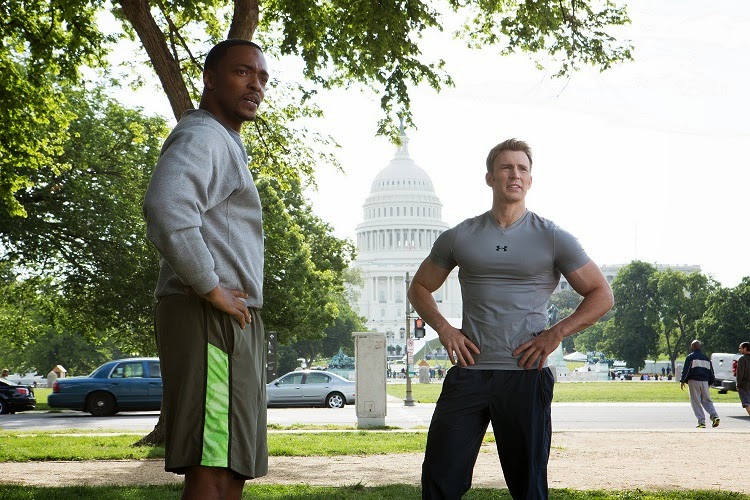
            Captain America: The Winter Soldier has pretty much been the smash hit of the year so far.  It’s a Marvel movie, it has a huge cast of established and new superhero characters.  It even (arguably) has a trio of giant killer robots.  It’s pretty much the definition of a summer action blockbuster.
            How does it begin?
            The Winter Soldier begins with two men doing laps around the National Mall in Washington.  That’s it.  Two guys out for their morning run.  One’s a bit faster than the other, but it’s not exactly a high-tension scene.  And that’s almost the first five minutes of the movie.
            But they’re doing something.  So it’s starting with action.
            Next time… well, I have limited ideas for next time.
            Until then, go do something.
            Maybe write.
June 12, 2014 / 1 Comment

You Never Get A Second Chance…

            This week’s title isn’t so much a pop culture reference as a “good general advice” reference.  It works for real life, and for writing.
           (If this is the first time you’ve stumbled across the ranty blog, I try to have clever and referential titles.  I usually fail….)
            Anyway, I wanted to talk about first impressions.
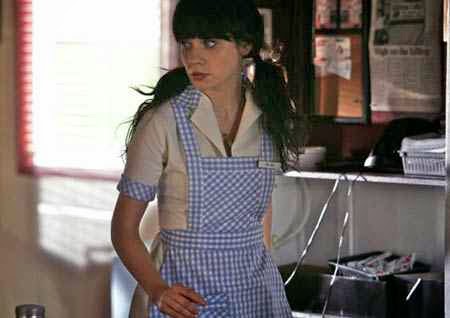
            I read a book a while back that introduced one of the main characters while they were yelling at a server in a restaurant.  I mean actually yelling.  I’ll call said character Wakko (not his real name).  Something was wrong with Wakko’s lunch  order and Dot (the server) was apologizing and offering to go get it fixed.  But he wouldn’t let it go.  He just kept berating this woman over the food—something that really wasn’t even her responsibility—and she kept saying she’d get it fixed as soon as possible.  And we were inside this guy’s head, too, so we saw some of his rude thoughts and annoyance even after the server had walked away.  He just couldn’t grasp the idea that someone would’ve brought an imperfect order to him.
            Then his new food came, he ate lunch, and wandered off into the events that began the story.
            Thing is… I have to admit, I wondered why we were spending time with this guy. Was he going to be ironically killed off in that getting-to-know-the-victim way (which would be cool)?  Was he the villain?  When the lovely heroine first meets him and is immediately left a little weak in the knees, my only thought was “wow, you’re in for a shock…”
            First impressions matter.  In the real world and in fiction.  Maybe even more in fiction.
            This ties back to an idea I’ve mentioned once or thrice before.  You’ve probably heard it as three act structure, although that term gets misused and misunderstood quite often.  When we talk about three act structure in storytelling—any kind of storytelling—what we’re really saying is that every story should have a beginning, a middle, and an end.  As a writer, I establish the norm, I introduce conflict into the norm, and then I resolve that conflict.  Three steps.
            Easy, right?
            Y’see, Timmy, when I first introduce a character, nine times out of ten I’m establishing the norm.  This is what said person is like most of the time, without the added pressure of that conflict I’m going to be introducing in a little bit.  These first impressions is where my character arcs are going to begin. 
            Silly and obvious as it may sound, this is why we generally meet protagonists doing good things (or at the very least, neutral things) and antagonists doing negative things.  Because if I start with someone yelling at a waiter, they’re a jerk.  That’s all there is to it.  Especially if I don’t know what led up to screaming fit. 
            And it’s tough to get past that first impression.  Not impossible, no, but if I go this way with my character then I’m choosing an uphill battle as my starting point.  If your first thoughts are that my character’s kind of a rude bastard or just a general ass or maybe a bit creepy in a bad way…  I’ll have to spend a lot of time getting past those perceptions.  And that’s time I can’t spend getting to, well, the plot.
            Run through a list of some of your favorite characters from books or movies and think about how we first meet them.  How often are the heroes and heroines doing essentially decent things?  Are the villains usually doing something bad or disturbing when you first see them?
            Consider Lee Child’s hero, Jack Reacher.  Most Reacher books begin with him in a very quiet, subdued setting.  He’ll be on a bus or sitting in a roadside diner.  Every now and then he’ll actually be in a real restaurant with servers who he usually tips well.  Because that’s the kind of guy he is.  Despite his intimidating appearance, he doesn’t go looking for trouble.  He doesn’t like problems.  He just wants to travel around and see the country.
            Granted, if you screw with Jack Reacher, you are in for a world of hurt.  He’s a huge, dangerous man who has no problem doing what he needs to do to survive.  People can talk about honor and fair play, but Reacher will do what it takes to win, and he’s very, very good at winning.  But that doesn’t come out until Child introduces some kind of conflict.
            Now, to be clear, there are a few ways I could structure my story so I first meet someone a bit further along their arc, and that might change things a bit.  It’s also possible I could have a real twist planned, and it turns out Dot is actually the little girl from the 1993 flashback, just with glasses now!  And you know she’s just flirting with those guys as part of her revenge plan…  It won’t end well for them
            Even then, I need to have a consistent beginning, middle, and end to his or her arc.  As I’ve mentioned before, these elements may be in a different narrative order but they still need to make linear sense.  If good people are going to go bad (or vice versa) I need to see a clear, believable chain of events.
            And I still need to introduce an interesting and semi-likable character.  Or, at the very least, not an unlikable one.  If my readers don’t want to follow a character, there’s a really good chance they’re just going to stop reading.  And then they’ll never see that cool twist I set up at the start.
            So think about those first impressions.  Because you really want to make the right one. 
            Next time, I wanted to talk about something big.
            Until then, go write.
June 7, 2014 / 5 Comments

Direct Pressure

            So very late.  So very, very sorry.  Thanks for your patience.
            By the way, just hold that there and press.  If you don’t, it’s going to keep oozing.
            Hey, speaking of medicine…
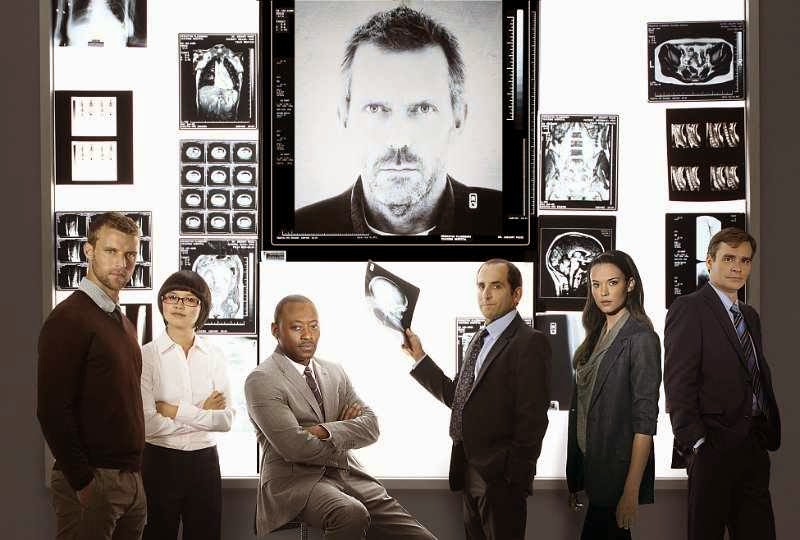
            A friend of mine is a med student and she’s joked with me a couple times about the television show House.  Believe it or not, House was a very unrealistic view of medicine.  But it was unrealistic on a level most folks don’t consider.  On the show, tests that would take days were often run in hours.  Treatments showed results in minutes instead of days.  Even his revival rate was amazing.  Said friend told me the odds of actually reviving someone who crashes in the real world—well, they’re not good.  CPR saves lives, but nowhere near as many as you’d like to think.  But on House they pulled it off at least every other episode.
            There’s a concept you may have heard of (or some variation of) that we’ll call compressed storytelling.  Very simply put, it’s the idea that we can skim over a lot of time and events without it affecting our story.  As the name implies, certain events are compressed so I can spend more time with others. 
            Most short-form stories—movies, episodic television, and short stories—are usually compressed to some degree or another.  Alfred Hitchcock—director, storyteller, partner of the Three Investigators—once said that drama is real life with all the boring parts cut out.  That’s also a good way to sum up compressed storytelling.
            Compressing the story often builds tension and knocks the stakes up a bit.  Silly as it may sound, compressing the story builds pressure.  If my villain plants a bomb in the city that’s going to go off in two months, that’s not a lot of pressure on the hero.  If it’s going to explode in twenty minutes… that’s a bit more urgent.  Likewise, if my hero (or heroine) has eight semesters to tell Phoebe his true feelings for her, he’s got a while to think about it.  If she leaves in two weeks for a year abroad with Steve Carlsburg (man, that guy’s such a jerk)… well, our protagonist needs to get his or her act together now..           
           Now, the flipside of this is decompressed storytelling.  It’s the idea that I should take my time and include everything.  And I mean everything.  Every single detail and nuance and fact, whether they’re relevant to the story I’m telling or not.  If we’re going to believe Hitchcock (and the man did know a few things about storytelling), this is when we add all the boring parts back in.  Supposedly also in the name of drama.
            Y’see, Timmy, decompressing the story takes the pressure off my characters.  If they have time to sit in a diner talking about the movie they saw last week or their intense feelings about Miracle Whip, there really can’t be anything else urgent going on in their life.  Yeah, good characters might have an occasional conversational segue, but it’s the difference between randomly commenting that I don’t like ketchup and telling the half hour storyabout the scarring childhood event that made sure I never touched the stuff again.
           Here’s an even better example.  I could tell you that I woke up this morning and sat down to write this week’s post (a few days late)… 
            Or I could tell you that I woke up, rolled over, folded my pillow in half, and went back to sleep for ten minutes.  Then my girlfriend got up and I looked at the clock and realized I really needed to get up because I have a deadline coming up, but first I tried to remember some bits of a dream I had.  Then I wandered into the bathroom, did my morning business, so to speak (we’ll skip over details there for the sake of politeness), washed my hands, dried them on the tan towel that doesn’t match the rest of the bathroom because I could only get one in the correct color, and then spent a minute playing with my hair.   I’m thinking about trying a new style, something like the brushed-forward cut Jonny Lee Miller has on Elementary.  We’ve got similar hairlines, so I think it could work for me. 
            Anyway, then it was off to the kitchen for my morning yogurt drink and a bit of grumbling at the fridge when I realized I drank the last of the Diet Pepsi last night.  Which is clearly the fridge’s fault and not mine.  I checked Facebook and Tumblr and even Google+, even though I’m honestly thinking of dumping G+ and going back to MySpace, just so I feel like I’m getting a better use of my time.  It just doesn’t get the response that either Facebook or Tumblr does.  My friend Bo put it in a good way, that Google+ just never hit that critical mass where a site really takes off.
            Then my girlfriend and I debated when we should go to the grocery store, because I needed Diet Pepsi and we also needed cat litter. But we were hoping the new Star Trek: Attack Wing ships will come out today because we love the game and we want that Borg tactical cube.  If we were going out later for that, it’d be much more time-efficient to do all our shopping at once.  But we didn’t know if the ships were definitely coming out today or not, which would also affect dinner plans because if we went over to Game Empire we’d probably grab a slice of pizza at Mamas and Papas and call that dinner.
            Then there was a minor panic attack after an email with my editor.  Turns out I had that deadline wrong and I was really freaking out before he calmed me down and assured me I could work for another two ort three weeks and it wouldn’t change a thing on his end.  So I took a few deep breaths, made a joke about how this just feeds into my drinking problem, poured myself a drink, and then sat down to write today’s ranty blog.
            Which, as a reminder after all that, is about how I don’t need to include every single detail and nuance and fact.
            And, man, I did not have time for all that.  I’m on a deadline…
            In my experience, some writers fall back on decompressed storytelling when they don’t actually have much story to tell.  I can’t make my novel lean and tight because if I did it’d only be three chapters long.  So I fill it up with segues and character moments and drawn out descriptions. 
            The common excuse for this is that I’m being “literary.”  I’m raising the bar and writing at a higher level than the rest of you.  All you people who keep skimming over those character moments and beautiful details and exquisite language in favor of things like “plot” and “action”… you’re the ones responsible for the dumbing down of America.
            I think a lot of this mindset is a function of something I’ve mentioned before—the very special episode syndrome.  If you’re not familiar with it, the very special episode is when a series does something a bit out of character.  Sitcoms do a serious story about abuse or racism.  Dramas do an all-musical episode.  Superhero comics spend an issue dwelling on the nature of mental health and suicide.  These decompressed stories tend to get a lot of notice and praise because they’re daring to push the envelope a bit and do something that radically contrasts their usual material.  I’m sure anyone reading this can come up with dozens of examples of such things.
            Something to take note of, though, is part of the reason the very special episode works is because of that contrast.  When we see a story where Spider-Man deals with one of his regular foes going kind of crazy and eventually killing himself, it has a lot more punch than if we read about a similar story in a psychiatric textbook.  Its rareness makes it special.  It’d be interesting to see what James Bond or Freddy Krueger do when they’ve got an absolutely free day, but it’s also going to wear pretty thin by the end of the first act.
            This is the big mistake I think people make with VSE (my new abbreviation), and it’s something else I’ve talked about before.  It’s when I look at the rare exception and assume that’s the rule.  It’s when I think the one aberration is what we should all be following.  If one story about Spider-Man dealing with mental health does well, we should do five!  Or ten!  Hell, why would we do anything except mental health issues? 
            This is why the last four seasons of Scrubswere all about people dying from cancer and drug overdoses, by the way…
            Now, as I often say, there is a place for both of these things.  I am a very big proponent of the idea that if you want to succeed in this business (the business of selling stories for money), then less is more.  But to automatically declare either method “wrong” is… well, just wrong. 
            If everything I’m writing is all one or all the other, though… maybe I should stop for a moment and reconsider.  Do I actually have a story and plot?  Are my characters dynamic and trying to resolve a conflict?  Or am I using decompressed storytelling to hide the lack of these things behind a lot of flowery language and drawn out, irrelevant dialogue?
            Are my characters fleshed out?  Is my setting well established?  Or am I skimming past plot points as fast as I can so nobody will notice I don’t have these things?
            Maybe it’s time to adjust the pressure a bit.
            Speaking of which, next time, there’s an idea I’d like to impress upon you…
            Until then, go write.
September 26, 2013

How To Be A Drama Queen

            Or a drama king.  I don’t judge…
            When we left off, I’d just finished babbling about narrative structure, which is how my readers experience a story.  Before that was linear structure–how my characters experience a story.  This week, I want to talk about how those two structures come together within a dramatic structure to form the actual story.
            Warning you now, this is going to be kind of big and rambling, but I’ve also included a lot of pictures.  Go grab a snack now and hit the restroom.  No one will be admitted during the dreadful story dissection scene…
            Also (warning the second), the story I’m going to dissect is The Sixth Sense.  If you’ve never seen it and somehow avoided hearing about it until now, stop reading and go watch it.  Seriously, if you’ve made it this long without having someone blow it for you, you need to see that movie cold.  People love to give M. Night Shyamalan crap, but there’s a reason The Sixth Sense made him a superstar writer-director.  So go watch it and then come back.  The ranty blog will be here waiting for you when you get back.
            Seriously.  Go.  Now.
            Okay, everyone back?
            As the name implies, dramatic structure involves drama.  Not in the “how will I make Edward love me” sense, but in relation to the building interactions between the elements of the story.  In most cases, these elements will be characters, but they can also be puzzles, giant monsters, time limits, or any number of things that keep my protagonist(s) from achieving his or her goal.  Any story worth telling (well, the vast, overwhelming majority of them) are going to involve a series of challenges and an escalation of tension.  Stakes will be raised, then raised again.  More on this in a bit.  
            Now, I don’t mean to scare you, but I’ve prepared a few graphs.  Don’t worry, they’re pretty simple and straightforward.  If you’ve been following the ranty blog for a while, they might even look a little familiar.
graph #1
            On this first graph (and all the others I’ll be showing you) X is the progression or the story, Y is dramatic tension.  This particular graph shows nothing happening (the blue line).  It’s an average day at the office, or maybe that long commute home on the train.  It’s flat and monotone.  No highs, no lows, no moments that stand out.
            Boring as hell.
            Harsh as it may sound, this graph is a good representation of a lot of little indie art films and stories.  There are a lot of wonderful character moments, but nothing actually happens.  Tonally, the end of the story is no different than the beginning.
graph #2
            As a story progresses, tension needs to rise.  Things need to happen.  Challenges need to arise and be confronted.  By halfway through, the different elements of the story should’ve made things much more difficult for my main character.  As I close in on the end, they should be peaking. 
            Mind you, these don’t need to be gigantic action set pieces or nightmarish horror moments.   If the whole goal of this story is for Wakko to ask Phoebe out without looking like an idiot, a challenge could be finding the right clothes or picking the right moment in the day.  But there needs to be something for my character to do to get that line higher and higher..
            Now, here’s the first catch…
graph #3
            Some people start with the line up high.  They begin their story at eight and the action never stops (I’m looking at you, Pirates of the Caribbean: Dead Man’s Chest).  This doesn’t leave a lot of room for things to develop, but the idea is that you don’t have time to see that because we’re hitting the ground running and going until we drop.
            You might notice the line on this graph looks a lot like that first one up above.  It’s pretty much just a straight line because there isn’t anywhere for things to go.  And, as we established, straight lines are pretty boring.  They’re monotone, and monotone is dull whether the line’s set at one-point-five or at eleven.
Rising with setbacks
            That’s the second catch.  Dramatic structure can’t just be a clean rise like that second graph.  That’s another straight line.  And straight lines are… well, I’m sure you get it by this point.  In a good story, there will be multiple challenges and the hero isn’t going to succeed at all of them.  He or she will win in the end, of course, but it’s not going to be easy getting there.  They’ll face mistakes, surprises, bigger challenges, and determined adversaries.  For every success, there’s going to be some setbacks.  So that blue line needs to be a series of peaks and drops. 
            If you know your physics, you know that we don’t feel a constant velocity.  Think about riding in a car.  As long as it’s a steady speed, you don’t notice.  You can drink coffee, move around, whatever.  What we feel is acceleration—the change in velocity.  Those ups and downs are when things stand out, when we know something’s happening.
            Make sense?
            So, with that in mind, here’s a big graph.
             This is everything together.  X is narrative structure.  It’s the story progressing from page one until the end of my story, novel, or screenplay.  Y is dramatic structure. We can see the plot rising and falling as the characters have successes and failures which still continue to build.  And the letters on the blue line are the linear structure.  We’re beginning at G, but there are two flashbacks in there that go back to A and D.
            Notice that D-F flashback.  Even though it’s near the end of the story, it’s got more dramatic weight than G through K.  This is the big, easy trick to dramatic structure.  No matter what my narrative is doing, it has to keep increasing the tension.
            Y’see, Timmy, this graph is what pretty much every story should look like if I map it out.  They’re all going to start small in the beginning and grow.  We’ll see tension rising and falling as challenges appear, advances are made, and setbacks occur.  They’re not going to be exactly like this, but the basic structure—an escalating, jagged line—is almost always a given.  Small at the start, increase with peaks and dips, finish big.
            Simple, yes?
            Keep in mind, this isn’t an automatic thing.  This is something I, as the writer, need to be aware of while I craft my story.  If I have a chapter that’s incredibly slow, it shouldn’t be near the end of my book.  If a scene has no dramatic tension in it at all, it shouldn’t be in the final pages of my screenplay.  And if it is, it means I’m doing something wrong.
            Now, that being said, it should be clear that where things happen within a narrative is going to effect how much weight they have.  Again, dramatic structure tells us that things in the beginning are small, things at the end are big.  Something that’s an amazing reveal at the end of the story won’t have the same impact at the beginning.
            Let me give you an example.  It’s the one I warned you about at the top.  I’d like to tell you an abridged version of The Sixth Sense.  But I’d like to tell it to you in linear order.
            Ready?
            The Sixth Sense is the story of Malcolm, a child therapist who is killed by one of his former patients in a murder-suicide.  Malcolm becomes a ghost, but doesn’t realize he’s died so he continues to “see” his patients.  Several months later, across the city, a woman becomes jealous of her new husband’s daughter, Kyra, and begins to slowly poison the girl.  It’s about this time that Malcolm meets Cole, a little boy with the power to see ghosts, and decides to take Cole on as a patient, helping him deal with the crippling fear the ghosts cause.  When Kyra finally succumbs to the poison and becomes a ghost, she finds Cole, too—inadvertently terrifying him when she does.  Malcolm suggests to Cole that helping her might help him get over his fear.  Cole helps expose Kyra’s stepmother as a murderer and also helps Malcolm come to realize his own status as one of the deceased.  And everyone lives happily ever after.  Even the dead people.
            The happily ever after is a bit of an exaggeration, granted, but it should make something else clear.  When the narrative of this story follows the linear structure, a huge amount of drama is stripped away.  It’s so timid and bland it almost reads like an after-school special rather than a horror movie.  A lot of the power of this story came from the narrative structure.  The order Shyamalan told this story in is what gave it such an amazing dramatic structure (and made him a household name).
            This is what I’ve talked about a few times with flashbacks and non-linear storytelling.  There needs to be a reason for this shift to happen at this point—a reason that continues to feed the dramatic structure.  If my dramatic tension is at seven and I go into a flashback, that flashback better take it up to seven-point-five or eight.  And if it doesn’t, I shouldn’t be having a flashback right now.  Not that one, anyway.
            For the record, this is also why spoilers suck.  See, looking up at the big graph again, E is very high up in the dramatic tension.  It’s a big moment, probably a game-changing reveal, in a flashback.  If I tell you about E before you read the story (or see the movie or watch the episode or whatever), I’ve automatically put E at the beginning–it’s now one of the first events you’ve encountered in the narrative.   And because it’s at the beginning, it’s now equal to G in dramatic tension.  Because things at the start of the story always have very low tension ratings.
why spoilers suck
            The thing is, though, E isn’t at the start of the story.  It’s near the end.  So now when I get to where E really is in the story, it isn’t that big spike anymore.  It’s down at the bottom.  The dramatic structure of the story is blown because I didn’t get that information at the right point.  It even looks wrong on the graph when the blue  line bottoms out like that.
            If you want an example of this (without giving anything away), consider Star Trek Into DarknessI can’t help but notice that a lot of people who were demanding to know plot and character information  months before the movie came out were also the same ones later complaining about how weak the story was.  Personally, I went out of my way to avoid spoilers and found the movie to be very entertaining.  It wasn’t the most phenomenal film of the summer, but I had a lot of fun with it
            It’s dismissed as coincidence.
            Now, here’s one last cool thing about dramatic structure.  It makes it easy to spot if a story is worth telling.  I don’t mean that in a snide, demeaning way.  The truth is, though, there are a lot of stories out there which just aren’t that interesting.  Since I know a good story should follow that ascending pattern of challenges and setbacks, it’s pretty easy for me to look at even the bare bones of a narrative and figure out if it fits the pattern.
            For example…
            By nature of my chosen genre, I tend to read a lot of post-apocalyptic stories and see a lot of those movies.  I’ve read and watched stories set in different climates, different countries, and with different reasons behind the end of the world.  I’ve also seen lots of different types of survivors.  Hands down, the least interesting ones are the uber-prepared ones.  At least a dozen times I’ve seen a main character who decides on page five to turn his or her house into a survival bunker for the thinnest of reasons, filling it with food, weapons, ammunition, and other supplies.  But twenty pages later, when the zombies finally appear…  damn, are they ready.  Utterly, completely ready.
            In other words… there’s no challenge.  There’s no mistakes, no problems, no setbacks.  The plot in most of these stories just drifts along from one incident straight to another, and the fully prepped, fully trained, and fully loaded hero is able to deal with each one with minimal effort.  That’s not a story worth telling, because that story is a line.  And I’m sure you still remember my thoughts on lines…
            On the other hand we have C Dulaney’s series, Roads Less Traveled.  The series begins with The Plan, protagonist Kasey’s careful and precise strategy for surviving the end of civilization.  But almost immediately, the plan starts to go wrong.  One of the key people doesn’t make it, a bunch of unexpected people do, and things spiral rapidly downward.  Challenges and setbacks spring up as the tension goes higher and higher.
            That sound familiar?
            And honestly… that’s all I’ve got for you.  I know I’ve spewed a lot, but I wish I could offer you more.  Y’see, Timmy (yep, it’s another double Y’see, Timmy post), while the other two forms of structure are very logical, dramatic structure relies more on gut feelings and empathy with my reader.  I have to understand how information’s going to be received and interpreted if I’m going to release that information in a way that builds tension.  And that’s a lot harder to teach or explain.  The best I can do is point someone in the right direction, let them gain some experience, and hopefully they’ll figure it out for themselves.
            So here’s a rough map of dramatic structure.  
            Head that way.
            Next week, I’ll probably blab a bit about Watson, the supercomputer.
            Until then… go write.

Categories