
Hope you all had a wonderful Halloween, Guy Fawkes Day, or respective eerie holiday.
As some of you know, I’m a bit of a geek, and as such I’m very excited for the release of Thor: The Dark World tomorrow. And since I’m always willing to be pop culture relevant—and I’m really slammed with other stuff right now—I thought I’d post a fun conversation I had with Justin Theroux, who wrote the third of the “Wave One” Marvel movies, Iron Man 2. Justin was great to talk to, even when he had to bite his tongue about some still-secret plot points and reveals. He also had a very positive and realistic view of working in Hollywood and working on a major tentpole movie (a sequel in a set of interlocking movies, at that).
A few points, but you’ll probably figure it out as it goes. I’m in bold, asking the questions. Keep in mind a lot of these aren’t the exact, word-for-word questions I asked (which tended to be a bit more organic and conversational), so if the answer seems a bit off, don’t stress out over it. If you see a long line of dashes (————) it means there was something there I didn’t transcribe, probably because it was just casual discussion or something I knew I wasn’t going to use in the final article for one reason or another (there are off the record discussions now and then). Any links are entirely mine and aren’t meant to imply Justin was specifically endorsing any of the ideas I’ve brought up here on the ranty blog—it’s just me linking from something they’ve said to something similar I’ve said.
By the very nature of this, there will probably be a few small spoilers in here, though not many. Check out the movie if you haven’t seen it yet. It’s fun and you’ll get a bit more out of this.
Material from this interview was originally used for an article that appeared in the May/June 2010 issue of Creative Screenwriting Magazine.
So, anyway, here’s me battering Justin with questions about Iron Man 2.
————————————————–
So… how does someone go from being an actor to screenwriter on a huge comedy to the sole writer on Iron Man 2?
(laughs) Your guess is as good as mine. I don’t know. I’ve been in Hollywood for about twenty years now. I don’t know if that’s overnight. Everyone has a weird road in this town and mine’s no different, I guess. Everyone has a weird little story to tell.
Have you been writing all along?
I have, yeah. If I were to thank anyone or lay it at anyone’s feet, it would be Ben Stiller who’s always been a very big champion of mine and always convinced me to do something professionally. So Tropic Thunder was the first thing we were able to do together. He was the one who first looked at my pages, years and years ago, and said ‘These are really decent pages. You should be doing this more.’ He was the one that gave me the confidence. So much of anything in the entertainment industry is confidence, and he was the first one to inject me with that.
Are you two friends?
We met… I was doing a play that he came and saw here in New York. We met after the show and he was very flattering and I was very flattering to him. I adored some of his earlier MTV shows and sketch work and The Ben Stiller ShowI thought was an unbelievably good show. So I was gushing about that. We sort of became friends over that. That was in… 94? 95? Four, maybe? Somewhere early ’90s.
Were you a comics fan as a kid?
Yeah. I was and am a comic book fan. I wasn’t one of those comic book fans who ran out every week and bought whatever new issue was out there. I sort of came into it backwards. I read a lot of underground comics–Heavy Metal, Art Spiegelman, that kind of thing– but I also was an avid Spider-Manand Iron Man fan when I was a kid.—So I was a fan. Not as probably die-hard as you might think, but I am a fan of the genre.
 How did you end up on board Iron Man 2?
I had worked with Robert on Tropic Thunder and we had worked very well together and got along. So he was the one who brought me over to Marvel. He said ‘You should meet with Marvel. You guys should sit down and see if you have any common ground because I think it would be a good fit.’ So I did. I went when they were first gearing up for the very, very first initial push into development for Iron Man 2. I sat with them for a long time and had long discussions with them about the character and that world. We just hit it off. It was a good match. Shortly thereafter they said they’d love to have me and I was completely flattered and floored, and we started developing the script right away.
Jon Favreau and Robert Downey Jr. both said early on, if I remember, they didn’t want to be involved if there wasn’t going to be time to do a good script. Were you already on board at that point?
Yeah. I don’t know. I don’t remember when they said that, but it sounds completely in line with the way those guys think and work. They’re amazing quality control, both of them. As is Marvel. They were extremely hands on, even in the creation of the story. It was enormously collaborative. I never felt like I was abandoned to write the script by myself, even though I did the actual writing. There was always someone to bounce ideas off of. Kevin Feige, Jeremy Latcham, Jon Favreau, obviously, and Robert, they were always there to lob in their ideas and support. It was a very socialist endeavor, the creation of the script.
I think the writing teams for the first film (Art Marcum & Matt Holloway and Mark Fergus and Hawk Ostby) had a couple of years working with Jon Faverau. You came on and they already had a release date for the film and less than a year before they started filming, yes?
(laughs) You try to forget. While you’re doing it you really try not to realize the pressure you’re under. You try not to focus on it, at least. You have to fake it and pretend you have all the time in the world to create it, because if you put a calendar and start X-ing days off you’ll go crazy. I sort of operated, as we all did, I think, where it’s like ‘Well, we’ll deal with that when we get to it.’ As we had to turn in pages to effects and the line producer, we did a lot of punting of things until we absolutely had to try to move the ball across the finish line.
What’s your method? Are you an outline guy, do you use note cards, do you just like to shuffle it all around in your head, start on page one, and plow through?
I don’t know. I love discussing things with people, almost to a fault sometimes. I’ll bug a bus driver if I really want someone’s opinion. The way I love to work is with someone who I trust knows the material, like Favreau and Feige, and bounce ideas off them. Those guys had the benefits of doing [the first Iron Man] and were well-versed in the pitfalls and problems of where certain ideas could take you. They were great at helping me eliminate certain things. They could dismiss things that otherwise I might waste time spinning my wheels in. That being said, when it actually comes down to writing I prefer to just wake up in the morning, make a cup of coffee, and just sit down and start hammering pages. I write fat, usually, and hope the director can help guide me. In this particular case Jon was good at guiding me towards what ——– on the one hand you’re trying to create a script that matches what Favreau’s vision is and what he wants to do. I’m a big believer in being in service to the director as much as possible.
So you don’t use any outlines?
No, no, we did plenty of notecards and outlines and all the rest of that. I think at a certain point you just have to start trucking through the deep snow and shoveling your way into it. Or out of it.
How much did Jon actually get to work with you on this? Was there time for the two of you to sit down and work the story, play with characters, that sort of thing?
Yeah, we met every single day in pre-production. He was doing Couples Retreat for portions of that. So we met very often, these epic sessions where we’d all—me, him, Robert, Kevin, and Jeremy—we’d sit in that room and beat through it. Then I’d go away and do pages, come back, we’d beat through it some more, and I’d go away and do pages. It was a very unified effort. We were all pulling on the same rope. It was the way this movie had to work just because of the time frame.
What about Robert Downey Jr. Did he have thoughts of his own for the script?
Yeah, absolutely. Many days we met up at his house and scribbled stuff on cards.
Was it all for him? Was it overall ideas or ideas for Tony Stark action and dialogue?
It was everything. He’ got such an insane–insane in a great way–of working. He’s just an idea generator. He’s like a firehose with a powerful stream. He’s one of those guys who’s just constantly percolating with new ideas and pushing into different areas and places where you didn’t think it could go. There were certian idea he would have and you’d think ‘That’s completely insane. There’s no way we could get away with that.’ He’d stick to it, and we’d write it and rewrite it, and we’d show up on the day and he’d perform it and–Oh, I get it. That totally makes sense. He’s the one who has it in his head. There’s a lot of lightning firing off that guy.
How long does it normally take you to get a draft?
I honestly couldn’t tell you. Even though we had a production draft that we ended up working off of, we were still developing whole chunks of it as we were shooting it. Once we had the schedule for what we were shooting, we then knew we could go back in and since this is towards the end of the shoot we can go back in and really start finessing it. So I was working on stuff on set all the way up until the very last day of shooting.

Now, how much of this was laid out for you from the start? There was some stuff hanging there from the first movie, of course, but did you come on and it was already “Okay, we want Whiplash, Justin Hammer, the Black Widow, War Machine, the briefcase armor… give us a story.”
No, no, no. To their credit, they really do give everyone involved in the process a blank slate to start with. And that’s a blessing and a curse. I think in the end it always ends up being beneficial to them. You go in knowing anything is a possibility and they don’t shut any doors or windows to what you want to do until it becomes either cost-prohibitive or just doesn’t make sense with the brand.
They’re firm believers that the fans are the shareholders in this whole thing, so they go in with the attitude of what do people want to see. It’s not necessarily about what we want to do, it’s what people are expecting and what they want of this character. And that’s a wonderful way to work, especially in this genre. Everything was on the table and then it was just a question of taking things off the table.
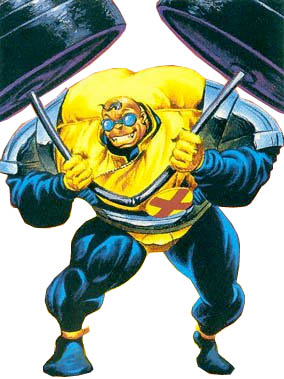
We opened up all the characters. We opened up Whiplash and all the famous villains of the past and started picking up each one, rolling it around in meetings, and going “What about this guy? What about that girl?” We ended up getting three new characters for this movie–Whiplash, Black Widow, and Justin Hammer–and realizing there was a very powerful dynamic between those three.
How did you end up with Whiplash?
Y’know, there was a bunch… I won’t bore you with who we were looking at—translate ‘bore you’ as ‘get in trouble’. It was really Jon’s idea. I think Jon, very early on, had the idea of using Mickey. We have sort of an energy theme going on, sort of a confluence of many things. One is, our Tony Stark is a public figure. Two, we knew we wanted to have this energy element to it. What is the thing that’s inside him? Could this thing become public? Could it get out there? It’s an arms race, essentially. Then when we were looking at the different characters, we were thinking where can we sort of plug that idea into a character, and Whiplash—through Jon’s vision of what that character could be or become–what we all gravitated toward. Weall thought that’s the guy. Once Jon had pitched the way he envisioned that character, which is very different from a guy with a big ponytail and a cape, we thought that’s very cool. These big energized whips emenating from his center chest piece. It all, organically, started to take shape. With the back story we thought we could have some fun there.
Now, in the first film one of the main elements was that Tony Stark had the only viable mini-Arc Reactor fused into his chest, plus there was one other one that would work for twenty minutes or so. In the trailers we’ve got Iron Man, War Machine, Whiplash, plus what looks like a whole squadron of armored soldiers fighting them at one point.
 Again, it sort of followed that…. If we walked into the room with anything, when we first started to develop, the one thing that was obviously on the table that we could not ignore was that he was a public figure. That was the first little piece of clay that hit the table that we knew we’d have to build off of. We thought, well, what comes with that? What comes with that is a strange kind of arrogance, especially in today’s world, that that’s definitely going to entail? Some kind of a newfound celebrity, to have a guy who’s a public superhero. So there’s sort of an arrogance to Tony at the beginning of the movie that he’s the only one who is in possession of this technology. So then the next dramatic device is… what if he’s not? What if someone else can create it as good as he makes it, or almost as good? That’s where we went with that. What if the genie got out of the bottle?
War Machine is a little unusual because he’s not part of the “classic” Iron Man stories. Rhodey is, of course, but War Machine was a much later addition. Was this a concern, for you or the studio, since most of the successful Marvel movies seem to deal with classic elements more than newer ones?
I don’t want to talk about other’s people’s movies but… War Machine is not a dark force. Our thinking was Tony is out in the world and has perhaps bitten off more than he can chew. One of the themes of the movie is can one man be an island? Are men islands in themselves, especially if you’re Tony Stark? Again, without giving away too much, the War Machine armor and who’s using it really complements that idea or that theme. I found it a relief to have that character in the movie. And obviously Don is wonderful. Only in the fact that they’re such good friends does that work.
Were you worried about the Batman issue? Or I guess, Daredevil, since we’re talking Marvel… That there are just so many character and elements crammed in here that there wasn’t going to be room for a coherent film story?
I wouldn’t say I was worried. There were times where I felt that we had a luxury of riches. It was like putting a bunch of desserts out in front of you an wondering which one you wanted to taste first. It never worried me in that way. If anything, it just made me want to work harder at servicing every one of them. But I think we’ve done a pretty good job of tempering that and making sure that it doesn’t just turn into a Jackson Pollack. Everyone has a purpose in the film, and I think as long as each one of those characters is well-defined and as long as they’re purpose-driven, then at the end of the day it just feels like a great big fun movie as opposed to a big, y’know, clusterfuck. (laughs)
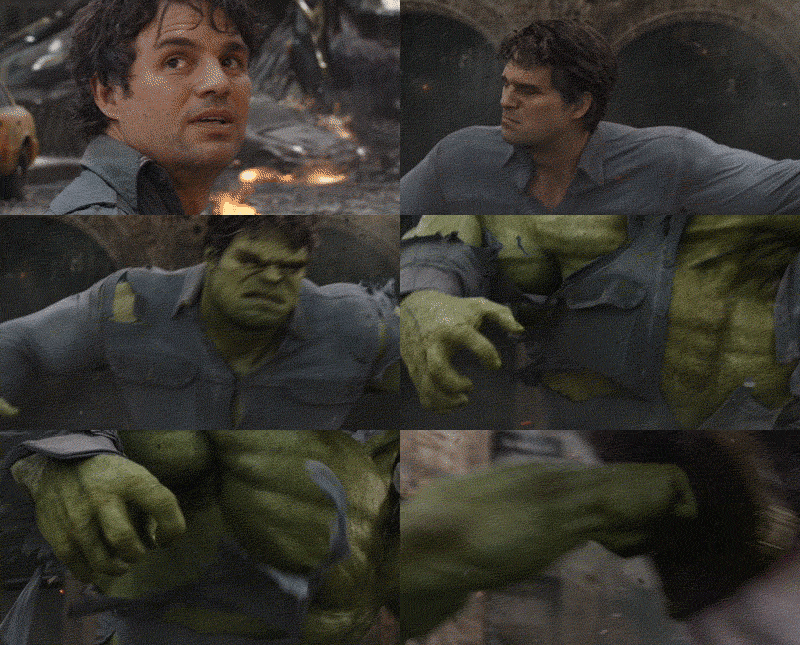
There’s been some talk lately that this movie takes place before the Incredible Hulk movie which came out… well, at the same time as the first Iron Man.
(laugh) I feel like Marvel has a great tradition of screwing the next writer. (laughs) I think initially, when they first started interweaving it, things were considered afterthoughts. Now—I don’t want to give away things happening in other movies—they’re starting to put a lot more thought into it and seeing it as a larger scheme. We have things in our movie that are doffing their hats or perhaps telegraphing things that are going to happen in other movies. That’s probably a much as I can probably say. It wasn’t like we had a big meeting with Kenneth Branaugh about Thor. There’s just enough cross-pollination to make it interesting, but not enough to start eating into other people’s sandwiches.
Was this something you were trying to figure out, how it all fit together, or did someone in an office just say “oh, this is the order?”
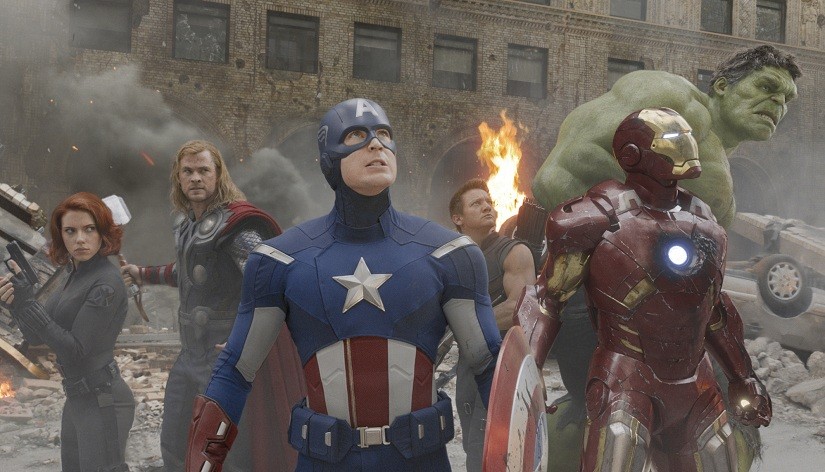
No, we knew we were going to have Nick Fury. He showed up, you just can’t ignore it. And then there’s much smaller clues and things that we seeded throughout that will play out in other movies. Obviously once Avengers is up and running you’ll start to feel the cumulative effect of those little jigsaw puzzle pieces getting put together.
I know there was also a point no one was sure if Samuel Jackson was going to be in the film or not. Was that affecting you and your story?
Yeah. For me, I just acted as if he was doing it. We were putting him in. He was going to go in. It was up to the powers that be to make that happen. I just kept writing as if he was going to show up on the first day.
Did you get a lot of notes? Were you under the microscope, because the first film had been so successful?
Yes, but not in a way… Marvel is a very special place. Kevin Feige is probably the biggest comic book fan I’ve ever met. He’s the biggest fan of his material. He is, without question, one of the best keepers of that torch. There would be times when we’d be bumping our heads or going ‘I don’t know how to make this work,” and Kevin would bring a clarity to the situation. I’ve never experienced it with any other studio or any other creative process, where–literally–the head of the studio would be the one to go ‘No, you know what the fans want? The fans want this, and at this moment in the movie this is what needs to happen and this is what we’re forgetting.” He– and Jon, too– was great at just refocusing it. He knows his brand and he knows his charcters so well. He’s one of those guys who can tell you the day and date he saw this character or that issue came out or that movie premiered. He just knows everything. He’s encyclopedic. I was always eager for him to put his two cents in an I would eek out his counsel on a regular basis.
Did the internet have a big influence on this? Either for you or the studio. Since the first movie people have been going crazy on the web with ideas and speculation, even more so once images and footage started appearing. Does it affect your writing?
For sure. Websites like Superhero Hype and IGN. I wouldn’t say it’s an internet-made movie or anything close to that– because a lot of time people have ideas that have no bearing on what’s ultimately possible– but definitely. There were times… As I said, the modus operandi of Marvel is that the only shareholders are the fans. There’d be times when they would say ‘Oh, I read this thing, they’d be stoked if this happened.’ So we know we’re not on the wrong track pursuing that idea. That’s really interesting and fascinating because it sort of puts a ghost partner in the room with you. A shadow voice in the room.
Last question for you… now that Iron Man looks to be a successful franchise, did you leave some threads and ideas dangling for another sequel? I know a lot of folks saw the Ten Rings terrorist group in the first movie as a hint towards the Mandarin…
I’m not confirming or denying that remark. (laughs) I think that’s still in the distant future. I would say if people looked for it they would definitely find it.