
February 13, 2026 / 1 Comment

Just Between Us

This is one of those things I’ve meant to revisit for a little while now. So, hey, let’s talk about the Children of Tama.
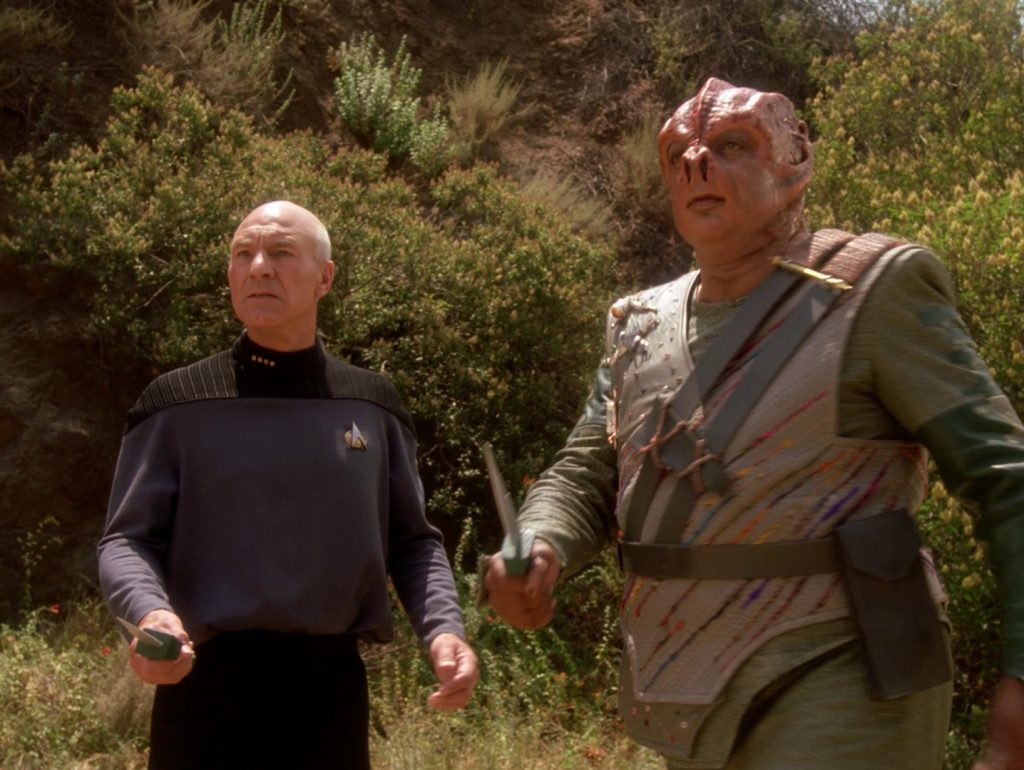
“Darmok” was one of the most popular episodes of Star Trek:The Next Generation, but on the off chance you don’t know it (it’s been *cough* thirty years, after all)–the Enterprise crew is attempting to open relations with an alien race called the Children of Tama. All previous attempts have come to a grinding halt because the universal translator can’t make sense of their language. It can be rendered in Federation English, yeah, but the words and sentence structure are just… gibberish. Determined to solve the problem, Dathon–the Tama commander—kidnaps Captain Picard, dropping the two of them on a hostile planet where they have to learn how to communicate and work together in order to survive. Through the course of this, Picard comes to realize Dathon’s language isn’t based on individual ideas and concepts, but on stories and metaphors. The Children of Tama wouldn’t say “I’m so relieved and happy to see you,” they’d say something along the lines of “Carol, when Zosia returns to Albuquerque.” It’s been impossible to properly translate the Tama language because the Federation doesn’t share their history and folklore.

In a way, all of us do this every day. We reference movies, TV shows, books, pop culture events, and then we stack and combine them. And we know people will understand us because they get the reference. It’s why we understand memes and reaction gifs and emojis.

Heck, want to know what an ingrained aspect of our language this is? When Bluesky first opened up, it didn’t have the functionality for gifs yet. So for almost a year, people responded to posts by just writing out things like “DiCaprioToast.gif” or “CasablancaShocked.gif.” And then the next step was (no joke) screenshots of Dathon from the “Darmok” episode describing various gifs. No seriously, that was a thing for a while.

Now, we also do this on a smaller scale. All of us have jokes and references that are only understood by certain circles. Coworkers. People who share a common interest. I may not get that programming joke, you might not understand School Spirits references, and neither of us are going to get those hardcore biathalon jokes. Pretty much every job has its own “inner language” and shorthand.

And sometimes those circles get even more intimate. Friends. Family. Even individuals. My gaming group has a bunch of things we all say that nobody else would comprehend. I’m in an ongoing group chat with a bunch of writers and we’ve got a few inside references none of you would get. And heck… my beloved and I have little things we say and do that nobody besides us would really understand (it’s how we’ll identify each other when the pod people/ body swappers take over). But to an outsider they could sound rude or confusing or like, well… gibberish.

Now, I’m willing to bet you all understand what I’m talking about here. The real question is, why am I bringing it up on the ranty writing blog?

A not-uncommon problem I see from some folks is they write dialogue loaded with references and figures of speech from their own personal experience. It might make sense within the writer’s personal circles, but outside readers just end up scratching their heads. And when this gets pointed out, the writers responsible for this issue will try to justify their words in a number of ways…

One is that their friends talk this way, and their friends are real people. Therefore, people really talk this way, and there’s nothing wrong with it. The thing is, as I’ve brought up here once or thrice before, “real” doesn’t always translate to “good.”

Two is they’ll argue this joke or reference is common knowledge. They’ll say the material is generally known– universally known, even– so the problem isn’t them, it’s the uneducated, unaware reader. This one’s tough, because it can be hard to agree on what “everybody knows” or even what’s generally known. If somebody honestly believes that everybody knows who won Best Original Screenplay in 1938, there’s not much you or I can do to convince them otherwise short of assembling a large focus group.

Y’see, Timmy, I can’t just write for my five closest friends. I mean, I can, sure, but not if I want to have some degree of success. I’m not saying my writing has to appeal to everyone and be understood by everyone, but it can’t be loaded with so many in-jokes and obscure references that nobody knows what I’m talking about.
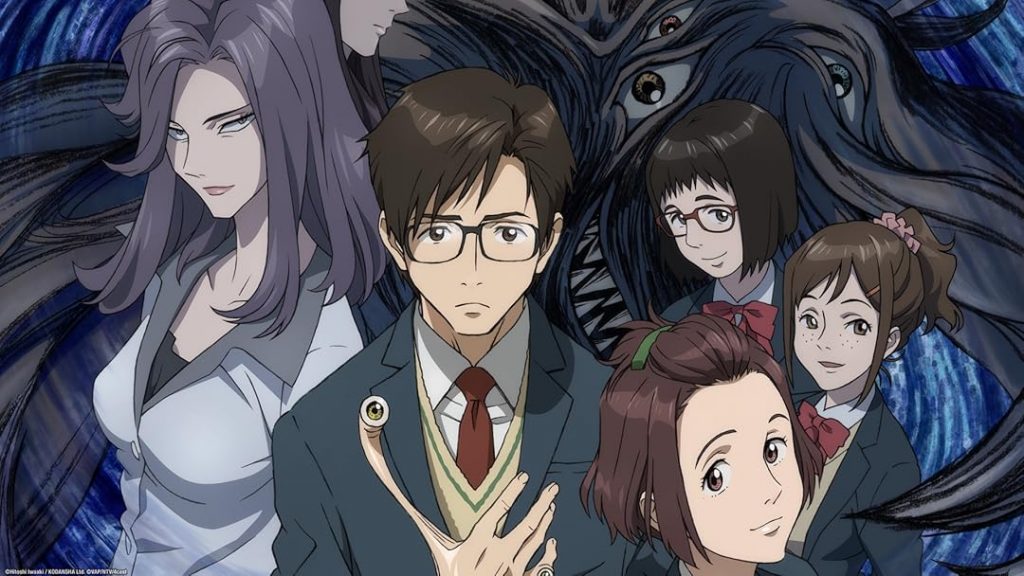
This is one of those inherent writer skills that we all need to be good at. We need to keep learning and being aware of the world. Not just the world as we want to see it, not just the parts that interest us—all of it. Because if a large swath of my story assumes you know the entire Japanese voice cast of Parasyte, Vietnam-era military jargon, or why talking about squirrel voices counts as sexy talk… it probably means I’ve just knocked my readers out of the story.

And knocking people out of my story is never a good thing.

In conclusion, the Children of Tama eventually joined the Federation. Lt. Kayshon was chief of security on the USS Cerritos and everyone could understand him. Most of the time. Commander Ransom, the first officer, even learned some Tama phrases.

Also, nobody won Best Original Screenplay in 1938. The category wasn’t invented until 1940.

You didn’t know that…?

Next time, I’d like to talk about what was really going on when we met.

Until then… go write.
February 4, 2016 / 1 Comment

Pod Six Was Jerks!

            Pop culture reference.  Long overdue, and to bring even more shame on my household, it’s kind of a repeat.  Sorry.
            Before I dive into things, I must shamefully point out that the latest book in my Ex-Heroesseries got released this week.  The marketing folks are lovely people, but they’ll be upset if I don’t mention it.  Ex-Isle is book #5 and it’s now on sale everywhere.  Check it out.
            And now, back to this week’s rant…
            This is something I’ve been meaning to talk about again for a while now.  As I mentioned, I’m kind of in a rush this week (even more on that below), so I thought this would be a good time to add in what’s more-or-less a repeat post.  At least, it is if you’ve been here since 2008…
            That being said, let’s talk about “Darmok.”
            “Darmok” was one of the first episodes of Star Trek:The Next Generation‘s fifth season.   The Enterprisevisits an alien race, the Children of Tama, which has repeatedly brought first contact attempts to a grinding halt because the universal translator can’t make sense of their language.  The Tama language can be rendered in Federation English, yes, but the words and sentence structure make no sense.  Sensing the problem that needs to be overcome, Dathon–the Tama commander—kidnaps Captain Picard to a hostile world where the two must fight together to survive.  Through their trials together, Picard comes to realize that the Tama language is not based on ideas and concepts, but on stories and metaphors.  They wouldn’t say “I’m happy,” they’d say something like “Scrooge, on Christmas morning.”  They don’t say they’re relieved to see you, they’d say “Indy, finding Marion in the tent.”  It’s been impossible to translate the Tama language literally because the Federation doesn’t share their history and folklore.
            In a way, all of us do this every day. We reference movies, TV shows, pop culture events, and then we stack and combine them. Heck, that’s pretty much what memes are.
            We also do it on a smaller scale, though.  All of us have jokes that are only understood by our family or certain circles of friends or coworkers.  Some folks crack jokes from Playboy, others from Welcome to Night Vale.  These folks obsess over Scandal and these folks watch iZombie whenever they happen to catch it.  Some people like sports, others like science.  And all of us talk about what we know and what we like.
            I worked on a set once where people commonly asked “Where’s Waldo?”  A lot of my college friends understood when you talked about Virpi Zuckk, the third Pete, and nice shoes.  Some of my best friends and I make frequent references to Pod Six,  killing Jeff, and “the girl’s evil cheater magic.”    
            Heck, even this title is an in-joke.  It’s a reference to one of the first Adult Swim cartoons, Sealab 2021. But also, when two of my friends bought a house and decided to use their sunroom as a dedicated gaming room, we all sort of universally decided to call it Pod Six.  Because it’s where we all hang out and talk in weird references that only we’re going to understand.
            See where I’m going with this?
            A common problem I see again and again in stories is oblique references and figures of speech that the reader can’t understand.  It might make sense within the writer’s personal circle or clique, but outside readers end up scratching their heads.  Several of the writers responsible for this sort of mistake will try to justify their words in a number of ways…
            First is that my friends are real people.  Therefore, people really talk this way, and there’s nothing wrong with it.  Alas, as I’ve mentioned here many times before, “real” rarely translates to “good.”  Pointing to a few of my like-minded friends and saying “well, they got it,” isn’t going to win me points with an editor.
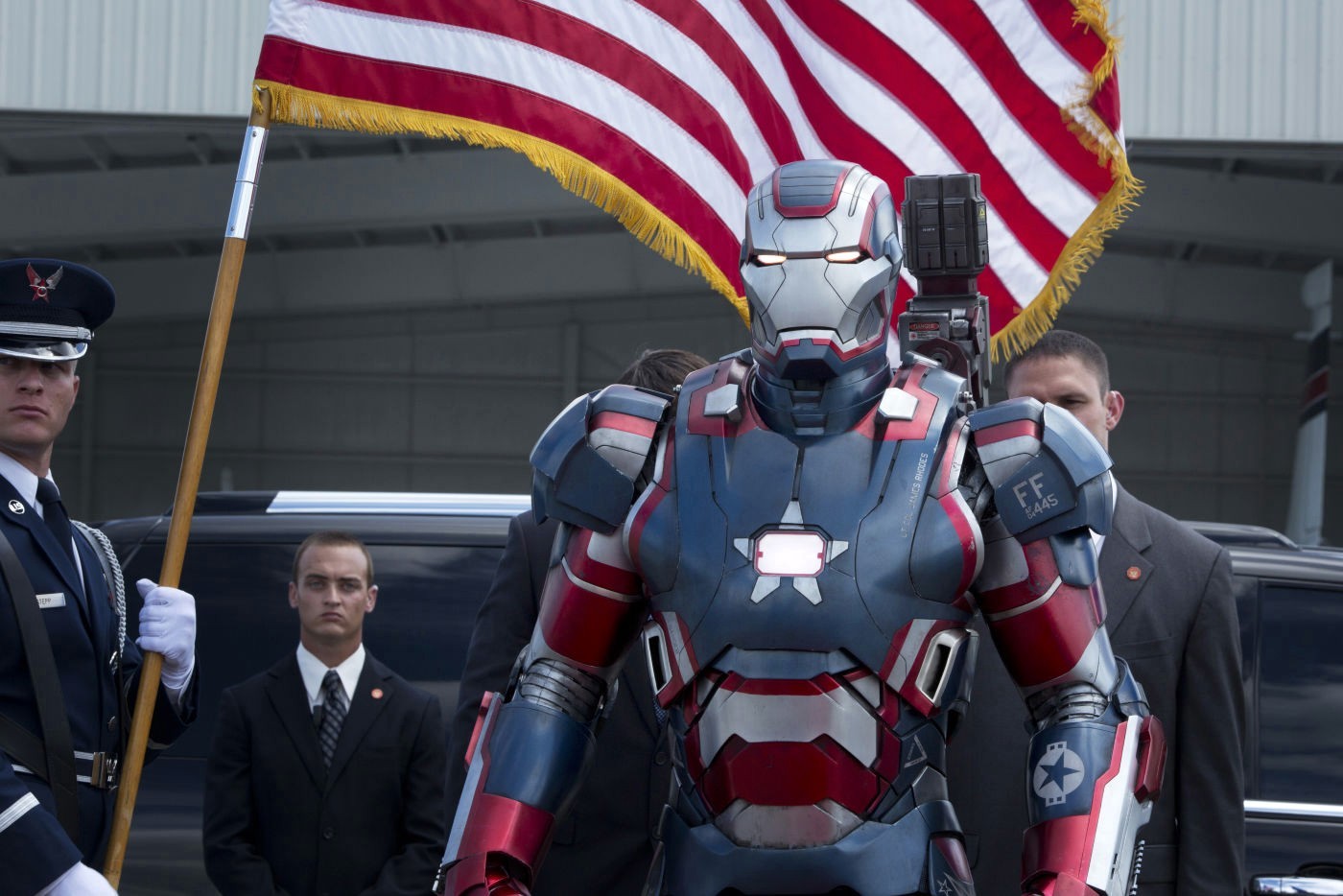
            Second is that I’ll argue common knowledge.  I’ll try to say this material is generally known– universally known, even– and it’s the reader who is in the feeble minority by not being aware of it.  This is probably the hardest to contradict, because if somebody honestly believes that everyone should know who the U.S. Secretary of State was in 1969, there’s not much you or I can do to convince them otherwise.  It’s much more likely, in the writer’s mind, that the readers are just uneducated simpletons who never learned the ten forms of Arabic verbs, don’t collect Magic cards, and couldn’t tell you the obvious differences between Iron Man and War Machine if their lives depended on it.
            Third, usually reserved for screenplays, is the auteur excuse.  I plan on directing this script, so it doesn’t matter if no one else can understand the writing (or if there are tons of inappropriate camera angles, staging instructions, and notes for actors).  The flaw here is that my screenplay will invariably end up getting shown to someone else.   A contest reader.  A producer.  An investor.  Someone out of that inner circle of friends who needs to look at my script and understand the writing.
            Y’see, Timmy, I can’t be writing just for my five closest friends.  Not if I want to succeed as a writer.  I’m not saying my writing has to appeal to everyone and be understood by everyone, but it can’t be so loaded with in-jokes and obscure references that nobody knows what I’m talking about.
            This is one of those inherent writer skills.  Something I just need to figure out how to do on my own, mostly by reading everything I can get your hands on.  I need to know words and phrases.  I have to know them and I have to be honestly aware of who else knows them.  Using extremely uncommon terms or words may show off my bachelor’s degree and vocabulary, but the moment a reader has to stop and think about what a word or phrase means, they’ve been taken out of my story
            And knocking people out of my story is one of the certain ways to make sure the reader puts my manuscript down and goes off to fold laundry.
            On an unrelated note… if you’re in San Diego and happen to be reading this just as it went up, I’m going to be at Mysterious Galaxy tonight (Thursday) talking and signing copies of Ex-Isle.  And on Saturday I’ll be at Dark Delicacies in Burbank doing more of the same.  Hope to see some of you there (and if not, you can call them and order books, too).
            Next time, I’d like to talk about how ignorant some of your characters are.
            Until then… go write.
November 26, 2014 / 3 Comments

More Dating Tips

            Very sorry about missing last week.  Copyedits. And Thanksgiving is this week, so I know nobody’s going to be reading this on Thursday.  So I figured I’d get this up today and hope to break even.  Sort of…
            Anyway, this week I wanted to blab on about dating your work.  And I figured the best way to do that would be to talk about the Cat & Fiddle.
           If you’re not familiar with Los Angeles, the Cat & Fiddle has been a Hollywood landmark for about thirty years now.  It’s a little pub in the middle of Hollywood with a nice outdoor patio.  It’s always been popular, but I think it managed to avoid being hip or trendy in all that time.  Part of Casablanca was filmed on that location.  Seriously.
            Heck, there’s a reference to the Cat & Fiddle about halfway through my book, 14.  It was a landmark, as I said, and my story is very much about Los Angeles.  Why wouldn’t I refer to it?
            Except now it’s closing.  The landlord found someone willing to pay twice as much so, well, the cat’s out in the cold.  No more Cat & Fiddle unless they can find a new place.  Somewhere else.
            What’s my point?
            Just like that, 14 has become dated.
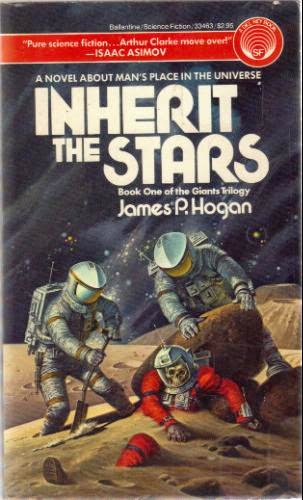
             Still, I’m not as bad off as James P. Hogan.  When he wrote his novel Inherit the Stars (first book in the Giants series) back in 1977, he envisioned the US facing off against the Soviet Union in a race to colonize the solar system (a race that gets interrupted by an amazing discovery, granted…).  Needless to say, the first three books in that series are extremely dated.
            When we say a book is dated, we mean it’s a book someone can look at and say “Ahhh, well this was clearly written back when…”  It’s a book that isn’t about now, it’s about then.  And when my book’s not about now, that’s just another element that’s making it harder for someone to relate to my characters and my story
            Remember in school when you had to read classics?  Some of the hardcore Dickens or Austen or maybe even Steinbeck.  One of the reasons they can be hard to read is because of the references in them.  They talk of events or customs or notable persons that are foreign to us.  Hell, half the time so foreign they’re just gibberish (bundling?  What the heck is bundling..?).
            When we hit these stumbles, it breaks the flow and makes the book harder to enjoy.  A dated book has a shelf life, like milk or crackers.  The moment it gets this label, there’s an end in sight.
            Because of this, there’s a common school of thought that I shouldn’t make any such references in my work.  My story shouldn’t mention current fads or events.  I don’t want to have references to celebrities or television shows or bands or music.  If I want to have my writing to have any sort of extended life—the “long tail” as some folks like to call it—it can’t be dated.
            And there is something to this.  I’ve seen metaphor-stories fall flat with readers less than a year after the events they’re referencing.  It was funny at the time, but if you watch Aladdin today it’s tough to figure out half the stuff the Genie’s riffing on (what the heck’s with the whoop-whoop fist thing…?).
            However…
            When the GOP shut down the US government last year, my friend Timothy Long pounded out a longish comedy short story called Congress of the Dead.  And for a few months it sold really, really well.  It’s not doing much these days (it’s still funny but not as topical), but he knew going in that it wasn’t going to be timeless and used that knowledge to his advantage.
            So, which way should I go?
            Well, here’s the catch.  My work is always going to end up dated.  Always.  There’s no avoiding it.  Stories get dated by technology and cars and geography. Things people assume will never change (like the Cat & Fiddle or the U.S.S.R.) end up changing. It happens all the time.  It can’t be helped.
            Consider this…
            Stephen King’s Cujo couldn’t happen today.  Cell phones undermine the entire plot.  Same with Fred Sabehagan’s Old Friend of the Family.  The entire plot of Lee Child’s first Jack Reacher book, Killing Floor, hinges on an idea that was obsolete six months before the book even reached stores.
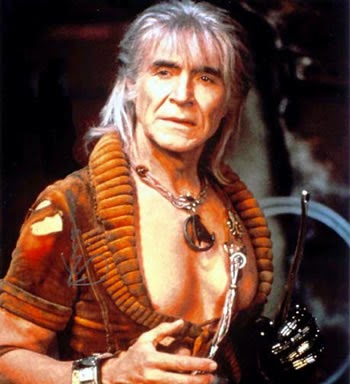
            Let’s not even talk about speculative fiction.  How many sci-fi shows predicted events we’ve since caught up with and passed?  Buck Rogers left Earth on a deep space probe in 1987, and Thundar the Barbarian saw the world collapse in 1994.  Star Trek told us the Eugenics Wars happened in the 1990s, which was also when Khan and his followers were launched into space in cryogenic suspension (presumably using the technology from the Buck Rogers deep space probes).  According to the Terminator franchise, Judgement Day happened in 1997 (later adjusted to 2004).  Then there’s 2001: A Space Odyssey and it’s sequel 2010.  Heck, even Back to the Future is just a few short weeks away from becoming a silly, dated comedy.  It’s going to be 2015 and there are no self adjusting clothes or flying cars or Jaws XIX (it looks like we did get hoverboards, though…).  And, hell, supposedly in 2015 people are still using faxes as a high-tech method of communication.
            If I really don’t want to date my work, I can’t mention anything.  Cars, music, movies, television shows, networks, books, magazines, sports teams, games, cell phones or providers, Presidents, politicians, political parties, countries, businesses of any kind, actors, actresses… all these things and a few dozen more. All these things change all the time in unpredictable ways.  So if I want to be timeless, I can’t bring up any of them.
            The problem is, though, these are all things that are part of our lives. They come up in conversations.  They shape how we react to other things.  So if I’m writing a realistic character with natural dialogue… these things will be there.
            So what’s this all mean?
            In the big scheme of things… don’t worry about it.
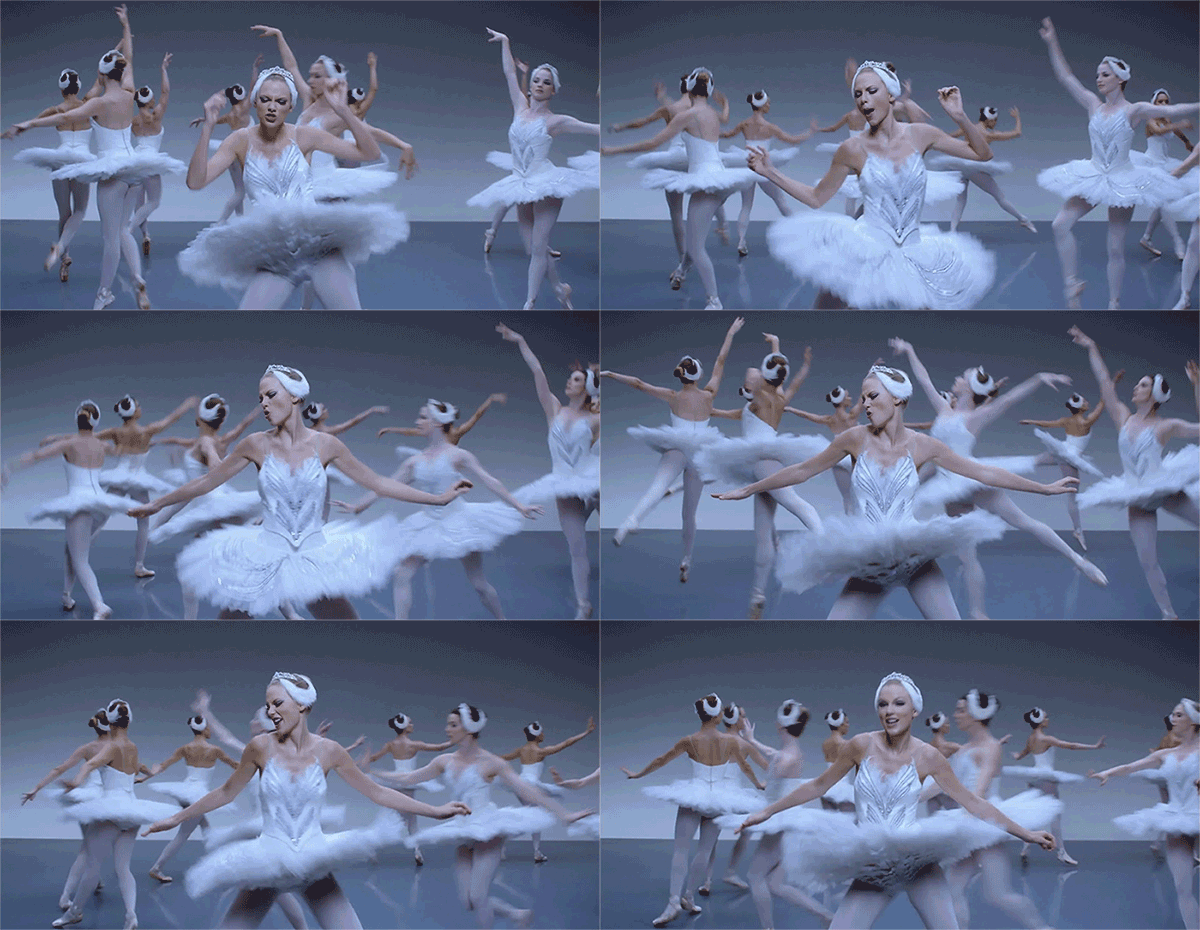
            That being said, I  probably shouldn’t base my entire plot around readers knowing the lyrics to Taylor Swift’s latest single, and (much as I love it) I might not want to use a reference to the second season finale of Chuck as the big button on my chapter.  There’s a reason some things stand the test of time, some become cult classics, and others become… well, we don’t know, do we?  And I should never be referencing something no one knows about.
            There isn’t an easy answer for this.  I’d love to list off some rules or just be able to say “8.3 references per 50 pages is acceptable,” but it isn’t that simple.  A lot of this is going to be another empathy issue.  As a writer, I need to have good sense of what’s sticking around and what’s a fleeting trend.  What references will people get in ten years, which ones they’re going to forget in six months, and how blatant these references need to be to get the job done.
            Getting dated is unavoidable.  It is going to happen to my work.  And yours. And hers.  But if we’re smart about it, we can get the most out of it while we can and still make sure that date’s as far off as possible.
            Next time, I’d like to talk about dialogue.  And I’ll probably make a mess of it.

            Until then… go write.

September 7, 2013

Easter Eggs

            Months early for Easter, I know.  But, as some of you may have guessed, I’m not really talking about those Paas coloring kits.  Or the Cadbury Bunny.
            For those few of you who are still waiting to see if Betamax is going to win the format wars, an Easter egg is a hidden bonus on a DVD or Blu-ray.  As of late, the term’s been broadened to include any little onscreen reference or in-joke. 
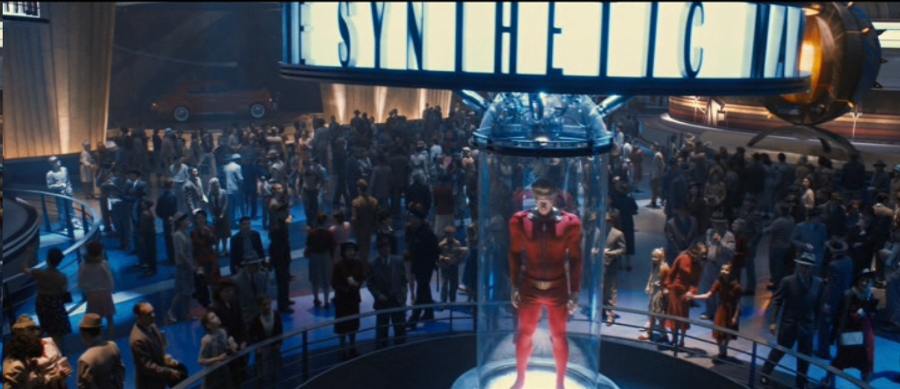
            A lot of superhero movies tend to have “Easter eggs,” in this broad sense.  Captain America’s shield (or a version of it) showing up in Tony Stark’s workshop.  Superman and General Zod crashing into a Wayne Industries satellite while they fight.  Agent Coulson stopping at a Roxxon gas station on the way out to New Mexico.  Professor Horton’s synthetic man at the WWII Stark Expo (a two-for-one Easter egg, really).  Heck, I remember giggling with geeky joy when Val Kilmer’s Bruce Wayne made an offhand comment about some people being “halfway to Metropolis by now.”
            I think most writers do this on one level or another.  We put in little in-jokes and references.  Sometimes they’re ten percenters, others they’re so small and private maybe only a dozen people in the world are going to get them.  I know I’ve done a bunch of them in different books and short stories.
            Now…a few weeks back I read an interview with Joss Whedon about the new Agents of SHIELD show.  The interviewer wanted to know if we’d be seeing lots of guest spots from some of the movie characters like Nick Fury or Cap or maybe Dr. Banner.  Whedon kind of shrugged it off and said while he wasn’t against it, the show wouldn’t last long if it was all about waiting for the next guest star or movie reference.  It needed to stand on its own feet, without support from the films.
            See, that’s the catch with these sort of in jokes and clever references.  My story needs to work despite these ten percenters, not because of them. If all I’ve got is a few clever nods to other things, I don’t have a real story—no matter how clever those nods are.
            This is also relates to a common prequel problem.  In prequel stories, there are often Easter eggs to all the stuff the audience knows is in the future.  Smallville would often dress teenage Clark Kent in blue t-shirts with a red jacket, or have numerous guest stars who would be important later in his life (like ace reporter Perry White).  Hannibal Rising had the titular character learning to cook and trying on samurai half-masks that hinted at the signature muzzle he’d wear later.  The Star Wars prequels showed us glimpses of the Death Star and hints of the Empire.  As I write this, there’s a pair of shows on the air, each about a famous fictional serial killer at an earlier part of their life.  And each show relies heavily on the fact that we, the audience, knows who this character is going to become.  There are constant winks and nods and references to things in their respective futures.
            In most of these cases, though, when you strip away all the references to “the future,” it becomes clear there’s very little going on in the now.
            There’s a similar problem you’ll see a lot in bad comedies.  It’s when the plot grinds to a halt to show us a painfully long setup for a joke that does nothing except get a quick laugh.  It’s not humor advancing the story, it’s just humor for the sake of humor.  And that gets old real quick, no matter how funny the gag might be on its own.
            I’ve mentioned seeing this in a fair number of genre stories.  A writer comes up with a really cool and new (or what they think is really cool and new) idea about zombie origins or time travel mechanics or vampire biology or cyborg implants or something.  But they don’t actually have a story.  They just have this one cool idea trying to carry everything. 
            All of these examples tie back to something I’ve brought up before.  One cool idea isn’t a story.  It’s just a story point.  And one story point—or even a dozen of them—does not make a book.  Or a movie.  Or even a short story.
            Easter eggs are cool and fun, no question about it.  But you can’t live off them. And a story can’t survive on nothing but sly winks.
            Next week, I think it’s time for that long overdue lecture on structure that I’ve been promising for months.
            Until then, go write.

Categories