

I went back and forth over the title for this week’s little rant. It felt too easy to go this way. Hopefully you’ll find it in your hearts to forgive me.
I wanted to take a few moments to talk about redemption tales. Someone asked about this a while back—a long ways back, I believe—and I thought it could make an interesting post. Redemption is tough to qualify, though, and it took me a while to put my thoughts into some form that, well, anyone else would comprehend.
That happens to me a lot.
Which brings us to today.
One key thing I’ll be bringing up a lot for this is empathy. A good redemption story relies heavily on me knowing how my readers will respond to various incidents and actions. If I don’t have a good idea how something will go over, it’ll be easy for either end of my redemption tale to seem pointless, confusing, melodramatic… or all of the above.
A redemption tale can either be the main thrust of my whole story or it can just be part of a single character’s arc. Either way my story has to hit a couple of points. Not in the sense of “introduce the motivating incident by page 17,” but more in a general “let’s talk about the story and the characters” way. If I don’t have these points in mind, there’s a good chance that my “redemption” story is going to earn some rolling eyes and a hearty laugh or three.
So… with all that in mind.
1—Does my character need to be redeemed?
This is one of those “obvious” things that far too many folks mess up. If I’m going to tell a redemption story about Yakko, he needs to do something that requires redemption. This is step one, and it’s kind of bothersome how often I see people who miss this point.
I’ve seen more than a few folks who try to structure big redemption moments around characters who haven’t done anything wrong. It’s really great that Yakko wants to sacrifice himself to make up for his past sins, but if he doesn’t have any past sins… well.. That’s not redemption, it’s just a pointless sacrifice. Yakko needs to have something in his past (or do something early in my story) for which he needs some form of honest redemption. For most of this post, I’m going to call that the key event.
That “past” aspect is important, but I’ll get to it in a few minutes…
That “past” aspect is important, but I’ll get to it in a few minutes…
This is my first big empathy moment as a writer. If I can’t predict what actions (or lack of actions) my audience will see as redemption-worthy, this story can get silly pretty quick. Yakko should not be going on a ten year penitent crusade around the world to make up for feeding his cat tuna instead of chicken. If he’s really guilt-ridden about that nickel he picked up off the sidewalk when he was six… again, I’d better be writing a comedy.
What was Yakko’s key event? Did he sneak a peek at his roommate in the shower? Write a bad check? Get someone fired? Rape or murder someone? Maybe lots of someones…?
That brings us to…
2—Can they be redeemed?
Somewhat related to the first point. There are certain acts that are unforgivable. That’s true in any society, past, present, or future. Sometimes people do things that are beyond redemption. It’s really tough to imagine anything a serial child rapist could do to make up for what they’ve done in the past.
Yeah, I’m sure some of you are thinking “they could die,” but that’s not redemption, is it? That’s vengeance, and that’s not what we’re talking about. And I’m going to talk about death in a little bit.
So when I’m writing Yakko’s redemption tale, I need to really think about what he’s done. Again, some of this is going to be an empathy issue. Will my readers think his key event is a redeemable act?
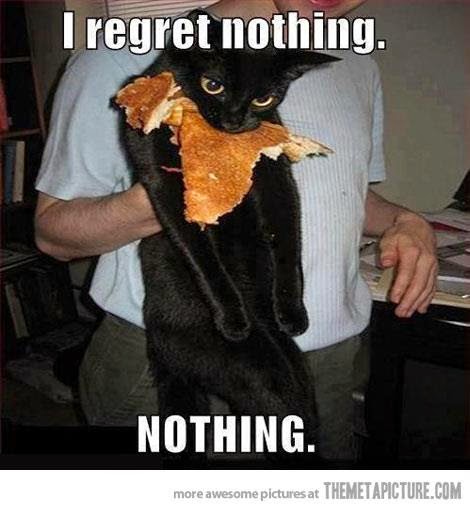
3—Do they want to be redeemed?
Again, this may sound obvious, but I can’t force redemption on someone. That’s not how it works. Yakko needs to want it.
And maybe he doesn’t. Maybe Yakko doesn’t feel like he did anything wrong. Perhaps he paid his fine or wrote his apology letter or served his time and considers the matter closed. Or maybe he knows it was wrong and just doesn’t care. Some people are like that. If Yakko’s one of them, it’s going to be tough for me to write a redemption story about him.
4—Why haven’t they done it before?
Okay, in order to explain this point, I want to toss out what I think is a fairly firm rule of thumb… Feel free to agree or disagree down below.
In a good redemption story, a notable amount of time needs to pass between the key event and the redemption for that event.
Y’see, Timmy, in my opinion one of the main elements of redemption (from a story point of view) is guilt over the key event. If I don’t feel guilt, then why would I want redemption (see above)? And if I’m taking care of things immediately after the key event, this isn’t so much redemption as it is… well, cleaning up. Yakko may feel horrible about having to do this clean up, but does he really feel guilty? If I hit someone with my car, it’s the difference between calling 911 and sitting with them until the ambulance comes… or switching my headlights off and speeding away. I may feel bad in both situations, but they’re two very different situations.
That being said… Why didn’t Yakko stop immediately? What made him run from his key event? What’s kept him from admitting it or doing anything about it until now? Denial? Fear?
Which brings us to a two-part point…
5A—Why are they doing it now?
If I accept that Yakko has tried to disavow or hide that key event for weeks or months or years… why is he looking for redemption now? What’s changed for him as a character that he’s decided to acknowledge this and make amends somehow?
This is another big empathy moment because this is a big decision for any character, and it goes against what they’ve done up until this point. If this isn’t a believable change of heart, my whole story’s going to fall apart.
5B—Why are they doing it now?
From a story structure point ofview, why is this happening now? Odds are Yakko’s going to start looking for redemption in this story, because I write about active characters who actually do things. So, as an author, why have I included this?
Am I just looking to round out Yakko a bit as a person? Is this the main plot of my whole novel? Either way, this decision and the repercussions from it need to fit into the structure of my story and into Yakko’s arc as a character.
Last but not least…
6—Does it balance the scales?

At the end of the day, every redemption story comes down to this. Does what Yakko did now make up for what he did then? Does he believe it does? Do other character think things are even now? Even more importantly, are my readers going to think this is a fair trade off, or is it going to come across a little thin or forced?
It’s worth mentioning death. All too often writers try to use death as the ultimate balancing agent. It’s seen as the automatic “redemption now” act. Sure, Yakko raped, killed, and pillaged his way across three continents, leaving thousands physically or emotionally scarred in his wake, but in the end he died saving those two campers from a grizzly bear. And that makes it all okay, right?
No, of course not. In fact, if not handled just right, death can come across as a “he got off easy” situation, cowardice, or even a cop-out on my part. I don’t have to deal with all these complex emotions and repercussions if Yakko takes a trio of bullets in the chest, but I can still be praised for my artistic handling of the situation.
That’s the idea, anyway.
On a related note, a redemption story where the character doesn’t redeem themselves in the end is just… well, kind of pointless. It may have been very pretty from a vocabulary-metaphor-symbolism point of view, but it isn’t a redemption story. Or much of any story, to be honest. I may feel it’s beautifully tragic and ironic, but I think most readers are going to find themselves wondering why they just wasted the past few hours following a guy who doesn’t accomplish anything…
And there you have it. A few questions I need to ask myself if I’m trying to do a redemption story. And if I don’t have some positive answers for most of them, well, maybe I need to look again at how I’ve set up my story. Or my character.
Because there’s a good chance they’re not on the road to redemption.
Next time I’d like to work backwards a little bit.
Until then, go write.