November 7, 2019

Initial Incisions

Hey, so I know last time I said I was going to talk about twists, but…
This past weekend I subbed in for Jonathan Maberry at the San Diego Writers Coffeehouse and we talked about… well, all sorts of stuff. NaNoWriMo. Agents. Editing. One interesting question that came up was how do you edit? Which is a fair point. I’ve talked about editing here a bunch of times, but not anywhere near as much about what it is or how we do it.
First off, we need to be clear that there are different types of editing. There’s the type we’re going to talk about now (which I’m just going to call initial editing) but there’s also story editing and copyediting. I’ve talked about those a bit before, so I won’t go into them two much now. I will note that they exist and that all of these are very different things. So when we talk about editing—if we’re offering it, asking for it, or just doing it ourselves–it’s kind of important we’re clear what we mean.

What we were talking about at the Coffeehouse, and what I shall blather on about here, is what I’m going to call initial editing. There may be a better, more generally-recognized term for it, but that’s what I’m going with here. Really, I should’ve been calling it something like this for ages now because, like I said, they’re all different and I should’ve been as clear as possible.

Anyway…

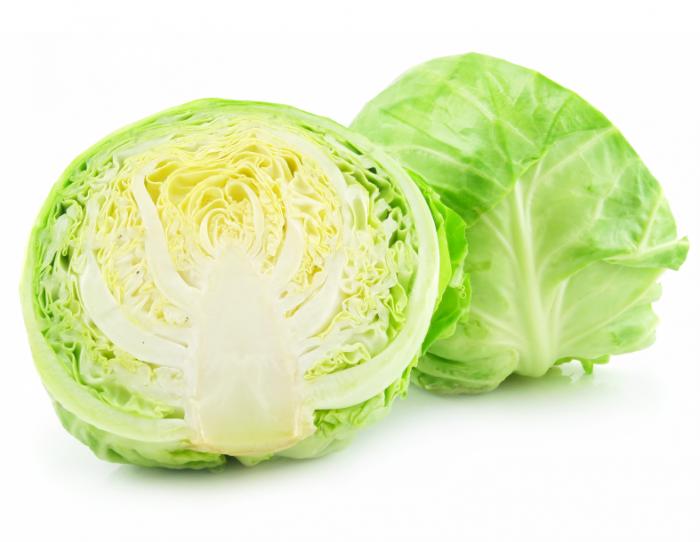
This is the first real attempt at trimming and tightening my manuscript. If I was cooking, this would be the trimming the fat stage. Like, literally, trimming the fat. I can have a nice cut of meat (or a good head of cabbage, if you prefer) but that still doesn’t mean I’m going to use 100% of it when I cook. I’ll cut off that layer of fat and maybe that piece of gristle. I’ll peel off those outer, kinda banged up leaves of cabbage, but also trim them away from the really hard, solid stem at the core of the head. This is when I take thing that’s good or nice and make it into something great—something I want to impress other people with.

For our manuscripts, right off the bat this is going to mean having an open mind and a willingness to accept some possibly uncomfortable facts. If I refuse to believe there’s anything wrong, it’s really tough to fix anything. When I finally get to that first solid draft—usually the second draft, for me—it means things are very likely a little bloated with excess words Things that aren’t necessarily wrong, but my manuscript will almost definitely be stronger and cleaner without them.
I’m just going to list some words and phrases to keep an eye out for. To be very clear, this list isn’t complete and it definitely isn’t the end-all-be-all of things you should absolutely always delete from your manuscript. But I think it’s a good starting point, and as we go through maybe you’ll start to feel a pattern, a sense of the kind of stuff you should be looking for when you pull out the knives and start cutting. So fire up your word processor (or your blue pencil, if you’re hardcore old-school), find your Find function, and start looking for…

Adverbs and Adjectives

Let’s just start with the big ones. A lot of folks have very strong opinions on adjectives, and especially on adverbs. Man, they hate adverbs. Some people think all adverbs should be ripped out of your manuscript while other people think all adverbs should be burned alive in your manuscript. And some people say adverbs are wonderful things and we should cultivate them like clover on a low-water front lawn.
I’m not a fan of adverbs. They have their uses, absolutely, and I’m not saying I never use them, but I also know a lot of the time they’re something I stick in quick to modify a verb rather than spending a few seconds to find the right verb. It’s an easy habit to get into, because pretty much every sentence is going to have a verb and I can pause for five seconds here, ten seconds there, and suddenly that’s an extra minute I spent on that paragraph. Five or six minutes on this page. It’s a drag we can feel, so it’s not uncommon to fall back on our first choice. Which is why people slowly run or quickly run or clumsily run when they could be ambling, dashing, or stumbling. A good rule of thumb I got years back that I try to follow is four adjectives per page, one adverb.
That—
That can be a killer. There are times when it’s necessary for comprehension, or maybe even grammatically required depending on how I’ve structured things, but on a guess I’d say 75-80% of them are unnecessary in a story. It’s not uncommon for me to delete around 200 thats during my initial editing, if not more. Think about it. That’s almost an entire, actual page cut from my manuscript just by focusing on one word.

Somewhat Syndrome—
An editor friend of mine came up with this a while back. It’s from a bad habit I had of modifying, well, everything. Even in a loose third person POV, it’d seem odd for someone to look across a room and say “Yakko was six-foot-two and weighed one hundred-ninety-five pounds.” It just feels unnaturally accurate, doesn’t it? Sure, some characters might have that sort of precision, but not many. So I’d soften it up a bit. “Yakko was somewhere around six-foot-two and weighed maybe one-hundred-ninety-five pounds or so.”

Over the years I’ve come to add a few other words to this list, but for starters just try looking for things like somewhat, about, around, maybe, might, sort of, a bit, and kind of.  I’ll also toss out that I saw a similar list from Benjamin Dryer recently and he suggested cutting very, rather, really, quite, so, of course, and in fact.

Heck, while we’re at it, let’s mention appeared to beand its evil step-siblings seemed to be and looked like. The thing is, these phrases aren’t supposed to be used alone. They’re almost always part of a literary construction where the second half of that structure is either an implied or actual contradiction.  So when I’m saying “Yakko seemed to be six-foot-two,” what I’m really saying is “Yakko seemed to be six-foot-two but really he was barely five eleven.  And what I meant to say all along was just “Yakko was six-foot-two.”  So I should probably triple-check these and make sure I’m not accidentally establishing a contradiction I don’t mean to be (and wasting a bunch of words in the process).

Looking back over this list, it’s probably worth mentioning that, yeah, when I delete some of these words and phrases it might mean I need to spend more time rewriting other things so my dialogue or narration still makes sense. Sorry. It happens. Probably want to make sure I also don’t just repeat the problem. It’s all part of the normal editing process.

And again, I want to stress–these words aren’t always wrong. I can use multiple adverbs on the same page. I can say someone’s around six-foot-two. There are totally valid reasons for these things to happen. But the whole point of this initial editing is to look at how often I’m using these words and patterns. And to figure out if they’re really necessary.
Now, these aren’t the only things I tend to look for in this initial editing pass. There might be (will probably be) plot threads, descriptions, characters, and more that can use a little trimming. If any of you like, I could talk about editing those, too. But I think for now, this is long enough. We’ve all got things to do.

Speaking of which, to bring things full circle, this Sunday at noon is the Los Angeles Writers Coffeehouse at Dark Delicacies in Burbank. Come on by and talk with us about writing and publishing and all that sort of stuff. Or just lurk in the background and browse the store while you listen in. Either was, I’m bringing little danishes.

And next time, yes, twists. Finally. After that it’s up to you.

Until then, go write.
July 17, 2019 / 1 Comment

SDCC 2019

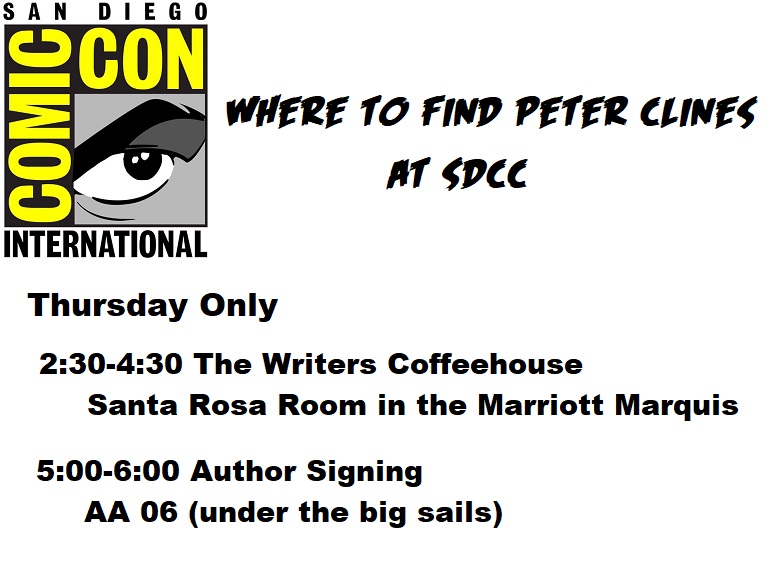
So, I’m only at SDCC for the one day this year. Slim chance you might catch me wandering on Saturday, but I think Thursday’s probably going to be it. Very sorry if you don’t get there until the weekend.

Also, I may be scribbling in some books at the Del Rey Booth (#2913) Thursday morning-ish, just so they’ll have signed books to sell.  If you happened to be there at the same time, you could say hi or get a book personalized or what have you. Follow me on Twitter and I’ll let you know when I’m heading over to the booth.

See you in San Diego!

March 7, 2019 / 4 Comments

The Outline Experience

Hey everybody!

(Hi, Doctor Nick!)

I’d like to thank you all for your patience while I was off finishing that book.  I went through a brutal last week of work on it.  I decided to change the last five chapters and then still squeeze in another polish draft.  Because why not, right…?

And I’m assuming you’ve all been patient.  For all I know this was the last straw and you all said screw it—Victoria Schwab just tosses out great writing advice on Twitter.  Why am I wasting time waiting for this guy to come back?

I may just be writing into the internet void.

Ah, well.  I’ll give it a few weeks to be sure.

So, speaking of the void, a couple months back I talked about outlines, and how my attitude toward them has changed over the years.  And it is so weird to say “over the years.”  I’m still amazed I’ve been doing this for as long as I have.

Anyway, I talked a bit about outlines and promised to revisit the topic because… well, this book I just finished was the first time I’ve done a book with a really full, complete outline.  The analogy I made was going from roughly planning out a trip to having an hour-by-hour itinerary.  And since my previous attempts to work with an outline hadn’t gone so well, I thought it would be worth talking about what I did and how it all worked out in the end.
First off, as I mentioned before, the outline for this book was huge.  Forty-two single-spaced pages, almost double what I’ve ever done before with this kind of blueprint.  I had everything broken down by chapters, I had notes of which chapters were done from which points of view.  And I had another four page document that was just notes on characters—names, backgrounds, wardrobe.  I could probably say I had fifty pages of this done before I sat down to start actually writing it.

Remember that last bit—we’ll come back to it.

It’s also worth mentioning that I spent almost five weeks working on this outline.  More than a month.  There were many false starts.  There was feedback.  I pretty much went through drafts of my outline.

Was it worth it?

Well, taking the holidays and a week with a bad back into consideration, I finished up a first draft in just under nine weeks.  That’s pretty good for me.  My first drafts are usually somewhere between two to three months, so this one basically scraped right up against that, on the quicker side.

But…
It’s also worth noting that this was a much, much tighter first draft than I usually do.  I’ve joked about the number of notes I’d usually leave for myself in a first draft.  MAKE THIS SOUND COOLER or ADD A CHAPTER EXPLAINING THIS.  Usually, I’d have ten or twelve of these in a first draft.  This time around I had… four?  Maybe five?  And only two of them all that big.  So my second draft took just over a week, if memory serves.  About eight days, altogether.  In the past, that’s been a three to four week process, patching over all those holes.

Now… let’s crunch some numbers.

I’m sure one or two of you are seeing this as a brilliant validation of outlines.  They make things go so much faster and easier. Three months down to two?  Three weeks down to a little more than one?  Fantastic! I shaved 33% or more off my time.

 Did I though…?

I mean, as I mentioned above, once I add in the five weeks of work for that outline, the overall work period is just about as long as it used to be.  It went much smoother, yes—much less head-banging-on-keyboard—but I’m almost tempted to say it took a little bit longer.  Not drastically longer, but I’m not sure it really saved any significant time in the long run.  I just used the time differently.

Also worth mentioning—what’s that old chestnut, no plan survives contact with the enemy?  Same thing here.  No outline survives contact with the actual story.  As things are building and fleshing out, they change.  These are no longer those characters, able to carry out those actions.  One character in this book had a complete 180 personality change from first to second draft, from angry yelling guy to eerily calm smiling guy.  Which worked so much better for the story and made one of those fill-in-the-blank sections turn out completely different than I originally planned.

That’s also why the ending changed, as I mentioned at the start.  I rewrote the last five chapters of the book.  The last seven, really, because once the characters were well-established and the pace was set… well, I came to some realizations.  One was that some of my ending was pointless conflict—just drama and action for the sake of drama and action, nothing else. Also, I had a much clearer view of how some characters would react, and those little tweaks changed how some things needed to happen.

One other thing to keep in mind that I’d never considered—using a really dense, detailed outline can be a bit brutal if you’re someone who likes tracking their word count.  Every day I’d type out 1500-2000 words and feel really good about myself.  And then I’d delete all the notes for that chapter, which would knock the overall word count back by 500-750 words.  Yeah, I still wrote the same amount, but… well, if those numbers mean a lot to you, it can be kinda disheartening.

What does all this boil down to?

Well, not much.  As I’ve said in the past, an outline is a tool for my writing arsenal, but there’s no law that says I have to use that tool.  For me—someone writing on a hard deadline as part of my full-time job—yeah, I think I may try using this tool again.  For you, maybe not.  Maybe you’re still at a point where you can take the time to just feel your way through the story.  Maybe you just don’t want to deal with an outline and have that much planned out for you.  These are all fine things.  Like so many things on the writing side, it comes down to what works best for you.  That’s the Golden Rule I mention here so often.

And those are my thoughts on outlines.

At this point I’ll toss out the reminder that my latest book, Dead Moon, is currently available exclusively from Audible.com.  It’s set in the Threshold universe, so if that’s your thing you may like it.  You may like it anyway.  Please check it out, and if you already did reviews are always appreciated.

Also, if you’re in the southern California area, this Sunday is the Writers Coffeehouse at Dark Delicacies in Burbank.  We’ll be there noonto three chatting about exposition and types of contracts.  As always, it’s 100% completely free (no fees, no dues, no sign-ups, no emails, nothing), and much like this blog, it’s kinda entertaining and semi-educational.  Feel free to stop by.

Next time…

Well, it’s been a while.  If anyone’s had a topic gnawing at them, please let me know in the comments.  Otherwise I’ll just babble on about spelling or superheroes or something.

Until then… go write.
December 27, 2018 / 2 Comments

The End Times

            Joyous Kwanzaato all of you celebrating it.  If you’re more the Christmas type, I hope the day was happy and peaceful and Santa got you that one thing that’s been on your mind.  And I hope all of you are looking forward to the upcoming New Year.
            Speaking of which… as this year’s winding down I thought it’d be worth going over what got done this year.  I’ve mentioned before, I think, that sometimes people get a really disheartening idea of how much some authors produce on a weekly/monthly/yearly basis because they’ll catch somebody like Chuck Wendig or Victoria Schwab posting about a particularly productive day they had (or Jonathan Maberry posting about, y’know, a day that ends in Y…).  When you’re struggling to squeeze in a few hours a week, it can be kinda soul-crushing to see people who are writing five or six thousand words a day.
            So I thought I’d go over all my writing-related activities for the year.  Break down what got done and how long it took.  Keeping in mind, again, that this is my full-time job, so there’s some stuff I consider part of the writing job that might not actually involve writing a specific book.  As we shall see.
            Anyway…
            I wrote—and rewrote—a good chunk of a book called Dead Moon.  I started it seven years ago and it’s finally coming out in February through Audible.  I think it’s a much better, stronger book than it would’ve been if I’d written it back in 2011.  Partly because I’m a better writer (I like to think so, anyway), partly because I’m gotten to work with a lot of good editors over those seven years and they each pushed me to be a little sharper, a little better.
            As you’re reading this, I’m a little over 45,000 words into another book, one that ties together two previous ones I wrote.  Overall, it’s going smoothly so far, although I’ve lost about a week to the flu which led right into the holidays, and also a pulled back early this fall.  I’d wanted to be another 20-25,000 words along at this point, but I’m still happy where things are at.  I’m probably going to do a whole post on this one sometime in the spring, because it’s the first time I’ve really done a book start to finish from a full outline.
            Plus I’ve been working on an outline for my next book, too.  Still in the early days, fleshing out a few things, but I’m very excited about it.
            I wrote about fifty-five posts here at the ranty blog.  Yeah, the number down on the side bar is a little higher, but a couple of those posts were cartoons or memes or different con schedules.  I’m not sure how many, but enough that I should probably knock at least a dozen off that final number.
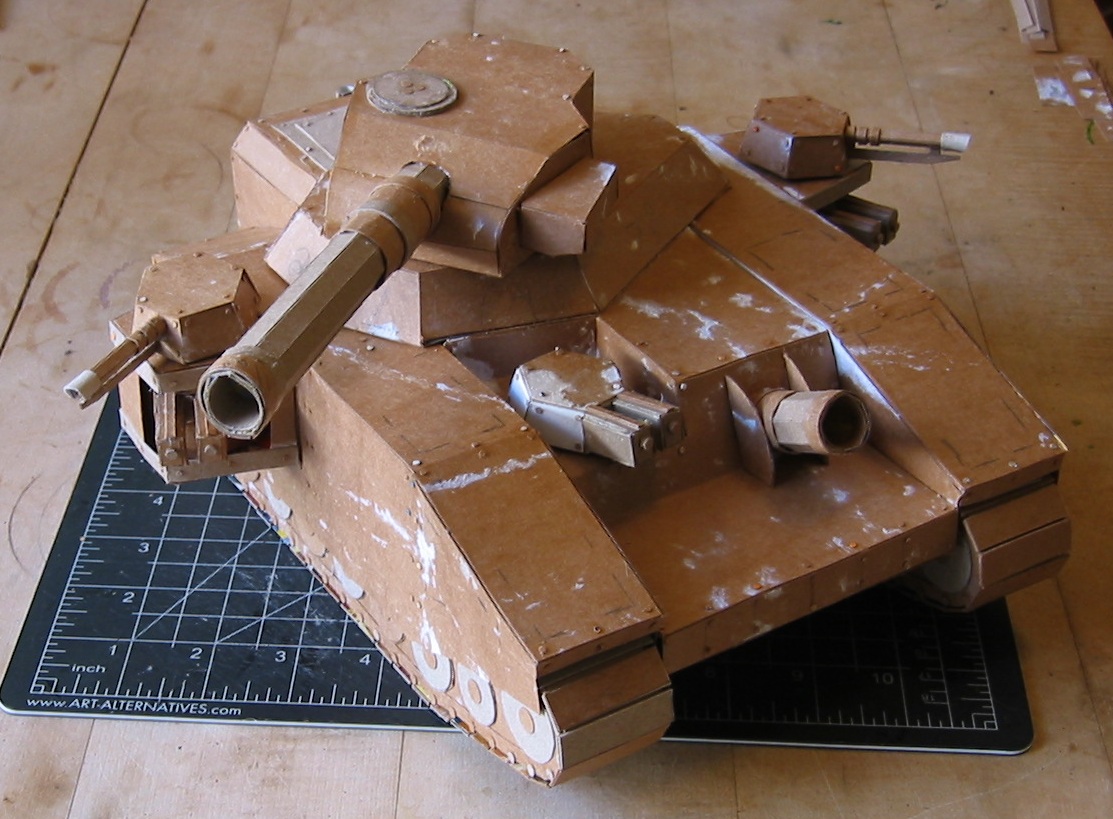
            Probably worth mentioning that this year I shut down another blog I’d had for a few years. It was mostly about my geeky toy soldier hobby and ways to save money with it.  Truth is, though, I just haven’t had time to put into those paperhammer projects that I used to.  Closing it down took a lot of stress and guilt off my shoulders for… well, not coming up with content for that blog.  So that’s probably something to remember, too.  There are times it’s worth it to stopwriting.
            Also worth mentioning that this was a pretty appearance-heavy year for me.  I appeared at five different cons, if memory serves, plus a few speaking engagements.  Plus the Writers Coffeehouse, and now the Dystopian/Apocalyptic bookclub at The Last Bookstore.
            Finally, a ton of reading.  I didn’t get to read as much as I would’ve liked these past few years, so in 2018 I made it a point that I wanted to read a lot of novels from a variety of authors, and try to read at least one a week.  It was energizing and enlightening and I can’t recommend it enough.  Expand your horizons.  I’m currently in the middle of book 51 for the year, and might even get into 52 this weekend.
            (there was a pile of comics in there, too)
            And there’s that.  How this professional writer spent his time this year.  And keep in mind I still had time to binge Lost in Space, Sabrina, and 3Belowwhile also keeping up with my CW shows and The Good Place.
            Oh, and move to another city.
            Almost forgot that part.
            What have you gotten done this year, writing-wise?  Did you hit your goals?  Get close?  Hopefully, if nothing else, it gave you a good sense of where your goals should be.  Did you push yourself too hard, or not hard enough?
            There is no right or wrong answer here.  The right speed for you is going to depend on what you want to get out of this and where you’re hoping to go with it.  There’s no reason for me–or for you– to compare myself to anyone else. It just matters that I’m getting something done.
            Maybe think about that a bit as 2019 rolls closer.
            On which note, I’m going to try to get some work done before we lunge into 2019.  Hope the holiday shave been good to you and continue to be so.
            Next time, I’ll probably be giving my start of the year spiel.
            Until then… go write.    

Categories