
October 10, 2019

Going Over The Numbers

Another quick post. Something that crossed my mind the other day. A little odd for a mostly writing blog, I know, but I wanted to talk about numbers for a few minutes.

I’ve rambled on here once or thrice about characters. Protagonists vs antagonists. Main characters vs.  supporting characters vs. background characters. Who should get namedand who shouldn’t.

But it struck me that one thing that almost never comes up is, well, how many characters should I have. How many can my story really support? How many does my story need?

Yeah, that sounds a little odd but some stories need more characters than others. A murder mystery with two characters doesn’t leave a lot of room for red herrings—especially when one of them is dead on page two (thanks, Owen!). If I want to write a slasher or torture porn story, well, I’m going to need a few extra teenage campers to send off into the woods. Heck, think how much it could limit my sci-fi story not to have a red shirt or three that can head up to that ridge to look around.

The truth is, a lot of stories have certain minimums. Nothing’s written down, mind you—there’s no chart somewhere that says romance=8 characters, mystery=15, urban fantasy=23.  But, as I just hinted, I can start hitting some odd problems when my story’s understaffed. Suddenly my murderous alien monster seems a little less genetically superior because, well, it’s not managing to kill anyone. Because there’s nobody for it to kill.
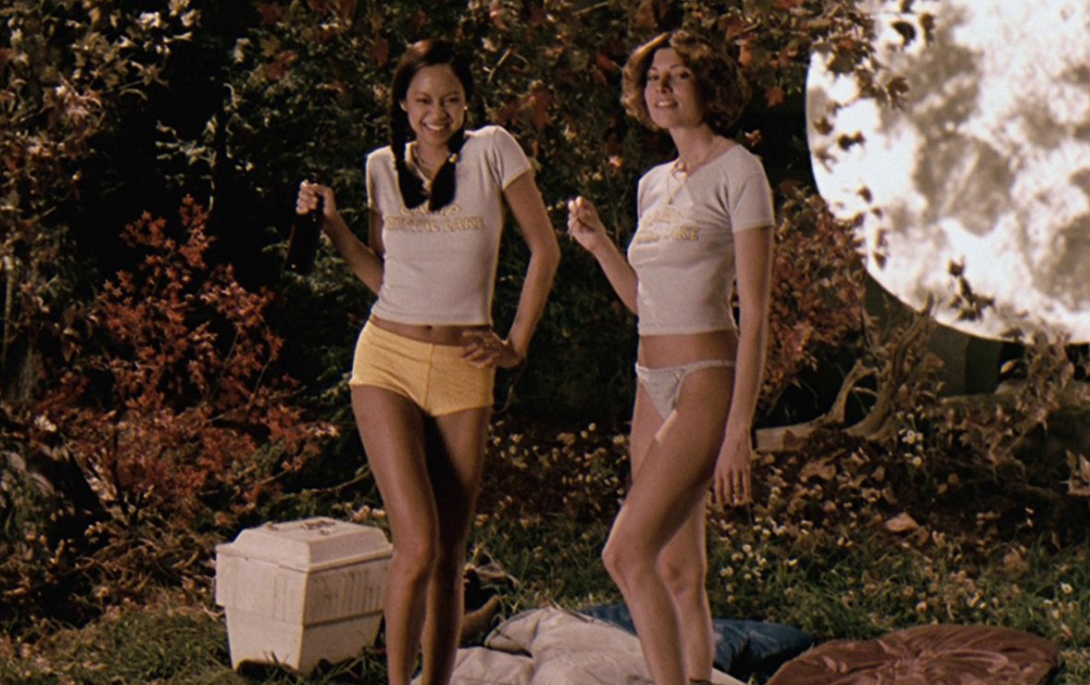
One of my Saturday geekery movies a few weeks back had this problem. It was a slasher film. Nubile kids up at the lake smoking pot and having premarital sex (a recipe for sudden death). Thing is… there were only four of them. Two couples. Which… well, it didn’t give our murderous killer much to work with. He just kinda stood around for a lot of the movie. And then he had two “attacks” where he didn’t kill anybody. Or even wound them.

If I had to guess, based off my own experience with such things, the screenplay went through a lot of revisions and had a lot of cuts. A LOT of cuts. And one thing that went away was extra characters. All those people with just one or two lines, anybody who only had a single contribution toward advancing the plot, everyone who was only there to look good in a bathing suit or a wet t-shirt.   They all got trimmed and cut and combined and suddenly—again, this is my just my guess—this summer camp went from nine or ten counselors to only four. And, sure, each of these four had a lot to do, but they were just too rare for our mystery murderer to kill one of them off at the end of act one. Or even act two. The story couldn’t afford to lose a character, so the killer kept… not killing them.

Essentially, it was a slasher film where nobody got slashed.

Sometimes, weird as it sounds, we need that nubile teen in the wet t-shirt running through the woods. Okay, we don’t need her specifically, but we need somebody there because what happens to that person is setting a certain mood and letting us know some things up front. More characters raise the stakes and heighten the mystery. We need the red shirts, the lab assistants, and that guy who’s acting shifty but has a pretty solid alibi for the time of the murder because sometimes they really are advancing the plot.

And, yeah, I know this may sound a little odd to say because I’ve talked a lot here about paring away excess. I’ve made many posts about trimming the fat and figuring out if I really need this character or not. But this is one of those odd balance things we all need to figure out for ourselves. Which really sucks, I know. I wish that chart did exist so I could just tell you how many characters is the correct number for your story.

Y’see, Timmy, this is one of those things that just falls under experience and empathy. It can’t really be taught, it just needs to be figured out. And I’m going to need to figure it out every single time, because my mystery in the Hamptons is going to (hopefully) be different than my mystery in the Catskills and neither of them are like my Long Island mystery (which partly takes place at the club, so there are at least a dozen suspects. Three dozen if we’re going to consider staff). I need to figure out that perfect balance between enough characters to propel the plot forward, but not so many that I’m bogging it down.

It’s tough, but it can be done. And you can do it.

I was going to say “count on it!” but that’s just way too cheesy.

Anyway…

This weekend is the Writers Coffeehouse at Dark Delicacies and also the Dystopian Book Club at the Last Bookstore. If you’re in the southern Californiaarea, maybe I’ll see you there for at least one of them.

Next time here… okay, look. Next time I’m probably going to do something quick. I’ll explain why then. But if you’re in the Dallas area, leave the 20th open.

Until then, go write.
October 3, 2019

Default Heroes

Just a few quick thoughts this week. Well, not super-quick. It’s a simple idea, but it might take a bit to explain.
As some of you may know, I have a habit of watching B-movies on the weekend, and often tweet out my thoughts and critiques of them while I build up my armies of little toy soldiers. I recently had a brief epiphany about a common problem they have, and it’s a problem I’ve also seen in books, comics… really, in pretty much every form of storytelling.  And it kinda grows off something I’ve talked about before.

A common problem in B-movies (but as I said, it shows up in all story formats) is trying to figure out who I’m supposed to be rooting for. The story gives us protagonists who are dull, completely unrelatable, offensive, or just plain annoying. Heck, sometimes it’s not an “or” situation but an “and”—the storytellers double down on just how bad a lead character that can have, on several levels.

And I find myself wondering how this happened. How did the storytellers settle on that person as their protagonist?  They don’t hit any of the benchmarks of being a hero—either in the protagonist or heroic sense. They’re not even a good character in a general sense. So why are we spending all our time with them?

Which is, I realized, the key problem.

When we end up with protagonists like this, it’s the storytellers falling back to default mode. We’re not making any changes or adjustments of our own, we’re just going to pick up the story and run with it as-is.  It’s factory-settings storytelling, so to speak.

For example, our protagonist should be the character we spend the most time with, right? Well, we’re spending the most time with, uhhhhh, that guy. So he must be our protagonist, right? Yeah, definitely our hero. I mean, there’ve been six chapters about him so far.

But there’s more to someone being my protagonist than just awkwardly being the center of attention. They have to be an active part of the story. Really, they need to be the active part, because if I’m focusing on them it’s their story.  And, seriously, why would I focus on them if there was another character doing more to drive the plot forward? If somebody else is doing more, it’s probably their story and I should really be focused on them.

And even that’s just the nuts and bolts structural stuff. There’s still all those stories where it’s assumed just because Wakko is our hero-by-default that everything he does is automatically, well, heroic. Every line of dialogue he speaks and every action he takes must be good because its the hero speaking/taking them. That’s the very definition of the hero, right—what they do is flawless and heroic!

But again… there’s more to it than that. To be a good hero, someone needs to be a good character. Sure, they can have some flaws, but they should have some strengths, too. As A. Lee Martinez once pointed out, there’s more to be being a good person than just not being a bad person. In the same way, there’s more to being the hero than just not being the person in the background.

Y’see Timmy, the default settings can work, but there’s nothing special about them. In fact, they’re usually not that great. Adequate at best.

And we all want to be better than adequate, right?

Oh, and hey– next weekend is the Dystopian Bookclub (a.k.a. We’re All Gonna Die!) at the Last Bookstore in LA. We’re reading Lilith’s Brood by Octavia Butler, and if you start soon you could have it done in time to join us for wine and snacks and interesting discussion.

Next time, I want to go over some numbers with you.

Until then… go write.

September 30, 2019

Tom Gauld

September 26, 2019 / 1 Comment

Getting It

Is it just the view on my screen, or has the tag cloud over there in the right margin kind of… collapsed? Shattered? It doesn’t look right, that’s for sure. Apologies if you’ve gone looking for something and it’s especially hard to find.
Anyway…

I stumbled across an issue recently in two very different books, and then in a movie, and it’s semi-related to some things I’ve talked about before. So I figured it might be worth a little refresher. And, not to sound silly but.. some of you are going to get this immediately and some of you aren’t.

There’s an idea I’ve mentioned here a  few times, which I first heard (read, really) from Damon Knight.  If we’re presented with a fact we don’t know, it’s information. If it’s a fact we doknow, it’s just noise. I don’t bother to explain what the ranty blog is about every week, because if you’ve found yourself here odds are you already know. But I will discuss Phoebe’s height a lot this week (she’s over six feet tall) because it’s kind of germane to the discussion, as one might say.

It’s very important that Phoebe is tall in my story. In fact, it’s semi-critical that my readers know she’s just over six feet. It’s a key point for her, and I can’t have them picturing her shorter—let alone drastically shorter—because it’ll make things very confusing at a later point in the story.

So… how do I do this? How do I make sure that when readers picture Phoebe, they picture her as just-over-six-feet in height? That it’s one of her defining details, something they absolutely picture about her?
Well, yeah, I have to put it in her description, sure. Writing it out is kind of a given. But I’ve talked before about how descriptions don’t always stick. We get mental images of characters that don’t always match up with their written descriptions. And, as I’ve mentioned, it’s really important that people remember Phoebe’s pretty tall (she is, as I may have mentioned, just over six feet).

Which brings us to another idea I’ve talked about—repetition. I’ve talked before about repeating words, phrases, and structures to get a certain effect. What I’d like to talk about today is using repetition on a slightly more visible level to try to cement important details (like Phoebe’s just over-six foot height) in my reader’s mind.

And I’d like to do that with the obvious example—A Christmas Story.

For those of you who are somehow unfamiliar with the movie, A Christmas Story is about a boy named Ralphie who wants… well, we can probably say is obsessed with getting a Red Ryder BB gun. It’s pretty much all he talks about. In fact, in a  ninety-three minute movie, he mentions it by name almost thirty times. He’s basically saying it every three minutes. If we go off standard script timing the Red Ryder BB gun comes up every three and a half pages. Is this a good rate to mention something important? I mean, A Christmas Story’s a legendary film, so it’s gotta be doing something right, yeah?

Let’s keep a few things in mind, though. Ralphie’s an obsessed little kid. He’s basically the nice version of Eric Cartman ranting about what color MegaMan he wants for his birthday. He’s single-focused in a way most mature adults grow out of pretty quick. And while it’s funny in small doses, I think we can all be honest and admit that Ralphie’s… kind of annoying. It’s in a cute way, but there’s no way he’d get away with this if he wasn’t a chubby-cheeked little kid with glasses.

(who later grew up to hate Iron Man and run tech support for Mysterio–seriously!)

But if I’m not writing from the point of view of an adorkable pre-teen, this level of repetition can get annoying real fast and start dragging my story down. Take Phoebe and her just over six-foot height for example. I only mentioned her five times (six counting this one), but the mentions of her and her height were starting to get on your nerves, weren’t they? There’s just so many times I can repeat this information before you’re grinding your teeth and saying “Yes, I get it, can we move on now please…”  In this case, repetition is more of a necessary evil, because there’s no way for us to get things across without putting it on the page somehow.

So… how many times?

As a good rule of thumb, I think I’d like to fall back on, well, another rule of thumb I’ve mentioned here once or thrice before. The rule of three. Really, really quick and dirty, the rule of three basically says by the third time I mention something—who Dot got the necklace from, needing to be worthy to lift the hammer Mjolnir, or how tall Phoebe is—my audience almost always gets it.

I’d like to add a small proviso to that, just for when we’re talking about this specific instance. Whatever my super-important detail is, I should mention or give an example of it twice very early on. If it’s Dot’s necklace, maybe she can muse about it once and someone can ask her about it. If it’s about that hammer, maybe Odin can whisper about it once and Thor can demonstrate it fifteen or twenty minutes later. Maybe Phoebe can address some part of her morning ritual she needs to adjust for her height (crouching in the shower) and then someone else can actually flat our comment on it.  These are all early, act one sort of things. Formative things. A one-two punch to land the information and drive it home before it has a chance to become noise.

And then forget about it. If a moment comes up in the story that absolutely calls for this detail to be mentioned again, but if not… don’t. Trust that your audience has it in mind.

The third time should be very close to the payoff, even if it’s hundreds of pages later. This is my last chance to nudge that idea into the reader’s mind before the reveal slams it into their eyes. Or ears. Okay, also into their minds. Look, this isn’t an exact science, okay?

And again, this is only if that fact or detail is really important. Like, deathly important.  Story collapses without it important. If it’s just me wanting Phoebe to be a blonde or, hey, the hammer has a woven leather grip… well, these are just regular bits of description. They’re the things I don’t worry about because my readers are probably going to have their own mental images for them. And that’s fine.. Seriously. If you want to picture Phoebe having auburn-brown hair, that’s cool  And because it’s not important, I don’t want to be driving that point of description home.

Actually, y’know what? I just thought about a better analogy (thus rendering most of this post irrelevant). We’ve talked about names here a bunch of times. How it’s okay not to name some characters? I can just let them sort of be in the background? 

That’s what details are like. There will be a lot of details in my writing that can be beautifully done, but ultimately they’re just sort of there and that’s okay. My reader can enjoy them in the moment but doesn’t need to keep them firmly in mind for things to work in my story. The ones I want to repeat, the ones that need to be specific, are the ones that are going to have an effect on how things unfold.

Y’see, Timmy, much like with names, I don’t want to bog down or annoy my readers with a bunch of details that aren’t going to matter. And I still don’t want to overuse the ones that are going to matter, because that’ll annoy them, too. I need to find that sweet spot where the facts register and get remembered, but don’t become noise.

Next time, I’d like to talk real quick about going with the default settings on this thing.

Until then, go write.

Categories