Hey, here we are back with the A2Q. Sorry this is a day late. Yesterday was a big day for me, and it ended up eating a lot of my time. In a good way.
Anyway, last time in the A2Q we talked about ideas. How to find them, collect them, and clean them up for later use. Now I want to talk about plots. We’ll go over what they are, why we need them, and how to put one together using that big pile of ideas we’ve gathered up and had sitting on our desk for a few months now.
In my mind, a plot has three basic parts. It establishes a norm. It gives us some kind of conflict. And then we resolve that conflict. Again, just me, but I think if my plot doesn’t have these three identifiable components, it’s going to be tough to get anyone interested in it.
Let’s go over each of them.
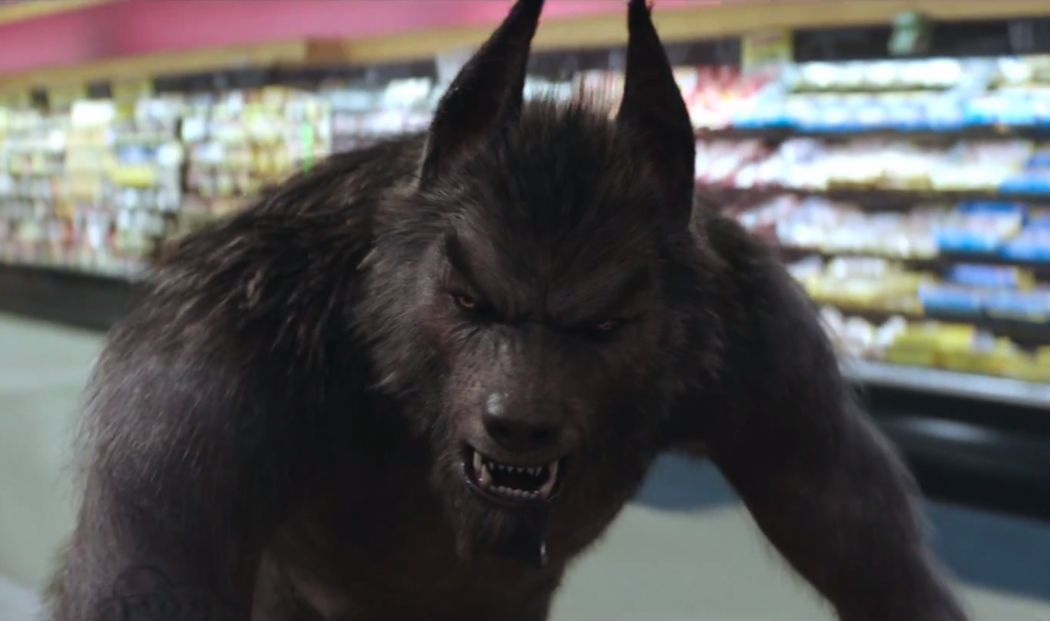
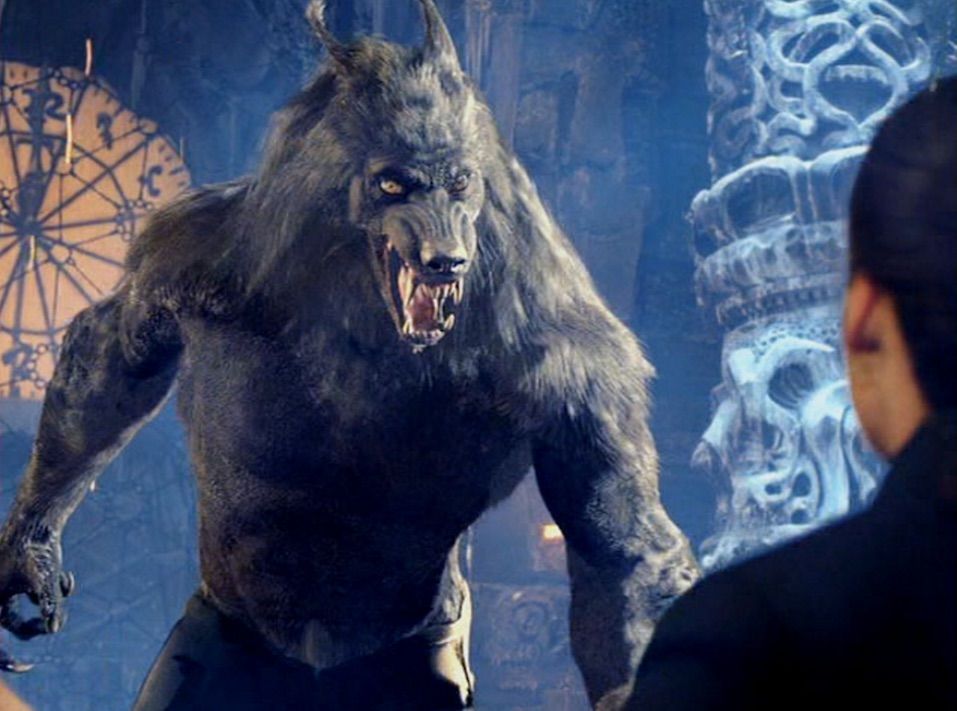
First, we need to establish what passes for “normal” in the world of my book. Maybe it’s the modern world as you and I both know it. Maybe it’s the historical world of the 17th century. Perhaps it’s a future world where planets settle all their grievances and negotiations with gladitorial games. Or possibly it’s the modern world but werewolves exist and everybody knows about them.

I know a lot of folks push for diving right in as quickly as possible, but there’s a reason this step is important. If I don’t establish what’s normal and natural in this world—or at least what my characters think is normal and natural—I can’t have anything unnatural happen to them. This can be a little tough if “normal” means living in a world with space elevators and moonbases, or a Victorian steampunk world, or a modern world where werewolves are real, but I really believe it’s vital. If I don’t establish what’s possible, everything that happens in my book becomes questionable, as do all my characters’ reactions to it.Yeah, you and I might freak out to see a werewolf run in front of our car tonight, but for the residents of WereWorld this is just another Thursday. It’s normal.
Second, we need to establish some kind of conflict. Whatever that norm is our characters are used to, something has to break it. By its very nature, today should be something out of the ordinary, because if this was a regular, day-to-day challenge our characters would already know how to deal with it, right? And if they know how to deal with it, it’s not that interesting. We want to see the day things change, the day our characters have to deal with something that knocks them out of their comfort zone and forces them to impress us somehow.
Now, throughout the course of our book, there may be a bunch of challenges my characters need to deal with. If a werewolf murders my character’s lover but nobody believes in werewolves, she could have a ton of people after her—the police, the FBI, her psychiatrist, maybe even a werewolf hunter who thinks she was bitten. But there should be a main, overall conflict that’s driving everything. In this particular case, it’s our character trying to prove werewolves are real and she’s innocent. Almost everything builds off of that.
Third, we need to resolve this conflict. We can’t tell our readers there’s a ravenous werewolf storming through my hero’s hometown killing everyone it can and then just… never refer to it again. If Dot’s dream all this time has been to ask out the cheerleader, then she needs to ask out the cheerleader (or at least address why she doesn’t need to ask out the cheerleader anymore). A big part of any book’s success is how we tie things up at the end which means… well, we need to tie things up at the end. When was the last time you or someone you know praised a book for not resolving anything?
Something else that kinda needs to be addressed. When the conflict’s resolved, it needs to be my hero who resolves it. I don’t want to follow Wakko for 300 pages and then have Phoebe step in to save the day at the end. All that tells me is we should’ve been following Phoebe all this time. Which means I write a book about the wrong character.
Now, with all that in mind, let’s talk about how we can fit a bunch of ideas together to make a plot.
And before we get into that, I want to go over something I mentioned last time. It’s one of the early obstacles we need to overcome in this book-writing process. And that’s understanding that one idea won’t become a book. An idea is just a single, lonely thing, and we need a couple of them together to make a plot.
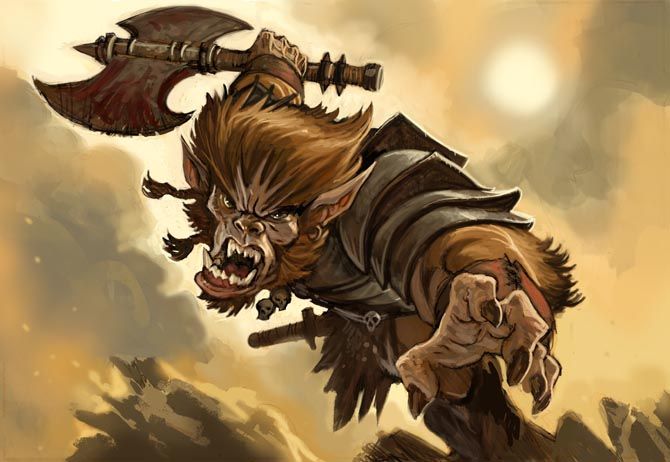
F’r example, let’s go with this idea— There’s a werewolf in the forest.
Now, I bet your brains are already hopping with this, right? Thinking of ways it can go. Well, that’s just what I mean when I say one idea isn’t a book. We all immediately, instinctively understand there has to be more than this. I just mentioned that a plot has three parts, so it stands to reason that it needs at least three ideas. A lone idea should force us to consider other ideas. Is it a hungry werewolf? Is it intelligent? Is the forest close to our characters? Are they in the forest? Do they know about the werewolf? Does anyone else know about it? Are they hunting the werewolf? Is the werewolf hunting them?
This is where we shall deploy our most powerful plot building tool… conjunctions! Yes, just like in that old Schoolhouse Rock cartoon? Am I dating myself with that? Never mind, you all know what conjunctions are.
When I’m assembling a plot, I’m going to be stringing ideas together with and, but, and sometimes or. Think of one of your favorite books or shows or movies. If I asked you right now to explain it to me, you’d end up using lots of conjunctions describing it as the ideas stack up.
We’re out for our evening walk but there’s a werewolf in the forest and the werewolf’s terribly hungry for human flesh and the forest is right on the edge of town and the werewolf is a time-travelling cyborg and the werewolf is also a Sagittarius but there’s still a chance we can stop the werewolf. We just need to get some silver bullets and shoot the werewolf with them or the werewolf will kill us all and getting killed would be really bad.
Let’s talk about that little pile of ideas I tried to make into a plot.
First off, hopefully you can see what I was talking about. Each little bit is a separate idea. On their own they’re not much, but as we tie them together they become part of the larger whole. I established a norm, I introduced a conflict, and I’ve floated at least two possible resolutions. It’s very basic and no frills, but it’s a pretty solid plot.
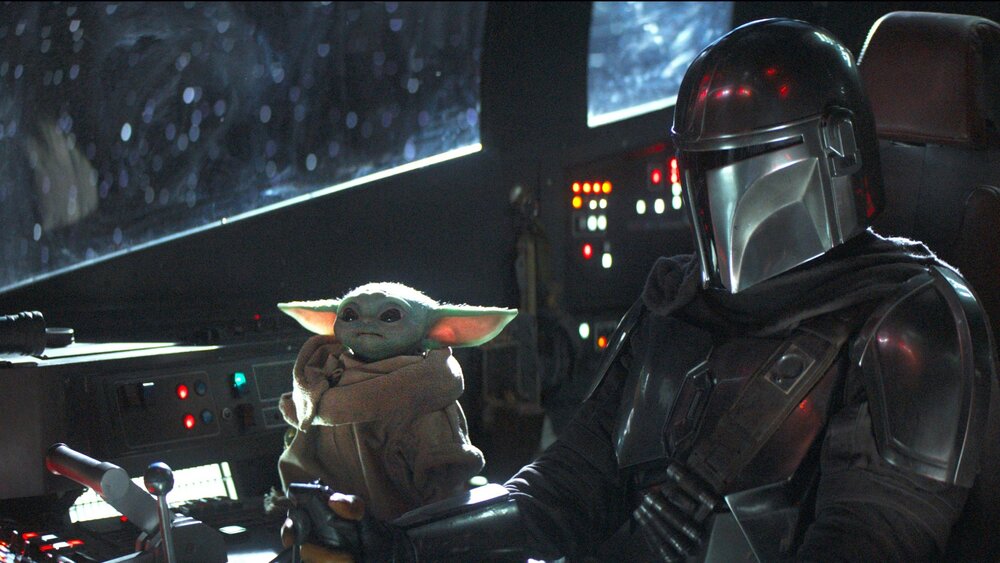
 Second, plot is almost always about doing something. To be more specific, the attempt to do something. My characters are doing something. The werewolf is doing something. Plot is active. Ninety-nine times out of a hundred, our plot is going to boil down to “X is trying to Y.” Kamala is trying to balance superheroics and schoolwork. The Mandalorian is trying to protect the Child. Benoit Blanc is trying to solve a murder. Detective Pikachu is trying to find Harry Goodman.
As I mentioned above, the thing our characters are doing should be something out of their wheelhouse, something that puts them in an uncomfortable place. If everyone knows werewolves are real, Phoebe’s a professional werewolf hunter, and she’s out there in the woods with a quiver full of silver crossbow bolts… again, this is just a Thursday night in WereWorld. But if she puts three of those silver crossbow bolts straight through the werewolf’s heart and they do nothing… well, crap, what’s she supposed to do now? She only really had the one trick and that werewolf looks very much still alive and super pissed now.
Third is taking that second point a necessary step farther. Plot is almost always (again, about 99% of the time) about the attempt to deal with an external problem. Enemies. Society. Corporate banks. Androids. Aggressive jocks. Harsh professors. Werewolves. They’re external things that affect our characters, and simultaneously they’re things our characters need to deal with or address, one way or another.
 Also, just because somebody always takes things too literally, when I say external, I’m referring to the characters as people—their consciousness, not their physical forms. If Wakko wakes up with a bomb implanted in his stomach or Phoebe gets a sudden case of super-lycanthropy, yes these threats are inside their bodies, but they’re still outside forces. They’re things that aren’t part of them, that they have no control over. We’re going to get to internal things later, don’t worry.
Make sense? Okay, lemme throw out two more plot-related things. A warning and a consideration. And I’m going to use a different metaphor for each one
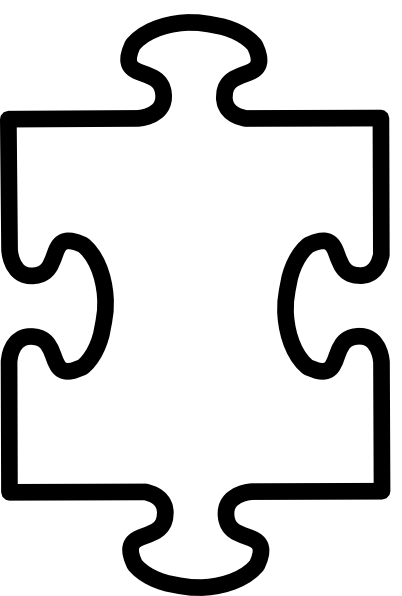
First is a warning. Last time, while were talking about ideas, I said we could think of ideas as puzzle pieces. Like building puzzles, we need to get a sense of what ideas fit best where, and also… which ones don’t fit at all. With puzzle pieces, we can look at the tabs and the slots, as well as what’s on the puzzle piece itself, and get a good sense of what goes where. The piece that’s all off-white moon and the piece that’s all night sky most likely don’t connect directly to each other. There’s going to be one or two pieces between them. Heck, maybe a lot of pieces. And that one with the flat side is clearly an edge—it’s not going to end up in the middle somewhere.
Likewise, that smaller bright green piece with grass on it and the notably smaller tabs… well, odds are prety good that’s not even part of this puzzle. We can see that it doesn’t belong and get rid of it pretty quick. We don’t want to spend a lot of time wrestling with something that clearly isn’t going to fit anywhere.
Look at my sample plot up there. Two of those plot points probably stood out to you. One is the werewolf being a time traveling cyborg. I mean, it’s a cool idea, but does it belong right there? Should it maybe be something we know from the start, or something we figure out at the end? Just dropped in right there it feels a bit jarring, yes?
Still, not as bad as the werewolf being a Sagittarius. It’s a funny bit, but funny doesn’t really fit with anything else there, does it? Maybe if the tone of the book was kinda different. But as is, it feels a little too goofy alongside talk of a flesh-eating werewolf charging out of the forest. I may really need to think about getting rid of it. Or changing some other things to make it fit better.
Plus, let’s be realistic—any decent monster is a Scorpio.
This is a really tough thing to get a handle on—the idea that an idea can be good but not good for my book. We tend to think that a good idea is good no matter what, and in a way that’s true. But we’re not talking about ideas as individual things. We’re talking about them in that greater, interlocked pattern that’s our plot. And sometimes a really cool idea just doesn’t fit. No matter how amazing that little piece of green grass looks, it just doesn’t go with the other pieces in this puzzle.
 Now, here’s my other thing for you to think about—a different way to consider plot.
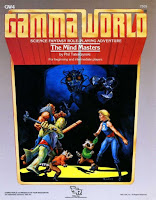
Raise your hand if you’ve played Dungeons & Dragons. C’mon, we’re all geeks here. If not D&D, I’m sure you’re familiar with some sort of pen-and-paper roll playing game. Gamma World? Vampire: The Masquerade?
Okay, since some of you are still feeling shy, a common element here is for a Dungeon Master (aka “the DM”) to draw out a map of the town/castle/catacombs/crashed spaceship our adventurers will be exploring. The DM draws out every room, tunnel, antechamber, hidden staircase, and so on, usually with a few extra details about what can be found in each area. This is the rough framework of the adventure.
This framework is very similar to how we build a plot. Lots of conjunctions, right? The adventurers will travel through an archway and a hallway and a thick oak door and a room and a hidden door behind a tapestry and a tunnel or a staircase and then a vault. Each element we add takes us further along the path, moving us toward some kind of conclusion. Hopefully one where our rogue, Yakko, doesn’t end up dead again.
 Now, with this metaphor in mind, let me ask you this. Have you ever sat down for a night of D&D with that person who’s just a little too enthusiastic that they finally get to DM? And they’re going to design the most amazing dungeon ever? We hit that first room behind the thick oak door and there’s twenty skeletons and they all have +2 swords and +3 shields and there’s a werewolf and she has a +4 flaming axe and the helm of disintergration and the floor is really a giant Trapper and the ceiling’s a Lurker Above and…
I’m guessing most of you are familiar with this kind of DM, in theory if not in personal experience?
Here’s what I wanted to point out. Notice how this version of the dungeon has just as many conjunctions, but it doesn’t actually go anywhere? After all those conjunctions, we still haven’t moved past the first room in the dungeon. We haven’t progressed at all.
This is something we need to watch out for. Not all of the ideas in our big pile are going to be part of the plot. Some of them are going to be details, and we don’t want to confuse details for plot points. My conjunctions shouldn’t all pile up in one place, just building and expanding this one area. They need to keep moving us into new rooms and new halls, all of which are leading us, again, toward that eventual end. We can add a lot of things to our plot with conjunctions, but do they actually move the plot along? Do they force our characters to make decisions and take actions?
So, to sum up a few points. My plot establishes the norm, introduces conflict, and then resolves conflict. It’s more than one idea, all with solid connections. It’s an active attempt to do something, and that something is almost always going to be some kind of external issue. And plot is moving our characters through the book.
After all this, you’ve probably guessed what I’m talking about in the next A2Q. Characters. How we come up with them. How we develop them. How we fit them into our plot.
But that won’t be for three weeks—next time here I want to talk about an old favorite, and the week after that is a little Valentine’s Day advice. And then back to the the A2Q for maybe two sections in a row.
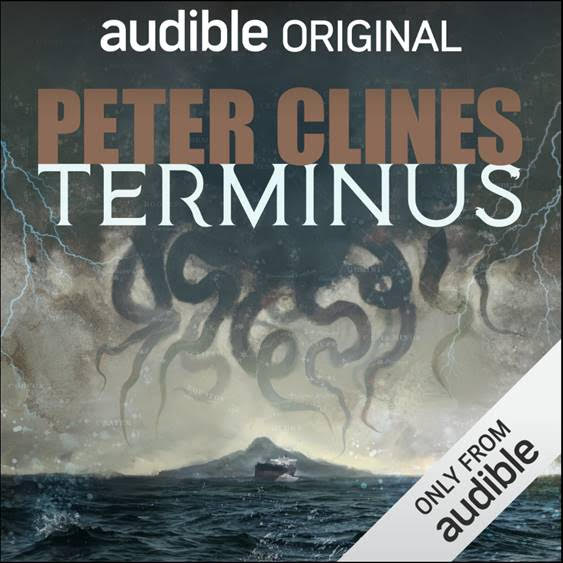
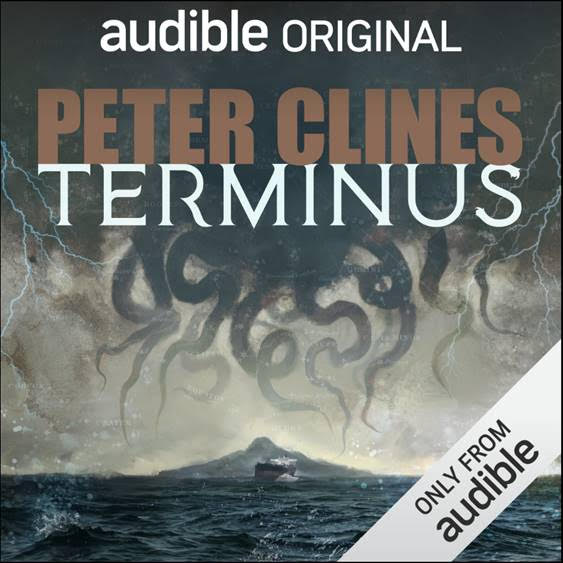
 Oh, and if you somehow missed it, my latest book, Terminus, just came out as an Audible exclusive. Go check out that beautiful landing page they set up on the other side of the link. It’s got a bunch of clips, a video chat between me and the narrator—the wonderful Ray Porter—and of course the book itself.
So until next time… go write.