

May 6, 2010

The Mysterious Island

Not to be confused with the uncanny valley, which is another phenomenon altogether…

So, there’s a show on television called LOST. Maybe you’ve heard of it? It’s not terribly popular and has only survived because of a miniscule-yet-devout fan following. Oh, and it completely changed how people approach one hour dramas on television and proved a genre show can hold its own.

Proving something, of course, doesn’t mean anyone’s learned anything. The recent Wall Street collapse has pretty much flat out proven trickle-down economics doesn’t work, but people still rally behind that mentality.

But I digress…

By the way, I’m going to be tossing out some spoiler-esque stuff here. If you’ve never seen the show and have been planning a one-month Netflix marathon once it’s over, you may want to skip today’s little rant. Maybe next week’s, too. A good part of storytelling is getting the twists and reveals when you’re supposed to, so if you want to enjoy this show as it was intended, take the week off.

Because of the phenomenal success of LOST, numerous shows tried to mimic its formula and failed. I’ve seen dozens and dozen of fledgling writers try to mimic it and they’ve failed, too. And, interestingly enough, they’re all failing for the same reasons. They don’t understand what they’re doing.

That sounds a little flip, I know, but that’s what it comes down to. These folks tried to copy something they saw, but they didn’t actually understand what they were seeing. In one sense, open-heart surgery is cutting open someone’s chest and poking around with steel tools, but we all understand that there’s a lot more to it than that. This is why nobody reading this grab for a steak knife when Uncle Wakko complains of chest pains.

At its core, this failure of storytelling comes from not understanding the difference between a mystery and a twist and how they both succeed. They’re two very different things, they each work a specific way, and they’re not interchangeable. Let’s slap a simple definition on each one.
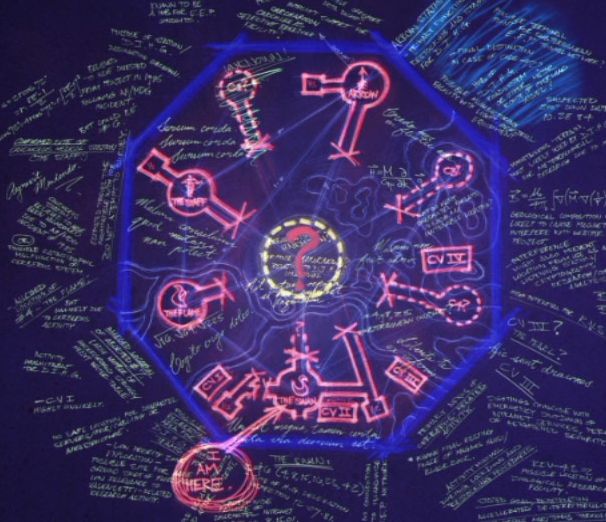
A mystery is when the main character(s) and the audience are aware that a piece of information has been hidden or kept from them, and the story usually involves the search for that unknown fact (or facts, as it may be). How did a polar bear end up on this tropical island? Why do these six numbers keep appearing everywhere? Who built this gigantic statue on the shore, and how did it get smashed? At it’s simplest, a mystery is a question someone in your story is asking and trying to find the answer to.

Now, here’s how people tend to screw this up.

In a mystery, the key element you have to remember is that the characters are aware of it. They’re searching for answers, or at least they’d be somewhat interested to find those answers. Because of this, the strength of a mystery is entirely dependent on those characters. If we (the readers or viewers) don’t care about the characters, we don’t care if they reach their goals, and in this case their goal is solving the mystery. In the same way a good character can make you empathize with a broken heart or an amazing triumph, they’ll make you want to know what the answers is behind a given puzzle.

Using LOST as an example again, think of the first three or four episodes. The first episode (or first half of the two-hour pilot) is nothing but character development. It’s about who survived the crash and giving us a quick thumbnail of their personalities. At the very, very end of the episode, there’s a loud roar and we see something crashing through the trees in the distance. Episode two is more character, and then a bit more mystery. There’s a polar bear in the jungle and the something grabs the pilot out of the crashed plane’s cockpit (a pilot who was supposed to be Frank Lapidus, it’s worth noting…) and brutally kills him. Episode three is even more character and ends with a creepy radio signal left by someone who was shipwrecked on this island almost twenty years ago. It’s not until the fourth episode, “Walkabout,” that there’s undeniably something unnatural going on here.

So out of the first four hours of LOST, all the mystery elements add up to… maybe ten minutes, if you really stretch it. The rest is all character. And as has been said many times before, once we believe in the characters, we have to believe in what happens to the characters.

A lot of people get this backward. That’s the first big mistake. They try to start with the mystery, then later on they develop the characters and make them relatable. For the record, this almost never works. How many failed stories or shows or movies have you seen where the writers tried to front-load some kind of mystery with the hope you’d get interested in the characters as they tried to solve it? Remember, it doesn’t matter how cool or awesome or clever the answer is. We need to be interested in the characters who are going to find that answer.

The other important thing about a mystery is that it has to have a resolution. We love the mystery, we remember the mystery, and we’ll stick around while these characters try to figure it out, but eventually we need to learn why there’s a polar bear on the island and why all that’s left of the statue is one four-toed foot. Mysteries need answers. Even if they aren’t spelled out or blatantly said, the audience needs to believe an answer exists–and has always existed–and they’re not just getting strung along.

That’s another classic mistake some writers make. They try to dazzle their audience with what looks like a cool, baffling mystery. What they’re really doing, though, is just throwing out random elements they’ve seen before. Their puzzle hasn’t been thought out and they’re not starting with an answer. When a mystery has a silly, this-makes-no-sense resolution, it sours everything that came before it (assuming it wasn’t soured already). When a mystery is never resolved (to be continued in the next book or the next screenplay), it gives the audience the sense they’ve wasted their time.

That’s a great note for beginners, by the way–any fledgling writer is going to fail with a mystery that gets revealed “next time.” You don’t get another manuscript to impress editors, publishers, or contest readers with. You just have this one. If you’re someone reading this blog and you don’t have two sales under your belt (not dollar options, not back-end deals–sales), “to be continued” is almost guaranteed to be the kiss of death.
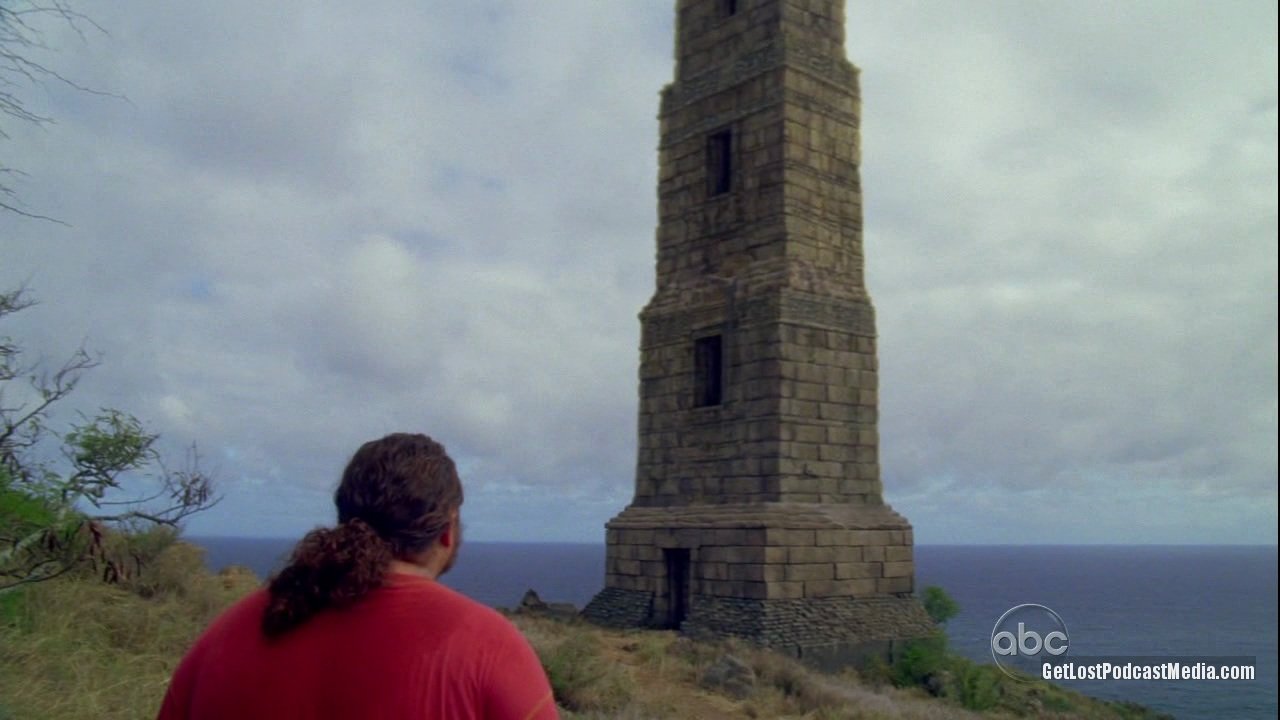
There’s another aspect to the resolution, too. If we find out the answer too soon, this wasn’t a mystery, just a minor plot point. Who burned Michael’s raft is never really a mystery because we almost immediately discover it was his son, Walt, who kind of likes it here on the island. What Jacob’s lighthouse is for also isn’t much of a mystery because we get the answer about fifteen minutes after we first see it. A mystery takes a little time and generally gets answered near the end of your story, which means you story needs to have an end. Many folks have commented on the thumb-twiddling quality the third season of LOST had. This was because the writers didn’t know when their show was going to end and were left unsure how to reveal their clues. Once they were past the beginning, the middle of their story rambled because they didn’t know where (and when) the end was. As I mentioned above, a mystery needs a solid conclusion, and that conclusion can’t be pushed off to some other time.

Speaking of pushing things off until another time, this is getting a bit long and I’m going to wrap it up. Next week I’ll use our favorite island castaways to rant about twists and some of the common mistakes people make with them.

Until then, go write.
April 29, 2010

Mad Men

Not a reference to the show, I assure you.

So, I ranted about this a while back, but a few recent things made me want to revisit it…

If I may, I’d like to go classical for a moment and talk about Jane Eyre. Yes, the 1847 book by Charlotte Bronte a.k.a. Currer Bell, sister of Emily and Anne. Now, Jane Eyre was one of Bronte’s earlier books, so we can excuse some of the clumsiness in it (her Villette isn’t as well known, but it’s a much smoother, subtler book). There’s one thing in it we can’t forgive though, and that’s Charlotte falling back on a cop-out character to drive several huge events in her story.

I’m speaking about Bertha Rochester, the crazy wife in the attic. She gets loose every now and then from her attic prison and glares at Jane. She’ll just stand in Jane’s bedroom and stare at her while she’s sleeping. Sometimes she does it from windows when Jane is outside. It gets so disturbing it drives a wedge between Jane and her beloved Edward “Mr.” Rochester (Bertha’s husband) and sends her fleeing. We eventually discover that Bertha sets fire to Rochester Hall (off-camera, so to speak) and throws herself from the roof during the blaze, thus clearing the way for Jane and Edward to be married at the end of the novel.

Now, it’s never made clear what drove Bertha insane. We also don’t learn exactly why she feels the need to glare at sleeping Jane from high windows and the end of her bed. Never discover why she sets fire to her home or decides to kill herself. Bertha just does all this because, well… she’s insane.

Shenanigans, my friends. I call shenanigans.

If you skim through that list of keywords on the side, you’ll see several rants about characters and a few on motivation. They’re related, after all. Believable characters are what make a story come to life, and good motivations are part of what make characters come to life.

One thing many people have trouble with are the bad guys in their stories. We all tend to use little bits of ourselves in our characters, but of course few of us have lots of criminal experience and none of us (hopefully) have homicidal impulses. It can be tough to get inside an antagonist’s head and come up with a rationale for whatever they’re doing.

Not only that, but sometimes certain events or moments just have to happen in a story. It’s been all plotted out and we need a reason for the characters to do this so that and that can happen a bit later. The writer also knows they need an in-story motivation for these events, no matter how bizarre or unlikely they are.

Faced with these challenges, a lot of people fall back on the quickest, easiest solution they can. They say the character is insane.

Now they don’t need a motivation, right? He or she is just doing this stuff because, well… they’re insane.

This is pretty much hands-down the laziest writing someone can ever do. All characters need a solid motivation, and when a writer decides to use insanity as carte blanche for any actions or behaviors of a character, it just shows that he or she was too lazy to work out a real motivation. The plot needs to be driven forward, and there’s no logical reason for this to happen, so we’ll just say someone’s insane and relieve ourselves of the need to be logical. It’s a cheap way to hide the writer’s button-pushing.

Another common occurrence is for the insanity to be a twist, something that comes out of nowhere and takes the reader’s breath away. The flaw that usually goes alongside this is that once Wakko’s insanity is revealed, his behavior does a complete 180 and he begins to act like a lunatic. Yes, Wakko’s been calm and rational for the entire story, but now that we know the truth he’s started foaming at the mouth and grabbing for kitchen knives. You can’t have a rational villain and fall back on “he’s insane.” This is a major cop-out. Dan Brown took a perfectly passable techno- thriller, Digital Fortress, and killed it in the last fifty pages when one of his leads turned out to be insane. Had nothing to do with the main story, this guy just happened to be nuts and started twitching as soon as we found out.

Just to be clear, insanity in and of itself is not a bad thing (speaking from a character point of view, of course). Hannibal Lecter. Renfield. The Joker. Davros. All of these characters are unquestionably out of their skull and are pretty much across the board magnificent either in print or on the screen. The thing is, the writers behind these characters all realized the key point I’d like to make here.

Y’see, Timmy, insanity is not a motivation. It’s the lens the characters are seeing their motivation through.

There’s an old joke you’ve probably heard that one definition of insanity is repeating the same action and expecting different results. But let’s really consider that for a moment. The implication is that Wakko, our insaniac, is choosing to repeat a given action–say, dropping anvils from a great height–because it’s his belief that the logical outcome of this action will be a certain, predictable result (just not the one he’s getting). He isn’t just dropping anvils for the heck of it. He has a motive fueled by what he sees as logical expectations.

In my college novel, The Trinity, the villain is completely insane. Homicidal, in fact. He believes that God only wants blood sacrifice, preferably human. That’s why, in the Bible, he rewards Abel for sacrificing a sheep but turns his nose up at Cain’s much larger sacrifice of harvested fruits and grains. When Cain does spill blood later (Abel’s), God rewards him with a mark that says no man will ever be able to lay hands on him. Thus, my modern-day villain has determined God wants us all to kill as many people as possible. A very twisted interpretation, granted, but I did tell you this guy’s insane, right? He’s not killing people because he’s insane, mind you, he’s killing them because, through his insanity, he believes this is how he should follow God’s will. We can point at it and say he’s doing Y because he believes X and expects Z as a result.

The Joker believes he can prove that everyone, at heart, is ruthless and psychotic, just like him. Renfield believes eating insects and spiders means he’s eating their life-essence and extending his own. Hannibal Lecter isn’t bound by the standards and taboos of the human race, giving him a cold ruthlessness that makes the Joker almost look rational. The writers behind these characters didn’t just fall back on “they’re insane.” They all have actual motivations for their specific actions.

Now, just to be clear, there are times where mindless insanity is just fine. Want someone gibbering in the corner reciting the same numbers again and again? You need somebody chopping up nubile teens out at Camp Crystal Lake? The purposeless madman was made for these tasks.

It needs to be said, though, this only works on a certain level of storytelling, and it isn’t a very high level. The stories of Jason Voorhees and Michael Myers are, at their core, campfire stories. It’s that same story of the escaped madman with the hook except here he’s got a machete. And that story’s great around a bonfire (or with popcorn), but you can’t really bring any clever twists or subtle nuances into it. Which means you shouldn’t expect a larger audience to be interested in it.

That’s why Friday the 13th just gets a decent opening weekend and Silence of the Lambs gets twelve weeks in the top five and a pile of Oscars the following spring.

Next week, six years is almost up, so we need to get in one last discussion about that mysterious island.

Until then, go write.

April 22, 2010 / 3 Comments

…But Three Rights Do Make A Left

Punchline. You get it or you don’t. And if you get it, you’re already ahead for this week’s rant.

A common pearl of wisdom from gurus is “write what you know.” At its simplest, this little nugget means you should write about things you have experience with, and hopefully some love for. For example, I know comic books. I know Los Angeles. I also know horror. So, believe it or not, I wrote a book about superheroes staving off a zombie apocalypse here in L.A. and a bunch of people liked it. One of them even thought it was worth publishing, and now a lot of people like it.

The flipside of this is don’t force yourself to write things you know nothing about and can’t relate to. When you force writing like this, or falsify experience, a reader can spot it right away. How often have you seen someone try to write mobster discussions, scientific jargon, or period dialogue that just sounds like nonsense?

Most of us are average folks. We each have our little specialty, though, and that’s another place “write what you know” can come in handy. As I’ve mentioned once or thrice, I was trying to write stories before some of you reading this were even born. I have screwed up more stories, in more ways, than most of you ever have a hope of matching. You’ll give up on this writing thing long before you hit the levels of incompetence I managed at one point or another. However, it’s that same long experience and learning process that lets me speak with something vaguely resembling authority now. Not a lot of people can do that.

Likewise, not a lot of people have studied medicine, which gave Michael Crichton’s medical/ scientific thrillers such a great edge. Stephen King knows small-town life in Maine far better than most of us. Kevin Smith knows what it’s like to be lower-middle-class in New Jersey. Each of these people knew what they knew and wrote to their strengths.

Now, here’s the catch. Yeah, there’s always a catch.

A common complaint is “they didn’t get the facts right.” Check out Amazon or IMDb and whatever book or film you choose, there’ll almost always be some idiot pointing out the gross mistakes in it. I’m not talking about the occasional typo or misplaced comma. I mean that guy who feels compelled to point out that a passenger jet takes six and a half hours to travel cross-country from San Diego to Boston, not five. Or that the gasoline in a Geo Metro gas tank would evaporate after seven years so there couldn’t be any in the tank ten years after the apocalypse. Or that a katana would actually shatter if it hit a steel beam, not take a chip out of it. Plus everyone knows they didn’t actually make true katanas until well into the Muromachi period so there’s no way an 11th century Japanese warrior would have one.

Yeah, we all know that guy.

Y’see, Timmy, what this ignores is that sometimes there’s a reason the facts are wrong. As I’ve mentioned many times before, reality is not a story point. I’m generally talking about screenplays when I say it, but it’s true for any type of storytelling. You need to get the facts right as often as you can, but you also can’t sacrifice your chosen tale on the altar of truth. As it’s been said, never let the facts stand in the way of a good story.

You want a good example of deliberately getting the facts wrong? Watch any medical or forensics show on television. House is a good one. A standard device on this show is to simplify procedures. Tests get run in minutes instead of hours. Test results take hours instead of days. No, this isn’t realistic, but it allows each episode to maintain a level of suspense and keep a ticking clock atmosphere. If House has to wait two or three days for each test result, that’s a lot of time to kill… and a lot of dead patients the way things work on that show. It’s just not as exciting to hear the team has two months to figure out what’s killing someone, so the writers bend the facts and condense the time. It also helps that 99.9% of us don’t know how long a chromahaemotomagraph test takes. Or exactly what it’s supposed to do. Or how to spell it.

Okay, I made it up.

Now, here’s an example from the other side of the coin. I was reading for a contest a few months back and got a story that revolved around planes. Maybe revolved is too strong a word. There were a lot of planes in it, and they were important to the plot. Sort of. I think they were.

Needless to say, the screenplay had other problems besides the one I’m about to bring up.

At one point the script spent almost three pages on a test pilot going through his pre-flight checklist. It was amazingly detailed, explaining what each system was, what it did, and examples of what could happen if said system failed. No question in my mind, this writer was an experienced pilot who knew his or her stuff. Some of this explanation was in dialogue, some of it was in action blocks, and some of it was kind of an inner-monologue thing. Like I said, there were other issues.

Three pages of that.

Now, being able to rattle off the entire pre-flight checklist for a fighter jet is damned impressive, more so if it’s 100% accurate. But that doesn’t mean it’s good storytelling. To be honest, it brought the story to a crashing halt. It is information we don’t know, but is it really information we need to understand the story? If I didn’t know for a fact the pilot had checked the wing flaps, would some crucial part of the plot collapse later?

This is one of the most common mistakes people make when they write what they know. They feel the need to get the facts right because this is their particular specialty, but they get them right at the cost of the story they’re trying to tell.

One place I see this a lot is weapons. A lot of folks who know their weapons feel the need to list off a lot of information about them. So you get bombarded with makes and years and model numbers and ammunition and magazine sizes and… man, it gets boring just writing about it in general terms. Much like the pre-flight checklist, knowledge of firearms or fencing or martial arts is fantastic, but more often than not it just clutters the page and makes the story drag rather than impress people. Plus, since these almost always relate to action scenes, it’s the last place you want your manuscript to drag.

As a note to screenwriters, it’s especially lethal to load up a screenplay with these sort of details. Unless it’s life-or-death necessary to know the villain is using an Argentinean Bersa Model Thunder 380 Super rechambered for .45 caliber ammo–and the second act will disintegrate without this fact–he or she should just have a pistol. Once your screenplay’s getting made there will be an entire prop department that probably has a much better knowledge of firearms than you, plus a stunt coordinator with years more fight experience. We don’t like it when people tell us how to write–don’t try to tell them how to do their jobs, either. Use that space for your story.

Even if they’re all correct, we don’t need to know all the facts. Sometimes, in fact, it’s better to ignore a fact or three if you can do it without drawing attention to yourself. The most important thing when you’re writing a story is the story, not “getting it right.”

Now, I’d love to be able to say there’s some easy ratio of fact vs. fiction you need to keep track of when writing. It’d be great to just say “keep it at seven parts to three,” but saying that would be a complete fiction in itself. There’s nothing that easy about it. Alas, it’s one of those things a writer just need to get a feel for, usually after making several attempts, failing at most of them, and getting feedback that confirms this failure. And it’s conditional, too–you need a different ratio in a sci-fi story than you do in a comedy.

When all else fails, remember Samuel Clemens. “Get your facts first, then you can distort them as you please.”

Next time I think I’m going to rant about something that’s been driving me nuts.

Until then, go write.

April 15, 2010 / 2 Comments

How To Get Away With It

Not really pop culture, but it seemed relevant considering the day. My other option was “This Serves No Purpose!!!” from Galaxy Quest. That’s pop culture and it’s a perfect example of what I wanted to prattle on about.

Alas, taxes are a certainty…

Speaking of taxing something, a while back I mentioned the problem of false drama. It’s when random stuff happens between your characters for no reason. Dot suddenly hates Wakko. Out of nowhere, Yakko is smitten with Phoebe. For motives we can’t understand, Wakko has decided to start arguing with the ninjas. Likewise, I’ve rambled on about motivated action and motivations in general. Stuff don’t “just happen” in a story because there’s a guiding force behind it all–the writer. Even acts of God in a story need to have a purpose.

Things also can’t happen just to fuel the story. That’s the difference between a character’s motivation and the writer’s. Anything in a story that isn’t natural or organic breaks the flow, and one of the worst things a writer can do is give the reader time to sit and think about how ridiculous something in a story is. It taxes their patience and strains suspension of disbelief.

With that being said, sometimes we just need a coincidence or an irrational act. It’s the curse of being a writer. Wakko needs to argue with those ninjas.

Now, I recently got to talk to some of the writers from LOST and an interesting term came up. Every now and then, by nature of their show, the story requires them to put in an odd coincidence or have a character make a very unusual choice. One way they solve this, according to Eddy Kitsis, is by “hanging a lantern on it.”

As the name implies, hanging a lantern on something means drawing attention to it. Not as the writer, but within the story. It’s when something odd or unlikey happens and the characters themselves comment on the oddness or unlikelihood of this.

On LOST, when Sun needs a pregnancy test, she and Kate find one in Sawyer’s stash of scavenged medication and toiletries. And while they’re waiting for the result, they both wonder what kind of person would bring a pregnancy test on an airplane. Really, isn’t that just a bit ridiculous?

In my book, Ex-Heroes, we’re told early on that the Mighty Dragon’s real name is George Bailey. Yes, George Bailey just like in It’s A Wonderful Life. He tells us this himself in a first-person chapter. And then he immediately points out how cruel his parents were and also that he owns the movie and has watched it several times.

So, why does this little trick work?

When the characters themselves immediately acknowledge a choice or action is unusual or ridiculous, it takes the edge off that element for the audience. We can’t forgive the million-to-one coincidence that everyone takes in stride, but we can if the people involve recognize those odds and comment on the unlikeliness of it.

What we wouldn’t forgive is the bizarre coincidence of someone flying with a one-use, specific item like a pregnancy test and everyone ignoring that coincidence. Good characters mirror their audience to some degree, so if the reader thinks this is a bit ridiculous, the characters probably should, too.

Look at Casablanca. It’s got a classic lantern moment. When the film begins, Rick has tried to vanish. He’s gone to another city, in another country, on another continent to escape his previous life, and a few years later the woman who tore out his heart comes walking through the door of his new place. Think about it–the odds of this are astronomical. But we never even consider the odds because Rick himself broods over them in a drunken stupor. “Of all the gin joints in all the world… why did she have to walk into mine?” We accept it because he’s sitting here acknowledging his miserable luck.

Now, does hanging a lantern make a story’s lucky coincidence totally acceptable? Well, not always. What it will do, though, is push back the suspension of disbelief a few notches. By acknowledging this convenient bit of plot or character within the story, the writer’s showing that their characters aren’t stupid, which taxes the reader’s patience. It’s also acknowledging that the reader isn’t stupid, because they just get angry when a writer does that.

So if the coincidence is a small one (say, two guys with the same name also have girlfriends with the same name) and you make a point of commenting on the oddness of it, we as the readers will probably accept it without question. If it’s one of those “you’ve got to be &*%#!ng kidding me!!” type of coincidences… well, you might be able to get it down to a raised eyebrow and a slight eye roll.

It’s also worth keeping in mind, this doesn’t mean you can include dozens and dozens of bizarre coincidences in your screenplay or manuscript and get away with pointing out each one. Like most magic tricks, it’s something you can only do once or thrice before people start to catch on to what you’re really doing. And once they see what you’re doing the illusion’s shattered on a bunch of levels.

Next time around, I’d like to prattle on about that old chestnut, writing what you know, and why fighter pilots don’t always make good writers.

Until then, go write.

Categories