February 3, 2011 / 2 Comments

Who is Keyser Sose?

Why am I using that famous question as the title?

No reason.

So, a while back, someone I was working with asked if I’d be willing to look over a script he’d been working on with a friend. I said sure, because I hadn’t yet learned to be wary of such situations. And then spent a few days figuring out what I could politely say about said script

Almost two-thirds of the script was other movies. Quotes from other movies. Visual references to other movies. Deliberate parallel scenes from other movies. Discussions about other movies. And what was left–the original material– wasn’t much.

Let me tell you another little story.

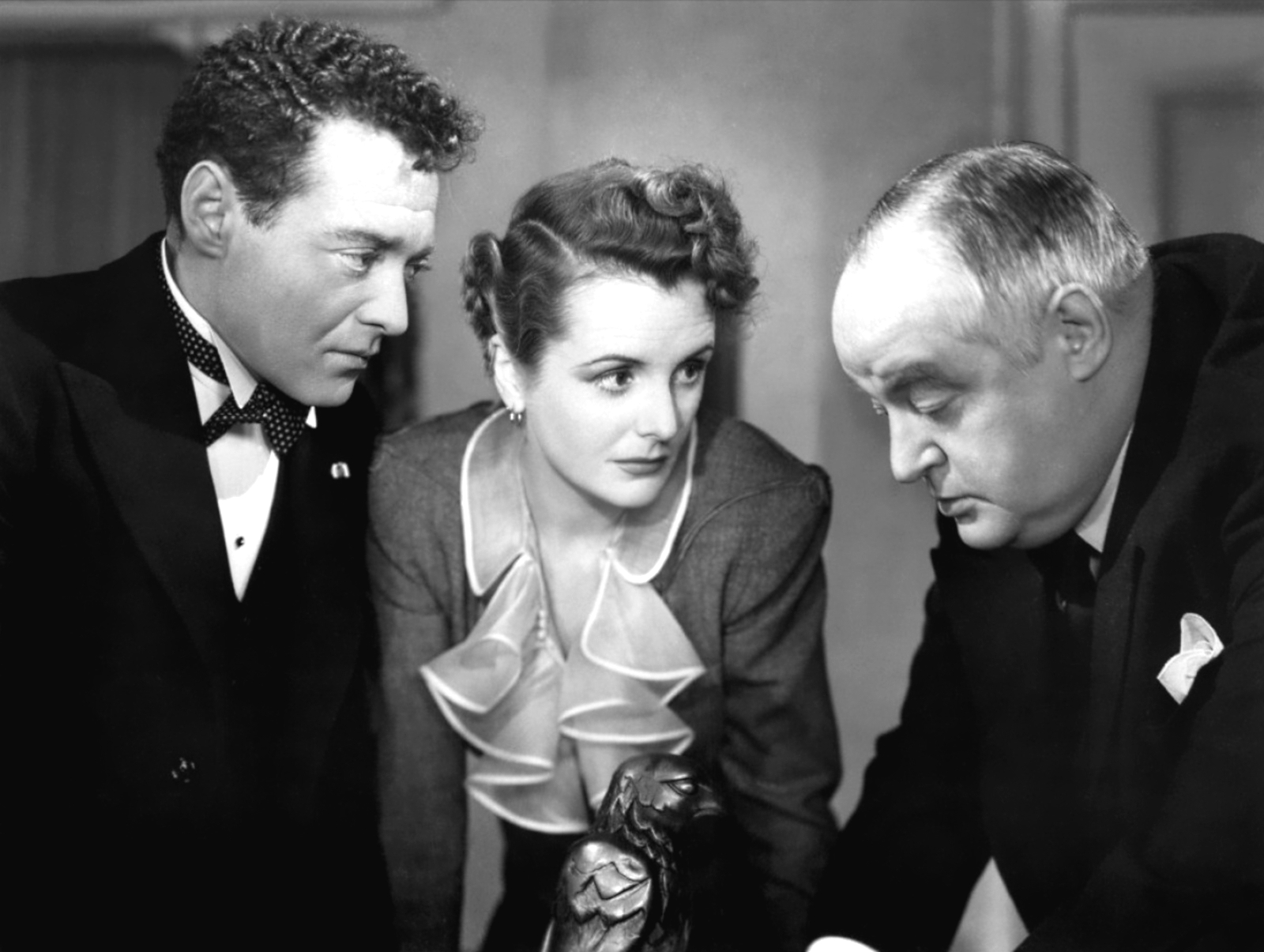
I was reading a script for one contest where the main character was named Sam Spade. He worked in a diner where their specialty chicken sandwich was called the Black Bird. One of his regulars was named Archer. There’s a waitress named Brigid, and the cook was named Wilmer. Then one day a guy named Cairo wanders in. He works for a fellow named Gutman.

These are the names of pretty much every character in The Maltese Falcon, by the way. If you didn’t know that, hang your head in shame and go rearrange your Netflix queue. How are you going to write anything new if you don’t know the classics?

Anyway, I’m getting away from the point.

What was the point, you ask?

Well, that’s a good question. What was the point of all these names and moments and interactions? If someone’s characters are going to do nothing but talk about movies and they’ve written their script to shamelessly copy movies, what do you think it’s about?

That’s right. It’s about a lost dog.

And that other one. With all those Maltese Falcon references, there’s got to be a lost treasure or a mystery or something going on, right?

Nope. It was a slice-of-life story about this person’s dreams and that person’s aspirations and desperate sex in the storeroom and driving home at night with the music loud. That’s it.

Soooooo… what’s up with all those references?

Personally, I blame Kevin Smith.

Ever since those guys in Clerks had a long debate about the contractors who built the Death Star, dropping references into stories and dialogue has become a standard. Oh, people did it before him but he started doing it in movies and made it very widespread. Smith still does it. Stephen King does it. I do it.

(…like how I lump myself in with the big guys? Not egotistical at all…)

The catch, of course, is that these writers have a reason for doing this. When Dante and Randall get in an argument about the Star Wars trilogy, we’re learning more about them than we are about the movies. When Milla Jovovich’s confused character in Resident Evil goes down into an unbelievable underground world, is it that shocking to discover she’s named Alice?

And let’s not forget that sometimes the reference is just there to drive home similarities or contrasts. In my own books, the Mighty Dragon’s real name is George Bailey. Remember the poor sap in Office Space who’s named Michael Bolton but loathes that musician’s songs?

Y’see, Timmy, once you start throwing out lots of familiar names and sequences, people are going to start looking for patterns. That’s what a good audience does. And there needs to be one. Each of these odd names or references is going to knock a reader out of the story for a moment or two, and if you don’t have any sort of payoff for that disruption… well, it’s not going to go over well.

Not only that, if you don’t acknowledge the oddness of everyone who enters this diner having the same name as a Maltese Falcon character, your readers are just going to get annoyed. If you acknowledge it but don’t have a real, in-story reason why all of them have these names, that’s going to be seriously annoying.

No, sorry, it’s not acceptable just because your three best friends said it was really cool and it wasn’t disruptive.

If you’re going to do something clever in your story, awesome. As long as there’s a real reason for doing it.

Speaking of doing it… next week’s going to be pretty close to Valentine’s Day. I thought I’d ramble on about the rules of love. Yep, there are rules. If only I’d known them in high school. Or college.

Until then, go write.

January 27, 2011 / 3 Comments

On Your Mark… Get Set…

Hey! It’s contest season again, isn’t it?

Technically it’s always contest season, yeah, but it’s the start of the year and a couple of the big ones are opening their doors for new submissions. So, as I often do at this time of year, I was going to offer a few insights into things that make all those contest readers want to put a gun in their mouth.

Well, that’s probably a bit extreme. There are some really awful scripts out there, but you can rest assured none of them are going to drive a reader to suicide. Murder, maybe, but not suicide.

Now, as I’ve said many times before, none of these mistakes are sure-fire ways to lose. But they’re all things that make readers roll their eyes and reach for the Captain Morgans, which means it just got that much harder to impress those readers. So keep that in mind before you fill out an entry form and maybe give your masterpiece one more good look. I mean, really look at it

Spelling — Yeah, I’m harping on this again. There’ll probably be a whole post coming up sometime in the near future.

Because it matters, that’s why.

Over the course of a few years I wrote two different contest columns for Creative Screenwriting, interviewed dozens of contest directors, and asked each of them about tips for aspiring entrants. Across the board, the first thing most of them said was spelling and grammar.

Now, a random typo doesn’t mean you blew it. We all make mistakes, and readers know that, too. If they go through and find a their on page 42 when it should be there, they’re going to cluck their tongues but keep reading. If there’s a typo on every page, though… Heck, there were a few screenplays I looked at where I wasn’t even thirty pages in and I’d lost track of how many there were.

Whenever you hand off a manuscript you’re trying to convince the reader that you’re a real writer. Someone who can do more with words than just sign their name, scribble a shopping list, or send a txt mssg (ROFL LOL STFU). The absolute, bare-bones basic tools of writing – any writing– are vocabulary, spelling, and grammar. Which means you need to master them, not your spellchecker. If you establish early on that you can’t handle the basics, why would a reader look any farther?

Apostrophe S — You could argue this goes under spelling, but speaking as someone who’s read a thousand or so scripts by aspiring screenwriters, I can say it’s in a class by itself. Messing up an apostrophe S stands out like a flare to anyone who knows how to use it. As I said above, we all make mistakes now and then, but it’s painfully obvious when a writer’s just throwing down random apostrophes and getting a few right by sheer chance.

Knowing the difference between a plural, a possessive, and a contraction is past basic—it’s a fundamental part of the English language. Stop writing, go get a grammar book–even a fun one like Eats Shoots & Leaves (look at the carousel down below)–and actually read it. Promise yourself that as of this moment there will be no more guessing or wild stabs in the dark.

Logic holes — A friend of mine called me once, laughing in hysterics. He was reading for a contest and was halfway through a sci-fi script where human colonists were struggling with the affects of a war that had taken place 200 years earlier. The enemy had released a bio-weapon that wiped out pre-pubescents, so every generation of colonists had lost all their children for the past two centuries.

Give it a second. You’ll start laughing, too.

You’ve probably heard of “movie logic,” a term which also applies to television and even prose. It’s when the writer bends the laws of common sense to solve an issue or a problem. As long as you don’t look at it too close, movie logic can usually get skimmed over and carry you to the next scene or paragraph.

The flipside of this is a complete lack of logic, which makes readers call their friends to share the joke. A lack of logic knocks the reader out of the story, which means it breaks the flow of the story. And that gets scripts put in the big pile on the left.

Fortune Cookie Talk — Also sometimes called Confucius-speak by another friend of mine. This is when a screenwriter tries to cut down their page count by cutting all the articles, “small” words, and transitional bits from their script. I think there’s also a misguided belief that this gives their writing more “punch.”

Neo walks streets. Man pulls gun. Neo dodges. Drives kick into man’s chest. Man out cold. Neo is One.

Trust me, there are only two things this leads to. One is annoyance as the story slowly edges into unreadable. Two is laughter. Not the good kind of laughter. The “all the kids die every generation for 200 years” kind of laughter.

The Squashed Script Sometimes the writer refuses to make any more cuts (for conscious reasons or sheer denial) and ends up with a 170-or-so page script. So they change the font size or the margins or the line spacing and crush the script down into an acceptable number of pages. After all, going from 12 to 9 point Courier can shrink a 170 page script down to 130 pages. That’s a fine length for a script, right?

This is annoying on a bunch of levels. First and foremost, if any writer is manipulating their script like this, it means they know their script is unacceptably long and they’re making no real effort to fix the problem. Second, it shows that the writer is assuming the readers won’t realize what’s going on (and why), which is kind of arrogant if you think about it.

Believe me, readers love arrogant writers who assume they’re idiots. It makes the job soooo much easier.

(not in a good way, in case the sarcasm wasn’t showing…)

Reality is What You Make It More often than not, either the title or final page of this screenplay assures the reader that this tale is, in fact, based on the true accounts of me/ my best friend/ my brother/ my parents/ my grandparents/ someone I read about in a magazine article. These are tales of cancer, disease, genocide, military struggles, marital struggles, crises of faith, and various other conflicts of this world we live in. Alas, sometimes they’re also about struggling writers searching for someone to recognize their genius. Often, the fact this is all true is stressed to give a certain validity and gravitas to the screenplay.

Thing is, it doesn’t matter if the story is true or not. Nobody cares. They just care if it’s a good story and it’s well-told. And in that respect, a tale of an orphaned cancer survivor in Rwanda needs to stand up against the story of a black-ops secret agent who teams up with prehistoric lizard men from Atlantis to save the world from a zombie apocalypse. Whether or not its true is irrelevant. In the end, you’re telling a story, and it’s either going to have its own validity or it isn’t. Reality just doesn’t enter into the equation for the reader, so it can’t for the writer.

Frankenanite — A large percentage of genre scripts involve nanites which somehow go rogue and endanger mankind. Don’t know what a nanite is? No problem–a couple of these writers don’t either. If you’re writing a genre screenplay about nanites (or something indistinguishable from nanites like genetically-altered bacteria or something) think carefully. If I had to pick the ten most overused plot devices, these little guys would be in the top three.

Epic — Avoid the word epic. The only time the word epic should appear in your script is if someone in the script is telling a very overblown story. It’s a word for critics, publicists, and producers. Screenwriters can use it in interviews, but not in their writing.

Orbs — No orbs. You would not believe how much this word is overused. People throw it in everywhere because they think it’s better than pedestrian words like round or sphere. Much like mellonballer is guaranteed to get you a Nicholl Fellowship, using the word orb to describe eyes, mystical stones, the sun, or pretty much anything else will make the reader shake their head and pour themselves a second drink. Then they will pour a third drink onto your script and set fire to it.

To Be Continued — You get one script to impress someone with. One. Nobody wins anything with the first of an epic trilogy (see above). That one manuscript has to stand on its own. Ending a screenplay – especially a contest entry screenplay- with “to be continued” hammers home the fact that this is an incomplete tale. It tells the reader you had no idea how to end this story in 120 pages.

Remember, The Matrix, Pirates of the Caribbean, and Highlander were not written as trilogies. Despite everything you may have heard, neither was Star Wars. Every one of these films was conceived of, written, and shot as a lone entity. They had to stand alone and succeed alone. If they had to do it that way, don’t think for a minute that your story won’t have to.

And there you have it. Ten ways you can make a reader sigh and shake their head in disdain. Which really means this is ten ways you can avoid getting the head shake, and that means your manuscript is that much closer to dodging the big pile on the left and ending up in the right pile.

Next time… well, I’m not sure what I’m going to rant about next time. But there will be a point to it, I assure you.

Until then, go write.

January 20, 2011

I May Have A Few Ideas…

So, two weeks back I mentioned an online conversation I had with a friend of mine. At least, the first half of it. I wanted to ramble on a bit now about the second half of that conversation and expand on some of the thoughts and ideas it sparked.

The topic is, what do you write?

There’s two ways to read that question. One could be reworded to that ever-popular, where do you get your ideas? I’m sure most of you reading this have heard a few of the punchier answers to that query. Some people want to sit down and write, but have no idea what to write about, while other people polish off a new screenplay over a long weekend.

There’s one very important thing any writer needs to understand if they want to be successful. Ideas are cheap. Ridiculously cheap. They’re a dime a dozen. I would guess on an average day I have at least ten ideas for books, short stories, screenplays, or television episodes. Last year one blogger (and for the life of me I can’t recall who) posted an idea on her page every day for the entire year, just to demonstrate how simple and cheap ideas are.

Now, from where I’m sitting, there are two issues beginning writers often hit when it comes to ideas, and they’re really two flipsides of the same problem.

Some folks lament that they never have good ideas. Yeah, they have a couple clever thoughts, but none of them are on that high level like Jurassic Park or American Gods or The Girl with the Dragon Tattoo. The ideas these people come up with are… well, kind of pedestrian. They’re not worth writing about, so these folks don’t write. They hold off and wait for the good ideas to strike.

The second group has too many ideas. They’re barely done writing their fourth screenplay this month when they get an idea for a series of epic novels. And they’re only on the second one of those when they think up a hit television series (which, naturally, leads back to a movie franchise).

Both of these groups are suffering from the same misconception. They think anything that goes on the page has to be pure, award-winning gold. The difference is that the first group won’t put anything down because they know it isn’t gold, and the other folks are assuming it must be gold because they got it on the page. Make sense?

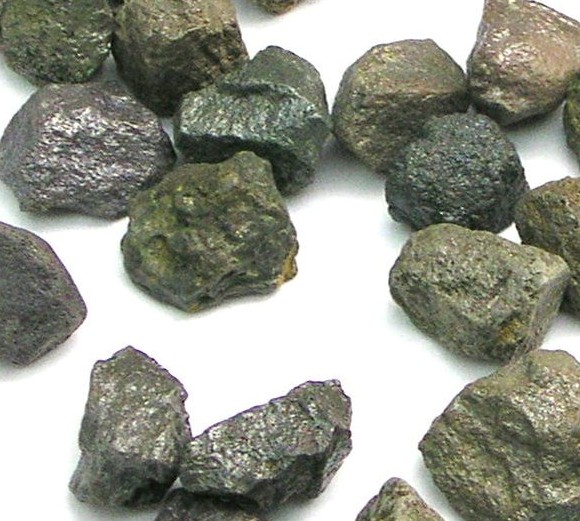
The catch, of course, is that most of the stuff that you put down isn’t going to be gold. It’s going to be rewritten and edited down and polished. Don’t think of story ideas as gold, think of them as diamonds. When a diamond first gets discovered, it’s a black, crusty, misshapen thing. Its got potential value, but not much past that. Diamonds need to be cut and recut, measured and examined, cut one more time, polished, and placed in a setting. Then they’re worth something.

The first group is tossing out all those black, coarse stones because none of them look like engagement rings. The second group is sticking the little lumps on gold bands and asking three months salary for them. Hopefully it’s easy to see why neither of these is the right approach.

So, once you’ve got an idea, it needs work. It’s not ready to go as is. Which brings us to the back half of this week’s rant.

The second way to read “what do you write?” is to ask which of these ideas do you pursue? If you have three or four solid ideas, which one do you start working on? How do you pick the idea you start with?

Well, first you need to keep in mind that one idea all on its own rarely translates to a story. “Some kids go to a haunted house,” is an idea, yes, but there’s not really a bestselling novel there. Likewise, you can’t do much if all you’ve got is “a girl who wants to build a time machine.” Just like cooking, you can’t make a story with only one ingredient. An egg on its own is an egg. An egg with cheese (and maybe a little turkey and a dash of pepper) is an omelette.

Once you understand this, then it just comes down to writing. How do the kids going to the haunted house and the girl who wants to build a time machine intersect and overlap? Is the girl one of the kids? Is the haunted house her secret lab? Is she going to rescue them? Is she hiding there after being made fun of and they’re coming to save her? Is anyone going to die in this house? Will anyone make it out? Is it just part of a plan cooked up by Mr. Haversham, the carnival owner?

Is that a hand in the back? Ahhh, yes. The question is, but what if the idea leads to a dead end? How do you know it’s a good idea until you actually sit down and write it? This one’s easy to answer.

You don’t.

Again, this kind of thinking goes back to that “it has to be gold” mentality. Sometimes you work your way through a hundred pages and discover there’s just nothing there. You wrote a chapter (or a bunch of chapters) that don’t work for one reason or another. Maybe more than one reason. Sure you could cheat a bit, tweak a few things, maybe toss out a deus ex machina or three, but in the end it doesn’t work because it doesn’t work. There’s no clever phrase or substituted word that’s going to change it.

I know a lot of people have trouble accepting this, even though it’s something we’ve all seen in other jobs. Chefs come up with recipes they never use. Architects design buildings that are never constructed. Hell, how much money does the auto industry spend on concept cars each year?

Consider this…

Once or thrice here I’ve mentioned a rule Stephen King talks about in his phenomenal book On Writing (there’s a link to it in that carousel at the bottom of the page). Said rule is–

Second Draft = First Draft – 10%

You remember that one, yes?

Well, if Mr. King follows his own rule–and we’ll assume he’s not a hypocrite–lets do a little math. The final version of Under The Dome is 1072 typeset pages. Even if we say there weren’t any other cuts in later drafts, that implies he cut just over 119 pages from his first draft. In standard manuscript format (Courier, double-spaced), that’s closer to 240 pages. Heck, that’s almost half of Ex-Patriots. It’s almost 2/3 of Ex-Heroes. Think about that. He typed up 240 pages of character and plot and description… and then tossed all that work.

Y’see, Timmy, almost every writer puts out a fair degree of material that’s never going to be seen by anyone. Again, don’t get paralyzed wondering if the next words on the page are going to be gold. Odds are they aren’t. But you will find some diamonds in the rough, and once you know how to spot them it’ll be an easier (and quicker) process to find them.

For now… take what you’ve got and work with that. There’s a good chance there’s a diamond or two in there somewhere. If you really put the work into it.

Next time, on a somewhat related note… well, contest season is lapping at my ankles. Which means more bad scripts to read. So we’ll talk about some of those.

Until then… go write.

Pop culture reference. First of the year…

Wow. Last week’s little rant must’ve struck a chord with folks. Almost double the usual number of hits. Hopefully it was the right chord.
Anyway…
One term that comes up a lot in gaming is “balance.” It’s important that the rules are fair and equal from all directions. No one player should have an inherent superiority to any other. Advantages in one area should come with disadvantages in another. And the players should have a fair chance against the odds themselves. If there’s only a 1-in-20 chance of this little piece of wargear working, it should be pretty darn impressive that 5% of the time it does.
Another term that comes up a lot in gaming is “broken.” It’s when a set of rules are so far our of balance that no one wants to play in that section of the game or against that particular piece of wargear. It’s just no fun to go into something knowing you’ve got no chance of success, one way or the other.
So, what does this have to do with being a god? More to the case, what does it have to do with writing?
Well, stories need to be balanced, too. We want characters to have a chance at achieving their goals, but we also want them to face a challenge getting there. If the story leans too far one way or the other, it becomes pointless.
If the antagonist is all-powerful, then the hero never has a chance. That’s boring as hell. There might be a few dramatic moments, if the writer really knows what they’re doing, but probably not. How long would you be willing to watch me stand in a field trying to will myself to levitate? We all know it’s not going to happen, so I’m betting not that long.
Keep in mind, the antagonist doesn’t have to be a guy (or gal) in body armor and a black cape. The high school jock, the bank officer, the evil drill sergeant, the abusive boss, even society in general– any of these can be the antagonist. And, again, if there’s no chance whatsoever of beating the antagonist, this story is not going to hold a lot of people’s interest.
I’d also point out that beating the antagonist doesn’t mean defeating them utterly. But as far as this main character is concerned, they have to have a chance to succeed at their particular goals. No chance means no interest.
The flipside of this is also true. If your main character has absolutely no chance of being defeated, that’s not very interesting either. Not many people are going to pay to see Mike Tyson pound on some nine year olds, and I guarantee the ones who do aren’t going for the fight. Would you pay to read a novel that’s all about someone who’s hungry and then they go out to dinner? Want to place any bets on Stephen Hawking solving third grade math homework?
Characters with godlike abilities aren’t interesting because they never get challenged. The reader (or audience) never gets the sense that there’s any sort of danger or threat. In which case, the whole story just became as interesting as me getting a glass of Diet Pepsi.
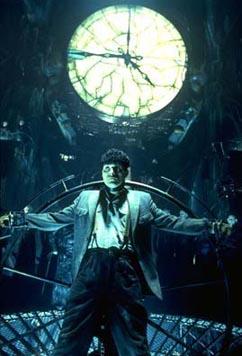
Consider The Matrix. It turns out Neo is a god, yes, but we only discover this in the last five minutes of the movie. Same with John Murdoch in Dark City. By the time they become all-powerful, the story’s pretty much over and we just get a few hints of what they’re going to do with their newfound godhood. In fact, when The Matrix turned out to be a huge success and they had to make sequel films, one of the first things the Wachowski Brothers did was try to scale back Neo’s abilities and say they were never as great as implied in the first film. Oh, he’s still powerful, yeah, but he’s no god. He’s a bit stronger, he can fly… but that’s about it.
Didn’t really help those sequels, though, did it?
This is, as a note, one of the problems many comic book writers have had with Superman over the years. How do you pose a believable threat to a hero who’s faster and stronger than anyone, and completely invulnerable to boot? A few writers, John Byrne probably chief among them, tried scaling the Kent boy way back, but other writers soon had the dial turned up past eleven again.
(Fun fact– Kryptonite wasn’t created to solve this problem. It was invented by the writers of the Superman radio show when their lead actor came down with laryngitis. They needed a way to explain why Superman didn’t appear in four episodes, so they had a kryptonite meteor hit the Daily Planet building without anyone noticing and end up in the same storage room Clark used to change. Bam–four episodes of the Man of Steel coughing feebly.)
There’s also another downside to nigh-omnipotent characters. Gods are boring as hell. They’re very tough to relate to, and if people can’t relate to characters there’s not going to be much in the story for them to invest in. Good characters have needs and desires and flaws, but godlike powers tend to nullify most of those things. All I need to do is snap my fingers and the Diet Pepsi is here. I didn’t even need to get out of my chair for it.
I read a script a few years back that was about two gods pinwheeling back and forth through history and assuming different identities in different times in an attempt to influence the development of mankind as part of some… I don’t know. A game? A random bet? A function of the universe? It was never made clear, but I can tell you I was bored out of my skull by page ten. If I wasn’t getting paid to read it cover to cover, I would’ve tossed it right then.
When Don Payne wrote his script for Fantastic Four: Rise of the Silver Surfer, he knew there was no way a giant in Teletubby-colored space armor was going to work on screen and come across as a threat. Rather than try to make Galactus relatable (and diminishing him in the process), Don turned the Devourer of Worlds into an inhuman, completely unrelatable thing– a monstrous, nebulous entity–and in doing so he kept the idea that this was something too powerful to imagine. People give Don a lot of crap for that script, but they ignore that he did a ton of stuff right (seriously–this film is loaded with plot elements lifted right out of Stan Lee’s stories).
If you’ve got an insanely powerful character in one of your stories, take another look at her or him. Do they need to be that strong? Wouldn’t they be more interesting with feet of clay? Maybe even a whole leg of clay? Isn’t your story going to be a bit more interesting if success and failure both seem like viable outcomes?
I think it would. But that’s just me.
Next week I’d like to revisit last week’s post and go into another idea from that online conversation.
Until then, go write.

Categories