
Well, it’s the start of the year, and that means a lot of the big guns of screenplay contests have opened their doors again.
How’s that for a mixed metaphor?
If you’ve been here for a bit, you know I’ve read for several contests and have also placed in and won a few, as well. I’ve also got a few friends who have read for contests at one point or another to pay the bills. And as it happens, we’ve all talked (and ranted, and drank, and pulled hair out…) at length about the things aspiring screenwriters do wrong with their entries.
That’s a key point a lot of folks don’t get. Just as there’s a difference between a spec script and a shooting script, there’s a difference between trying to win a contest and trying to get a writing career in Hollywood. What works in one will not necessarily work in the other.
So—without further ado because it’s a long list—here are fifteen things that will make a contest reader groan while reading my script, set out more or less in the order the reader will probably notice them.
It’s Filled With Typos–Yeah, spelling. Again.
During my time at Creative Screenwritingmagazine I wrote two different contest columns. I interviewed dozens of contest directors and asked about advice for aspiring entrants. The first thing most of them said was spelling and grammar.
Now, readers know we all make mistakes. If they go through and find a there on page 23 when it should be they’re, they’re going to cluck their tongues but keep reading. There’ve been more than a few screenplays I read, though, where I would’ve guessed the writer came from an ESL background.
For the record, messing up an apostrophe S is something everyone notices. As I said above, we all make mistakes now and then, but it’s painfully obvious when I’m just throwing down random apostrophes and getting a few right by sheer chance. Knowing the difference between a plural, a possessive, and a contraction is a fundamental part of the English language.
When I hand off my manuscript I’m trying to convince those readers that I’m a real writer. The absolute, bare-bones basic tools of writing – any writing– are vocabulary, spelling, and grammar. If I establish early on that I can’t handle the basics, why would a reader look any farther? Nothing shoots my chances down faster than a bunch of misspelled or misused words on the first page. Or the second page. Really, if a reader’s finding a typo per page, on average, my script has to be spectacular in every other respect or its pretty much done.
When I hand off my manuscript I’m trying to convince those readers that I’m a real writer. The absolute, bare-bones basic tools of writing – any writing– are vocabulary, spelling, and grammar. If I establish early on that I can’t handle the basics, why would a reader look any farther? Nothing shoots my chances down faster than a bunch of misspelled or misused words on the first page. Or the second page. Really, if a reader’s finding a typo per page, on average, my script has to be spectacular in every other respect or its pretty much done.
It’s Totally Inappropriate – This isn’t me being old and stuffy, it’s actually a tie-in to the 50% Rule. A lot of contests have very strict guidelines about what they want and what they’ll accept. The Nicholl Fellowship doesn’t accept adaptations—even of public domain work—unless you’re adapting your own work. Kairos only wants material with strong Christian themes and morals. Shriekfest is only looking for horror scripts. If I send my adventure horror story to Kairos under the premise that several people pray to God during it… well, it’s not their fault I didn’t make the first cut. Likewise, I wasted money by sending a romantic comedy to Shriekfest. If I’m going to submit to a contest, I want to make sure I’m submitting to the right contest for my screenplay.
It’s Squashed— Sometimes a writer refuses to make any more cuts (for conscious reasons or sheer denial) and ends up with a 170+ page script. So they change the font size or margins or line spacing and crush the script down into an acceptable number of pages. After all, going from 12 to 9 point Courier can shrink my 170 page script down to 130 pages. That’s a fine length for a script, right?
This is annoying on two levels. First and foremost, if I’m manipulating my script like this, it means I know my script is unacceptably long and I’m making no real effort to fix the problem. Second, it means I’m assuming the readers are too stupid to realize what I’ve done and why. Which is kind of arrogant on my part when you think about it.
Believe me, readers love it when an arrogant writer assumes they’re stupid. It makes the job much easier.
It’s In Fortune Cookie Talk — Also sometimes called Confucius-speak (according to one friend) or Boris-and-Natasha-speak (so sayeth another friend). This is when I try to cut down my page count by cutting all the articles, “small” words, and transitional bits from my script. There’s also a misguided belief among some folks that this will give my writing more “punch.”
Neo walks streets. Man pulls gun. Neo dodges. Kicks man in chest. Man out cold. Neo is One. Goes after Moose and Squirrel.
Trust me, there are only two things this leads to. One is annoyance as the story slowly edges into an unreadable mess. Two is laughter. Not the good kind of laughter.
It’s All Crowd Scenes
I read one script that introduced twelve characters in the first ten pages, plus a handful of minor ones. The record was seventeen in the first five pages. As I explained once to a friend of mine, that’s like pouring out a truckload of gravel and asking someone to take note of what color stones they see.
I can pace the introduction of characters. If I tell the reader ten people walk into a room, I don’t need to give out all their names, genders, physical descriptions, and character quirks at once. We can get to know them as the situation arises.
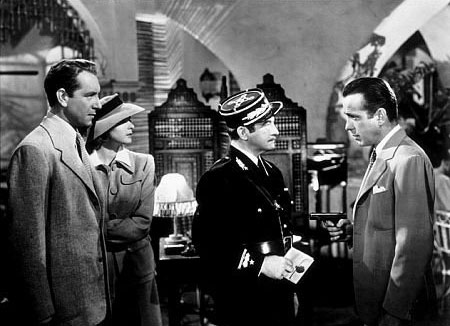
It’s Got Confusing names –This may sound a little foolish, but if my script has characters named Steve, Stephen, Steph, Stella, Stan, and Stacey, it’s going to be very difficult for a reader to keep track of who’s who. I mention it because I saw a double-handful of scripts that suffered from this problem and it was one of the factors that kept most of them from making it to the next level of the competition. If you look at most scripts, it’s rare to get multiple characters whose names start with the same letter or sound—it just makes for an easy mnemonic. Raiders of the Lost Ark has Indy, Marion, Belloq, Sallah, Toht, and Katanga. Bridesmaids has Annie, Nathan, Lillian, Megan, and Helen. Casablanca has Rick, Elsa, Victor, Louis, and Sam. Even with the huge squad of Colonial Marines in Aliens, the only double-up is Hicks and Hudson (and as my friend Rakie’s pointed out, Lt. Gorman confuses them on screen because of it).
 On a related note, if I have a grease-covered auto mechanic named Charlie who’s a woman, it needs to be absolutely clear in the script that she’s a woman. Likewise, if my wedding planner is named Leslie, I have to make sure it’s obvious he’s a man. Nothing frustrates readers more than to get ten pages in and discover they’ve mentally assigned the wrong gender to a character, because it means they have to go back over everything they just read. So I have to be careful with names like Pat, Chris, Sam, and so on.
 It’s an “Actor Script” –A popular thing in the indie field is the character script, also known in Hollywood (somewhat demeaningly) as “the actor script.” At its heart, it’s a tissue-thin plot with a handful of character sketches thrown into it. Some men talk about how their lives have gone in unexpected directions. A group of women talk about relationships. People in line for tickets strike up random conversations. And nothing ever really happens.
In a way, it’s hard to argue against scripts like this. These really are the type of people you’d meet waiting in line, and they really are the type of conversations and brief relationships that would spring up. And, let’s be honest, not much happens in most of our lives on a daily basis. However, is there anything challenging–or interesting— about something that’s indistinguishable from the boring, everyday life we all lead?
This leads nicely into…
It’s Based on True Events— This is kind of a broad problem, but all of the nuances really fall under the same umbrella. More often than not, the title page or closing cards reassure the reader my screenplay is, in fact, based on the actual accounts of me/ my parents/ my best friend/ someone I read about in a magazine. These are tales of cancer survival (or not), homeless teens, military struggles, Wall Street apathy, and various other unsung heroes and villains of this world we live in. Often, the fact that this is a true story is stressed to give a certain validity to what the reader is about to take in.
Alas, nobody cares if the story’s true or not. Nobody. They just care if it’s a good story and it’s well-told. And in that respect, my tale of an AIDS-infected orphan in Somalia needs to stand up against the story of a ninja trying to save the world from prehistoric lizard men from the lost continent of Atlantis. Whether or not one’s a true story is irrelevant. If one’s difficult to read and the other one isn’t, if one has flat characters and the other one doesn’t, if one’s boring and the other one isn’t– these are what decide if a script is any good or not. In the end, I’m telling a story, and it’s either going to have its own validity or it isn’t. Reality just doesn’t enter into the equation for the reader, so it can’t for the writer.
Now, a certain subset of “True” scripts could be called Current Events Scripts. This is when I decide to write a script about a topical subject that’s in the public eye. Which would be really interesting if five hundred other people weren’t following through on the same idea. In 2009 there was a wave of contest screenplays inspired by the brief 2008 Gaza Strip war. In 2010 there were countless scripts that used the Wall Street crisis as their backdrop. I’m betting this year is going to be split between “soldiers coming home from Iraq” scripts and “Occupy (Your City Here)” scripts.
I’ll even go one step further and say there are certain events and people who are always in the public eye—no matter how obscure or rare I might think they are. Anne Bonney. Tesla. Elvis. Some historical figures just attract scripts for some reason, and every screenwriter thinks they’ve written something original… just like me.
It’s A Formula Rom-Com –The beautiful-but-totally-business-oriented female executive who finds love with a middle-class Joe Everyman. The guy engaged to bridezilla who meets the reallove of his life. The awkward, nerdy girl who needs to realize she’s the most beautiful girl around. The man chasing his dream girl only to realize his friend has been his real dream girl all along.
Any of these sound familiar? They do after you’ve read nine or ten of them, believe me. Yeah, flipping the genders doesn’t make them any more original, sorry.
Does the script also have a scene where someone finally ignores their constantly-ringing cell phone in favor of quality time with that special someone? Maybe a prolonged, awkward scene where someone has to change clothes for some reason and ends up in their underwear/ robe/ a towel with that soon-to-be-special someone?
If my script has any of these plotlines or elements, it’s already been left at the altar. A rom-com has to be really spectacular and original to impress a reader. In all the years I worked for different contests, I read one rom-com that stood out. Just one.
It’s about a writer –I repeat this one every year. Do not write scripts about writers. Ever. Out of 150 scripts I read for one contest, nineteen of them had writers as a main character. That’s almost one out of every seven—almost 15% of them! They were all awful and not one of them advanced. Jennifer Berg, the administrative director of the PAGE Screenwriting Contest, once joked with me that if her contest banned scripts about writers they’d probably lose a quarter of their entries.

It sounds harsh, but no one cares about the day-to-day struggles I go through as a writer. Absolutely no one. They also don’t care about the day-to-day struggles of a thinly-fictionalized version of myself. And they also don’t care about the sheer joy of the creative process, the wild and quirky nature every writer has, or the way impossibly beautiful women and handsome men are drawn to creative types (that last bit is true, though). It’s almost impossible to do a film about writing because it’s such a quiet, introspective activity. That’s why most films about writers don’t focus on writing—they’re about attempted murder (Throw Momma From the Train), romance (Shakespeare In Love), or escaping from nightmarish nurses (Misery).
Also, it’s the most hackneyed ending possible when the writer-character finally sells their book or screenplay, everything is now perfect in the world, and they win the Pulitzer/ Oscar/ whatever. The real reason most contests don’t want contact information on scripts is so the readers will not hunt down the screenwriters who do this and beat them to death.
It’s a Crappy Job Script –Kind of like I mentioned above with writers, no one cares about my trouble at work because we all have troubles at work. A job issue should never, ever be the key conflict in my story. If my script is all about getting that promotion or landing that account, it’ll be filing for unemployment pretty soon.
Keep in mind these can be elements in a script, just not the driving force. Lots of famous stories have people dealing with work issues, but they’re usually indicative of larger issues in the character’s life. Those kind of issues are what a script should be about. Consider Wesley in Wanted, Peter in Office Space, or Bob in He Was A Quiet Man. All of these people have awful jobs they struggle with, but none of these films are about that job.
It’s a Holiday Script–If you add in movies of the week on cable and straight-to-DVD, there’s a good case to be made that holiday films are one of the best selling script genres out there. We’re not talking sales, though, we’re talking about contests—a lot of which don’t care if your script is commercially viable or not. The trick is to come up with something the reader hasn’t already seen again and again. And again. And again. They’ve seen Santa quit, get his performance reviewed, get fired, solve conflicts, cause conflicts, struggle with the times, and adapt to modern technology. Dark spirits have tried to put the scare back in Halloween, Cupid has taught someone about true love, and the first Arbor Day story has been told—many, many times and many, many ways.
Just in case you missed it– they’ve all been told many times in many ways. If I’m going to do a holiday script, it has to be really amazing and original.
It’s a Director’s Draft — Every now and then a script shows up littered with stage direction, camera angles, parentheticals, editing notes, and so on. I saw one guy rant and rave on a message board because his feedback told him to eliminate such things, and it had been counted against his screenplay. He was planning to shoot this film himself with his friends, though, so not only were these notes acceptable– they were necessary!
They weren’t, really.
As a screenwriter I have no business putting them there unless they are absolutely relevant to telling the story. When my script goes to a contest, it’s just a script. It isn’t the screenplay I’m going to make with my friends and it certainly isn’t the screenplay I’m going to direct. It’s just a screenplay, one standing up all on its own against all the others in the contest. And if mine is filled with a lot of camera angles and parentheticals that shouldn’t be there, well… that’s probably why it’s going into the large pile on the left.
It’s a Musical –Musical screenplays are almost impossible to pull off as specs and they always make contest readers groan. Always. Lyrics on the page are great, but I can’t assume the reader is going to be someone with a flawless sense of rhythm and pacing. Without the actual music setting the mood and the tone, lyrics are just poetry–often very awkward, clumsy poetry. Which means they’re awkward, clumsy lines of dialogue. And awkward, clumsy dialogue is the kind of thing that gets my script tossed into that left-hand pile.
I’ve also seen a few comedy scripts which tried to parody existing songs. However, unless I can absolute guarantee every reader would knows the song, doing this faces all the same issues as the original songs up above. I shouldn’t gamble on a contest reader knowing an obscure tune from Peter Gabriel, Florence and the Machine, or the White Stripes… or even a popular one.
The Last Words in the Script are “To Be Continued…” – I get one script to impress a reader with. One. Nobody wins anything with the first of an epic trilogy. That one manuscript has to stand on its own. Ending a screenplay – especially a contest entry screenplay- with “to be continued” hammers home the fact that this is an incomplete tale. It tells the reader I had no idea how to end this story in 120 pages.
Remember, The Matrix, Pirates of the Caribbean, and Highlanderwere not written as trilogies. Despite everything you may have heard, neither was Star Wars. Every one of these films was conceived of, written, and shot as a lone entity. They had to stand alone and succeed alone. If they had to do it that way, I can’t think for a minute that my story won’t have to.
There you have it. Fifteen things that make screenplay readers cringe and start them turning toward that big pile on the left with your script. Make sure they don’t put it down there.
Next time, for the holidays, I think I might babble on about love or sex or something like that.
Until then, go write.
 It’s very cheap for your Kindle or Kindle app of choice. Just saying…
 For James Edwards, the police officer who becomes Agent J, the MIB is an intergalactic wonderland of non-stop discovery. He’s the ignorant stranger. Alien life forms, alien customs, alien technology—it’s all new to him. But consider Agent K. Everything that excites or stuns J makes him yawn. Invading battle fleets, extraterrestial assassins, talking dogs, rocket cars, a warp-drive powered superball… these things all bore the hellout of him. In fact, as the story progresses it becomes clear that K is at a disadvantage because he’s become so jaded by the world he lives in.
 crossed with Akira Kurosawa’s
  It adds up to a mid-sized novella, so it’s also very cheap.