July 17, 2016 / 2 Comments

It’s my SDCC schedule!!

I just thought I’d put this here on the off chance anyone wanted it.  Also gives me a centralized location to send folks.
Wednesday night I’m going to be at Comikaze—LibertyStation. It’s a preview night fundraiser for the Kevin Workman Foundation, from 6-9:00PM with drinks, cosplay, and a few familiar folks hanging out. Jonathan Maberry will be there, too, along with V.E. Victoria Schwab, Jason M. Hough, Peter Orullian, Scott Sigler, Greg Van Eekhout, and posibly a few others. This is off-campus and open to everyone—no passes, no reservations, nothing.  Buy books there, bring books, get autographs, hang out, support a good cause.
Thursday I’m wandering the con. If you can find me, you may claim your three wishes.
Friday I think I’m going to do what I’ve done in years past.  I’m going to hang out at Geek & Sundry (aka Petco Park) and have lunch.  There may be other creative-type folks with me.  Please feel free to stop by and chat. I’ll probably be there… let’s say roughly noon-thirty to two.  Maybe a little earlier or later on either end.  Geek & Sundry is another off-campus event thing where you don’t need a ComicCon pass or anything like that to attend.  Just walk in. 
Saturday from noon to one I’m doing a signing at the Crown booth (1515) in Random House alley. They’ll have the paperback version of THE FOLD there, but Mysterious Galaxy (over in booth 1119) has told me they’ll have some other things of mine.  And you can bring anything else you like, of course.
Saturday evening at 6:00 I’m on a panel about worldbuilding and storytelling. That’s in room 23AB.

There may be another signing on Saturday, but I may not know until last minute.

Sunday I may be there for a bit, but there’s a chance I’ll head out early.  If the three wishes have not been claimed by this point, this’ll be your last chance.
Actually, one other thing… Would it bother anyone if I did something like this now and then?  The blog would still be 95% writing advice, but maybe once a month there’d be a post about something else. Still probably related to writing, but in a bit more of a fringe way.  A little bit if self promotion like this, but also some random thoughts on publishing, reviews, Amazon, and other stuff that will probably get me into trouble further down the line?

Let me know.

Hope to see you in San Diego!

I really like this title, even though it makes me think of the conservative talk show host in V for Vendetta.

So, a question was posed in the comments a few weeks back—how do you deal with criticism?  Specifically, how do you tell good, useful criticism from questionable opinions, and how do you weight those opinions to tell which are worth listening to and which are just… well, wrong.

I think that was the question, anyway. If I’ve completely missed it, Chris, feel free to point and laugh at me in the comments. Until then, though, this is what I’m going with…

This is kind of well-timed, too.  Back in May I handed in my new book to the publisher, and near the end of the month I got back notes from my editor.  Lots of notes.

Pages of notes.

 I won’t lie.  It stung.  It never feels good to have someone pull out lists of reasons why months of work needs… well, even more work.

Here’s the thing, though.  He was right on about 85% of what he said.  And I knew it.  My editor’s a smart guy, and he picked up on a lot of things—small things, really—that didn’t work in the story. But these small things snowballed into three or four big problems.

(Which I am now about halfway through fixing…)

So… how did I know he was right?

Assuming I’m actually open to receiving some honest criticism, one thing I can immediately look for is if this criticism is objective or subjective.  Is it a factual, provable point, or is it just a reader’s opinion.  If I use the wrong spelling of canon, drop commas in weird places, or don’t have a single transition anywhere… these are real problems that have a right or wrong answer.  This is objective criticism, and if I’m going to get argumentative about something like spelling, well… my writing career is going to take a while to get going.

Which takes us to subjective criticism.  This is when my editor or beta readers express their opinions on my writing.  And opinions can be taken with a grain of salt. Or several grains.  Sometimes a spoonful.

For example, some opinions are informed.  My agent doesn’t think this is a good time to try selling an urban fantasy book.  He spends his time talking to different editors and looking at recent market trends, so he’s probably got a pretty good sense of things.  That doesn’t mean selling a UF book right now is a guaranteed failure, but it’s probably a good way to approach things for now.

On the other hand, some people’s opinions are a bit… less informed.  I think zombies suck.  Maybe you could give her a dog?  Or a cat?  I feel like this sex scene could be cut.  Have you considered ending the book on Chapter Six and just making it a novella?  Have you considered giving this up and going back to investment banking?  These are all critical statements, but there’s nothing backing them up except one reader’s opinion.

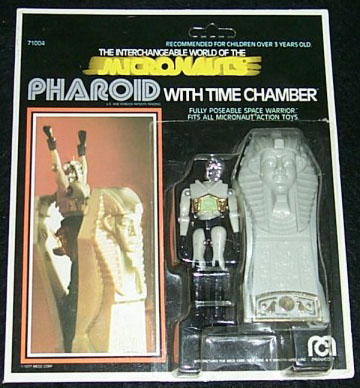
And don’t get me wrong.  Everyone’s entitled to an opinion, and their opinion is (usually) totally valid.  But at the end of the day, some opinions carry more weight than others.  Neil deGrasse Tyson’s opinions on moon colonies carry more weight than mine, even though I once did a whole month of research for a zombies-on-the-moonbook.  Pretty much every woman on Earth has better thoughts than me about the struggles, barriers, and sexism they encounter as a woman.  On the plus side, my opinions on G1 Transformers and Micronauts carry more weight than my brother’s (he was more into sports when we were kids…and as adults, too).

But how do I tell objective feedback from the subjective stuff? There are so many rules and accepted standards!  It could take years and dozens of drafts to learn them all!

Well, here’s one easy rule of thumb.  If I’m giving you feedback for something, and my notes have a lot of phrases beginning with–

“I think…”
“I feel…”
“This didn’t do it for me.”
“I just don’t…”

–my critique probably isn’t that objective.  Just because my personal reading preference may be for casual dialogue, implied sex and violence, or clever twists doesn’t automatically mean these things are right for a given story.  And it doesn’t mean a lack of them is wrong.  So when I’m saying “I think you need this,” I’m not offering advice based on facts or rules, just off my own thoughts and feelings.

However…

Yeah, there’s always a however…

As I’ve mentioned before, some people will try to soften the blow with criticism because they don’t want to hurt my feelings when I read their notes. So even though they’ll have a perfectly valid, solid point to make, they’ll lead it with one of those phrases I mentioned above.  “Not 100% sure, but I think you may want to check if Schwartzenagger is the correct spelling.”  I’ve done this to other writers.  Readers have done it to me.  It’s just human nature.

Except…

The flipside of this is the people who don’t realize they’re just voicing their opinions or some half-understood advice. And these folks will declare with absolute certainty that I must change this character’s name or move that comma or turn all my zombies into witches because, seriously, who still writes about zombies?  It’s over, people. Witches are the new hot thing.

So when I’m wading through my feedback, I need to be able to sort good opinions from bad ones.  And real objective criticism from heartfelt opinions.  That’s part of my job as a writer.

Now, all that being said… there are times someone’s personal opinion might hold a little more weight.  If some producer wants to pay me to rewrite my screenplay to include an alien love-child, or to rewrite the main character of my civil war slave story to be a white guy…that’s their call.  If a publisher wants to buy my Agent Carter fan-fic with all the names and a few genders swapped, I probably won’t tell him no.  If someone wants to pay me actual money to do something that could very well ruin my story…  well, getting paid is nice.  A lot of writers cover their monthly bills that way.  Especially in Hollywood.

Y’see, Timmy, the bad news is that a huge amount of knowing how to sift through criticism and make these choices is just plain experience. It’s the ugly process of writing, getting feedback, rewriting for the feedback… and realizing two or three drafts later some of that critique could’ve been ignored.  Then having this happen again… and again.  And again.  The only way to learn this is through writing and rewriting and learning exactly how all of this word-stuff fits together and then writing some more and having it suck a little less.

Also, it’ll help a lot if I read more.  Lots of things in lots of genres.  If I can name a hundred manuscripts that have done the same thing as mine with a character, with structure, with dialogue, that’s probably a good sign that what I’m doing is acceptable. But the only way I’m going to know that is if I’ve read lots and lots of material.

By the same token, if I read a hundred books a year and not one of them has done what I did with dialogue… well, it might mean I’m a visionary, but odds are it means this isn’t really an acceptable practice.  If I find one or two out of that hundred that do it, they’re probably the exception than proves the rule.  Again, though, the only way I’ll know is to read.

Yeah, this sounds like a lot of work.  It is. I didn’t figure all this out overnight, or even in the eight or nine years since I started this blog.  This is actual decades of experience, stretching back to the early ‘80s when I first started screwing up this stuff with fanfic, comic book scripts, and lizard man stories.  And I screwed up and got rejected a lot.

As I’ve mentioned before, experience is what you get when you don’t get what you want.

Speaking of not getting what you want…

There will be no post next week because I’m going to be down at San Diego Comic Con.  If you happen to be there Saturday, though, I will be part of a panel on worldbuilding and storytelling, so you could show up and mock me in person.

And I’ll probably put up a few photo tips to make up for the lack of actual post.

When we do meet again, though, I’d like to talk about chefs.

Until then… go write.

            Three weeks until San Diego ComicCon!
            As it happens. I’m actually a bit bogged down right now, trying to get everything set up for SDCC while also doing a ton of edits (and also trying to deal with a killer headache).  To be honest, I was half-thinking of skipping this week.
            Fortunately for all of us, Timothy Johnson stepped up and offered to scribble out some quick thoughts on editing as a tool for improving our writing.  Tim’s an editor based out of Washington, D.C., and he’s got a debut sci-fi/horror novel, Carrier, available right now from Permuted Press (go check it out).  All things said, he has a pretty good idea what he’s talking about.  You can find him regularly on Twitter or Facebook.
            Next week, I’ll be back to talk about sorting through feedback. For now, here’s Tim…
——————-
            This post is not about commas. It’s not about mechanics or style. It’s not about verb conjugation or misplaced modifiers.
            I know many writers bemoan the editing process. I get it. It can seem unnecessary and even like a waste of time. But I promise you it’s not. Even though you wrote your story, it’s still a crudely formed lump of clay.
            So, I’m not going to get into the nuts and bolts of grammar. This post is about helping you, a writer, become better at writing. Through editing, you can take your writing to the next level. It’s about how you take the word stream of your writing process and turn it into a cyclical filtration system for distilling tight, compelling prose.
            It’s basically how to become a Brita filter for literature.
            If you came in here thinking, “Ugh, I don’t want to learn stuff. This is why I pay an editor to make my writing good,” stick around. As an editor, I can assure you I’m human, and that’s relevant because there’s a quality quotient that we can achieve based upon the work you present to us. That is to say, if you serve us crap, we might be able to make a crap casserole, but it’s still a crap casserole. Give us better ingredients to work with, and the end result will be better for it.
            So pick up your hammer and chisel, and let’s get to work.
Find your brain stutters.
            If you’re human, you probably say, “um,” more than any other word in a typical day. We say, “um,” when our brains search for the right word but our mouths want to keep going. Similarly, we have the same disconnect between our brains and our fingers, those overzealous bastards.
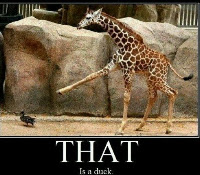
             Look out for “that,” “this/these/those,” and passive voice.
            “That” is simple. It’s the most overused word in the English language. If you see “that” in your writing, chances are it’s unnecessary and you can destroy it with zero regret.
            “This/these/those” are a little different. We often use “this/these/those” as demonstrative pronouns. That’s basically fancy grammar talk for “you know what I’m talking about, shut up.” And they’re perfectly acceptable, grammatically speaking. The problem is they’re vague, and if our objective is to get our language tight and compelling, they aren’t going to do the job.
           Find these (see what I did there?) and destroy them. Ask yourself what you’re actually writing about, and use a noun.
            Another stutter to look out for is passive voice. For many people, it can be difficult to recognize, and some will even argue it’s not that big of a deal. Well, to those people, I say it’s super popular in legal speak for a reason: passive voice is unclear and confusing.
            We often write passive voice because we have action-oriented minds. We consider more strongly the thing that is happening than the people who are performing the action. You get a pass as a human, but as a fiction writer, you don’t get to rest on your laurels. Writing active sentences will serve you better.
            To find your passive sentences, look for statements in which it isn’t clear who or what the subject is. Most times, you can find passive voice by looking for any form of the verb “be.”
            Let’s write a stupendously ridiculous example that combines all three of these brain stutters:
            “This is something that you are wanted to do.”
            Now, if we unsuck that, it becomes the following:
            “I want you to kill him.”
            See how this edited version is way more direct, clear, and powerful? If this stuff is a bit too abstract for you, let’s dial it back a bit.
Find your weak language.
            Generally, people write how they speak. There’s nothing wrong with that, but one of the points of thinking about your own writing critically is to construct storytelling prose that isn’t boring, mundane, everyday language as if you’re telling someone a story in a grocery store checkout line.
            You can certainly crank the wrench too far and edit the human quality out of your words, so the onus is on you to find a balance where your prose leaps off the page but still is identifiable as yours.
            “To be” is the worst offender of being weak. I mean, “to be” is the worst offender of weak language. “To be” verbs can signify passive language (see above), but most often, they mark an opportunity to do something more interesting. Find all instances of “be/been,” “is/are,” and “was/were,” and see what else you can do with those sentences other than pointing out that the subjects of those sentences exist.
            Beyond existential quandaries, however, authors tend to filter actions unnecessarily. For example, they may relate how the main character felt a bullet hit his arm, rather than writing, “The bullet tore through his arm.” Similarly, authors tend to explain how the main character watched as a comet flew through the atmosphere instead of writing, “The comet blazed across the night sky.”
            Unless your point is the character’s internal experience with these happenings, you are creating a buffer zone between me and the visceral experience. This is akin to pulling your punches in boxing. Are you trying to lose the fight for your reader’s attention? Find all instances of “feel/felt” and “watch/watched/see/saw.” Chances are, you can hack the first part of the sentence off, and nobody will miss it.
            Moving on, Stephen King wrote that the road to hell is paved in adverbs. He then continued to use adverbs, but I digress. What are adverbs? They are essentially any word that ends in “-ly.” So, “happily,” “dangerously,” “doggedly,” “grimly,” and on and on. You get the idea. These words are useful, but they signal a weak verb. Like adjectives, which modify nouns, adverbs modify verbs; however, unlike nouns, verbs have the power to imply additional information. In other words, we don’t need no stinkin’ adverbs.
            Find them and destroy them. While you’re at it, take care of “very,” “almost,” “about,” and the like. They indicate inexact language and have no place in tight, powerful fiction. If we don’t get the idea from the word you’re modifying, you’ve used the wrong word.
            Let’s keep going. I’m good. You good? Good.
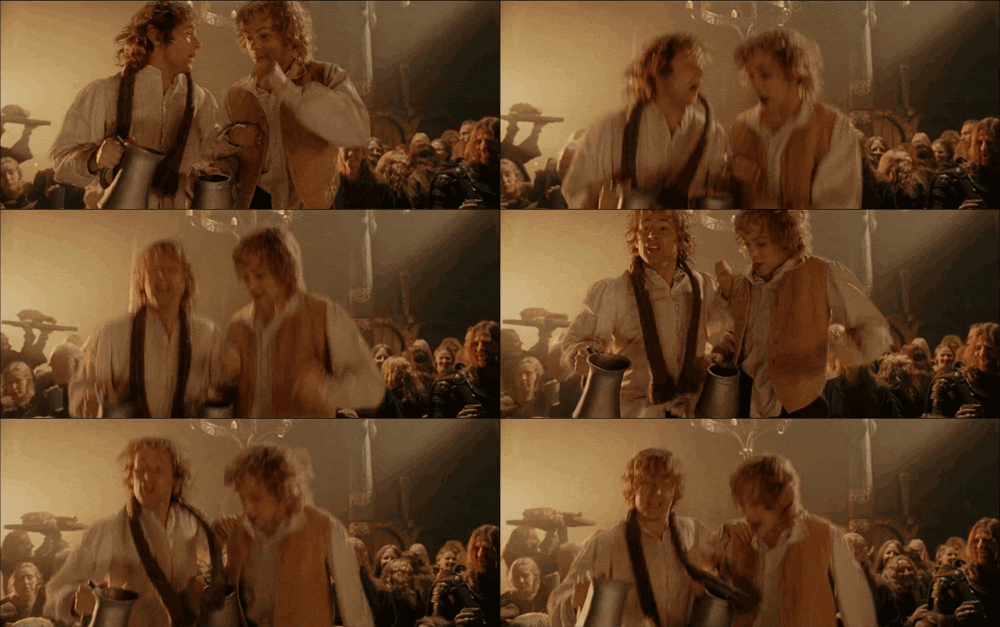
            Gerunds. Gerunds are the verb form that ends in “-ing.” Generally, gerunds describe a process that is ongoing, and while there’s technically nothing wrong with them, many authors overuse them and use them incorrectly. Seek them out, and see if the regular form of the verb will suffice. For example, what’s the difference between, “The hobbits were dancing at the Prancing Pony,” and “The hobbits danced at the Prancing Pony”? Five letters and a space, and stronger prose.
            As a final language-strengthening tip, look for repetitive words. It can be jarring to a reader to see the same word twice in a short amount of space, but also variety is the spice of life. If you find you’ve used the same word twice in the same paragraph (even the same page, if you want to be as anal as I am), it’s an opportunity to edit and make your writing more interesting. Seize that chance. Your readers won’t thank you, but that’s the point. They’ll never know your writing was worse. They’ll just be impressed at how good it is.
Oops! You learned something.
            By employing these tips, I promise your work will read better. And, by editing your work, you will force yourself to think critically about your prose. You will slow yourself down, focusing on the small ideas instead of concerning yourself with the big ideas. The small ideas are extremely important, because only through those ideas do we, as readers, understand your big ideas.
            If you keep at it, eventually, you will recognize these weaknesses while you write, and you will discover better versions of your sentences with progressively less effort. It will become automatic and ingrained in your writing. By using these techniques to improve the writing you’ve already done, you will improve your future writing before you write it. More important, you’ll look back and realize that, on a fundamental level, you’ve become a better writer.

Categories