
January 11, 2018 / 1 Comment

What They Know

            There’s an empathy issue I see crop up a fair amount of time, and I ran into it a few times back in my film days, too.  I just hit a big patch of it recently, and it was while I was working on a pitch/outline that also kind of skirted around it.  So I figured it was worth talking about a bit here.
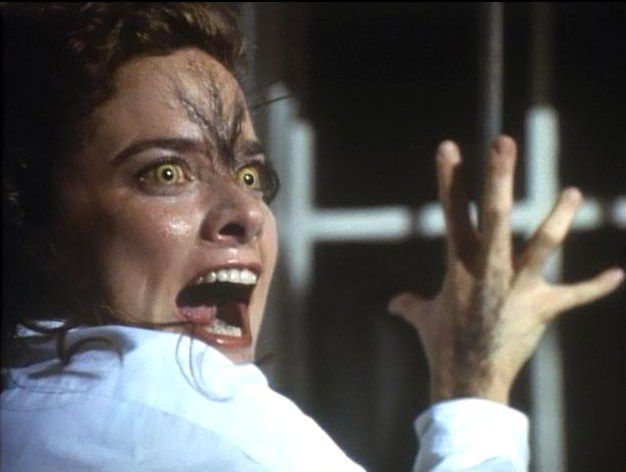
            That big patch I mentioned was a werewolf anthology I read (some monster names may have been changed to protect the innocent).  One of the things that amazed me was how many of the stories had a “big twist” which turned out to be—ready for it?—this is a werewolf story!  Some of these were pretty good… but I still ended up twiddling my fingers once it became apparent where things were heading and I had to wait for the narrative to get there.
            Now, granted, in this particular case a fair share of the blame for that falls on the editor.  Why would I accept a story for my anthology that’s undercut by… well, the very nature of the anthology?  That just seems like a bad idea.
            But why submit such a story, either? Shouldn’t I, the writer, immediately realize that anyone who picks up the anthology is already going to be clued in to my big reveal?  And shouldn’t I be aware of the failings that creates in my story?
            Either way you look at it, nobody’s thinking about what the readers are going to know when they sit down with this story.
            Simple truth is, what my audience knows affects what kind of story I can tell.  It’s going to affect my structure. Maybe even my genre.
            No, seriously.  Imagine trying to write a mystery story where we all know who the murderer is from the very start.  Before we even pick up the book.  If I try to tell that story in a normal mystery format with normal mystery tropes, it’s going to collapse really fast.  The whole structure of mysteries is based around the audience not knowing certain things, so if they already know them… well, that’s going to be a tough sell.
            Remember that pitch/ outline I mentioned?  It’s loosely inspired by an old ‘50s sci-fi movie.  But one of the big issues is that the “science” that drives most of the story in that movie is just awful.  Oh, it might’ve been borderline acceptable back in the day, but these days my niece could poke a dozen holes in.  And she’s a high school freshman. In Texas!
            That’s how weak the science is.
            So if I want to tell that story now, I’ll need to change a lot of things.  Those rationales and explanations just won’t hold with modern readers because they know better.  It’ll kill their suspension of disbelief almost immediately and they’ll give up on my story before they get to chapter five.
            And I don’t write big chapters.
            As I mentioned above, both of these examples deal with an empathy issue.  I have to be aware of what my audience knows.  What’s common knowledge, what’s obvious, and what sort of thing they’re already aware of.  And I need to understand how that knowledge is going to affect the reception and dramatic structure of my story.  Something they already know can’t be a surprise, and something they know is wrong can’t support a string of plot points.
            Please note an important difference here. Wrong doesn’t mean not real.  I can propose tons of alternate histories or secret societies or fringe science breakthroughs. I’d love to give you guidelines for making up planets or technologies or imaginary animals.  But the simple truth is… it’s an empathy thing.  Every thread in every story is going to be unique and different in how I present it and how you receive it.
            Semi-related—this is also why spoilers suck so much.  They literally change the story I’m telling (or reading) because they change what the reader knows. 
            For example…
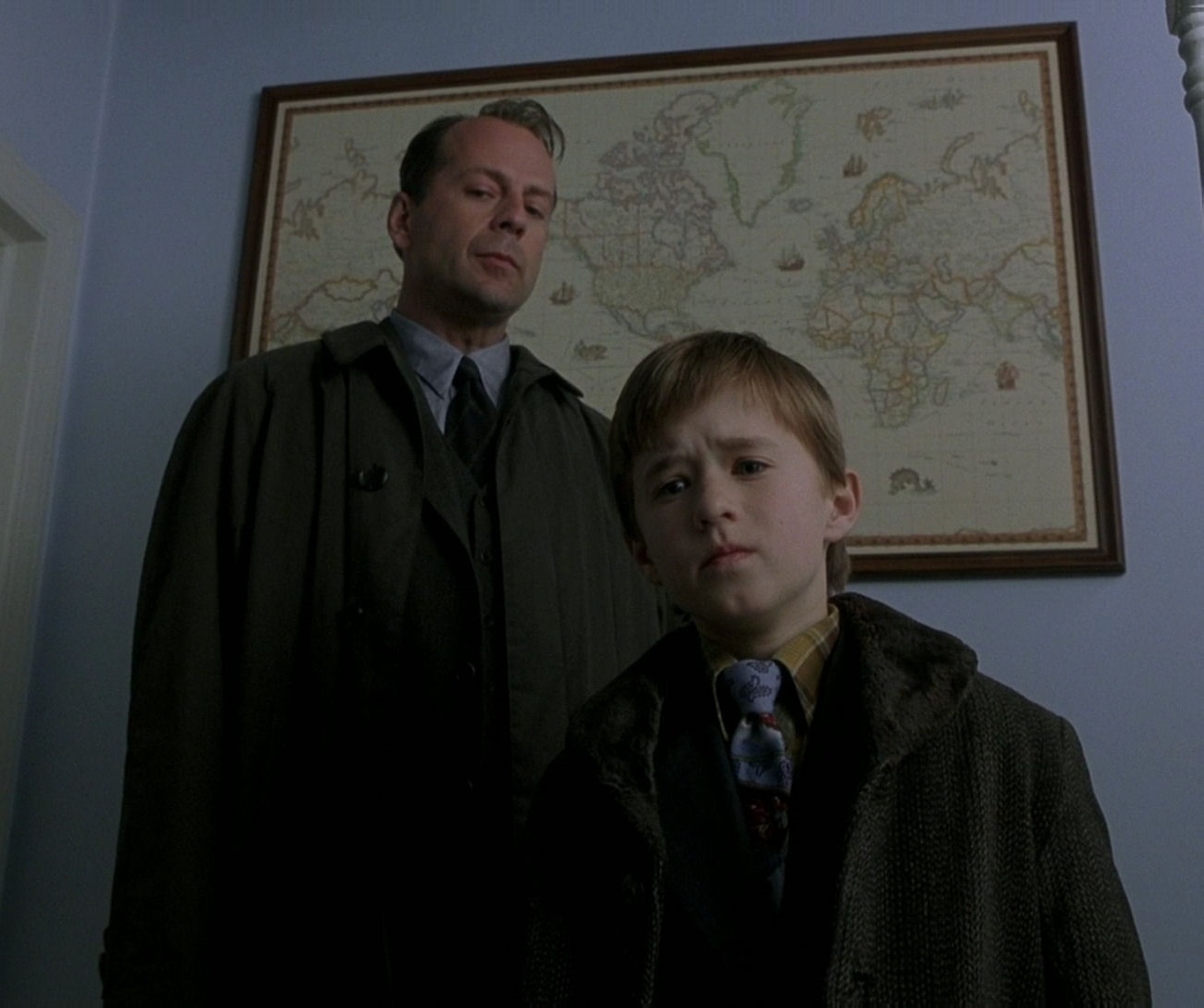
            I’m going to spoil The Sixth Sense, so if you haven’t seen it, stop reading now and go watch it. No, seriously, go.  The whole point of this is how knowing things can mess up how you receive a story, so if you keep reading you’ll never be able to watch The Sixth Sense the way you’re supposed to.  NEVER.  If you’ve somehow managed to avoid it until now, I don’t want to be the one to take it away from you, so stop reading.
            STOP!
            NOW!!
            Okay, now that those folks are gone…
            That big reveal at the end of The Sixth Sense is a jaw-dropping moment when we hit it for the first time.   But if we go in already knowing Bruce Willis has been dead all along, this is a very different story.  It’s almost an afterschool special.  “The Boy and his Phantom Psychologist,” Thursday at four on ABC.
            More to the point, that ending doesn’t have the dramatic weight it would without that knowledge. And it never can.  We can’t unlearn things, much as we’d like to.
            Once something’s been spoiled… that’s it.  No takebacks.  No mulligans.
            I’ll even toss this out.  The ending of The Sixth Sense was such a powerful moment that it got copied many times–often by people who didn’t really understand it.  But this often-copied ending still ended up out there.  It became common.  And because it was common knowledge, so to speak, it changed how writers can tell that sort of story.  These days, most readers know to look for that sort of twist.  And they’ll pick up on the subtlest of clues or hints.  And I need to be aware of that if I want to tell one of those stories—that people will almost be expecting it.
            Because if I don’t, I should know I’m about to make some clumsy mistakes.
            Next time, I want to talk about some more basics.
            Until then… go write.
October 30, 2015

Gentlemen… BEHOLD!

            Okay, it’s just going to be a quick post this week. I found out kind of last minute that I’m hosting the Writer’s Coffeehouse in San Diego on Sunday (noon at Mysterious Galaxy—stop by), so I’ve got to scribble up some notes for that.  Also, I’ve got a big Halloween party the night before, so please don’t be surprised if I show up dressed like Rick from Rick and Morty
            Speaking of which, I think this is the first time I haven’t done a horror post on the week of Halloween.
            But let me get back to this week’s point, which is…
            This!
            One of the greatest parts of storytelling, in my opinion, is the reveal.  It’s when we find out who the murderer is, or that Phoebe isn’t really dead, or maybe how Wakko ended up with the Elder Blade, or maybe that it isn’t really the Elder Blade, or maybe that Phoebe is actually Wakko’s long-lost sister Dot and she’s had the Elder Blade all along.  Or maybe it’s something a little more mundane, but still a bit of a shock.  It might just be finding out someone died last week, or that someone actually came over to break up with you and not to make wild monkey-love, or even getting those test results back… not with the result we wanted.  On one level or another, pretty much every story is going to have a reveal of some kind.
            This is how I get information across to the reader—I reveal it.  My characters answer the phone, open a book, get a text message, pull back a curtain, step around a corner, tear open an envelope, or turn slowly to see who’s sitting in that chair by the fireplace.  Lots of reveals are minor, some are subtle, and a few carry a ton of dramatic weight because they’ve just changed how my readers are viewing the story.
            Now, there’s an important thing to remember here, and it ties back to something I’ve mentioned once or thrice in the past.  Facts we don’t know are information. Facts we do know (or could’ve very easily deduced) are noise.  Another way to think of noise is that it’s literary static–clutter on the page. 
            Since a reveal deals with information, it can’t be about facts we already know or could’ve figured out on our own.  Even if my characters don’t know it, it’s still noise to the reader.  So if I structure a paragraph or scene or chapter around a reveal that, well, isn’t really a reveal… it’s going to fall flat.
            Let’s look at an example (one I’m making up off the top of my head).
            Our first shot will be Yakko being sworn in as President of the United States.  Maybe ten or twenty pages later we’ll see him chatting at length with the White House press secretary. After that, he’ll be stepping off of Air Force One, waving to the crowds.      
            And then, finally, we’ll have him on the phone.  A black phone, one that’s still connected to a hard line.  And as Yakko tells someone on the other end “Make it happen,” our point of view pulls back to reveal he’s calling from inside… THE OVAL OFFICE!!!
            Big shocker, right?
           Okay, it’s not.  Really, it’s not a surprise at all.  All of us know where the President spends his workdays.  And, well, since I’d made it really clear Yakko was the President, none of us are surprised to see him in the Oval Office.  So my big reveal at the end of that example is supposed to carry dramatic weight, but instead it stumbles because it isn’t carrying anything except noise.
            Y’see, Timmy, a reveal should give my readers information if expect it to have some dramatic impact.  It isn’t dramatic if we already know it.  Or if we easily could’ve figured it out.  And if my writing’s all done around the idea that it is a  dramatic reveal… that’s how my manuscript ends up in the pile on the left.
            So go forth and reveal yourself in–In your writing!!!  Jeez, it’s Halloween, yeah, but there’s little kids out there…
            Next time… well, I’ll do something.
            Until then, go write.
September 11, 2015 / 2 Comments

Come On and Twist A Little Closer Now

            If you don’t get the title reference, I’m afraid you have to leave.  It’s not my choice, you understand.  It’s the law.
            Anyway…
            I’ve run into a few folks recently talking about spoilers, usually pertaining to twists.  It’s a little bothersome how many times I’ve seen people say that knowing a twist in advance shouldn’t—and doesn’t—affect their view of a story.  And this is… well, just wrong.  That’s not a matter of opinion.  It’s just flat out wrong.
            So I thought it might be worth discussing some of the finer points of a well-executed twist.
            First, though, let’s define a few terms.
            A mystery is when the main character and the readers are aware that information has been hidden from them, and the story usually involves the search for that unknown fact. At it’s simplest, a mystery is when someone in my story asks a question and then tries to find the answer. 
            Suspense is when there’s an important piece of information my readers know and the characters don’t. The key here is that my characters don’t know that they need to know this vital fact. The woman Yakko is going upstairs with is the murderer.  There’s a bomb under the table.  Dot’s going into a meeting with a bunch of her superiors who all know what she did.  These are common suspense situations.
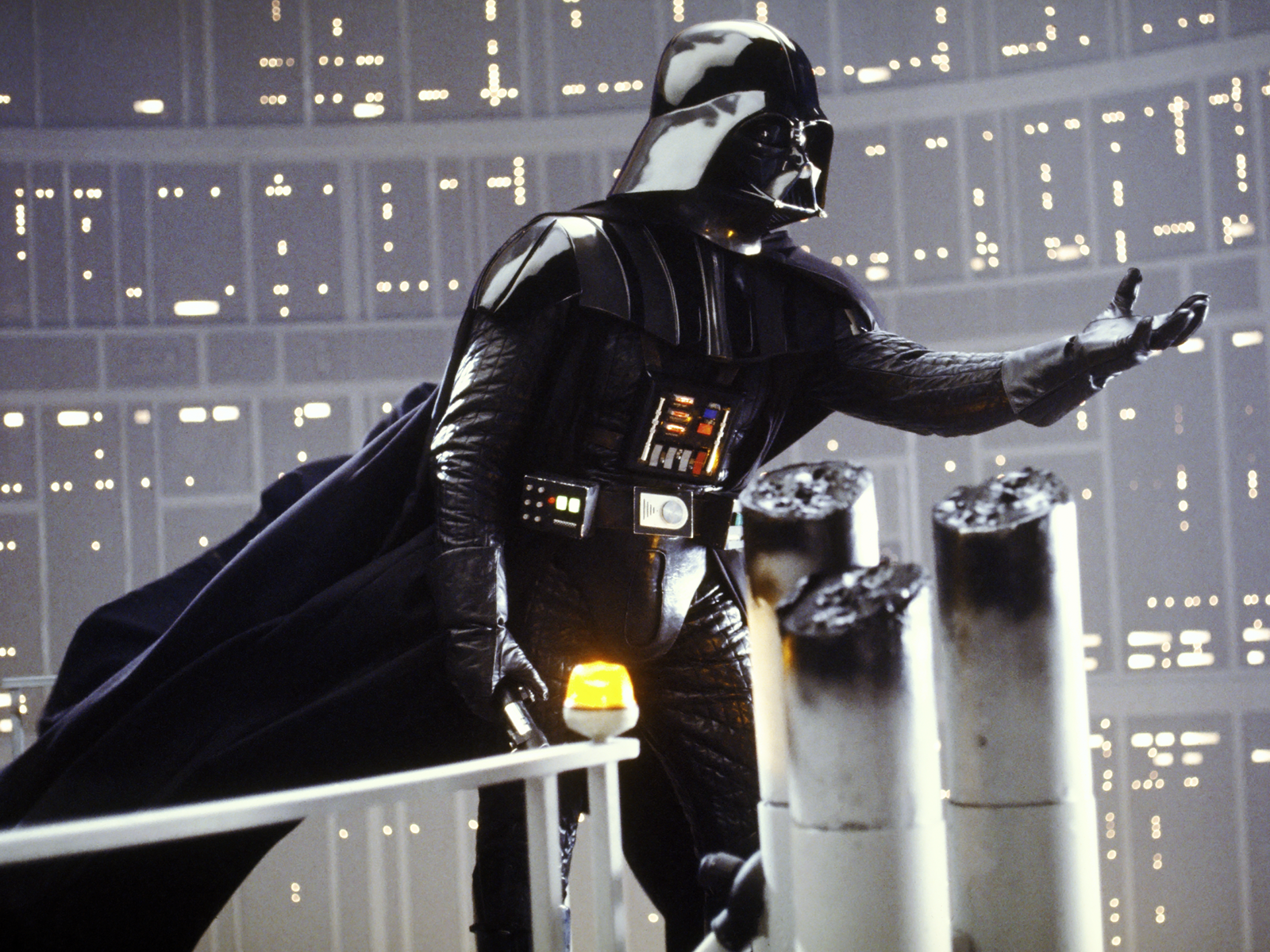
           A twist is when information is revealed that my characters and the audience didn’t know was being kept from them.  They don’t even suspect those facts are out there, waiting to affect the story.  When a twist appears, it comes from out of nowhere and changes a lot of perceptions for the characters and the audience.  We’ve all been told that Luke Skywalker’s father is dead, so when we learn that Darth Vader is his father, it’s a bombshell that alters our view of everything.
            Assuming we didn’t see all the advertising for the prequels…
            But that’s a different discussion…
            Notice that in most of these, the characters and the readers are in the same position.  Their view of things lines up.  The only time it doesn’t (with suspense) is when the characters are in extreme danger because of what they don’t know, which cranks up the tension for the audience.
            Going off the above definitions, one of the main components of a successful twist is that the reader (or audience) doesn’t know it’s coming.  We can’t be surprised or taken off guard by something we’re expecting, right?  So without that element… well, it’s not a twist anymore.  This moment becomes empty, poorly structured suspense, a missed beat in the structure of my story.
            Personally, this is why I’m so nuts about spoilers.  One small spoiler can rip the heart out of a great reveal and leave it flapping in the wind like an empty shirt on a clothesline.  Rather than identifying with the characters, we’re waiting for them to catch up and shaking our heads at how long it’s taking them.
            Y’see, Timmy, saying a twist should still make sense whether or not I know it’s coming is like saying a defibrillator should still work whether or not it’s got electricity running through it.  We’ve removed a vital element that it needs to function.  A working defibrillator won’t always perform the function it was made to, yeah, but it simply can’t when it’s not even plugged in.
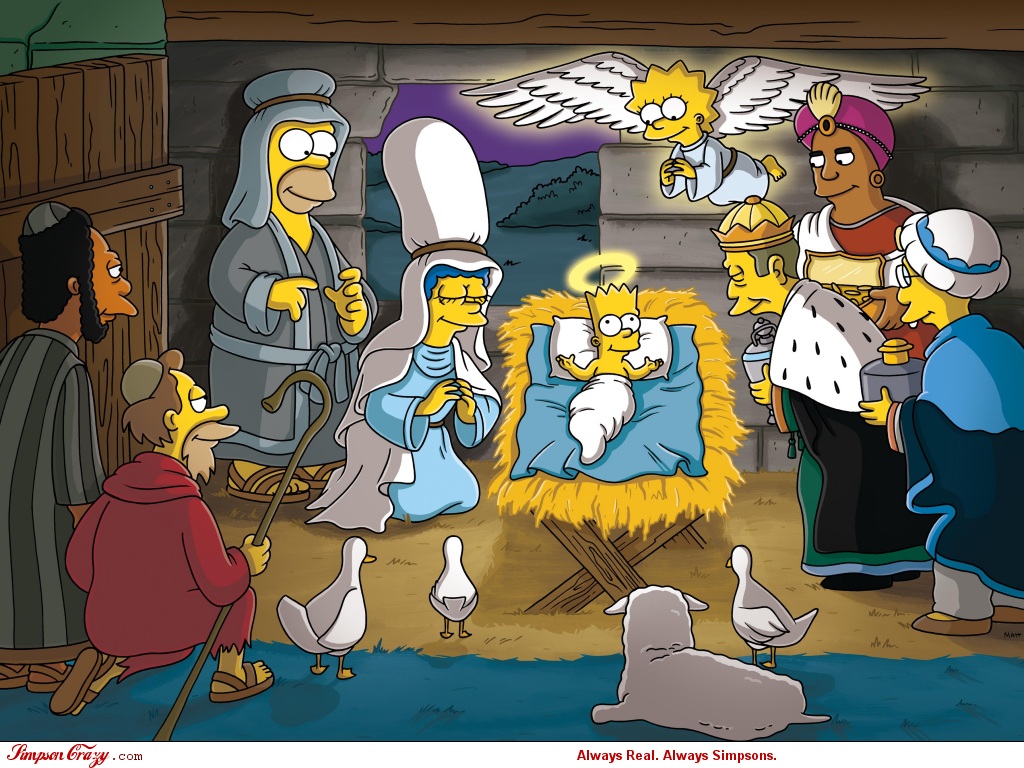
            Now, there are two other things that can make a twist flop.  One is when the information the twist reveals isn’t actually a surprise, or it’s something the reader probably figured out on their own.  If you’re a long-time fan of The Simpsons, you may remember one time when Homer told the Nativity story in church.  And he ended his little sermon with these drama-filled words…
            “And did you know that baby Jesus grew up to be… Jesus?”
            It’s a perfect example of this point.  If I’m two or three steps ahead of the characters and the author, a “reveal” like this borders on comedy.  Which is great if I’m writing comedy, not so good if my book is a techno-thriller.  A twist that tells us something we already know, by definition, isn’t a twist, and it doesn’t matter if the author hasn’t specifically spelled it out or not in the book.  If all my readers figure out who Dr. Acula really is on page two, it’s my own fault when the big twist falls flat.
            The second thing that kills a twist is the flipside of what I just said.  It’s also not a twist if there’s absolutely no way we could’ve suspected it.  Yes, a twist depends on us not knowing something’s coming, but when it arrives it needs to fit with everything we’ve been told all along.  A reveal should mesh with what we know, not contradict, and make us look at things in a new way.  Finding out Phoebe is my long-lost cousin in the last fifty pages is a twist.  Finding out Phoebe is a third-gender alien from the year 2241 in the last fifty pages means I should…
          Wait, an alien from 2241?  Hasn’t this a period murder-mystery novel for the past two hundred pages?  What the hell…?
            I once read a book where we found out in the last twenty pages that the leader of the all-woman biker gang is actually a vampire.  And while we’d known this was an urban fantasy novel, there’d been no clue whatsoever that vampires exist.  It was a first person story and the main character had never even told us that vampires were a thing, even though we learned in those final pages that this is the vampire she knew had killed her husband.  The reveal clashed with what I knew about the world and the character, and that clash jarred me out of the book at a point when the author really needed me to be sucked into it.
            And that’s the real killer. When my twist falls flat, for any reason, it breaks the flow of the story.  And since big twists tend to come toward the end of a story, it means I’m giving my readers a reason to stop when I want them to be checking the clock to see how late it is and if they can finish the book tonight.
            A twist is a powerful device, the five-point-palm technique of storytelling.  It needs to be done a certain way, but if I can master it I’ll be unstoppable. And if I do it wrong…  I’m just going to piss off my target.
            Next time, I think we need to discuss paying dues.  Especially those of you who’ve been here for a while.
            Until then, go write.
July 1, 2011 / 3 Comments

One Time Only

If at first you don’t succeed… destroy all evidence you ever made the attempt.

No, no, don’t do that…

A few years back I was working on a film set where we were staging a bank robbery. The director… well, let’s be polite and say he wasn’t quite as knowledgeable as he thought he was.

We ended up doing a big dolly track move that encompassed the whole scene. Then we did a series of tighter moves. Then we did a wide master of the scene and got all the coverage. Then we did a reverse master of the scene and started doing coverage on that. Then came all the reaction shots for everyone in the bank. And by this time, the crew was starting to grumble, because every one of us knew what was going wrong.

As it turned out, my department had an intern, and he was still watching all this with complete newbie glee. As the day (and the bank robbery) wore on and on, he asked me what everyone was getting so grumpy about. After all, weren’t these all cool shots? I agreed they were, but pointed out that at least half of them were a waste of time. When he asked why, I came up with this way to explain it.

“When all this gets cut together,” I told him, pointing at one of our extras “you can only use one shot of them robbing that bank teller. You can break it up a bit, but not much because it’s happening so fast. At the end of the day, you can only rob teller number five once, so filming nine different versions of her getting robbed is a waste of time. If this guy knew what he was doing, he’d just get the shots he was going to use and that’d be it.”

The intern took those words to heart, and two or three more times during that project he’d give me a nod on days when scenes were just dragging and say “You can only rob teller number five once.”

The point of the story being, I know at least one person has gotten something useful out of my rambling.

No, wait, sorry, the point is that when you’re telling a story you can’t do the same thing again and again and expect it to have the same weight.

There’s an idea in literary theory (sorry, I do have to go there now and then) which says you can only experience a story for the first time once. After that first time, your brain can’t help but restructure your view of the story to see it with more experienced eyes. If you’ve ever read a mystery novel for a second time, or maybe rewatched films like The Sixth Sense, Dead Again, or The Prestige, you know it’s a very different experience when you go through these stories a second time. Or a third time. But you can never, ever get that first time again. Even something like The Empire Strikes Back changes between the first and second exposure to the material.

This is why we all hate spoilers, because the innocence, so to speak, of that first experience is being taken away from us and we can never get it back. To be honest, this is also one of the problems I have with the “film school” approach to movies. A lot of these folks get taught to study and dissect films rather than to watch them, so the first time with the story is lost on these people. They never see the movie the way it was intended to be seen—they just jump straight to the second viewing. Which seems counterproductive when you want to learn how to do something. It’s like going to cooking school and never bothering to taste anything.

Anyway… I digress. But not by much.

There’s another aspect to doing the same thing more than once, and this is the idea of noise. A few times before I’ve brought up Damon Knight and his wonderful observation about facts. A fact we don’t know is information, but a fact we already know is noise. This is true even if we just learned the fact ten or fifteen pages earlier.

An example…

I read a book a while back where one piece of information was “revealed” four times. Essentially, character A discovered a mysterious South American temple that shouldn’t exist. Then A was killed and B found his notes, so B discovered the temple. B quickly related the story to C and then C explained the whole thing to D, so now D learned about the temple. And D… well D was pretty high-ranking, so he went to the President and told the whole Cabinet about the temple. And every single time people would have incredulous reactions and then the reader got the explanation of what the temple represented and who built and how we know it’s ten thousand years old and what we think it is.

Every. Single. Time.

Y’see, Timmy, that information is powerful the first time we hear it. Like so many things that get repeated, though, it loses power every time. In this case, it’s not just losing power, it’s taking a rapid plunge from information to noise.

Plus, it’s taken a huge emotional hit. Finding out that the pyramid strongly implied, if not proved, a pre-human civilization was amazing… the first time. The second time it was something we already knew, even if it was new to this particular character. The third time it was annoying. By the fourth time, personally, I was skimming.

Here’s an easier example, and one we’ve all probably dealt with at some point or another. Have you ever had someone tell a joke (or what they thought was a joke) and then they repeated the punchline when no one laughed? Maybe they repeated it two or three times. Perhaps they went after people one on one (“Hey, Timmy, did you hear when Mike said he wasn’t putting in enough hours and I said ‘That’s what she said’..”). In these situations, as the joke was repeated again and again, we all just got more and more annoyed, didn’t we?

Now, anytime a writer has a fair-sized cast of characters and an even slightly challenging plot, they’re going to have to deal with this issue. You can’t have everybody walking around together experiencing every single thing at the same time. Which means there are going to be points when A and B know something C and D don’t. The trick is coming up with ways to share that information without having the story come to a grinding halt while characters discuss things the reader already knows.

I bring this up not just because of the head-banging nature of that book I referenced above, or because of scarring memories of the bank robbery. Y’see, this is something I’m dealing with right now. In my current project I’m juggling a large cast who are investigating a mystery separately, but keep coming together to compare notes. I know my mystery, but the roadblock is getting past awkward infodump scenes without neglecting this character or that one. I mean, Debbie’s reaction to what they found in the sub-basement is just as valid as Pash’s, isn’t it? She just had the bad luck of having to work that day so she couldn’t go exploring and had to get that information second hand.

You get one chance for your big reveal and that’s it. One. You can’t keep revealing it again and again and expect that reveal to have the same emotional weight. It’s also not going to draw the audience in, because it’s gone from being a surprise to being… well, just another fact.

And if you’re not careful, repetitive facts can get dry and boring really quick.

Next week, I’d like to tell you about the time I sat around for hours watching the most inefficient bank robbery ever.

No, actually, next time I’d like to describe something you’ve probably never seen before.

Until then, go write.

Categories