
October 1, 2010 / 4 Comments

Avoiding Reality

So sorry that I didn’t post anything last week. The past several days have been a mess of articles and book stuff and dental nightmares. Yup, I’m one tooth down from the last time we were all here. And my gums are sore as hell right there, let me tell you…

This is going to be one of those rants where I come across as especially harsh and bitter, so I apologize right up front for that, too. Awful as it may seem, I’m doing this for your own good. And mine, so I don’t have to deal with this sort of thing anymore. Hopefully not as much, anyway.

I’ve blathered on here a few times about reality and truth in storytelling. Not in the sense of getting your facts correct, but in the sense of telling true stories based on real events. Awful as it sounds, no one cares if a story is true or not. They really don’t. They might be interested or impressed after the fact (“Wow, someone actually went through all that?”) but while a reader’s going through a manuscript the fact that it’s based on a true story is even less important than if the writer submitted it in a white envelope or a manila one. And most people submit their work digitally these days, so that should tell you how piddling the envelope factor is.

So, for the record, odds are none of the following events will make a good story. Not a “based on true events” story. Definitely not a memoir.

–Birth of your child

–Loss of your child

–Finding true love

–Loss of a loved one

–Loss of a parent

–Recovering from cancer/ AIDS/ Parkinson’s/ et al

–Not recovering from cancer/ AIDS/ Parkinson’s/ et al

–Finding your faith

Now, before anyone leaps down my throat, as I write this a very dear friend is going through chemo and radiation therapy because he had a bunch of cancerous material removed from his neck. I’ve got two sets of friends who just had their first child within the past week and another who are expecting twins within the month. This summer I lost my grandmother and the cat I’ve had for sixteen years within 36 hours of each other.

Are all of these powerful, emotional events? Without a doubt.

Are they story-worthy?

Probably not.

See, here’s the thing. Hundreds of people are diagnosed with cancer every week, probably dozens with the exact same variety my friend Tony has. Babies are born by the bucket load every hour and, if the census is to be believed, people die at about half that rate. It’s awful to think of, but most animal shelters end up gassing a few hundred cats every week.

So why are the versions of these events I mentioned above any different? Why are they special?

Well, because they happened to me, of course. It sounds silly to say but we all see the world through our own perspective. These events are powerful–to me. They elicit a strong emotional response–from me. Some of them will linger with me forever– the rest of my life.

To most of you, though, these are just dry facts. As we said before, birth, death, and illness aren’t exactly rare anywhere in this world. I’m sure most of you have a certain degree of empathy–you’d be lousy writers if you didn’t– and that you have some honest congratulations/ well-wishes/ sympathy for what I’ve said above, but in reality it’s just stuff you file away and move on. It’s only been half a page, but how many of you can remember how long I had my cat for?

There’s a saying I’ve brought up here before– “Tragedy is when I stub my toe, comedy is when you fall down a hole and die.” This little bit of black humor is usually pointed at would-be-comics, but I want to use the inverse. To wit…

This story may be extremely powerful and dramatic to you, but to me it’s just silly nonsense.

This is why so many of these thinly-fictionalized stories don’t work and make readers roll their eyes. The writer hasn’t grasped that basic empathic truth, that these events don’t have an emotional weight past what was personally experienced. Again, it’s absurd that I have to point this out, but it’s more absurd how many people don’t get it. Real stories about family and friends are generally not good for the same reason family and friends don’t make good critics when you need feedback. You’re too close. It’s like when I mentioned game scripts a while back. It may be the most amazing night of Warhammer 40K you and your friends have had in months, but that doesn’t automatically mean it’s going to make for a good story. It seems cool because you experienced it.

I’d never say you can’t make it with one of these stories, but if it’s the way you’re leaning you may want to stop and reconsider. No one will ever convince me losing the Terrible Cookie Monster wasn’t powerful and tragic. I know better than to write a book about it, though.

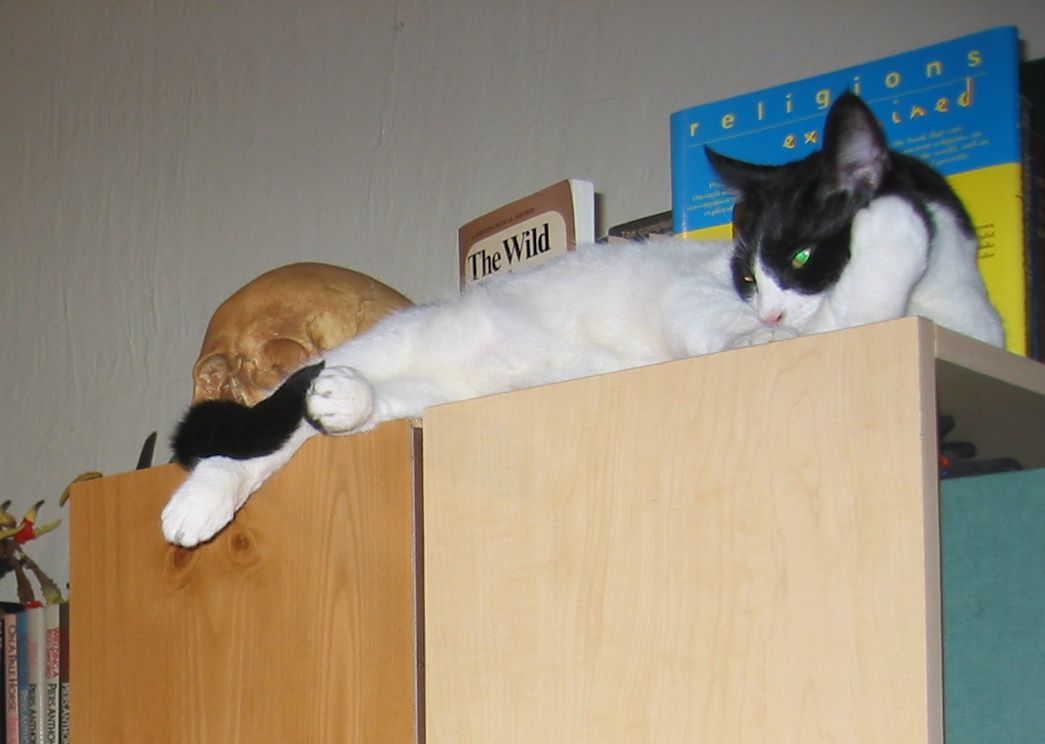
Don’t be surprised if a little white and black cat shows up in one of my books, though.

Next time, I’d like to address the negativity that so often runs through my little rants here.

Until then, go write.

July 16, 2010 / 6 Comments

It’s A Small World After All…

We’re fostering a couple kittens right now that we rescued from the alley alongside our building. They were Mathilda and Charlie Baltimore for a while, then they hit puberty, certain things developed, and we realized Greystoke and Tarzan might be better names. Then it was Gandalf and Sauroman. We’ve finally settled on Loud Howard and Charlie Gibson.

Bonus points if you know where all those names come from.

The downside is, we ended up with fleas in our apartment. Every time I thought we wiped them out a new wave surged up. I got bit at least once a day. They’re just tiny, annoying things. No one likes a flea.

No, not even the people who run flea circuses. Those things are all fake, anyway.

Do any of you even know what a flea circus is or am I just dating myself again?

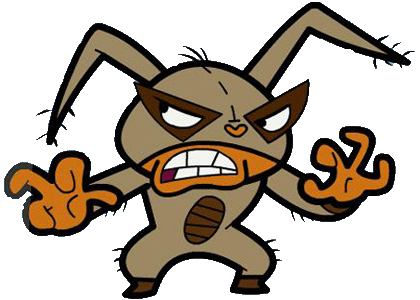
Hey, look! The Flea!

Anyway, the thing is, my beloved is reading for a contest right now, and the flea problem made her come up with an analogy. She’d just finished her latest pile, which included (among others) a big cosmic-level story about universe-threatening monsters or something like that and also a more “indy” story about a character who sat and really did nothing while interesting things happened all around her. As my lady love put it, they were stories that focused on the flea on the back of the dog who was chasing the car that the bank robbers were escaping in from their heist.

Let me put it simpler terms. Who’s writing a story set in the modern-day, 2010 United States?

Okay, now how many of you are writing about the health care crisis? The bill passed but there are still arguments and debates and questions and the earliest bits of it won’t begin until next year. It’s a huge issue that affect everyone in this country on one level or another.

Which means it’s affecting your characters. So, who put it in their story? Anyone?

Anyone?

Bueller?

I’m going to go out on a limb and guess not many of you. I’ll step a bit further out and presume you didn’t include it because it wasn’t really relevant to the story you were trying to tell. Which is also why you probably didn’t include a lot about either the war on terror or climate change.

Does the flea have an effect on the bank robbers? Do the bank robbers have an effect on the flea? No, don’t talk to me about the butterfly effect or interconnectedness or any of that nonsense. They’re yes or no question, and if you’re going to be a halfway decent writer you have to be honest about answering them

The point I’m trying to make is that you have to know which story you’re telling. Am I telling the story of the flea, or the story of the bank robbers? Because there does come a point, by sheer sense of scale, that they’re not the same story anymore. In the same way health care or global warming are just too big to have them “casually” in my writing, odds are this phenomenal bank heist is way beyond the life of the flea.

In my experience, this issue comes up a lot in little “art” stories. Writers try to bring in big, complex issues to make their story more “real” and give it “scope” (d’you notice how many of these things I have to keep putting in quotes?). Alas, since the story is really about some introspective naval-gazing these issues are more a distraction that anything else. All they’re doing is wasting words that could be used for better things. This is the story of the flea where someone tries to keep talking about the bank robbery.

This is also why a lot of epic stories tend to fail, just coming at it from the other side. When a writer is focused on creating the most cosmic-level story they can, they generally don’t give the reader anyone to relate to, just people to be in awe of. A story needs a character to be our entry point, and world-changing, epic stories that overwhelm said character are just too big. It’s the story of the bank heist and the audience has all become fleas. One film critic (whose name, I hate to admit, escapes me at the moment) made the clever observation a while back that stories like Star Wars and Lord of the Rings succeeded despite their epic stories, not because of them.

I was going to put some examples of this sort of thing, but the more I thought about it (and kept going over this little rant) the more I realized how hard that would be. This is really just one of those things you get or you don’t. If you’re reading this and think I’ve kind of wasted this week’s rant on the obvious, you probably get it. If you have no idea what I’m talking about, or you’re already composing an angry retort, odds are you don’t. It’s just one of those things that makes sense after processing a given amount of storytelling. I wish I could be clearer about it, but the best I can do is point you in the right direction and give you a rough idea of what you’re feeling around for. One day it’ll all just click. It did for me.

If a story’s going to be small and intimate, then keep it small and intimate. If it’s going to be big, remember to give all us regular folks a gateway into that big story or we’ll just get lost in it. Odds are a manuscript can’t handle being stretched between the two extremes, so writers need to be clear what their story is about.

Next time, I’m going to make things as easy as possible to get through.

Until then, go write.

April 22, 2010 / 3 Comments

…But Three Rights Do Make A Left

Punchline. You get it or you don’t. And if you get it, you’re already ahead for this week’s rant.

A common pearl of wisdom from gurus is “write what you know.” At its simplest, this little nugget means you should write about things you have experience with, and hopefully some love for. For example, I know comic books. I know Los Angeles. I also know horror. So, believe it or not, I wrote a book about superheroes staving off a zombie apocalypse here in L.A. and a bunch of people liked it. One of them even thought it was worth publishing, and now a lot of people like it.

The flipside of this is don’t force yourself to write things you know nothing about and can’t relate to. When you force writing like this, or falsify experience, a reader can spot it right away. How often have you seen someone try to write mobster discussions, scientific jargon, or period dialogue that just sounds like nonsense?

Most of us are average folks. We each have our little specialty, though, and that’s another place “write what you know” can come in handy. As I’ve mentioned once or thrice, I was trying to write stories before some of you reading this were even born. I have screwed up more stories, in more ways, than most of you ever have a hope of matching. You’ll give up on this writing thing long before you hit the levels of incompetence I managed at one point or another. However, it’s that same long experience and learning process that lets me speak with something vaguely resembling authority now. Not a lot of people can do that.

Likewise, not a lot of people have studied medicine, which gave Michael Crichton’s medical/ scientific thrillers such a great edge. Stephen King knows small-town life in Maine far better than most of us. Kevin Smith knows what it’s like to be lower-middle-class in New Jersey. Each of these people knew what they knew and wrote to their strengths.

Now, here’s the catch. Yeah, there’s always a catch.

A common complaint is “they didn’t get the facts right.” Check out Amazon or IMDb and whatever book or film you choose, there’ll almost always be some idiot pointing out the gross mistakes in it. I’m not talking about the occasional typo or misplaced comma. I mean that guy who feels compelled to point out that a passenger jet takes six and a half hours to travel cross-country from San Diego to Boston, not five. Or that the gasoline in a Geo Metro gas tank would evaporate after seven years so there couldn’t be any in the tank ten years after the apocalypse. Or that a katana would actually shatter if it hit a steel beam, not take a chip out of it. Plus everyone knows they didn’t actually make true katanas until well into the Muromachi period so there’s no way an 11th century Japanese warrior would have one.

Yeah, we all know that guy.

Y’see, Timmy, what this ignores is that sometimes there’s a reason the facts are wrong. As I’ve mentioned many times before, reality is not a story point. I’m generally talking about screenplays when I say it, but it’s true for any type of storytelling. You need to get the facts right as often as you can, but you also can’t sacrifice your chosen tale on the altar of truth. As it’s been said, never let the facts stand in the way of a good story.

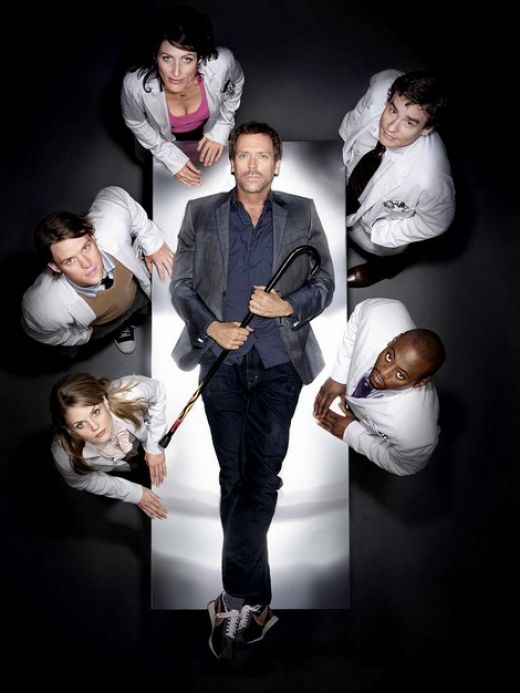
You want a good example of deliberately getting the facts wrong? Watch any medical or forensics show on television. House is a good one. A standard device on this show is to simplify procedures. Tests get run in minutes instead of hours. Test results take hours instead of days. No, this isn’t realistic, but it allows each episode to maintain a level of suspense and keep a ticking clock atmosphere. If House has to wait two or three days for each test result, that’s a lot of time to kill… and a lot of dead patients the way things work on that show. It’s just not as exciting to hear the team has two months to figure out what’s killing someone, so the writers bend the facts and condense the time. It also helps that 99.9% of us don’t know how long a chromahaemotomagraph test takes. Or exactly what it’s supposed to do. Or how to spell it.

Okay, I made it up.

Now, here’s an example from the other side of the coin. I was reading for a contest a few months back and got a story that revolved around planes. Maybe revolved is too strong a word. There were a lot of planes in it, and they were important to the plot. Sort of. I think they were.

Needless to say, the screenplay had other problems besides the one I’m about to bring up.

At one point the script spent almost three pages on a test pilot going through his pre-flight checklist. It was amazingly detailed, explaining what each system was, what it did, and examples of what could happen if said system failed. No question in my mind, this writer was an experienced pilot who knew his or her stuff. Some of this explanation was in dialogue, some of it was in action blocks, and some of it was kind of an inner-monologue thing. Like I said, there were other issues.

Three pages of that.

Now, being able to rattle off the entire pre-flight checklist for a fighter jet is damned impressive, more so if it’s 100% accurate. But that doesn’t mean it’s good storytelling. To be honest, it brought the story to a crashing halt. It is information we don’t know, but is it really information we need to understand the story? If I didn’t know for a fact the pilot had checked the wing flaps, would some crucial part of the plot collapse later?

This is one of the most common mistakes people make when they write what they know. They feel the need to get the facts right because this is their particular specialty, but they get them right at the cost of the story they’re trying to tell.

One place I see this a lot is weapons. A lot of folks who know their weapons feel the need to list off a lot of information about them. So you get bombarded with makes and years and model numbers and ammunition and magazine sizes and… man, it gets boring just writing about it in general terms. Much like the pre-flight checklist, knowledge of firearms or fencing or martial arts is fantastic, but more often than not it just clutters the page and makes the story drag rather than impress people. Plus, since these almost always relate to action scenes, it’s the last place you want your manuscript to drag.

As a note to screenwriters, it’s especially lethal to load up a screenplay with these sort of details. Unless it’s life-or-death necessary to know the villain is using an Argentinean Bersa Model Thunder 380 Super rechambered for .45 caliber ammo–and the second act will disintegrate without this fact–he or she should just have a pistol. Once your screenplay’s getting made there will be an entire prop department that probably has a much better knowledge of firearms than you, plus a stunt coordinator with years more fight experience. We don’t like it when people tell us how to write–don’t try to tell them how to do their jobs, either. Use that space for your story.

Even if they’re all correct, we don’t need to know all the facts. Sometimes, in fact, it’s better to ignore a fact or three if you can do it without drawing attention to yourself. The most important thing when you’re writing a story is the story, not “getting it right.”

Now, I’d love to be able to say there’s some easy ratio of fact vs. fiction you need to keep track of when writing. It’d be great to just say “keep it at seven parts to three,” but saying that would be a complete fiction in itself. There’s nothing that easy about it. Alas, it’s one of those things a writer just need to get a feel for, usually after making several attempts, failing at most of them, and getting feedback that confirms this failure. And it’s conditional, too–you need a different ratio in a sci-fi story than you do in a comedy.

When all else fails, remember Samuel Clemens. “Get your facts first, then you can distort them as you please.”

Next time I think I’m going to rant about something that’s been driving me nuts.

Until then, go write.

April 1, 2010 / 2 Comments

Baby Steps

So, as some of you may have picked up along the way, I used to work full-time as a crewperson on various films and television shows. On one level, this sounds very exciting and cool. People like hearing stories about blowing stuff up, getting to film in cool locations, and that Reiko Aylesworth is about fifty times more stunning in person than will ever, ever come across on film. I mean, she is just gorgeous. And funny. And a pool shark. Yes, to some extent, working in the film industry really is that cool.

On one out of twenty days. Maybe one out of fifteen, depending on the project.

The rest of the time, it’s dull as hell. Honest. No one’s that interested in the long days, the idiots in charge, or the screw up from another department that delayed everything for an hour. In this respect, the film industry isn’t that different from most other jobs, which is why a lot of people’s eyes glaze over when you try to tell them about it.

Which isn’t that surprising, if you think about it. It’s a job. It’s real life. And real life, for the most part, is pretty boring. Even in the movie industry.

Real life meanders. Sometimes it wanders aimlessly. It involves people learning the same lessons everyone else had to learn–or sometimes not learning them and screwing up more. The dialogue in real life sucks. Have you ever read an actual transcription? I do it all the time. Most people sound like idiots, trust me, and I include myself in there. We stutter, we second guess and repeat ourselves.

As such, it’s always baffling when people think they’ve done something amazing by writing a story about real life. With real characters. And real dialogue. In a sense, it’s like bragging about the peanut butter and jelly sandwich you made for lunch. The only thing more embarrassing is when you try to convince people the PB&J is something bold, daring, and new. Check it out. Bread on both sides. You’ll see I spread the peanut butter across the entire surface of the bread rather than leave it as a large glob in the middle. Also notice, please, that the jelly is between the slices of bread– I came up with that bit myself.

(If it helps, picture Chef Gordon Ramsey staring at me with that stunned look he seems to do so often… and then his next five or six words getting bleeped out.)

Let’s stop and consider for a moment. This is an accomplishment? It’s like congratulating someone for getting pregnant at the prom–so many people do it that it’s almost not worth talking about.

Now, one of the earmarks of this type of writing is when a character has an epiphany. A supposedly real world-altering revelation about their life. I say supposedly because most of them are the sort of simple life lessons most people have figured out by age twenty or so. You know, that it’s better to be loved than to be cool. That drugs are bad. That their destructive behavior is hurting the people around them. Those sort of things. While it’d be tough to prove, I can’t help but think a lot of these moments get put in because it’s something the writer experienced and they don’t grasp that everybody has these moments.

My friend Ace has a neat term for this, developed after years and years of reading for different screenplay contests. To quote: “It’s the moment when a baby discovers their own feet. It may be the coolest thing ever in the life of the baby, but for the rest of us it’s pretty dull and mundane.”

When a real character figures out it’s better to enjoy life than spend time at work, they’re discovering their own feet. When someone realizes they should cherish and spend time with the people that matter to them, it’s their own toes they’re staring at. If someone comes to the jaw-dropping conclusion that they’ve messed up a life that was clearly messed up on page one–OH MY GOD! The toes wiggle when I think about wiggling them!!!!

Part of why this rubs people the wrong way is that it’s plain condescending. As I mentioned before, a lot of these lessons are things we figured out in high school, even if maybe we didn’t take them to heart at the time.

Y’see, Timmy, when people talk about something great and say “It’s so real,” they’re making an implied statement. And that statement is (in full) “It’s so real, but I know it actually isn’t. But, wow, if it was real I bet it would be just like this.”

No one likes real life. If they did, there wouldn’t be any market for even the thinnest veneer of escapism. No one would read books or go to the movies. Reality rarely makes good stories, and the few times it does it’s often too outlandish to be believable. Anyone remember me talking about Vesna?

We want quasi-life. We want life +1. We want the good guy to win. We want the villain to get his or her comeuppance. We want the cute couple to overcome obstacles both physical and emotional so they can be together. We want cyborg ninjas from the future programmed by elder gods from the past and million to one odds that pay off and nymphomaniac heiresses who look just like Reiko Aylesworth.

Okay, maybe that last part’s just me…

Of course, that’s also key. We want all that, but we want it to be believable, too. I mean, if the hero beats the cyborg ninjas and beats the odds three times in a row and finds nympho-Reiko… well, that’s just silly.

So, we want life +1–maybe as much as life+3– but it has to be realistic. At least enough that we can believe in it.

Sound tough? It is, believe me. That’s why most people can’t cut it as writers. They don’t have the ability to pull it off or the patience to figure out how to do it.

A lot of them, instead, write these real stories. Gritty, depressing stories. Stories with broken, unlikable character who fail at everything and lead miserable, pathetic lives. That’s art, my friends. The sure sign it’s art–no one wants to pay to see it because they don’t understand it. No, seriously. That’s the definition of art. Just ask any failed artist and odd are they’ll tell you the problem is everyone else, not them.

At the end of the day, if you’ve decided to tell a real story, you’ve just made a peanut butter and jelly sandwich. You’ve done something that’s common, available everywhere, and didn’t take much effort. It may be the greatest PB&J ever, but it’s still nothing compared to a fairly nice filet mignon. Or even a just-adequate slice of cheesecake. Heck a McDonalds 79-cent hamburger beats a peanut butter and jelly sandwich.

Next week, I’ve got something I’d like you to read.

Until then, go write.

Categories