

October 29, 2010 / 1 Comment

The Fear-O-Meter

Hello, kiddies! Thanks for tuning in to my latest blog post-mortem!! Hehehehehheheeeee!!

Pop culture again. Ahhh, those were the days…

So, last year at this time I talked about a couple of the subgenres horror can be broken down into. It’s important to know which group your tale of terror sits best with so you know how to approach the different elements and the way they mesh together. Knowing this also helps to sell it and promote it.

By the same token, when you sit down to write something “scary,” it can help to know just what you’re hoping to accomplish. People get their heads cut off in the Saw movies, in Attack of the Clones, in The Man in the Iron Mask, and in A Mighty Heart, but these decapitations are all received in very different ways because of how their particular stories are being told. In the same way, Freddy Kruger has been a slasher, a monster, and a plain old villain, even though the character has barely changed at all. How, exactly, do you intend to scare your readers with this moment as opposed to that one? Or are they supposed to evoke the same kind of fear?
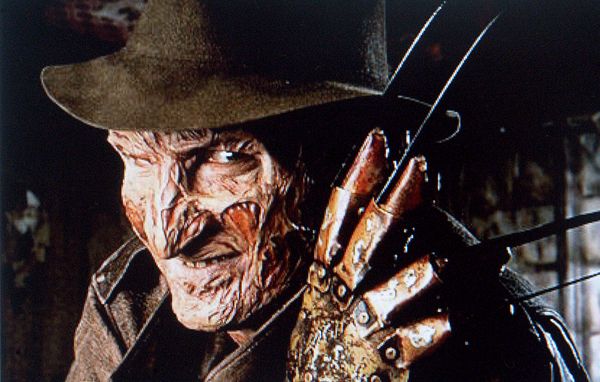
You can nitpick back and forth, but I think fear, as a sensation, generally breaks down into three basic categories. There’s a couple different names people use for them, but for our purposes today, let’s call them the shocker, the gross out, and dread. These three form the food pyramid of fear, if you will, which means using and combining them in the right ways can make a variety of tasty seasonal treats.

…starting to sound like a cooking blog…

Anyway…

The Shocker This is when something unexpected happens and makes the audience jump. It’s the fear of what’s happening right at this moment. If you’ve ever watched someone read and seen their eyes bug, they probably just hit a shocker. Ever been in a theater when most everyone screams? Same thing. When someone walks around the camp cabin and Jason buries his machete in their skull, that’ll make you jump even watching a movie where you know people are going to get machetes in the skull. When Michael suddenly shoots Ana Lusia on LOST, that’s a shocker, too. Individual shocks can be stretched out a bit–especially on film– with lots of shouting and chaos and a few smaller shocks to keep it going, but really a shock is a short-lived thing.

The shocker is powerful, but it’s important for writers to remember it can’t stand on its own for long. As I’ve mentioned before, a good way to think of shocks is like exclamation points. You can use them! You can use a lot of them!!! But after a while, there needs to be something that actually requires emphasis! If not the shocks will start to lose power and your readers or audience will start to get bored!! Shocks eventually need something solid and lasting to support them.

The Gross-Out As named by the King himself. It’s when things are just disgusting. This is when the writer’s trying to tap into the reader’s sense of revulsion and maybe even induce some nausea. It’s when we spend two or three pages on someone getting their limbs sawed off or just eating a peanut butter and maggot sandwich, where the little sour-milk colored larva are eating their own paths through the spread before getting crushed against the roof of the mouth by someone’s tongue. The gross out usually differs from the shocker because of duration. While a shock gets weak the longer the writer tries to prolong it, a gross out can actually gain strength as it goes on and on (and thus, torture porn was born). Go too long or too frequently, though, and audiences will get bored with the gross out just like anything else.

An interesting point is that the audience often (but not always) knows the gross out is coming. We don’t linger on it, but it rarely comes out of nowhere.

It’s also worth noting that a lot of gross-out stuff moves closer to dread when it isn’t described at length. Speaking of Stephen King, we all remember the lovely “hobbling” scene in Misery, yes? What’s happening almost takes second place to Annie calmly explaining what she’s doing and why she’s doing it… even in the middle of the procedure.

Dread This is when something doesn’t happen, but we know it could. It’s fear of potential events, if that makes sense. You could also call this suspense or perhaps terror (if you wanted to nitpick). We’re waiting and waiting because we know something’s going to reach out from under the bed or crawl out of the closet and the fact that it hasn’t yet is giving us the chills. Pennywise the Clown gives us anxiety because we know he isn’t just a clown and it’s very wrong for him to be down in those sewer drains. Hannibal Lecter is creepy just sitting in his cell talking about the things he’s done in the past. And the zombie Julie Walker is kind of hot, but you also know she’s on that razor’s edge of probably eating everyone in the room (and not in the fun way). Dread works well in larger tales because there’s space for eerie backstories, but a good writer can also make it function in tighter spaces.

There’s two catches that come with dread. One is that it relies on the writer having a very solid grasp of how the audience is going to react and what they’re going to know. If I tell you there’s a Strigori knocking at the front door, most of you are going to shrug your shoulders and open up. Likewise, I may find ketchup disturbing, but I shouldn’t assume everyone’s skin is going to crawl at the sight of it. Paint the creepy stuff on too thin or to vague and the audience just won’t get it and they’ll be bored. Paint it to thick and they’ll be angry you assumed they weren’t going to get it. If the shocker is a hammer, suspense is the scalpel of fear.

Tying back to that, dread also relies on the audience having… well, not to sound crass, but it depends on a certain level of intelligence and involvement. If you try explaining climate change to a chimpanzee, you’ll notice they don’t get too worried about it–assuming they sit there for your whole lecture. It makes me sound old, I know, but part of the challenge with dread these days is the shortening of people’s attention spans. If people keep switching channels, walking away, twitting, or texting, they’re not getting involved in the story. Without that involvement, it’s very hard to build a sense of dread.

Also worth noting that dread needs good characters more than the other two types. We need to be able to identify with what a character’s going through. If we can’t, this is a news report, not a story.

Once you know just what you’re trying to do, it’s easy to see how each one works and how they can work with each other. Campfire stories are often little suspense tales that build to a shock in the same way jokes build to a punchline. A lot of the ‘80s slasher films would start with a touch of suspense, jump to shock, and then dive headfirst into the gross-out. Alfred Hitchcock could drag suspense out for ages, but knew a good shock or two could make a film unforgettable.

(mother, please. I’m trying to work on my blog. No mother, it’s not one of those websites, it’s for good people…)

Anyway…

Next time is mostly for the budding screenwriters. Some of you found out last week that you didn’t get one of the 2010 Nicholl Fellowships, yes? I’m willing to bet that no one reading this did, but I’m also sure some of you didn’t try for one. Let’s talk about why you didn’t get one.

Until then, go hand out candy. Oh, and write between trick or treaters.

August 5, 2010 / 2 Comments

Shotgun Art

All right you primates, listen up. This is my BOOMSTICK!

The twelve-gauge, double-barreled Remington– S-Mart’s top of the line. You can find this in the sporting goods department. That’s right, this baby was made in Grand Rapids, Michigan and retails for about $109.95. It’s got a walnut stock, cobalt blue steel, and a hair trigger.

To get to my point, though…

The great advantage of the shotgun is that it’s very hard to miss with one. Load a few shells of buckshot and you can pretty much guarantee you’ll hit whatever reanimated dead thing you’re more-or-less aiming at. Heck, even if you’re not sure what you’re aiming at, you’ll still probably hit it. You won’t hit it with full force, granted, but with that amount of spread you will hit something. And if you’re lucky and hit enough of it, you’ll do more than slightly annoy your chosen target.

With that being said, I’d like to tell you a story…

It’s the story of Yakko Warner, a young man who wanted nothing more than to grow up and be on the Olympic pie-throwing team. It was his dream for as long as he could remember. But then, in the womb, tragedy struck…

Yakko was diagnosed with Sudden Infant Death syndrome and Alzheimer’s. Despite this, he fought on, born an orphan just two years after his parents were killed by a drunk driver. Working his way through private school and an ivy-league college by collecting deposit bottles every night and weekend, he graduated and became an alcoholic writer, artist, and musician on the same day he discovered he had AIDS, brain cancer, and Lou Gehrig’s disease. The next day, a random gang shooting killed his pregnant wife and four-year old son and left him crippled and in a wheelchair.

Yakko decided to become a teacher, in the hopes his story would inspire inner city autistic children to stay out of gangs. Alas, his students were all killed by drug dealers, crooked cops, homophobic bigots, racists, tragic suicides, random household accidents, and Somalian pirates.

Then he decided to write a book about the experience. Then he decided to option the book to be a screenplay. Then he decided to skip teaching and writing the book and just sell the story to Hollywood for the money. The screenplay won a Nicholl Fellowship, a Pulitzer, a Nobel Peace Prize, and a Nickelodeon Kids Choice Award.

Finally, on the day Yakko went to pick up his Academy Award for General Excellence, he was killed by a drunk driver. Ironically, the same drunk driver who had killed his parents five years earlier. As he bled out in the gutter, waiting for an ambulance that was delayed because Republican politicians he’d backed had slashed health care bills, a dove landed nearby. Then–as he stared at the bird and realized he’d wasted his life in books when he should’ve been out there living– Yakko died the most painful, agonizing death ever imagined.

~Fin~

Okay, you’re probably chuckling a bit, but what might be hard to believe is how common this kind of storytelling is. I saw it in writers’ groups in college (part of the reason I don’t belong to such groups anymore) and countless times when I used to read for screenplay contests. You wouldn’t believe the number of dramatic stories that are just brimming with excess plot devices and story threads.

This all springs from a common misconception–that writing a bunch of plot points and character elements is the same thing as writing a story. The logic is that if I load up my story with every possible dramatic cliché for every single character, one of them’s bound to hit the target, right? And then, eventually, the story will be dramatic. Plus, adversity builds character, therefore it stands to reason all this extra adversity in my story will make for fantastic characters.

I mean, Yakko comes across a dramatic, dynamic character, right…?

In all fairness, it’s not just the dramatic types looking to create literature and art who do this, although I must admit, they seem to be the most common offenders. I just read a book a while ago that puts the old action pulps to shame. Every punch drew blood, every car chase (or skimobile chase, or quad-runner chase…) ended with an explosion, and every leap rattled bones. Not only that, but every character had a snappy one-liner to toss out before, during, and after offing one of the villains. And there were lots and lots of villains…

There’s also the horror story that has blood and gore and chunks of flesh everywhere. Well, it would be everywhere except the story is told in complete darkness. Plus there’s a little chalk-skinned child who moves in high-speed “shaky vision” and the borderline psychopath and the one person who isn’t a psychopath but snaps anyway and gets dozens of people killed because he or she opens a door or invites something in or plays with the puzzle box.

Don’t even get me started on the sci-fi stories that have epic alien wars and ancient technology and sacred orbs and unstoppable monsters and long-prophesied, godlike, cosmic beings and cyborg ninjas and out-of-control nanites. God, I hate nanites. You’d think they’re more common than bacteria, the number of stories they show up in…

Y’see, Timmy, whatever your chosen genre is, just loading up with plot elements and blasting away with your No.2 shotgun does not create a story. That’s called mad libs, and it’s the opposite of writing in just about every way possible.

Which brings us to the flipside of using a shotgun. At close range your shot will definitely hit. It will hit with everything. And when that happens, you will completely annihilate your target. Nothing left but rags.

Take that as you will.

Next week I have a ton of deadlines so I might not be able to post anything, but if I do it will be pure magic, as always.

Until then, go write.

July 8, 2010 / 2 Comments

A Shock to the System

We all know this moment. It shows up in books and films.

Our heroine, Dot, descends into the darkened cellar with only a flickering flashlight to guide the way (or a torch, for our British readers). We hear a rustle of movement. Something gets knocked over behind her–a set of golf clubs. She pans to the light left and right, revealing so many places to hide. There’s definitely someone-or something— down here in the cellar with her. There’s more movement, more noise, a few cries from Dot and then

–HAH —

the cat leaps into her arms from the top of a nearby cabinet or stack of old newspapers.

This, my friends, is what we commonly call a cheap shot. It’s when you wind up tension and expectations only to pay them off with a shock that turns out to be completely innocent. Granted sometimes it isn’t innocent because

–HAH–

the cat leaps away just as the psychopath dives out and runs Dot through with the umbrella from the golf bag. This is still a cheat, however, because the psychopath is just relying on shock value. All that built-up tension got paid off early with the cat and, well, the cat is not the payoff we were hoping for.

In certain activities, this sort of thing is called “premature”…

Cheap shots and shock gags are popular in stories for two reasons. One is because they’re hard to screw up. Put a racing crescendo in the soundtrack, add a racing heartbeat, splatter some gore, let rip with an off-color fart joke, and the audience almost has to react a certain way. That’s the second reason. You can practically guarantee the audience will respond how you want because they’re the lowest common denominator of emotional stimulation.

Now, let’s be clear on one thing. These little shocks are great, either in horror or action or comedy or whatever. Anything that gives the audience a little jolt out of their complacency is always good.

The problem is when that’s all a given story has to offer. A lot of stories try to get by with lots of cheap shots and shock gags because they don’t have anything else. The comedies aren’t that funny. The horror stories aren’t that scary.

There was a little horror movie I saw a while back where the suspected killer (or is he…?) had a habit of appearing from nowhere. Someone moves or the camera shifts and there he is. Walk into the office reading your mail, look up, and there he is. Open the medicine cabinet for an aspirin, close it, and behind you in the reflection there he is. Have a talk with your friend about stress, say goodbye, turn around, and there he is. Go out to get something from the fridge at night, close the fridge door, and there he is.

Notice how the italics are getting boring? That’s shock value wearing out its welcome. It’s breaking the flow again and again by reminding you this is a constructed story trying to play on your emotions. At the screening for this particular movie, I realized halfway through that the other critics and I were all doing the same thing. We were conducting the film with our fingers, cueing the suspected killer’s appearances because they’d become so predictable.

Consider, if you will, the lesson of Monty Python.

For those pathetic few of you who don’t know, Monty Python was the name of a British comedy troupe back in the ‘70s. John Cleese was a founding member. So was writer-director Terry Gilliam. There’s probably a few other faces in there you’d recognize, but I didn’t really want to talk about them.

The whole point of Monty Python was to do off-beat, nonsensical comedy. It was absurdist humor taken to the extreme, with people arguing about book stores, dead parrots, and even arguing about arguments. Unexpectedly, Monty Python became a huge hit. Their show ran for several seasons. The group did international tours. They made a couple of movies.

And they became predictable.

People started taking about jokes and skits being “Pythonesque.” It was hard to be nonsensical when people were expecting nonsense. The absurdity became standard. And right about this time Monty Python started to be a little less funny. Then a lot less funny. And then they more or less broke up.

If you don’t want to think poorly on the Pythons, consider slasher films. They dominated the ‘80s because it was easy to shock audiences with more gruesome and gory deaths. Eventually, though, slasher films almost became another form of comedy. People were laughing at them more than cringing because they’d become bored by the constant cycle of extreme death. It’s just like what I mentioned a while back about endings that come out of left-field. They become so commonplace in bad indie films that people just expect them now. They lost what shock value they once had.

Again, as I said above, there’s nothing wrong with a shock or a cheap shot now and then. Shocks and surprises are good. We all enjoy them.

–HAH–

You need to have more than that, though, if you want to really connect with your audience. There needs to be real tension. Real suspense. Real payoffs.

Yeah, it’s tough and, yeah, some readers simply are not capable of understanding foreshadowing and suspense. A real uphill battle. So you need to decide if you’re going to aim high or if you’re going to go for the lowest common denominator.

Because you can only be premature so many times before other folks start getting frustrated with you.

And then you’re going to find yourself all alone.

Next time, I need to talk about the developing flea problem.

Until then, go write.

October 29, 2009 / 3 Comments

Haunted Website of Horror!!!

It’s like a radio–a radio tuned to the frequency of evil!

If you get that reference… God, I pity you.

So, I’ve talked about different genre issues here a few times before. With the upcoming holiday, though, I thought it would be nice to pause and talk about one that’s near and dear to me.

To be honest, I wasn’t always into horror. As I noted on a friend’s website recently, it wasn’t until my college years that I really embraced the many forms of the genre. Before that, I was terrified of more things than we’ve got room to list. Yet I eventually hit the point that I started selling original horror stories of my own and was even asked to become a dark god and crush the hopes and dreams of mortals.

But that’s a story for another time…

The different forms of horror is what I really wanted to talk about in this week’s little rant, though. Anyone who’s dabbled in the genre knows that, alas, when you tell folks this is your field you tend to get lumped into this vague slasher/ vampire/ Satanist category. Either that or earmarked as someone working through childhood issues. Most folks don’t realize horror can be broken down into many different sub-genres, just like comedy, drama, or other art forms like painting. Being under the same umbrella of “horror” doesn’t mean Dracula is anything like Hostel, and neither of them resembles Resident Evil. As a wise man once said “I am nothing like Family Guy!!”

The catch here (and there’s always a catch, or you wouldn’t be bothering to read any of this, would you?) is that a lot of fledgling writers aren’t sure where their stories fit under the umbrella, either. They’ll start off with the trappings of one sub-genre, move into a plot more fitting a different one, wrap up with an ending that belongs on a third, and have the tone of yet another through the whole thing. They have a specific name for this problem. It’s called Plan 9 From Outer Space.

It’s important to know just what you’re writing, for two different reasons. One is so you’ll be true to it and don’t end up with a sprawling story that covers everything and goes nowhere. You don’t want your slasher pic to degenerate into torture porn, and if you’re aiming for cosmic-level evil it’d be depressing to find all the earmarks and resolutions of a common supernatural story. You also want to be able to market your story, which means you need to know what it is. If you tell an editor it’s not torture porn when it plainly is, at the best you’re going to get rejected. At the worst, they’ll remember you as “that idiot” when your next piece of work crosses their desk.

So, here’s a few different panels of that umbrella. Some of them are established sub-genres which have already been debated to death. Others are just things I’ve noticed on my own that I feel are worth mentioning. Use them a lot and maybe they’ll enter the lexicon.

Supernatural stories

This is one of the easiest ones to spot. It’s your classic ghost story. The phone lines that fall into the cemetery. The girl out hitchhiking alone in the middle of night. The mother who wishes on a monkey’s paw that her dead son would come home.

There are a few key things you’ll notice about these. One of the biggies is that the protagonist rarely comes to harm in a supernatural story. Their underwear will need to go through the wash three or four times and they may not sleep well for years afterwards, but physically, and even mentally, they tend to come out okay. If anyone suffers in a supernatural story it’s usually the bad guy or some smaller character. Also, these stories tend not to have explanations– they just are. There aren’t any cursed objects or ancient histories at play. Things happen because… well, they happen.

Even with it’s clever twist, The Sixth Sense is still a great example of a supernatural story, as is “The Signalman” and “A Christmas Carol,” both by that populist hack Charles Dickens.

Giant Evil stories

These are the grim tales when the universe itself is against you. Every person you meet, every thing they do–it all serves some greater, awful evil. H.P. Lovecraft and Robert Howard wrote a lot of giant evil stories. The Omen is another good (so to speak) story of the universe turning against the protagonist. And any fan of Sutter Cane will of course remember the reality-twisting film In The Mouth of Madness.

Personally, I would toss a lot of haunted house stories in here, because the haunted house (or ship, or insane asylum, or spaceship, or whatever) is essentially the universe of the story. Not all of them, but a decent number. The reader or audience doesn’t see anything else and the characters don’t get to interact with anything else. The Haunting of Hill House, The Shining, and Event Horizon could all be seen as supernatural stories, but their settings really elevate them to giant evil stories.

Thrillers

Thrillers also stand a bit away from the pack because they tend to be the most grounded of horror stories. No creatures of the night, no dark entities, far fewer axe-wielding psychopaths. The key thing to remember is that a thriller isn’t so much about what happens as about what could happen. It’s more about the ticking clock, the killer hiding in the closet, or the booby trap that’s a razor-width from going off and doing… well, awful things to our characters. There’s a lot of suspense focused on one or two characters and it stays focused on that one character for the run of your story. A thriller keeps the characters (and the reader) on edge almost every minute.

Alfred Hitchcock was really the master of thrillers, although much of his work came from other sources. How many folks have actually read Robert Bloch’s Psycho, for example? Silence of the Lambs is another great thriller, both the book and the film.

Slasher stories

Slasher stories are really about one thing, and that’s the body count. How many men, women, and fornicating teens can the killer reduce to cold meat? Note that there’s a few distinctions between a slasher story and a torture porn story (see below), and one of them is usually the sheer number of people killed. There’s also often a degree of creativity and violence to the deaths, although it’s important to note it’s rarely deliberate or malicious. Often it’s just the killer using the most convenient tools at hand for the job. The original Friday the 13th film series has pretty much become the standard for slasher pics, and it’s what most people tend to think of first when you mention the term..

A lot slasher stories used to have a mystery sub-element to them, and often it was trying to figure out who the killer is. These days it’s more often a twist, and often not a very well-done one. You’d’ve never guessed she was the killer, would you? And the reason you never guessed was because she has no motivation, there was no foreshadowing, and it makes no sense whatsoever within the established story. Slasher films, especially, developed a bad habit of falling back on the insanity defense and got stereotyped as “psycho-killer” movies. Which is a shame because some of them are actually very clever and creepy.

Monster stories

The tales in this little sub-genre tend to be about unstoppable, inescapable things that mean the protagonist harm. They’re rarely secretive or mysterious, but they do have an alarming habit of tending toward unkillabillity (new word, just coined, take that Shakespeare). The emphasis here is that nothing your heroes (or the villains, police, military, or the innocent bystanders) do can end this thing’s rampage, and any worthwhile rampage tends to involve people dying. There may be blood and death, but the focus with a monster isn’t finding it or learning about it– it’s stopping it or at least getting as far away from it as possible. Of course, how far is far enough with something that doesn’t stop?

The original monster story is, of course, Frankenstein. Godzilla is a monster, in a very obvious sense, but so are zombies and even Freddy Kruger. I still hold that the reason Jason X is so reviled by fans of the franchise is that the filmmakers turned it into a monster movie, not a slasher film like the ones before it.

Adventure Horror stories

To paraphrase from Hellboy (which would also fit in this category), adventure horror is where the good guys bump back. While they may use a lot of tropes from some of the other subgenres, the key element to these stories is that the heroes are fighting back. Not in a weak, flailing, shrieking cheerleader way, but in a trained, heavily-armed, we’ve-got-your-number way. Oh, it can still go exceptionally bad for them (and often does), but this sub-genre is about protagonists who get to inflict a bit of damage and live to tell the tale. For a while, anyway. To quote an even wiser man, even monsters have nightmares. Or bothersome irritations, at the least.

Brian Lumley’s Titus Crow novellas are a great example of adventure horror stories that are set in the world of Lovecraft’s Cthulhu mythos, as is the short story “Blood Bags and Tentacles,” by D.L. Snell. The Resident Evil franchise is horror adventure with zombies, just like my own Ex-Heroes. Some of you may have seen Dog Soldiers, and several of you have probably seen Army of Darkness.

Torture porn

Paul Verhoven once commented that the reason Murphy is killed so brutally in the beginning of Robocop was because there wasn’t time at the start of the film to develop him as a character. So they gave him a horribly gruesome death, knowing it would create instant sympathy for the character, and then they’d be able to fill in more details about his life later on in the film. That’s the general idea behind torture porn. Minus the filling in more details about the characters later.

I’m not sure if Stephen King himself actually coined the term “torture porn” in his Entertainment Weekly column, but that’s the first place I remember seeing it. Before then, I was referring to these as “uncomfortable stories.” Torture porn, at its simplest, is about making the reader or the audience squirm. If you can make them physically ill, power to you. The victims are usually underdeveloped, unmemorable, and doomed from the moment they’re introduced. It’s not about characters, it’s about the visceral things being done to the characters. They’re getting skinned, scalped, boiled, slowly impaled, vivisected… and we’re getting every gory detail of it. As I mentioned last week, porn is when you show everything and this sub-genre is about leaving nothing to the imagination. They are the anti-thriller, to put it simply. This is where you’ll find the Saw and Hostel films, and many of Rob Zombie’s movies.

A key element to torture porn is the victim is almost always helpless. They’re bound, drugged, completely alone or vastly outnumbered. Unlike a slasher film– where there’s always that sense that Bambi or Candi might escape if they just run a little faster or make a bit less noise– there is no question in these stories that the victim is not going to get away. That hope isn’t here, because that’s not what these stories are about.

In closing, I’ll also toss in the free observation that it’s very difficult to merge two of these subgenres because a lot of them contradict each other by their very nature. Not impossible, mind you, but very difficult. If you remember the jumble that was Freddy vs. Jason, a big part of the problem there was as the script stumbled back and forth between a monster movie (when it focused on Freddy) and a slasher film (when Jason was on screen). You can’t have a film that focuses on chopping up teens one moment and just terrorizing them the next. It’s also why the film stabilized a bit, tone-wise, in the second half when it settled into a straight out monster-mash.

So, that’s enough of that. Feel free to dwell on these points while you’re munching on the ill-gotten gains you scored via your candy beard. Yeah, all of you with kids, you know what I’m talking about…

Happy Halloween. Don’t forget to get some writing done.

Categories